What is the mission of NACRO?
NACRO is the Network of Academic Corporate Relations Officers. NACRO “provides professional development opportunities that enable corporate and academic professionals to develop and advance comprehensive, mutually beneficial relationships between industry and academia.” While membership in NACRO has historically been limited to corporate relations officers in the academy, the organization is now open to professionals in industry.
How did you become involved in NACRO?
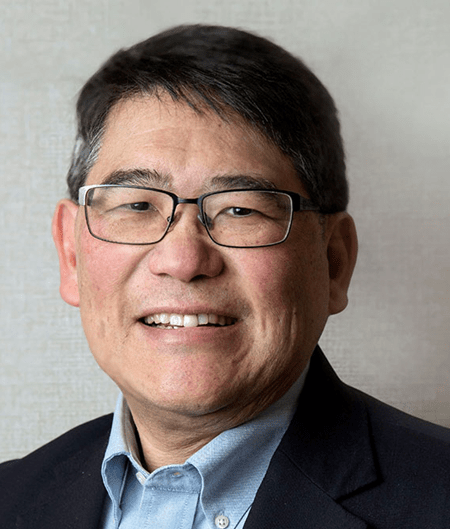
I have been in NACRO for over 10 years. Having a background as a chemical engineer, I worked for Dow Chemical for 17 years. A large part of my job was bringing in sponsored research with academia so that Dow would have much needed expertise and capability. Therefore, I was initially on the other side of the table. Once I began working in research development, working in/with corporate relations was a natural fit for me.
What is your role within your organization?
I am Director for Research in the Grainger College of Engineering at the University of Illinois Urbana-Champaign. My office falls under the Office of the Associate Dean for Research. In addition to supporting the launching of large, multi-investigator, multi-organization efforts, I have a significant faculty development mission. I have developed a number of programs for early career investigators including a program for new faculty to help them in starting their research at University of Illinois and a workshop series dedicated to assisting faculty with their NSF CAREER proposals. I have also developed/facilitated workshops on interacting with program officers and workshops on leading graduate students as well as faculty peers. As part of seeding large, multi-investigator centers and institutes, I oversee the Strategic Research Initiative at Grainger Engineering, which offers funding to help build teams and obtain preliminary data for large, multi-million-dollar proposals. I am also a certified coach – coaching faculty and staff in career and leadership development. I recently initiated “5 for 5” group coaching where five professors meet with me for five weeks.
How can NORDP’s alliance with NACRO help us at the member level?
We have an alliance between NORDP and NACRO, and one of the things we’ve been thinking about is how this alliance can increase member-to-member interaction across these organizations. Right now, we are exploring collaborations between NORDP, NACRO, and federal agencies. Our current project is emerging in conversation with the NSF TIP (Technology, Innovation, and Partnership) program. NORDP and NACRO are exploring the possibility of partnering to conduct a landscape analysis of needs and capabilities (such as workforce development and commercialization opportunities) in different regional innovation ecosystems. We hope to facilitate collaborations between universities and corporations that are mutually beneficial. This project is well-suited to support the NSF ENGINES program, which focuses on catalyzing regional innovation ecosystems – especially those that may be in early development and have had limited interaction with federal agencies.
You recently presented on this project at the NACRO 2023 meeting. How was your talk received?
This year’s NACRO 2023 meeting was held in Portland, Oregon. I presented on a panel with fellow NORDP and NACRO member Rachel Dresbeck, Senior Director of Research Development at Oregon Health and Science University, and NACRO member, Kim Jacobs, Assistant Dean of Development in the College of Engineering at Florida A&M and Florida State. A quick poll of the audience of about 50 showed that almost all were potentially interested in this project. Our vision for the landscape analyses are quite broad and may include technical/research capabilities, entrepreneurship, tech transfer, DEIB, local government needs, nonprofits/NGOs, community engagement, incubator services, etc.
How might NORDP members be involved in this project?
This project will necessarily draw upon many untapped partnerships and will have teams performing landscape analyses in different areas of the country that are co-led by NORDP and NACRO members. NORDP and NACRO members can also just be members of the teams. The highly successful NORDP Consultant program has been an inspiration and a model as we plan for this grassroots effort. We are also drawing upon Strategic Doing to develop our framework. As you may know from workshops at previous NORDP conferences, Strategic Doing facilitates collaborations to address complex challenges. NORDP members Rachel Dresbeck, and Jeff Agnoli, Director of Education, Funding, and Research Development in the Office of Research at Ohio State (who is also a Strategic Doing Fellow) are involved in this effort. The NORDP membership will be instrumental in requesting support for their regions and partnering with us in these efforts. NSF TIP may also wish to prioritize certain areas. While we are still in the planning phase of this effort, it is clear that the kernels of activity and energy from this effort will also result in new collaborations and team building.
Based on your experiences as an engineer in industry, an RD professional, and a NACRO member, how can research development offices and offices of corporate relations work together more effectively?
I want to emphasize the importance of networking between RD offices and offices of corporate relations. While each office has its own mission, there is a benefit for corporate relations being included as a part of the team in proposals to federal funders, and vice versa. Since corporate partnerships and funding are an essential part of the academic research ecosystem, corporate relations, and research development should be working closely together on a regular basis. This will result in new opportunities as well as more compelling proposals for funders. Instead of waiting until a particular proposal needs corporations, these teams can engage at a much earlier stage to determine how they can work together for future proposals – before the solicitation comes out. Programs that the institution has submitted to in the past may be a good place to start.
 NORDP News