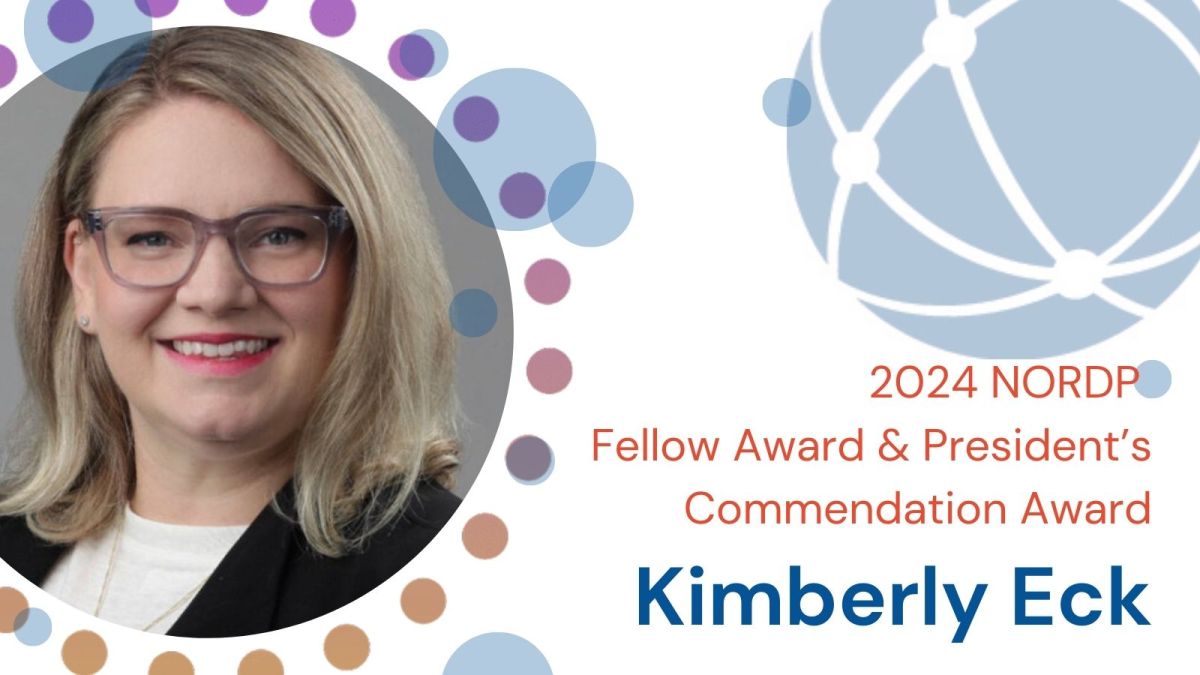
This commendation recognizes individuals for exemplary service to NORDP and is presented at the discretion of the outgoing NORDP President to individuals who have contributed to the success of their presidential year.
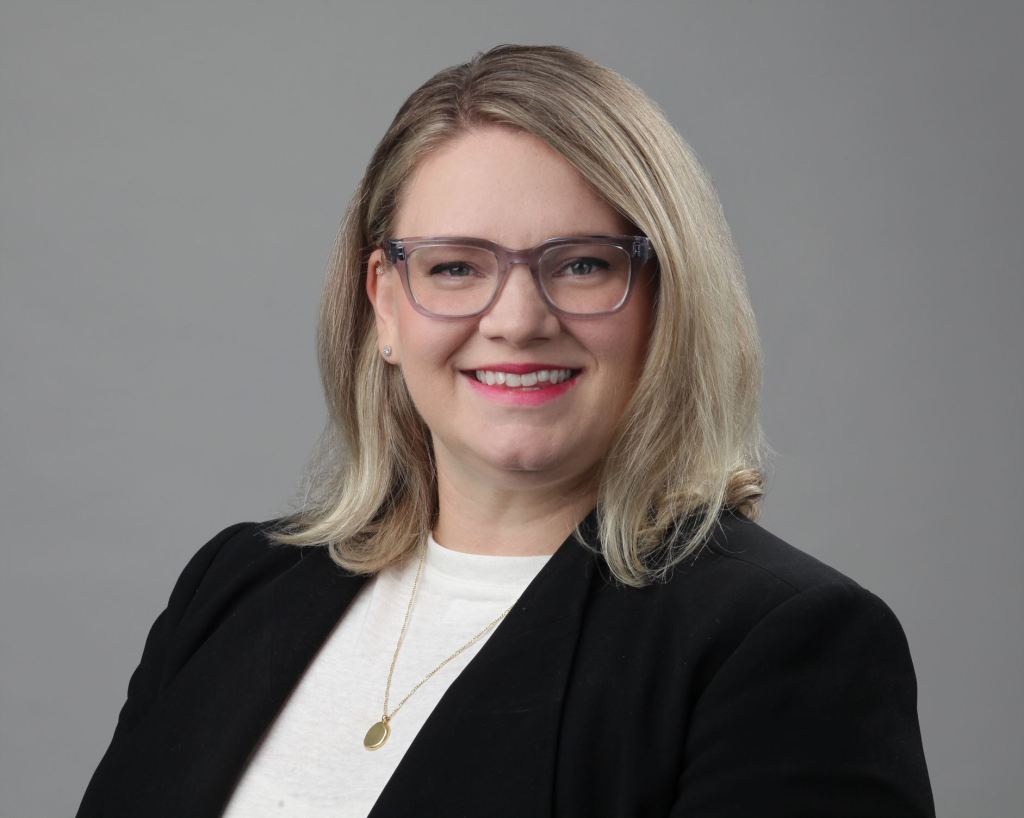
Who: Dr. Kimberly Eck, Senior Associate Vice President for Research at Emory University & Senior Director of the NORDP Consultants Program
Where: Emory University
Number of years in research development: 16 years
Length of NORDP membership: 10 years
What initiative are you the most proud of in your role as a NORDP volunteer?
I am so proud of the NORDP Consultants Program! The NORDP Consultants Program is dedicated to expanding the national research ecosystem by providing research development services to build research capacity at MSIs and ERIs at no cost to those institutions. I am deeply grateful for the recognition that I do this work as a volunteer without personal compensation.
The Program was originally conceived of by a group of NORDP thought leaders. At the time the original pilot project was presented, I was on the Board and we agreed to move forward with the concept.
When we started in 2021, we were working with four HBCUs, funded by a private foundation. We have now worked with 172 institutions of higher education. We’ve helped these institutions with engagements that have secured more than $90 million in funding. I think we will get to $100+ million in mid-2025. Those 172 institutions come from 44 states and jurisdictions, including Puerto Rico and the U.S. Virgin Islands. So, we have a significant reach.
There are three ways to engage with the Program: One is through our cohort model, and that’s where we recruit MSIs. They apply through a competitive process, and we select them based on the alignment of their goals and the activities that they hope to pursue with support from the Consultants. Then, the MSIs engage in a two-year intensive period with us. There’s also follow-on engagement and support opportunities. This cohort model is what the original four HBCUs went through. We’ve already started the second and third cohorts.
The second model of engagement is when we embed into a federally funded proposal process. Here, the funder comes to us and indicates that they would like support for all of the applicants that will be involved in this process. This requires really close collaboration with the funder, understanding what the funders goals are, and then working on one specific proposal with usually a multi-institutional group to submit that proposal and get it panel ready. So that’s a single shot, but all the programs that we’ve engaged with have really been focused on building innovation and research capacity, so that has been very well aligned with what we’re doing.
The third model is partner initiated. Here, an ERI or MSI, reaches out to us and lets us know they are planning to apply for an opportunity and that they need research development expertise. In this case, the partner is leading the submission, and we’re coming along and supporting with specific activities, for example, a capacity assessment. Our first partner-initiated project is led by Delaware State University, an HBCU that successfully competed in the first round of the NIH STRONG program.
I am very privileged to have had the support from Emory University and NORDP to pursue opportunities to grow this program as the Director – and I had a lot of help! More than 20 NORDP members volunteered to help launch the program in summer and fall of 2021. As the program has evolved, MANY NORDP members have contributed to its success.
How did you hear about NORDP and what made you join initially?
I heard about NORDP from a colleague while working at the State University of New York around 2013. I was delighted to learn other people were doing proposal development but in a way that was different than research administration. Like many others have described upon joining NORDP, I felt like I found my people.
What relationships have you built as a result of NORDP?
I deeply value having a national network of people I can call on with different areas of expertise, different experiences, and unique insights. My closest NORDP relationships were built by volunteering together. Attending the annual conference feels like a reunion. Being a part of NORDP has also allowed me to build relationships with other associations, like ARIS, and funders, especially NSF. I cherish everyone that has contributed and/or currently works in the NORDP Consultants Program.
Describe how NORDP has changed from when you initially joined
NORDP’s membership has grown significantly! It is fantastic to continue to see such vibrant in-person conferences alongside virtual offerings that are more accessible. I am excited to see NORDP evolve to meet its members’ needs and new paths of sustainability.
What recommendations do you have for members to get more involved with NORDP?
Consider co-authoring a resource for the Equipping Minoritized and Emerging Research Institutions to Grow their Enterprises (EMERGE) Library. This library features co-created and peer-reviewed knowledge articles and case studies that address MSI and ERI research enterprise priorities and provides context specific implementation strategies and insights. The NORDP Consultants Program hosts writing sprints that bring together RD experts from MSIs and ERIs and more resourced institutions to produce resources. It’s a fantastic way to get involved with the NORDP Consultants Program!
When structuring the articles, we take a factual approach, but we very actively try to not simply regurgitate language in the solicitation. We try to make it more understandable, for example by using more colloquial language. We strive for a balance of what your buddy at your institution would tell you if they could and the factual content. We have published three resources through these sprints in collaboration with the NORD Committee and three more are in development.
 NORDP News