Written by: Roshni Singh Career Stories team
Faculty Development Curriculum and Mentorship Networks
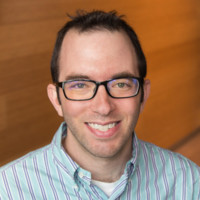
For June career stories, we interviewed Matthew Schwartz, PhD, who redefines what it means to support early-career faculty, building faculty development programming and mentorship networks to support academic success at UMass Chan Medical School. Matt is Senior Program Manager for Faculty Development in the Investigator Career Advancement Program (iCAP) at UMass Chan Medical School’s Office of Health Equity. At UMass Chan, Matt’s main responsibility is to design, manage, facilitate, and evaluate faculty development programs and mentorship activities aimed at enhancing the productivity, satisfaction, retention, and success of early-career research faculty, particularly those from groups historically underrepresented in science.
Certified as a facilitator by the Center for the Improvement of Mentored Experiences in Research (CIMER) and a graduate of both Ciencia Puerto Rico’s inaugural Inclusive and Reflexive Facilitation Fellowship and the 2025 Linton-Poodry SACNAS Leadership Institute, Dr. Schwartz is a national leader in faculty development and mentorship. He is an active member of NORDP, where he organizes the Faculty Development Peer Mentoring Group and serves on both the Mentor Training Team and Mentoring Committee. Fifteen-Twenty NORDP members regularly participate in monthly meetings of the Faculty Development Peer Mentoring Group, and any NORDP member is welcome to participate by signing up via WisdomShare. This Spring, along with several members of the Mentor Training Team, he facilitated a CIMER training through NORDP to further elevate mentorship practices by NORDP members across institutions.
Dr. Schwartz brings a wealth of experience to his role. He holds a PhD in Genetics and Genomics from Harvard University and a BA in Biological Sciences from Northwestern University. His academic career began as an Assistant Teaching Professor at Simmons University, where he also collaborated with the Center for Faculty Excellence, under the leadership of Dr. Jennifer Herman, as the Faculty Fellow for Teaching Excellence. Early on, he recognized a passion for creating systemic changes in academia through faculty development, curriculum innovation, and mentorship after a transformational experience as a participant in a Summer Teaching Institute at Simmons. Since then, at UMass Chan, he has been leading the creation and implementation of a holistic, tailored faculty development curriculum to support the success of four successive cohorts of early-career research-focused faculty.
Dr. Schwartz has led over 75 professional development workshops, incorporating active learning techniques such as case study analysis and role play, reflective practices, and restorative justice principles to facilitate authentic conversations and create transformational faculty development experiences. He regularly collects faculty feedback for continuous improvement of iCAP and to ensure he is meeting faculty needs. With 2-hour iCAP sessions every two to three weeks, some outsiders express concerns about taking up too much faculty time, but the effect is the opposite, with iCAP participants noting how much time they are saving later because of iCAP’s support for advancing their careers and learning how to effectively lead their research groups.
When asked to distinguish between faculty development and research development, Dr. Schwartz shares: “Faculty development takes a holistic view—it’s about mentorship, career development, and fostering belonging and wellbeing in addition to research development skills like proposal writing, managing budgets, and navigating collaboration.” He regularly uses his research development skills, however, to dig in, understand the literature, and apply evidence-based best practices in creating both the structure of iCAP’s cohort-based peer mentorship group, and for all of the faculty development sessions he develops, on topics ranging from research mentor training to navigating difficult conversations, effective networking, and fostering wellbeing.
Focusing on mentorship, Dr. Schwartz believes in building networks, supporting faculty in identifying and filling gaps in their mentorship networks, and cultivating his own large network of people whom he can consult and who can support his own career success and development.
Dr. Schwartz is happy to answer any questions you have and especially encourages readers to reach out to him if they are looking for mentorship and support in creating their own faculty development initiatives. Please feel free to contact him at matthew.schwartz3@umassmed.edu.
To listen to his full interview by the career/kindle team, please click on this link (you must log in as a NORDP member to access): https://nordp.org/store/viewproduct.aspx?id=24459276; Chapter 48: Matthew Schwartz

 NORDP News