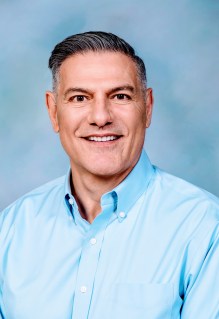
Who: Carlos Garcia, Director, Research Development & Infrastructure
Where: William Marsh Rice University
Number of years in research development: 9
Length of NORDP membership: 7
Number of NORDP conferences attended: 5
How do you unwind? Reading a good book
My work in research development started when I worked in the Rice University Smalley-Curl Institute, formerly known as the Center for Nanoscale Science and Technology. We started working with the DOD and other state universities to build a program in the State of Texas. The program was called Strategic Partnership In Nanotechnology (SPRING) and brought in over $30M in research equipment to Texas.
 Thereafter, I moved to the Office of Research and settled into my new role as Director of Research, Development, and Infrastructure. In this role, I oversee the Interdisciplinary Research Support Office (IRSO), which is designed to support the development of proposals and the administration of large and strategic projects. IRSO partners with the Office of Proposal Development and other internal departments to submit complex interdisciplinary proposals. Through IRSO, I oversee a number of university centers and institutes. I work in consultation with faculty, department heads, deans, and research center and institute directors to determine the level of support necessary for each proposal or project. We provide strategic planning and administrative support beginning in the startup and continuing through the execution and sunset phase of interdisciplinary projects. We also offer comprehensive pre- and post-award support for these centers and institutes, and coordinate all of our support activities with research administrators and financial officers across campus, including those in Research Accounting, the Office of Sponsored Projects and Research Compliance, and the Controller’s Office. In addition to these responsibilities, I oversee the Rice Office of STEM Engagement, Evaluation and Assessment, the Shared Equipment Authority, the Research Support Shop, and the Animal Resource Facility.
When I started this new position, there were no guidelines or predecessors to ask about my duties. A year into my job, I discovered NORPD. It was a relief to know there were others like me!
Since my first meeting, I’ve been able to find support in the vast network NORDP provides. The Southwest local region has also been very beneficial. I would encourage you, if your time allows, to make sure you attend your local chapter. This is especially important if you are new in this profession. You will be surprised how eager and ready this group is to help you. At one of the NORDP meetings, we realized that there was an extraordinary number of members from Houston and from the Texas Medical Center in particular; we started getting together every couple of months for lunch to talk about our roles and challenges, and to offer suggestions to one another on how to meet those challenges.
_____________________________________________________________________
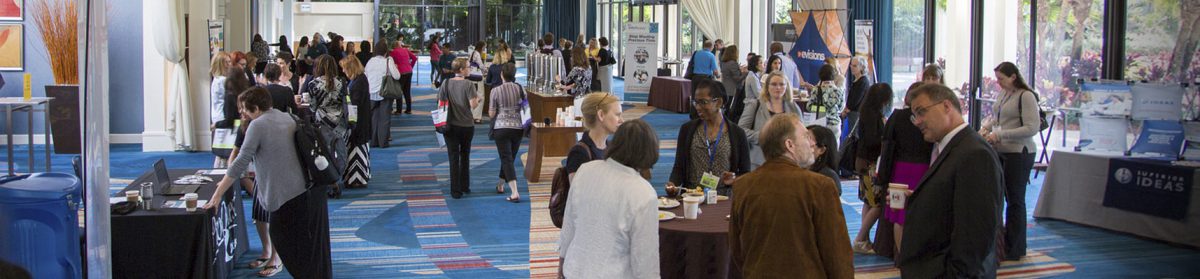
We hope to see you at the Conference, which will be held May 17 – 20, at the Hyatt Regency Hill Country Resort and Spa in San Antonio, TX. The conference room block can be accessed HERE.
For more information about the conference or to register, visit http://www.nordp.org/conferences. Follow @NORDP_official on Twitter for all the latest #NORDP2020 updates.
NORDP fosters a culture of inclusive excellence by actively promoting and supporting diversity, inclusion and equity in all its forms to expand our worldview, enrich our work, and elevate our profession.
 Download the Attendify app from your app store
 During the job interview, the only RDM in the office at that time discussed NORDP and the great experiences and opportunities for learning she had attending the conference. So, when another RDM and I joined, we immediately signed up for NORDP membership and made plans to attend our first conference (in 2018). While RD was not new to me from my previous positions, in my first year as RDM, I sometimes felt like I had one foot each in two boats going in different directions – am I a survey methodologist or a RD professional? At the NORDP conference, I met more than one person with a ‘split personality’ like mine, and I even found other survey enthusiasts! I learned a lot about developments in the RD world, which I feel helped me ‘catch up,’ and at a poster session I found people eager and willing to share their solutions to a process problem I was grappling with. There was no question I’d be attending the next conference.
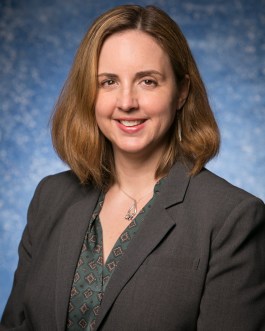 As the go-to reviewer for the applications and articles of my grad school classmates at Penn, I found that I loved reading about various areas of research, not focusing just on my protein of interest. After graduation, I found my way to the American Association for Cancer Research where I wore many hats, including grant writer and review committee administrator. I then went on to another cancer research foundation to manage their grant portfolio. In this role, I did everything from RFA creation to peer review to awarded grant oversight. Having those close experiences with grant applications made me fall in love with the early phase of research: the time when a PI can dream about what they want to do and how to do it. It also allowed me to continue to have broad exposure to many types of research.
 Providence Waterplace Park and Riverwalk
 RISD Museum
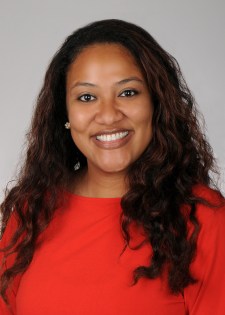 When a position became available within the Office of Research Development in 2018, I jumped at the opportunity. As Lead Advisor for Research Training & Outreach Initiatives, I am responsible for sustaining and enhancing MUSC’s training grants, with a specific emphasis on educating the research community about best practices for grant applications. In addition, I coordinate and manage professional development workshops and webinars and provide funding consultations for investigators focusing on training and career development awards. My experiences as someone who was supported by both individual and institutional training grants, in addition to managing training programs at MUSC and having an understanding of the statewide needs and the patient population that MUSC serves, has proved invaluable in the development of training programs designed to shift the training landscape here on campus.
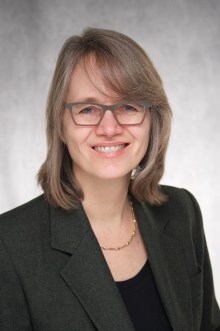 My main role as a writing consultant is to help researchers make their grants (and research manuscripts) more compelling. I provide input on everything related to readability – mechanics, aesthetics, clarity – as well as on scientific aspects of the work. I also regularly teach scientific writing and, occasionally, help to organize large-scale proposals and guide authors to funding opportunities and collaborators. Finally, I have had several opportunities to train scientific editing interns; this facilitated the transition of my two-department editing service to a core facility for the college in 2017.
 In 2015, I was appointed as the Director of Biomedical Research Development by the University of Bridgeport (UB) to help build a scientific environment that enhances research support for faculty and promotes “team science” and collaborative research programs. Notably, UB is an emerging research institution where faculty time is consumed by heavy teaching loads. This leaves very little time for research that results in long-term meaningful projects that receive grant funding. As such, resources for biomedical research at UB are very limited. In 2015 and with the support of UB leaders, I established UB’s first Collaborative Biomedical Research Center, outfitted with state-of-the-art research equipment for use by UB faculty and their students as well as collaborators for conducting their biomedical research projects.
 NORDP News