NORDP 2018 Conference Notes: Ideas Lab Workshop: Starting a Grand Challenge Initiative & Picking/Proposing a Grand Challenge Topic: Issues & Decisions from the University and the Research Team Perspectives (Part 1)

Ideas Lab Workshop: Starting a Grand Challenge Initiative & Picking/Proposing a Grand Challenge Topic: Issues & Decisions from the University and the Research Team Perspectives (Part 1)

Presenters:

  • Eva Allen, Indiana University
  • Sarah Archibald, University of Wisconsin-Madison
  • Jennifer Lyon Gardner, The University of Texas at Austin
  • Michelle Popowitz, UCLA
  • Sarah Rovito, Association of Public and Land-grant Universities
  • Amy Spellacy, The Ohio State University

Thanks to our session scribe, Linda Vigdor, City University of New York! 

Key points from the session. We learned:

This session was designed to be highly interactive with the audience. A broad overview of key factors to consider when initiating a grand challenge include:

  1. What are the drivers for starting a program – how might these influence the design of the program?
  2. Grand Challenge Goals vs. Themes – it is helpful to differentiate between these.
    1. Theme: (-) not that easy to measure outcomes and hard to set up requirements to meet but (+) good for generating interest and engaging participants; “no failure” with a theme; themes persist beyond the goals and offer potential of culture change
    2. Goal: (+) easier to communicate objectives but (-) narrower focus than a theme; “failure” is a possibility – thus, harder to sell to researchers or executives
    3. One strategy is to start with a theme (for ideation phase) then narrow the theme to focused goals
  3. Management of theme-driven and goal-driven challenges require different strategies.
    1. Theme-driven: open-ended management
    2. Goal-driven: defined approach
  4. Get creative with funding approaches, for example:
    1. Sell institutional assets (e.g., parking)
    2. Generate philanthropic gifts
    3. Provide campus-based funding
  5. Ideation approaches:
    1. Pre-define a broad topic – bring people together to brainstorm ideas to further refine/define the topic
    2. Run open calls – ask for concept papers and/or offer seed funding grants to explore viability of ideas
    3. Organize topics around specific person with core expertise or draw
    4. Top down – topic defined by high level administration or by external partner to achieve specified goals

What did you hear at this presentation that surprised you?

I was surprised by the difference in focusing on goals vs. themes as an organizing structure when designing a grand challenge. Both have their merits.

  • Advantages of organizing around Smart Goals:
    • (a) unified vision;
    • (b) easier to communicate societal impact;
    • (c) promise of defined impact for participants;
    • (d) measurable;
    • (e) time-limited;
    • (f) roles more easily defined; and
    • (g) better positioned for partnerships
  • Advantages of organizing around Themes:
    • (a) flexibility;
    • (b) campus able to define or declare success at any point;
    • (c) inclusivity;
    • (d) scope can be variable;
    • (e) may generate more excitement due to fewer restrictions; and
    • (f) no predefined timeline or endpoint

What resources did you discover at this presentation?

What was the most interesting question asked by an audience member, and what was the presenters(s)’ response?

An interesting question focused on best strategies for picking teams.

  • Identify people known to be team players
  • Identify people who have the requisite experience, and/or reputation relevant to the proposed theme
  • Noted: themes proposed at general meetings can be hard to manage in terms of selection, focus, etc.
  • It’s also important to have a strategy to keep faculty engaged once they sign on to a grand challenge

What else from this session should NORDP members know?

The interactive format kept the session lively and produced thoughtful ideas.
NORDP 2018 Conference Notes: NORDP Program for External Evaluation of Research Development (PEERD): Perspectives from Evaluators and Institutions Evaluated

NORDP Program for External Evaluation of Research Development (PEERD): Perspectives from Evaluators and Institutions Evaluated

Presenters:

  • Jerilyn Hansen, Utah State University
  • Susan Carter, Retired, UC Merced
  • Kay Tindle, Texas Tech University
  • Peggy Sundermeyer, Trinity University

Thanks to our session scribe, Mary Jo Daniel, University of New Mexico!

Key points from the session. We learned:

  • PEERD is a new (formalized in 2017) service offered through NORDP that currently has a pool of 8 reviewers.
  • PEERD reviews are planned collaboratively by institutional leadership and the PEERD team.
  • Review team composition is critical; there needs to be a balance of personalities, skill sets, and experience levels.
  • Reviews engage campus leadership, the RD office being reviewed, and faculty groups.
  • Reviews result in actionable recommendations.


What did you hear at this presentation that surprised you?

Not a surprise, but a good idea: it’s best to plan for a follow-up meeting to share review recommendations broadly with those who participated in the review (e.g., other administrators, faculty members).

What resources did you discover at this presentation?

What was the most interesting question asked by an audience member, and what was the presenters’ response?

An audience member pointed out that evaluations can be judgment-based/draw from experience, or more data-driven (e.g., use of repeatable protocols). The audience member felt that PEERD appears to emphasize the first, and wanted to know how this was decided upon. The presenters explained that individual campus goals determine the approach taken by the PEERD group. So, if a campus requests an analysis of data, the PEERD group is able to do this.

What else from this session should NORDP members know?

Cost of a PEERD review is dependent on individual campus goals and the design of the review itself, but a “ballpark” figure for the service is between $12K – $18K. The PEERD reviewers are paid a fee and NORDP is paid for its administration of the program.

NORDP 2018 Conference Notes: Practical Strategies for Facilitating Innovative Research

Practical Strategies for Facilitating Innovative Research

Presenters:

  • Donnalyn Roxey, Knowinnovation
  • Andy Burnett, Knowinnovation

Thanks to our session scribe, Jennifer Huntington, University of Michigan!

Key points from the session. We learned:

  • Knowinnovation designed the “Ideas Lab” – a multi-day program to develop ideas among faculty members with different areas of expertise to create a proposal for funding.
  • Creativity was defined as the production of novel and useful thinking. Everyone is creative in different ways that leads to innovation.
  • Tools to use with faculty in order to foster ideation that will get researchers to truly collaborate and think beyond their own ideas of what is important.
  • Clear link between Research Development professionals and their ability to use their skills creatively to foster innovative research. RD professionals are not just the implementation piece.
  • During the session, there were two points at which the audience was asked to speak with someone sitting next to them about 1. Where each person could use more creative methods in RD, and 2. What have you seen work well in that space? This was a great way to develop connections with colleagues and share ideas.

What did you hear at this presentation that surprised you?

It was surprising to have the session be based around the idea of creativity and how we can foster that first in ourselves and understand that we are all creative in different ways. That really helped tie into the proposed strategies for fostering innovative research. It surprised me how willing Knowinnovation was to share some of their methodology for us to immediately utilize at our home institutions.

What resources did you discover at this presentation?

Two models were shared: Web of Abstraction – how to define the “problem” or really understand what the problem is.  PPCO – how to focus on the values of different ideas to stop the “that’s a terrible idea” mindset. PPCO evaluates an idea starting with the Pluses, the Potentials, the Concerns, and lastly, how to Overcome some of the Concerns (when possible). The presenter did state that she was willing to share any other resources around Knowinnovation’s methods.

What was the most interesting question asked by an audience member, and what was the presenter(s)’ response?

One question was asked about ideal group size for ideation workshops. Another participant asked how to get faculty to attend the workshops. The presenter responded that the ideal size is less than 10, and that the “sweet spot” is a group of 7-8 people. That then tied into clarifying that a successful workshop of this type is NOT based on attendance/size, so getting faculty to “show up” is not actually the program’s goal. It becomes rather difficult to effectively ideate around innovative concepts when there isn’t an ability to narrow the focus enough. The end goal of these workshops is to have a handful of faculty come out with a great proposal concept for funding.

What else from this session should NORDP members know?

If you sign-up for the Knowinnovation blog, they periodically post about the work they are doing, including methodologies and other helpful tips. They offer many services, including: workshops, virtual events, lunchtime talks, 3-day proposal building sessions, and ideas labs.

NORDP 2018 Conference Notes: The Little RD Office That Could: Lessons Learned from RD Program Flops

The Little RD Office That Could: Lessons Learned from RD Program Flops

Presenters:

  • Karen Fletcher, Appalachian State University
  • Katie Howard, Appalachian State University

Thanks to our session scribe, Suzanne Lodato, Indiana University Bloomington!

Key points from the session. We learned:

  • Unsuccessful programming gives you an opportunity to rethink and revise your programming and move forward.
  • If you observe your audience while you are facilitating a program, you will see it is obvious when they are beginning to lose focus. Exercises like stretching breaks can help participants refocus.
  • Sometimes it is more effective to split longer workshops into smaller, more digestible sessions. For example, for finding funding, an overview session can be followed up by a separate hands-on funding database workshop.
  • Often a single session is more effective than a series of multiple sessions, particularly if you can gather some feedback within the single session. Participants tend to drop out of multi-week programs.
  • Workshops that require registration draw much better participation than drop-in workshops.

What did you hear at this presentation that surprised you?

  • Appalachian State is a PUI, but is currently recruiting more faculty who are “research intensive.”
  • Most participants who attend a finding funding workshop do not think it works well.
  • A two hour finding funding workshop tends to be ineffective because too much material is presented in one sitting and people lose focus.

What were the most interesting questions asked by audience members, and what was the presenters’ response?

  • For finding funding, some research development professionals encourage faculty to set up profiles before attending a hands-on database session.
  • What didn’t work: one person organized drop-in days for consultations on finding funding that were poorly attended.
  • Appalachian State has a separate office for undergrad research.

What else from this session should NORDP members know?

Here are two grant writing workshop models that worked well:

  • A multi-week program that required a sign-off from the faculty member’s department chair. Participants submitted a white paper to apply for the workshop, and the white papers were judged by means of a competitive process. Faculty had to commit to attending a specified minimum number of sessions. Participants identified a scientific mentor. Staff identified a senior mentor with whom the participant met once a month. Participants were also mentored by staff and peers. Only senior mentors were paid, because they had to meet with participants once per month and report back. Mentoring and accountability to the mentor were the reasons for the success of the program. Participants talked about more than just their current proposal with their mentor, so they developed their career paths, too.
  • Short, internal grant writing workshops 1.5 hours in length. The grant program is reviewed in the session, and participants spend time discussing their proposal ideas to receive feedback. An exercise may encourage participants to write for a very short period of time (e.g., 90 seconds), but they are not required to write during the workshop.


NORDP 2018 Conference Notes: Perspectives from Federal Agencies – NEH and IMLS

Perspectives from Federal Agencies – NEH and IMLS

Presenters:

  • Brett Bobley, National Endowment for the Humanities
  • Ashley Sands, Institute of Museum and Library Studies

Session Scribe: Paige Belisle, Harvard University

Key points from the session. We learned:

  • Both the NEH and IMLS can fund a wide range of project types. The best way to learn about all of the individual programs offered is to visit the funders’ websites.
  • Both agencies recommend that prospective PIs reach out to a program officer to discuss their proposed projects prior to applying. Program officers can also read proposal drafts.
  • NEH encourages faculty members from outside of the humanities to apply via interdisciplinary projects.
  • IMLS has a broad definition of what constitutes a museum or library – so it’s good to check to see if a PI’s project might fit within this agency by looking at the requirements of the individual programs.
  • Both agencies have an interest in funding projects in the digital humanities and in digital infrastructure.

What did you hear at this presentation that surprised you?

Many faculty and research development professionals alike are under the impression that all research projects supported by the National Endowment for the Humanities must result in a scholarly book. However, this is not the case! The NEH supports a wide range of projects, including programs for the public, preservation and access, and the digital humanities.

What resources did you discover at this presentation?

Both of the program officers emphasized that samples of successful proposals are available on their agencies’ respective websites, organized by individual program.

What was the most interesting question asked by an audience member, and what was the presenters’ response?

One audience member asked how to advise faculty who wanted program officer feedback after the stated draft deadline had passed. Both program officers suggested such faculty members reach out to their respective program officers directly to ask about sending a draft regardless—this is sometimes a feasible option and can be mutually beneficial.

What else from this session should NORDP members know?

NEH and IMLS staff are available to travel to give outreach presentations at institutions. For NEH/IMLS budgeting purposes, it is helpful to request such a presentation well in advance. The presenters also recommended partnering with other institutions in your region to host a joint event, as having the opportunity to present to multiple/larger groups allows the program officers to justify their budget requests more successfully.

NORDP 2018 Conference Cameo: BreeAnn Brandhagen

#NORDP2018 starts Monday, May 7 in Arlington, VA. Keep checking back here at the blog and on our Twitter feed (@NORDP_official) for live conference updates. Register here: http://www.nordp.org/conferences.
_____________

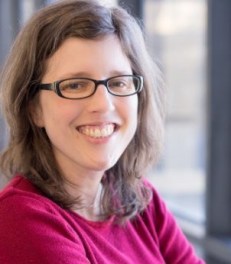
Who: BreeAnn Brandhagen, Program Manager
Where: BioSNTR
Number of years in research development: 4
Length of NORDP membership: 1
Number of NORDP conferences attended: 1
When you were a kid, what did you want to be when you grew up? I wanted to be either a doctor or an event planner.

After completing my PhD, I was a Lecturer for one year but found myself missing research. I knew I did not want a traditional faculty career, but I wanted to be engaged with research in some way. An opportunity to work with a new research center came up and I jumped in without really knowing what I would be doing!

DSC_3590In 2014, I started  as the first Program Manger of BioSNTR (pronounced “bio-center”), a state-wide distributed research center in South Dakota. I work with faculty across the state on large collaborative research projects. In addition to managing the finances of the center, I also monitor and evaluate project progress, assist faculty in finding and applying for new funding, coordinate public and university relations’ information, and assist in creating new partnerships amongst academic researchers and the local biotech industry. Every day looks different and that’s what I love most! I also really enjoy getting to interact with faculty from a variety of disciplines – I’m always learning something new!
I attended the NORDP conference for the first time last year, and had an amazing experience. There was so much good information presented in all of the sessions, and I brought back a lot of new ideas to implement in our center. I joined as a NORDP member after attending the conference and have continued to be impressed by the resources and information provided by the organization and the other members. As someone new to the field, and in a state that does not have a lot of people working in this area, finding NORDP was a huge benefit.

I would highly recommend attending a Networking Dinner at the NORDP conference and/or participating in the run/walk sessions in the morning. I found that these events were a great way to meet and connect with other attendees, in a very non-intimidating setting (which was perfect for an introvert like me!)

Social Media Links:
LinkedIn: https://www.linkedin.com/in/breeann-brandhagen
Twitter: @DrBrandhagen

_____________

We hope to see you at the Conference, which will be held May 7-9, 2018 at the Hyatt Regency Crystal City in Arlington, VA.  For more information about the conference program or to register, visit http://www.nordp.org/conferences. Follow @NORDP_official on Twitter for all the latest #NORDP2018 updates.

NORDP fosters a culture of inclusive excellence by actively promoting and supporting diversity, inclusion and equity in all its forms to expand our worldview, enrich our work, and elevate our profession.

NORDP 2018 Conference Cameo: Cathy Borgesen

#NORDP2018 starts Monday, May 7 in Arlington, VA. Keep checking back here at the blog and on our Twitter feed (@NORDP_official) for live conference updates. Register here: http://www.nordp.org/conferences.
_______________________________________________________

Who: Cathy Borgesen, Assistant Director of Research Development
Where: MIT
Number of years in research development: 1
Length of NORDP membership: 1
Number of NORDP conferences attended: 2018 will be my first one!
What is the most interesting place you’ve visited? Ephesus, Turkey

Working in Research Development was not something I had planned to do and I have only been working in this capacity for one year. Prior to becoming involved in RD, I spent time as a graduate student, an adjunct college instructor, a prep school English teacher in Istanbul, a Research Administrator at Boston Children’s Hospital, and a Fiscal Officer at MIT.

0I took my current position last May after two years as a Fiscal Officer (FO) in the Research Laboratory of Electronics (RLE), one of MIT’s largest research labs. While I was at RLE, I worked on two successful Manufacturing USA proposals: AIM Photonics and AFFOA. Working to coordinate between multiple stakeholders across MIT, other academic institutions, and governmental agencies was extremely exciting and challenging. I realized that I wanted to do more work on large, complex proposals, especially those that were cross-disciplinary in nature and would further the larger institutional research mission.
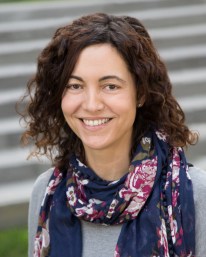
I joined the Office of Research Development in May 2017 and became a NORDP member that same month. Since joining NORDP, I have attended regional meetings at Wellesley College and Harvard University which were both extremely helpful. At the first meeting I felt comfortable as a newcomer and met several individuals from New England colleges and universities with whom I still communicate about possible collaborations. At least one collaboration between my institution and another local college arose from these regional meetings. I went to my first meeting knowing no one in the RD field and I left knowing many people from different types of colleges and universities. I felt that I could easily reach out to all of the people I met if I had any questions or just wanted to find out how they were doing something at their institution.

I’m looking forward to attending the sessions at the 2018 annual meeting, but I’m most excited to meet people from other parts of the country who are involved in RD. It seems that RD can vary dramatically by institution–between different types of institutions (State/Private), different sized institutions (under 1,000 students to up to 40k+), and different “ages” of RD offices (MIT’s Office of Research Development is only two years old). I want to get a better understanding of what RD professionals at a wide range of organizations do, how they do it, and how they prioritize their work within their organizations and the current funding climate.

_______________________________________________________

We hope to see you at the Conference, which will be held May 7-9, 2018 at the Hyatt Regency Crystal City in Arlington, VA. For more information about the conference program or to register, visit http://www.nordp.org/conferences. Follow @NORDP_official on Twitter for all the latest #NORDP2018 updates.

NORDP fosters a culture of inclusive excellence by actively promoting and supporting diversity, inclusion and equity in all its forms to expand our worldview, enrich our work, and elevate our profession.

NORDP 2018 Conference Cameo: Monica F. Vidal

#NORDP2018 starts Monday, May 7 in Arlington, VA. Keep checking back here at the blog and on our Twitter feed (@NORDP_official) for live conference updates. Register here: http://www.nordp.org/conferences.
_______________________________________________________

Who: Monica F. Vidal, Ph.D., Research Development Specialist
Where: Stanford University
Number of years in research development: 7
Length of NORDP membership: 2
Number of NORDP conferences attended: 1
What is the most interesting place you’ve visited? Antelope Canyon in Arizona

When I was a kid I wanted to be a scientist. I earned my PhD from the University of Graz, Austria in Biophysics and then came to the United States for my postdoc at University of California Irvine. During that time, I realized I enjoyed the process of looking for funding opportunities and writing research grants. Around the same time, I moved back to Spain and started a new position at the University of Barcelona. At that time, I didn’t know I was doing research development, but my main tasks were looking for new funding opportunities and helping to build large research proposals to submit to the European Commission. Those research projects had 3 to 10 partners – sometimes even more! – from different countries. It was hard but definitely a lot of fun!

MonicaIn 2014, my family and I came back to the USA. I started working at the Department of Microbiology and Immunology at Stanford University in 2015. I work with junior faculty and postdocs, finding new opportunities and helping with proposal development. In addition, I focus on strategic proposals which can lead to larger interdisciplinary projects.
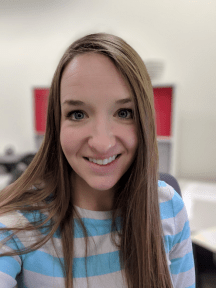
I was introduced to NORDP in 2016 through Dr. Michael Helms, Director of the Stanford Research Development Office. I joined the organization and last year I attended my first conference. Although I am able to apply a lot of what I learned at the European Commission to my current job, I am still learning new processes and policies related to sponsors. I have used many of the resources on the NORDP website as well as the listserv. I find it very useful! I look forward to attending this year’s conference, meeting old colleagues from last year, networking with other research development professionals, and learning new strategies and practices.

_______________________________________________________

We hope to see you at the Conference, which will be held May 7-9, 2018 at the Hyatt Regency Crystal City in Arlington, VA.  For more information about the conference program or to register, visit http://www.nordp.org/conferences. Follow @NORDP_official on Twitter for all the latest #NORDP2018 updates.

NORDP fosters a culture of inclusive excellence by actively promoting and supporting diversity, inclusion and equity in all its forms to expand our worldview, enrich our work, and elevate our profession.

NORDP 2018 Conference Cameo: Emily Brashear

#NORDP2018 starts Monday, May 7 in Arlington, VA. Keep checking back here at the blog and on our Twitter feed (@NORDP_official) for live conference updates. Register here: http://www.nordp.org/conferences.
_______________________________________________________

Who: Emily Brashear, Faculty Research Development Specialist
Where: Washington State University
Number of years in research development: 2
Length of NORDP membership: 1
Number of NORDP conferences attended: 2018 will be my first one!
What is the most interesting place you’ve visited? Aruba, it truly is a desert island!

I jumped into the Research Development (RD) world without even knowing what exactly it was. What I did know was that RD is better than reviewing police reports, which is what I was doing in my previous career. (And although that work is filled with funny stories and action, it comes with bad shifts and can be lonely!) So, I jumped into RD with both feet.

Brashear

My primary job at Washington State University is to find faculty funding. I think this is one of the most exciting parts of RD. I train faculty on how to navigate through the funding database and encourage them to explore new avenues where their research can fit. Another one of my tasks is to manage the university’s limited submission competitions. I feel our limited submission opportunity system is pretty strong, but I would love to hear what others are doing. I also recently took on a small internal program at WSU with the goal of learning pre-award functions. This is the beginning of a new career for me—it’s exciting!

My coworkers have attended a few NORDP Conferences and thought it would be a great way for me to learn more. The conference in May will be my first NORDP conference. I have only heard good things—there seems to be a lot of networking, building relationships, and learning. I’m eager to attend and see for myself!

_______________________________________________________

We hope to see you at the Conference, which will be held May 7-9, 2018 at the Hyatt Regency Crystal City in Arlington, VA.  For more information about the conference program or to register, visit http://www.nordp.org/conferences. Follow @NORDP_official on Twitter for all the latest #NORDP2018 updates.

NORDP fosters a culture of inclusive excellence by actively promoting and supporting diversity, inclusion and equity in all its forms to expand our worldview, enrich our work, and elevate our profession.

NORDP 2018 Conference Cameo: Matthew T. Rondina

#NORDP2018 starts Monday, May 7 in Arlington, VA. Keep checking back here at the blog and on our Twitter feed (@NORDP_official) for live conference updates. Register here: http://www.nordp.org/conferences.
_______________________________________________________

Who: Matthew T. Rondina, MD, MS
Where: University of Utah
Number of years in research development: 10
Length of NORDP membership: 2
Number of NORDP conferences attended: 1
How do you unwind? In my off time, I unwind by traveling and I enjoy a variety of sports, such as climbing and biking. Last year I was fortunate enough to travel to Scotland and mountain bike the Scottish Highlands. I have a true love for the outdoors and adventures.

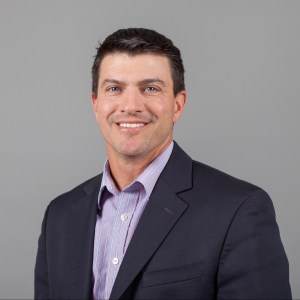
I started my research career in medical school. Early on, I recognized the need for research development professionals. At that time, kind and patient people helped me learn the ropes of preparing IRB proposals, recruiting participants, writing grant applications, and collecting data. Those experiences and others embedded within me the desire to build collaborative, productive relationships with research development professionals.Matt Rondina

Fast forward a few years, and now my day looks a bit different. In addition to seeing patients in the University of Utah Thrombosis Clinic, I serve as Precision Medicine Foundation Director for the Utah Center for Clinical and Translational Science and am the Associate Director of the Molecular Medicine Program. I am also fortunate to have an NIH-funded translational research lab and work with many talented people, such as Antoinette “Toni” Blair. I could not possibly do my research without a team of dedicated and knowledgeable people willing to work collaboratively.

While I have always relied heavily on the guidance of research development professionals, I don’t think I completely connected these dots until I attended the NORDP conference in 2017. In my various positions, including my role as a research mentor, I always advocate for research development. I feel it is important that we empower research professionals to feel comfortable proposing, developing, and implementing ideas for research. As one concrete example from my own research program, we historically tended to recruit participants through standard approaches, such as newspaper advertisements. When my project coordinator, Toni, suggested that we consider an alternative strategy for recruitment and amend our IRB’s resources to add Research Match (www.researchmatch.org), I was initially skeptical. However, I trusted her instincts and Toni very quickly brought this important recruiting tool onboard for our studies. This resulted in us meeting and, in some cases, exceeding our recruitment milestones. I am immensely grateful that Toni took the initiative to leverage this important resource for our program, as she has done innumerable times since.

I am a strong advocate for research development at my institution. I believe we should fully support efforts to build and develop a robust community of research professionals that help each other and the greater scientific community. While uncomfortable at times, we need to recognize the increasingly dynamic environment of research and be nimble enough to adapt with change. I have identified my project coordinator, Toni Blair, as a rising star in the community of researcher professionals. We are proud to support her attendance at her first NORDP conference in 2018. I look forward to participating in what will undoubtedly be an outstanding meeting.

_______________________________________________________

We hope to see you at the Conference, which will be held May 7-9, 2018 at the Hyatt Regency Crystal City in Arlington, VA.  For more information about the conference program or to register, visit http://www.nordp.org/conferences. Follow @NORDP_official on Twitter for all the latest #NORDP2018 updates.

NORDP fosters a culture of inclusive excellence by actively promoting and supporting diversity, inclusion and equity in all its forms to expand our worldview, enrich our work, and elevate our profession.