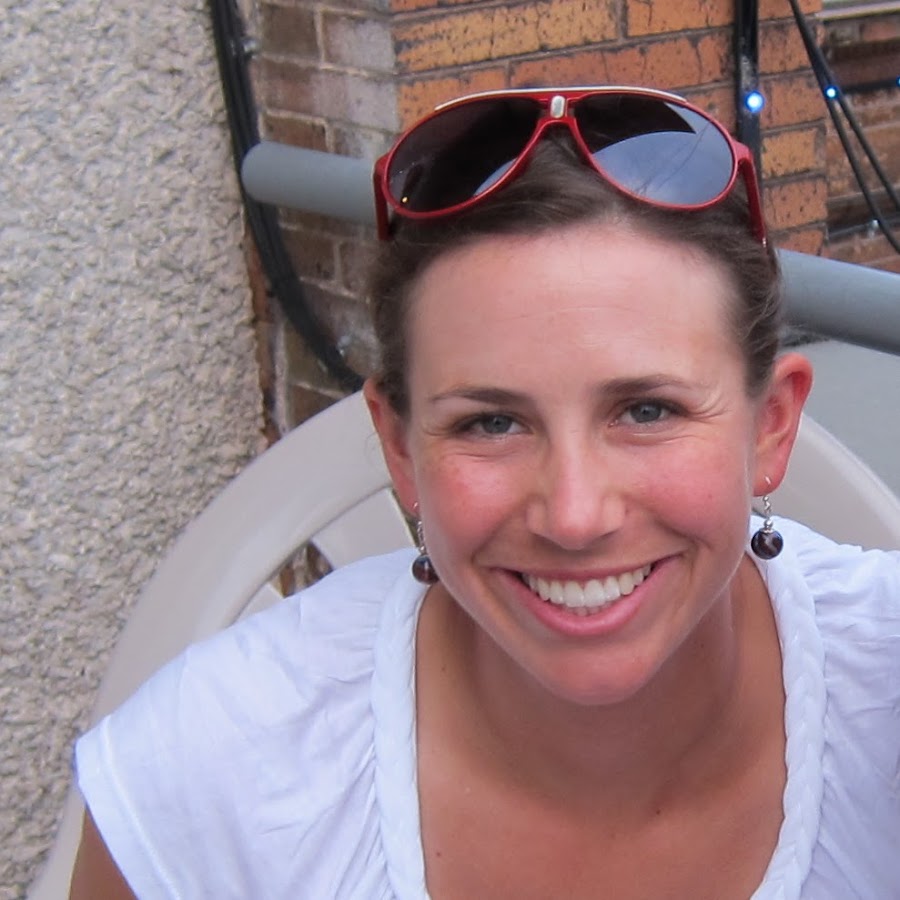
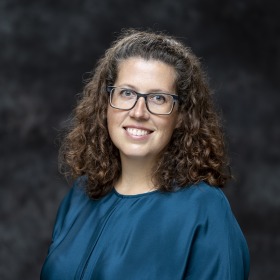
Who: Dr. Susan Ferrari, Assistant Dean and Director of Corporate, Foundation, and Government Relations
Where: Grinnell College
Number of Years Working in RD: 10 years
Length of NORDP Membership: 10 years
Entering the field
Susan, who leads an office with a team of three, was hired into a grants office in 2013 for a research administration role. At a small institution, she’s worn many hats related to RD, corporate and foundation relations, and faculty development. Susan earned her PhD in biomedical sciences but credits her general nerdiness, including many years of Quiz Bowl competition, for providing a broad foundation of knowledge that enables her to work across disciplines.
Throughout her career, Susan has championed faculty outreach and support, and she’s coordinated with other units to lead initiatives in these areas. Another common thread through her career is bringing people together, especially to support humanists and challenges related to those disciplines.
The value of her NORDP membership became apparent when Susan realized how NORDP could support her in developing programing for faculty. She was especially inspired by members working in the liberal arts space, including Claudia Scholz (formerly of Trinity College and Spellman College, now at the University of Virginia School of Data Science) and Kendra Mingo (formerly of Willamette University, now at UC San Diego).
Susan has been part of what is now a movement towards RD within liberal arts college research administration circles. Supporting faculty who teach many courses and who may not need to write books or win grants to earn tenure creates an all-carrots, no-sticks environment, presenting unique challenges and opportunities.
Research Development work
Susan calls her work in RD ‘cradle to grave’; it includes everything from hands-on work with faculty and proposal preparation, both research and curricular grants, community-involved efforts, and communications. She works with everyone from artists to scientists.
Susan had been working with Communications on efforts to share information about faculty research (including improving internal communication about new faculty members’ research and teaching agendas), which grew into initiatives to rebuild community after the pandemic. Recently, she established a faculty writing group program, now in its second round, a huge success with 55 participants out of approximately 200 faculty!
During the pandemic, Susan conducted a study with 46 faculty interviews on research culture at Grinnell to assess needs and guide future efforts. This work identified key issues, such as loneliness and lack of community around research, interest in more discussion of the research process (not just products), and areas where particular demographics or disciplines were not being well-served by current institutional structures. Conducting the project and sharing the results across campus helped Susan build closer relationships with faculty members and inspired other partners to work with Susan’s team to address the issues identified in the study—for example, the Grinnell College Libraries has launched a weekly faculty-staff research series.
Susan’s study also helped her make an institutional case for the value of faculty research. In liberal arts colleges, research activity is generally valued for its benefit to the curriculum and student experience. However, Susan’s research indicates that further benefits exist. These include supporting faculty retention and well-being and providing faculty a sense of autonomy. Her research also indicates that these benefits are especially strong for minoritized individuals. Further, her work showed the benefits that faculty members derive from their research communities beyond the College. This work demonstrates that RD supports faculty and communities broadly and is much more than dollars at the door.
Susan’s history with NORDP
Susan joined NORDP in 2013 and became more active in 2018, inspired by great work from members in the liberal arts space. Prior to becoming a board member, she engaged most with the PUI affinity group and the creative arts, social sciences and humanities (CASSH) group.
Susan has also been involved with the NORD grant committee since receiving a grant in 2020 that supported a study of faculty members at liberal arts colleges who direct institutional grants that blend pedagogy and research.
Susan went to her first conference in Providence (2019) as well as online conferences and gatherings, and she’s presented both in person and virtually on faculty programs at NORDP events.
Motivation to run for the NORDP Board
Susan notes that it’s a challenging time to be in humanistic or qualitative social science fields because of a retreat from those fields by some of their traditional funders. She sees RD as part of what can address that challenge, so she promotes RD within her professional circles, including in her role as past president (2020-2022) of Colleges of Liberal Arts Sponsored Programs (CLASP), which supports grants professionals at over 300 primarily undergraduate institutions.
A large part of Susan’s motivation to run for the Board was driven by her desire to expand what people think about when they think of RD and by her enthusiasm around the cultivation of an RD community of practice at smaller institutions and for smaller efforts. This community of practice includes more diverse schools, minority-serving institutions, and emerging research institutions. It’s important to Susan that perspectives from those within this community are respected and honored, and she emphasizes that we can all learn from each other. The productive exchange of ideas and learning has been exemplified by the CASSH group.
What Susan is most excited about as a new NORDP Board member
Susan is excited to get to work with people that she’s seen shaping NORDP in recent years. She’s excited about our new management company. She’s ready to tackle challenges related to declining funding and enrollments in the humanities and the near- and long-term impact of the SCOTUS decision. She acknowledges challenges but embraces them with enthusiasm.
Susan remembers going to her first NORDP conference and knowing that she ‘found her people’. That was topped when she went to her second conference and first-time-participant friends from CLASP and other liberal arts colleagues told her that they found their people. Embracing connection, Susan is looking forward to continuing to bring more into the fold.

 NORDP News