Find me on LinkedIn
🚀 Currently: Michigan Technological University
💼 Formerly: University of Michigan, UP Health System-Portage
🧰 Offering my time and talents to: NORDP2023 Conference (co-chair), NORDP Communications Working Group (co-chair), NORDP-GL Executive Committee, NORDP Mentoring Committee, Copper Country Ski Tigers (Level 1 coach)
In just five years, the NORDP Consultants Program has partnered with 177 institutions across 44 states and territories, helping MSIs and ERIs secure more than $100 million in research funding. Through intensive cohorts, embedded proposal support, and partner-initiated projects, the program is accelerating research capacity nationwide.
These efforts are powered by nearly $11 million in funding from federal and philanthropic partners, including the National Science Foundation (NSF), the National Institutes of Health, the National Institute of Justice, and the Carnegie Corporation of New York, along with additional sponsors committed to strengthening research capacity at MSIs and ERIs.
Now entering the final phase of NSF funding, OIA–2331578, the NORDP Consultants Program is pleased to announce the institutions joining Cohort V. Each has demonstrated a clear commitment to strengthening research activity and connecting scholarship to student learning and societal impact:
Morehouse College, a private Historically Black College in Georgia;
New York City College of Technology (CUNY City Tech), a public Hispanic-Serving Institution in New York;
Hope College, a private primarily undergraduate institution in Michigan; and
California State Polytechnic University, Humboldt (Cal Poly Humboldt), a public Hispanic-Serving Institution in California.
Through the cohort model, ERIs receive up to 600 hours of tailored consultant support, a substantial investment in research infrastructure, along with access to professional development and national networks. Cohort V will kick off its two-year engagement in October 2026.
Join the Movement: EMERGE Authorship Opportunities
We’re building a one-of-a-kind space for MSI and ERI research development leaders to share, shape, and lead, and we want you in the conversation.
The EMERGE Library is the first national, peer-reviewed collection of plain-language, collaboratively written resources centering the expertise of MSIs and ERIs. Built from direct engagement with partner institutions, EMERGE captures practical strategies you won’t find anywhere else, created by and for the emerging research enterprise.
With 4,000+ downloads to date, these resources are already shaping practice nationwide. Our flagship guide, Assessing the Impact of Research Development, has been downloaded 1,000+ times.
Now, we’re building the next set, and this is your chance to contribute, collaborate, and be part of a national community advancing MSI and ERI research capacity.
Join our EMERGE author interest meeting to learn more and get involved in upcoming writing groups:
EMERGE Author Interest Meeting Tuesday, July 28, 2026 4:00 PM ET
This work reflects our commitment to a lasting legacy, one where MSI and ERI institutions and leaders are central, visible, and driving the future of the national research ecosystem.
Reminder to apply for the 2025-2026 mentoring program year! The NORDP Mentoring Program runs from July to June, matching members in a 1:1 mentor-mentee dyad model or a 1:3 mentor-mentees cohort model. The 2026-27 NORPD Mentoring Program registration closes on Friday, May 15, 2026. It is not too late to submit your application for the 2026-27 cycle as a mentee, a mentor, or both!
Nora McCall Mentee
Nora McCall started as a Research Development Program Manager at the University of Michigan School of Information in June 2025, focusing on programming to support faculty research. Previously, she worked as a Health Program Specialist at the National Institute for Neurological Disorders (NINDS) and Stroke and a Senior Grants Administrator at Weill Cornell Graduate School. Nora earned a PhD in neuroscience from the University of Minnesota and completed her postdoc at the University of Pennsylvania, where her research was funded by NIH F31 and F32 fellowships.
Sneha Das Mentee
Sneha Das is a Program Officer at Research Manitoba, where she leads the Innovation Proof‑of‑Concept and Strategic Partnership programs to strengthen the province’s research and innovation ecosystem. She previously worked as a Research Development Manager at the University of Illinois Urbana‑Champaign, supporting proposal development and internal seed grant programs. She has a PhD in microbiology from the University of Illinois Urbana‑Champaign.
Karl Dreher Mentee
Karl Dreher is a Program Manager at Temple University, where he leads the I-SPARK interdisciplinary research initiative and supports faculty collaboration and research development. He has over 25 years of experience in program management and human resources across higher education, corporate, nonprofit, and ministry sectors.
Elizabeth Lathrop Mentee
Elizabeth Lathrop has been the Director of Proposal Development for the A. James Clark School of Engineering, University of Maryland since 2018, assisting faculty in pursuing and capturing external funding. She has degrees in multiple science disciplines – Chemistry, Biological Sciences, and Biophysics. Her prior position as the Associate Director for Programs for a DOE Energy Frontier Research Center – Nanostructures for Electrical Energy Storage (EFRC-NEES, 2014-18), brought valuable hands-on strategic planning and program management experience working with a complex multi-institutional project team.
Q1: What influenced you to apply to be a mentor and a mentee for the NORDP Mentoring Program? Why did you choose the cohort mentoring model?
Mentee Nora: I’m the only person with a research development role in my office, so it can feel a little lonely at times. The NORDP Mentoring Program, particularly the cohort model, has provided me with a sense of community and a support network that builds on NORDP’s webinar programming.
Mentee Sneha: I have previously participated in a NORDP cohort mentoring program last year and immensely benefited from it. So, I wanted to come back and do it again this year. My primary reason for choosing the cohort model is the opportunity to learn from and discuss issues with a broader group, and hear different perspectives, which I enjoyed immensely both times.
Mentee Karl: As someone new to research development, I thought it would be extremely helpful for me to get a better understanding of the field through a mentorship program. Learning from a small group who have been in the profession longer than I have has been very helpful.
Mentor Elizabeth: As a mentor, I appreciate participating in a cohort group because it provides an opportunity for peer learning. I feel peer-mentoring is a really important aspect of mentoring. I don’t see myself as an ‘expert’ of anything; rather, having to learn from different people with different perspectives and their lived experiences helps me to grow as a person.
Q2: Have you participated in a 1:1 mentoring model before? How has this experience been different or similar?
Mentor Elizabeth: I participated in a 1:1 dyad relationship before through NORDP. Discussions in a cohort model tends to be more general, focusing on topics that are applicable to RD/PD professionals more broadly, whereas in a 1:1 dyad relationship, we are more likely to zoom into a particular work-related challenge or ways to develop a specific skillset. As a mentor, I feel less pressure in a cohort model because we can rely on each other for second opinions. I was very happy to have run into both my previous mentee and several past cohort buddies at the 2026 NORDP Conference in Indianapolis!
Q3: What was your favorite part about this cohort mentoring model?
Mentee Nora: I loved learning about many different perspectives in the world of research development, sharing experiences, tips, and occasional frustrations with people at different institutions and career stages.
Mentee Sneha: I agree with both Nora and Elizabeth, and would just reiterate that the community-building aspect was also my favorite part.
Mentee Karl: I enjoyed learning from everyone from the cohort. The different perspectives from the group has helped me see the various ways research development is administered at various universities and organizations. Getting to know everyone has been great.
Mentor Elizabeth: I was surprised by how different our job responsibilities are. As RD professionals, we wear multiple hats and perform different tasks depending on the needs. The cohort mentoring model allows me to understand better the roles of research professionals in the grant-making business. My favorite part about cohort mentoring is a sense of community building of finding “my people!”
Q4: How has participation in the Mentoring Program helped broaden your horizons about Research Development in general and/or affected your daily work in particular?
Mentee Nora: The way we run our mentoring group meeting with running notes has helped me organize my brainstorming for “Food for Thought” sessions I run for my faculty.
Mentee Sneha: I found the Individual Development Plan we did at the beginning of the new year helpful for long-term goal setting.
Mentee Karl: I agree with Sneha. The IDP has been extremely helpful for me as I continue to grow in my role in research development.
Mentor Elizabeth: My professional networks have substantially increased through the mentoring program.
Q5: What surprised you about being a mentor or a mentee?
Mentee Nora: I was surprised by how much we all had to teach each other!
Mentee Sneha: I am always surprised at how much I learn and take away from these meetings, and always nice to hear different experiences and perspectives.
Mentee Karl: I was surprised by how different RD is at other institutions.
Mentor Elizabeth: I was surprised by how much I still have to learn about research/proposal development while at the same time, amazed by what others do and accomplish on a daily basis.
Q6: Any words of wisdom or encouragement for those wanting to apply next year? Any other thoughts you would like to share?
Mentee Nora: The Mentoring Program, especially the cohort model, is a fantastic way for introverts to dip their toe into networking.
Mentee Sneha: I definitely recommend the program, especially to those new to the RD profession, as it is always nice to find a community to learn from and receive support as you grow in the role.
Mentee Karl: I would say do it. You may have 10 different excuses as to why you can’t, but what you gain from the experience is worth the investment.
Mentor Elizabeth: I encourage everyone to sign up for being a mentor, a mentee, or both. We are all busy professionals, but the time spent in a welcoming shared space is vital to our mental well-being and professional growth.
Investment in mentoring is an investment in you. As the NORDP Mentoring program registration closes on Friday, May 15, 2026, the NORDP Mentoring Team encourages everyone to participate and invest in themselves for the coming year! If you have any questions, please email mentoringprogram@nordp.org and a member of the Mentoring Team will reach out to you.
By Melanie Bauer, Grant Writing Manager, Nova Southeastern University
The Coaching & RD Peer Mentoring Group (PMG) is currently led by two co-conveners: Don Takehara, Director for Research, Grainger College of Engineering – Office of the Associate Dean for Research at the University of Illinois at Urbana-Champaign; and Jet LeBlanc, Consultant and Coach at the AtKinsson Training Group.
Melanie Bauer
Melanie Bauer is Nova Southeastern University’s (NSU) Grant Writing Manager, working in the Grant Writing Lab under the Division of Research and Economic Development (DoR). She supports faculty and professional staff through all proposal development stages—funding research, project ideation and scoping, enhancement of proposal drafts, and revision and resubmission of unfunded proposals. She also supports other aspects of research capacity building at the university, including training, communications, and strategic planning. Previously, she served as Assistant Director of a STEM education lab at Yale University, where she conducted both research and program evaluation studies, as well as managed over $3.5 million in grant-funded projects supported by NSF, NIH, and the Howard Hughes Medical Institute. She joined NORDP when she started her first full-time RD job at NSU five years ago and has been delighted to engage with its mentoring program and professional development offerings.
Q1. What influenced you to sign up for the NORDP PMG Program? Why did you choose this particular PMG focus?
MB: Several years ago, I did what I think many new NORDP members do the first year they join the organization: I joined almost all the PMGs. Once I realized that this led to too many meetings each month, I started to narrow down my signups to which topics were most relevant to my current work or goals in RD. As a PMG frequenter, I can say that the Coaching and RD PMG has been a standout group, especially in terms of how the conveners have run it. At least over the past couple of years that I have been involved, they have taken an experiential approach to facilitation, providing opportunities for us to see what it feels like to coach and be coached. So while I cannot say something in particular drew me to this PMG, the reason I have stayed has been the unique opportunity to grow my skillset in a way that feels like it will stick. It’s one thing to hear about something I could do someday, but it’s another thing to actually try it out.
Q2. What were your initial expectations of the Peer Mentoring Group, and how did your actual experience compare?
MB: The typical PMG, in my experience, is run with a rotating set of topics and volunteer facilitators leading presentations and discussions under the umbrella theme of the PMG. This presents a great opportunity to share models and resources, ask questions and get feedback, and make connections with colleagues around the country. Volunteer facilitators do not have to be experts in the topics, and in fact many PMG participants are new to the field of RD, but they come with a few prompts to engage others.
In the time that I have been a part of the Coaching and RD PMG, the conveners (who have expertise and certifications in coaching and integrating coaching approaches in their RD work) have taken a somewhat different approach, leading us through various essentials and experiences in the coaching world. They have shared “powerful questions” they use to engage faculty about their research work and goals. They have also given us ways to think about our mindset and approach when providing faculty support. It can be easy to go into advisor or consultant mode with faculty, telling them about grant opportunities and what they need to do to be successful. In coaching you focus more on the person and human in front of you. What are their goals, their perceived obstacles, and solutions and next steps that they generate on their own. It helps you avoid being the teacher, or falling into the rinse and repeat that can sometimes happen when you spend an extended period of time in a service job.
Q3. Can you recall a time when you received information or direct advice from your peers in the group that made a significant difference in your RD professional work?
MB: Joanna Downer has been a presence in my time in this Coaching and RD PMG, and she shared two ways of thinking about coaching that I have since used in some team science support programming I led. The first is “Focus on the person, not the problem,” and the other, related idea is “The answer is in other people.” Both of these phrases are on sticky notes up on my bulletin board.
I think these ways of thinking about supporting faculty can be freeing for a new RD professional or for an RDP embarking on a new type of support, such as supporting interdisciplinary research teams. Do we need to understand their science? Understand the direction they need to go? Make a roadmap for their next steps? What I’m coming to believe is that, at least in some cases (most? all?), it is better for the team or individual faculty member to chart their own path. Too much support and I have found that I can get in the way of, say, the faculty team taking ownership of their own experience and creating a plan together. At the end of the day, you will leave—that meeting, that team. Those who remain need to feel empowered to plan for and do what’s next without you being there.
Q4. New Q. Have you had any challenges integrating what you’ve learned about in this PMG into your RD work?
MB: As a follow on to what I shared above about using a coaching approach, I will say that it can be challenging to walk the line between coaching and advising with faculty. Early-career faculty often come with a lot to learn, such as navigating a new university, finding which funders they fit with, and drafting their first grant proposal. Additionally, I work at a university with heavy teaching loads (4-4 and 3-3-3), so the time I have with faculty and the extra work I can expect from them in the research and grant seeking space is limited. And many times I’ll see a faculty member once, and then not again for a year or more. Because of these factors, I often feel pressure to pack a meeting with all my best advice for getting started. While there is certainly essential information new faculty need to know, I am interested in continuing to challenge myself to have these faculty meetings be more faculty-led.
Since I have joined NORDP I have been interested in hearing how others approach these new faculty meetings—what’s their “script” for these introductions? I think infusing coaching may help flip the script and ensure these meetings are at the right pace and contain the content that the faculty member wants and needs in that moment.
Q6. What advice would you give to someone new to peer mentoring who is considering joining one of our PMGs?
MB: Each PMG has its own cadence and way of running. And each year that cadence and format may change, such as with the changeover of lead conveners or the wishes of the PMG group. My advice is to pick one or two PMGs to try out this year, but do not be shy to switch PMGs if you do not find the right fit for you. Meanwhile you’ll be growing your professional network through the best professional organization in the country! I have been with NORDP five years now, and the same people I see in PMGs, I see at the annual conference, and these are people I feel I can reach out to. My last piece of advice: Are you new to NORDP? Want to meet new people and learn along the way? Sign up to be a PMG convener. You can get paired with a co-convener to work with.
What I have taken away the most from professional organizations is that you need to build a network of colleagues before you think you’ll need to call on them. PMGs are a nice way to engage with a small group and get more familiar with your new NORDP peeps!
A Day in the Life of Mentoring Committee Volunteers
By Mentoring Committee Marketing and Communication Team (McMc)
The NORDP Mentoring Committee (MC) held another successful annual open house on Jan 15, 2026. More than 20 prospective and current Mentoring Committee members joined to hear from experienced colleagues about the psychological benefits of mentoring and what different MC roles entail.
A lively panel discussion centered around “A Day in the Life” of a Mentoring Committee volunteer showcased eight distinct MC roles and what it meant to be a volunteer in each role.Here is a recap of the panelists’ responses:
Matt Schwartz is the senior program manager for faculty development at UMass Chan Medical School, who manages a faculty development and mentorship program for early-career faculty. He feels the Mentor Training Team (MTT) is a natural place where he can jump in and help support better mentoring for RD professionals. The MTT meets throughout the year but the main focus is in February and March, when an intense mentor training workshop is offered to the NORDP members. The training regimens (two mentor trainings per week) are offered using evidence-based practices adopted from CIMER for RD. As a volunteer, Matt learns how to facilitate and gains experience through co-facilitating with someone who is more experienced.
Jet LeBlanc, Lead Coach and Team Development Consultant at ATG, and Sujatha Koduvayur, Director, Research Development at Worcester Polytechnic Institute, are both volunteer conveners of two different Peer Mentoring Groups (PMGs)—Coaching and RD and AI in RD, respectively. They reflected on the fun they had interacting with their PMG members and noted that the time commitment is between 2 and 4 hours per month, including the 1-hour monthly online meeting with the group. PMGs are unique because they are not time-bound to a program year and NORDP members can join a PMG at any time!
Jess Brassard, Director of Research Development and Communication, serves on the Mentoring Committee Marketing and Communication (McMc) subcommittee and the broader Communication Working Group (CWG), though serving on the CWG is not required for McMc members. Jess shared that the McMc has one monthly meeting per month apart from the full Mentoring Committee meeting. During meetings, the subcommittee collaboratively drafts content for blog posts which profile mentoring activities and Mentoring Committee offerings—about one blog post per month is typical. This is a fun and easy fit for NORDP members who like writing. To join the co-working fun on the McMc, send a note to mentorprogram@nordp.org.
Vess Vassileva-Clarke, Director of Research Development at University of Michigan – Dearborn, highlighted the opportunity to serve on the Match Team. The Match Team’s efforts are focused during a short, intense period once a year, usually in April–May. The work involves serving as humans-in-the-loop for the mentoring matching program algorithm (housed in Wisdom Share) to make sure optimal matches are made. Joining the Mentoring Match team can be a short-term commitment and can be satisfying to know that you’ve helped connect people to start new relationships. To join this team and help with annual matching, attend the April or May Mentoring Committee meeting and let the group know you are interested, or send a message to mentorprogram@nordp.org!
The open house highlighted Mentoring Committee membership, activities, and events. As a reminder:
The PMGs are open at any time.
The 2026-27 mentoring year for dyads and cohorts will conclude in June. New matched dyads and cohorts for the 2026-27 mentoring year will launch in July 2026. The application portal will be open in May—look for the announcement in the NORDP Monthly newsletter.
The Mentoring Committee is looking forward to a productive 2026 with volunteers!
Written by Gerry Foo and the Mentoring Committee Marketing and Communications (McMc) Team
At the January Mentoring Committee Open House, we had the great pleasure of hosting a guest speaker, Dr. Gerry Foo, to talk about the psychological benefits of mentoring and volunteer work. We want to thank Gerry for generously sharing his perspectives through this blog reflection.
Dr. Gerry Foo
Dr. Gerry Foo is a Senior Research Development Specialist at Tufts University. Prior to this, he spent almost two decades as a clinical psychologist providing consultation to families, schools, clinics, and hospitals. Gerry recently transitioned to this role in research development to leverage his extensive background and experience in psychology to effectively consult with teams of investigators to improve strategy to secure funding for their research.
Speaker Reflection
Written by Dr. Gerry Foo
With January being National Mentoring Month, I could think of no better time to share all the benefits you can get from being a mentor or a volunteer. In particular, there are specific psychological benefits that you can receive by serving as a mentor in the Mentoring Program or a volunteer for the Mentoring Committee.
If you’ve ever considered becoming a mentor for the Mentoring Program, I encourage you to learn more about the program and how it can be mutually beneficial to both the mentor and mentee. For example, research has shown that serving as a mentor helps you:
Gain perspective and improve problem-solving in your own work
Grow leadership capacity
Gain confidence in your knowledge/skills
Feel connected to a supportive community
Gain a sense of meaning in your work
In addition, a recent study by the University of Cambridge found that mentoring reduced anxiety/stress and improved mental health for both mentors and mentees, and that sharing one’s own knowledge and experience allowed mentors to feel greater appreciation, satisfaction, and purpose (Gill et al., 2018). Similarly, a recent meta-analysis of the effects of volunteering revealed wide-ranging and long-lasting personal benefits for volunteers, including improved general health, quality of life, psychological well-being, pride and empowerment, motivation, self-efficacy, positive affect, sense of connectedness, and purpose (Nichol et al., 2024).
However, some of us might hesitate to volunteer because of these thoughts:
“I don’t have enough time.”
“The meeting times don’t fit my schedule.”
“I have nothing to contribute.”
“I don’t want to make an ongoing commitment.”
“I’m not good at the kind of work that goes on in the Mentoring Committee.”
Similarly, some of us might be reluctant to mentor because of these ideas:
“I don’t know what to expect.”
“What if my mentee and I don’t mesh well?”
“I’m already a mentee; I can’t do both, can I?”
These statements are all understandable reasons why becoming a mentor or a volunteer right now might feel like a challenge. In fact, many (if not all) of us who volunteer have had some of these same reasons as we weighed the pros and cons of becoming a mentor or a volunteer. Yet, despite these doubts, we can all make the effort to adjust our busy schedules and give even just a bit of our time as we learn more about the benefits of serving others.
The Mentoring Committee is a diverse and fun group of NORDP members who rely on and support each other, and each of us has found a way to contribute to its mission in our own unique and creative ways. If you’ve ever considered joining the Mentoring Committee, I encourage you to reach out to learn more about how you can help by giving even just a bit of your time. Find out more about the Mentoring Committee by contacting mentorprogram@nordp.org.
References:
Nichol, B., Wilson, R., Rodrigues, A. et al. Exploring the Effects of Volunteering on the Social, Mental, and Physical Health and Well-being of Volunteers: An Umbrella Review. Voluntas 35, 97–128 (2024).
Written by: NORDP’s Mentoring Committee Marketing and Communications (MCMC) Team
January is officially the Mentoring Month, and the NORDP Mentoring Committee (MC) is excited to showcase a lineup of resources, stories, and opportunities to help you thrive in your mentoring journey. Whether you’re an experienced mentor or just starting out, there’s something for everyone. Here is what our mentors and mentees said about the NORDP Mentoring Program:
Mentoring Committee Open House
Join us on January 15, 2pm ET for our monthly meeting to learn more about what the Mentoring Committee does, and find out how to get involved and join us. Rising Co-chair and former clinical psychologist Gerry Foo, Ph.D., will make a presentation on the psychological benefits of mentoring. We will also have invited panelists sharing their “A Day in the Life” of a Mentoring Committee member.
Dr. Gerry Foo is a Senior Research Development Specialist at Tufts University. Prior to this, he spent almost two decades as a clinical psychologist providing consultation to families, schools, clinics, and hospitals. Gerry recently transitioned to this role in research development to leverage his extensive background and experience in psychology to effectively consult with teams of investigators to improve strategy to secure funding for their research.
Key dates on Mentoring for 2026:
January 1, 2026: National Mentoring Month begins. January 7, 2026: I Am a Mentor Day. January 15, 2026: Mentoring Committee Open House January 19, 2026: Dr. Martin Luther King Jr. Day of Service. January 21, 2026: Thank Your Mentor Day. January 27–February 26, 2026: Mentor Training for Research Development Professionals (registration is full) February 4-6, 2026: National Mentoring Summit.
Contributors: NORDP Mentor Training Team Paula Carney, Loyola University Chicago, and Kristin Boman, University of Minnesota, Twin Cities
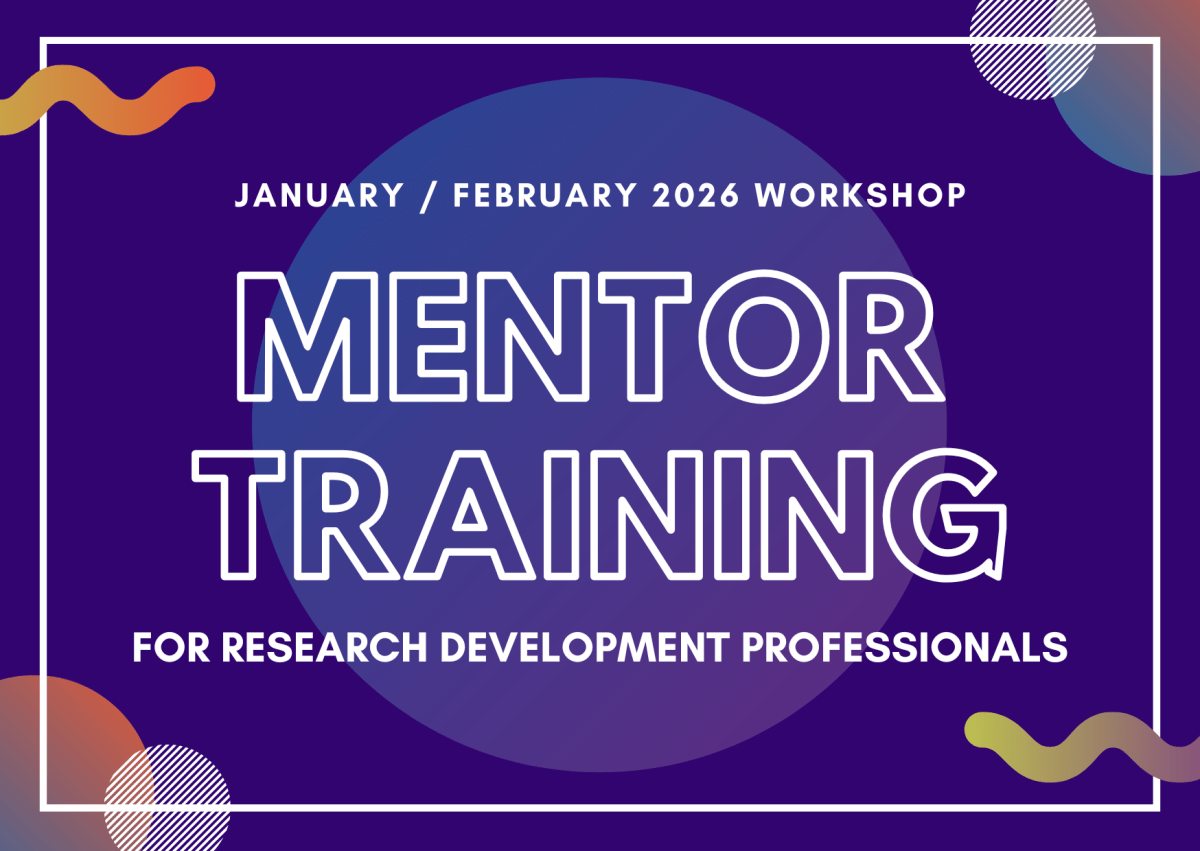
Mentor Training for Research Development Professionals – Registration Open forJanuary/February 2026Workshop
Are you a mentor? A mentee? Do you find yourself formally or informally mentoring staff or faculty? Are you ready to explore mentoring competencies that can be utilized across the work of research development (RD)? This interactive workshop series covers the 9-module Entering Mentoring curriculum, initially developed for mentoring researchers and tailored for RD professionals. A past workshop attendee commented:
“EXCELLENT training! The ideas presented are very applicable both to mentoring within the research development profession and elsewhere in the research enterprise – the things I have learned and practiced in this course are incredibly valuable to me as I provide mentoring to faculty, particularly early stage investigators and junior faculty, in the area of grantsmanship.”
Using evidence-based strategies, participants will build upon competencies crucial to the success of the mentoring relationship and expand mentor training across the research enterprise. Participants who complete the entire curriculum will receive a certificate of completion. The curriculum results from an association between the NORDP Mentoring Committee and the University of Wisconsin Center for Improvement of Mentored Experiences in Research (CIMER) in collaboration with the National Research Mentoring Network (NRMN), organizations involved in developing and validating the original curriculum. RD professionals at all levels of mentoring will explore how mentoring (shown to improve career outcomes, impact employee engagement and retention, and lead to more inclusive work environments) can benefit mentors and mentees in RD.
Workshops will be presented and facilitated by the NORDP Mentoring Committee; many are certified CIMER Trained Facilitators. Over 120 NORDP members have been trained through this initiative.
Schedule:
Two 1.5-hour sessions each week for 5 weeks (every Tuesday and Thursday*) 1/27/26 – 2/26/26 2–3:30 pm EST / 11 am–12:30 pm PST
As the format is highly interactive, participants must agree to participate in at least 9 of 10 sessions.
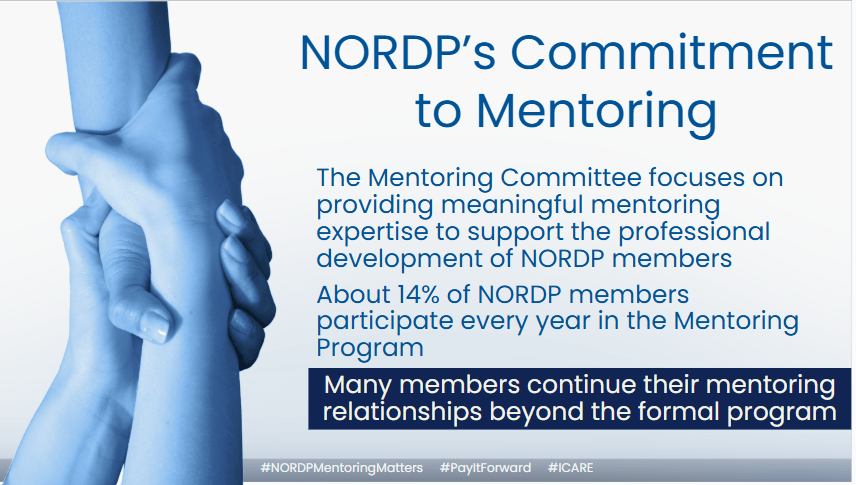
The traditional mentoring dyad (1:1 mentor-mentee) program has been a NORDP member feature since 2012. The Cohort Mentoring Group, piloted in July 2022, consists of matching three mentees with similar interests with one shared mentor. Both the dyad and cohorts are matched based on the WisdomShare matching algorithm.
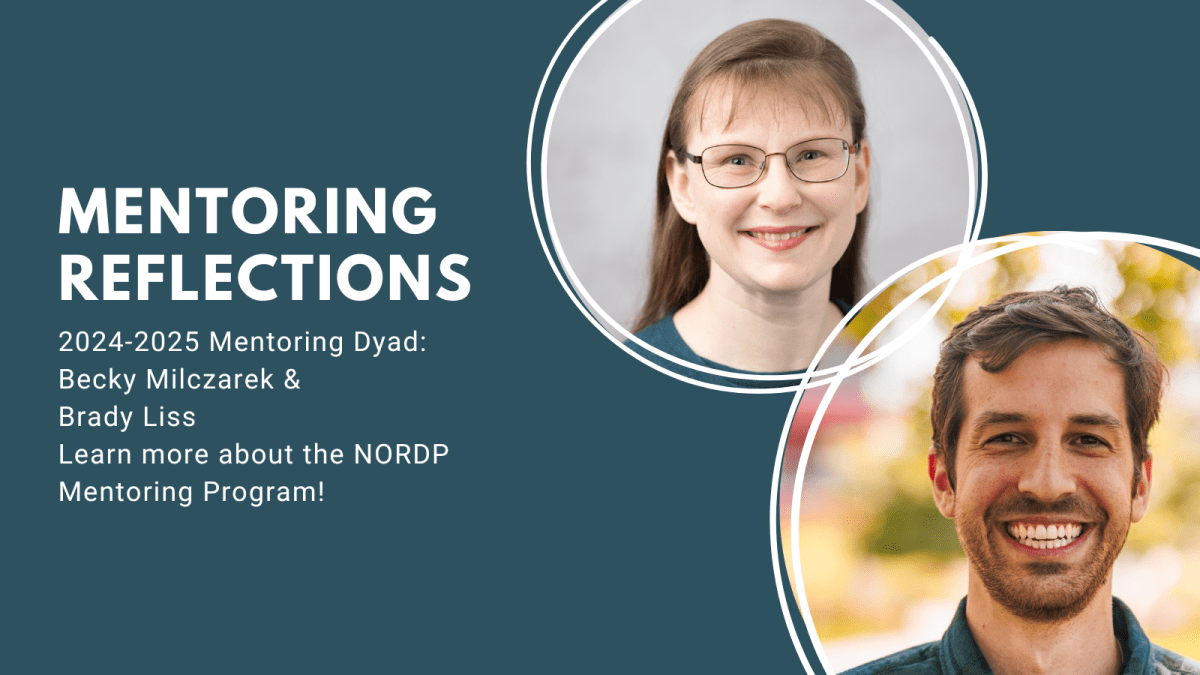
This month, we caught up with a dyad mentee-mentor pair, Brady Liss (Mentee) and Becky Milczarek (Mentor) from the 2024-2025 mentoring program year to share their experiences with NORDP.
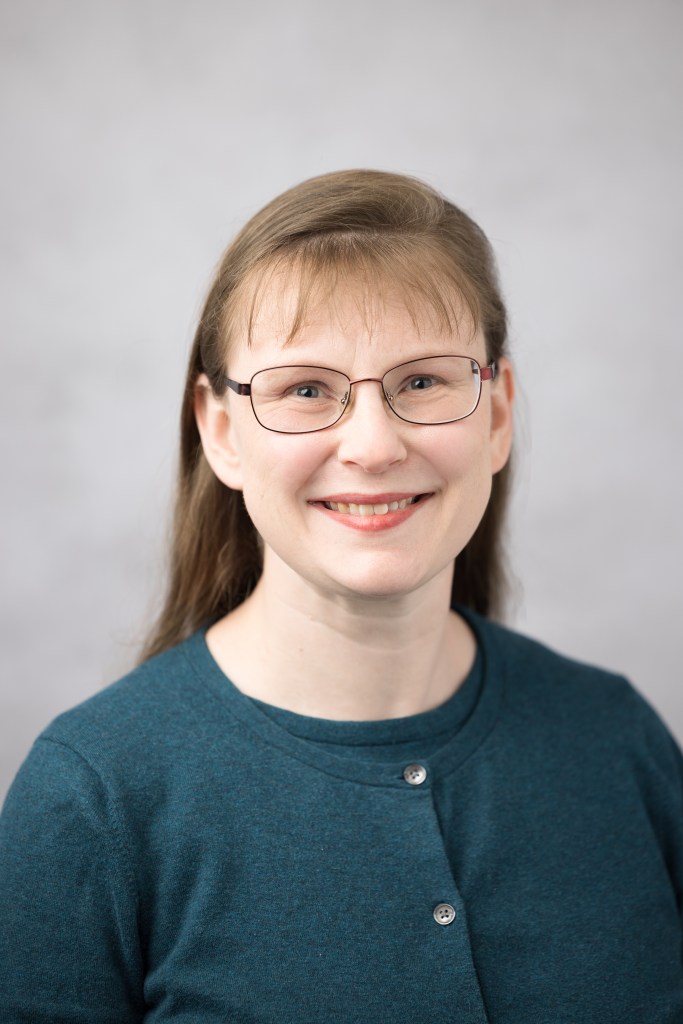
Becky Milczarek (she/her), mentor Assistant Director, Office of Research Development University of Illinois Chicago
Rebecca (Becky) Milczarek, Ph.D., University of Illinois Chicago (UIC) • Becky is an Assistant Director in the campus-level Office of Research Development at the University of Illinois Chicago (UIC). Dr. Milczarek’s formal training is in Food Science and Chemical Engineering, and she spent the first decade of her career in the roles of researcher and proposal reviewer in the federal government before pivoting to academic RD in 2021. Becky elevates the UIC research enterprise by connecting investigators with collaborators and funding, managing the limited submissions process for the campus, and guiding early career and seasoned investigators alike toward a reviewer-centric approach to proposal narrative development.
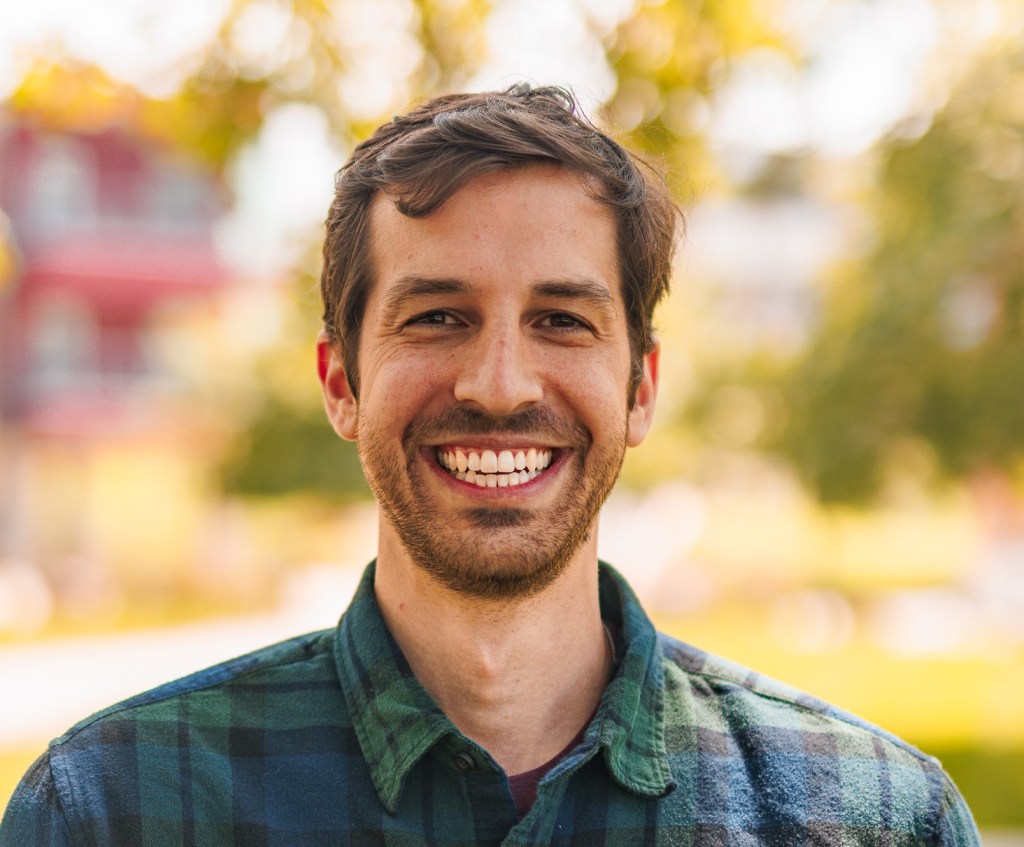
Brady Liss (he/him), mentee Grant Proposal Developer University of Vermont
Brady Liss, PhD, University of Vermont • Brady is a Grant Proposal Developer for the College of Arts and Sciences at the University of Vermont. Brady completed his PhD in Anthropological Archaeology at the University of California San Diego, before joining the Research Development team in May 2023. As archaeology is uniquely situated at the intersection of the humanities, social sciences, and natural sciences, he leverages his previous research experiences to best support faculty across a variety of departments and disciplines in the college.
Q1: What influenced you to apply to be a mentor and a mentee for the 2024-2025 NORDP Mentoring Program?
Brady: Like many research development professionals, I didn’t anticipate (or frankly even know about) a career in research development until I applied for my current position as a grant proposal developer at the University of Vermont. In turn, I was looking for opportunities to develop professionally in this new (to me) field. The NORDP Mentoring Program seemed like the perfect opportunity to gain insights from someone with more experience. Further, as I can find networking in larger settings intimidating or overwhelming, the opportunity to join a 1:1 dyad was very appealing!
Becky: I had previous positive experiences as a mentee in a NORDP mentoring dyad in 2022-2023 and a cohort in 2023-2024. Although I’m still relatively new to the field of RD, I felt confident enough to start paying it forward as a mentor in 2024-2025. I still recognize I have a lot to learn, though, and thus also participated as a mentee in 2024-2025 – I really enjoyed being a part of a “mentorship sandwich” and am continuing this approach in the current program year.
Q2: What is your favorite part of your relationship?
Brady: My favorite part about my mentor-mentee relationship with Becky was the open and fluid conversations. We established specific topics for each of our monthly meetings, but allowed the conversation to naturally progress to other subjects. I also enjoyed the opportunity to discuss navigating the current federal funding landscape in a multi-generational NORDP mentor-mentee meeting; Becky’s former mentor joined the conversation.
Becky: For better or worse, it was really “misery loves company” in the 2024-2025 academic year. All in the RD profession will recognize the myriad challenges and upheavals during this period, and it was grounding to have regular, candid conversations with a colleague going through the same experiences.
Q3:How has participation in the Mentoring Program helped broaden your horizons about Research Development in general and/or affected your daily work in particular?
Brady: My participation in the mentoring program certainly broadened my horizons concerning research development. Sometimes as a grant proposal developer, I can become hyper-focused on supporting the individual grant. However, research development is bigger than any one grant. Meeting with Becky helped reiterate this concept. For example, we explored issues of inclusive language and transparency in funding announcements, leveraging LinkedIn to expand resources and connections, engaging with other fields entirely, etc. Based on Becky’s insights and suggestions, I am exploring new avenues to raise awareness about research development careers among archaeologists.
Becky: My discussions with Brady gave me a deeper appreciation for both the diversity of RD activities and the commonalities across the profession. Nominally, Brady and I do not have much overlap in our day-to-day RD responsibilities: Brady primarily supports proposal development within a college, while I focus on campus-wide faculty professional development, funding opportunity discovery, and limited submissions. It was enlightening for me to hear more about the proposal development side of the shop, and I’m hoping Brady learned a bit about some more upstream RD activities. At the same time, we definitely identified and explored common themes, mostly having to do with better understanding and serving our clientele. Enabling productive communication with various stakeholders, offering the right support at the right time, and navigating a rapidly shifting research funding landscape are (I will declare here) universal RD themes that we touched on this past year.
Q4: What surprised you about being a mentor or a mentee?
Brady: I don’t think I was necessarily surprised by any particular aspect of being a mentee, but the program did emphasize the unique collegiality of NORDP members (which was a bit of a surprise compared to previous professional organizations I have participated in). Whenever I have a conversation about NORDP, a primary talking point is always the kindness of the members and their willingness to help. Despite being in a slightly different role and having more experience in the field, Becky exemplified this in her openness to discussing any topic of interest and through dedicating her time to this process.
Becky: I knew the NORDP mentoring program was intended to be mentee-driven, but I was surprised at how graciously Brady took up this mantle. He kept us on track with our discussion topics and was proactive in (re)scheduling our meetings, but he always showed flexibility when new circumstances or opportunities arose. I suppose I should not have been surprised at this!
Q5: What made you decide to maintain a longer-term mentoring relationship, and how has it impacted you?
Brady: I really value the opportunity to learn from others, especially when they have more and/or different experience(s) in a given space; Becky fits both these qualifications. Being fairly new to research development with a background in the humanities, I was grateful for the opportunity to learn from Becky, who has served as an assistant director of research development for over four years with a background in food engineering. Our meetings were also consistently comfortable, open, and insightful, making it an easy decision to maintain a longer-term mentoring relationship to continue learning and sharing.
Becky: It was a pleasure to connect with Brady through this program, so I was happy to suggest we touch base a few times a year as we both progress in our careers. I’m looking forward to hearing about Brady’s accomplishments, challenges, and a-ha! moments.
Q6: Any words of wisdom or encouragement for those wanting to apply next year? Any other thoughts you would like to share?
Brady: In the past, I likely would have avoided this type of opportunity. I decided to go for it based on two factors: 1) my experiences interacting with research development professionals, which were always cordial, collegial, and kind, and 2) the smaller setting (a 1:1 dyad) with low-stakes (open discussion, one-hour meetings, once per month) sounded ideal. Now having “completed” the program, I am grateful I did, and I would encourage others to do the same.
Becky: NORDP has built a wonderful mentorship infrastructure, so I highly recommend getting involved as a mentee, mentor, or both. Having been in both a cohort and a few dyads, I can say both models have their strengths. Dyads offer more customizability and focus for a mentee with clear goals going into the program. Cohorts provide instant networking and a wider variety of perspectives and experiences. I encourage prospective mentees and mentors to try both options at least once and keep in mind that every mentoring relationship will be different, regardless of the number of folks involved.
On a practical note – be aware of the program signup window! In early spring, the start of the mentoring year may seem a long way off, but don’t miss your chance to participate.
Applications for the 2026-2027 mentoring match cycle will open in the spring of 2026 — keep an eye out for NORDP announcements. Additional mentoring opportunities are available through the Peer Mentoring Groups that are open for participation throughout the year via the WisdomShare platform [LINK: https://nordpmentoring.mywisdomshare.com/]. Contact the NORDP Mentoring Committee if you have any questions at mentoringprogram@nordp.org.
An investment in mentoring is an investment in you!
Peer Mentoring Group (PMG) Conveners: Sujatha Koduvayur, Worcester Polytechnic Institute; and Brooke Gowl, Appalachian State University
The AI in RD Peer Mentoring Group (PMG) is now being launched to provide a vehicle for supporting NORDP members interested in using artificial intelligence (AI) in their research development (RD) practice, such as instructing researchers on how to securely and efficiently incorporate AI in their work.
The 2025 NORDP Conference included several sessions that addressed the use of AI in RD. AI, when used judiciously, can significantly impact research endeavors by strengthening the practice of RD. Currently, RD professionals are using AI to perform targeted grant searches; assist with proposal development by creating summaries, checklists, and other resources from notice of funding opportunities (NOFOs) and other solicitation guidelines; and support team science practices by creating ideation meeting summaries and identifying potential collaborators. Having a PMG to disseminate these practices, learn from each other, and jointly find better and more efficient ways to leverage AI tools in our work directly aligns with NORDP’s mission to advance RD as a profession.
The AI in RD PMG will share current practices and explore new ways to:
include AI in our RD daily practice,
learn about privacy and ethical concerns,
discuss program director-invited presentations on AI applications,
design and develop faculty resources on best practices for AI-assisted grantwriting,
converse about other AI-related topics in RD.
The PMG will invite external experts for guest lectures in addition to the discussion of case studies encountered by PMG members who currently use AI in their daily tasks.
NORDP Members can view and join PMGs via the WisdomShare Platform or you can email Sujatha Koduvayur or Brooke Gowl to learn more about and get involved with the new AI in RD PMG. Questions about the WisdomShare platform can be directed to mentorprogram@nordp.org.
NORDP Members interested in learning more about all eight active PMGs, including AI in RD, can join the 2025-2026 Peer Mentoring Group Kickoff on Tuesday, October 14, 2025, from 1:00–2:00 PM Eastern.
In addition to the new AI in RD PMG, the following seven PMGs are also currently active:
AI in RD: exploring the use of AI in research development workflow and applications
Career & Professional Development:exploring how to become more efficient and effective in our roles
Coaching & RD:developing and implementing coaching as part of the research development (RD) skillset
Collaboration & Team Science:building collaborations and interdisciplinary research programs
Faculty Development:supporting RD professionals who perform faculty development through programming and workshops
Leadership & Management:leading in both official and unofficial capacities
Proposal Development & Project Management for Research:Supporting proposal development for faculty grant seeking and leveraging project management tools and methodologies to enhance efficiency and success in securing extramural funding
Strategic Planning & Advancement:guiding policy and planning for enhanced research and scholarship
Vessela Vassileva-Clarke, Co-Chair of the NORDP Mentoring Committee
Fall marks an exciting start to a new mentoring cycle at NORDP! The 2025-2026 mentoring year runs from July through June, and we’re thrilled to welcome all mentors and mentees—whether matched in a dyad or part of a mentoring cohort—into this year’s program.
The June 25 Mentor Program Orientation featured this year’s NORDP Mentoring Award recipient and Mentoring Committee Co-Chair, Angela Jordon. New and returning participants were introduced to the program and joined breakout sessions based on their role—mentor or mentee—and format—dyad or cohort—to learn more about what to expect in the year ahead.
Behind the scenes, the Mentoring Committee, including the Match Team and the Mentoring Leadership Team, has worked diligently to make that stellar start possible. Updating our WisdomShare platform, opening the application window, carefully reviewing and confirming matches to ensure the best possible pairings for all participants, answering numerous emails about program registration, mentoring profiles, etc., are just a few of the tasks they completed. On behalf of both current and past NORDP Mentor Program participants, we extend our heartfelt appreciation and thank them for making the entire process feel easy and seamless!
We are especially excited to continue our mentoring cohorts, now in their fourth year! In this model, three mentees are matched with one mentor, creating a small community for ongoing peer‑mentoring discussions. Thank you to the many dedicated individuals who volunteered to serve as mentors—whether in dyads or cohorts—this year. Your willingness to share your time and expertise makes this program thrive.
Tips for New Mentors and Mentees
If you’re just getting started, here are a few quick tips to help you make the most of your experience:
Log in to WisdomShare for your mentor/mentee’s contact information, messaging tools, and suggested milestones
Explore the Learning tab in WisdomShare for guidance on where to begin
Visit your WisdomShare Dashboard to find active Peer Mentoring Groups (PMGs), and join the ones that interest you—no matching is required for PMGs!
If your mentor or mentee(s) hasn’t reached out yet, don’t wait—take the initiative to connect! There’s no single “right” way to engage
Attend the monthly Mentoring Committee Meetings (3rd Thursday of the month all year) to learn the latest mentoring news and share your mentoring experiences and ideas with a group of NORDP members who are truly into mentoring
Watch for upcoming McHuddles—informal gatherings hosted by Mentoring Committee facilitators where you can share ideas, ask questions, and learn from others through supportive and fun interactions
Have questions, concerns, or suggestions? Reach out to us anytime at mentorprogram@nordp.org
Share Your Story!
The Mentoring Committee is always looking to highlight mentoring experiences. If you were part of a 2024–25 mentoring dyad or cohort and would like to share your story in a future blog post, please contact the McMc team at mentorprogram@nordp.org.
Here’s to a successful and inspiring 2025-2026 mentoring year—thank you for being part of it!