NORDP is powered by the excellence and impact of its members. Each year, NORDP Awards celebrate the outstanding accomplishments of NORDP members making exemplary contributions to the organization as well as the practice and/or study of research development. NORDP Awards honor the distinctive achievements and contributions of individuals, collaborative groups or work teams, programs or projects, and organizations.
Recipients of 2024 NORDP Awards were recognized during the annual NORDP Conference held April 28 – May 1 in Bellevue, WA. In the coming months, you will have a chance to learn more about each awardee through in-depth interviews that will be shared through NORDP News. Congratulations to all of the fantastic awardees for your service to our organization and profession!
Rising Star Award
Katie Pelland, Senior Research Program Officer, University of Virginia Brain Institute
Elizabeth Lathrop, Proposal Development Specialist, University of Maryland A. James Clark School of Engineering
Volunteer of the Year Award
Elizabeth Festa, Assistant Director of Research Development, Rice University
Mentoring Award
Paula Carney, Director of Research Development, Loyola University Chicago School of Social Work
Tisha Gilreath Mullen, Director of Proposal Development, University of Nebraska-Lincoln
Innovation Award
Emory University’s Training Grant Support Office: Kelly Moore, Director of Training Grant Support; Amber Mason, Associate Director of Evaluation; Dena Reinoso, Assistant Director of Training Grant Support; Tekla Smith, Project Support Specialist
NORDP Fellow Award
M.S. “Peg” AtKisson, Founder and President, AtKisson Training Group
Kimberly Eck, Associate Vice President for Research, Emory University
President’s Commendation
Kimberly Eck, Associate Vice President for Research, Emory University
RD Champion Award
Andy Burnett, Co-Founder and CEO of KnowInnovation
Holly Falk-Krzesinski Service Award
Faye Farmer, Director of Design Enterprise Initiatives, Arizona State University
The profession of research management has been gaining recognition worldwide, but what exactly is it? The profession is new, ever-evolving, and shaped by its place-based culture.
Produced by the International Network of Research Management Societies (INORMS) of which NORDP is an affiliate member, a recent article, “Navigating the evolving role of research managers: Insights from INORMS Council members,” shares views from five passionate and leading research managers from the UK, Norway, Ireland, the Netherlands, and West Africa.
Learn why they think the profession helps drive innovation, widen perspectives, and raise reputation.
Are you interested in international research development? For more information on INORMS, contact NORDP’s INORMS liaison, Colin O’Brien-Lux at colin.o’brien-lux@nottingham.ac.uk. For more information about NORDP’s growing International Working Group, contact Liz Lance at ealance@syr.edu.
Thanks to Colin O’Brien-Lux for sharing this information!
Registration for the 2024-2025 Mentoring Program is currently open on Wisdom Share for all NORDP members to sign up as a mentor, a mentee, or both. New participants need to create an account on Wisdom Share. Returning participants should follow the instructions available online from the NORDP Mentoring Committee. Deadline to apply for the 2024-2025 mentoring program closes on Friday, May 17, 2024.
In this installment of the Mentoring Reflections, we caught up with mentee-mentor pair Sandra Arriaga (Mentee) and Julie Hawk (Mentor) from the 2023-2024 cohort of the Mentoring Program to share their experiences with NORDP.
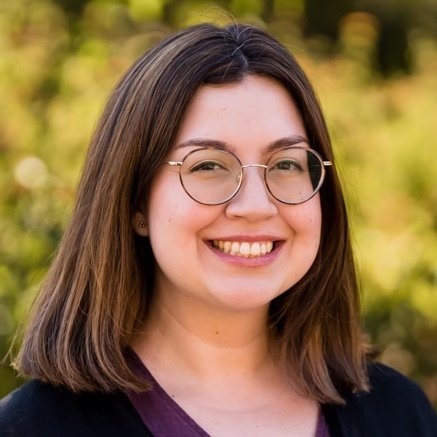
Sandra Arriaga is a Research Development Specialist with the Stanford Research Development Office and has spent the entirety of her career working in higher education. After years of teaching college composition, running academic programs, and writing proposals on the side (with a brief stint living and working in Amman, Jordan), she transitioned to the field of research development full time. Sandra has a Master’s degree in English with a concentration in Teaching English to Speakers of Other Languages (TESOL) and brings a background in education, social science, and applied linguistics to her work supporting STEM faculty from across the university on their proposals. Outside of work, Sandra enjoys traveling and yoga, and is learning to play drums.
Julie Hawk obtained her PhD in English from Georgia State University in 2012 and spent the next few years teaching at Georgia Tech and then the University of West Georgia, where she discovered that she could translate the skills from her training to a Research Development context. Since 2016, she has been working with researchers on a variety of kinds and sizes of grants. She currently works at Emory University School of Medicine in the Department of Pediatrics, where she deals mostly with large biomedical grants. However, her experience in both an emerging research institution and at an engineering powerhouse provides a wide skillset and range of disciplinary directions for grant seeking.
Q1: What influenced you to apply to be a mentor and a mentee for the 2023-2024 NORDP Mentoring Program?
SA: I am relatively new to research development, having started my current position in 2021 after a few years writing and editing proposals outside of my previous full-time role. Initially, I prioritized getting to know my immediate colleagues, supervisor, and institution while taking advantage of the many resources that NORDP offers. Once I had solid footing in my current role, I felt ready to join the NORDP’s mentoring program because I had heard wonderful things about it from my co-workers.
JH: I have been doing Research Development for several years, and last year I had a wonderful experience as a mentee in this program. Not only did the mentoring relationship provide a touchstone for learning more, but it also showed me that I was more ready to be a mentor than I thought. So I decided to pay it forward and sign up as a mentor.
Q2: What is your favorite part about your relationship?
SA: Julie offers great perspective and is just plain fun to talk to. We have a lot in common and both of us have our cats make a guest appearance more often than not. Her thoughtful advice and observations always make me feel energized after our calls, no matter what is going on for me in work and life.
JH: Sandra and I have a lot in common, including our educational backgrounds and our past teaching experience. These commonalities allow for easy analogies when we are talking through various experiences in our work lives. Sometimes I forget that I’m officially her mentor, as I certainly get as much out of the mentoring relationship as a mentee is supposed to. It truly is a bidirectional exchange.
Q3:How has participation in the Mentoring Program helped broaden your horizons about Research Development in general and/or affected your daily work in particular?
SA: Because I’ve only held one “official” RD position so far, I can sometimes lose sight of the fact that so many of us experience the same kinds of challenges and that others have dealt with them before me. Julie brings an outside point of view from within a similar professional culture, adding a voice of reason and experience which helps me reflect more deliberately. Through talking with Julie, I also learned more about her experience as an NORDP Consultant and became more interested in that type of work.
JH: Both as a mentee last year and a mentor this year, I have learned so much about the varied ways to approach RD work as well as the similarities that underlie all those variations. Working in a department as the sole RD professional, a network of colleagues is something I must intentionally cultivate. Participating in the mentoring program is one very important way that I do that, and it is extremely valuable.
Q4: What surprised you about being a mentor or a mentee?
SA: How much I needed one! It was the right time for me, and I was fortunate to be matched with the right mentor. While I have many opportunities to engage in professional development and mentoring within my organization, there’s nothing like talking to someone who “gets it” but isn’t steeped in the exact same context. It was also very beneficial to work through the MESHH Network framework with someone. Talking with Julie helped me see mentors and opportunities to find mentors where I hadn’t seen them previously.
JH: Like many others, I occasionally suffer from Imposter Syndrome, so I think I was most surprised by the fact that I actually know a lot more about RD than I realized. I was also surprised that the mentoring matching system seems to work so well. Both last year and this year, it matched me very well indeed!
Q5: What made you decide to maintain a longer-term mentoring relationship and how has it impacted you?
SA: When I reflect on my career so far, one theme that emerges is that whenever I’ve had the opportunity to learn from a mentor, I have thrived. In a previous career (teaching), I also served as a mentor after I had accumulated enough experience, and both sides of the mentoring relationship have been so valuable. Through the mentoring relationship, I have been able to appreciate how much I’ve learned and refined my own internal compass. I find mentoring especially important because I work remotely. I can intentionally build the type of connections that non-remote employees might be able to create more serendipitously.
JH: I have always benefitted from longer term mentoring relationships, whether they were formal or informal arrangements. After experiencing a great deal of benefit as a mentee in the program last year, I knew that any fears I had about not having enough time to participate were unfounded. Like the adage that one should meditate for at least 10 minutes every day unless you’re too busy, in which case you should meditate for 30 minutes, the mentoring relationship serves as a reflective experience that re-energizes my everyday work life.
Q6: Any words of wisdom or encouragement for those wanting to apply next year? Any other thoughts you would like to share?
SA: If you’re worried about having enough time, consider the “return on investment.” The way you’ll feel refreshed and re-charged after talking with your mentor will likely make managing your time easier in other aspects of your work. And by all accounts, NORDP does an excellent job with matching people. You won’t regret it!
JH: If you’ve been in RD for a while but think you aren’t advanced enough to be a mentor, that’s probably Imposter Syndrome. On the other hand, you could always start by being a mentee. Regardless of which you do (or both!), you will absolutely benefit from it.



 NORDP News