
Written by: Roshni Singh with input from Natalie Baronian, Career Stories team

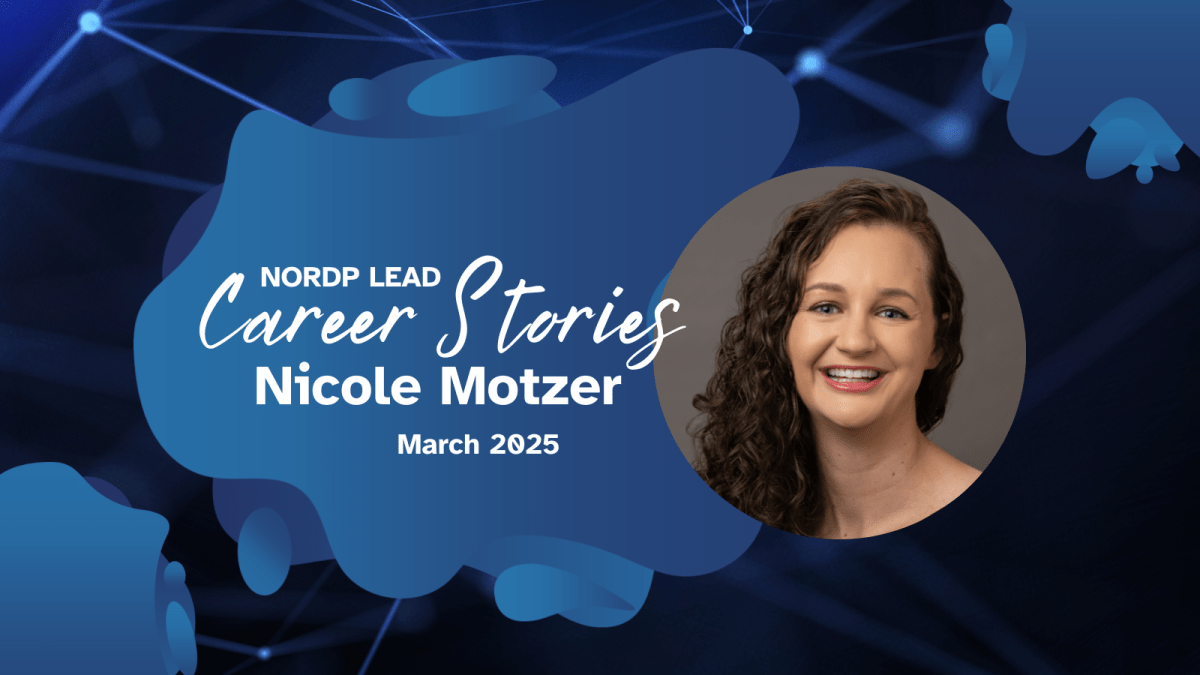
In our March Career Stories, we spotlight Nicole Motzer, the founding director of the Office of Research Development at Montana State University (MSU). Leading a small but mighty team of research development professionals, Nicole’s journey is one of passion, perseverance, and innovation. With a Ph.D. in Geographical Sciences from the University of Maryland, College Park, Nicole has been awarded over $1 million in funding from NSF, NASA, and the Gordon and Betty Moore Foundation. Before joining MSU three years ago, Nicole served as the Assistant Director for Interdisciplinary Science at the National Science Foundation-funded National Socio-Environmental Synthesis Center (SESYNC). There, she played a critical role in facilitating science teams, supporting interdisciplinary proposals and research programs, and developing first-of-their-kind training programs. As SESYNC sunsetted, through lots of googling, Nicole discovered the research development field and the position at MSU that allows her to continue doing what she loves.
Transitioning from working with a single sponsor (NSF) and supporting projects focused only on socio-environmental systems research at a research center to launching a broad-reaching RD office at an R1 university was an exciting challenge, but also a steep learning curve. By spending time getting to know MSU faculty and research needs, attending countless NORDP webinars, and building strong relationships with NORDP colleagues and peer institutions, Nicole turned MSU’s Office of Research Development from a nascent idea into a thriving campus unit in just a few years.
More than three years into the role, Nicole feels good about what she and her team have built through a process of “trial and error.” MSU’s RD programming and services have shifted as the office has matured, starting with a regular schedule of bi-weekly lunch-and-learns (e.g. EPSCoR, international research, etc.) to now including biannual Research Development Days, three-day writing retreats, and multi-week grant writing workshop series. Additionally, broader impacts support now features more prominently in her office following her participation in multiple Center for Advancing Research Impact in Society (ARIS) programs, as does support for graduate student research fellowships such as the NSF GRFP. Nicole’s office further provides innovative, multi-institutional opportunities for NIH R01-ready investigators and for faculty interested in other priority funding programs through her participation in the FOCUS (Fostering Opportunities Through Collaborative University Synergies) community, alongside the University of Idaho, University of Nebraska-Lincoln, Utah State University and University of Nevada Reno.
Nicole credits her lessons in leadership to her mentor, Dr. Jonathan Kramer, former Director of Interdisciplinary Science at SESYNC, who provided her with a supportive environment, increasing responsibilities, and trusting space to experiment and fail safely. She tries to emulate this model with her own team to help grow the profession of RD. She also mentioned an important part of her legacy will be to serve institutions where she feels she can make a significant impact. Nicole initially experienced imposter syndrome as a novice RD director and now advises everyone, especially early-career women, to never doubt themselves and their capabilities. Her advice to RD professionals just starting out is to slow-walk proposal feedback, understand how people want to receive feedback, and customize their approach to individuals.
Nicole is actively involved in NORDP, having participated in the Mentoring Program, NORDP LEAD, and the Professional Development Committee. A favorite part of her job is collaborating on innovative programming with NORDP colleagues across the country. At the 2025 NORDP conference, Nicole received NORDP’s Rising Star award as well as the Innovation award for her involvement with the FOCUS team. In 2024, Nicole was appointed to the National Academies of Sciences, Engineering, and Medicine’s Committee on Research and Application in Team Science, representing both her research development and team science practitioner perspectives in one space. Nicole lives in Bozeman, MT, surrounded by mountains, with her family.
Nicole would love to answer any questions you have for her, so please feel free to email her at nicole.motzer@montana.edu

 NORDP News