
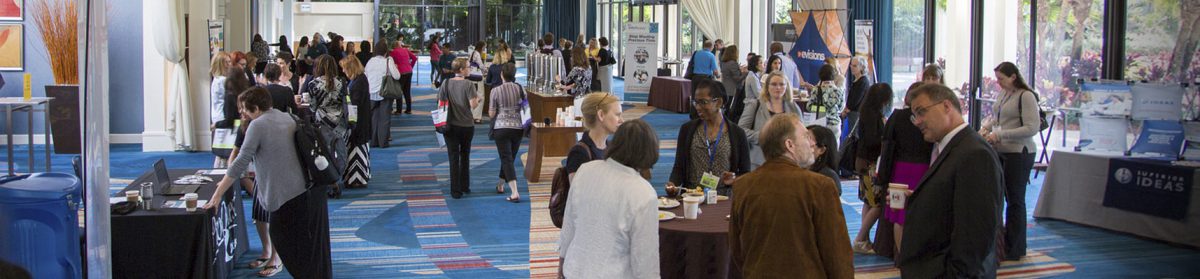

Mentoring Committee Open House to celebrate the National Mentoring Month!

Abstract image of shades of blue.

A Day in the Life of Mentoring Committee Volunteers

By Mentoring Committee Marketing and Communication Team (McMc)

The NORDP Mentoring Committee (MC) held another successful annual open house on Jan 15, 2026. More than 20 prospective and current Mentoring Committee members joined to hear from experienced colleagues about the psychological benefits of mentoring and what different MC roles entail. 

A lively panel discussion centered around “A Day in the Life” of a Mentoring Committee volunteer showcased eight distinct MC roles and what it meant to be a volunteer in each role. Here is a recap of the panelists’ responses:

Matt Schwartz is the senior program manager for faculty development at UMass Chan Medical School, who manages a faculty development and mentorship program for early-career faculty. He feels the Mentor Training Team (MTT) is a natural place where he can jump in and help support better mentoring for RD professionals. The MTT meets throughout the year but the main focus is in February and March, when an intense mentor training workshop is offered to the NORDP members. The training regimens (two mentor trainings per week) are offered using evidence-based practices adopted from CIMER for RD. As a volunteer, Matt learns how to facilitate and gains experience through co-facilitating with someone who is more experienced.

Jet LeBlanc, Lead Coach and Team Development Consultant at ATG, and Sujatha Koduvayur, Director, Research Development at Worcester Polytechnic Institute, are both volunteer conveners of two different Peer Mentoring Groups (PMGs)Coaching and RD and AI in RD, respectively. They reflected on the fun they had interacting with their PMG members and noted that the time commitment is between 2 and 4 hours per month, including the 1-hour monthly online meeting with the group. PMGs are unique because they are not time-bound to a program year and NORDP members can join a PMG at any time!

Jess Brassard, Director of Research Development and Communication, serves on the Mentoring Committee Marketing and Communication (McMc) subcommittee and the broader Communication Working Group (CWG), though serving on the CWG is not required for McMc members. Jess shared that the McMc has one monthly meeting per month apart from the full Mentoring Committee meeting. During meetings, the subcommittee collaboratively drafts content for blog posts which profile mentoring activities and Mentoring Committee offerings—about one blog post per month is typical. This is a fun and easy fit for NORDP members who like writing. To join the co-working fun on the McMc, send a note to mentorprogram@nordp.org.

Vess Vassileva-Clarke, Director of Research Development at University of Michigan – Dearborn, highlighted the opportunity to serve on the Match Team. The Match Team’s efforts are focused during a short, intense period once a year, usually in April–May. The work involves serving as humans-in-the-loop for the mentoring matching program algorithm (housed in Wisdom Share) to make sure optimal matches are made. Joining the Mentoring Match team can be a short-term commitment and can be satisfying to know that you’ve helped connect people to start new relationships. To join this team and help with annual matching, attend the April or May Mentoring Committee meeting and let the group know you are interested, or send a message to mentorprogram@nordp.org!

The open house highlighted Mentoring Committee membership, activities, and events. As a reminder: 

  • The PMGs are open at any time. 
  • The 2026-27 mentoring year for dyads and cohorts will conclude in June. New matched dyads and cohorts for the 2026-27 mentoring year will launch in July 2026. The application portal will be open in May—look for the announcement in the NORDP Monthly newsletter.

The Mentoring Committee is looking forward to a productive 2026 with volunteers!

Psychological Benefits of Mentoring & Volunteering

Written by Gerry Foo and the Mentoring Committee Marketing and Communications (McMc) Team

At the January Mentoring Committee Open House, we had the great pleasure of hosting a guest speaker, Dr. Gerry Foo, to talk about the psychological benefits of mentoring and volunteer work. We want to thank Gerry for generously sharing his perspectives through this blog reflection.

Portrait of Dr. Gerry Foo.
Dr. Gerry Foo

Dr. Gerry Foo is a Senior Research Development Specialist at Tufts University. Prior to this, he spent almost two decades as a clinical psychologist providing consultation to families, schools, clinics, and hospitals. Gerry recently transitioned to this role in research development to leverage his extensive background and experience in psychology to effectively consult with teams of investigators to improve strategy to secure funding for their research.


Speaker Reflection

Written by Dr. Gerry Foo

With January being National Mentoring Month, I could think of no better time to share all the benefits you can get from being a mentor or a volunteer. In particular, there are specific psychological benefits that you can receive by serving as a mentor in the Mentoring Program or a volunteer for the Mentoring Committee.

If you’ve ever considered becoming a mentor for the Mentoring Program, I encourage you to learn more about the program and how it can be mutually beneficial to both the mentor and mentee. For example, research has shown that serving as a mentor helps you:

  1. Gain perspective and improve problem-solving in your own work
  2. Grow leadership capacity
  3. Gain confidence in your knowledge/skills
  4. Feel connected to a supportive community
  5. Gain a sense of meaning in your work

In addition, a recent study by the University of Cambridge found that mentoring reduced anxiety/stress and improved mental health for both mentors and mentees, and that sharing one’s own knowledge and experience allowed mentors to feel greater appreciation, satisfaction, and purpose (Gill et al., 2018). Similarly, a recent meta-analysis of the effects of volunteering revealed wide-ranging and long-lasting personal benefits for volunteers, including improved general health, quality of life, psychological well-being, pride and empowerment, motivation, self-efficacy, positive affect, sense of connectedness, and purpose (Nichol et al., 2024).

However, some of us might hesitate to volunteer because of these thoughts:  

  • “I don’t have enough time.”
  • “The meeting times don’t fit my schedule.”
  • “I have nothing to contribute.”
  • “I don’t want to make an ongoing commitment.”
  • “I’m not good at the kind of work that goes on in the Mentoring Committee.”

Similarly, some of us might be reluctant to mentor because of these ideas:

  • I don’t know what to expect.”
  • “What if my mentee and I don’t mesh well?”
  • “I’m already a mentee; I can’t do both, can I?”

These statements are all understandable reasons why becoming a mentor or a volunteer right now might feel like a challenge. In fact, many (if not all) of us who volunteer have had some of these same reasons as we weighed the pros and cons of becoming a mentor or a volunteer. Yet, despite these doubts, we can all make the effort to adjust our busy schedules and give even just a bit of our time as we learn more about the benefits of serving others.

The Mentoring Committee is a diverse and fun group of NORDP members who rely on and support each other, and each of us has found a way to contribute to its mission in our own unique and creative ways. If you’ve ever considered joining the Mentoring Committee, I encourage you to reach out to learn more about how you can help by giving even just a bit of your time. Find out more about the Mentoring Committee by contacting mentorprogram@nordp.org.


References:

Nichol, B., Wilson, R., Rodrigues, A. et al. Exploring the Effects of Volunteering on the Social, Mental, and Physical Health and Well-being of Volunteers: An Umbrella Review. Voluntas 35, 97–128 (2024).

Michael J. Gill et al. ‘Mentoring for mental health: A mixed-method study of the benefits of formal mentoring programmes in the English police force.’ Journal Of Vocational Behavior (2018).

Welcoming the National Mentoring Month!

Written by: NORDP’s Mentoring Committee Marketing and Communications (MCMC) Team

January is officially the Mentoring Month, and the NORDP Mentoring Committee (MC) is excited to showcase a lineup of resources, stories, and opportunities to help you thrive in your mentoring journey. Whether you’re an experienced mentor or just starting out, there’s something for everyone. Here is what our mentors and mentees said about the NORDP Mentoring Program:

Bubble 1: I love that the program is mentee-driven and it's great to get to know people. Everyone in my mentoring group brought very diverse perspectives about professional life and development, which ultimately helped strengthen us all as a whole.
Bubble 2: …My mentor created a safe, inclusive space that made me feel comfortable in speaking with them and talking to them about the various challenges I was experiencing.

Mentoring Committee Open House

Join us on January 15, 2pm ET for our monthly meeting to learn more about what the Mentoring Committee does, and find out how to get involved and join us. Rising Co-chair and former clinical psychologist Gerry Foo, Ph.D., will make a presentation on the psychological benefits of mentoring. We will also have invited panelists sharing their “A Day in the Life” of a Mentoring Committee member.

Dr. Gerry Foo is a Senior Research Development Specialist at Tufts University. Prior to this, he spent almost two decades as a clinical psychologist providing consultation to families, schools, clinics, and hospitals. Gerry recently transitioned to this role in research development to leverage his extensive background and experience in psychology to effectively consult with teams of investigators to improve strategy to secure funding for their research.

Key dates on Mentoring for 2026:

January 1, 2026: National Mentoring Month begins.
January 7, 2026: I Am a Mentor Day.
January 15, 2026: Mentoring Committee Open House
January 19, 2026: Dr. Martin Luther King Jr. Day of Service.
January 21, 2026: Thank Your Mentor Day.
January 27–February 26, 2026: Mentor Training for Research Development Professionals (registration is full)
February 4-6, 2026: National Mentoring Summit.

#MentoringMonth #BeAMentor #MentorshipMatters #MentorshipGoals #MentoringImpact