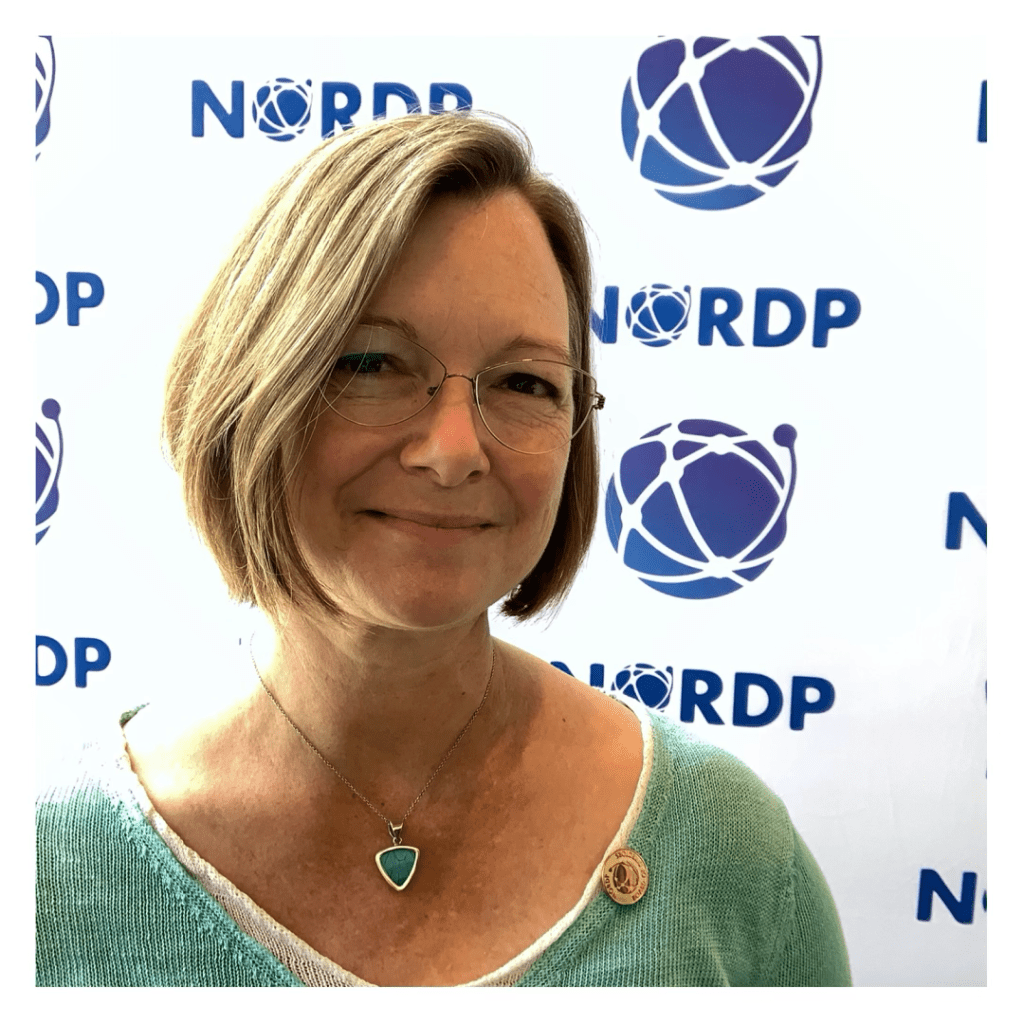
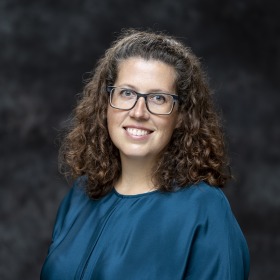
Who: Dr. Eva Allen, Senior Research Development Specialist, Biological Sciences Division
Name of organization/institution where they work: University of Chicago
Number of Years Working in RD: 23 years
Length of NORDP Membership: 13 years
When and how did you enter the field? What kind of research development work do you do?
Eva found herself in a tough situation in her first year of graduate school at Indiana University (IU) for evolutionary biology when she learned that she didn’t share common research interests with the lab she was working with. Because of this, she cobbled together two different advisors for a topic she developed. However, neither of them had grant funding for her work. So, Eva wrote proposals, drawing on her strengths as a writer; she grew up with an English professor father and served as a writing tutor as an undergraduate.
After earning her PhD, she stayed on at IU providing research development support to her department. This role expanded over 20 years, as described in the 2020 New Board Member Cameo blog post. In 2021, she became the Assistant Director for Research Advancement of IU’s Environmental Resilience Institute.
From IU, Eva was recruited to ASU, where she worked in the central RD office, founded and led by Faye Farmer and Karen Walker. This role had a very strong emphasis on proposal management, and it’s where she realized that proposal management is what she had been doing all throughout the years developing complex proposals.
After a year at ASU, an opportunity presented itself within the Biological Sciences Division at University of Chicago. There, the Research Development Team supports approximately 400 investigators, both tenure-track faculty and clinical investigators, focusing on large, complex applications. When there’s downtime, they will work on smaller submissions or consult with PIs who are planning large submissions. With an RA on the team who handles most paperwork, like biosketches and budgets, Eva can focus on engaging with the researchers on the science and how they’re articulating it. She ensures that communication is clear, from high-level concepts down to editing the document.
What’s your history with NORDP? How have you engaged with the organization (committee work, conferences attended/presented)?
When Eva first joined the campus level team at IU in 2012, she learned about NORDP from colleagues and attended the national conference. She’s attended every conference since then, and presented at many of them. In 2014, she joined the Conference Workshops Organizing Committee, eventually co-chairing the group for the 2018 and 2019 conferences. After a year on the Executive Committee for the 2020 conference, she stepped away from that work to join the Board of Directors.
During Eva’s first year on the Board she trained as Assistant Treasurer, and served as Treasurer in 2021 and 2022. During 2023, the fourth year of her first term, Eva was an informal immediate-past treasurer, consulting and supporting the transition. In the current Board term, she is not serving in an executive office. Her primary responsibilities are being a liaison for the Professional Development Committee and leading a task force to update NORDP’s website to make it more useful for prospective and current members.
What motivated you to run for the NORDP Board for a second term?
Eva credits her first Board term as being a very valuable professional development experience. Expanding her network and deepening relationships during this first term proved extremely rewarding. Last May, near the end of her first term, the Board laid out a strategic roadmap, and Eva wanted to stay on to be part of leading implementation of those plans.
What are you most excited about as a new NORDP Board member?
One pillar of this roadmap is cultivating volunteer opportunities for growth. The board recognizes the importance of ensuring that volunteer pathways are available, accessible and clear, and that expectations are well-laid-out and reasonable. This is important so that volunteers do not burn out. Also, the board wants to increase the professional growth, positive experience, and active engagement of volunteers. Eva is aiming to leverage the updated website to highlight information on volunteering and on the benefits of being a member of NORDP.
Pictured from left to right are Amber Mason, Tekla Smith, Kelly Ann Moore, and Dena Reinoso.
Who:
Kelly Moore, Director, Training Grant Support Office, Emory University
Amber Mason, Associate Director of Evaluation, Training Grant Support Office, Emory University
Dena Reinoso, Assistant Director, Training Grant Support Office, Emory University
Tekla Smith, Project Support Specialist, Training Grant Support Office, Emory University
Where: Emory University
Number of years in research development: Kelly 4 years, Dena 3 years, Amber & Tekla 2 years each
Length of NORDP membership: Same as above!
The NORDP Innovation Award recognizes individuals, groups, or teams, functional units, or organizations who leverage unique skills or resources to kick-start innovation in research development and advance the profession or the field in ways that generate evidence of promise or demonstrable results. Innovators leverage partnerships, experiment with tools and techniques, or generate and share knowledge to advance NORDP and the work of its members.
The interview was conducted with Dr. Kelly Moore, on behalf of the Training Grants Support Office Team.
What is the Training Grant Support Office and how did you first become interested in establishing TGSO?
The Training Grant Support Office (TGSO) at Emory University is dedicated to bolstering the sustainability of our current training programs while also identifying and fostering new areas for program development. We achieve this by providing specialized expertise, tools, and resources that are essential for the success of our research training initiatives. I founded the TGSO in December 2020, driven by a strategic vision from Dr. Deborah Bruner, Emory’s Senior Vice President of Research, who recognized the critical need for enhanced support of research training within the larger research ecosystem at Emory.
Prior to joining Emory, I was involved in training grant and fellowship support as part of a broader set of responsibilities at the University of Texas MD Anderson Cancer Center UTHealth Houston Graduate School of Biomedical Sciences. There, I was managing a training grant, everything from processing payroll for trainees to programming, running their seminars, bringing in speakers, etc. That’s what really got me into this world of training grants and being in an academic environment, although it was in the Dean’s office, so we looked at it from a very different perspective, that is, from an educational standpoint. As part of my other duties, I started helping students and faculty apply for fellowships and training grants. At that time, it was a small portion of what I did, but that’s what started to get me interested in extending more full time into training grants. After a few years, some duties shifted, and my fellowship and training grant responsibilities expanded, and then that’s when I saw the position at Emory to start the TGSO.
Moving from an academic to an RD office was really interesting. Being in a Research Office, we are able to provide equitable support to everyone, regardless of where they are located in the University and across career stages to include predoctoral and postdoctoral grants.
The opportunity to establish the TGSO allowed me to focus exclusively on this vital area. I was particularly drawn to Emory because it provided the platform to not only enhance the support for training grants but also to create and implement comprehensive, university-wide initiatives that would strengthen our programs for years to come.
What was the process of building out TGSO and how did your membership in NORDP play a role in your efforts?
Building out the Training Grant Support Office (TGSO) was a strategic and iterative process. We started small, but with a clear vision. Initially, it was just me, but over time, we’ve expanded to a team of four dedicated professionals. In the early stages, we focused on engaging with stakeholders across the university to understand the existing landscape of training grant support. This involved assessing what resources were already in place, identifying gaps, and determining where there was room for improvement.
To get started, I did a listening tour with our faculty and our central research offices. I also consulted with the Graduate School and the Office of Postdoctoral and Mentored Trainee Education, the Office of Sponsored Programs, and Research Compliance to learn what was currently happening at Emory. When I looked behind the curtain, I began to realize that training grants are really important to a small corner of the world.
At Emory, last fiscal year, we secured over $1.1 billion in sponsored research awards, with $15.6 million of that coming from training grants. While training grants represent a very small piece of the pie, it’s a really, really important piece. These grants play a critical role in sustaining and advancing the research ecosystem by cultivating the next generation of researchers and ensuring the long-term vitality of Emory’s research enterprise. A lot of Emory’s processes and policies are built for the big piece of the pie — the research grants. There were no specific policies and procedures for training grants, and so a lot of my work was looking at what had been done, because within a particular department or division, training grants may be been managed very well. I wanted to learn from what as working well and amplify it to all of the programs.
Getting started, we had to be strategic in our approach, so we chose to focus first on pre-award services, knowing that a solid foundation here would be crucial before we could effectively build out post-award supports. A key principle throughout this process was ensuring equity among our programs—we were committed to not offering a service to one program unless we could ensure it would be available to all.
I didn’t know about RD until I met my Dr. Kim Eck, my supervisor. NORDP really helped me gain an understanding of the institutional standpoint: What is our capacity for taking on training? What areas are we strong in? What are our core research areas that we focused in? And how can we develop programs on top of those core research areas? We used a lot of competitive intelligence to determine our top funding areas and to find natural groups of faculty that we can build programs around.
My membership in NORDP has been instrumental in shaping TGSO’s approach. Nationally, training grant support is often housed within academic-based offices, such as a university’s graduate school or postdoctoral affairs office. Emory is unique in that TGSO is situated within the Office of Research Development, which gives us a distinct advantage. Having previously worked within an academic affairs office, my perspective on training was rooted in traditional academic frameworks. However, through NORDP, we’ve been able to integrate these educational approaches with RD principles, creating a hybrid model that enhances the support we offer for training grants at Emory.
What relationships have you built as a result of NORDP, and how have these relationships influenced your work?
The relationships I’ve built through NORDP have been incredibly rewarding and have significantly influenced my work. In addition to my role with the TGSO, I’m the co-founder and current Vice President of the National Training Grant Community of Practice (NTGCOP). Founded in early 2021 by training grant support offices from Emory, Georgetown University, Northwestern University, and the University of Wisconsin-Madison, NTGCOP aims to support leaders nationwide through tri-annual meetings focused on NIH guidelines, resource sharing, and training grant administration.
We started NTGCOP because training grants can be a very lonely space. NIH guidelines, like most federal guidelines, are muddy at best. A lot of it’s open to interpretation and experiences. Having someone you know to ask best practices, or, how do you read this, was really important to us, and it didn’t exist from an administrative space. NIH is very faculty heavy, and they have lots of groups and conferences for the faculty, but not so much for the administration. NORDP was a huge factor in our growth, because, as all of my counterparts all sit in academic offices, they didn’t even know what NORDP was. We took our presentation to NORDP, and there was a light bulb moment in the room; everyone was like, oh my gosh, help with training grants! Today, we have nearly 500 members from over 100 institutions, many of whom are also NORDP members. These relationships have been integral to our growth and success.
We’ve submitted some responses to NIH requests for information that relate to training grants, and we were told that one of the letters and RFIs that we submitted actually had an impact on changes NIH has implemented. We’ve now built some strong relationships with NIH, both within particular institute’s like NIGMS, some various program managers, and also with Dr. Ericka Boone, Director of the NIH Division of Biomedical Research Workforce.
More recently, we’ve co-presented with the Federal Demonstration Project (FDP) and the NIH on reducing administrative burdens for NIH training grants. We’ve also recently become a 501(c)(3) non-profit organization, which is a significant milestone for us. It was a NORDP member who connected us with the FDP, whose purpose is to evaluate administrative burden in research. We connected this effort with NIH, and the three organizations co-presented on training grants, with over 600 people attending. We conducted a survey of the audience and came up with a one pager of tips and tricks for first time applicants that we’re now sharing as a resource.
One of NORDP’s greatest strengths is its strong and supportive community. Since joining, I’ve developed numerous connections through my participation in the NORDP Mentoring Training Series and as a recent member of the NORDP conference planning committee. These connections have provided invaluable insights, collaboration opportunities, and support, greatly enhancing my work with TGSO and NTGCOP.
What other innovations have you observed within NORDP (or the field of research development) since you first joined?
One of the most impactful innovations we’ve embraced since joining NORDP is the use of competitive intelligence within research development—a strategy recognized by NORDP with a previous Innovation Award. By applying various competitive intelligence analyses, TGSO has shifted from a reactive to a proactive approach, working closely with faculty to initiate and develop strategic, multi-departmental, and multi-institutional proposals. This approach has also led to the integration of new training program expectations into all major Senior Vice President for Research investments, such as centers and university-wide initiatives.
We have a small group of US private institutions with medical schools that we benchmark against, and we will do a lot of competitive intelligence reporting on that to benchmark where we are make decisions on what type of programs we should be focusing on. And that competitive intelligence piece has been really critical, because if we have the data to back up a decision, it is much more palatable for the faculty. For example, if we can come back and tell them, that lately, applications that go in without any sort of refined career development for trainees only have x percent of success, the faculty are much more inclined to rethink what they’re doing.
The results have been tangible and impressive. Emory is now ranked among the top 20 institutions in the country for NIH-funded training grants. We’ve seen our training grant submissions double, and the average scores of these submissions have improved by 30%, often falling at or below the current NIH funding lines. Notably, Emory has achieved a perfect score (10) on multiple training grant proposals for four consecutive years—something that hadn’t been accomplished in over a decade. In FY22, the Emory TGSO experienced a 125% increase in awarded proposals, more than doubling the number funded in FY20 and FY21.
What advice do you have for NORDP members leading their own innovative initiatives within the field of RD?
My number one piece of advice would be to embrace ambition. Don’t be afraid to pursue bold and ambitious ideas. Some of the most impactful innovations come from daring to think big. If you believe in your idea, pursue it with confidence, knowing that innovation often requires stepping outside of the conventional. Also, it is important to build a strong network. Collaboration is key in RD. Cultivate relationships with key stakeholders, both within your institution and across the wider RD community. Networking can provide valuable insights, resources, and support as you navigate the challenges and opportunities of leading your own innovative initiative.
Personally, I wouldn’t be here where I am today without being ambitious and taking the shot. And so that’s my biggest piece for anyone, especially for moving into leadership in any capacity. Whether you lead a team or you’re a part of a team, bring up your ideas. Don’t feel like any ideas you know not good enough to pursue, because if someone told me it’s absolutely crazy for y’all to be reaching out to the NIH about this, then I would not be where I am today, in partnership with NIH to help make change.
I have to say, NORDP, hands down, is my absolute favorite professional organization I’ve ever been a member of. We have a great sense of community and heart and care for members. I did the NORDP mentor training series earlier this year, and the relationships I built with everyone there were fascinating. Moving forward, there’s a lot to pursue at the intersection of training grant support from an academic perspective and training grant support from a research perspective. We are happy to help others working in that area, however that may be.
This commendation recognizes individuals for exemplary service to NORDP and is presented at the discretion of the outgoing NORDP President to individuals who have contributed to the success of their presidential year.
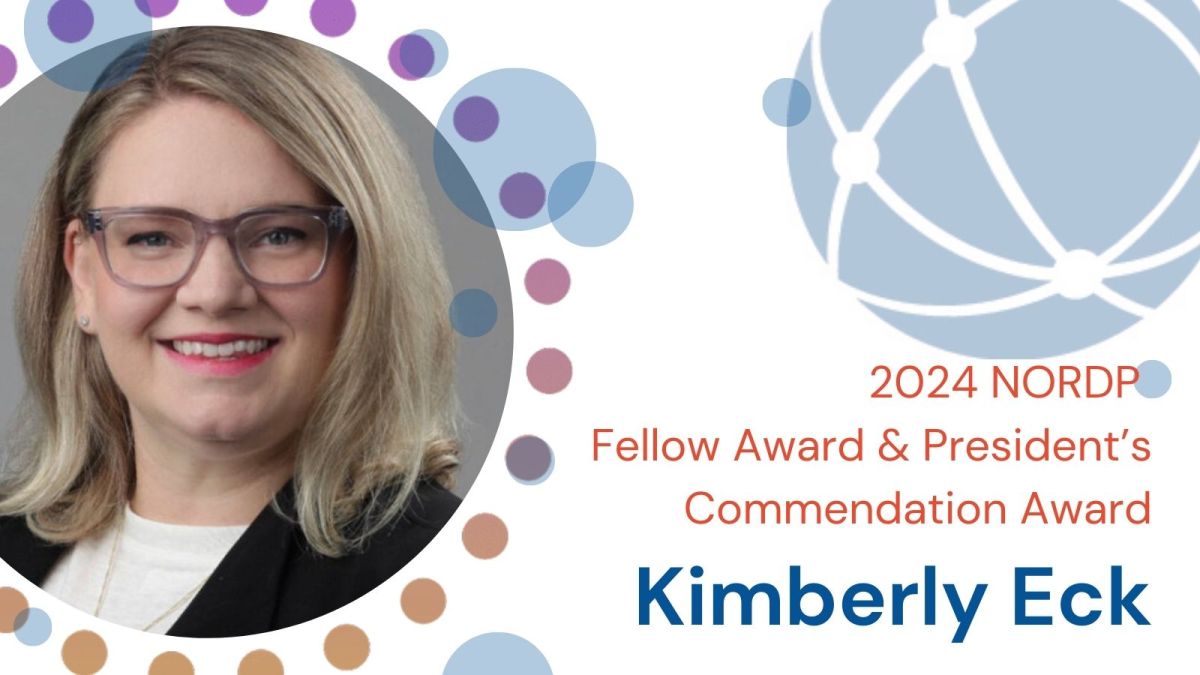
Who: Dr. Kimberly Eck, Senior Associate Vice President for Research at Emory University & Senior Director of the NORDP Consultants Program
Where: Emory University
Number of years in research development: 16 years
Length of NORDP membership: 10 years
What initiative are you the most proud of in your role as a NORDP volunteer?
I am so proud of the NORDP Consultants Program! The NORDP Consultants Program is dedicated to expanding the national research ecosystem by providing research development services to build research capacity at MSIs and ERIs at no cost to those institutions. I am deeply grateful for the recognition that I do this work as a volunteer without personal compensation.
The Program was originally conceived of by a group of NORDP thought leaders. At the time the original pilot project was presented, I was on the Board and we agreed to move forward with the concept.
When we started in 2021, we were working with four HBCUs, funded by a private foundation. We have now worked with 172 institutions of higher education. We’ve helped these institutions with engagements that have secured more than $90 million in funding. I think we will get to $100+ million in mid-2025. Those 172 institutions come from 44 states and jurisdictions, including Puerto Rico and the U.S. Virgin Islands. So, we have a significant reach.
There are three ways to engage with the Program: One is through our cohort model, and that’s where we recruit MSIs. They apply through a competitive process, and we select them based on the alignment of their goals and the activities that they hope to pursue with support from the Consultants. Then, the MSIs engage in a two-year intensive period with us. There’s also follow-on engagement and support opportunities. This cohort model is what the original four HBCUs went through. We’ve already started the second and third cohorts.
The second model of engagement is when we embed into a federally funded proposal process. Here, the funder comes to us and indicates that they would like support for all of the applicants that will be involved in this process. This requires really close collaboration with the funder, understanding what the funders goals are, and then working on one specific proposal with usually a multi-institutional group to submit that proposal and get it panel ready. So that’s a single shot, but all the programs that we’ve engaged with have really been focused on building innovation and research capacity, so that has been very well aligned with what we’re doing.
The third model is partner initiated. Here, an ERI or MSI, reaches out to us and lets us know they are planning to apply for an opportunity and that they need research development expertise. In this case, the partner is leading the submission, and we’re coming along and supporting with specific activities, for example, a capacity assessment. Our first partner-initiated project is led by Delaware State University, an HBCU that successfully competed in the first round of the NIH STRONG program.
I am very privileged to have had the support from Emory University and NORDP to pursue opportunities to grow this program as the Director – and I had a lot of help! More than 20 NORDP members volunteered to help launch the program in summer and fall of 2021. As the program has evolved, MANY NORDP members have contributed to its success.
How did you hear about NORDP and what made you join initially?
I heard about NORDP from a colleague while working at the State University of New York around 2013. I was delighted to learn other people were doing proposal development but in a way that was different than research administration. Like many others have described upon joining NORDP, I felt like I found my people.
What relationships have you built as a result of NORDP? I deeply value having a national network of people I can call on with different areas of expertise, different experiences, and unique insights. My closest NORDP relationships were built by volunteering together. Attending the annual conference feels like a reunion. Being a part of NORDP has also allowed me to build relationships with other associations, like ARIS, and funders, especially NSF. I cherish everyone that has contributed and/or currently works in the NORDP Consultants Program.
Describe how NORDP has changed from when you initially joined
NORDP’s membership has grown significantly! It is fantastic to continue to see such vibrant in-person conferences alongside virtual offerings that are more accessible. I am excited to see NORDP evolve to meet its members’ needs and new paths of sustainability.
What recommendations do you have for members to get more involved with NORDP?
Consider co-authoring a resource for the Equipping Minoritized and Emerging Research Institutions to Grow their Enterprises (EMERGE) Library. This library features co-created and peer-reviewed knowledge articles and case studies that address MSI and ERI research enterprise priorities and provides context specific implementation strategies and insights. The NORDP Consultants Program hosts writing sprints that bring together RD experts from MSIs and ERIs and more resourced institutions to produce resources. It’s a fantastic way to get involved with the NORDP Consultants Program!
When structuring the articles, we take a factual approach, but we very actively try to not simply regurgitate language in the solicitation. We try to make it more understandable, for example by using more colloquial language. We strive for a balance of what your buddy at your institution would tell you if they could and the factual content. We have published three resources through these sprints in collaboration with the NORD Committee and three more are in development.
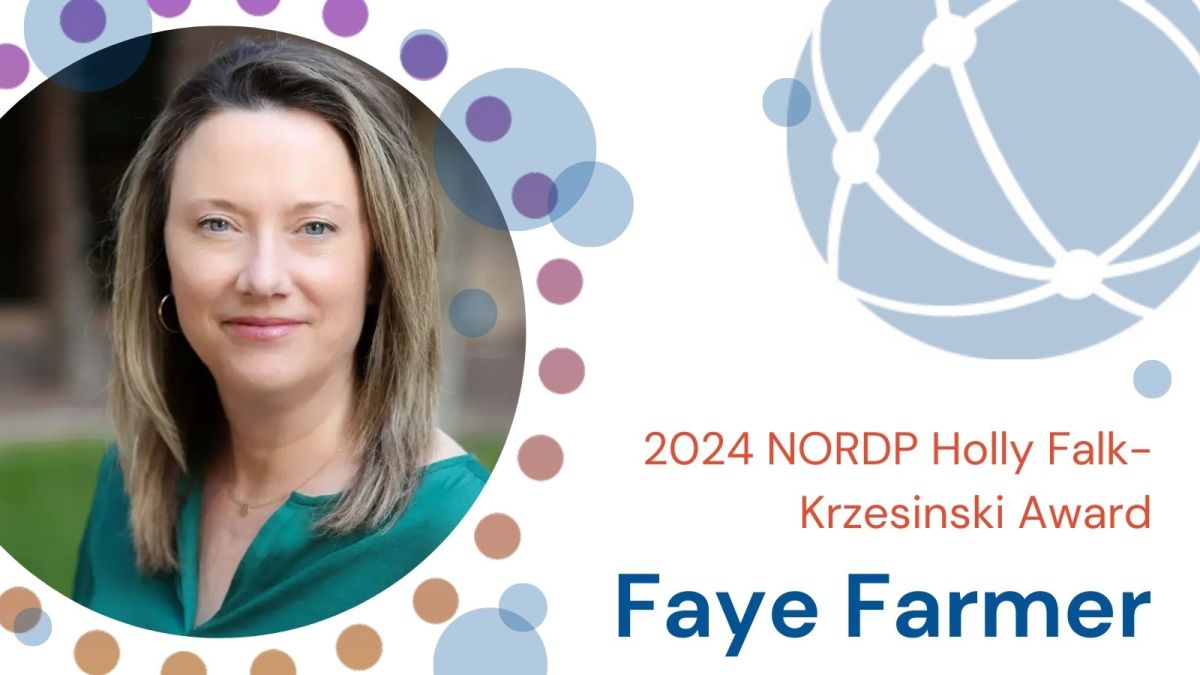
Named for NORDP’s founding President, this award is voted on by the Board of Directors and given annually to a NORDP Member in recognition of outstanding service to the organization, to the research development profession or field, and to peers.
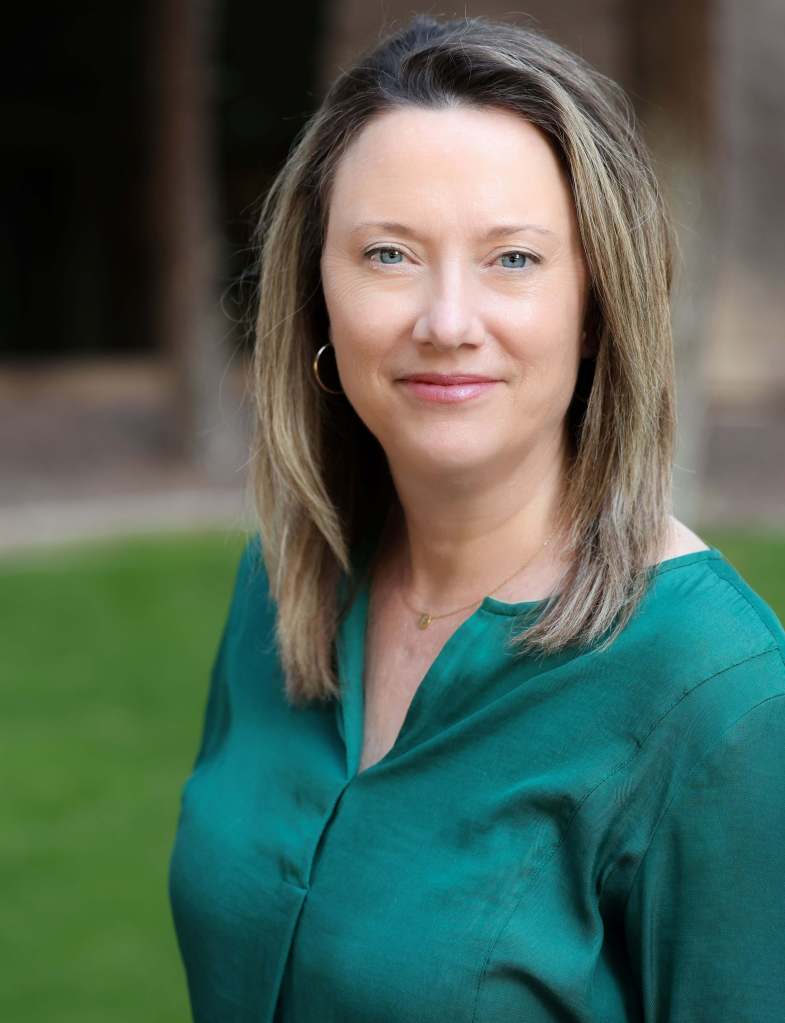
Who: Faye Farmer
Where: Director of Enterprise Design Initiatives at Arizona State University
Number of years in research development: Faye started working on proposals as an editor at a scientific institute at ASU in 2008. She moved to the University’s central office in 2011. She co-founded the central Research Development office in 2015 and worked there until 2023.
Length of NORDP membership: 15 years
You have served NORDP in numerous roles and capacities over the years. Could you share a bit about what that journey has been like?
The journey has been fantastic. Faye has held both formal and informal leadership roles in NORDP. Faye considers her greatest contributions to be in the area of conference presentations, where she shared about ASU’s experience alongside other universities. When she ran for the Board, it was a culmination of the conference experience, working with the Mentoring Committee and working with the PEERD consulting program.
NORDP has always depended on volunteers. Holding this truth close during her Board service was important to Faye. She served on the Board from 2019 to 2023. While on the Board, she contributed to two Board initiatives. Both leveraged the work of volunteers in the organization. One was the task force for certification. This involved working with several passionate and motivated individuals through a series of steps that culminated in a report that was published this year.
The second effort involved a task force on NORDP policy review and updating. Faye organized individuals interested in creating more inclusive policies within the organization. This work reflected a dynamic, evolving membership in the thousands and tried to future-proof the organization as it grows. The original bylaws were essential to the founding of NORDP, but the policies needed to address size and diversity of the organization’s membership. This work resulted in a set of policy drafts that were provided to the Board in November of 2023.
In your view, what makes an effective leader, and how has your philosophy of leadership informed your work within NORDP?
Faye believes in the power of collaboration. NORDP has taught her this. She also recognizes that she still has a lot to learn about interpersonal relations and communications. Leading in NORDP means that you are good at what you do and also invested in other’s success. Research development is a coopetition, where members balance their own university or college interests while benefiting from each other’s knowledge and experience. This balance is achievable because of the strong sense of community. Leadership means growing the scope and scale of this balance through the many layers of institutional types, career rungs, and time in the profession.
What do you see as the biggest rewards, and challenges, of serving in leadership roles within NORDP?
As far as challenges, the path to organizational change can sometimes feel glacial. But Faye believes it is slow because NORDP values community insight and input. Achieving a well-grounded, high-quality outcome that has meaning for many in the organization often requires contributions from many people over time. As an organizational leader, Faye recognizes that she does not speak for herself but for the people who put her there. This requires frequent checking-ins and creating inclusive and transparent processes.
Faye has found that the biggest reward of working in NORPD is expanding networks upon networks of professionals in research development. Even as her career has shifted in the last year, she still gets emails asking for her thoughts, advice, or connection. At ASU, Faye encouraged her team to engage with NORDP, especially by presenting at conferences. By sharing our experience, NORDP reduces barriers to engagement for its professionals. The result is better, faster, higher-quality, and more effective research development services and support nationwide.
More recently, you have played a crucial role in revitalizing the New Opportunities in Research Development (NORD) Committee. What has that process been like, and what do you see as the greatest opportunities for the field of research development moving forward?
Faye sees incredible opportunities in research development. She believes that there is momentum toward more purposeful strategy development. Faye often touts the importance of strategic (competitive) intelligence, which builds upon institutional analysis and expands it to include national program and policy trends. These early, pre-funding opportunity activities allow research development professionals to answer questions like, who is funded and why. These answers become actionable insight among university leaders, ultimately translating into more efficient funding pursuits.
What advice do you have for NORDP members who aspire to greater service within NORDP or the field at large?
Volunteer! Faye sees a parallel to the advice we give faculty and other researchers. Just step up and get involved. Faye recognizes that people want and should be paid for their work, but volunteering is critical to creating a more inclusive organization. Volunteering provides a unique skill set that may not be accessible through our work. She also recommends that NORDP members call in anyone and everyone to the organization. She says NORDP needs all levels of education, experience, and backgrounds to be successful. It is incumbent upon members to create a more diverse organization with intention and care.
Who: Ms. Amy Gantt, Director of Strategic Research Development
Where: Tufts University
Number of Years Working in RD: 20 years
Length of NORDP Membership: 13 years
Entering the field
Amy earned her master’s degree in sociolinguistics from North Carolina State University, deciding not to pursue a PhD because, while she really enjoyed learning about linguistics, she didn’t envision a career in linguistics. She then spent about five years waiting tables and teaching in North Carolina, including at community colleges. About 20 years ago, she left North Carolina to move to Boston, still unsure about what she wanted to be when she grew up. In Boston, Amy started working as a freelancer for Tufts through a connection with Peg AtKission, who was leading the creation of research development services there. She thought that she would do this work for a little while until she figured out her career path. Well, 20 years and a couple of promotions later, and a lot of institutional change, she’s still in the field.
Her research development work
Amy’s team’s responsibilities have grown over the years to become quite broad. She and her team are responsible for very large federal proposals, and they partner with their corporate and foundation relations colleagues to work on very large foundation proposals. They are also responsible for helping junior faculty with their proposals, with a focus on NSF CAREER and other early-career awards. Amy oversees three seed funding programs that are managed by the Office of the Vice Provost for Research, and she oversees limited submissions. Amy places a priority on developing partnerships, particularly with other institutions, although her team partners with industry as well. Amy’s team helps to develop research strategy for both individuals and for teams and for the institution itself. Her portfolio is very broad and, as a central office, covers the entire institution.
Amy notes that one thing that Tufts does very well is community-engaged and community-based participatory research, in line with Tufts’ emphasis on making an impact on society. Something she really enjoys is connecting fundamental science to impact and how it’s going to engage people. Her social science training has helped her to think through study design – things like ‘what variables are you controlling for’ and ‘what ways are you going to recruit?’ When hiring, she looks for people with very strong writing and communication skills, but just as important to her is a sense of curiosity. Amy enjoys diving into all different fields, thinking very deeply about what connections there are across them and what is unique to a specific field and about how she can leverage all of those different pieces.
Amy’s history with NORDP
Amy joined NORDP in 2011. She became aware of NORDP through her regional group (New England area), which was fairly new, and she believes that she was reached out to by them around that time. Through her interactions with the Region, she learned more about NORDP. The Northeast group has stayed close to her heart throughout the years, and she served as chair for the Region for a three-year term. During that time, she organized meetings and came to understand more about NORDP at the national level. As often as university finances allowed, she attended conferences. She recognizes the value of these events and alternates attendance among her team so as many people as possible have the chance to benefit from in-person attendance. Amy has presented posters and oral presentations on a wide range of topics at conferences over the years: She’s spoken on how to avoid saying ‘no’ in a resource-limited environment and how you can be really creative with a small staff and do a lot. She has also talked about her career path in RD, and she’s presented with colleagues on institutional engagement with corporations and where that fits into RD, particularly on the federal side.
Her motivation to run for the NORDP Board
Serving on the Board was not something on her radar, but Amy was nominated for a position. When this happened, she remembered how much she enjoyed and learned from being chair of NORDP Northeast, and she thought that this would be a really great way contribute at a time when there’s a lot of creativity in RD and excitement about RD ‘professionalizing’. She also recognized it would be an opportunity to expand her network and learn more about the Organization. Amy recognizes that there is much room for learning from one another, from figuring out new ways to do things that would increase efficiencies to improve competitiveness and leveraging each other’s strengths on the administrative and research sides of our institutions. She recognizes the value and importance of professionalizing the field without losing the creativity.
What Amy is most excited about as a new NORDP Board member
Amy is excited about many things! She really enjoys thinking strategically about making NORDP more inclusive, in terms of increasing the compositional diversity of our members, in making sure that we’re meeting the needs of our communities, and that the Organization is leveraging its strengths. It’s important to Amy that we are not burning out volunteers, that we offer programming that reaches the people that it needs to reach, and that we are supporting the growth of our industry. Amy also recognizes the importance of telling that story outside of the RD community. Something she has always loved about NORDP is that people are so helpful and collegial rather than competitive. She holds the value of community very dear. Amy supports the continuing expansion of RD, which includes bringing new people in. She’s excited about new people, new ideas, and keeping moving!
Amy’s very grateful to have the opportunity to be a part of NORDP leadership, and she’s grateful to the community that we’ve all collectively built around NORDP. She wants to ensure that we continue to have the same (or even better) support and environment for people who are coming into the field. Amy acknowledges that most people don’t grow up thinking ‘I want to be a research development professional’. She doesn’t necessarily want that to change, but she does want people to see that this is a fun career; it’s really satisfying and she wants to encourage people, if they’re so inclined, to become a research development professional.
Who: Dr. Carly Cummings, Senior Director of Research and Faculty Development
Where: University of Idaho
Number of Years Working in RD: 12 years
Length of NORDP Membership: 7 years
Entering the field
After receiving her PhD, Carly decided that she didn’t want a career in research, but she really enjoyed teaching, so she took a faculty position at a primarily undergraduate institution in New England. She started a lab there and supervised undergraduate research; she was funded for this research from a variety of sources. After some years, she decided on a change of course, so she resigned from that position and moved to Washington, DC, to start working in science policy. During her over two years in DC, she was a Science and Technology Policy fellow at the National Academies and worked at the American Association for the Advancement of Science (AAAS) in the Research Competitiveness Program, where she coordinated peer review processes to inform science and technology investments from state agencies and other nations. Part of this work involved writing requests for proposals (RFPs), soliciting proposals, managing the proposal evaluation process and making funding recommendations. Here, she gained deep knowledge of the peer review process and how federal agencies work. Next, Carly was recruited to a dean’s office at the college level, at Mississippi State University for a mixed RA-RD role. Over five years later, she moved to Utah State University and founded the RD office for the College of Science, which she led for almost two years. From there, she went on to start another RD office, this time a central office, at her current institution, the University of Idaho. She notes that she’s worked in a variety of capacities, but a common thread is that she likes to start things from scratch!
Her research development work
In her current role, Carly is charged with growing the research portfolio for the University of Idaho, an R2 institution with R1 aspirations. The creation of her office was part of a strategic plan, which includes supporting faculty in their pursuit of extramural funding. Her office takes a 360-degree approach to meeting their mission and achieving those goals. The office provides standard proposal development services, but they also place high emphasis on faculty development. For example, she developed the Faculty Success Seminar Series that ran for three years, with up to 16 seminars per academic year. Now, she is overseeing the creation of a library of resources with recorded presentations and slide decks available through their webpage. Her office has a focus on early-career faculty and runs the Proposal Development Academy: What You Need to Know Before You Write for a cohort of ~12 faculty who have been nominated by their deans for this opportunity. The focus is not on proposal writing but on learning about the organization structure of funding agencies and acquiring the broad range of skills required for developing competitive proposals. Her office also manages limited submissions and supports leadership training for early- and mid-career faculty through partnership with AtKisson Training Group.
Carly notes that in order to grow the business enterprise, it takes people who are capable and willing to write competitive proposals and then eventually write bigger proposals, and so on. She emphasizes supporting the people they have and likens this to planting seedlings and taking good care of them so they can grow into trees. At University of Idaho, Carly’s office started out as a team of three, and now they are an office of seven. She’s had great support from research leaders on campus, and she feels honored to have been able to grow the office as she has. The value of an RD office is definitely recognized!
Carly’s history with NORDP
Carly joined NORDP about seven years ago when she moved into an exclusively RD role at Utah State University. She found it very refreshing to learn that there are other people who had the kind of jobs she did because, until then, she didn’t really appreciate that there were other people doing the same kind of work at a university, which made her feel isolated. Over the years, she’s seen the real value of NORDP come from conversations and connections with people that she wouldn’t have met otherwise, including people she can call on when she needs some assistance. In fact, knowing that she has support through the NORDP community played a part in Carly deciding to take on the challenge of starting a central RD office from scratch.
Carly has participated in every NORPD conference and presented a few times. She’s a regular conference volunteer; presenting and volunteering are priorities for her team, she sees that as how they give back. Carly was on the working group that helps reshape the Leadership Forum for a number of months, with the aim to make this leadership offering accessible to more individuals at varying stages of their career..
Her motivation to run for the NORDP Board
Carly was approached by a current board member to ask if she has considered running for the board, and at first she wasn’t sure what she could contribute! However, after that conversation, she changed her mind. The conversation prompted her to think back on her experiences with RD, reflecting that everyone has their own path. She realized that representing a smaller, rural institution gives her a valuable perspective that she wants to share with others. She wants to let people know that they can advocate for resources and shared approaches to communicating with leadership about metrics, including putting them in perspective. For example, she was able to grow her office in three years and used metrics that she set (and quickly met) to support that growth, helping make leadership comfortable with the investment. She acknowledges that most in RD are scrappy and able to do a lot with little but that growing staff can be a reasonable goal. She’s found growing her office immensely rewarding, feels fortunate to have had that opportunity, and hopes that this success can serve as encouragement to others to grow their offices or step into a director role. Carly also wants to represent the voice of those in EPSCoR and IDeA states, where she has a deep connection, not just through her work in Idaho but in Utah, Mississippi and Vermont, with an understanding of how difficult it is to capacity build.
What Carly is most excited about as a new NORDP Board member
Carly plans to advocate for having institutions partner to achieve shared goals, something she would like to promote for the NORDP regions. She’s in Region V, and she is working with her partners in Montana, Nebraska, Nevada, and Utah to develop ways to share knowledge and resources, especially in the development of programming as well as faculty collaborations. She believes that this approach is keeping within the collaborative, rather than competitive, spirit of NORDP. At a previous conference, she noted a poster from Region I that provided further inspiration on how well regional institutions can work together. The leadership Carly brings in capacity building and in growing RD within institutions will serve NORDP well!
Who: Dr. Susan Ferrari, Assistant Dean and Director of Corporate, Foundation, and Government Relations
Where: Grinnell College
Number of Years Working in RD: 10 years
Length of NORDP Membership: 10 years
Entering the field
Susan, who leads an office with a team of three, was hired into a grants office in 2013 for a research administration role. At a small institution, she’s worn many hats related to RD, corporate and foundation relations, and faculty development. Susan earned her PhD in biomedical sciences but credits her general nerdiness, including many years of Quiz Bowl competition, for providing a broad foundation of knowledge that enables her to work across disciplines.
Throughout her career, Susan has championed faculty outreach and support, and she’s coordinated with other units to lead initiatives in these areas. Another common thread through her career is bringing people together, especially to support humanists and challenges related to those disciplines.
The value of her NORDP membership became apparent when Susan realized how NORDP could support her in developing programing for faculty. She was especially inspired by members working in the liberal arts space, including Claudia Scholz (formerly of Trinity College and Spellman College, now at the University of Virginia School of Data Science) and Kendra Mingo (formerly of Willamette University, now at UC San Diego).
Susan has been part of what is now a movement towards RD within liberal arts college research administration circles. Supporting faculty who teach many courses and who may not need to write books or win grants to earn tenure creates an all-carrots, no-sticks environment, presenting unique challenges and opportunities.
Research Development work
Susan calls her work in RD ‘cradle to grave’; it includes everything from hands-on work with faculty and proposal preparation, both research and curricular grants, community-involved efforts, and communications. She works with everyone from artists to scientists.
Susan had been working with Communications on efforts to share information about faculty research (including improving internal communication about new faculty members’ research and teaching agendas), which grew into initiatives to rebuild community after the pandemic. Recently, she established a faculty writing group program, now in its second round, a huge success with 55 participants out of approximately 200 faculty!
During the pandemic, Susan conducted a study with 46 faculty interviews on research culture at Grinnell to assess needs and guide future efforts. This work identified key issues, such as loneliness and lack of community around research, interest in more discussion of the research process (not just products), and areas where particular demographics or disciplines were not being well-served by current institutional structures. Conducting the project and sharing the results across campus helped Susan build closer relationships with faculty members and inspired other partners to work with Susan’s team to address the issues identified in the study—for example, the Grinnell College Libraries has launched a weekly faculty-staff research series.
Susan’s study also helped her make an institutional case for the value of faculty research. In liberal arts colleges, research activity is generally valued for its benefit to the curriculum and student experience. However, Susan’s research indicates that further benefits exist. These include supporting faculty retention and well-being and providing faculty a sense of autonomy. Her research also indicates that these benefits are especially strong for minoritized individuals. Further, her work showed the benefits that faculty members derive from their research communities beyond the College. This work demonstrates that RD supports faculty and communities broadly and is much more than dollars at the door.
Susan’s history with NORDP
Susan joined NORDP in 2013 and became more active in 2018, inspired by great work from members in the liberal arts space. Prior to becoming a board member, she engaged most with the PUI affinity group and the creative arts, social sciences and humanities (CASSH) group.
Susan has also been involved with the NORD grant committee since receiving a grant in 2020 that supported a study of faculty members at liberal arts colleges who direct institutional grants that blend pedagogy and research.
Susan went to her first conference in Providence (2019) as well as online conferences and gatherings, and she’s presented both in person and virtually on faculty programs at NORDP events.
Motivation to run for the NORDP Board
Susan notes that it’s a challenging time to be in humanistic or qualitative social science fields because of a retreat from those fields by some of their traditional funders. She sees RD as part of what can address that challenge, so she promotes RD within her professional circles, including in her role as past president (2020-2022) of Colleges of Liberal Arts Sponsored Programs (CLASP), which supports grants professionals at over 300 primarily undergraduate institutions.
A large part of Susan’s motivation to run for the Board was driven by her desire to expand what people think about when they think of RD and by her enthusiasm around the cultivation of an RD community of practice at smaller institutions and for smaller efforts. This community of practice includes more diverse schools, minority-serving institutions, and emerging research institutions. It’s important to Susan that perspectives from those within this community are respected and honored, and she emphasizes that we can all learn from each other. The productive exchange of ideas and learning has been exemplified by the CASSH group.
What Susan is most excited about as a new NORDP Board member
Susan is excited to get to work with people that she’s seen shaping NORDP in recent years. She’s excited about our new management company. She’s ready to tackle challenges related to declining funding and enrollments in the humanities and the near- and long-term impact of the SCOTUS decision. She acknowledges challenges but embraces them with enthusiasm.
Susan remembers going to her first NORDP conference and knowing that she ‘found her people’. That was topped when she went to her second conference and first-time-participant friends from CLASP and other liberal arts colleagues told her that they found their people. Embracing connection, Susan is looking forward to continuing to bring more into the fold.
The NORDP Rising Star Award recognizes individuals for their outstanding, early volunteer contributions to NORDP and strong potential for future contributions to the organization and the profession or the field.
Who: Katherine Duggan
Where: Northeastern University
Number of years in research development: Since 2017 (6 years)
Length of NORDP membership: 2017 (6 years)
Kate Duggan, Associate Director of Research Development at Northeastern University, has been recognized as a Rising Star who brings an open, thoughtful and passionate approach to her work in NORDP. She has been recognized for her wealth of experience from a range of research development roles at two institutions, especially as applied to recruiting and harnessing the energy of other volunteers and encouraging and supporting social connections and engagement among members.
Kate is a member of the Member Services Committee, is a regional co-representative for Region 1, and she has served on the Executive Board for Region 1 as a Membership Coordinator in the past. Kate has consistently demonstrated her dedication to successful onboarding of new members including through the development of the New Member Orientation Guide and by co-hosting the inaugural New Member Meet-Up.
Kate is also a longstanding member of the Conference Planning Committee, including for 2023, and is now serving as co-chair of the 2024 conference. Within the Conference Planning Committee, she has served on numerous subgroups including Social and Networking, Evaluation, Speaker Support, and Abstracts.
Kate’s most proud of the planning and execution of the 2023 conference, the first in-person event since 2019. She notes that she had a great group to work with, including many new members and, working together, the Committee was able to accomplish its goals, working as a team with a range of backgrounds in terms of NORDP and research development experience.
Due to the growth of NORDP since 2019, the 2023 conference was the first in-person NORDP event for many members. Kate and her team worked up to and through the event to get answers to members on logistics and scheduling so that all attendees could be prepared and engaged.
Kate joined NORDP when she started a position in research development at Brown University, her previous institution, learning about NORDP from one of the founders, Anne Windham, and getting involved with the very-active Region 1 right away, including by participating in regional meetings.
In addition to meeting many new people, because many of her colleagues at Northeastern University are also members of NORDP, the organization has provided opportunities to get to know those colleagues better as well as stay connected with colleagues from her former institution.
Kate believes that, over the years, NORDP has developed more and better ways for those new to NORDP and/or research development to make connections and grow professionally, especially through the growth of working groups. She notes that roughly coinciding with NORDP’s growth to over 1,000 members, NORDP is now embracing an outward-facing role as the leader in and advocate for research development, with the establishment of the Research Development Review: The NORDP Journal, the NSF Growing Research Access for Nationally Transformative Equity and Diversity (GRANTED) program, and related initiatives.
One development that has played a major role in her career has been the advent of the Creative Arts Social Sciences and Humanities (CASSH) affinity group. As support for those in the creative fields and social sciences has often lagged behind that for other disciplines, Kate has been thrilled to see support for CASSH disciplines blossom, to include an active Basecamp group and monthly meetings.
Kate recommends that new membersjoin a committee or working group related to their interest, and to be sure to check out new groups that have recently been established. She also encourages them to keep in mind how involvement in NORDP can help support a career in terms of the opportunities to grow into leadership roles.
Kate’s colleagues have described her as an exceptionally enthusiastic, creative, and dependable volunteer within NORDP – a true Rising Star.




 NORDP News