NORDP 2018 Holly J. Falk-Krzesinski Service Award: Jeff Agnoli

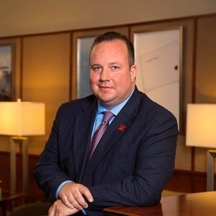
The Holly J. Falk-Krzesinski Service Award is conferred by the NORDP Board of Directors in recognition of the commitment of a NORDP member to the growth of NORDP as an organization, strong efforts toward furtherance of the research development profession, and service to peers. It is named in honor of NORDP’s founder and first president, Holly J. Falk-Krzesinski. An award is presented at the annual conference to one NORDP member in good standing. The 2018 Awardee is Jeff Agnoli.

jeff holly large.jpg
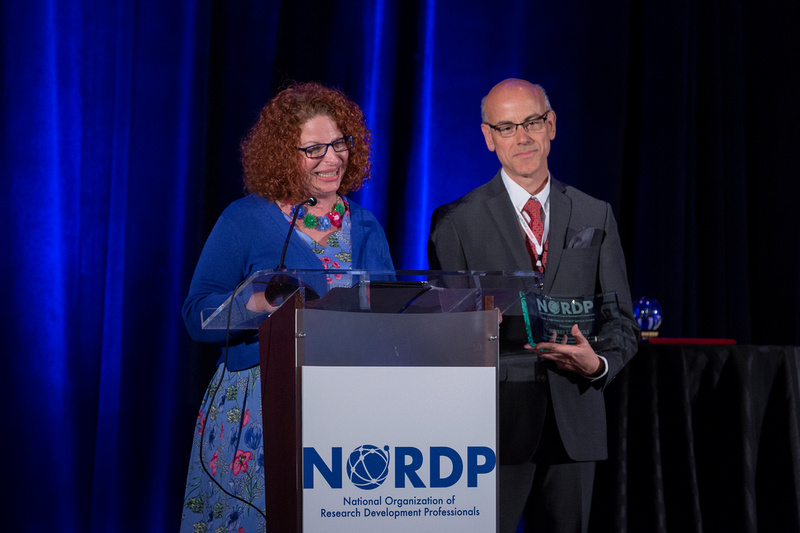
Jeff Agnoli receiving the award from Holly Falk-Krzesinski at the 2018 NORDP Conference in Arlington, VA.

Who: Jeffrey T. Agnoli; Education, Funding and Research Development; Office of the Vice President for Research
Where: The Ohio State University
Number of years in research development: 25
Length of NORDP membership: 8

What initiative are you the most proud of in your role as a NORDP volunteer?

I have enjoyed my role in enhancing the general and fiscal operations of NORDP as well as my contributions to the field through presentations and pre-conference workshops.

How has your service to NORDP enhanced your career?

My understanding of the RD professional role/function and how it works on different campuses enables me to adopt best practices for my own university.

Describe how NORDP has changed from when you initially joined.

When I joined NORDP in 2012 we had ~600 members and we are now close to ~900 members and still growing. Our committee structure and organizational operation have morphed from what was a small nonprofit to a much more sophisticated organization. As we have grown, we have been able to offer more services to our members and contribute to expanding the RD profession. Two-thirds of our members are early-career professionals — that was not the case in 2009 when NORDP began.

Compiled by Daniel Campbell, Member Services Committee. Read more about Jeff’s efforts on behalf of NORDP here. Congrats, Jeff!

NORDP fosters a culture of inclusive excellence by actively promoting and supporting diversity, inclusion and equity in all its forms to expand our worldview, enrich our work, and elevate our profession.

Lessons Learned From My Experience As A Grant Applications Reviewer by Domarina Oshana, Ph.D.

Picture1.pngLet’s face it, although reviewers are asked to remove themselves from potential conflicts of interest and to park their biases at the door, the reality is that embedded within their scientific experiences are their own personal pet peeves and lived experiences, which can be difficult to extract from the review process. Still, the overall lesson I learned from my experience as a grant reviewer was that while it’s impossible for an applicant to please all reviewers on a panel, it’s quite possible to please most of them. Therefore, if you want your application to be deemed competitive and worthy of funding, your aim should be to think like a reviewer and write your application to please most reviewers. Here are some tips I recommend from serving as a reviewer in the nonprofit and government sectors:

Honestly assess the fit of the RFA to your proposal concept.

If you can clearly articulate that your proposal honestly responds to the purpose of the request for applications (RFA), then it’s very likely that your application will be deemed competitive. Unfortunately, sometimes applicants don’t always honestly assess the appropriateness of the RFA. For example, an applicant may see an RFA as an opportunity to fund work that they are already doing, when in fact the RFA may not be intended for such activity. So, in an attempt to acquire general operating funds, the applicant packages the proposal in a way that is seemingly responsive to the priorities of the RFA, when in fact, overall, it’s not. Reviewers often see through this approach and while many reviewers can understand the need, they are not impressed by the applicant’s proposal. This is because applicants that indirectly request funding for general operating expenses fail to convince the reviewers of how the work they are doing will advance scientific knowledge, if awarded funding.

Another instance that fails to convince reviewers that there is a good fit between the proposal concept and the RFA is when the applicant does not have the experience to carry out the work proposed. For example, if an applicant with experience only in collecting and analyzing archival data proposes a study in which he/she will collect and analyze data from direct contact with human participants, and offers no information about whether a consultant with experience in working with human participants will be hired, then the reviewers will question the goodness of fit between the applicant’s experience and the skill required to carry out the work of the proposed study. As an applicant, your job is to convince the reviewer of the scientific merit of your proposed study and your ability to carry out the work. An honest assessment with yourself about why you are responding to the RFA is a good first step to ensure that you can convince the reviewers that your concept and ability are meritorious.

Craft a thorough literature review.

This can be quite challenging to do. If your field is immense, it’s almost impossible to write a comprehensive literature review within the page limitations of a grant application. Nevertheless, effort should be made to provide a strong conceptual framework and to cite the work of authors that have done substantial work in the area you wish to further study. Often, these persons can be sitting on the review panel and if they see that you haven’t credited or acknowledged their work, they may conclude that you are uninformed. Beware of these reviewers, as their extremely poor score of your application can skew the ranking of your application.

Clearly articulate your research design and data analysis plan.

In the eyes of many reviewers, it is your study approach that will accelerate or decelerate your candidacy for funding. Yes, it’s that important! Ideally, reviewers want to see a concise, clear, innovative, and doable research plan. And, they want to see that you’ve not only thought about data collection procedures, but data coding and analysis procedures as well. Reviewers want to see a plan that is appropriate for the research questions being asked and the aims of the study. If your research plan is inadequate, chances are that the reviewers will be unconvinced of the scientific merit of your study and/or your ability to carry out the work you have proposed. To avoid such pitfalls, here are some questions you must be certain to answer in your research design:

  • Are your research questions and hypotheses clearly stated and rationalized (i.e., grounded in a strong conceptual framework and preliminary evidence)?
  • Are your research questions appropriate to the target population you have proposed to study and/or the aims of the proposed project?
  • Have you clearly translated your research questions into statistical questions?
  • Did you address how you will recruit participants and what you will do if your initial recruitment strategy fails to yield the anticipated number of participants?
  • Have you offered a justifiable rationale for your recruitment strategy?
  • If you are proposing a non‐experimental or quasi‐experimental study, did you provide a clear rationale for this type of design as opposed to a randomized control trial design and/or other designs?
  • Did you indicate or explain the psychometric properties of any data gathering instruments you propose to use?
  • Did you outline a concrete data analysis plan and how you will handle missing data?
  • Did you provide an acceptable rationale for your choice of analytic techniques?
  • Have you consulted with a statistician or proposed to engage the services of a statistician?

Make friends with an Institutional Review Board (IRB).

Just because grant application guidelines may state that you don’t need to have an IRB on record at the time that you submit your proposal, that doesn’t mean that you should underestimate the importance of addressing potential risks to human participants and your procedures for minimizing the risks. Reviewers want to see that you have very thoughtfully considered all the possibilities and how you will handle them. You need to consider the “what ifs” of working with human participants and what you will do to ameliorate the “what ifs” as they arise. For example, “what if” a participant decides to drop from your study midway through the project? How will you treat that participant? What will you do with their data? What does your data safety and monitoring plan delineate? You need to convince the reviewers that you are committed to protecting human participants. Having an IRB in place before you submit the application is extremely helpful because IRB members can help you think through all the “what ifs” and what to do about them in an ethical and responsible way.

Provide authentic letters of support.

Reviewers are quite savvy and can clearly see when you have employed the use of a template for your letters of support. When they see that you have used the same template for all of your letters, they are not impressed. Their discontent can be attributed to the fact that your template‐generated letters translate to a lack of commitment from your potential collaborators. While it can be argued that writing letters of support may be an intimidating and new experience for some members of your networks, for example, and that the provision of a template is to ease their fears, that doesn’t mean that each of your letters of support should look exactly the same with only a change in the signature. If you are going to write your own letters of support (on behalf of your collaborators), make sure each one is authentic and believable.

Carefully follow the instructions of the grant application.

This may sound unbelievable, but there are reviewers who will take the time to count the number of characters in your proposal title and if they find that your title exceeds the guideline of the application, they will actually carry their disgruntlement with your inability to follow directions throughout their review of your application. They will even question how it was possible that your application made it to the scientific review panel, when in their eyes, it should have clearly been eliminated for failure to follow application instructions. For example, the PHS‐398 instructions are highly thorough. All the information needed to complete the forms is well explained. Little things matter; make sure you don’t overlook them.

Submitted by Domarina Oshana, a social scientist and research development professional. She uses her scientific expertise and soft skills to advance knowledge discovery and address pressing human challenges. To learn more about her perspective, please visit her LinkedIn


NORDP 2018 Conference Notes: From Seed to Harvest: Designing, Monitoring and Improving Internal Funding Programs

From Seed to Harvest: Designing, Monitoring and Improving Internal Funding Programs

Presenters:

  • Kathryn Partlow, University of Nebraska-Lincoln
  • Daniel Campbell, Old Dominion University
  • David Bond, Rochester Institute of Technology
  • Carl Batt, Cornell University

Thanks to our session scribe, Regina Coles, Virginia Commonwealth University!

Key points from the session. We learned: 

  • RFP design should include an Eligibility section, Purpose, Goals/Objectives, and provide clear Expectations/Reporting.
  • Include a request for feedback at each step of the process (e.g. submission, review, during the award and closeout).
  • Develop an award agreement and have key persons sign to encourage accountability.
  • Return on investment (ROI) should be tracked throughout the lifecycle and can comprise books, articles, proposals submitted, etc.
  • Require faculty to be in good standing to be eligible; delinquent reporting will make them ineligible for future internal funding.

What did you hear at this presentation that surprised you?

This really shouldn’t surprise many, but the notion that program evaluation is critical to improving and understanding the benefits of the program. Essentially, if you are not collecting feedback you cannot improve the program.

What resources did you discover at this presentation?

The data that were provided were based on a survey sent out to the NORDP listserv last year. Thus this baseline data is an available resource for others that need it to support their own programs.

What were the most interesting questions asked by an audience member, and what was the presenters’ response?

Q: What outcomes can actually be attributed to the SEED funding and which are tangential to the funding?
A: Is difficult to untangle this however if you are clear in the RFP about what the focus of the funding should be then that will help guide this.

Q: How long do you measure and track outcomes?
A: Depends on the initial focus of the program – must be specific about the goals.

Q: How do you incentivize your reporting?
A1: Create an agreement and include a reporting schedule.
A2: Send reminder emails with a report template.

Q: How many years were data collected for programs that were ultimately sunsetted/discontinued (as provided in example)?
A: About 7 years.

Q: How do you manage faculty that are already well-funded versus un-funded/early career faculty?
A: Eligibility criteria for program should be clear as to which population the funding will support.

What else from this session should NORDP members know?

  • Provide FAQs if possible to help faculty/administrators.
  • Consider the submission platform – email vs. online.
  • The review process management should include setting expectations for reviewers, managing conflicts, and developing review criteria.
  • Consider targeted programs for junior faculty or postdocs/grad students.
  • Most seed programs are for funding amounts of $5K-$25K thus an emphasis should be on piloted ideas that are less polished instead of a focus on broader impacts.
  • Suggestion to incorporate a professional development plan for early career faculty in the submission.

NORDP 2018 Rising Star Cameo: Christina Papke

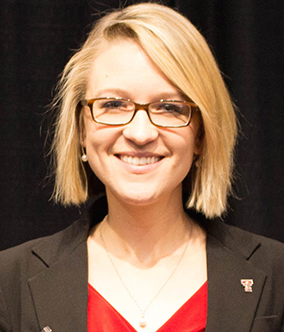
Christina Papke is one of three NORDP members to receive the 2018 Rising Star Award for outstanding volunteer contributions to NORDP. We honor Christina in the cameo below.

Who: Christina Papke, Research Development Officer
Where: Texas A&M University
Number of years in research development: 3
Length of NORDP membership: 3

What recommendations do you have for members to get more involved with NORDP?Papke Photo

One great way to start getting involved is to find small ways to jump in and contribute. Join a committee, begin attending the committee’s meetings/calls, listen, and be willing to share your ideas or begin volunteering for some smaller tasks.  Contact your regional representative for ways to get involved with your regional group. Volunteering at the conference itself, including hosting a networking dinner, is also a great way to get involved and meet other NORDP members. Watch the Listserv for ways to get involved with various working groups or conference planning committees.

Additionally, consider joining the Mentoring Program as a mentor or mentee. Your unique skill set can be an asset even if you have only been in RD for a short time. We believe that peer mentoring is a valuable experience where both parties gain from the experience. Please contact me at cpapke@tamu.edu or send an email to mentorprogram@nordp.org to learn more.

How has your service to NORDP enhanced your career?

One of the biggest ways serving within NORDP has enhanced my career is that it has provided opportunities to meet others from across the country doing RD. I have been able to hear a variety of perspectives and ideas, and I feel comfortable picking up the phone to ask questions of my NORDP colleagues. I have also had the chance to be mentored and serve as a mentor for others. Through serving within NORDP, I have had opportunities to build my leadership, communication, and organizational skills, and currently serve as the co-chair of the Mentoring Committee.

How did you hear about NORDP and what made you join initially?

I learned about RD as a career option and about NORDP from a workshop presenter at a medical writing conference. I joined NORDP after starting in my current position because I wanted to meet others in RD, take advantage of the available resources, and learn as much as I could in my new field.

What relationships have you built as a result of NORDP (new colleagues, connections to institutions where you previously had no point of contact)?

NORDP has given me the chance to meet RD colleagues from across the country that I would not have been able to meet otherwise. These interactions both in person and on the phone have been valuable networking opportunities that have helped me with advice on projects and challenges in my career.

I have also built a number of relationships through my involvement with the mentoring program. These relationships both as a mentor and a mentee have represented a reciprocal sharing of ideas that I would not have had access to without NORDP.

Compiled by Daniel Campbell, Member Services Committee

NORDP fosters a culture of inclusive excellence by actively promoting and supporting diversity, inclusion and equity in all its forms to expand our worldview, enrich our work, and elevate our profession.

NORDP 2018 Election Results

nordp logo_compressed

June 19, 2018

Dear Colleagues,

I want to thank the Chair of the Nominating Committee, Nathan Meier (University of Nebraska-Lincoln) and the 2018 Nominating Committee: Jan Abramson (University of Utah), Rachel Goff-Albritton (Florida State University), Jeri Hansen (Utah State University), Mady Hymowitz (University of Western Ontario), Augusta Isley (Ball State University), Kim Patten (University of Arizona), Barbara Walker (UC-Santa Barbara), for their work soliciting and evaluating applications and nominations for this year’s Board of Directors election. Further, we appreciate their liaising with NORDP’s election provider, Survey & Ballot Systems, to communicate the 2018 election results which were ratified by the Board of Directors on June 12, 2018.

We are pleased to welcome three new members and one returning member who will serve a 4-year term (2018-2022) beginning July 1, 2018:

  • Kimberly Eck, University of Tennessee, Knoxville
  • Jill Jividen, University of Michigan Medical School
  • Paul Tuttle, North Carolina A&T State University
  • Etta Ward, Indiana University – Purdue University Indianapolis

Congratulations to the new Board members and thank you to all the candidates for their participation.

We look forward to your leadership, energy and ideas as we strive to meet NORDP’s mission to support a robust national and international peer network of RD professionals whose broad goals include enabling competitive individual and team research, enhancing institutional competitiveness and catalyzing new research and institutional collaborations thereby facilitating research excellence.

Sincerely,

Karen Eck
Vice President/President-Elect 2017-2018

NORDP fosters a culture of inclusive excellence by actively promoting and supporting diversity, inclusion and equity in all its forms to expand our worldview, enrich our work, and elevate our profession.

NORDP 2018 Rising Star Cameo: Kay Tindle

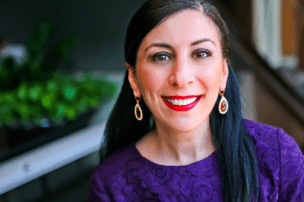
Kay Tindle is one of three NORDP members to receive the 2018 Rising Star Award for outstanding volunteer contributions to NORDP. We honor Kay in the cameo below:

Who: Dr. Kay J. Tindle, Managing Director of Research Development
Where: Texas Tech University
Number of years in research development: 8
Length of NORDP membership: 5

What recommendations do you have for members to get more involved with NORDP?Kayla Tindle

I often hear folks talk about reasons not to get involved in professional organizations such as demands of their current job or no time to do something extra.

I have also heard someone say, “You don’t get involved for the job you have, you get involved for the job you want to have.” I believe this and I encourage members to join a working group or committee, volunteer at the conference, host a webinar, give a workshop, or become a mentor or mentee. Your professional development and the connections made can benefit your future career.

If you are unsure of how to get involved contact me at Kayla.Tindle@ttu.edu or any of our committee chairs or co-chairs.

How has your service to NORDP enhanced your career?

Being involved has been incredibly rewarding as a result of a variety of experiences including mentoring, development of friendships, commiserating on shared struggles, encouragement, and the ability to talk through sensitive issues. I’ve learned a great deal from the connections I’ve made through NORDP.

It has also helped me navigate my own career with resources like the conference, listserv, and conversations with colleagues across the nation. I’ve gained a great deal of confidence over the years using resources like the salary survey/COL index which helped me negotiate a raise and higher title. This is a great tool for anyone going into a job interview providing external validation when discussing salary.

I am honored to be able to give back to an organization that has given me so much.

How did you hear about NORDP and what made you join initially?

I actually learned about NORDP in the offer letter for my first Research Development position. It was explicitly stated that I was expected to join for my professional development! My deeper involvement began at the behest of Peggy Sundermeyer when she asked me to chair the Southwest Regional meeting at the 2015 conference. Things progressed and I now co-chair the Member Services Committee. Thanks Peggy!

What relationships have you built as a result of NORDP (new colleagues, connections to institutions where you previously had no point of contact)?

I have developed numerous levels of relationships over the past five years.  These range from individuals I see every year at the conference to closer connections with whom I am in regular contact over the phone and email throughout the year.

I am also serving as a mentor this year to two mentees who are very nascent to Research Development. I am excited to work with them both in the coming year as well as learn about their respective institutions.

Compiled by Daniel Campbell, Member Services Committee

NORDP fosters a culture of inclusive excellence by actively promoting and supporting diversity, inclusion and equity in all its forms to expand our worldview, enrich our work, and elevate our profession.

NORDP 2018 Rising Star Cameo: Nathan Meier

Nathan Meier is one of three NORDP members to receive the 2018 Rising Star Award for outstanding volunteer contributions to NORDP. We honor Nathan in the cameo below.

Who: Nathan Meier, Assistant Vice Chancellor of Research
Where: University of Nebraska-Lincoln
Number of years in research development: 15
Length of NORDP membership: 7 years

What recommendations do you have for members to get more involved with NORDP?N Meier

My advice is to dive in! Attend the annual conference. Look for a committee to join, or reach out to a board member or committee chair and have a conversation. This will offer a great opportunity to learn how NORDP works, see how you might contribute, and allow you to extend your network by interacting with colleagues from around the globe. Don’t be shy. You won’t regret it!

How has your service to NORDP enhanced your career?

My involvement has provided a litmus test of sorts for me as a research development professional and for the work we do in research development at Nebraska. It has shown me how we compare to other institutions and how we can improve by learning about what other members are doing. NORDP is a great crucible for collecting and mixing all types of perspectives, experiences, and institutions. This provides a sort of professional smorgasbord of strategies and approaches from which members may select and use to up their RD game.

How did you hear about NORDP and what made you join initially?

I became aware of NORDP early on when my supervisor was contacted about the initial meeting from which the organization was formed. I joined the listserv and saw its value to my work. Membership soon followed along with attending the annual conference.

What relationships have you built as a result of NORDP (new colleagues, connections to institutions where you previously had no point of contact)?

NORDP helps you learn who your colleagues are nationally – and meet them. I have built a national network of peers to consult with who offer objective insights and perspectives. If I have an issue that I cannot resolve locally, there are folks within the NORDP network always willing to provide ideas and share or brainstorm solutions. I began my service on the conference marketing committee, which led to joining the nominating committee, which I currently chair. Over the years, I have been the recipient of unexpected mentoring and developed numerous friendships along the way.

Compiled by Daniel Campbell, Member Services Committee

NORDP fosters a culture of inclusive excellence by actively promoting and supporting diversity, inclusion and equity in all its forms to expand our worldview, enrich our work, and elevate our profession.

NORDP Mentoring Program Webinar Series

Based on feedback from last year’s program participants, the Mentoring Committee has developed a series of webinars to support mentors/mentees/peer mentors when using the OnBoarding Packet, or individual tools in the packet. These webinars are open to the entire NORDP community, regardless of current participation in the NORDP Mentoring Program. Join us for one or all, and committee members will share tips as to how to use the tool, strategies for success, and other best practices. Registration links and descriptions for the first two webinars are below, as well as times and titles for the whole series:

Date Topic Length
June 13, 1:00 pm EST Getting your Mentoring Relationship off to a Strong Start 60 minutes
June 20, 1:00 pm EST The Initial Conversation Guide for Mentor Pairs: Getting Ready, Getting Started, Getting Results 45 minutes
June 27, 1:00 pm EST Self-Assessment Worksheet: Capitalizing on Strengths and Targeting Areas of Growth for Professional Development 45 minutes
July 11, 1:00 pm EST My MESHH Network: Developing Your Own Personalized Mentoring Network to Achieve Your Goals 45 minutes
July 18, 1:00 pm EST The NORDP Individual Professional Development Plan (IPDP): Your Personalized Map for Success 45 minutes

 WEBINAR DESCRIPTIONS

Getting your Mentoring Relationship off to a Strong Start (June 13)

You are a mentor, a mentee, a peer or a near peer mentor. You might just be beginning to form a new relationship as a participant in the NORDP Mentoring Program, or are otherwise engaged in a mentoring relationship. This initial session in the NORDP Mentoring Program OnBoarding Packet Webinar Series will introduce participants to the OnBoarding Packet resources that are available to all NORDP members.

The webinar will provide an overview of mentoring within NORDP and provide tips and techniques for getting off to a strong start. The information that will be shared can be applied to any mentoring relationship, and at any stage. Attendees will have opportunities to ask questions, and provide input.

Following this introductory session, four targeted webinars will be delivered throughout the summer to provide a more in-depth look at each of the OnBoarding Tools: Initial Conversation Guide, Self-Assessment Worksheet, My MESHH Network and Individual Professional Development Plans. Join us for one, or for all, as you develop a strong foundation for mentoring.

Presenter:

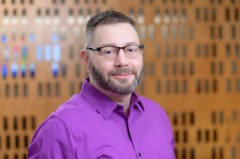
Jan Abramson, MS, has worked in higher education since 1990. Throughout img_3098-jan-abramsonher career, she has been an ardent proponent of the value of mentoring. Her career began at University of Central Missouri, followed by appointments at University of Warwick and University of Birmingham (England). Returning to the US, she worked at University of Idaho before landing at University of Utah. Her early career was in student leadership development; since 2005, she has worked in the health sciences providing research and development support for the Hartford Center for Geriatric Nursing Excellence, developing a research office for the College of Health, and growing a health-sciences wide emerging researcher program. In her role in a central research office, Jan is focusing on nurturing and supporting research administrators in Utah and across the country.
The Initial Conversation Guide for Mentor Pairs: Getting Ready, Getting Started, Getting Results (June 20)

Are you part of a mentor-mentee or peer-mentor pair? Whether you are just starting out or have an established mentoring relationship, this webinar will share some best practices. The OnBoarding Packet starts with the Initial Conversation for Mentor Pairs, a guide for preparing for and engaging in your first conversation. The tool has several sections and checklists that can serve as signposts: these include Getting Started, Establishing Agreements, and a Goals Worksheet and Checklist. This webinar will help you get a great start to your mentoring relationship. This tool can also be useful for those not formally paired for approaching people in your own mentoring network (MESHH) for relationship development.

Presenters:

David Widmer, PhD, has 17 years of research development and administrationDavid Widmerexperience at Memorial Sloan Kettering Cancer Center, first as a Sr. Grants Management Specialist and currently as the Grants & Contracts (G&C) Manager of Scientific Development. In 2009, David started the G&C Funding Development Team (FDT) and has led it since 2011. A NORDP member since 2010, he has been actively involved with several working groups and committees. From 2012-2014 he served on the Membership Services Committee where he was part of the salary survey task force; since 2015 he has been a member of the NORDP Mentoring Program Committee and of the MESHH working group that developed the on-boarding packet and currently serves as Mentoring Committee co-chair. David has a Ph.D. in Biopsychology and Behavioral Neuroscience, and Masters in Cell & Developmental Biology and the History of Medicine. David held a Fulbright Scholarship (1998-1999) and was a Fellow of the Swiss Confederation from 1999-2000.

Rachael Voas, MA, CRA, is the project manager for the Grants Hub, Office of the Vice rvphoto-300x300President for Research, at Iowa State University. In this role, Rachael leads interdisciplinary team development efforts in strategic areas and is actively involved with Team Science training initiatives. Rachael has six years of research development experience and has occasionally learned lessons the hard way, so she looks for opportunities to develop mentoring relationships to help others find an easier path and further the prowess of research development professionals.

Posted on behalf of the Mentoring Committee.

NORDP fosters a culture of inclusive excellence by actively promoting and supporting diversity, inclusion and equity in all its forms to expand our worldview, enrich our work, and elevate our profession.

NORDP 2018 Conference Notes: Strategies to Grow Research at a Branch Campus

Strategies to Grow Research at a Branch Campus

Presenters:

  • Sian Mooney, Arizona State University
  • Susannah Gal, Penn State Harrisburg
  • Faye Farmer, Arizona State University

Thanks to our session scribe, Kara Luckey, University of Washington, Tacoma!

Key points from the session. We learned: 

  • Working in the RD space at a “branch” campus (and similar contexts) can present challenges for the RD professional and the faculty they serve stemming from feelings of isolation, distribution of power and resources, and a lack of energy for the research enterprise.
  • To meet these challenges, the presenters suggested multi-pronged approaches in three broad areas: Culture change, enhancing visibility internally and externally, and creative allocation of existing resources.
  • Presenters from ASU West Campus and Penn State-Harrisburg suggested a number of tools to move towards a culture of active research, including: Promoting and celebrating research through regular newsletters/publications and annual recognition events; creating opportunities and a ‘safe space’ for faculty to develop collaborations and a shared sense of purpose; and one-on-one encouragement to individual PIs who are well-positioned to pursue significant funding opportunities but require a ‘push.’
  • Presenters outlined a number of mechanisms to improve internal and external visibility of faculty research, including: Using consistent talking points on and off campus to emphasize faculty work and its importance to the larger university, developing relationships with key champions and allies within the branch campus, with other branch campuses, and at the primary campus; and seek out university-wide committee appointments to bring visibility and resources to research on your campus.
  • Finally, presenters encouraged branch campuses to pursue opportunities to effectively and creatively allocate resources, including: Developing a strategic plan that can be used to make the case for the needed for resources; rigorously demonstr­ate the return-on-investment of requested resources and equipment; Maximize access to existing resources and trainings offered at the main campus, and make the case to central campus staff for why they should come to the branch campus; Encourage the use of classrooms for research, especially for faculty with high teaching loads: Offer a cohort-model to train undergraduates across branch campuses to minimize the burden on individual faculty members.

What did you hear at this presentation that surprised you?

One branch campus (ASU, West Campus) saw an impressive 8-fold increase in funding revenues after several years of targeted efforts toward cultural change led by Sian Mooney that followed many of the approaches identified in the session.

What resources did you discover at this presentation?

The presenters used a helpful real-time polling tool – sli.do (or slido.com) – that allowed audience members to respond to questions posed during the presentations. This made for a more interactive panel than would have been likely for the last session of the conference.

What was the most interesting question asked by an audience member, and what was the presenter(s)’ response?

An audience member asked about the sharing of DUNS numbers across campuses, and the implications for funding. The presenters agreed that the sharing of DUNS numbers has political importance – e.g. communicating that the campuses are part of *one* university – however, there are limitations that can be frustrating for faculty on branch campuses. In particular, faculty on branch campuses must compete internally for limited submissions, which can leave branch faculty members feeling that they are at a disadvantage.

What else from this session should NORDP members know?

A large part of the cultural change achieved by the presenters from ASU West Campus and Penn State-Harrisburg was the result of encouraging faculty to think of themselves as active researchers. This was achieved through a good deal of cheerleading and deep support provided at the individual and collective level. As trust was (re-)built, faculty began to internalize their identity as active researchers, and – with targeted communication up the chain – administration at both the branch and main campuses began to take notice as well.


NORDP 2018 Conference Notes: Building Research Resilience Through International Cooperation: The Example of Horizon 2020

Building Research Resilience Through International Cooperation: The Example of Horizon 2020

Presenters:

  • Mary Kavanagh, Delegation of the European Union
  • Cole Donovan, U.S. Department of State
  • Victoria Bodnorova, EURAXESS North America
  • Claire Chen, National Council of University Research Administrators

Key points from the session. We learned: 

H2020

  • Goals of international cooperation: identify talent, tackle global challenges, identify business opportunities.
  • H2020 is the biggest multi-national and multi-lateral research program in the world.

DOS

  • Transatlantic enterprise is valued at $800 billion US and comprised of federal and philanthropic funding.
  • US-Ireland cooperative supports simultaneous proposals submitted from US and Ireland to NSF or NIH; funded projects based on US review are then supported by each country (to their resident researchers).

EURAXESS North America

  • Three mechanisms:
    • EURAXESS (jobs & funding; partnering tool & hosting (good for developing consortia); information & assistance; EURAXESS worldwide).
    • Marie Sklodowka-Curie Actions (innovative training methods; individual fellowships; research and innovation staff exchange; co-funding of regional, national and international programs).
    • European Research Council (starting grants; consolidator grants; advanced grants; synergy grants).
  • Established to support researchers moving from overseas to the EU; over 200 centers in every European country; all services are free of charge. Euraxess.org – “assistance and support” section.

NCURA

  • BILAT USA 4.0 has four goals: facilitate pilot dialog; foster transatlantic partnerships; identify emerging research topics; engage the private sector. Has 6 US partners and 10 EU partners.
  • Hosted resources: report on US funding opportunities for EU researchers; database on funding opportunities; terminology guide; research connection symposium at NCURA annual meeting (free and public event).

What did you hear at this presentation that surprised you?     

  • DOS may have international opportunities that are well aligned to research; don’t overlook DOS as a funding source.
  • Almost 1000 applications for US Nationals to the Marie Sklodosdka-Curie with 18% success rate for US Nationals (versus 13% overall for EURAXESS).

What resources did you discover at this presentation?

What was the most interesting question asked by an audience member, and what was the presenter(s)’ response?

  • Q: Is the “implementing arrangement” the name of the funding opportunity?
    • A: Using the terminology “invoke the US-EU implementing arrangement” for the EU partner should be sufficient.
  • Q: How should an ADR advise US faculty to become involved in EU opportunities when there is not an existing US opportunity? Do they find an EU partner?
    • A-Kavanagh: EU funds health research overall and developing countries directly. Existing US funding can be leveraged, rather than pursuing new funds.
    • A-Donovan: NSF is exploring the convergence model as an attempt to increase transdisciplinary work, largely to involve more social scientists.

What else from this session should NORDP members know?

US Department of State wants to assist with connecting with European partners – US-EU implementing partnerships that enable work with EU partners without H2020 eligibility; EU partner must invoke the benefit.