

Written by Kate Duggan, Conference Planning Committee

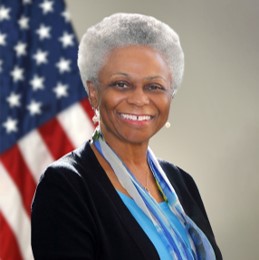
As research development professionals and NORDP members, we pride ourselves on our flexibility, versatility, and ability to meet the moment. This year’s NORDP Conference closing keynote, Sarah Spreitzer, utilizes many of these same skills in her role as Vice President and Chief of Staff of Government Relations for the American Council on Education (ACE). Her May 1 keynote will provide an update from Washington, DC on the new administration’s actions and policies relevant to higher education and research, the response from Congress, and how NORDP members can draw upon their own skills and experience to understand, interpret, and advocate in the evolving federal landscape.
Sarah was drawn to federal advocacy by way of her passion for education, which was inspired by her mother and grandmother, both elementary school teachers. After earning her bachelor’s degree from Beloit College in Wisconsin and a master’s degree from The Catholic University of America in Washington, DC, Sarah was aiming for a career as an academic when she took a break from being a student to work for the University of Washington’s Federal Relations office. That one post-graduation job turned into a career for Sarah, who went on to become a Senior Government Relations Representative/ Lobbyist for Lewis-Burke Associates and then Director of Federal Relations for the University of Missouri System before joining ACE in 2017.
In her role at ACE, Sarah represents 1600+ institutions of higher education, working to unite the postsecondary community around topics of mutual concern and interest. At present, these topics include the proposed decrease of federal facilities and administrative (F&A) rates to a maximum of 15%; opposing the DETERRENT Act, which would add extensive new faculty and staff foreign gift reporting requirements; and immigration policies that affect international students and faculty.
While the current moment is presenting some unique challenges to the national academic research enterprise, Sarah still sees reason to be optimistic. On considering how higher education reacts to adversity and might respond in this moment, Sarah reflected that “we’re a little slow, but we are flexible. And I think that that was really demonstrated during COVID. If you had told me that all of our institutions would be able to transition online within a week and address all of the needs of our international students who suddenly weren’t sure if they were going to stay, or if they were going to have to go. I would be like, there’s no way we could do that. We did it. We did it and I think that that is the strength of higher education.”
Beyond drawing upon the resiliency our institutions cultivated during the pandemic, Sarah has more advice for NORDP members on how to handle the headlines:
Pause: “When something new comes out…it’s important to take a breath and pause before you react … understand what’s actually happening, that there is supposed to be a rule of order for the implementation, that a lot of things that are happening are being stopped by the courts.”
Share: “Sharing information during this really confusing time is incredibly important, because I may have an NIH grant that got canceled because of the DEI executive order. You may not have had a grant canceled yet, but perhaps the program officer isn’t returning your phone calls or something’s happened when you try and draw down the funding. And so sharing that information and being part of this larger community is really really important.”
Advocate: “I also think talking about what messages work, like when you’re talking to individual members of Congress,” can be helpful in giving RDPs the tools we need to demonstrate the value and contributions of our institutions with elected officials and members of the public who may not be familiar with how college and university funding is allocated, governed, and what kinds of research and programming it makes possible in our communities.
Despite the uncertainty many of us are experiencing, Sarah has “complete confidence in the ability of higher education to respond to the challenges during this time, and I’m kind of excited to see how we do respond….the relationship between higher education and the federal government is going to be very different. There’s going to be a lot of things thrown at us, but I know that higher education will come out at the other end okay; it’ll just be different.” For more Washington insights and a dash of related optimism, be sure to attend Sarah Spreitzer’s May 1 closing keynote; conference attendees are encouraged to submit questions for Sarah by navigating to the keynote session in the Whova app.




 NORDP News