Written by: Vessela Vassileva-Clarke, Jessica Brassard, Elizabeth Lathrop on the Mentoring Committee Marketing and Communications (McMc) Committee
Image co-created by Jess Brassard and Adobe Firefly
Managing stress in the face of uncertainty is a crucial skill that, together with connecting with a more experienced mentor or a like-minded mentee, can significantly improve our mental and emotional well-being. Uncertainty can lead to feelings of anxiety and helplessness for both mentors and mentees. Evidence-based mentoring strategies can help mitigate these effects. How can we show up in our mentoring relationships during uncertainty, beyond employing the usual stress reduction recommendations of practicing mindfulness, regular physical activity, balanced nutrition, and adequate sleep? Seeking support from our NORDP mentoring community, whether in our dyads, mentoring cohorts, or peer mentoring groups, can provide a safe space to share concerns and gain perspective, reinforcing that we are not alone.
The NORDP Mentoring Committee offers a wealth of mentoring tools and resources that can be adapted to support each other through uncertainty via WisdomShare’s Learning Library. All NORDP members can create an account on WisdomShare to access these tools and resources (WisdomShare account here):
Bolster your foundation of trust and psychological safety and check in with your people — You’ve been doing this all along. Take some time to revisit this for yourself and for those around you, whether in your formal mentoring relationships or in your everyday interactions. This strategy emphasizes creating a safe space for vulnerability during uncertain times. The evidence shows that psychological safety is crucial for learning and adaptation during change. See Building Trust from the NORDP Mentoring Toolkit.
Revisit agreements and reinforce flexible boundaries — During a time of change and uncertainty, you may want to review the ground rules of your mentoring relationship and revise them as appropriate. Be flexible with each other’s new ‘norm’ with respect to timing, forms of communication, and sharing of responsibilities. This is a time when “going the extra mile” can reinforce your support and commitment to your people! See Establishing Agreement for more tips.
Listen to support learning and understanding — Be mindful and pay close attention to what your colleagues are saying through the practice of Active Listening to support full understanding of a problem or a challenge. By asking “what”, “how” and “when”, you develop a strategy that encourages and empowers self-discovery and problem-solving. See Probing Questions for additional resources to enhance your ability to communicate clearly.
Give honest feedback and be thoughtful to those around you — Pay attention to others’ state of being when providing feedback and advice. Oftentimes, under stressful circumstances, extra patience can lead to rewarding and reciprocal experiences. Asking “am I hearing you correctly that …” can be a useful strategy for clarifying questions. “Pause – Listen – Think” before you respond can be another useful strategy during uncertain times. For more information, see Giving Honest Feedback and Advice.
Lean into your MESHH Network for the support you need — Leverage your mentoring relationships and RD/PD networks to identify allies and support. Consider sharing resumes with each other to enhance and strengthen your job application package and storytelling. Provide constructive peer feedback and investigate opportunities through the NORDP Job Board.
The traditional mentoring dyad (1:1 mentor-mentee) program has been a NORDP member feature since 2012. The Cohort Mentoring Group, piloted in July 2022, consists of matching three mentees with similar interests with one shared mentor. Both the dyad and cohorts are matched based on the WisdomShare matching algorithm. This is a reflection of one of the traditional mentoring dyads from the 2020-2021 mentoring year.
Angela Jordan
Mentor Angela Jordan, University of South Alabama • Angela is the Director of Research Development at the University of South Alabama and is responsible for strategic, catalytic, and capacity-building activities designed to promote faculty development and enhance their ability to attract external funding. With a background in the social sciences and humanities, Angela brings an interdisciplinary perspective that is informed by the principles of collaboration and community engagement. She has been the Co-Chair of the Mentoring Committee since 2023, actively engaging NORDP members to support mentoring for research development professionals.
Wendi Jensen
Mentee Wendi Chiarbos Jensen, University of Nebraska Medical Center • Wendi is the Director of Research and Grants Development in the College of Public Health at the University of Nebraska Medical Center. Wendi provides all proposal development support, works on strategic endeavors, and helps promote research across the College of Public Health at the University of Nebraska Medical Center. Her experience in working in an institutional-level office as well as a busy academic unit has helped her understand the value that external funding plays in research progress, creative discovery, and educational programming. Wendi participates in NORDP’s Academic Medicine/Affiliate Medical Center Affinity Group and is part of the NORDP Region V: Midwest/Mountain.
Q1: What influenced you to apply to be a mentor and a mentee for the 2020-21 NORDP Mentoring Program?
Angela: 2020 was my fourth year participating in the matched mentoring program, and my third year as a mentor. While I originally joined the program in 2016 because I thought I would benefit from mentoring, with some encouragement I leaped into being a mentor myself, and I found it rewarding. By that point, I knew that every mentoring relationship is unique and was looking forward to another year of being on that journey with some more NORDP members as we worked through problems and thought about goals, whatever shape that would take. Of course that was also the first COVID year, which gave us some additional challenges to talk about!
Wendi: I was hired for a new position in my college so I did not have others doing the same RD work as I did. The NORDP Mentoring Program allowed me the chance for collegiality when there were no other co-workers at my job site. I had hoped to find a good resource for discussion of my professional goals and challenges. The Program did this by matching me with Angela Jordan!
Q2: What is your favorite part about your relationship?
Angela: Wendi was really great, very grounded, and open to the self-reflection process that is essential for growth. Like many new to research development, she brought invaluable experience and transferable skills from previous jobs, and she was very motivated. Every mentee is different and has different types of goals; Wendi had some very specific things she wanted to work on, which was fun for me.
Wendi: It’s reassuring to connect with another RD professional who can relate to my experiences and help me process any issues I am having. Angela’s insights into how to navigate situations I was encountering always included helpful and concrete approaches she had used. And I appreciated her calm delivery and approach to work.
Q3: How has participation in the Mentoring Program helped broaden your horizons about Research Development in general and/or affected your daily work in particular?
Angela: Being involved in the mentoring program has reinforced my understanding of what great people we have in NORDP. People bring diverse backgrounds and face unique challenges in their jobs and careers, yet at the same time, so many of us share characteristics like having a growth mindset and being very open to sharing experiences, tools, and tricks of the trade. In some professional contexts, the knowledge economy is built on scarcity and controlled access, but in our profession, we have a knowledge economy built on abundance, and it has benefitted my professional growth tremendously. It also informs my thinking about the importance of mentoring in other contexts, such as for faculty and staff development, as well as its use as a component in proposals.
Wendi: I enjoyed our regular discussions about what was going on in our campus and unit environments. Hearing my mentor’s perspective on the RD field was also beneficial as I considered my own workload and how to manage time.
Q4: What surprised you about being a mentor or a mentee?
Angela: To be honest I spent much of my life with an antiestablishment mindset, and would have resisted thinking of myself as a mentor. I didn’t have great mentors as an undergraduate or during my first stint in graduate school, but also wasn’t primed to be a good mentee either. By the time I joined NORDP, I was much more receptive to the idea that being a mentor or mentee did not need to fit into a narrowly defined box and could be a really beneficial opportunity for growth in either role. After having positive mentoring experiences within NORDP, I know that the roles are adaptable to the unique context and needs of each relationship. Although both roles are essential, mentorship is really about the mentee, and in the NORDP context should be driven by the mentee; the mentor can be thought of as a facilitator for mentee exploration and development.
Wendi: I have benefitted from tremendously skilled mentors going back to my undergraduate student days. Early in my career, I may not have realized that i sought mentoring but certainly recognized its impact after the fact. With the NORDP partnering, Angela and I were able to forge a relationship through regular initial meetings and then maintained it by spacing out our meetings a bit. This worked well for me and I hope for Angela. I was surprised how quickly I felt a connection with her.
Q5: What made you decide to maintain a longer-term mentoring relationship and how has it impacted you?
Angela: One thing that came out organically over the course of the year is that, partly in conversation with me about the PhD I was working on at the time, but largely because of Wendi’s work with faculty in her college, she came to realize that she had the capacity and desire to do research herself, which led her to enroll in a PhD program. We’ve kept in touch and I am excited to see her continuing down that path!
Wendi: I was hopeful that we would have a good personal connection, but there are no guarantees that people doing the same kind of work will necessarily like each other. I found Angela to be approachable about not just work but also her personal experiences. We were of similar age and family situations but had followed different career paths. I appreciated the personal commonalities we discovered and how they impacted our professional lives.
Q6: Any words of wisdom or encouragement for those wanting to apply next year? Any other thoughts you would like to share?
Angela: I know that taking the leap to be a mentor can intimidate people if they’ve never been in that role; it’s really easy to talk yourself out of doing it by thinking you don’t have enough experience or the right experience, or that you don’t fit what you imagine a mentor should be. But if someone is considering it then chances are that they do have something to offer, and even if they’re junior in the profession I guarantee that we always have people who are brand new to the field who can benefit from their mentorship.
Another challenge is that, because every relationship is different, someone’s first experience as a mentor might not be exactly what they had imagined. At that point, it’s easy to think ‘mentoring isn’t for me.’ However, I’d encourage people who’ve had that thought to try it again, because they may find that the next time around it’s a truly rewarding experience.
Wendi: I have subsequently served as a mentor every year since my mentee experience with Angela. NORDP provides a great service through this program and has helped me connect with colleagues all over the US. My advice is the same given to all of my mentees: continue participating in this program and serve as both mentor and mentee. The 360-degree perspective these roles provide will enhance your professional capacity and enrich your personal attributes.
Applications for the 2025-2026 mentoring match cycle will open in the spring — keep an eye out for NORDP announcements. Additional mentoring opportunities are available through the Peer Mentoring Groups that are open for participation throughout the year via the WisdomShare platform [LINK: https://nordpmentoring.mywisdomshare.com/]. Contact the NORDP Mentoring Committee if you have any questions [link: mentoringprogram@nordp.org].
An investment in mentoring is an investment in you!
Contributors: NORDP Mentor Training Team Paula Carney, Loyola University Chicago, and Kristin Boman, University of Minnesota, Twin Cities
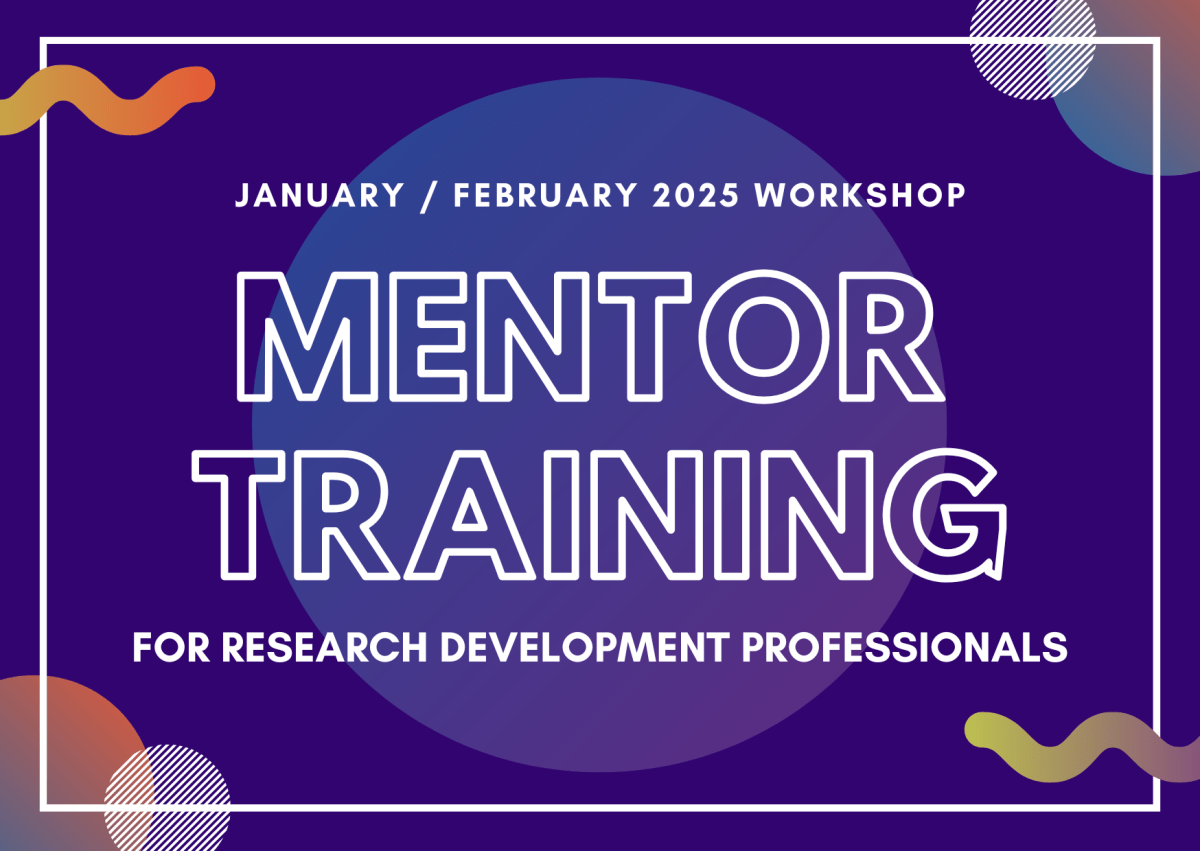
Mentor Training for Research Development Professionals – Registration Open forJanuary/February 2025 Workshop
Are you a mentor? A mentee? Do you find yourself formally or informally mentoring staff or faculty? Are you ready to explore mentoring competencies that can be utilized across the work of research development (RD)? This interactive workshop series covers the 9-module Entering Mentoring curriculum, initially developed for mentoring researchers and tailored for RD professionals. A past workshop attendee commented: “EXCELLENT training! The ideas presented are very applicable both to mentoring both within the research development profession and elsewhere in the research enterprise – the things I have learned and practiced in this course are incredibly valuable to me as I provide mentoring to faculty, particularly early stage investigators and junior faculty, in the area of grantsmanship.”
Using evidence-based strategies, participants will build upon competencies crucial to the success of the mentoring relationship and expand mentor training across the research enterprise. Participants who complete the entire curriculum will receive a certificate of completion. The curriculum results from an association between the NORDP Mentoring Committee and the University of Wisconsin Center for Improvement of Mentored Experiences in Research (CIMER) in collaboration with the National Research Mentoring Network (NRMN), organizations involved in developing and validating the original curriculum. RD professionals at all levels of mentoring will explore how mentoring (shown to improve career outcomes, impact employee engagement and retention, and lead to more inclusive work environments) can benefit mentors and mentees in RD.
Workshops will be presented and facilitated by the NORDP Mentoring Committee; many are certified CIMER Trained Facilitators. Over 100 NORDP members have been trained through this initiative.
Schedule:
Two 1.5-hour sessions each week for 5 weeks (every Tuesday and Thursday) 1/28/25 – 2/27/25 2–3:30 pm EST / 11 am–12:30 pm PST
As the format is highly interactive, participants must agree to participate in at least 9 of 10 workshops.
Cost: FREE!
Register TODAY for the workshop series – 35 participant limit and the course will fill up fast!
Contributors: Mayla Boguslav and Toyin Babarinde Career Navigator program lead: Samarpita Sengupta
“I fell into it.”
If you ask a room of RD professionals the question “How did you get into RD?,” the most common answer is likely “I fell into it!” For a profession that has significantly grown and continues to do so, “I fell into it” doesn’t resonate with everyone. The NORDP Mentoring Committee launched the Career Navigator program and the trainee membership to create intentional pathways to the RD profession. Trainee membership is defined by NORDP as “individuals who must, at the time of NORDP membership application, 1) have not held a paid Research Development (RD) position, 2) be enrolled in a graduate educational program (for example a Master’s or Doctoral program) or hold a postdoctoral fellowship, and 3) be interested in pursuing RD as a career.
In this program, NORDP trainee members, who are looking to explore RD as a potential career path are paired with NORDP Career Navigators who share similar backgrounds and career paths of interest to the trainee. Through a mentee-driven relationship, trainees learn more about the field of RD and find support for landing their first RD position.
The program has matched 20 NORDP trainee members to date, with an impressive 42% of the trainee members landing their first RD position. Nine of the matches are currently open. Through a Mentor Sign up form sent through the NORDP Listserv, 13 NORDP members so far have signed up to be Career Navigators, many of whom are alumni of the program and are looking forward to giving back.
Mayla Boguslav, PhD
Toyin Babrinde, PhD
In February 2024, Mayla Boguslav, PhD, who was then a postdoctoral research fellow at Colorado State University was paired with Toyin Babarinde, PhD, who serves as the Executive Director of the Office of Strategic Research Development at the University of Texas Medical Branch. Since then, Mayla has transitioned into the Research Associate, Research Development role at the Southern California Clinical and Translational Science Institute at the University of Southern California. We caught up with both of them to ask about their experiences with the Career Navigator program.
What influenced you to join the Career Navigator program as a mentor or mentee?
Mayla as mentee: I identified that I wanted to study the research endeavor and realized that RD is the place to do it. However, I did not know much about RD, let alone careers in RD. I joined the NORDP Career Navigators program to focus on my career transition into RD and learn the possibilities.
Toyin as mentor: As a beneficiary of having great mentors, I am compelled to pay it forward wherever possible. Finding my career path was not easy or clear and I’m happy to help others in their journey.
What was your favorite part about your mentoring relationship?
Mayla as mentee: Toyin’s honesty about an RD career both the struggles and the excitements. We have discussed topics such as leadership, change, career transitions, and many more that have all been very valuable.
Toyin as mentor: Mayla’s openness to ask questions and explore various topics.
What have you found most rewarding and most challenging about being a mentor?
Toyin’s answer: The most rewarding part is hearing that I was helpful. There are not notable challenging components to mentorship. There are times when I have wished I could intervene/advocate on behalf of my mentee in some of their situations, but all I can do is give thoughtful feedback and guidance and hope things work out the best way possible for them in that situation.
Any words of wisdom or encouragement to those who are considering a transition into an RD career?
Mayla as mentee:
Find mentors to learn from and discuss it with.
Be open to new ideas
Ask lots of questions
My RD career transition has been seamless because of all the mentors and conversations I have had including with Toyin.
Give yourself grace to not be perfect because you need to learn a whole new field.
Toyin as mentor: Mayla summarized it very well which is why you will see some of the same answers.
Be open to new ideas
Don’t be afraid to ask “ALL” the questions 😊
Know it’s ok to feel lost but understand that you will find your ground at the right time.
Extending grace to yourself is critical
Talk to as many people in various roles as possible to learn about your options.
Be bold, courageous, and confident
Do not be afraid to let your light shine brightly, there is room for everyone to do so.
As with many mentoring relationships, Mayla and Toyin still keep up the mentoring relationship beyond the official Career Navigator program and Mayla considers Toyin as a lifelong mentor.
If you are a trainee member looking to find your RD career, please sign up for the Career Navigator program. We are always looking for more Career Navigators for our pool. If you are a RD professional, and are able to commit to a short-term mentoring relationship, please sign up to be a Career Navigator. This program is especially useful for those who are contemplating signing up as mentors for the NORDP mentoring program and would like some experience with being a mentor. If you have a RD position, you can be a Career Navigator!
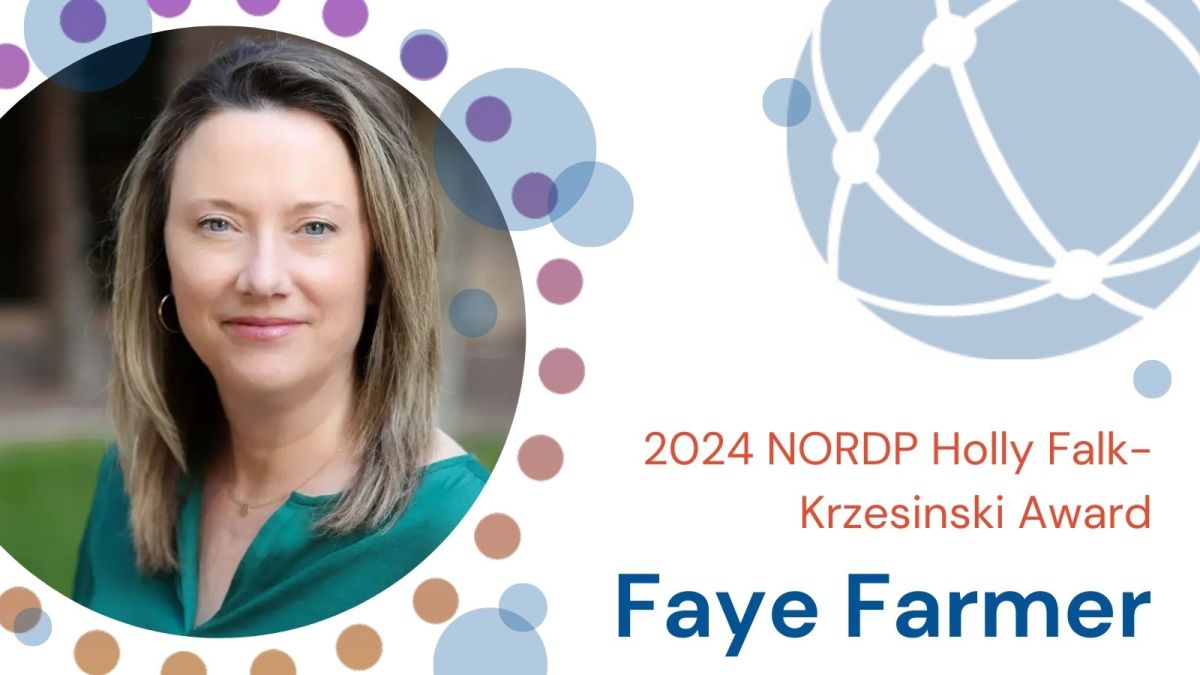
Named for NORDP’s founding President, this award is voted on by the Board of Directors and given annually to a NORDP Member in recognition of outstanding service to the organization, to the research development profession or field, and to peers.
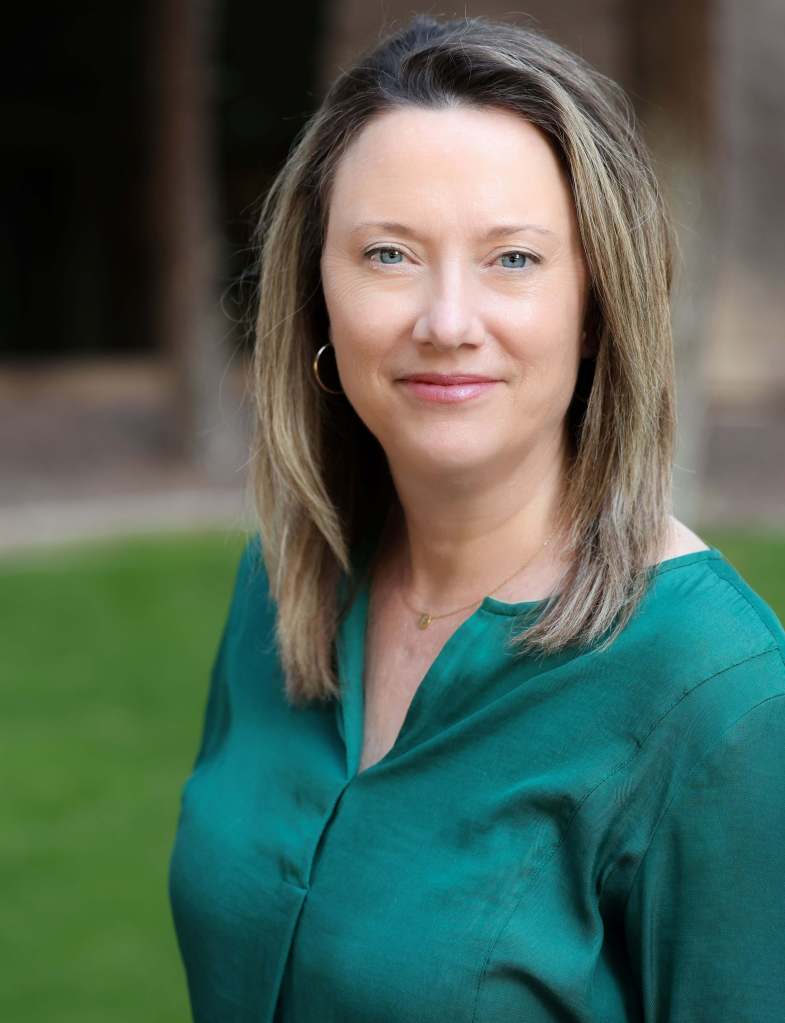
Who: Faye Farmer
Where: Director of Enterprise Design Initiatives at Arizona State University
Number of years in research development: Faye started working on proposals as an editor at a scientific institute at ASU in 2008. She moved to the University’s central office in 2011. She co-founded the central Research Development office in 2015 and worked there until 2023.
Length of NORDP membership: 15 years
You have served NORDP in numerous roles and capacities over the years. Could you share a bit about what that journey has been like?
The journey has been fantastic. Faye has held both formal and informal leadership roles in NORDP. Faye considers her greatest contributions to be in the area of conference presentations, where she shared about ASU’s experience alongside other universities. When she ran for the Board, it was a culmination of the conference experience, working with the Mentoring Committee and working with the PEERD consulting program.
NORDP has always depended on volunteers. Holding this truth close during her Board service was important to Faye. She served on the Board from 2019 to 2023. While on the Board, she contributed to two Board initiatives. Both leveraged the work of volunteers in the organization. One was the task force for certification. This involved working with several passionate and motivated individuals through a series of steps that culminated in a report that was published this year.
The second effort involved a task force on NORDP policy review and updating. Faye organized individuals interested in creating more inclusive policies within the organization. This work reflected a dynamic, evolving membership in the thousands and tried to future-proof the organization as it grows. The original bylaws were essential to the founding of NORDP, but the policies needed to address size and diversity of the organization’s membership. This work resulted in a set of policy drafts that were provided to the Board in November of 2023.
In your view, what makes an effective leader, and how has your philosophy of leadership informed your work within NORDP?
Faye believes in the power of collaboration. NORDP has taught her this. She also recognizes that she still has a lot to learn about interpersonal relations and communications. Leading in NORDP means that you are good at what you do and also invested in other’s success. Research development is a coopetition, where members balance their own university or college interests while benefiting from each other’s knowledge and experience. This balance is achievable because of the strong sense of community. Leadership means growing the scope and scale of this balance through the many layers of institutional types, career rungs, and time in the profession.
What do you see as the biggest rewards, and challenges, of serving in leadership roles within NORDP?
As far as challenges, the path to organizational change can sometimes feel glacial. But Faye believes it is slow because NORDP values community insight and input. Achieving a well-grounded, high-quality outcome that has meaning for many in the organization often requires contributions from many people over time. As an organizational leader, Faye recognizes that she does not speak for herself but for the people who put her there. This requires frequent checking-ins and creating inclusive and transparent processes.
Faye has found that the biggest reward of working in NORPD is expanding networks upon networks of professionals in research development. Even as her career has shifted in the last year, she still gets emails asking for her thoughts, advice, or connection. At ASU, Faye encouraged her team to engage with NORDP, especially by presenting at conferences. By sharing our experience, NORDP reduces barriers to engagement for its professionals. The result is better, faster, higher-quality, and more effective research development services and support nationwide.
More recently, you have played a crucial role in revitalizing the New Opportunities in Research Development (NORD) Committee. What has that process been like, and what do you see as the greatest opportunities for the field of research development moving forward?
Faye sees incredible opportunities in research development. She believes that there is momentum toward more purposeful strategy development. Faye often touts the importance of strategic (competitive) intelligence, which builds upon institutional analysis and expands it to include national program and policy trends. These early, pre-funding opportunity activities allow research development professionals to answer questions like, who is funded and why. These answers become actionable insight among university leaders, ultimately translating into more efficient funding pursuits.
What advice do you have for NORDP members who aspire to greater service within NORDP or the field at large?
Volunteer! Faye sees a parallel to the advice we give faculty and other researchers. Just step up and get involved. Faye recognizes that people want and should be paid for their work, but volunteering is critical to creating a more inclusive organization. Volunteering provides a unique skill set that may not be accessible through our work. She also recommends that NORDP members call in anyone and everyone to the organization. She says NORDP needs all levels of education, experience, and backgrounds to be successful. It is incumbent upon members to create a more diverse organization with intention and care.
I am thrilled to announce the launch of a new NORDP Faculty Development Peer Mentoring Group (PMG). This new PMG is designed to support NORDP members who are dedicated to enhancing faculty research success through holistic professional development programming. This new PMG provides a platform for RD professionals to discuss, share resources, and offer feedback on the design, development, implementation, facilitation, and evaluation of faculty development workshops and other programming.
Faculty development is a critical aspect of research success, as it equips faculty with the skills, knowledge, and support they need to excel in their research careers. RD professionals play a key role in designing and delivering these programs, which can include everything from workshops on grant writing and research team management to training in leadership, mentoring, addressing conflict, and fostering wellbeing.
Using the peer mentoring model, the Faculty Development PMG’s goals are to:
Create a collaborative space where RD professionals can exchange ideas and resources related to faculty development programming.
Enhance the quality and impact of faculty development programs by sharing best practices and evidence-based approaches.
Provide feedback and support for RD professionals who are responsible for faculty development initiatives at their institutions.
Foster a community of practice focused on improving faculty research success through effective professional development.
The Faculty Development PMG is for any NORDP members who are involved in or interested in the creation, facilitation, and evaluation of faculty development programs. We invite all NORDP members to join the Faculty Development PMG and contribute to this exciting new initiative. Whether you are an experienced RD professional or new to the field, your insights and experiences are valuable. Whether you are looking to refine existing programs or develop new initiatives, this PMG offers a valuable opportunity to learn from and collaborate with your peers.
NORDP Members can view and join PMGs via the WisdomShare Platform and / or you can email Matthew Schwartz to learn more about and get involved with the new Faculty Development PMG.
NORDP Members interested in learning more about all seven active PMGs can join the 2024-2025 Peer Mentoring Group Kickoff on Tuesday, September 24, 2024 from 1:00 – 2:00 PM Eastern.
Career & Professional Development:exploring how to become more efficient and effective in our roles
Coaching & RD:developing and implementing coaching as part of the research development (RD) skillset
Collaboration & Team Science:building collaborations and interdisciplinary research programs
Faculty Development:supporting RD professionals who perform faculty development through programming and workshops
Leadership & Management:leading in both official and unofficial capacities
Proposal Development & Project Management for Research:Supporting proposal development for faculty grant seeking and leveraging project management tools and methodologies to enhance efficiency and success in securing extramural funding
Strategic Planning & Advancement:guiding policy and planning for enhanced research and scholarship
PMG Co-conveners: Sonya Craig, New York University Langone Medical Center Anna Ortynska, University of Kentucky Denise Wright, Emory University
We are excited to introduce a new theme to our Proposal Development Peer Mentoring Group (PMG) at NORDP— Project Management. This addition is designed to meet the professional needs of project managers, fostering collaboration and knowledge-sharing within the research development (RD) community.
At the heart of our Proposal Development & Project Management for Research (PD&PM) PMG is the goal to build a robust community of RD professionals focused on advancing their capabilities through collaboration and shared experiences. This group serves as a dynamic platform for discussing challenges, exchanging best practices, and discovering innovative management and RD strategies.
Members of the PMG can look forward to the following engaging activities:
Virtual Meetups – regular sessions to discuss current challenges, share success stories, and explore effective proposal development and project management tools. These meetups offer a forum for real-time interaction and support among peers. Meeting topics will be shared in advance, so that you can attend the sessions that are of most interest to you.
Resource Sharing – allows participants access to a collective repository of tools, templates, and case studies. These resources are intended to enhance practical knowledge and application, equipping members with the materials needed to succeed.
The PD&PM PMG represents an exciting new avenue for professional growth and community building within NORDP. By joining, you’ll be stepping into a collaborative environment where every member plays a pivotal role in shaping the future of project management in research development while learning about best practices of proposal development. This initiative is not just about managing projects—it’s about building leaders and forging a path to greater effectiveness and impact in the research community.
If you’re a NORDP member passionate about project management and/or proposal development and willing to contribute to a community of like-minded professionals, this PMG is for you.
Join us in this journey of growth and collaboration! We invite you to join us to learn more by attending the upcoming PMG Kickoff on Sept 24 — registration is now open.
2024-5 Peer Mentoring Group Kickoff
When: Tuesday, September 24, 2024, 1:00 – 2:00 pm Eastern
Who: Any NORDP members who are interested in learning more about Peer Mentoring Groups (PMGs).
What: The NORDP Mentoring Committee’s Peer Mentoring Groups (PMGs) provide an ideal platform for NORDP colleagues to share ideas and learn from each other.
Registration: Register for the PMG Kickoff here to get the zoom link!!
Contributors: Mentoring Committee Marketing and Communication (McMc) Team
The summer always serves as an exciting beginning to the mentoring year. The typical cycle for the NORDP mentoring year runs from July to June for the mentoring dyad and mentoring cohort participants. The Mentoring Committee, specifically the Match Team and the Mentoring Leadership Team, work in May and June to make adjustments to the WisdomShare platform (more on that in a moment), prepare the application window, and make the matches and verify that good matches are being made.
On June 25, the Mentoring Committee sponsored the 2024 Mentor Program Orientation, introducing this year’s participants to the program and featuring one of the 2024 NORDP Mentoring Award recipients, Paula Carney. Breakouts based on participant’s role as a mentor or a mentee either in a dyad or a cohort, allowed everyone to learn more about what to expect in the year to come.
WisdomShare is a tool that NORDP has purchased to easily and effectively match mentors and mentees. The tool can match individuals or groups based on several criteria such as job level, years in the RD field, preference for dyad or cohort format, and other matching preferences. WisdomShare’s algorithm scores matches, but the Match Team and other mentoring committee volunteers still go through each dyad and cohort with an eye on the human element to make sure the best matches are made.
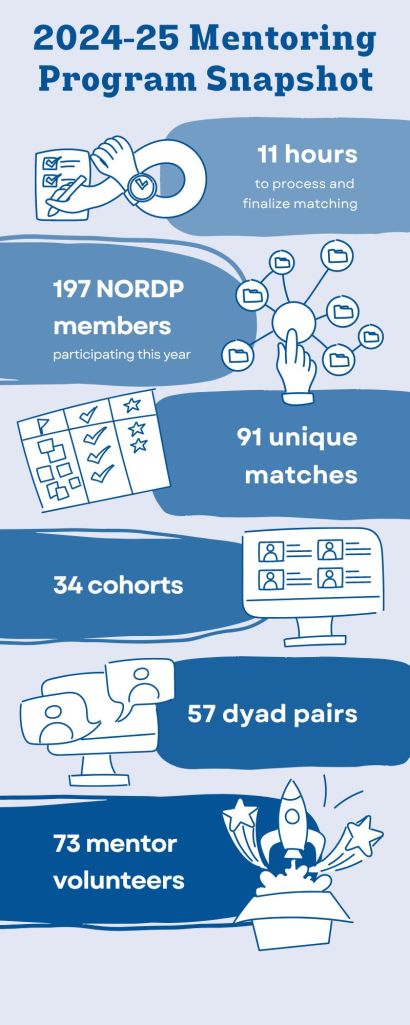
Using this year’s WisdomShare mentor- and mentee-profiles, the Match Team spent approximately 11 hours to process and finalize the matching. Overall, we have 197 NORDP members participating in this year’s Mentor Program. We matched 91 unique matches — 57 dyad pairs and 34 cohort groups, a slight increase compared to 56 dyad pairs and 31 cohort groups in 2023. The Mentoring Committee is especially excited for another year of mentoring cohorts after two successful years. Mentoring cohorts match three mentees to one mentor and they lead peer-mentoring discussions throughout the year. Many thanks to the 73 brave individuals who volunteered to be a Mentor either in a dyad or cohort this year!
Advice for new mentors and mentees (matched participants):
Use the WisdomShare “Learning” tab to help you figure out where to begin.
Log into WisdomShare for your mentor/mentee’s contact information, messaging, and for a suggested milestones list.
Go to the WisdomShare Dashboard to find active Cohort and Peer Mentoring Groups (PMGs) and to join the PMGs you are interested in.
If your mentor/mentee has not reached out to you yet, be the first to contact them! There is no right or wrong way to connect to RD peers.
Look out for future McHuddles – informal gatherings hosted by NORDP Mentoring Committee facilitators and an opportunity to share ideas, ask questions, and collectively learn from other mentees/mentors in breakout sessions.
Contact the Mentoring Committee (mentorprogram@nordp.org) if you have any questions, concerns, or suggestions.
The McMc team is always looking for mentoring dyads and cohorts to profile in a blog post. If you were part of a 2023-24 mentoring dyads and cohorts and are willing to share your experience, contact the McMc team through mentorprogram@nordp.org.
Written by: Mentoring Committee Marketing and Communication Team (McMc)
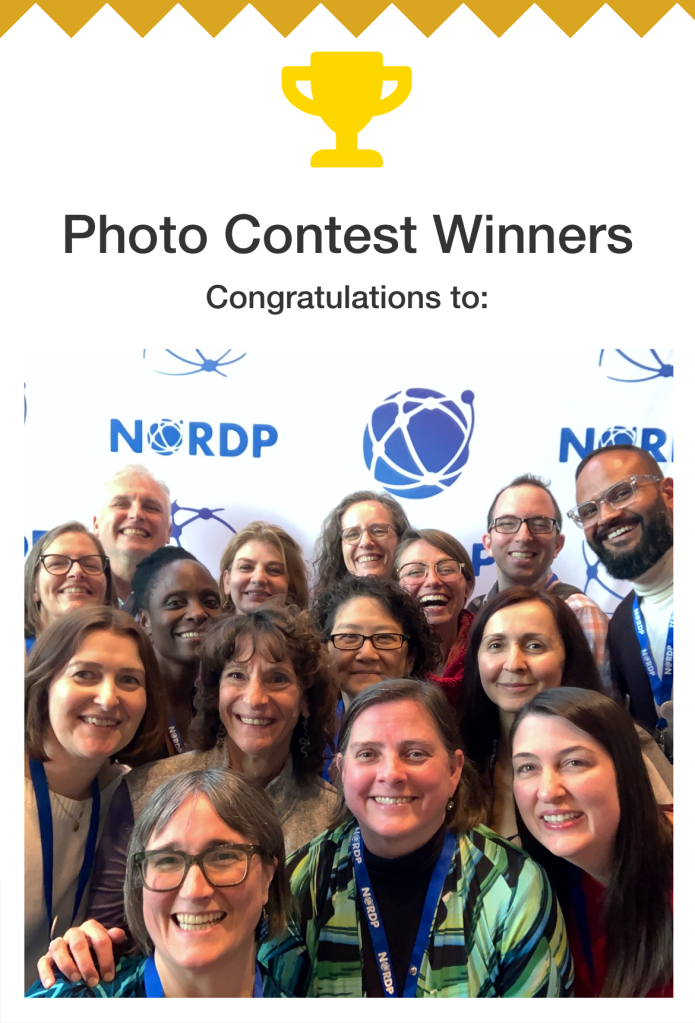
A Big Thank You to all the volunteers who have dedicated their time and effort for the Mentoring Committee (MC) this past year! The MC sponsored a mentoring volunteer appreciation dinner at the 2024 NORDP Conference in Bellevue, WA, where 17 members were able to participate. In fact, the MC group photo was this year’s photo contest winner — many thanks to Hilda McMackin for instigating the photo-opp.
At the MC Lightning Storm, eight speakers shared a wide range of mentoring experiences, highlighting lessons learned about being a mentor or a mentee from thought-provoking perspectives and contexts. For example, Samarpita Sengupta presented her personal RD journey sharing unique challenges from an immigrant’s perspective and highlighted lessons learned for mentors with immigrant mentees; Kelsey Hassevoort shared how she developed her mentor network using informational interviews. Rounding out the speakers of the MC LIghting Storm are: Monica Castañeda-Kessel.Sonya Craig, Joanna Downer, David Hopfe, Hilda McMackin, and Sarah Robertson, with Hilda, David, and Elizabeth Lathrop as the moderators.
The conference breakfast on Monday 4/29 was a great time to connect with NORDP committee members and hear about the work done by the MC committee. The MC breakfast table was packed with conference attendees eager to learn how to join the committee sessions, events, and programs, and to meet the more experienced mentoring “veterans.” The committee members rose to the occasion and showed up early, ready to share experiences and advice. The extra chairs pulled from nearby tables to accommodate everyone joining the conversation were a great testimony to the committee’s hard work and dedication to communication, openness, and pure awesomeness!
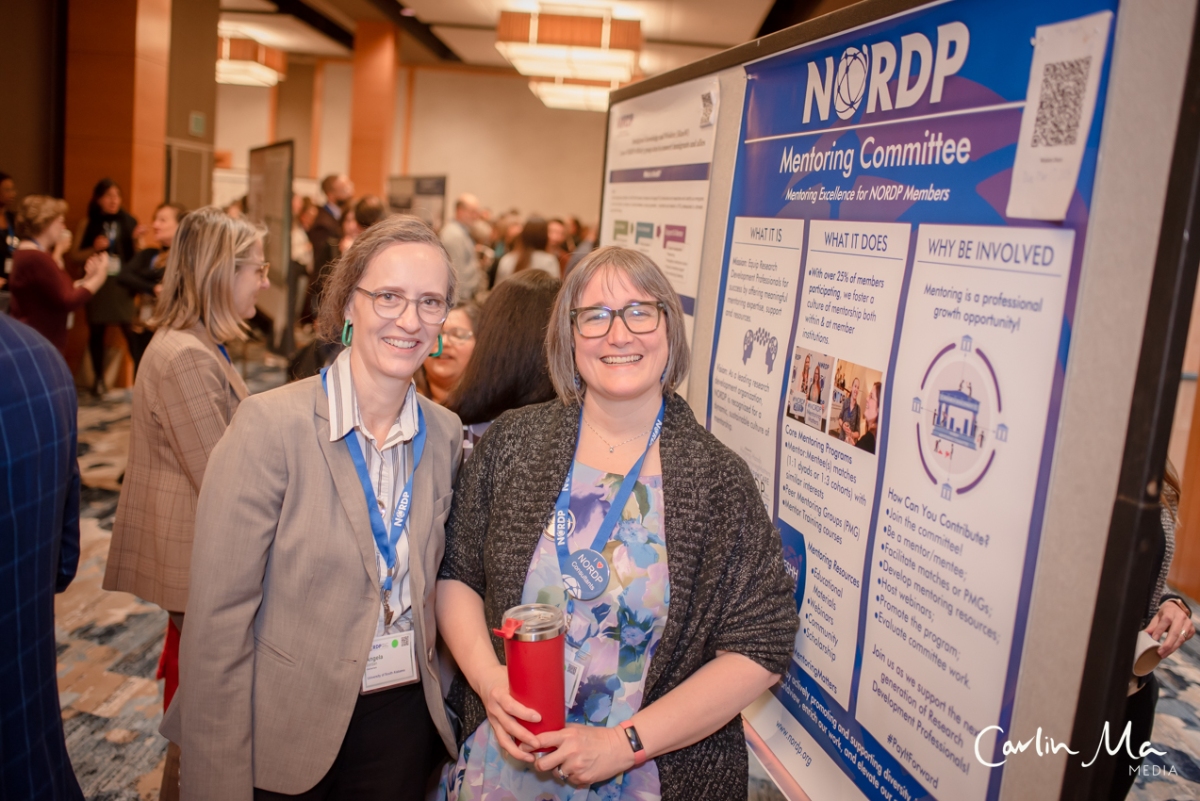
The conversation in front of the MC poster during the Tuesday Poster Session was as lively as the breakfast talk from the previous day. Supported by visuals via the MC evergreen poster, we were able to recruit at least a dozen mentoring volunteers and new mentors/mentees. A heartfelt thank you to Jan Abramson who made mentoring buttons and provided a large box of chocolate truffles. She sent them via snail mail since she was unable to attend #NORDP2024. The chocolate treats definitely helped attract the crowd’s attention and interest.
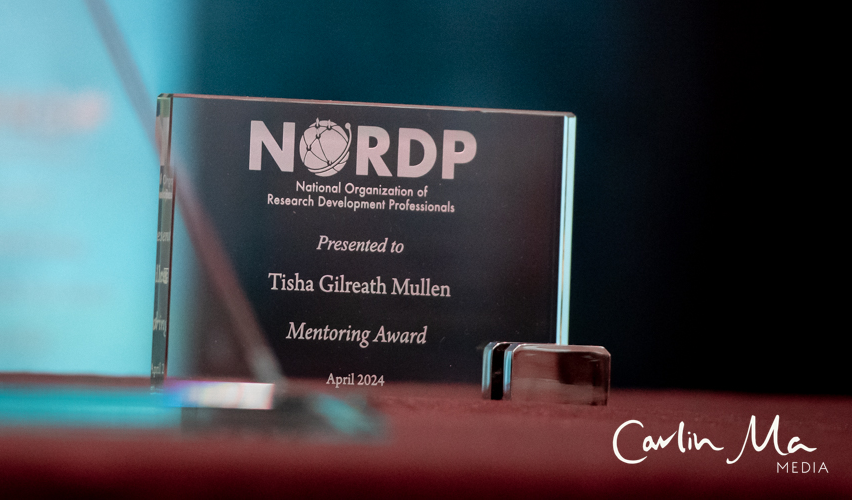
Finally, we are so excited that MC co-cair Elizabeth Lathrop was recognized with a 2024 Rising Star Award during the Awards Ceremony. [Insert picture from photographer] We are so proud of everything you have done to lift the Mentoring Committee, Elizabeth! In addition, Mentor Training Team lead Paula Carney was also awarded the Mentoring Award along with Tisha Mullen this year – Congratulations!
The MC is looking forward to a new enriching mentoring season!
Inspired? You can learn more about MC committee work by reaching out to mentorprogram@nordp.org
Contributor: Kristin Boman, University of Minnesota, Twin Cities
In academic settings, research mentoring and mentor training has traditionally been focused on faculty and trainees. NORDP collaborated with NIH-funded evidenced-based Center for Improvement of Mentored Experiences in Research (CIMER) to adapt the Enter Mentoring curricula for research development professionals. Since then, 100 + NORDP members (7% of members) through six cohorts have participated in mentor training for research development (RD) professionals offered by the NORDP Mentoring Committee.
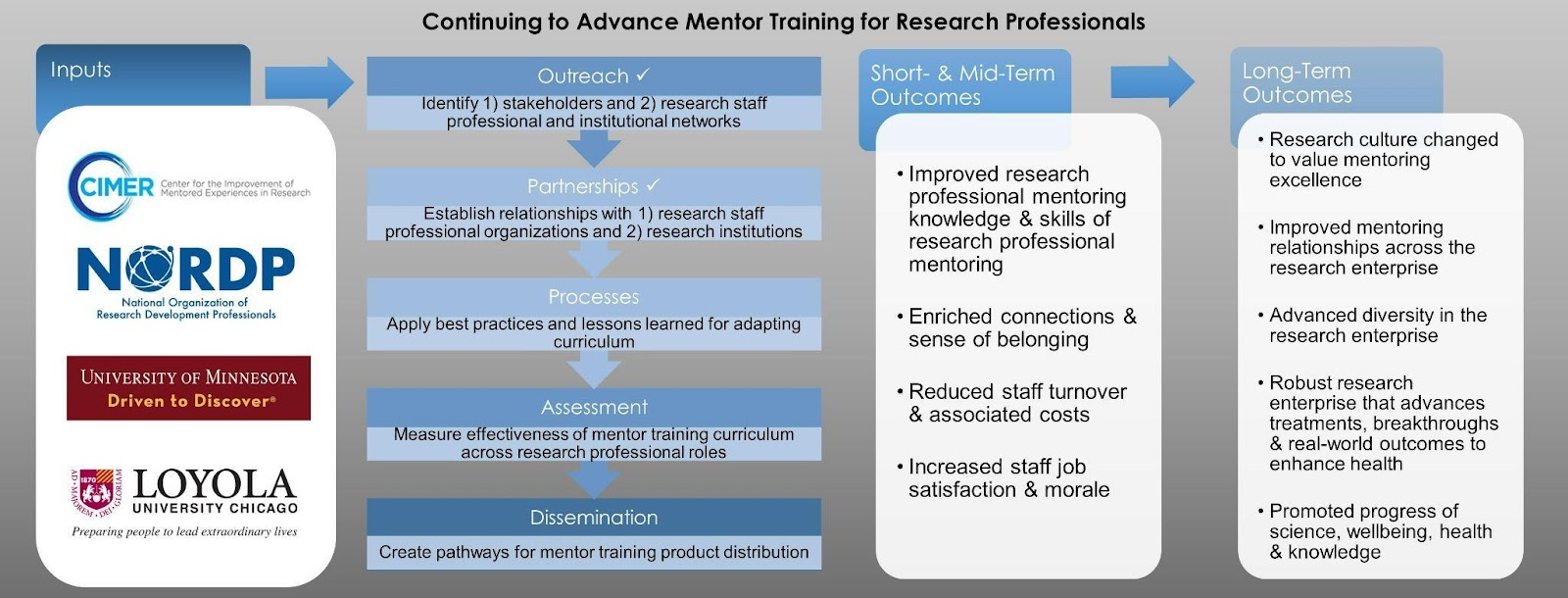
The RD mentor training curricula is being adapted further for research professionals, i.e. program managers, clinical research coordinators, regulatory and compliance officers, etc. in collaboration with personnel from the University of Minnesota’s (UMN) Department of Family Medicine and Community Health and Clinical and Translational Science Institute, Loyola University Chicago and CIMER. Once the curricula adaption is completed, it will be beta tested, assessed, and disseminated (see figure below).
One of the NORDP Mentoring Committee‘s goals is to contribute to the national scholarly discussion of mentoring and bring knowledge of the state-of-the-art in the science of mentoring to NORDP. With support from NORDP Mentoring Committee, UMN, and CIMER travel awards, Kristin Boman presented a poster on staff mentor training at the 2024 Association for Clinical and Translational Science (ACTS) meeting in Las Vegas, Nevada, April 3-5, 2024. Boman co-chairs the NORDP Mentor Training Team with Dr. Paula Carney and leads the UMN Primary Care Practice Based Research Network. The poster generated interest from training and workforce development leaders at several universities; in fact, conversations have begun about potential dissemination pathways.
Several members of the NORDP Mentor Training Team have laid the groundwork for this initiative by volunteering their time and skills, especially Paula Carney, Kathy Partlow and Jan Abramson who led the initial training adaptation for RDs. The most recent cohort was highlighted in a recent blog post. Feedback from NORDP participants has also been instrumental for continual improvements to the training curricula. The next NORDP Mentor Training Workshop is anticipated to launch in early 2025.For more information on the NORDP Mentoring Committee, including how to become involved, please contact the Mentoring Committee via mentorprogram@nordp.org. You can also visit the mentoring tag on NORDP news for any program updates.









 NORDP News