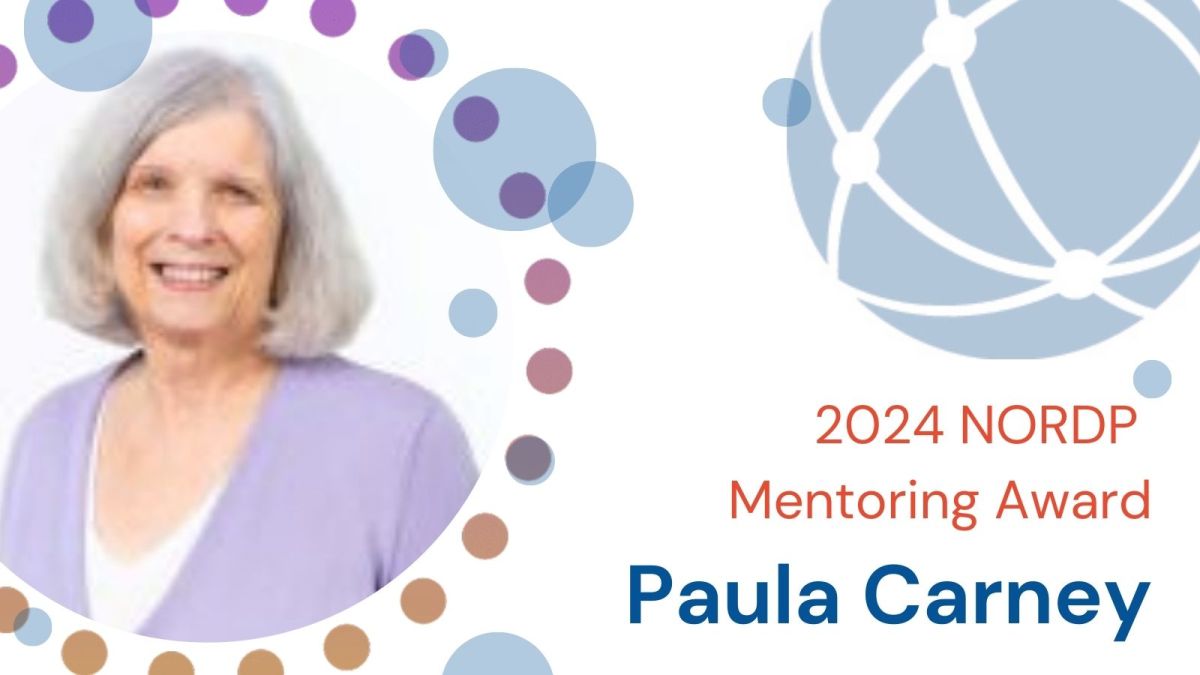
NORDP 2024 Mentoring Award: Paula Carney

First awarded in 2022, the NORDP Mentoring Award recognizes an individual NORDP member’s unique ability to provide an engaging, supportive, and inclusive environment for professional and/or personal growth through mentorship in the research development community. This award is bestowed with the acknowledgment that effective mentoring occurs through formal and informal channels and may vary in style and substance.

Who: Paula Carney

Where: Loyola Chicago University 

Number of years in research development: It depends. Paula started doing what she likes to call “Research Career Development” when she was a faculty member, perhaps beginning in the 2008/2009 timeframe.

Length of NORDP membership: 6 years

Q: How did you first get involved with research development and mentoring?

A: My journey with research career development—focusing on the person doing the research—began when I was a faculty member in Nutrition and Public Health at the University of Tennessee. As one of the only social scientists in a primarily basic science department, I often found myself explaining, mentoring, and bridge-building.

When I relocated to Chicago and joined Northwestern University, I worked with Holly Falk-Kryzisinki as our team developed their Clinical and Translational Science Award (CTSA). I served as the PhD director for all education and training programs through the CTSA in the medical school. My role included adapting Chris Pfund’s training program for clinical and translational researchers, with significant involvement in curriculum development—this was around 2009.

I later expanded my mentor training at Northwestern to include the medical school and eventually the entire university. I discovered that having an effective approach to mentoring was crucial, especially for those situations where a mentee gets the greatest, best-known mentor in the world, but isn’t getting any actual mentoring.” We developed programs for postdocs and junior faculty before there was an established curriculum.

My career path then led me to Chicago State University, a minority-serving institution, where I served as dean, associate provost, and professor. Though we didn’t have a formal program, I continued with informal mentoring, which was always my approach. After some family needs arose, I stepped back and joined Loyola’s School of Social Work, where I could concentrate on people and outcomes in an urban environment, both very near to my heart.

When the pandemic hit, I pivoted to focus more on consulting individuals—the one-to-one aspects of mentoring rather than group activities. Despite the challenges along the way, it’s been an extremely satisfying experience professionally, allowing me to apply all my previous experiences in new contexts.

Q: What was your initial understanding of mentoring and how has that grown over time?

A: I think I initially came to mentoring through my role as a faculty member. I’ve always been drawn to it because it’s such a natural part of career development. When we consider the various developmental roles in research—mentoring, consulting, educating, training, and supervising—I found myself naturally moving between these roles depending on the needs of the interaction.

For me, mentoring was always an extension of my role as an educator. I quickly learned that just because you train people doesn’t mean they’ll succeed—there are different tests and challenges they’ll face. That’s why I look at things both at the individual and organizational level, and everywhere in between.

My understanding has evolved to become more visual over time. I see mentoring as existing along several continuums—from individual to organizational, and from organic to more structured approaches. The key is figuring out the space you need to be in and what the person, group, or organization needs at any point in time. It’s very dynamic.

This perspective has been valuable in our work with the NORDP Mentoring Committee, where we’re recognized as an exemplar for association-based mentoring. We’re now exploring how to extend this approach to other job classifications and components of the research enterprise. 

Q: What does being a good mentor mean to you?

A: Good mentoring means mentoring from the side. I picture the mentoring relationship as two (or more) people sitting together—none having more power than another. It’s about figuring out how to help each other. I also believe that research development professionals have so much knowledge and influence to help faculty. So good mentoring means owning that influence and building that knowledge and influence into service for faculty. 

Q: What do you wish you had known when you began your mentoring journey?

A: Trust yourself. Trust your intuition. Nothing’s going to break, and you’re not going to do anything wrong. I’d also recommend reading and exploring broadly and taking time for reflection.

I often use the iceberg metaphor—what you see is just 10% of what’s there. The real learning comes from getting beneath your neck and out of your head. It’s about trusting and recognizing your intuition through reflection and taking time to explore the softer side of mentoring.

I wish I had known sooner that we all have our saboteurs—those little voices that sit on your shoulder saying, “Don’t do that. Nobody’s going to be interested in that.” You need to silence those voices.

Another important realization is that while you should focus on the mentee, much of what they need is already inside them. You’re just guiding them a little bit, helping them discover their own path. I had one mentee who realized at the end of our formal relationship that she didn’t want to be in this field at all. So our work shifted to figuring out where she actually wanted to be.

That’s the beauty of mentoring relationships—sometimes they evolve beyond the original context. The connections continue because you genuinely like each other and continue to learn together. It’s really, really cool.

Q: What have you found most rewarding, and most challenging, about being a mentor?

A: One of the most rewarding aspects has been developing a vision for how mentoring can function at both individual and organizational levels. The dynamic nature of finding the right space to meet people’s needs at any given moment is both challenging and fulfilling.

A particularly rewarding project was developing a logic model last year with Kristin Boumann that positions NORDP as an exemplar in association-based mentoring. This work has allowed us to think about how we can extend our approach to other job classifications and components of the research enterprise.

For example, we’re now meeting with Clinical Research Coordinator groups at several universities on a multi-year project where I’m serving in a consulting role. It’s challenging work that takes us beyond our usual NORDP initiatives, but it’s incredibly rewarding to see our mentoring model being adapted and implemented more broadly. 

The challenge is always balancing the organic, relationship-based aspects of mentoring with the need for structured programs that can be scaled and measured. But that tension is also what makes mentoring work so interesting and impactful.

Q: What advice do you have for others within NORDP who wish to follow in your footsteps?

A: Just get involved. Just do something and say something. NORDP is an organization that is remarkably flat in its structure, as is the field of research development itself. That openness creates numerous opportunities for contribution.

I think that’s what makes our organization and association special—there’s a place for everyone. Having worked in more hierarchical environments where I was responsible for things like accreditation, I really appreciate the collaborative nature of NORDP.

Your experience might vary depending on your institutional context—working in the humanities will be different than in an engineering school—but the key is to find your niche and contribute from your unique perspective. Faculty involve research development professionals very differently from other people in the system, which gives us a special vantage point.

The beauty of NORDP is that you can bring your whole self to the organization. Whether you’re interested in mentoring, professional development, or other aspects of research development, there’s space for your voice and contributions. Don’t wait for an invitation—just jump in and get started.
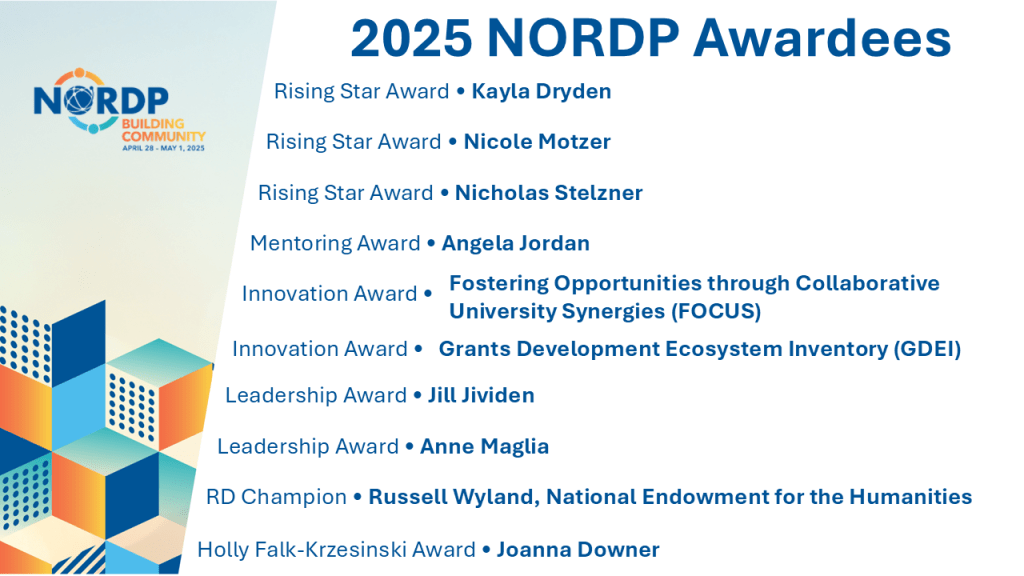
Congratulations to the 2025 NORDP Awardees!

NORDP is powered by the excellence and impact of its members. Each year, NORDP Awards celebrate the outstanding accomplishments of NORDP members making exemplary contributions to the organization as well as the practice and/or study of research development. NORDP Awards honor the distinctive achievements and contributions of individuals, collaborative groups or work teams, programs or projects, and organizations. 

Recipients of 2025 NORDP Awards were recognized during the annual NORDP Conference held virtually from April 28 – May 1. In the coming months, you will have a chance to learn more about each awardee through in-depth interviews that will be shared through NORDP News. Congratulations to all of the fantastic awardees for your service to our organization and profession!

Rising Star Award

Kayla Dryden, The University of Texas at Austin

Nicole Motzer, Montana State University

Nicholas Stelzner, University of Washington


Mentoring Award

Angela Jordan, University of South Alabama


Innovation Award

Fostering Opportunities through Collaborative University Synergies (FOCUS): Tracy Gatlin and Nicole Motzer (Montana State University), Carly Cummings and Ryan McAllister (University of Idaho), Heather Borck, Matthew Dwyer, Nathan Meier, Jackson Hardin, and Tisha Gilreath Mullen (University of Nebraska-Lincoln), Carrie Busha and Aurora Pinkey (University of Nevada, Reno), Jeri Hansen and Dawnie Elzinga (Utah State University)

Grants Development Ecosystem Inventory (GDEI): Kara Luckey (Seattle University), Jennifer Glass (University of Massachusetts Dartmouth), Dean Gerstein (Pomona College), Sarah Robertson (Bryn Mawr College), Amy Chan-Hilton (University of Southern Indiana)


Leadership Award

Jill Jividen, University of Michigan

Anne Maglia, University of Massachusetts Lowell


Research Development Champion Award

Russell Wyland, National Endowment for the Humanities


Holly J. Falk-Krzesinski Service Award

Joanna Downer, Duke University

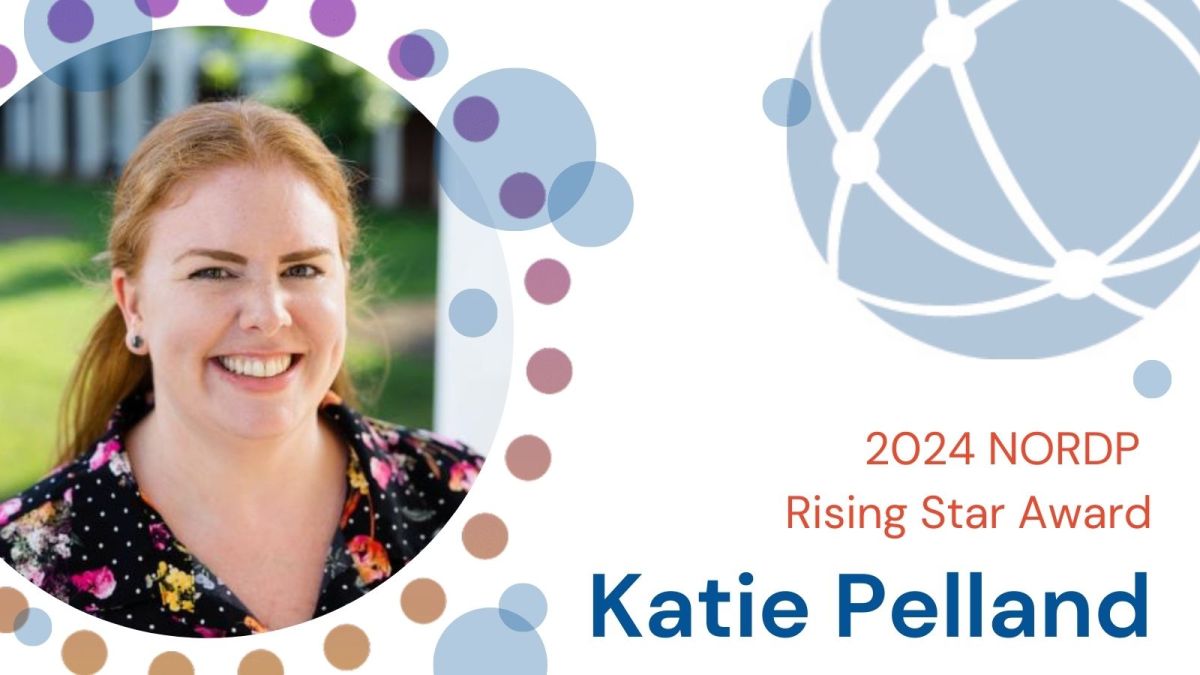
NORDP 2024 Rising Star Awardee – Katie Pelland

The NORDP Rising Star Award recognizes individuals for their outstanding, early volunteer contributions to NORDP and strong potential for future contributions to the organization and the profession or the field.

Who: Katie Pelland

Role: Senior Research Program Officer, University of Virginia Brain Institute

Number of years in research development: 6

Length of NORDP membership: 6 years


What initiative are you the most proud of in your role as a NORDP volunteer?

One initiative I’m particularly proud of in my role as a NORDP volunteer is the streamlining of the board application process. Through the years there have been various iterations of the Board application process and the expectations of Board candidates. One thing we did while I was the co-chair of the Nominating Committee was to examine the application process and what barriers it might pose to members running for the Board. And that resulted in us streamlining the application process to focus on what truly matters for running for the NORDP Board: why candidates want to be on the board and how they are qualified to serve. We really want to have a Board that represents the diversity of the NORDP membership and since instituting these changes we’ve seen an increase in Board candidates and NORDP members at a variety of career stages running for the Board.

Another initiative I’m proud of is creating a transparent and straightforward path to committee membership for two of the committees on which I’ve served: the Nominating Committee and Conference Committee. This process involved putting out an open call to NORDP members to gauge interest and launching a simple form for interested members to complete in order to join the committee. I think there are sometimes barriers to NORDP service, and our goal was to let NORDP members know that it’s very easy to join a committee and get involved. These efforts have strengthened both committees and brought in NORDP members who want to give back to the organization but might not have known where to start. I would love to see this process expanded to include all NORDP committees to make it easier for our members to volunteer!


How did you hear about NORDP and what made you join initially?

I first heard about NORDP while I was finishing up graduate school and working as an intern in UVA’s central research development office. My supervisor, Becca Latimer, was very active in NORDP and introduced me to the organization immediately after I started and encouraged me to join. Given her enthusiasm and the value of the community, knowledge-sharing, and resources, joining NORDP felt like a no-brainer. 


What relationships have you built as a result of NORDP?

It’s a long list that ranges from fantastic one-off conversations at virtual meetings and in-person conferences to honestly some of my closest friendships. One of the things I think is so valuable about NORDP relationships is the shared understanding of our work in research development. Even though our jobs may differ, there’s a mutual comprehension and respect for what we do, which can be harder to find with colleagues outside of our field. There’s also a “rising tide lifts all boats” mentality within the NORDP community and everyone is so generous in sharing their knowledge so we can all improve.

Additionally, the mentors I’ve gained through both formal and informal channels have been invaluable. As I’ve navigated career changes, these mentors have helped me brainstorm ideas, and have hard conversations that have helped me figure out where I want to go and what I want to do. All of these relationships have given me a stronger sense of all the things that a career in RD can be.


What are you most excited about when it comes to the future of NORDP? 

I’m very excited about the rapid growth NORDP, and the field of research development (RD), has been experiencing. NORDP is playing a major role in shaping how RD is evolving and expanding. I’m particularly excited about the effort to professionalize the RD profession, with the introduction of a new journal, NSF GRANTED, and NORDP’s certification or credentialing task force. These efforts are helping to establish RD as a recognized and respected career path.

Additionally, NORDP is putting more intention into skill transfer through workshops and other educational opportunities, which helps both new and experienced RD professionals broaden their skill sets. This is really important for the continued growth and development of the field, particularly for those of us who are in the earlier stages of their careers and are thinking about what our trajectory will be long-term. It’s also exciting to see representation of RD professionals in higher-level positions, such as AVPRs, which is changing the institutional landscape. This trend is likely to continue, allowing RD professionals to move up and expand their influence.


What recommendations do you have for members to get more involved with NORDP?

I have so many! My first recommendation for members looking to get more involved in NORDP is to start by joining a committee that interests you. Read up about the different committees and choose one that aligns with your passions. Then, email the co-chairs to express your interest. Most committees are always welcoming new members, so don’t hesitate to reach out.

Another great way to get involved is through the mentoring program, either as a mentee or a mentor. As a mentor for the first time this year, I’ve found it incredibly rewarding. Despite some initial imposter syndrome, my conversations with my mentee, who is new to RD, have been really insightful and beneficial for both of us.

I also know that many regions have regular Zoom or even occasionally in-person get-togethers, and attending these can help you connect with others and stay informed about what’s happening in your neck of the woods. The annual meeting is also a fantastic opportunity to get involved, and with the 2025 meeting being virtual, it will be more accessible.

Lastly, participate in the elections by attending the board candidate forum and voting for members of the Board. It’s important to have a say in who leads our organization!


What does your future in NORDP look like?

In the immediate future, I’m transitioning into the role of immediate past chair of the Nominating Committee before rolling off. I’ll miss serving on NomCom – it has been a wonderful opportunity to learn about NORDP and the Board without overextending myself, which I have really appreciated. I’m also excited to be serving as one of the Conference co-chairs this year!

Longer term, there’s so much I’m interested in doing. I’ve started to get involved with the Communications Working Group and I’d like to get more involved in NORDP’s Committee on Inclusive Excellence, whose work is increasingly important. I also plan to stay active in the Atlantic region, where there’s been a real push by our current regional leaders to make the region more active. I could see myself someday aspiring to a leadership role within the region and helping foster the same level of engagement we see in other regions like the Northeast and Great Lakes.

NORDP 2024 Innovation Award: Training Grant Support Office at Emory University

Pictured from left to right are Amber Mason, Tekla Smith, Kelly Ann Moore, and Dena Reinoso.

Who:

Kelly Moore, Director, Training Grant Support Office, Emory University

Amber Mason, Associate Director of Evaluation, Training Grant Support Office, Emory University

Dena Reinoso, Assistant Director, Training Grant Support Office, Emory University

Tekla Smith, Project Support Specialist, Training Grant Support Office, Emory University

Where: Emory University

Number of years in research development: Kelly 4 years, Dena 3 years, Amber & Tekla 2 years each

Length of NORDP membership: Same as above!

The NORDP Innovation Award recognizes individuals, groups, or teams, functional units, or organizations who leverage unique skills or resources to kick-start innovation in research development and advance the profession or the field in ways that generate evidence of promise or demonstrable results. Innovators leverage partnerships, experiment with tools and techniques, or generate and share knowledge to advance NORDP and the work of its members.

The interview was conducted with Dr. Kelly Moore, on behalf of the Training Grants Support Office Team.

What is the Training Grant Support Office and how did you first become interested in establishing TGSO?

The Training Grant Support Office (TGSO) at Emory University is dedicated to bolstering the sustainability of our current training programs while also identifying and fostering new areas for program development. We achieve this by providing specialized expertise, tools, and resources that are essential for the success of our research training initiatives. I founded the TGSO in December 2020, driven by a strategic vision from Dr. Deborah Bruner, Emory’s Senior Vice President of Research, who recognized the critical need for enhanced support of research training within the larger research ecosystem at Emory.

Prior to joining Emory, I was involved in training grant and fellowship support as part of a broader set of responsibilities at the University of Texas MD Anderson Cancer Center UTHealth Houston Graduate School of Biomedical Sciences. There, I was managing a training grant, everything from processing payroll for trainees to programming, running their seminars, bringing in speakers, etc. That’s what really got me into this world of training grants and being in an academic environment, although it was in the Dean’s office, so we looked at it from a very different perspective, that is, from an educational standpoint. As part of my other duties, I started helping students and faculty apply for fellowships and training grants. At that time, it was a small portion of what I did, but that’s what started to get me interested in extending more full time into training grants. After a few years, some duties shifted, and my fellowship and training grant responsibilities expanded, and then that’s when I saw the position at Emory to start the TGSO.

Moving from an academic to an RD office was really interesting. Being in a Research Office, we are able to provide equitable support to everyone, regardless of where they are located in the University and across career stages to include predoctoral and postdoctoral grants. 

The opportunity to establish the TGSO allowed me to focus exclusively on this vital area. I was particularly drawn to Emory because it provided the platform to not only enhance the support for training grants but also to create and implement comprehensive, university-wide initiatives that would strengthen our programs for years to come.

What was the process of building out TGSO and how did your membership in NORDP play a role in your efforts?

Building out the Training Grant Support Office (TGSO) was a strategic and iterative process. We started small, but with a clear vision. Initially, it was just me, but over time, we’ve expanded to a team of four dedicated professionals. In the early stages, we focused on engaging with stakeholders across the university to understand the existing landscape of training grant support. This involved assessing what resources were already in place, identifying gaps, and determining where there was room for improvement.

To get started, I did a listening tour with our faculty and our central research offices. I also consulted with the Graduate School and the Office of Postdoctoral and Mentored Trainee Education, the Office of Sponsored Programs, and Research Compliance to learn what was currently happening at Emory. When I looked behind the curtain, I began to realize that training grants are really important to a small corner of the world.

At Emory, last fiscal year, we secured over $1.1 billion in sponsored research awards, with $15.6 million of that coming from training grants. While training grants represent a very small piece of the pie, it’s a really, really important piece.  These grants play a critical role in sustaining and advancing the research ecosystem by cultivating the next generation of researchers and ensuring the long-term vitality of Emory’s research enterprise. A lot of Emory’s processes and policies are built for the big piece of the pie — the research grants. There were no specific policies and procedures for training grants, and so a lot of my work was looking at what had been done, because within a particular department or division, training grants may be been managed very well. I wanted to learn from what as working well and amplify it to all of the programs.

Getting started, we had to be strategic in our approach, so we chose to focus first on pre-award services, knowing that a solid foundation here would be crucial before we could effectively build out post-award supports. A key principle throughout this process was ensuring equity among our programs—we were committed to not offering a service to one program unless we could ensure it would be available to all.

I didn’t know about RD until I met my Dr. Kim Eck, my supervisor.  NORDP really helped me gain an understanding of the institutional standpoint: What is our capacity for taking on training? What areas are we strong in? What are our core research areas that we focused in? And how can we develop programs on top of those core research areas? We used a lot of competitive intelligence to determine our top funding areas and to find natural groups of faculty that we can build programs around.

My membership in NORDP has been instrumental in shaping TGSO’s approach. Nationally, training grant support is often housed within academic-based offices, such as a university’s graduate school or postdoctoral affairs office. Emory is unique in that TGSO is situated within the Office of Research Development, which gives us a distinct advantage. Having previously worked within an academic affairs office, my perspective on training was rooted in traditional academic frameworks. However, through NORDP, we’ve been able to integrate these educational approaches with RD principles, creating a hybrid model that enhances the support we offer for training grants at Emory.

What relationships have you built as a result of NORDP, and how have these relationships influenced your work?

The relationships I’ve built through NORDP have been incredibly rewarding and have significantly influenced my work. In addition to my role with the TGSO, I’m the co-founder and current Vice President of the National Training Grant Community of Practice (NTGCOP). Founded in early 2021 by training grant support offices from Emory, Georgetown University, Northwestern University, and the University of Wisconsin-Madison, NTGCOP aims to support leaders nationwide through tri-annual meetings focused on NIH guidelines, resource sharing, and training grant administration.

We started NTGCOP because training grants can be a very lonely space. NIH guidelines, like most federal guidelines, are muddy at best. A lot of it’s open to interpretation and experiences. Having someone you know to ask best practices, or, how do you read this, was really important to us, and it didn’t exist from an administrative space. NIH is very faculty heavy, and they have lots of groups and conferences for the faculty, but not so much for the administration. NORDP was a huge factor in our growth, because, as all of my counterparts all sit in academic offices, they didn’t even know what NORDP was. We took our presentation to NORDP, and there was a light bulb moment in the room; everyone was like, oh my gosh, help with training grants!  Today, we have nearly 500 members from over 100 institutions, many of whom are also NORDP members. These relationships have been integral to our growth and success.

We’ve submitted some responses to NIH requests for information that relate to training grants, and we were told that one of the letters and RFIs that we submitted actually had an impact on changes NIH has implemented. We’ve now built some strong relationships with NIH, both within particular institute’s like NIGMS, some various program managers, and also with Dr. Ericka Boone, Director of the NIH Division of Biomedical Research Workforce.

More recently, we’ve co-presented with the Federal Demonstration Project (FDP) and the NIH on reducing administrative burdens for NIH training grants. We’ve also recently become a 501(c)(3) non-profit organization, which is a significant milestone for us. It was a NORDP member who connected us with the FDP, whose purpose is to evaluate administrative burden in research. We connected this effort with NIH, and the three organizations co-presented on training grants, with over 600 people attending. We conducted a survey of the audience and came up with a one pager of tips and tricks for first time applicants that we’re now sharing as a resource.

One of NORDP’s greatest strengths is its strong and supportive community. Since joining, I’ve developed numerous connections through my participation in the NORDP Mentoring Training Series and as a recent member of the NORDP conference planning committee. These connections have provided invaluable insights, collaboration opportunities, and support, greatly enhancing my work with TGSO and NTGCOP.

What other innovations have you observed within NORDP (or the field of research development) since you first joined?

One of the most impactful innovations we’ve embraced since joining NORDP is the use of competitive intelligence within research development—a strategy recognized by NORDP with a previous Innovation Award. By applying various competitive intelligence analyses, TGSO has shifted from a reactive to a proactive approach, working closely with faculty to initiate and develop strategic, multi-departmental, and multi-institutional proposals. This approach has also led to the integration of new training program expectations into all major Senior Vice President for Research investments, such as centers and university-wide initiatives.

We have a small group of US private institutions with medical schools that we benchmark against, and we will do a lot of competitive intelligence reporting on that to benchmark where we are make decisions on what type of programs we should be focusing on. And that competitive intelligence piece has been really critical, because if we have the data to back up a decision, it is much more palatable for the faculty. For example, if we can come back and tell them, that lately, applications that go in without any sort of refined career development for trainees only have x percent of success, the faculty are much more inclined to rethink what they’re doing.

The results have been tangible and impressive. Emory is now ranked among the top 20 institutions in the country for NIH-funded training grants. We’ve seen our training grant submissions double, and the average scores of these submissions have improved by 30%, often falling at or below the current NIH funding lines. Notably, Emory has achieved a perfect score (10) on multiple training grant proposals for four consecutive years—something that hadn’t been accomplished in over a decade. In FY22, the Emory TGSO experienced a 125% increase in awarded proposals, more than doubling the number funded in FY20 and FY21.

What advice do you have for NORDP members leading their own innovative initiatives within the field of RD?

My number one piece of advice would be to embrace ambition. Don’t be afraid to pursue bold and ambitious ideas. Some of the most impactful innovations come from daring to think big. If you believe in your idea, pursue it with confidence, knowing that innovation often requires stepping outside of the conventional. Also, it is important to build a strong network. Collaboration is key in RD. Cultivate relationships with key stakeholders, both within your institution and across the wider RD community. Networking can provide valuable insights, resources, and support as you navigate the challenges and opportunities of leading your own innovative initiative.

Personally, I wouldn’t be here where I am today without being ambitious and taking the shot. And so that’s my biggest piece for anyone, especially for moving into leadership in any capacity. Whether you lead a team or you’re a part of a team, bring up your ideas. Don’t feel like any ideas you know not good enough to pursue, because if someone told me it’s absolutely crazy for y’all to be reaching out to the NIH about this, then I would not be where I am today, in partnership with NIH to help make change.

I have to say, NORDP, hands down, is my absolute favorite professional organization I’ve ever been a member of. We have a great sense of community and heart and care for members. I did the NORDP mentor training series earlier this year, and the relationships I built with everyone there were fascinating. Moving forward, there’s a lot to pursue at the intersection of training grant support from an academic perspective and training grant support from a research perspective. We are happy to help others working in that area, however that may be.

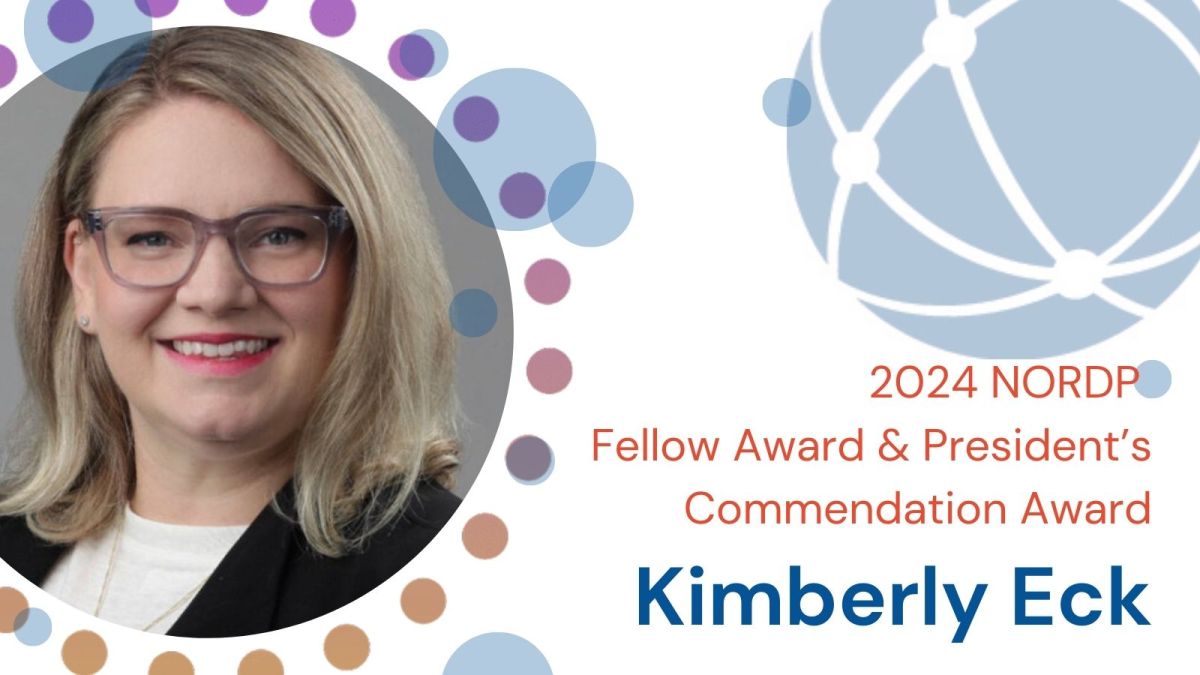
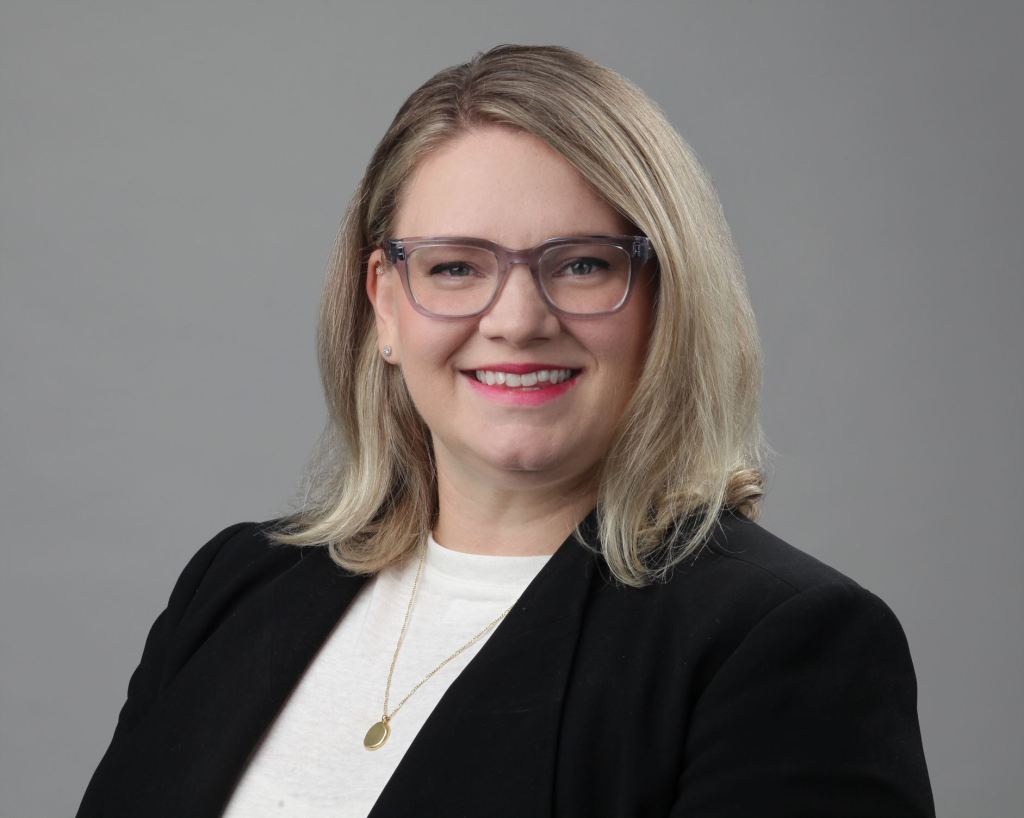
NORDP 2024 President’s Commendation: Dr. Kimberly Eck

This commendation recognizes individuals for exemplary service to NORDP and is presented at the discretion of the outgoing NORDP President to individuals who have contributed to the success of their presidential year.

Who: Dr. Kimberly Eck, Senior Associate Vice President for Research at Emory University & Senior Director of the NORDP Consultants Program

Where: Emory University

Number of years in research development: 16 years

Length of NORDP membership: 10 years

What initiative are you the most proud of in your role as a NORDP volunteer?

I am so proud of the NORDP Consultants Program! The NORDP Consultants Program is dedicated to expanding the national research ecosystem by providing research development services to build research capacity at MSIs and ERIs at no cost to those institutions. I am deeply grateful for the recognition that I do this work as a volunteer without personal compensation.

The Program was originally conceived of by a group of NORDP thought leaders. At the time the original pilot project was presented, I was on the Board and we agreed to move forward with the concept. 

When we started in 2021, we were working with four HBCUs, funded by a private foundation. We have now worked with 172 institutions of higher education. We’ve helped these institutions with engagements that have secured more than $90 million in funding. I think we will get to $100+ million in mid-2025. Those 172 institutions come from 44 states and jurisdictions, including Puerto Rico and the U.S. Virgin Islands. So, we have a significant reach.

There are three ways to engage with the Program: One is through our cohort model, and that’s where we recruit MSIs. They apply through a competitive process, and we select them based on the alignment of their goals and the activities that they hope to pursue with support from the Consultants. Then, the MSIs engage in a two-year intensive period with us. There’s also follow-on engagement and support opportunities. This cohort model is what the original four HBCUs went through. We’ve already started the second and third cohorts.

The second model of engagement is when we embed into a federally funded proposal process. Here, the funder comes to us and indicates that they would like support for all of the applicants that will be involved in this process. This requires really close collaboration with the funder, understanding what the funders goals are, and then working on one specific proposal with usually a multi-institutional group to submit that proposal and get it panel ready. So that’s a single shot, but all the programs that we’ve engaged with have really been focused on building innovation and research capacity, so that has been very well aligned with what we’re doing.

The third model is partner initiated. Here, an ERI or MSI, reaches out to us and lets us know they are planning to apply for an opportunity and that they need research development expertise. In this case, the partner is leading the submission, and we’re coming along and supporting with specific activities, for example, a capacity assessment. Our first partner-initiated project is led by Delaware State University, an HBCU that successfully competed in the first round of the NIH STRONG program.

I am very privileged to have had the support from Emory University and NORDP to pursue opportunities to grow this program as the Director – and I had a lot of help! More than 20 NORDP members volunteered to help launch the program in summer and fall of 2021. As the program has evolved, MANY NORDP members have contributed to its success.


How did you hear about NORDP and what made you join initially?

I heard about NORDP from a colleague while working at the State University of New York around 2013. I was delighted to learn other people were doing proposal development but in a way that was different than research administration. Like many others have described upon joining NORDP, I felt like I found my people.

What relationships have you built as a result of NORDP?
I deeply value having a national network of people I can call on with different areas of expertise, different experiences, and unique insights. My closest NORDP relationships were built by volunteering together. Attending the annual conference feels like a reunion. Being a part of NORDP has also allowed me to build relationships with other associations, like ARIS, and funders, especially NSF. I cherish everyone that has contributed and/or currently works in the NORDP Consultants Program.


Describe how NORDP has changed from when you initially joined

NORDP’s membership has grown significantly! It is fantastic to continue to see such vibrant in-person conferences alongside virtual offerings that are more accessible. I am excited to see NORDP evolve to meet its members’ needs and new paths of sustainability.

What recommendations do you have for members to get more involved with NORDP?

Consider co-authoring a resource for the Equipping Minoritized and Emerging Research Institutions to Grow their Enterprises (EMERGE) Library. This library features co-created and peer-reviewed knowledge articles and case studies that address MSI and ERI research enterprise priorities and provides context specific implementation strategies and insights. The NORDP Consultants Program hosts writing sprints that bring together RD experts from MSIs and ERIs and more resourced institutions to produce resources. It’s a fantastic way to get involved with the NORDP Consultants Program!

When structuring the articles, we take a factual approach, but we very actively try to not simply regurgitate language in the solicitation. We try to make it more understandable, for example by using more colloquial language. We strive for a balance of what your buddy at your institution would tell you if they could and the factual content. We have published three resources through these sprints in collaboration with the NORD Committee and three more are in development.

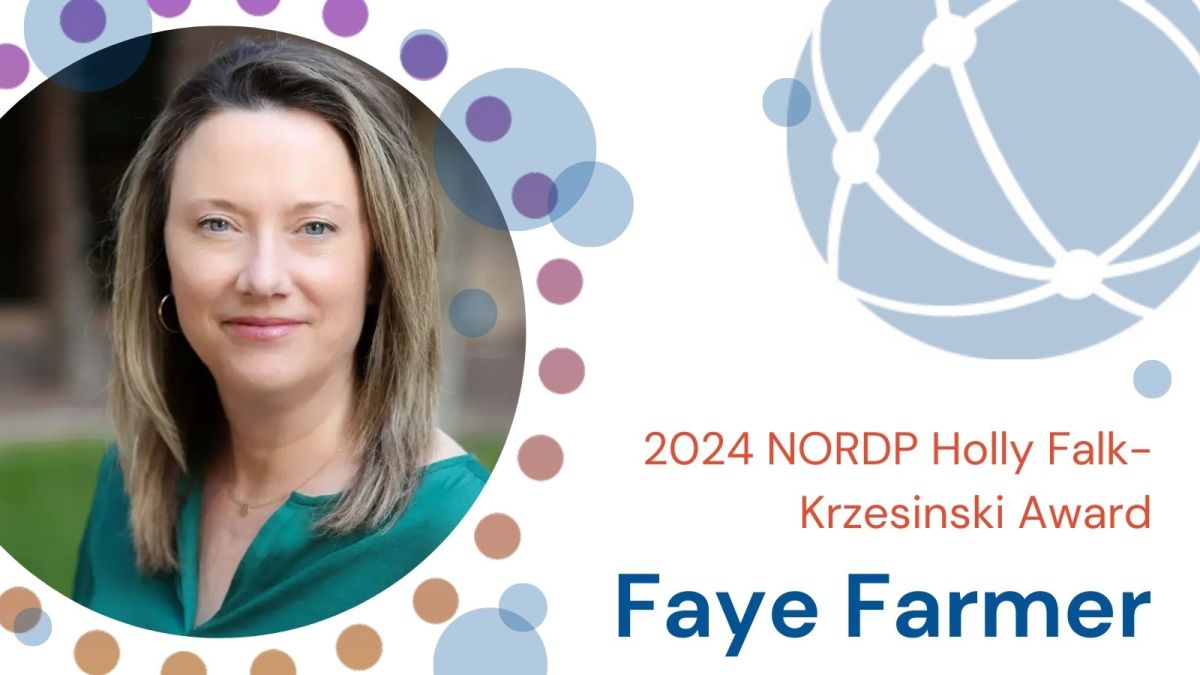
NORDP 2024 Holly Falk-Krzesinski Award

Named for NORDP’s founding President, this award is voted on by the Board of Directors and given annually to a NORDP Member in recognition of outstanding service to the organization, to the research development profession or field, and to peers. 

Who: Faye Farmer

Where: Director of Enterprise Design Initiatives at Arizona State University

Number of years in research development: Faye started working on proposals as an editor at a scientific institute at ASU in 2008. She moved to the University’s central office in 2011. She co-founded the central Research Development office in 2015 and worked there until 2023.

Length of NORDP membership: 15 years

You have served NORDP in numerous roles and capacities over the years. Could you share a bit about what that journey has been like?

The journey has been fantastic. Faye has held both formal and informal leadership roles in NORDP. Faye considers her greatest contributions to be in the area of conference presentations, where she shared about ASU’s experience alongside other universities. When she ran for the Board, it was a culmination of the conference experience, working with the Mentoring Committee and working with the PEERD consulting program.

NORDP has always depended on volunteers. Holding this truth close during her Board service was important to Faye. She served on the Board from 2019 to 2023. While on the Board, she contributed to two Board initiatives. Both leveraged the work of volunteers in the organization. One was the task force for certification. This involved working with several passionate and motivated individuals through a series of steps that culminated in a report that was published this year.

The second effort involved a task force on NORDP policy review and updating. Faye organized individuals interested in creating more inclusive policies within the organization. This work reflected a dynamic, evolving membership in the thousands and tried to future-proof the organization as it grows. The original bylaws were essential to the founding of NORDP, but the policies needed to address size and diversity of the organization’s membership. This work resulted in a set of policy drafts that were provided to the Board in November of 2023.

In your view, what makes an effective leader, and how has your philosophy of leadership informed your work within NORDP?

Faye believes in the power of collaboration. NORDP has taught her this. She also recognizes that she still has a lot to learn about interpersonal relations and communications. Leading in NORDP means that you are good at what you do and also invested in other’s success. Research development is a coopetition, where members balance their own university or college interests while benefiting from each other’s knowledge and experience. This balance is achievable because of the strong sense of community. Leadership means growing the scope and scale of this balance through the many layers of institutional types, career rungs, and time in the profession.

What do you see as the biggest rewards, and challenges, of serving in leadership roles within NORDP?

As far as challenges, the path to organizational change can sometimes feel glacial. But Faye believes it is slow because NORDP values community insight and input. Achieving a well-grounded, high-quality outcome that has meaning for many in the organization often requires contributions from many people over time. As an organizational leader, Faye recognizes that she does not speak for herself but for the people who put her there. This requires frequent checking-ins and creating inclusive and transparent processes.

Faye has found that the biggest reward of working in NORPD is expanding networks upon networks of professionals in research development. Even as her career has shifted in the last year, she still gets emails asking for her thoughts, advice, or connection. At ASU, Faye encouraged her team to engage with NORDP, especially by presenting at conferences. By sharing our experience, NORDP reduces barriers to engagement for its professionals. The result is better, faster, higher-quality, and more effective research development services and support nationwide.

More recently, you have played a crucial role in revitalizing the New Opportunities in Research Development (NORD) Committee. What has that process been like, and what do you see as the greatest opportunities for the field of research development moving forward?

Faye sees incredible opportunities in research development. She believes that there is momentum toward more purposeful strategy development. Faye often touts the importance of strategic (competitive) intelligence, which builds upon institutional analysis and expands it to include national program and policy trends. These early, pre-funding opportunity activities allow research development professionals to answer questions like, who is funded and why. These answers become actionable insight among university leaders, ultimately translating into more efficient funding pursuits.

What advice do you have for NORDP members who aspire to greater service within NORDP or the field at large?

Volunteer! Faye sees a parallel to the advice we give faculty and other researchers. Just step up and get involved. Faye recognizes that people want and should be paid for their work, but volunteering is critical to creating a more inclusive organization. Volunteering provides a unique skill set that may not be accessible through our work. She also recommends that NORDP members call in anyone and everyone to the organization. She says NORDP needs all levels of education, experience, and backgrounds to be successful. It is incumbent upon members to create a more diverse organization with intention and care.  

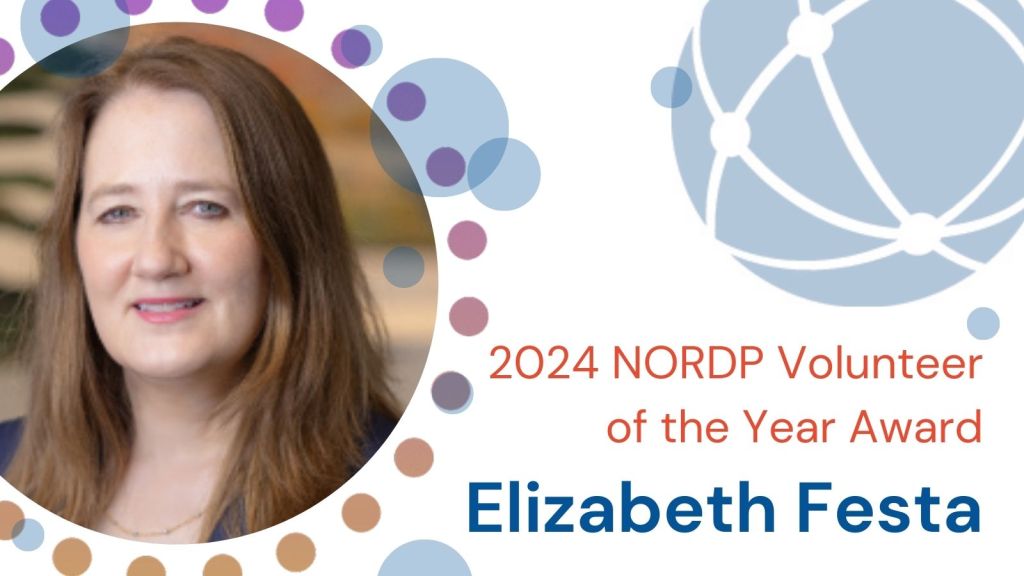
NORDP 2024 Volunteer of the Year Award

The NORDP Volunteer of the Year Award celebrates a NORDP member who has made an exceptional volunteer contribution to the organization during the past 12 months, recognizing them for going beyond what may be reasonably expected with respect to volunteer duties and responsibilities. 

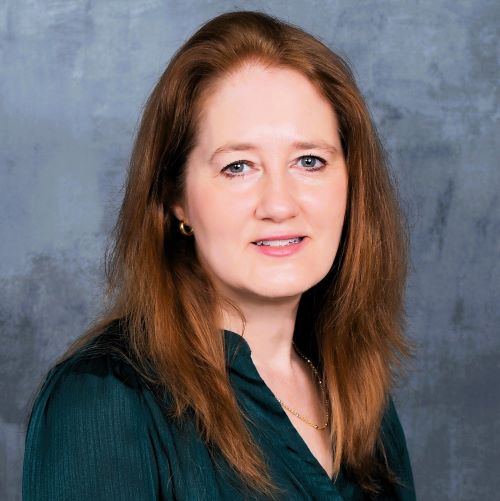
Who: Elizabeth Festa, Managing Director of Grants and Fellowships, Research Universities Practice 

Where:  McAllister & Quinn

Number of years in research development: 8-10 years

Length of NORDP membership: 5 years

What initiative are you the most proud of in your role as a NORDP volunteer? I oversee the Liaison Program for NORDP’s Strategic Alliances Committee (SAC). In that role, I’m most proud of writing reports from SAC liaisons who exchange information between NORDP and the many organizations in the global research enterprise. Over a dozen Liaison Reports can be found in the NORDP News blog, which is easily accessed from NORDP’s main webpage.

Over the last couple of years, I’ve had the pleasure of interviewing SAC liaisons with:

  • Advancing Research in Science (ARIS)
  • Alliance for Hispanic Serving Institution Educators (AHSIE)
  • Canadian Association of Research Administrators (CARA)
  • Colleges of Liberal Arts Sponsored Programs (CLASP)
  • International Network of Research and Management Societies (INORMS)
  • Network of Academic Corporate Relations Officers (NACRO)

NORDP currently has approximately 20 liaison partners, all of which offer significant opportunities for collaboration with NORDP. This delivers great value to NORDP’s members, their institutions, and NORDP as a whole.

How did you hear about NORDP and what made you join initially? Before beginning my position at McAllister and Quinn, I worked at Rice University for 17 years.  I initially served as a faculty lecturer and as associate director of a campus-wide Academic Affairs program for writing and communication. In those roles, I supported graduate and undergraduate students across all schools of study in multi-modal academic communication and advised faculty on how best to teach and assess skills in research writing and presentation. I became interested in research development while I was working in this program. In 2014, I served as a reviewer for the Fulbright-National Geographic Digital Storytelling fellowship.  Shortly after, I began coaching doctoral students applying for federal grants, such as the NSF GRFP, NSTRF, and NDSEG. As I pursued a career in research development, Dr. Phyllis McBride, who was director of  Rice’s Office of Research Development Services, suggested I get involved in NORDP. In fact, I ended up joining NORDP even before I had a full-time position in RD,

I was drawn to RD because of the competitiveness of the grant world. Early in my post-graduate career, I went on the academic job market and received a tenure-track offer.  Ultimately, I decided not to pursue that opportunity. That was a major turning point in my career, as I wasn’t sure what my next step should be.  I realized though, that I wanted to stay in touch with the research world.   In my current job, I get to meet faculty across a range of institutions and disciplines and to learn about their research.   I love the dynamism and forward-oriented genre of the proposal. There is an excitement in developing a strong plan that leverages resources, anticipates and mitigates risk, and imagines potential outcomes and impacts of research.    

What relationships have you built as a result of NORDP? My involvement in NORDP has resulted in extremely close working relationships and friendships that I truly treasure. Many of my NORDP colleagues are senior to me, and I’ve benefitted from their mentorship. As just one example, with their input, I’ve focused on how to run a more effective meeting. Watching leaders like Karen Eck, Kim Patten, Sharon Pound, Jessica Venable, Faye Farmer, Peggy Sundermeyer, Jess Brassard, and others has taught me so much, whether it be focusing on my career path or learning how to use communications tools.

Describe how NORDP has changed from when you initially joined. I’ve witnessed the tremendous growth of NORDP, with our membership reaching 1,400 and over 700 attendees at the annual conference. During my time on the Membership Services Committee (MSC), we approved three new affinity groups. Within the Strategic Alliances Committee (SAC), we have also approved several new liaisons over the last two years.  This is an exciting time for NORDP, with new challenges and opportunities as we expand our membership and external networks.  

Of particular note, our 2024 membership survey and RD certification and credentialing surveys revealed the diverse roles and institutions in which RD members are serving, and raised questions about how we define the field of research development.    Additionally, I’ve seen a shift to RD professionals working more in hybrid and remote roles. MSC’s upcoming salary survey which will launch in the spring of 2025 is sure to give us new insights into the career choices and career paths of our membership.

One other evolution in membership was revealed at the new member breakfast at this year’s conference. There seems to be a heightened interest in NORDP as a professional development venue, with new training provided virtually to entire RD offices at member locations and targeted programs for both entry-level and advanced RD professionals.

What recommendations do you have for members to get more involved with NORDP? I can encourage others to follow some of the steps I’ve taken to get engaged in NORDP. First, attend your regional group and find  affinity groups that match your interests. Second, attend the annual conference and join in on the activities like networking dinners and the poster session. Third, join NORDP Groups (these replaced Circles); these are great virtual spaces for  collaboration. Fourth, attend the annual Committee Round Robin online event. Finally, utilize LinkedIn to connect to NORDP members and don’t be afraid to connect to or follow leaders whose work inspires you. NORDP is one of the most welcoming professional organizations I have been a part of, and I am invested in helping others find their place in our community.  

Congratulations to the 2024 NORDP Awardees!

NORDP is powered by the excellence and impact of its members. Each year, NORDP Awards celebrate the outstanding accomplishments of NORDP members making exemplary contributions to the organization as well as the practice and/or study of research development. NORDP Awards honor the distinctive achievements and contributions of individuals, collaborative groups or work teams, programs or projects, and organizations. 

Recipients of 2024 NORDP Awards were recognized during the annual NORDP Conference held April 28 – May 1 in Bellevue, WA. In the coming months, you will have a chance to learn more about each awardee through in-depth interviews that will be shared through NORDP News. Congratulations to all of the fantastic awardees for your service to our organization and profession!


Rising Star Award

Katie Pelland, Senior Research Program Officer, University of Virginia Brain Institute

Elizabeth Lathrop, Proposal Development Specialist, University of Maryland A. James Clark School of Engineering


Volunteer of the Year Award

Elizabeth Festa, Assistant Director of Research Development, Rice University


Mentoring Award

Paula Carney, Director of Research Development, Loyola University Chicago School of Social Work

Tisha Gilreath Mullen, Director of Proposal Development, University of Nebraska-Lincoln


Innovation Award

Emory University’s Training Grant Support Office: Kelly Moore, Director of Training Grant Support; Amber Mason, Associate Director of Evaluation; Dena Reinoso, Assistant Director of Training Grant Support; Tekla Smith, Project Support Specialist


NORDP Fellow Award

M.S. “Peg” AtKisson, Founder and President, AtKisson Training Group

Kimberly Eck, Associate Vice President for Research, Emory University


President’s Commendation

Kimberly Eck, Associate Vice President for Research, Emory University


RD Champion Award

Andy Burnett, Co-Founder and CEO of KnowInnovation


Holly Falk-Krzesinski Service Award

Faye Farmer, Director of Design Enterprise Initiatives, Arizona State University

Learn more about the NORDP Awards program and view past awardees.

NORDP 2023 Fellow: Jennifer Lyon Gardner

The NORDP Fellow Award recognizes the long-term accomplishments of members who have made sustained contributions to NORDP and worked tirelessly to advance research development as a profession and/or as a field. Status as a NORDP Fellow is the highest professional distinction the organization may bestow on a member. 

Who: Jennifer Lyon Gardner, Deputy Vice President for Research

Where: The University of Texas at Austin

Number of years in research development: 16

Length of NORDP membership: 11 years

What does leadership mean to you? 

I think leadership means different things in different contexts. The way I operate as a leader in my role at UT Austin is really different from the way I’ve operated as a leader within NORDP. Within UT, I started out as an office of one and had to do all the things myself. This meant I had to be very strategic about my time management and prove that RD services could be of value to faculty in order to move toward my goal of establishing RD at an institutional level. Once we had a VPR in place who believed in this goal, I was able to build up a large team. But I never set out to be a supervisor of a large group of people. I don’t consider myself to be the greatest mentor, actually – it requires a degree of patience that I find challenging when I have a bunch of things I want to accomplish. But I’m extremely fortunate to have managers within my team who are incredible at providing that mentoring. This allows me to focus on leveraging my strengths to lead the team. I excel at setting a vision for my team. I’m good at advocating for what we need and working with top level administration to get things done and bridging the faculty-staff divide. 

Within NORDP on the other hand, when I was on the Board I sensed there was a need for something else. Within the Board, everybody is a leader. Everybody can set a good vision. What I saw was a need for someone who could put their head down and get stuff done. I spent so much of my time at UT being the person who makes all the decisions and justifies the existence of RD, it was honestly refreshing to have a group of peers to work with on the NORDP Board who already understood the value of RD so we could just get down to business. I took on the operational role of Board Secretary, which meant I spent a lot of time checking things off lists, keeping things organized, and doing a lot of behind-the-scenes work that I don’t think the average NORDP member will ever tangibly be able to see. But I’m proud that this behind-the-scenes work made the Board’s job easier and freed up their time to be able to focus on the important stuff, the same way that RD officers support faculty so the faculty can really focus on the scholarly content of a proposal and do their best work. And by contributing to the efficiency of how the Board and our organization runs, that ultimately benefits NORDP members.

What has your journey within NORDP looked like so far?

I came into NORDP not knowing anyone or anything about the organization. When I first joined (in 2013), I followed the listserv passively for a while and then I put a question out there. The question was about starting a seed funding program to incentivize cross-department collaboration (one of those perennial questions that still comes up on the listserv to this day). When I asked the question, Susan Gomes wrote me back and offered to chat and she had so much great RD-specific advice that I still share with others today. That first early interaction showed me how amazingly helpful and collaborative the RD community is and how important it is to have colleagues at other institutions who you can be frank with and compare notes. 

In 2015, Rachel Dresbeck encouraged me to run for the Board. And I did, but I wasn’t elected. But after putting myself out there, I was asked to co-chair the Conference Committee and I said yes. It was the first time I had ever chaired a conference; I’d never done something like that before. I had my first child in the middle of planning the conference, and going to that conference was the longest I had been away from my then-5-month-old daughter. But I felt like it was an important new kind of leadership experience for me to take on. In 2017, I was encouraged to run for the Board again, which I was really nervous about because I had done it once before and wasn’t chosen. But I decided to go for it, and this time I was elected. I had never served on a Board before, so it was a massive learning experience. It was Karen Fletcher (who was Board Secretary at the time) who took me under her wing and helped me find my voice and recognize what I could contribute. And so it means a lot to me to be named a NORDP Fellow in the same year as Karen because she has been one of my biggest supporters and aspirational peers within the field.  I had my second child while I was serving on the NORDP Board. And that’s something I’ve really liked about NORDP – how accommodating it is. I’ve always been able to find ways to remain engaged even as I was growing my family. That’s something that I think is particularly cool about our organization.

After I completed my time on the Board, I focused on revamping NORDP’s Leadership Forum. I was particularly interested in the Leadership Forum because I’ve been on a really rapid leadership trajectory within my own career. I became an AVP when I was 34, and I wanted to find a way to show more people in the organization that taking on that kind of position is not just a matter of waiting it out for someone to retire; you don’t have to be in your late 40s or 50s to be in a leadership role. I was also interested in finding a way to keep people engaged with NORDP and providing resources across all career stages. We opened up the leadership forum from an invitation-only to an application-based process to make it more inclusive and allow people to nominate themselves rather than depending on someone else in the organization to name them, which I’m really proud of. I’ve also continued to be involved in other NORDP events like the 3-part RD talent acquisition, retention, and development panel held in 2022-2023.

Throughout your time in NORDP, which relationships stand out to you? What led you to take on leadership roles within the organization?

My pursuit of leadership roles within NORDP would only have happened with the encouragement of Rachel Dresbeck and Gretchen Kiser. Initially, I didn’t see myself as “Board material.” They saw it in me before I saw it in myself. Once I was on the Board, Karen Fletcher, Karen Eck, and Jeff Agnoli played a big role in supporting me as a new Board member and helping me feel reassured that I do belong on the Board and that I do have something unique to contribute. 

Since being on the Board, I continue to get a lot of value out of the close relationships I’ve built with peers within the organization, people like Jill Jividen, Kim Patten, Faye Farmer, and Nathan Meier. These relationships are incredibly important; we compare notes about things that are going on in our institutions and support each other. Knowing that my peers in RD share some of the same frustrations that I do sometimes lets me know that I’m not just failing as an RD professional. 

What initiatives are you most proud of from your time as a NORDP volunteer?

Revamping NORDP’s Leadership Forum is certainly an initiative I’m proud to have led. There are also a few other things I’ve been involved in since being on the Board that stand out to me. One is serving as a recurring panelist for the three-part series hosted by Susan Carter and Nathan Meier focused on ‘Exploring the Research Development Talent System’, in which we employed a systems-thinking approach to jumpstart a larger conversation among NORDP members around recruiting, developing, and retaining RD talent. We got a lot of positive feedback from members after that series that they found the conversation helpful. 

Finally, as I was nearing the end of my term on the Board, I rebooted a then-dormant executive (internal/Board members only) committee, the Governance Committee. This was one of those behind-the-scenes things that you might only become aware of if the Bylaws get updated, or something procedural like that. But my committee members (including Karen Fletcher, Rachel, Faye, and Nathan mentioned above, as well as Etta Ward, Joanna Downer, and Paul Tuttle) and I had a deep collective trust in each other and were able to have some really frank conversations about organizational culture and things we knew we wanted to improve about the culture. Back then, we’d sometimes really struggle to get a full slate of candidates for Board elections each year. In more recent years, through both the GC’s early work and also the Nominating Committee’s sustained efforts, NORDP has benefitted from a huge wave of incredible Board members who bring such a wide and impressive set of competencies to the role. If representation on your Board matters to you, I highly encourage you to consider serving on the Nominating Committee! 

How has your involvement in NORDP impacted your career in research development?

My involvement in NORDP has undoubtedly had a positive impact on my career in research development as I’ve worked my way up from being a staff member providing RD support for a research center at UT Austin to where I am now. And one thing that has dawned on me more recently is that as I’m in the organization longer and longer, my role within NORDP is changing: it’s not so much anymore about what new knowledge NORDP can provide to me, or how NORDP is developing me as a person, but it’s more about how I can use my position and visibility within the organization and my position as a leader to bring others up. One personal goal I’ve set for myself going forward is that, at every conference, I want to do a presentation with a person I’ve not interacted with previously as a means to get to know them and give them greater visibility. So if you’re a NORDP member reading this and you want to hop on a collab for the 2025 conference, write to me! 

What are you most excited about when you think about the future of research development as a field?

What excites me most about the future of RD is its growing visibility and recognition as a legitimate profession and field. The field of Research Development is explicitly referenced in federal agency documents now! On a more personal note, whenever we hire a new dean or leader at UT and I introduce myself as “leading Research Development for the institution,” they now typically respond with, “That’s great! At my previous institution we had someone like you and they were so valuable!” More and more organizations are choosing to invest in RD as a strategic asset, and that means more career opportunities for all of us in the field. To be clear, all of us in NORDP should feel proud of this and take credit for elevating the legitimacy and profile of our field and profession. 

Celebrating the 2023 Winners of the NORDP President’s Commendation Award

Celebrating at the annual conference (L to R): Becca Latimer, Jessica Moon, Anne Maglia, and Jessica Brassard.

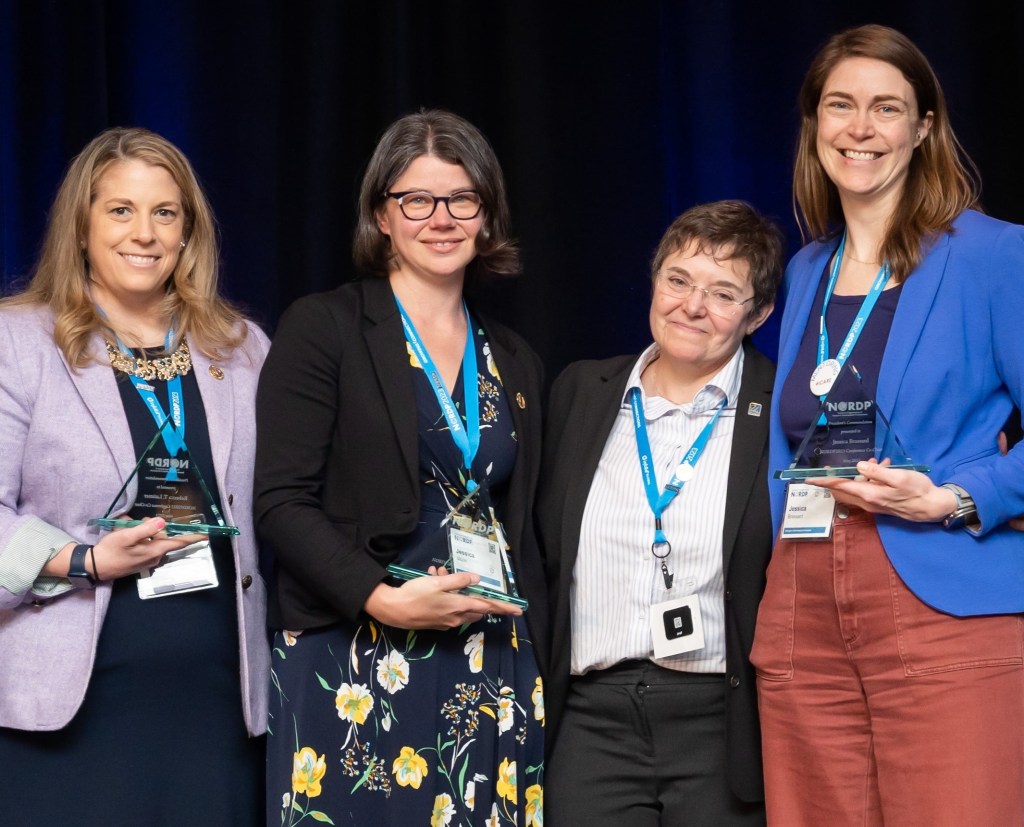
As NORDP members gear up for the Annual Conference in Bellevue, WA, we take time to celebrate a set of three volunteers who led the effort to make NORDP’s first post-pandemic, in-person conference in 2023 a reality. Anne Maglia, past president of NORDP, says she was thrilled to recognize the leadership of Becca Latimer, Jessica Brassard, and Jessica Moon, co-chairs of the that conference with the 2023 President’s Commendation Award.

Latimer is the research program director in the University of Virginia’s Comprehensive Cancer Center. Brassard is director for research development and communication at Michigan Technological University. Moon is executive director for the Stanford Longevity, Equity, and Aging Research Consortium. Together, they spent hundreds of hours and worked with dozens of volunteers to make the 2023 Annual Conference a rousing success.

Maglia says that she is extremely grateful for the drive and commitment of these three NORDP leaders. They epitomize the volunteer spirit of the organization and were the obvious choice for this very special award, she says.

“Returning to our in-person conference in 2023 presented unique challenges, and these three were undaunted and went way, way above and beyond expectations. They set up sustainable systems and devoted hundreds of hours of their precious time to bring NORDP back together in person,” Maglia says.

The three awardees agree that the systems created before them and the NORDP volunteers who support this massive undertaking are keys to their “success.” For example, conference committees historically have co-chairs. Each year, at least one co-chair continues from the year prior, and two other co-chairs are added to the team. The conference committee includes nine sub-committees, and each of the co-chairs oversees three of them.

The structure allows for strong relationships to build. Latimer, who was a co-chair of the NORDP virtual conference in 2022, laughingly says that the “two Jesses were the first I talked to when I woke up and the last before I went to bed.” 

The updated conference committee structure allows them to have a tie-breaker for difficult decisions and to bring a diverse set of skills to the task. The structure also allows for a solid succession plan from year to year and for synergy to build between committee volunteers.

“So many of us in NORDP are here because we want to be engaged in research development,” Latimer says. “We want to help, mentor, learn, share, and advance RD. I like to live like that, and I enjoy being surrounded by people with those same values,” Latimer says about her colleagues.

Moon and Brassard had worked on the subcommittees on the 2022 virtual conference, and they both stepped up when Latimer asked them to help lead the 2023 conference. (The 2024 conference leadership includes Brassard, Moon, and Katherine Duggan. Latimer is the new lead of the Executive Conference Committee, a position usually taken by the exiting co-chair).

Moon describes the committee structure “small but mighty” and “nimble,” and she says that the three co-chairs “took care of each other,” stepping in and respecting boundaries when needed.

Brassard adds that the group of three led from their strengths based upon the unique skills each brought to the team. She encourages NORDP members to engage in this year’s conference activities, as schedules allow. She says she intentionally “gave myself permission to share my skills, to grow into the organization.” She calls the award for this work “icing on the cake” – the cake being the sense of community and pride that pulling off the 2023 conference afforded.

Watch for a call for volunteers to assist with conference activities and for other exciting announcements from this year’s conference committee.