NORDP 2023 Keynote: Mentors-of-the-Moment with Dr. Brad Johnson

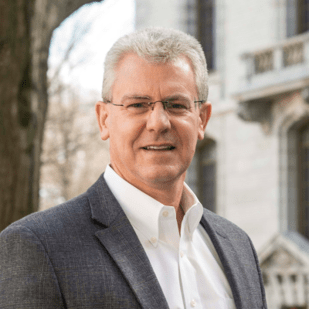
NORDP 2023 Keynote Speaker, Dr. Brad Johnson

For Dr. Brad Johnson, it was a crucial conversation with a valued mentor early in his career that offered him the affirmation that he needed to pursue his professional goals. Johnson, at the time, was a brand new clinical psychologist serving as a lieutenant in the U.S. Navy Medical Corps. And despite the extensive training he had undertaken to become a practicing clinical psychologist, he was having some misgivings about his chosen profession. Johnson remembers working up the courage to share his thoughts with the senior psychologist who was serving as his supervisor and telling her, “You know, my happiest moment in the week is when a client cancels an appointment and I actually have time to do some writing. I love working on research articles and I love teaching, and I’m kind of thinking I don’t want to be a clinical psychologist in the traditional sense. I’d love to teach and be an academician.” His mentor’s response? As Johnson recalls, “She just looked at me and said, ‘Of course.’ like she’d known that all the time.” That pivotal conversation was a lightbulb moment for Johnson about the power of mentorship.

Dr. Johnson, now a Professor of Psychology in the Department of Leadership, Ethics and Law at the United States Naval Academy and a Faculty Associate in the Graduate School of Education at Johns Hopkins University, will be delivering the closing keynote at the 2023 NORDP conference. His address, entitled  Mentors-of-the-Moment: Creating Mentoring-Rich Organizational Cultures, will focus on how to leverage developmental relationships and existing mentoring infrastructure to create cultures of mentoring within organizations.

When he began teaching and supervising students  in a clinical psychology doctoral program, Johnson’s initial research focused on the treatment of depression. But that started to shift when one of the doctoral students he was supervising became interested in researching mentoring. “He came to me and he said, ‘You know, I found this article on mentoring in graduate training, and I find it really interesting and I think I might want to do this for my dissertation.’” His decision to join his mentee in pursuing this new line of research was another pivotal moment for Johnson. “It absolutely shaped the whole arc of my career, focusing a bit less on clinical treatment and a lot more on developmental relationships.”

Johnson’s next career move brought him to the U.S. Naval Academy, where he has been a faculty member ever since. As far as his research was concerned, this move was, in Johnson’s view, “such a natural, seamless transition because mentoring is so important in the military.” One of Johnson’s initial projects at the Naval Academy was a large study focused on retired Navy Admirals and their experience with mentoring in the fleet. One of the most powerful findings from the study, in his view, concerned the longevity of these mentoring relationships. “One of the things we asked was, ‘Why did the relationship end?’ and by far the most common response was that the mentor had died. It turns out that these relationships were lifelong. And they continued, even up to the point where the mentor was no longer living.” This finding was reminiscent of Johnson’s own relationship with his mentor from his days in graduate school. “We don’t see each other as often, but if I ever have a major career decision to make, I always reach out to him, even now. The effect of really great mentoring often lingers, and in the best case, these relationships become lifelong friendships.”

Johnson is particularly excited to speak to NORDP conference attendees about actionable strategies for moving beyond mentoring programs to creating cultures of mentoring, both within NORDP itself and within attendees’ organizations. “We know that a lot of talented junior folks fall through the cracks because they don’t think it’s for them or that they’re entitled to mentoring. And senior people feel like mentoring programs can be a burden and don’t engage.” For Johnson, building a mentoring culture means becoming a mentor-of-the-moment, someone who shows interest in junior colleagues in the day-to-day interactions we have at work. “Being a mentor-of-the-moment might mean being the kind of person who will initiate a conversation with a colleague about something you admired about their work, offering affirmation, or just saying, ‘Hey, if you ever want to drop by and just chat about where you’d like to go in the organization, I’ve got an open door,” he says. “If you have that kind of culture, we find that retention goes way up, satisfaction and belonging go way up. And I think we need to spend a lot more time thinking about our culture, not just our formalized programs.” 

Mentoring Wellness

By Melissa Li, University of Michigan

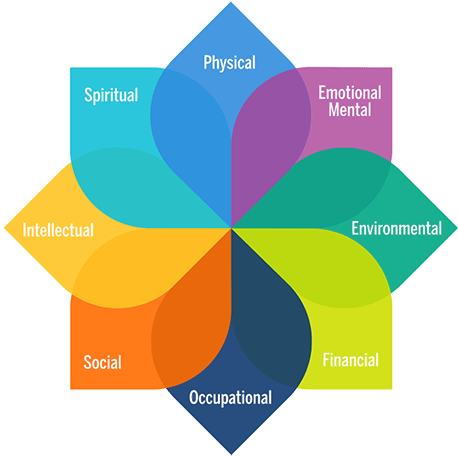
Mentoring is a valuable relationship that can have a significant impact on one’s life, both personally and professionally. Recognizing and addressing mentees’ wellness is a critical component of mentoring. As shown in the figure below, well-being spans multiple dimensions, including emotional, mental, physical, social, intellectual, spiritual, financial, etc. A few of them are discussed as follows.

Credit: University of Michigan

Emotional wellness: Emotional wellness refers to an individual’s ability to manage their emotions in a healthy way. In a mentoring relationship, it’s important to create a psychologically safe space where the mentee feels comfortable sharing their feelings and concerns. The mentor can provide emotional support, offer guidance on managing stress and anxiety, and help the mentee develop healthy coping mechanisms.

Mental wellness: Mental wellness is about maintaining a healthy state of mind. In a mentoring relationship, the mentor can encourage the mentee to practice mindfulness, help them identify any negative thought patterns, and provide guidance on setting goals and developing a growth mindset.

Physical wellness: Physical wellness refers to maintaining a healthy body through regular exercise, proper nutrition, and adequate rest. The mentor can encourage the mentee to prioritize physical wellness, share tips on healthy habits, and offer guidance on finding a work-life balance.

Social wellness: Social wellness involves having meaningful relationships and a strong support system. The mentor can encourage the mentee to build positive relationships, offer guidance on effective communication and conflict resolution, and help the mentee identify and navigate any social challenges.

Intellectual wellness: Intellectual wellness refers to an individual’s ability to engage in creative and stimulating mental activities. In a mentoring relationship, the mentor can encourage the mentee to pursue their intellectual interests, offer guidance on developing critical thinking skills, and provide resources for continued learning.

Overall, prioritizing the mentee’s wellness in all these areas can lead to a more fulfilling mentoring relationship and the mentee’s success.

SAC Spotlights: An Interview with Tisha Gilreath Mullen, SAC liaison to to Advancing Research Impact in Society (ARIS)

In April, 2023, Elizabeth Festa sat down with Tisha Gilreath Mullen to discuss Tisha’s experience as a SAC Liaison to Advancing Research Impact in Society (ARIS).

Tisha Gilreath Mullen, SAC Liaison

The Strategic Alliances Committee (SAC)‘s NORDP Liaisons Program is an exciting opportunity for NORDP members to thoroughly advocate for Research Development to external organizations and associations while gaining additional professional experience. While championing NORDP, Liaisons provide an invaluable service to NORDP members by gathering and sharing relevant and useful information as part of a broad and strategic outreach program.

In April, 2023, Elizabeth Festa sat down with Tisha Gilreath Mullen to discuss Tisha’s experience as a SAC Liaison to Advancing Research Impact in Society (ARIS).

Tell me about your role at University of Nebraska.

I lead the Office of Proposal Development, a five-member team situated within the Office of Research and Economic Development’s research development group at the University of Nebraska-Lincoln.

What is the mission of your liaison organization, ARIS?

Advancing Research Impact in Society (ARIS), an NSF-funded initiative that originated as NABI (National Alliance for Broader Impacts) in 2018, brings researchers and engagement practitioners together to build capacity, advance scholarship, grow partnerships, and develop resources to help facilitate and demonstrate the impact of research in communities and society.  

Why did you decide to become a liaison to ARIS?  What benefits has it conferred on your organization and on your own professional development?

My role as a liaison offers me an opportunity to broaden my professional network by meeting and collaborating with colleagues working in the research impact space. It made sense for me to seek out this type of engagement because the University of Nebraska-Lincoln has enjoyed a strong relationship with ARIS from its very beginnings as NABI and the relationship has always been viewed by my leadership as mutually beneficial. Over the years, we have offered ARIS Broader Impacts 101 training for faculty and we were among the pilot participants in the ARIS Program to Enhance Organizational Research Impact Capacity (ORIC). ORIC, in particular, was useful for enhancing the supports and resources we deploy to help our faculty extend the societal impact of their work. We now have a research development position dedicated to research impact and we are involved in piloting the ARIS Toolkit Project in one of our faculty development programs.

What benefits and resources of ARIS would you like NORDP members to know about?

The ARIS Toolkit, a compilation of resources that research development and research impact professionals can use to help faculty think strategically about how to identify and cultivate robust community partnerships, is publicly available. It’s an amazing resource for NORDP members who guide faculty toward understanding what elements are needed to create a robust and mutually beneficial broader impacts plan. Beyond the Toolkit, ARIS offers webinars on topics of interest to both our communities (NSF CAREER proposals, for example) and, of course, there are opportunities for organizations to participate in ORIC. Upon graduation from ORIC, organizations become part of a research impacts community of practice, which helps to sustain momentum gained through the program. It’s also worth noting that NORDP and ARIS have a joint Memorandum of Understanding, which includes discounted registrations for NORDP members to attend the annual ARIS Summit and ARIS members to attend the annual NORDP conference. I encourage anyone interested in learning more about ARIS to attend the Summit. It affords access to colleagues who are doing innovative research impact work, sneak peeks at new tools to facilitate research impacts; and insights into new concepts that are driving innovations in the space. If your experience is like mine, you’ll be challenged by the Summit to think in more expansive, powerful, and inclusive ways about the work you do. 

How were you challenged by this year’s ARIS Summit?

This year’s Summit in Baltimore focused on diversity, equity, inclusion, and accessibility. The speakers and sessions challenged me think more deeply about what we are doing well in the Office of Proposal Development and areas in which we need to improve.  The keynote was delivered by Dr. Natalie Shaheen, Assistant Professor of Special Education at Illinois State University, who is blind.  She talked about access and equity for a blind population and identified different strategies for engagement and disseminating research. For example, when introducing speakers to an audience that includes blind individuals, do we describe the speaker’s appearance? If we are using slides, are they fully accessible? As an audience how do we express engagement with a blind speaker (such as finger snapping or foot stomping, for example)? When we publish research, what considerations are we giving to accessibility (do we translate the work into Braille, for example)? While we are attuned at my institution to the importance of racial, ethnic, and gender diversity, equity, inclusion, and accessibility, we have less often considered how to reach audiences with physical disabilities. These insights will impact how my team coaches on inclusion moving forward.

How does our alliance with ARIS help to promote the professional development of NORDP as an organization?

The NORDP/ARIS alliance is a natural connection that is integral to the work of both organizations and we can accomplish so much more by working together. There is a true synergy to this alliance, where the whole is most definitely greater than the sum of its parts. We can learn from each other at the grassroots level and wield more influence on the national and international stage when we unite for change.

About the Strategic Alliances Committee

The Strategic Alliances Committee focuses on the interactions between NORDP and all external entities, including research funding, government and private agencies, and other professional organizations. Our goal is to become recognized as the “go-to” organization regarding interactions between funding agencies and research performing institutions, and to facilitate communication and collaborations between research institutions themselves. The signature program of the Strategic Alliances Committee is the member-led NORDP Liaison program which utilizes a matrix approach to reach out to over 20 organizations including AAAS, APLU, the National Academies, and the European Commission. Click here for more information and to get involved.

NORDP 2023 Keynote: Diversity in the Data with Dr. Christine Yifeng Chen

NORDP 2023 Keynote Speaker, Dr. Christine Yifeng Chen

From a young age, Christine Yifeng Chen had an affinity for the outdoors. Growing up in upstate New York, she spent many afternoons amusing herself in the local woods observing plants, rocks, and passing wildlife. When the sun was down or the weather was poor, she watched nature documentaries on public television and read books about historical expeditions and voyages, captivated by stories of field scientists working in far-flung places. Despite her enthusiasm, she never considered that outdoor field research was something she could ever do herself. After all, she had no camping or hiking experience, and hardly traveled outside of her hometown, as the costs of such activities were prohibitive.

That all changed when she “won the lottery,” as Chen puts it, by gaining admittance to Princeton University for her undergraduate studies with a full tuition financial aid package. Scanning the catalog of course offerings, she noticed that the earth science department offered classes with field trips, all expenses paid. Soon enough, in her first semester, she found herself in California, gazing at snow-capped mountains, climbing up sand dunes, and walking amongst ancient pine trees for the very first time. This formative experience set the stage for Chen’s future in field geology. “It was a complete culture shock,” Chen says. “Suddenly, I had access to all these resources at this school, to do all the things I’d always read about or seen on TV. It was nothing short of life changing.”

Chen understands first-hand the impact that access to social and material resources can have on one’s career. She will deliver the 2023 NORDP Conference opening keynote address, entitled “Racial disparities in research funding.” In her remarks, she will highlight results from a recent study she led showing systematic racial disparities in funding rates at the National Science Foundation (NSF). Using publicly available data, Chen and her colleagues showed that from 1999 to 2019, proposals by white researchers at NSF were funded at rates higher than most other non-white groups, and that these trends held regardless of scientific discipline and proposal type. Since similar patterns have been observed at the National institutes of Health, NASA, and other philanthropic funding organizations, they are likely widespread throughout the research funding ecosystem.

Despite countless of initiatives at colleges and universities to diversify the professoriate, data on faculty demographics indicate that higher education institutions appear to have little to show for it. Chen believes that the long-standing funding disparities have played a significant role in stymieing diversity goals: “Eliminating inequalities in STEM and academia will require a reorganization of what causes inequality in the first place: unequal access to social prestige and material resources.”

As a geologist and geochemist by training, Chen is very familiar with the lack of diversity amongst faculty. The geosciences are the least diverse field of all STEM disciplines in terms of race and ethnicity; less than 10% of geoscience PhD recipients are people of color, and little has changed in the last 40 years. And unlike other STEM disciplines, Asians are underrepresented amongst geoscience PhD recipients.

That statistic, along with the rise in anti-Asian sentiments during the pandemic, spurred Chen and two of her colleagues to start an affinity group, Asian Americans and Pacific Islanders in Geosciences (AAPIiG), to build community for AAPIs in the discipline. It was through one of the early virtual AAPIiG community gatherings that Chen first learned from a senior academic about the “open secret” that Asian researchers have the lowest proposal success rates at the NSF. The rest is history.

Chen is eager to engage with the NORDP community about these widespread funding disparities and what we can do about them, both as individuals as well as a collective organization. She hopes that we might consider the funding data at our own institutions from both public and private funders with a critical eye. Chen also hopes that NORDP can mobilize a coordination action in response to these trends, given our unique vantage point as being embedded in the research community at multiple levels and sectors. “NORDP is ideally positioned to guide and catalyze action around this issue. If not you, who else?”

Chen is now at a national lab where she continues her geological and geochemistry research.

Help us welcome her to the NORDP stage in May.

Follow @NORDP_official on Twitter for all the latest #NORDP2023 updates.

NORDP fosters a culture of inclusive excellence by actively promoting and supporting diversity, inclusion, and equity in all its forms to expand our worldview, enrich our work, and elevate our profession.

Hats Off to the 2023 NORDP Mentor Training Workshop Graduates!

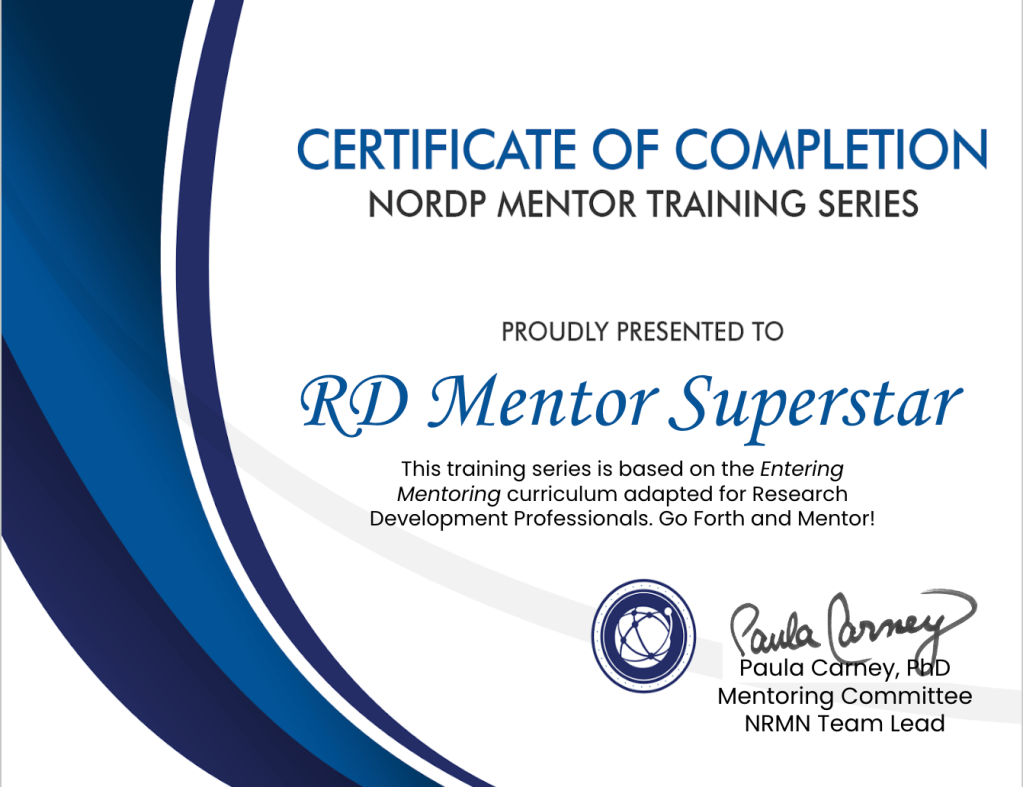
The NORDP Mentoring Committee’s Mentor Training Team held a mentor training workshop in January – March 2023. Nineteen NORDP members completed the 5-week workshop, covering the 9-module Entering Mentoring curriculum initially developed for research mentors and tailored by the NORDP Mentoring Committee for RD professionals in collaboration with the University of Wisconsin Center for Improvement of Mentored Experiences in Research (CIMER). RD professionals explored key mentoring competencies that can benefit RD mentors and mentees that have been associated with improved career outcomes, employee engagement and retention, and more inclusive work environments. The workshop was facilitated by NORDP members Toni Blair, Kristin Boman, Paula Carney, Rachel Goff-Albritton, and Melissa Li.
The NORDP Mentoring Committee is committed to equipping Research Development professionals for success by offering meaningful mentoring expertise, support, and resources. The next Mentor Training Workshop is being planned and will be announced soon. If you would like to be contacted when the next workshop series is scheduled, please complete this form.

Congratulations to the following 2023 NORDP Mentor Training graduates!

SheriAndersonNorth Dakota State University
SarahAtkinsonMichigan Tech
AnnaBabkhanyanUniversity of Hawaii
DanielleBarefootUniversity of Arizona
TiffanyBrutusJames Madison University
ElizabethCarrollTexas Tech University
KathyDreyerUniversity of North Texas
DebbieFrankWashington University in St. Louis
SharonFranksUC San Diego
CarolynnJulienFairleigh Dickinson University
MonicaKesselUtah State
LizLanceSyracuse University (Falk College)
CrystalLoveIndiana University
JenniferLyon GardnerThe University of Texas at Austin
AliPearksUniversity of Colorado Denver
MatthewSchwartzUMass Chan Medical School
VessVassileva-ClarkeUniversity of Michigan
QuyenWickhamArizona State University
ViktoriyaZhuravlevaColumbia University
List of graduates from the 2023 Mentor Training and their home institutions.

New NORDP Board Member Cameo: Becca Latimer

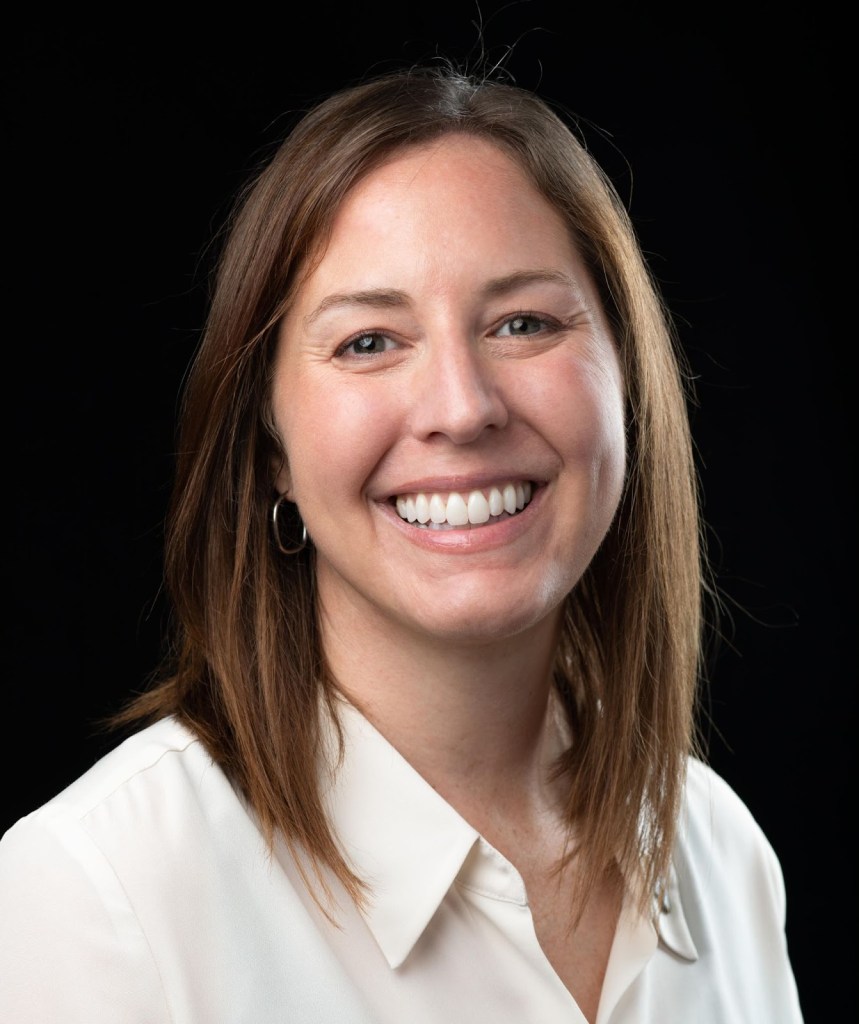
Becca Latimer, NORDP Board Member

Who: Becca Latimer, Research Program Director

Where: University of Virginia Comprehensive Cancer Center

Number of Years Working in RD: Seven Years

Length of NORDP Membership: Seven years


When and how did you enter the field? What kind of research development work do you do?

I fell into RD, as many of us in NORDP do. I had just completed a postdoctoral position in developmental biology, and I knew I wanted to stay in research but I did not want to open a lab. I knew there had to be something else out there that would allow me to utilize the skill sets I had learned at the bench. We had just moved to Virginia when I heard about a position in the office of the Vice President for Research at the University of Virginia – they were starting up a research development team. While I didn’t get the job I had originally applied for, I stayed in touch with the hiring manager and was offered a position to lead a funding discovery project the office was trying to get off the ground. I jumped in and learned quickly, and the rest is history!

As for the work I do now, I’ve recently started in a new position in the University of Virginia Cancer Center. My new role allows me to support many of the key functions that keep the center running. So far, I have taken on projects like putting together new seed grants and revamping and streamlining our processes to make the center function more efficiently. I’ve also been doing a lot of work on our internal metrics. We have more than 200 members so there’s a lot of data to keep up with! So in my time at UVA, I’ve gone from a very central to a very focused role – two totally different beasts, but both important to the whole research enterprise.


What’s your history with NORDP? How have you engaged with the organization (committee work, conferences attended/presented, other roles you’ve held)?

My history with NORDP started when I attended my first NORDP conference and it opened my eyes to the fact that these are my people and this is a really cool organization. I quickly became interested in committee service and decided to join the professional development committee, although it was a tough choice because all of the committees interested me! In 2019, there was an opportunity to step up to serve as a co-chair for the PD Committee, and I decided to say yes because I knew it would give me a chance to be more involved and meet more people and contribute to the projects the committee was trying to move forward.

I’ve also worked with Kimberly Eck on the salary survey committee in 2019, which I found to be very fun and fulfilling. I feel like the salary survey really gives us a good idea of where we stand as professionals and as an organization. And I think it has been a useful tool to our members that they can use to advocate for themselves and their colleagues when it comes to negotiating with their institutions.

Most recently, I became involved with the NORDP Conference Planning Committee. I started right before we put on the 2021 virtual conference, which was our first virtual conference, and served as a co-chair for the 2022 virtual conference. I’m currently serving as a co-chair for our 2023 conference (our first in-person conference in four years), and I also serve on the executive conference committee. I’ve been reflecting on the fact that the last time NORDP held our conference in Crystal City, it was 2018 and I was serving as a conference ambassador, and now we’re back in this venue and I’m serving as a co-chair. It’s kind of wild!


What motivated you to run for the NORDP Board?

I actually decided I wanted to be more involved in NORDP during the pandemic. I saw it as an opportunity, because I was working from home and decided I could use the time I was no longer spending commuting to the office to do more volunteering. So I really just made a conscious decision to really immerse myself more and step up and roll up my sleeves to get the work done. And in doing that, I feel like it’s really fostered a lot of great relationships with my NORDP colleagues. And I realized just how important NORDP has become to me, because of our organization’s vision and mission. I don’t work with any other group or organization that works to be as inclusive and is filled with people that are so thoughtful and united in their desire to push things forward and institute change. I’ve gotten so much out of NORDP and benefitted from the people who have served on the Board before me and put their time and effort into progressing and evolving our organization. I felt like it was time for me to contribute that kind of effort back to our members as well and pay it forward.


What are you most excited about as a new NORDP Board member?

I think one great step our Board has taken previously is to outline some key initiatives and key result areas (KRAs) that we as an organization can focus on. I’m really looking forward to building on those KRAs going forward. I’m also just really excited to work with our Board, because we have an awesome Board! So many of my fellow Board members are trusted colleagues and friends who I’ve built relationships with since joining NORDP and everyone is so supportive. Our Board is really engaged and interactive, and motivated to keep improving our organization.

2022 Leadership Award: Kathy Partlow

As part of the April 27, 2022 NORDP Awards session, NORDP Fellow Jan Abramson presented the 2022 NORDP Leadership Award with heartfelt emotion to her peer, colleague and friend — Kathy Partlow. The NORDP Leadership Award “honors a member, a group of members or team, an RD unit, or an organization that demonstrates exceptional leadership and/or a deep commitment to volunteerism in ways that advance the profession or field of RD.”

Jan began her recognition of Kathy with a quote from Peter Strople, former director of Dell Computer Corporation — “Legacy is not leaving something for people, it’s leaving something in people. The legacy of leadership begins at the first moment of impact.” Jan’s moment of impact with Kathy began when they worked together on the Mentoring Committee. Whether we know it or not, our NORDP experiences have been touched in some way by Kathy’s quiet, behind-the-scenes leadership. 

Jess Brassard from the Communications Working Group interviewed Kathy about her take on leadership. 

Who: Kathy Parlow

Where: Remote-working from Oklahoma. Note: Kathy participated in this interview in her personal capacity. 

Number of years in research development: 10

Length of NORDP membership: 10

What is leadership to you? 

KP: Formally, I am a co-chair of the Mentoring Committee and the lead for the Evaluation & Innovation team. Broadly, I believe leadership is noticing that one is in a position to to bring others up. This can happen from any title or position. Leadership also means having a big-picture, strategic mindset to guide a group of people toward the group’s mission.

How did you learn or develop your style of leadership? 

KP: My style of leadership is focused on others. I use the unit’s mission as a meter. My contributions started small and really grew as I became passionate about mentoring. Along the way, other leaders mentored me and helped me “settle in” to the style that best suits me. I was very much mentored into my servant leadership style.

How does your membership in NORDP develop your leadership style? 

KP: I came to a point in my career where there was no pathway to leadership in my job and had a mentor that encouraged me to think more broadly about where I could gain leadership experience. I chose to develop my leadership capabilities outside my “day job” through volunteering and community service. 

What relationships have you built as a result of NORDP, and how have these relationships influenced your work? 

KP: I have connected to amazing colleagues and formed lasting friendships through mentee/mentor relationships and volunteer activities. Their guidance is infused through my work and career journey. I learned to be active and intentional about building relationships. Within the Mentoring Committee, I take it to heart. It’s the foundation of everything the Mentoring Committee does. 

What do you wish you would have known when you began your leadership journey within NORDP? 

KP: I wish I would have known earlier that leadership is a gentle pathway. It doesn’t need to be a switch that is flipped. I eased into the time commitment. The “rising co-chair model” of the Mentoring Committee and other NORDP committees helps with transitions. I appreciate the co-leadership and support this model enables. 

What have you found most rewarding, and most challenging, about leading within NORDP? In your CAREER? 

KP: As far as the most challenging — the Mentoring Committee leadership team saw the need to adapt to a growing NORDP. That meant large initiatives were needed to adapt and diversify the resources for mentoring (e.g. peer mentoring groups (PMGs) and implementing Wisdom Share mentoring software ). The reward from this hard work has been the feasibility of supporting record-breaking numbers of NORDP Mentoring Program participants. . 

By far, the most rewarding part of NORDP is the people. I love to recognize and celebrate with NORDP volunteers in these accomplishments (and all the mini-milestones throughout). 

What advice do you have for others within NORDP who are looking to develop as leaders? 

KP: My advice is to choose a measured path. Most NORDP leadership roles allow you to ease into them. Make small contributions at first. Share your time and skills in areas that interest you. Find reward in the volunteer work.

New NORDP Board Member Cameo: Kim Patten

Kim Patten, NORDP Board Member

Who: Kim Patten, Assistant Vice President for Research Development

Where: University of Arizona

Number of Years Working in RD: 15 years

Length of NORDP Membership: Nine years


When and how did you enter the field? What kind of research development work do you do?

My first position was working for a science-informed nonprofit started by a bunch of astronomers and engineers. I worked on the issue of light pollution, and one of my first assignments was to build a coalition of researchers, nonprofits, and governmental entities. Working with my director at the time, we received NSF funding for a workshop (my first NSF grant!). With preliminary data based on connections made at that workshop, an instrument that was designed and funded by NSF. And that was my introduction to RD, forming teams, getting funding, and sponsoring research (and I was hooked).

I went to graduate school, but stopped at my masters, and then joined the Arizona Geological Survey, running a large Department of Energy center that was nationwide, therefore, logging some frequent flyer miles in the process. I enjoyed working with these teams, providing dedicated support throughout the lifecycle of the research process. With just under a year left on the project, a friend told me the University of Arizona was starting a new department within the research office and encouraged me to apply. And I made the leap. There were better benefits at the university than in my other state job, including parental leave benefits, and better work-life-balance. In all honesty, I’m really happy I made that leap. The transition was difficult as I really loved what I was doing at the Survey, and the people, but here I am!

Today, I engage in a lot of strategic initiatives. I’m one of the primary liaisons for the research office with our federal relations arm. So, I have moved (and this is a Jennifer Lyon Gardener and Jeff Agnoli term) further “left of proposal” in my current efforts than in my previous positions. A lot of what I’m doing these days is leveraging federal relations activities for and toward appropriations and authorizations requests. We’re trying to get ahead of the major research activities authorized in the CHIPS+ Ac and Inflation Reduction Act. My work has transition to more of a strategic direction while others on our team focus on relationship development and proposal development.


What’s your history with NORDP? How have you engaged with the organization (committee work, conferences attended/presented)?

I’ve been a NORDP member since 2014, first presenting at the annual conference in 2015. I missed 2016 because of the birth of my kiddo, but I’ve been to every one since then. I’ve participated in numerous committees, including the Nominating Committee (NomCom), and the Strategic Alliances Committee (SAC). I’ve also been working to help and support both my institution and NORDP with professional career lines and career development activities. If you look back at some of my conference presentations, you’ll see how I worked with HR to get six lines of professional contributor and five lines of management for my RD team. Now, I’m trying to implement those, which is much easier said than done.

I joined the NomCom in 2015 and served as its chair through the pandemic. I was drawn to serve on SAC because of its focus on partnerships and engaged research. Partnership development, especially at the organizational level, was of particular interest to me, as I was transitioning part of my team into more partnership development, including supporting my leadership as they stood up a societal impacts unit. I was really interested in learning from the organization called Advancing Research Impact in Society (ARIS) about that potential, and that’s how I got recruited to be a NORDP liaison to ARIS. We do now have an Office of Societal Impact at the University of Arizona. It does not report to me, but it’s a parallel office to mine, and we report up to the same VP, which is nice. And we collaborate significantly. All to say, I appreciate NORDP for the personal and professional growth as well as lessons learned from across the organization and with/from other organizations. We are a community of lifelong learners, and it shows.


What motivated you to run for the NORDP Board?

I’ve had my eye on the board for a little while; that’s part of why I wanted to be on NomCom, to see what the process was like. I was serving on another board through 2021, so I felt that I could not feasibly add the commitment, especially one with such a high volunteer load. To serve well takes a significant commitment, and hopefully a commitment that is supported by your employer (mine has been wonderful in supporting me).

My previous board service gave me experience with organizational development and growth, and I can to bring that to NORDP. From a bylaws overhaul to an investment policy, that board work took on a “cleanup” of the organization’s systems and support infrastructure, and I felt that experience would help the NORDP board and NORDP as an organization. That service also provided me with insights into staffing and outsourcing of a small, but mighty, non-profit. I’d argue that NORDP is at a transition point in its growth, and I’m excited to be part of the board that helps us reach the next level of infrastructure and support for our phenomenal community of contributors.

While I hope that my previous board experiences will help, I also hope that my experience in running and leading a comprehensive RD shop is also relevant. One of my goals for my own team is to encompass the four core areas of RD, as defined by NORDP: (1) strategic research advancement, (2) communication of research and research opportunities, (3) enhancement of collaboration/team science, and (4) proposal support functions.


What are you most excited about as a new NORDP Board member?

I am most excited about the fact that we are primed for success. I think the previous boards and the membership have done a great job of building a fantastic community and making sure that RD is a recognized field. I think that we are at that make-or-break moment, and I’m looking forward to helping make it happen. I think that the existing board members are phenomenal and talented individuals. They have been welcoming and have treated me warmly. I also have a board mentor, so that’s fantastic. I’m really looking forward to supporting NORDP to provide the infrastructure that’s needed for future success. I’m a big fan of collective impact and thinking about backbone organizations. Excited to make that happen for NORDP.

ARIS 2023 Summit: Special Discounted Registration for NORDP Members

Advancing Research Impacts in Society (ARIS) is offering two discounted registrations for NORDP members to attend its 2023 Summit: Research in Service to Society. The Summit will take place March 22-24, 2023 at the Baltimore Convention Center in Baltimore, Maryland.

This special offer reduces the cost of registration by $150 and includes a one-year ARIS membership. More details about the Summit are available on the ARIS Summit homepage.

NORDP members who are not current ARIS members are eligible for this rate.

This discounted registration offer is available on a first come, first served basis. Interested individuals should send a request to tgilreathmullen2@unl.edu by March 1, 2023.

Tools ‘n Tips: Writing for a Lay Audience – Presented by Susan Elkins

Tuesday, January 10, 2023 @ 12:00pm (Eastern)

Researchers often have a difficult time with writing for a lay audience. This does not mean removing all of the science. It does mean simplifying or clearly defining those technical terms and ideas. It can also be helpful to think about making a connection between the scientific advancement you’re discussing and the potential benefits to the intended audience. Research development professionals can help faculty better address this task.

During the PD Committee’s January Tools ‘n Tips monthly webinar, Susan Elkins shared advice and resources for RD professionals looking to hone their skills when writing for a lay audience. 

Resource 1: Writing for a lay audience (Cancer Research UK) 

  • Keep it simple
  • Keep it short
  • Make it inclusive
  • Back it up
  • Separate your ideas
  • Active voice
  • Avoid turning verbs into nouns
  • Use lists where appropriate
  • Be economical
  • Use analogies and images
  • Use Links

Resource 2: In a nut shell: how to write a lay summary (Christopher Tancock)

  • “So what” – justify your research
  • Contextual background – why are you doing this
  • Follow a logical order
  • Explain the impact
  • Sort sentences – write in plain English
  • Avoid jargon if possible
  • First person active voice
  • Use positive statements instead of negative ones
  • Include images if possible

Resource 3: 3 Questions to ask yourself when writing for lay audiences (AMWA Blog) 

  1. Who is my audience?
  1. What are their needs?
  1. How can I communicate most effectively?
  • Consider structure/content/design
  • Optimize readability
  • Tailor content for specific audience
  • Make it easy to navigate
  • Review your work through from your audience’s perspective

Accessing Previous TNT Recordings:

  • Log into your NORDP account (www.nordp.org)
  • Look for the “Quick Links” menu (blue) on the right-hand side of the screen
  • Select “NORDP LMS”
  • Make sure you are seeing “All Courses” – scroll down to the bottom of the page and select “SHOW ALL COURSES”
  • Search for “TnT”
  • Select the “TnT (Tools & Tips) Talks”

Do you have a great Tool or Tip you would be willing to share? If so, please contact Dawn McArthur or Emily Devereux. We would love to hear any requests and we’ll see if we can’t find a presenter!