PMG Organizers: Don Takehara, Jet LeBlanc, Joanna Downer, Paula Carney, & M. S. (Peg) AtKisson.
The 2022 NORDP Conference included multiple sessions that addressed the discipline of coaching and how it can be used in research development (RD), including faculty research career development, research leadership development, and research team engagement.
The Coaching & RD Peer Mentoring Group (PMG) is now being launched to provide a vehicle for supporting NORDP members interested in coaching.
Coaching fits a broader collection of skills in the RD skillset to further faculty research career development and reflects the dynamic nature of the RD profession. Coaching is a powerful process that encompasses a distinct set of competencies. The International Coaching Federation defines coaching as “partnering with clients in a thought-provoking and creative process that inspires them to maximize their personal and professional potential.” Coaching often unlocks previously untapped sources of imagination, productivity, and leadership. Trained coaches can engage individual faculty to address research career and research leadership development, facilitate research team engagement, and promote development of research leaders.
Using the peer mentoring model, the Coaching & RD PMG’s goals are to:
Enable members to explore coaching as part of the RD skillset
Develop programs to offer coaching as an RD service at the institutional level
Assess coaching as a contributor to faculty and organizational research attainment
Provide a setting for accountability and continuous improvement for RDs interested in coaching in research development
The Coaching & RD PMG is for NORDP members who may be curious about becoming a coach to add to their RD skillset, interested in adding coaching to an institution’s faculty research career, research leadership development, or research team engagement programs, as well as other opportunities for RD professionals that may benefit from inclusion of coaching.
NORDP members interested in learning more about all eight active PMGs can do so at the 2023 Peer Mentoring Group (PMG) Orientation on Wednesday, October 26, 2022, noon-1:30 pm Eastern.
The New Opportunities for Research Development (NORD) Committee is excited to announce the NORD / InfoReady Grant Cycle II 2022 Awardees, sponsored by InfoReady and NORDP.
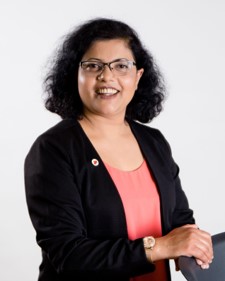
NORD/InfoReady Grant Awardee Sanjukta Choudhury
Sanjukta Choudhury, from the University of Saskatchewan, was awarded $4,714.18 for the project, “Identifying Equity, Diversity, and Inclusion (EDI) Gaps in Faculty Research to Inform Research Development Practices: The Case of a Canadian Research-Intensive University”
This project aims to advance Equity, Diversity, and Inclusion (EDI) in faculty research through identifying barriers that researchers face in academia for meaningful EDI integration in research, and by gathering inputs on possible actions to address those barriers. The proposal addresses a pressing question in the disciplinary field of Research Development (RD) and proposes a three-step plan: a) developing a better understanding of the details of the problem picture that our researchers are facing to generate and nurture an inclusive research environment, b) discussing/consulting the identified problems with RD professionals for possible solutions, and c) communicating the findings with the broader research community internationally. Choudhury anticipates that the findings will impact the perspectives and understanding of both the researchers and research administration leadership/ professionals, resulting in an expansion of the resource allocation and improved training / services around adopting a more inclusive research guidance and practices. The research will influence enhanced EDI skills for RD professionals and larger scale research and collaboration among RD professionals internationally, broadening the recognition that is necessary to sustain a deep and lasting change in RD.
NORD/InfoReady Grant Awardee Kathryn Duvall
Kathryn Duvall, from East Tennessee University, was awarded $5,000 for the project “Developing strategies to improve and facilitate collaborative research”
Through a collaboration with an university institute and a regional committee on research and academics, Duvall’s project seeks to better understand the barriers, opportunities, and facilitators to fostering and enhancing interdisciplinary research around a central focus area (child and family health) with administrators, faculty, staff, trainees, and community organization representatives in a regional sample of south central Appalachian institutions for higher education. Duvall will develop a data dashboard around a central research focus (child and family health) within the region to provide information that will improve communication about work being conducted in the region, and foster collaborative teams which include more clinical faculty.
NORD/InfoReady Grant Awardee, Pammala Petrucka
The Nursing Unit for Research & Scholarship Excellence (NURSE) led by Dr. Pammla Petrucka, from the University of Saskatchewan, was awarded $5,000 for the project “Exploring the role of research development in building a strong culture of research: Co-creating with researchers and research development professionals through participatory diagramming”
This study seeks to better understand how the professionals that support and strengthen the research process can build a positive research culture for faculty and institutions, and ultimately enhance research development as a profession. Petrucka and participants will create a research development cycle diagram to illustrate (i) how decentralized and targeted research development supports activities that can build research culture within the College of Nursing and beyond and (ii) identify lessons learned, best practices, tools, and resources to advance the profession within North America. The results of this study will provide insights into the role research development plays in creating a strong culture of research within an academic unit from the perspectives of researchers and research development professionals. By examining the beliefs, values, knowledge, and actions that build culture, research institutions will be better positioned to continue to create a permanent culture shift that builds an environment for research success.
The NORDP Rising Star Award recognizes individuals for their outstanding, early volunteer contributions to NORDP and strong potential for future contributions to the organization and the profession or the field.
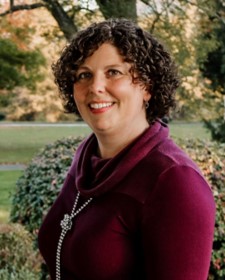
Becca Latimer, Rising Star Awardee
Who: Becca Latimer, Ph. D., Research Program Director
Where: University of Virginia Comprehensive Cancer Center
Number of years in research development: 6
Length of NORDP membership: 6 years
What initiative are you the most proud of in your role as a NORDP volunteer?
It is a tie between my work on the annual conference and past efforts with the salary survey committee.
I am one of the co-chairs for the 2023 national conference and I have served a variety of roles on the recent virtual ones as well. I really enjoy this area as it not only provides a way for our members to get together, but also learn important tools, tips and educational content from our experienced membership. I truly appreciate that as a member myself and my efforts with the upcoming and past conferences focus on providing the most valuable, useful, relevant, and current content for NORDP members.
A few years ago, I helped put together the report from the 2019-20 Salary Survey which I believe is a valuable asset to members. It allowed us to collect data to gauge how our membership is evolving and diversifying over time. It is helpful to new members and allows them to see the varied backgrounds and types of positions in the RD field. It is also beneficial if your institution does not support RD functions. Finally, it is also useful to RD veterans in their work towards merit raises and promotions.
How has your service to NORDP enhanced your career?
My volunteer efforts have truly helped me come into my own in a profession I did not know about seven years ago. I came from a bench research background, and I really did not know much about the various careers you could use a research background for beyond that. I came to NORDP with an open mind and it has been helpful since day one. The various service experiences have allowed me to meet many other engaged volunteers. These folks have mentoring characteristics and skill sets that have helped me enhance my own skills as well. Working on projects for NORDP has allowed me to progress in my current career and mentor new people coming into NORDP and at my home institution, too.
How did you hear about NORDP and what made you join initially?
When I started in RD my supervisor recommended checking out the annual conference. In my prior sciences work I really valued attending national meetings and engaging with people that shared similar interests as me – I was pleased with my first NORDP conference experience. It was exciting to be a part of a group that were interested the same topics as I was and who had similar career goals.
What relationships have you built as a result of NORDP?
My engagement with NORDP really allowed me to step outside of my own experience. I’ve learned more about interacting with a wide variety of individuals from different institutions, including MSIs, PUIs, and R universities, than I ever would have on my own. I came to realize that we all have the same goal. Everyone I have encountered through NORDP has been collaborative and giving. They are always willing to take time out of their workday and life to help if they can.
Describe how NORDP has changed from when you initially joined
The overall general mission has not changed, but I have noticed in the past few years that NORDP has incorporated a lot more inclusivity work and activities, which has been extremely beneficial. It has provided more opportunities for members to learn how to include DEIB into their everyday practices. This has been evident through conference speakers, webinars, workshops, and training activities. Additionally, the growth in the membership in recent years is also an indicator that this is a positive community that welcomes people who are interested in learning, collaborating, and practicing inclusivity.
What recommendations do you have for members to get more involved with NORDP?
It actually took me a few years to get involved myself. It can seem intimidating at first, but there are so many ways to volunteer. Think about what you like to do and what seems of interest to you that is going on right now. Think about what group would allow you to learn a new skill sets or a group that would benefit from you bringing your skills into the mix. I would say to start with one activity and see where it takes you. If you like it and see areas where you would contribute more, consider taking on a leadership position. There are opportunities for any type of work that might be of interest to you. It is also such a great way to meet new people and learn novel and different methods of completing tasks or projects.
As conference co-chair I definitely have to recommend that the conference (May 5-11, 2023 in Crystal City, VA) will be great place to learn about or engage with all of these things. Our theme is Growing Connections – and we’ll have plenty of time for networking. You can connect with committees & affinity groups, present a poster or during a concurrent session, or volunteer in some capacity. The call for abstracts is out! Consider submitting one. I’m looking forward to seeing you all there – sporting your favorite NORDP gear!
Jeff Agnoli, Senior Liaison, Office of Corporate Partnerships, The Ohio State University, is serving on the Conference Steering Committee for the International Expert Finders System Forum, April 5 & 6, 2023 in Coral Gables Miami, Florida. He will be a keynote presenter in part because of his research development responsibilities and his role in building a sustainable future for the Ohio Innovation Exchange, http://OhioInnovationExchange.org. This year’s theme is Connecting the Dots, which is something RD professionals do every day!
Agnoli will feature the various ways RD professionals use tools to build interdisciplinary teams, assist with identifying mentors, fostering innovation, building corporate partnerships, and driving economic development. He invites other NORDP members to consider submitting a call for conference proposals and share their institution’s unique use of these emerging tools. Presentations, panels, or posters can address how each college/university leverages these platforms to provide strategic/competitive intelligence, enhance the proposal development process, etc.
“I believe it is time for the RD community to do what we do best, i.e., leverage our relationships across the campus and advance the use of these tools,” he says. “Every day, we build partnerships with our colleagues in the libraries, information technology, communications, foundations/corporate relations, and technology transfer, to promote our faculty, enhance their research impact, and build our institutional reputation.”
Contact Agnoli at agnoli.1@osu.edu if you have questions or interest in collaborating on a poster, presentation, or panel discussion featuring your institution’s unique adoption of these types of platforms.
The Ohio Innovation Exchange (OIEx) is the essential gateway for university scholars and business/industry seeking to build partnerships. Visitors enjoy access to more than 10,000 experts, research equipment/services, and patents to drive innovation and increase economic development. Every week thousands of people from across the globe visit the http://OhioInnovationExchange.org to discover new opportunities and promote research discoveries.
By Jeremy Steinbacher (Syracuse University) and Leah Gorman (Oregon State University)
We are seeing new opportunities for transdisciplinary teams to develop proposals that cross disciplinary boundaries to increase the societal impact of research. Our institutions are excited by these opportunities, thinking creatively about how they might nurture environments that foster transdisciplinary work, and looking to research development (RD) professionals to help spark and facilitate these collaborations. For many members of the NORDP Collaboration and Team Science Peer Mentoring Group (CTS PMG), the skill set needed to do this work has not traditionally been a central part of our professional training. In addition, our institutions may not be familiar with how other institutions are approaching this work. Combined, the lack of both training and institutional knowledge leaves many RD professionals with the feeling that we are constantly reinventing the wheel when facilitating team science. The CTS PMG seeks to address this challenge by offering an opportunity for RD professionals to share best practices and develop strategies toward creating working knowledge of team science at our institutions.
Below, we address some common questions about the CTS PMG and the work we have engaged in over the last year.
How is a peer mentoring group different from other types of professional development environments you might use to build skills for fostering collaboration and team science?
All of us have access to a variety of professional development opportunities through our employers, professional societies, and educational institutions. Many of these are highly-structured workshops and classes with a designated leader/instructor and, for the most part, strangers as co-participants. On the other hand, the PMG environment offers several characteristics that provide a distinct learning experience.
First, the PMGs do not have a single, defined topic at the outset; rather, the material is flexible to the needs, experience, and interests of group members. Though the CTS PMG set a schedule of topics for monthly meetings early in the year, we remained flexible to accommodate new topics as the group evolved.
Additionally, unlike a workshop, class, or a traditional dyadic mentoring relationship, a PMG benefits from a range of perspectives, rather than training on a single approach. Every facilitator brings a different style and the open nature of discussions encourages input from all participants regardless of experience level. Importantly, the setting of ground rules by the group itself early in the meeting cycle helps create a psychologically safe environment where it is ok to be vulnerable. This helps members recognize and express the limits of their knowledge, knowing that the other participants are there to support each other’s growth.
PMGs also offer the chance to build relationships with other NORDP members beyond the annual conference experiences and the more structured learning opportunities.
What did we learn about collaboration and team science this year?
The CTS PMG discussed a wide variety of topics over the last year!
Sharon Pound (University of Tennessee) led a discussion about the relationship aspects of teams, including how to deal with common barriers in communication and expectations, and also the benefits of long-term team building.
Laura Heinse (University of Idaho) presented strategies for after-action review, such as post-submission debriefs with a team to determine course corrections and evaluate lessons learned.
Chris Erlien (Duke University School of Medicine) and Eva Allen (Indiana University) gave an overview of the many issues unique to developing center proposals with large teams, both practical impacts like project management and strategic issues surrounding group ideation and leadership.
Melanie Bauer (Nova Southeastern University) shared a range of strategies that she has employed to facilitate faculty networking within her institution and with other institutions in her state.
Leah Gorman and Sarah Polasky (University of Missouri-Columbia) led a discussion about collaboration across disciplines and the strategies we employ when team members working in very different disciplinary cultures.
Finally, guest speakers Kristine Glauber and Christine Hendron of Intereach introduced us to their community of “boundary spanners” working across disciplines. Chris Erlien provided a nice description of their talk in a recent blog post.
How can NORDP members get involved in a PMG?
The NORDP PMGs are open to all members. We encourage experienced practitioners to participate in these groups as a way to build community and share best practices (#payitforward). To see the available PMGs, visit your dashboard on the WisdomShare platform and scroll down until you see the list of Peer Mentoring Groups, where you can click to join. Our PMG group will kick off again in September, and everyone who has joined will get the notification message. If you have already joined a PMG or a few, we hope that you continue participating in the same or new PMGs this upcoming year. If you have not yet tried a PMG, we strongly encourage you to attend this year! To all, bring your curiosity, a willingness to share your experiences, and lots of questions.
The NORDP Mentoring Committee is planning a PMG Orientation in October. Keep an eye out for the event announcement and we welcome everyone to participate!
Submitted by Gagan Bajaj, Chetna Chianese, and Jan Abramson
How did you end up in Research Development? You may have had a circuitous path to this rewarding career. Many of us did.
Are you curious about how others within NORDP have grown their careers in RD? Did you know there is a large collection of 30-minute videos available to NORDP members, sharing the career stories of RD professionals? It’s true!
The NORDP Fireside Chats conversation series highlights the professional trajectories of NORDP members working in a wide variety of roles and showcases the many paths available for career growth and advancement within the field. Each conversation is 30-minute listen-and-learn session, with time provided for participant questions.
Previous Fireside Chats guests have included:
Karen Fletcher, Director of Grants Resources & Service, Appalachian State University
Susan Carter, Director of Research Development, Santa Fe Institute
Mark Milutinovich, Director, Large Center Development, University of New Hampshire
Samarpita Sengupta, Director of Research, Assistant Professor, UT Southwestern Medical Center
Daniel Arriaga, Assistant Director for Research Engagement, UT Austin
Kelly Rose, Chief Scientific Officer, American Society of Hematology
Rebekah Hersch, Associate Vice President for Research and Innovation, George Mason University
Peg AtKisson, Founder and President, Atkisson Training Group
Quyen Wickham, Senior Proposal Manager, Arizona State University
Etta Ward, Assistant Vice Chancellor for Research Development, IUPUI
…and many more!
These recordings are available to NORDP members, via the NORDP LMS. To access them, first log in to the LMS using your NORDP credentials, then select the course named NORDP LEAD presents: Fireside Chats where you’ll find all of the previously recorded conversations. You can search for the course using the search bar or by selecting from the Course Categories tab (at the top of the screen) > Career and Personal Development.
You can watch any (or all) of the videos at your leisure.
First awarded in 2022, this award recognizes an individual NORDP member’s unique ability to provide an engaging, supportive, and inclusive environment for professional and/or personal growth through mentorship in the research development community. This award is bestowed with the acknowledgement that effective mentoring occurs through formal and informal channels and may vary in style and substance.
2022 Volunteer of the Year, Katie Shoaf
Who: Katie Shoaf, Director of Grants Resources & Services
Where: Office of Research, Appalachian State University
Number of years in research development: 7
Length of NORDP membership: 5 years
What has your experience being a NORDP volunteer looked like so far?
When I first joined NORDP in 2017 my boss, Karen Fletcher, was really involved in the organization and really encouraged me to also get involved. The first conference I attended was the 2017 NORDP Conference in Washington D.C., and at that conference I went to all the committee meetings to check them out and see what committee work might interest me.
After shopping around, I ended up joining two committees right away: the Professional Development Committee and the Mentoring Committee. Each committee functions very differently, so they provided unique ways for me to provide support to the organization, and within both committees I was able to jump right in and start helping with things. For example, within the Mentoring Committee, I joined the MESHH subgroup and we built a lot of the tools that NORDP mentoring pairs use today, which was a really fun experience.
One of the next big initiatives I became involved with as NORDP volunteer was the RD101 course offered to new research development professionals. I had known Kari Whittenberger-Keith from the Professional Development Committee and knew that she was pulling together a group of volunteers to begin to build a curriculum of sorts for folks who had recently matriculated into the field. The RD101 course had been piloted at a previous NORDP conference, but there were a lot of changes that needed to be made, and there was demand to offer the course virtually. Because Kari knew my reputation as a hard worker and that I would follow through with things, she generously gave me the opportunity to be involved in updating the RD101 course and offering it virtually in 2020. And I feel like that has happened to me a lot within NORDP. I would not be where I am in the organization today without people saying, “Hey, I’ve been really impressed with you and your work, and I think you have a lot of potential. I think you can do this thing, do you want to do it?” Being able to say yes to those opportunities and have the support for that from my fellow NORDP volunteers has been so important.
My most recent NORDP volunteer role has been serving as the National Conference Co-Chair in 2021 and 2022. I had actually run for the NORDP Board before I was asked to be conference co-chair. And while my run for the Board was unsuccessful, I think it put me on people’s radar, and it was a great learning experience for me and opened up my volunteer time to get involved in NORDP in other ways. Serving as a conference co-chair has been a very time-intensive experience, one I undertook while also working full-time and working toward my PhD, so it has been so important for me to be able to set boundaries around my volunteering in order to take care of my own health. And I think that one of the best things about volunteering within NORDP – there is space for you to step back when needed to take care of yourself, and there’s room for you to jump back in whenever you feel you’re ready.
What was the first volunteer position you held within NORDP, and what led you to say yes to subsequent opportunities to volunteer within the organization?
As I mentioned previously, I first became involved as a NORDP volunteer through the Mentoring and Professional Development committees. In addition to working on the MESHH subgroup of the Mentoring Committee, I quickly got involved in the webinar planning and production working group within the PD committee, learning how to host webinars on Zoom (this was years before we were all forced into a virtual work environment, so it turns out my experience learning how to host webinars for the PD committee came in handy in 2020)! I really enjoyed the different sets of responsibilities and tasks that came with volunteering on these two different committees.
As for what led me to say yes to subsequent opportunities within NORDP, part of it is my personality. I’ve always been the kind of person who says “yes” to things, and as a young professional I’ve viewed volunteering as a way to both prove myself and get better at my job and learn new things. I also genuinely wanted to say yes because of the incredible people that I was working with – through my committee service I’ve gotten to know so many people from very eclectic and diverse backgrounds and built so many meaningful relationships, so signing up to spend more time working alongside my fellow volunteers was an easy call. I do think one thing I have learned with experience is when to say “yes” to a new opportunity and when I need to hold off on taking on something new so I can have balance, which I think is an important lesson to learn (and one that most people learn the hard way by perhaps saying “yes” to too many things).
As you’ve gotten more involved in NORDP and taken on multiple volunteer roles, which experiences stand out to you?
I think volunteering with NORDP has been a great way to build confidence, not only in myself, but in my ability to do my job. It has been very reinforcing to know that I do know things about the field of RD. I’ve learned a lot about this organization and have seen the value that it adds to people’s lives and careers. And so I think that the experiences that stand out to me are the ones where I’ve seen my fellow volunteers grow and lift each other up. There are so many members I have worked with who are so quick to say kind things and build each other up. More than once people have come up to me and commended me on presentations I’ve given or committee tasks I’ve taken on, and that’s not an experience that’s unique to me, it speaks to the broader volunteer culture within NORDP where volunteers are so quick to show gratitude, compassion, kindness, and genuine care for each other.
What do you see as the biggest rewards, and challenges, of being a NORDP volunteer?
I think the biggest rewards of being a NORDP volunteer are the professional growth opportunities that come with stepping up and volunteering. You can be a NORDP member and attend webinars and conferences and learn a lot, but I’d say volunteering adds an additional level of professional growth and more opportunities to step into leadership positions. The other huge reward is the relationships you build with other volunteers. The NORDP community is made up of so many genuinely wonderful humans and I’ve made so many lasting and meaningful friendships. And I don’t think I would have gotten that without getting involved in the organization. You don’t just get that from attending a webinar, or attending a conference once a year, you get that reward from engaging meaningfully with other people around a shared goal of supporting an organization that we all care about.
Among the biggest challenges are finding balance and preventing burnout. It’s hard! You want to say yes to all the things when you love something, and sometimes you’ll end up saying yes to too many things. I wish there was infinite time and energy and the ability to say yes to everything, but there’s not. And I think we in NORDP are working to shift the culture of volunteering to make it more acceptable for people to have boundaries, which is so important. We ask a lot of our volunteers and we need to make sure that we’re building a culture that supports and shows gratitude to them, and welcomes in new volunteers so that we can spread the work around and ensure that nobody feels overwhelmed. There are so many reasons people may already be tapped out and burnt out right now that it can be hard to ask someone to give another hour of their month away to volunteer, so volunteer recruitment is an ongoing challenge. But at the same time, the rewards of being a NORDP volunteer make those challenges worth it. And the upside is that these challenges are to some extent self-correcting. If we can show folks the rewards of being a volunteer, more people will seek out those volunteer opportunities and we’ll be able to distribute the work across a wide volunteer base, lessening the time burden on everyone (or at least that’s how I like to think about it)!
Are there particular volunteer opportunities (within or outside of NORDP) you’re looking forward to pursuing next?
I think at some point in the future, maybe in the next couple of years, I will run for the NORDP Board (probably once I’m closer to being finished with my PhD)! I also do a lot of local volunteering in my community that I really enjoy.
What advice do you have for NORDP members who aspire to be highly involved volunteers?
Go for it! Find things that are meaningful to you so that you don’t feel like volunteering is a chore – you want it to be something you look forward to. For me, the people within NORDP have provided that meaning, and that has made it very easy to enjoy the things that I’ve done. I also think that it’s good to have boundaries – you don’t need to volunteer for every single thing, just show up and volunteer for the thing that really compels you. And once you do get involved, take an active role in building a positive volunteer culture. Lift others up with you and give them a chance to succeed!
The resources and opportunities below are presented on behalf of NORDP’s Strategic Alliances Committee (SAC).
Overseas Research Centers’ Faculty Development Seminars: The Council of American Overseas Research Centers’ upcoming faculty development seminars to India, Mexico, and Senegal are now accepting applications. Note that due to the Covid-19 pandemic, the seminars to India and Senegal were postponed and will now take place in winter, while the seminar to Mexico will take place in Spring 2023. CAORC offers fully funded overseas seminars that help faculty and administrators at US community colleges and minority-serving institutions gain international experience with the aim of developing and improving international courses, curricula, and teaching materials at their home institutions. To learn more, visit their website.
Team Science Resources: The National Socio-Environmental Synthesis Center (SESYNC) has an online set of resources that will be of value to many NORDP members. Dr. Margaret Palmer, director of SESYNC, was a keynote speaker at the SciTS 2022 conference (https://www.inscits.org/2022-keynote-speakers), where she shared the important collaborative and interdisciplinary research they’ve been doing. This set of resources is part of SESYNC’s new website (www.sesync.org) that contains a vast collection of lessons and learning materials for the classroom, videos, case studies, data lessons and guides, explainer articles, and more. The materials cover a range of unique and innovative topics, including the science of team science. They will continue to add to this collection to help those at all career stages to engage in socio-environmental and interdisciplinary research.
Expert Finder Systems Sets April 2023 Forum Date: On April 5 and 6, 2023, at the University of Miami Expo Center in Coral Gables, Florida, this Expert Finder Systems in-person event will bring together the research information management system community — practitioners, open-source tools, vendors, and researchers — to advance this rapidly evolving field. NORDP’s own Jeff Agnoli, Senior Liaison Strategic Partnerships at The Ohio State University, is helping plan the forum as a member of the Steering Committee. He says the great weather, gorgeous venue, and vibrant community make this event worth adding to your calendar! Registration and hotel details will be coming soon.
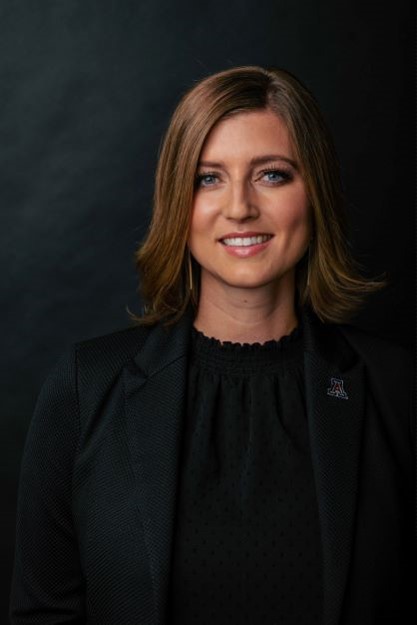
Who: Kimberly Patten, Assistant Vice President for Research Development; NORDP Board of Directors, Designated MSI Seat
Where: University of Arizona
Number of years in research development: 17 years total: 8 years in academic research; 4 years in science research management; 5 years in nonprofit research management
Length of NORDP membership: 8 years
What initiative are you the most proud of in your role as a NORDP volunteer?
As a NORDP volunteer the thing I am most proud of is spending time with the Strategic Alliances Committee and working with them to formalize our relationships with sister organizations. From a professional perspective I think the thing I have done and willingly shared in service to both my institution and the profession is trying to help think through career progression in research development and developing these lines of progression. The structure I have developed at the University of Arizona is six different levels within research development, plus an additional five levels of management lines. There are eleven different career progression steps that you could be involved in research development. I’ll admit that implementing these lines is more difficult than creating them, but just having them is a start.
How has your service to NORDP enhanced your career?
How has it not? The best thing about NORDP is the community and sharing, willingness of individuals to share best practices. I’m reluctant to say that I have come up with anything originally. Instead, it’s a culmination of best practices, digging in deep and talking to people. Then taking the pieces that would fit at my institution. People are so willing to give, share and provide support within this community. That willingness to share has enabled me to think about implementing infrastructure within my institution and how we fit into the larger research development picture.
How did you hear about NORDP and what made you join initially?
I started at the University of Arizona in 2014. The grant funding I had was coming to a close and a friend sent me this job opportunity.
I came into the position under a former NORDP board member, Anne McGuigan, who provided phenomenal mentorship and that connection to NORDP. I became a member of NORDP almost from day one of joining the University of Arizona and attended my first conference in 2015, where like many before me have said, I found my people.
What relationships have you built as a result of NORDP (new colleagues, connections to institutions where you previously had no point of contact)?
I serve in the mentoring program as both a mentor and a mentee. I have been paired frequently with people at less resourced institutions and it’s just incredible to me what they can accomplish as a one-person shop. I have also grown an informal mentor network through committee connections. And then there’s the listserv postings; I’ve reached out on more than one occasion based on someone’s job posting or guidance on the listserv. People at NORDP are so kind and willing to help. As a hiring manager, bringing on new talent is one area that I have relied on help through the NORDP network. For example, engaging with postdocs and through the national postdoc association group or looking at faculty spousal hires. These are a couple of the ideas that have come up through NORDP.
Describe how NORDP has changed from when you initially joined
NORDP has certainly grown. It is constantly improving processes and remaining flexible. NORDP is still in a discovery mode. It is still an incredibly welcoming organization and the work done by committees like the Committee on Inclusive Excellence and Member Services is making it an even more welcoming organization. We are at a tipping point for thinking through what services we can provide as an organization for our growing membership. Really there is nowhere to go but up. The bigger and broader the network, the better informed we all are and the more ideas to harness.
What recommendations do you have for members to get more involved with NORDP?
My first recommendation is to sign up for mentorship. One of the most important things that a research development professional and NORDP member can do is expand your network – find someone outside your institution you can throw ideas around with, learn from and grow with. The next one is to think about your strengths and whether you want to continue building and growing them or try something new. It’s not a bad thing to try something new, especially if you’re brand-new to RD. We all fall back on our comfort zone. New experiences can help you network and build collaborations (and this is coming from someone that finds networking incredibly uncomfortable). Don’t be afraid to stretch yourself because NORDP is such a welcoming and open community that you will find a way to contribute regardless of what you decide to do.
I am incredibly humbled at the nomination and to actually receive the award I find it hard to put into words how I feel. I sincerely appreciate this organization and what it has done for me, professionally and personally. I hope I have given back even a percentage of what I have received. To be in the cohort that was selected – these are some of the people that I also look up to, is humbling.
The NORDP Rising Star Award recognizes individuals for their outstanding, early volunteer contributions to NORDP and strong potential for future contributions to the organization and the profession or the field.
Joshua Roney, Rising Star Awardee
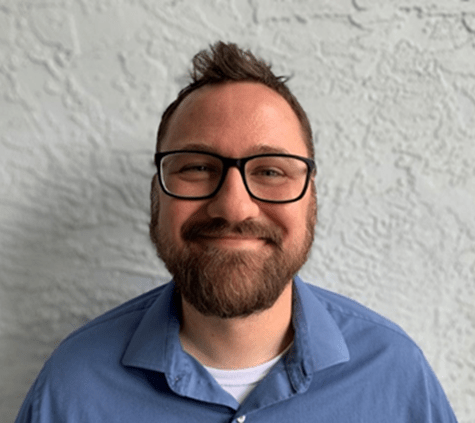
Who: Joshua Roney, PhD, Associate Director, Research Development, Office of Research
Where: University of Central Florida
Number of years in research development: 11 ½ years
Length of NORDP membership: 9 years
What initiative are you the most proud of in your role as a NORDP volunteer?
I started with the Professional Development (PD) Committee who were looking to transition to a new platform for webinars and other online events. We helped the transition to Zoom to be successful and developed procedures for running web-based events that continue to be utilized and updated as needed. Another initiative I am proud of is the Tools and Tips (“TNT”) talks launched last year – this was a collaborative effort to capture a more informal way to briefly share helpful resources with NORDP members. This has been well received and is now a regular offering through the year.
How has your service to NORDP enhanced your career?
It has made me more confident as an RD professional and has given me experience in specific areas like planning and delivering engaging workshops. Serving has also allowed me to gain insights and training on some areas that have evolved and grown in our profession (Competitive Intelligence, for example). Being mindful of changing opportunities for RD support and being proactive at my institution with regard to them has helped me to advance in my career and be successful.
How did you hear about NORDP and what made you join initially?
My manager, Jo Smith, encouraged me to join and participate in NORDP. She was passionate about research development and helped to continually strengthen the Research Development office at UCF. She passed that along to me – the philosophy that NORDP is the authority in RD information and a valuable community to be involved in. She wanted me to be an actively involved NORDP member, and I trusted her advice. It has been a rewarding experience.
What relationships have you built as a result of NORDP?
I have friends that I have now worked with for years through serving on the PD Committee and connecting and presenting at conferences. I have also been able to collaborate with some of them outside of NORDP through scholarship and grant activities. Connecting with people in PD Committee has been great for me because people join for different reasons. I initially joined PD Committee because I wanted to get promoted from GRA to a full-time employee, which meant for me the start of my career. Others may have joined because they wanted to advance their skillset, expand their office, or strengthen the depth and range of resources available. Because we’re coming from different places, we’re bringing different energy and experience to our group. Working in RD, there may be only a small number of RD professionals at that institution, and I think that may be part of why NORDP is so collaborative. I’ve found that members are extremely willing to share information, resources, advice, and assistance. That spirit is baked into NORDP.
Describe how NORDP has changed from when you initially joined
When I first started in NORDP, everything felt brand new. I’m so glad that the sense of finding new opportunities ahead has been a continual experience while being an involved member. I’ve been happy to see trends in RD workshops and discussions continue to evolve over time, and the growth of the organization has continued to bring more voices into the mix. I’ve also seen exciting developments in RD growing in the production of scholarly works, and it’s nice to see new vision elements periodically noted by NORDP leadership.
What recommendations do you have for members to get more involved with NORDP?
Don’t feel like you have to wait for a good fit opportunity to appear before getting involved. If you have ideas for things, you will likely find people or initiatives that can align with that good idea. Don’t wait to give things a try. If you do that with the intention of connecting with the people you will be working with, then I think you won’t be disappointed.
I’m so grateful to NORDP and the experience of being involved. Where I am in my institution and professionally is intertwined with my positive experience as a member of this organization. My original plan was to get my graduate degree then become a teacher, but I changed plans because I found RD to be a better fit for me. I still have opportunities to teach through things like workshops and mentoring, and there are always new things up ahead to learn and adapt for my institution.

 NORDP News