NORDP 2022 Plenary: Dr. Sherilynn Black Identifies Solutions and Spurs Action Toward Achieving Equity 

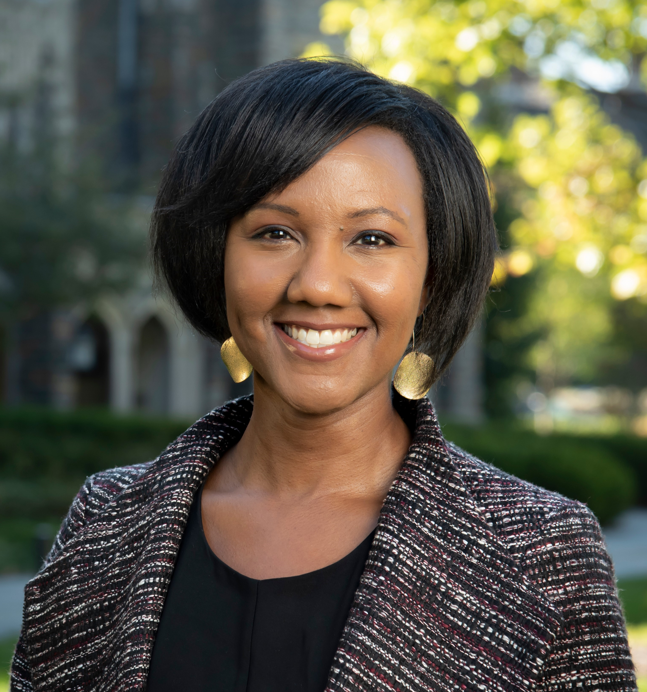
Sherilynn Black, NORDP April 27 Plenary Speaker

An unyielding commitment to equity and inclusion has been a through-line of Dr. Sherilynn Black’s career, from her graduate training as a neurobiologist to her current position as Associate Vice Provost for Faculty Advancement at Duke University. “I always had a desire to contribute to the scientific workforce in a way that was led by my values, and also led by a desire to expand knowledge and to expand people’s ability to understand and have access to science,” noted Black, reflecting on her professional journey, which has combined neuroscience, human behavior, higher education administration, and diversity work. 

Black will give a plenary address to NORDP conference attendees entitled Examining Barriers and Identifying Solutions Toward Achieving Equity in STEM. In her remarks, she will explore the ways in which research development professionals can empower themselves and their colleagues to promote equity within their institutional environments and offer practical and easily adoptable steps toward changing systems and structures in academic organizations.  

Black’s current work, which has been funded by HHMI, NIH, and Burroughs Wellcome Fund (among others), focuses on developing and measuring the effectiveness of interventions designed to promote diversity in academia. When asked about the ways in which her research interests have evolved she responded, “I was still interested in doing research, but wanted to do it in a way that really touched on the areas that were very important to me. I ended up transitioning from basic neuroscience to social neuroscience and then started focusing on race and equity more specifically.” As for how her research has informed her work as an administrator, Black points out, “My work is to design interventions. I study large scale datasets and look at the ways to design interventions to shift human behaviors towards equity. So, for me, the research that I do ties in very closely with a lot of the administrative roles I’ve held.” 

While the connection between Black’s neurobiology background and her current research might not seem intuitive at first blush, the connection is clear to her. “To me, as a scientist, thinking about academia as an ecosystem is no different than thinking about a biological structure. Using statistical models has helped me learn how variables interact with one another. If you change one element of a model, how will it affect the downstream indicators of the rest of the model?” And Black is a strong proponent of applying the same rigorous scientific approach to her current work that she brought to the bench as a graduate student and postdoctoral researcher, noting,” I think a lot of times when it comes to work on diversity and equity topics people go off of their gut, or they see a successful initiative somewhere else, and they try to apply it locally without any contextual knowledge or evidence that it will be effective. They are not informed by the literature or by scholarly expertise. I like to use data to inform the practices that I develop for interventions. And I really do think that’s a big part of why they’ve been successful – because they’re evidence-based methodologies that are focused extensively on understanding the contextual knowledge, understanding the affective parts of motivation and behavior, and understanding the desired outcomes.” 

Black views research development professionals and other academic staff as vital changemakers within their institutions when it comes to promoting a culture of inclusivity noting, “Research development professionals are critical for this work, because they are the ones who can create the culture, tone, and climate of training and work environments. Often times, students cycle in and out, and faculty may come and go, but staff play a critical role because they are often the longitudinal forces creating the culture that others cycle through.” 

As Black is well aware, the hierarchy that can exist within academic institutions and companies alike can make changing the culture a challenging endeavor. “Ultimately, hierarchy can lead to a strong desire to cling to different norms for self-preservation. Anything that disrupts positionality or disrupts power structures can lead to challenges when you’re thinking about equity.” But despite these challenges, she notes the imperative for institutional change, stating “If the culture and climate is not one that allows all individuals to thrive, we will continue to see underrepresentation and attrition, or we will bring in scientists who have to assimilate to the current inequitable environment to survive. This means that we’re actually losing the benefit of the diversity that we sought to recruit in in the first place. Science will not be the best that it can be, and we won’t be as strong or as innovative of a field.” 

Above all else, Black hopes that plenary attendees will come away with a sense of empowerment to step up at their own institutions. “I think that the more we create spaces where people feel that they have the agency and the right to speak up on what’s right and wrong, and the more that we all agree to subscribe to the norm that every person has the right to thrive and excel. That includes all students, faculty and staff.  I think this will help more scientists to feel like they have the power to speak up when they see something going on.” 
NORDP 2022 Plenary: Estrada Focuses on Kindness-Affirming Inclusion

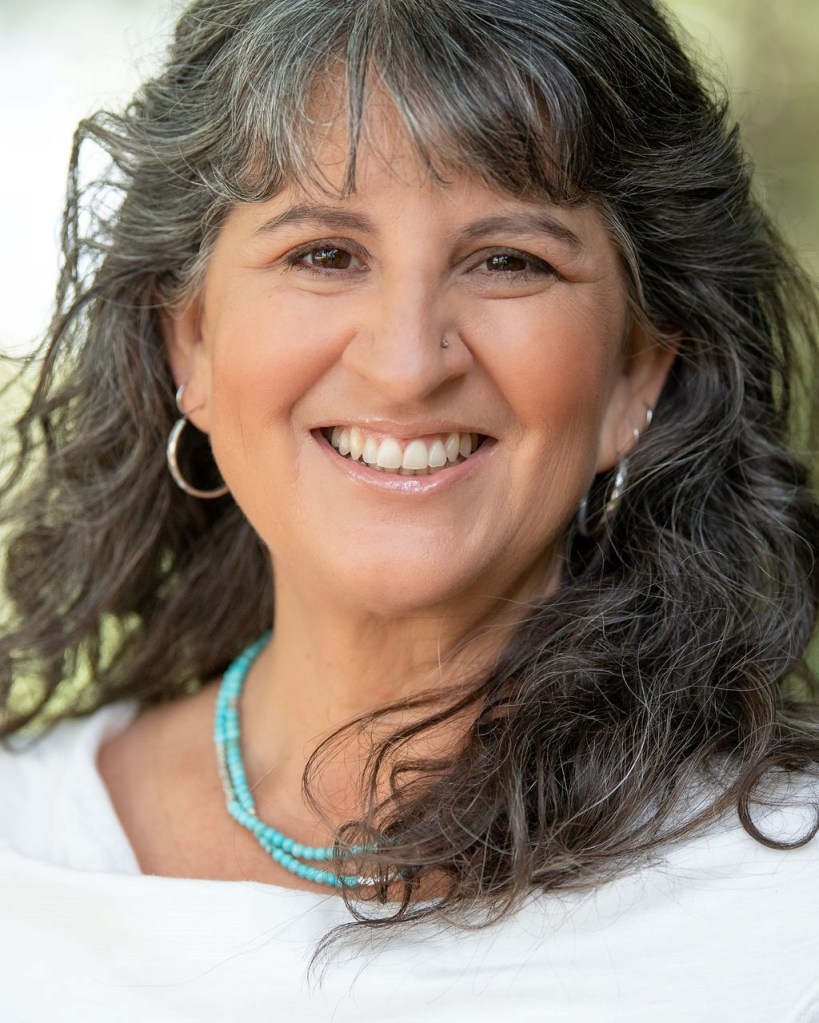
Mica Estrada, NORDP April 28 Plenary Speaker

When someone is kind, they support the dignity of another person. When mentors are kind, they convey a sense of safety, which is good for learning, retention, and attention. NORDP conference attendees will learn more about the benefits of kindness and tips to bring new perspectives on kindness to our work.

“Kindness affirms inclusion,” says Dr. Mica Estrada, Associate Professor in the Department of Social and Behavioral Sciences and the Institute for Health and Aging at the University of California at San Francisco’s School of Nursing. She will be the NORDP 2022 conference plenary speaker at 11:00 a.m. eastern time on Thurs., Apr. 28, discussing “Why Kindness Is Important when Mentoring in an Interconnected World.”

As a social psychologist, Estrada studies how people integrate into their field. “We look at how quality mentorship helps students feel they can do the science, develop their identity as scientists, and how they share community values,” she explains.

Estrada says kindness has always been at the forefront of her scholarship. “At about four years old, my first memory was when a US ship went into Chinese water. I remember thinking, will there be a war, why do we hurt each other?” She continues thinking about that later question in her research, and chooses to focus on how people connect to each other, and specifically on kindness as the solution.

She compares her passion for kindness in mentoring to tending a garden. “Instead of spending time pulling weeds, I decided to put effort into growing what we want to reduce the space for the things we don’t want to grow,” she says.

Estrada will share findings from her years of research with NORDP conference attendees, highlighting results that are relevant to mentoring students and faculty or working with other research development colleagues.

“We’ll be talking about ‘quality mentorship’,” she says. The first focus is on instrumental support, or the “nuts and bolts” activities, such as how to access physical spaces or scholarly journals. This will differ in each situation. The second focus is on psycho-social support, such as empathy, listening, and emotional presence. Again, the details will differ based on the relationship, but the concept is important.

Estrada’s research is well funded by the NSH, NIH, and HHMI. She says she finds grantwriting to be a creative, labor-intensive challenge as she explains what she wants to explore while being concrete and persuasive. She draws upon past experiences with non-profit groups and work with development officers. She is also engaged in community-service roles, serving on the National Research Council Committee’s Roundtable on the Future of STEM Education; the National Academies of Sciences, Engineering, and Medicine consensus study on Advancing Anti-Racism, Diversity, Equity, and Inclusion in STEM Organizations; and a NASA Minority University Research and Education Programs advisory committee.

Estrada focuses her research and time on understanding how to increase inclusion and equity in our education system.  Her research methods identify educational interventions that facilitate integration into a community and increased engagement in the normative behaviors of that community for all students. She encourages us all to amplify what we want within our academic and professional environment, and she sees ample opportunity to do this.

“We’re at an interesting time in history,” she suggests. “COVID has shaken up the way we work. There’s an opportunity to not go back, but to go forward in a way that serves us as human beings.”

Follow @NORDP_official on Twitter for all the latest #NORDP2022 updates.

NORDP fosters a culture of inclusive excellence by actively promoting and supporting diversity, inclusion and equity in all its forms to expand our worldview, enrich our work, and elevate our profession.

Member Services Committee Recommended Awards

Earlier this year the Member Services Committee (MSC) organized a competition for established Regional and Affinity groups and recommended awards to a variety of groups. The intention of the competition was to assist groups with retention, recruitment, and engagement of members throughout NORDP.

The PUI Affinity Group’s project, Landscape of Research Development (RD) at Predominantly Undergraduate Institutions (PUIs), is using mixed-method data collection and analysis to examine the unique identity of RD staff at PUI’s. The initiative will fund a graduate student to analyze survey data collected in summer 2021 and provide incentives for focus groups in the Spring & Summer that will provide qualitative data to complement the survey. The ultimate plan is to prepare a white paper to be shared within NORDP and a draft manuscript for peer-review and outside distribution.

If you are interested in learning more about the PUI Affinity Group’s work please contact Kara Luckey at kluckey@seattleu.edu.

The Great Lakes Region received support for their annual retreat that was held in January. The event had 30 attendees from 17 organizations with the theme Wellness and Diversity, Equity, Inclusion, and Belonging (DEIB). Attendees heard from a guest speaker, Denise Williams, Ph. D, who discussed How Trust Levels and “Thinking Traps” Influence Work Team Engagement and Effectiveness, followed by a group discussion on approaches to DEIB at the attendees’ institutions. In an effort to maintain longer-term member engagement the region has also created a book club and provided books to ten members (by random drawing). More details about the retreat can be found here.

If you are interested in getting involved with the Great Lakes regional group please contact Ellen Freeman at efreeman@umn.edu.

The Northeast Region’s initiative is planning to examine Justice-Equity-Diversity-Inclusion + Belonging (JEDI+B) related to RD units and DEI units. The group hopes to examine questions such as, “How can RD professionals be given RD-specific allyship training? Can we design a toolkit to be used at the institutional level to enable RD-DEI collaboration best practices intramurally? Can we build an inter-institutional regional strategy? How can we diversify the RD community itself?” NORDP-NE hopes to work with representatives from the National Association of Diversity Officers in Higher Education (NADOHE) and other groups to adapt and modify a multi-institutional climate survey that will complement NORDP’s overall CIE survey. Ultimately the plan is to share the survey with NORDP-NE members and provide insights to the region and NORDP as a whole to help recruit, retain and engage members. 

If you are interested in learning more about this initiative please contact Mariah Nobrega at m.nobrega@northeastern.edu

Elizabeth Festa, co-chair of MSC, said, “We are excited by the innovative way in which these three groups have rooted their engagement efforts in research inquiry as well as diversity, equity, and inclusion. Their events and projects will contribute not only to advancing knowledge in the field of RD but to embodying the values of NORDP. “

Compiled by Daniel Campbell, Member Services Committee

Takeaways from the 2022 International Mentoring Association Conference: The Transformational Power of Mentoring

In February, four NORDP members – Jan Abramson, Rachel Goff-Albritton, Kathy Partlow, and David Widmer – attended the International Mentoring Association conference in Gainesville, Florida. The conference occurs every other year and includes a wide spectrum of mentoring enthusiasts across education, business, and other sectors. Since 1987, the International Mentoring Association has been the premier source for best practice solutions and support of mentoring professionals. For this blog post, we feature takeaways from one of the many sessions that were part of the conference. 

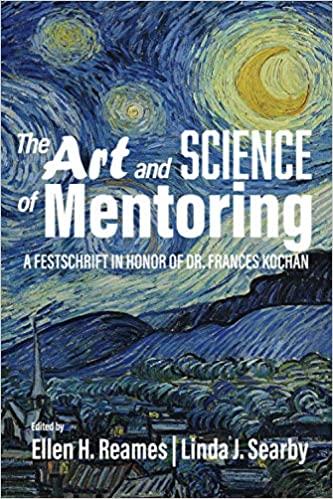
Session: The Art and Science of Mentoring: Testimonies from Research and Practice

Takeaways by: Kathy Partlow

Text

Description automatically generated

Picture a conference session with a long table of panelists packed in elbow-to-elbow at the front of the room. You might be thinking the panel organizers were overzealous in their invitations; however, I soon discovered that the table was a visual representation of the impact of mentoring. Dr. Frances (Fran) Kochan, a well-known education leadership scholar and master mentor, was surrounded by a few select mentees that she had impacted throughout her academic career. Her mentees had decided to honor her with a festschrift – a German word for a commemorative of someone who is still living – to pay tribute to her influence and contribution to the field. Each mentee wrote about how Fran’s mentorship helped them navigate skill development, career progression, or work/life integration topics as examples of putting mentoring theory into practice within a chapter of The Art and Science of Mentoring: A Festschrift in Honor of Dr. Frances Kochan. Each shared powerful and moving testimonials on what they learned from Fran about mentoring and how one person “can cross our paths and change us forever.” As Fran – and really the entire audience – worked to control emotions throughout the testimonials, Fran closed the session by encouraging each of us to always be a mentor and a mentee. I found the session inspiring. I want to be like Fran and what I learned from this session is that having that kind of impact is possible for each of us. 

Afterwards, as we NORDies gathered and talked about that session, one of the clearest session messages was how mentoring leads to growth and transformation. The impact of mentoring begins reciprocally: the mentee and mentor both benefit. Then, the impact of that mentoring grows exponentially: each mentee goes on to influence multiple others and so on. Importantly, the impact of mentoring happens through small acts: being kind and supportive to others, actively listening, picking up a phone, or returning an email. The impact of mentoring also happens through big acts: being a role model, collaborating together, giving psychological and emotional support, or providing sponsorship. 

Overall, the impact of mentoring is transformational for self and others. Registration opens soon for the next cohort of the NORDP Mentoring Program. What will your impact be as a mentee? As a mentor? Who will be at your table? What legacy do you want to leave?

NORDP 2022: Early Registration Closes Next Week

Early-bird registration for the fully virtual 14th Annual Research Development Conference, #NORDP2022,  closes next week.  Registration through March 31 is $179 for members and $279 for nonmembers, but after March 31 prices will increase $40 until registration closes April 20. 

Just a reminder that anyone participating in the Conference program (speakers, sponsors) will need to register in order to access the platform.  If you need assistance or have any questions, please email the NORDP office.   

After registering, get ready for #NORDP2022 with swag. You voted on your favorite mug mottos — now you can purchase your favorite designs on a real mug! Check out the volunteer-run shop and make your purchases before the conference to be ready for the morning coffee chats.

See you next month! 

The NORDP 2022 Conference Planning Committee

NORDP 2022 Plenary: Dyhia Belhabib: Diversity Matters Now

Dyhia Belhabib, NORDP 2022 Conference Tuesday Plenary Speaker

Diversity in research is much more than a good idea; it can be the key to survival, says Dyhia Belhabib, Principal Investigator at Ecotrust Canada.

“Diversity matters; otherwise it can be deadly,” she says. “We’re in the midst of the climate crisis. It’s happening now. We need solutions and strategies to become more resilient now.” She suggests some of the best solutions will be brought by diversity.

“People often ask me how I got into this field, and I tell them I understand what it stems from. I don’t look like most others who study the ocean,” Belhabib explains her passion for diversity in STEM fields.

For example, as a child growing up in Tazmalt, Algeria, she and her family dealt with droughts for decades. “I’ve carried water from the well. I know how to be resilient, how to save water,” she says.

Belhabib will be the NORDP 2022 conference plenary speaker at 1:00 p.m. on Tues., Apr. 26, discussing minorities and equity in STEM research. She will share experiences working at the intersection of sustainability and ocean criminality.  A highly published scholar and devoted advocate for social justice in conservation, elimination of illegal fishing, inclusive science, and empowering minorities in research, she founded spyglass.fish, an online platform for monitoring illegal fishing worldwide, and Poplar and Ivy, a magazine that supports underrepresented voices in science and conservation.

She shared a recent experience consulting with an academic institution on diversity issues. “We were shut down the moment we asked for diversity of perspectives,” she recalls the moment when she was first introduced to an all-white panel. “I wasn’t surprised to see such a panel, but I was shocked at the reaction.”

To her, diversity represents a matter of life and death. “Lack of diversity can be deadly,” she says. For example, death can arise when doctors don’t understand what measles look like on a black person’s skin. She emphasizes the importance of bringing diversity to science and learning how to open STEM careers to minorities.

“We all have biases we need to uncover,” she says as she turns her attention to her NORDP plenary presentation. “It’s very important to be aware. We tend to export what we perceive to be the best solution, regardless of the situation and context. Perhaps we need to be a bit more creative, to circumvent the political climate and accepted narratives to pursue effective change.”

Research development professionals have tended to be colonial, what Belhabib equates to hindering local expertise and supporting ill-adapted solutions in areas where minorities prevail. In other words, from Belhabib’s perspective, RD has tended to support established researchers and pre-existing solutions.

“Research development professionals might consider how they transfer bias from individuals to the system, essentially preventing people from getting into the system. It’s a matter of strategy,” she suggests.

The reward can be great: diverse perspectives and diverse thoughts challenge scientific research, which needs to be challenged, Belhabib says. “As a result, those proposals have more meaningful outcomes.”

Follow @NORDP_official on Twitter for all the latest #NORDP2022 updates.

NORDP fosters a culture of inclusive excellence by actively promoting and supporting diversity, inclusion and equity in all its forms to expand our worldview, enrich our work, and elevate our profession.

Learn More About the Strategic Alliances Committee

Mark your Calendar!!

NORDP members are invited to join the Strategic Alliances Committee’s quarterly meeting on Thursday, Mar. 17, from 2:00 to 3:00 p.m. eastern time at this Zoom Link: https://tennessee.zoom.us/j/675272311.

Those who are new to the committee will learn more about its three key themes. NORDP members who serve as liaisons will provide updates on their respective organizations, and several liaisons will share success stories from organizations like ARIS, INORMS, and APLU. Learn more about what it means to be a liaison and how to apply. This is an excellent way to engage with NORDP and others in the research development universe.

Great Lakes Region’s Half-day Retreat Recap

The 2022 NORDP Great Lakes Region held its annual retreat on January 18 via Zoom. The event saw about 30 participants from 17 organizations. This year’s theme was wellness and Diversity, Equity, Inclusion, and Belonging (DEIB).

The retreat kicked off with musical performances by University of Michigan student musicians, setting a calming atmosphere at the beginning. The programming included an inspiring guest presentation, titled How Trust Levels and “Thinking Traps” Influence Work Team Engagement and Effectiveness, by Denise Williams, PhD, University of Michigan Organizational Effectiveness Consultant. Next, the Great Lakes Region community was invited into a conversation on DEIB, where the participants discussed their institutions’ approaches to implementing DEIB in research development work. The Great Lakes Region Executive Committee gave regional updates on the governance of the regional Executive Committee, asked for input on potential activities to engage members, and introduced the region’s book club. Finally, the retreat concluded with a casual virtual happy hour.

Ten participating members were randomly selected to receive a copy of the book Lessons from Plants, by Michigan State University’s Dr. Beronda Montgomery, the first read for the book club. With the consideration of wellness, health breaks were provided while fun and relaxing music was played. Colleen Greene, University of Michigan Senior Wellness Coordinator, also demonstrated invigorating and restorative desk stretches between two sessions. The half-day event received positive feedback, including insightful discussions and professional connections.

The retreat was organized by the Great Lakes Region’s inaugural Executive Committee. The committee members are Maggie Berg (University of Illinois Urbana-Champaign), Jessica Brassard (University of Michigan), Ellen Freeman (U of Minnesota-Twin Cities), Sarah James (AtKisson Training Group), and Melissa Li (University of Michigan). It was financially supported by a mini grant from a recent competition organized by NORDP’s Member Services Committee aimed at assisting affinity and regional groups with retention, recruitment, and engagement of members. 

Written by the NORDP Great Lakes Region Executive Committee

NORDP 2022 Conference Scholarships Available

NORDP Conference Scholarships (known as “Attendance Awards” when we meet in person) are intended to help members offset the cost of conference registration. These scholarships are intended for those who need financial support beyond what their institutions or organizations will provide. NORDP 2022 awards will fund the cost of one (1) conference registration per award at the early-bird member rate.

These awards, funded by AtKisson Training Group, support NORDP’s mission to enhance the diversity of our membership and member institutions. Members who are new to NORDP, are attending their first NORDP conference, identify as belonging to a group that is underrepresented in NORDP, or represent Minority-Serving Institutions, are strongly encouraged to apply.

Special thanks to AtKisson Training Group for these Scholarship Awards.

Scholarship recipients are expected to volunteer at the conference and serve on a NORDP committee or subcommittee following the 2022 conference.

Eligibility: These awards are not available to current and prior NORDP Board of Directors members, Affiliate Members or consultants. Anyone who has received conference/travel support from NORDP in the previous three conference years (2019, 2020 or 2021 conferences) is not eligible in 2022.

To Apply: Visit https://nordp.infoready4.com/#competitionDetail/1863054. Applications are due March 15, 2022 by 8 pm ET/5 pm PT. (If this is your first time using NORDP’s InfoReady site, please select “Register” in the upper right-hand corner to create a login for this site.)

PLEASE DO NOT REGISTER FOR THE CONFERENCE UNTIL YOU ARE NOTIFIED OF THE STATUS OF YOUR SCHOLARSHIP APPLICATION. We will contact applicants with decisions before the Early-Bird registration window closes on March 31.