Leveraging the RD Toolbox to Support Inclusive Excellence

Contributed by Debra Karhson, Ph.D., Crystal M. Botham, Ph.D., Gretchen L. Kiser, Ph.D., and Elizabeth Seckel, M.A.

The 10 year anniversary of the report by Ginther et al. (2011) has re-ignited an important conversation on federal grant funding disparities and structural oppression within biomedical research. Recent updates to the report show only a marginal increase in funding rates for Black researchers (Erosheva et al., 2020). Importantly, response articles by Taffe and Gilpin (2021) and Stevens et al. (2021) highlight the calls to action by stakeholders to rectify this unjust federal funding infrastructure. While these articles single out federal funding institutions like the NIH, they also highlight the critical role for research development (RD) professionals in transforming the research workforce to be more just and equitable. Moreover, in light of the forthcoming funding initiatives by federal funding institutions to increase diversity in research (i.e., NIH UNITE initiatives), RD professionals have an instrumental role in ensuring these funds have the greatest impact on the communities that need them most.

To assist other RD professionals ideate actions at their own institutions and in line with the October 12th NORDP blog post on Conversation Roadblocks, we spent a session during the 2020 NORDP Pacific Regional Meeting keeping ourselves accountable to this work. In this dedicated session, we shared the individual practices and policies NORDP members have taken to advance justice, equity, diversity, and inclusion at their institutions.

Below we categorized these crowd-sourced actions into one of the three following categories (Figure 1): allies, accomplices, and co-conspirators. These terms come from social justice epistemology and create a framework for examining where greater risk can be taken by those committed to increasing justice, equity, diversity and inclusion in the workforce. Briefly, allies and allied actions are those which show an individual’s general support of social justice movements and initiatives. Actions of an accomplice are pro-active, de-center dominant narratives, and leverage our privileges in service of justice. Finally, co-conspiratorial actions are those that involve the greatest risks and are the most active of the three in disrupting systems of oppression.

Ally

Accomplice

  • Lead a Conversation Roadblocks or similar discussion
  • Join and be an active member of the NORDP Committee on Inclusive Excellence
  • Ask questions when something is inequitable. “If you see something, say something!” Advocacy is like a muscle that gets strengthened with each use
  • Serve on advisory committees, groups and task forces. Leverage your privilege as an RD professional to advocate for others in these spaces
  • Enhance equity, validity, and diversity in university hiring, using processes such as Oregon State University’s Search Advocate Program or Ohio State University’s strategic planning for a fair and equitable future
  • Attend training for RD professionals like the UCSB-based Center for Research, Excellence, Diversity in Team Science (CREDITS) to understand why and how to encourage greater team diversity
  • Bring in expert facilitators to give workshops on different DEIB (Diversity, Equity, Inclusion, Belonging) topics such as how to build inclusive research teams, best practices for community engagement, etc.

Co-Conspirator

  • Partner with campus offices and organizations that are involved in DEIB activities. For example, UCSF hosts a matchmaking event between interested research faculty and URM students/trainees/staff from other local universities and community colleges
  • Engage affinity groups such as Black and or/ LatinX postdoc and faculty associations to co-create resources based on their needs
  • Volunteer your grant writing expertise for a community non-profit serving BIPOC (black, Indigenous, and people of color) communities
  • Evaluate language and review criteria for internal grants to adopt an anti-racism praxis in peer review. University of Michigan launched a new resource for mitigating bias and improving practices in peer review, nominations processes, etc.
  • Convene and participate in anti-racism advocacy efforts on our campuses and beyond, applying RD skills like project management, writing, etc.
  • Develop guidebooks, workshops, and bootcamps for diversity-specific grant programs, such as Stanford’s Diversity Supplement website or Jump Start Awards
  • Develop and provide small seed funding opportunities to support research on structural racism or that promote diversity. Chapman University provides seed funding for research and creative activities that serve the needs of diverse communities. UCSF has introduced an intramural seed grant focused on anti-Black racism in health research.

We wish to thank all the participants in our 2020 Pacific Regional presentation, Leveraging the RD Toolbox to Support Institutional Diversity Efforts, for sharing the important work they are doing. The above list of actions is by no means exhaustive, instead we hope it sparks new ideas and implementation efforts. During the 13th Annual NORDP conference, we will continue this dialog and actively explore ways that we as RD professionals can support DEIB during the session titled Leveraging and Building the RD Toolbox to Support Institutional DEIB Goals. Please join us on May 4, 2021 at 12:15 pm. NORDP will also host another set of Conversation Roadblock discussions around the virtual conference as well, so get ready for this valuable conference add-on and join in on uncomfortable conversations! 
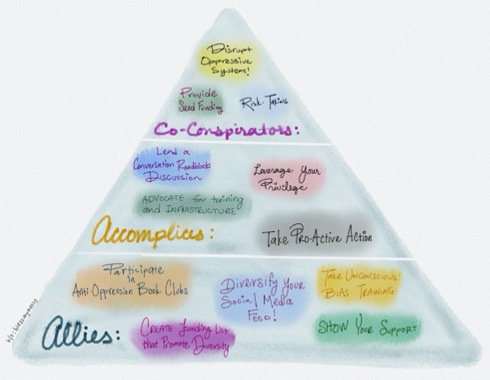
Figure 1. The Pyramid of accountability for Research Development Professionals (graphic inspired by @blessthemessy)

Strategic Alliances Committee Update: Volunteers Needed

One of the first committees to exist within NORDP, the Strategic Alliances Committee builds mutually beneficial relationships with other organizations to strengthen NORDP’s position in the global research enterprise and benefit NORDP members. To continue this work, the committee is actively recruiting volunteers in two areas:

1) Liaisons – The NORDP website describes this long-standing program that taps NORDP members to gather and share relevant and useful information as part of a broad and strategic outreach program. More than 20 NORDP members are currently engaged as liaisons, and more are needed to connect with various professional societies, federal agencies, and other organizations that are potential sources of collaboration and professional development for NORDP members. If you’re interested in serving as a liaison, please contact Karen Eck at keck@odu.edu.

2) Communications – With dozens of liaisons gathering vital information, the committee is looking for members to help disseminate that information. This might include contacting liaisons and drafting blog posts, establishing a calendar of liaison partner events, or assisting with NORDP presentations made at liaison partner events. If you’re interested in helping with this, please contact Sharon Pound at spound@utk.edu.

NORDP fosters a culture of inclusive excellence by actively promoting and supporting diversity, inclusion and equity in all its forms to expand our worldview, enrich our work, and elevate our profession.

Featured NORDP 2021 Session: “Mindfulness” with Dr. Kelcey Stratton

Dr. Kelcey Stratton will join NORDP members for a mindfulness session during the NORDP 2021 conference on Monday, May 3rd at 1:45pm EDT. Her session will focus on skills to mindfully pause, improve presence, and cultivate gratitude, compassion, and positive emotions. Participants will have a chance to practice evidence-based strategies to manage moments of stress and support their well-being.

Dr. Stratton is a clinical psychologist and the Program Manager for Resilience and Well-Being Services in the Michigan Medicine Office of Counseling and Workplace Resilience. In this role, she develops programs and strategies to enhance well-being for faculty and staff at Michigan Medicine. She has a particular interest in the areas of stress and resilience, trauma-informed care, mindfulness, and the use of narrative and reflective practices.

Prior to coming to University of Michigan, Dr. Stratton lived and worked in South Africa for several years, where she served as a mental health clinician and consultant to Peace Corps volunteers and medical providers in over 65 countries. She has also worked as a clinician and researcher in the VA health system, where she focused on post-traumatic stress concerns. She completed her undergraduate studies at the University of Oregon and her Ph.D. in clinical psychology at the New School for Social Research in New York City.

Follow @NORDP_official on Twitter for all the latest #NORDP2021 updates.

NORDP fosters a culture of inclusive excellence by actively promoting and supporting diversity, inclusion and equity in all its forms to expand our worldview, enrich our work, and elevate our profession.

Mentoring Reflections: Carolynn Julien & Faye Farmer

As we approach a new year in the NORDP Mentoring program, we thought it might be beneficial for NORDP members contemplating becoming first-time Mentees or Mentors to hear from current participants in the program. With that in mind, the NORDP Mentoring Committee is pleased to share the inaugural installment in a series of “Mentoring Reflections” from mentoring dyads enrolled in the 2020-2021 NORDP Mentoring Program. The first of these dyads comprise members of the Mentoring Committee who agreed to share their insights. Mentors and mentees got together to talk about their experiences in the program and jointly wrote up responses to questions that were put to them.

The first in the series of Mentoring Reflections is from Carolynn Julien, who is the Associate Director, Office of Research Administration at Hunter College in The City University of New York, and her mentee, Faye Farmer, who is the Executive Director in the Office of VP Research Development at Arizona State University.

  • What influenced you to apply to be a mentor and a mentee for the 2020-21 NORDP Mentoring Program?

We got to know each other in the exceptional mentor training program in 2020-2021. Interacting in the training program allowed us to gather some insights about our professions, talents, and abilities. During a breakout session, Faye heard Carolynn mention a project she was working on, and Faye wanted to start a similar project. Taking the initiative, Faye reached out to Carolynn to see if Carolynn could mentor her through the project and Carolynn willingly accepted. Being in the mentor training program allowed us to comprehend the possibilities of broadening our circle of mentors. Once the project is successfully completed, we will further share our experiences about the project and the process.

  • What was your favorite part about your relationship?

We were both working on similar projects and used the mentoring relationship as a resource. We provide positive reinforcements and maintain regular check-ins that are easy and pressure free. What we learned during this relationship is that we are kindred spirits, and this also provided an opportunity for Carolynn to make a connection with NORDP and be of service to the organization.

  • What surprised you about being a mentor or a mentee?

The powerful personal connections were a surprise. We both have served as mentors and have been mentees and know that this is not always the outcome. We know that this mentoring relationship will continue to be an ongoing relationship after the 2020-2021 mentoring program ends.

  • How has participation in the Mentoring Program helped broaden your horizons about Research Development in general and/or affected your daily work in particular?

This program has taught us that it is crucial to recognize the qualities of people you need to enhance your journey as a RD professional. Our mentoring relationship has added depth to our lives by realizing the power of the RD network. The simple ask to be a mentor is an example of the power of the NORDP network.

  • Any words of wisdom or encouragement for those wanting to apply next year? Any other thoughts you would like to share?

Please take the leap to be a mentor or mentee; the rewards in serving as either are abundant. Our second piece of advice is to be open to the full potential of the mentoring relationship and to be receptive to all of the possibilities.

If you would like to share your experiences as a mentoring dyad, please contact mentorprogram@nordp.org.

Applications for the NORDP Mentoring Program for the 2021-22 year will be opening soon. Watch this space for more information in the coming weeks!

Written by Samarpita Sengupta and C. Scott Balderson

NORDP 2021 Plenary

NSF’s Sethuraman Panchanathan Builds New Partnerships to Drive Research

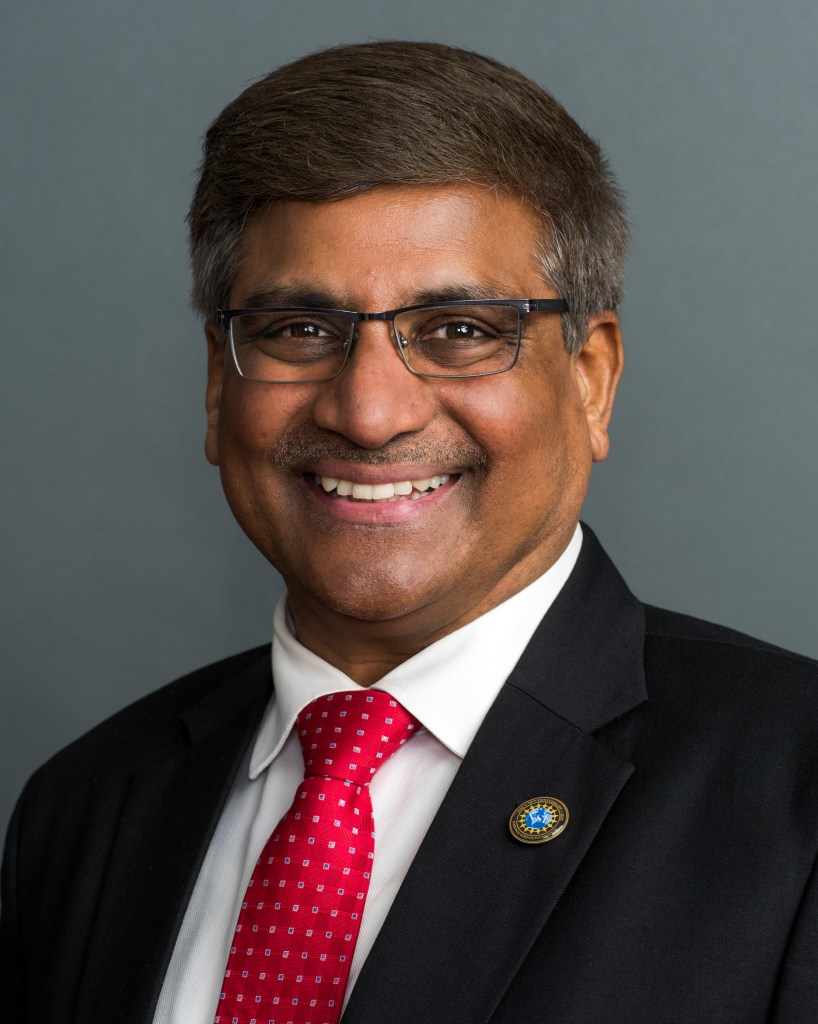
Dr. Sethuraman Panchanathan

For more than 70 years, the National Science Foundation has been powering discovery and innovation across the entire range of fundamental science and engineering research and education. As NSF’s 15th Director, Sethuraman Panchanathan sees extraordinary opportunities ahead for the research community to build on that legacy.

When he presents his plenary session, titled “Strengthening the Symbiosis of Exploratory and Translational Research @ Speed & Scale,” on Mon., May 3, from 11:00 a.m. to noon (EDT), he will share his insights on the future of research and the vital role for research development in that future.

“The framework for seeding bold, large-scale innovative research with meaningful societal impact is part of the DNA of NSF,” Panchanathan says. “Research development is integral to both NSF’s success and how we foster success in the research community. It’s about building the capacity and tools to advance knowledge more efficiently, and about building platforms and ecosystems that spur innovation.”

He notes that research development has sped up the pace of science and engineering, enabling researchers to make more discoveries and bigger breakthroughs faster than ever before.

“When I talk about my vision for strengthening the research enterprise at speed and scale, that’s also a strategic vision for expanding research development. Because our future success is going to depend on the investments we make in people, platforms, and partnerships. We need to strengthen the research community by reaching the tremendous talent that exists throughout this nation,” he says. He especially hopes to reach the “Missing Millions,” those with STEM capabilities from underrepresented communities who don’t yet see a pathway into science and engineering.

“We’ve built up tremendous research capacity over the past 70 years, and that is a launch pad not only for big science and engineering accomplishments, but for building even greater capacity for discovery and innovation,” Panchanathan continues. “My vision relies on partnerships, not just how NSF can create partnerships, but how we can foster environments where collaboration and multidisciplinary work thrives. Innovative, collaborative ecosystems are powerful tools for scaling up research progress.”

NORDP fosters a culture of inclusive excellence by actively promoting and supporting diversity, inclusion and equity in all its forms to expand our worldview, enrich our work, and elevate our profession.

Early Bird Registration Rates for NORDP 2021 Close Next Week

The Early Bird Member Registration price for NORDP 2021 is $149; Early Bird Nonmember pricing is $249. Early bird rates close March 31st – register soon to save! Registration is open on our registration page HERE.

The full schedule and registration are now available. The schedule at a glance and a downloadable PDF of the detailed schedule can be found HERE.

NORDP 2021 features over three full days of content delivered virtually. Registrants will have access to all recorded sessions from conference week.

The bulk of the conference content will take place May 3-6. In addition,
Pre-conference events start April 26 and feature more than 7 hours of pre-recorded 20-minute oral sessions. Post-conference events, starting May 10, feature more roundtables. Note: Pre-conference roundtable registration has already filled and the currently available post-conference roundtables will be full very soon.

We hope to see you at NORDP 2021!

Follow @NORDP_official on Twitter for all the latest #NORDP2021 updates.

NORDP fosters a culture of inclusive excellence by actively promoting and supporting diversity, inclusion and equity in all its forms to expand our worldview, enrich our work, and elevate our profession.

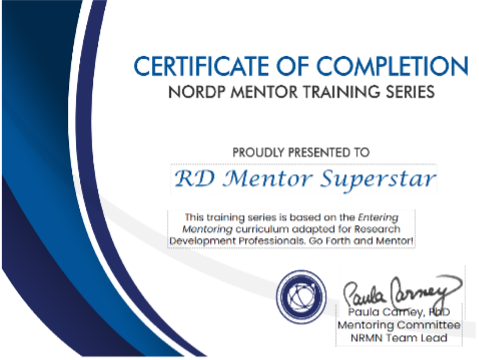
Hats Off to First 2021 NORDP Mentor Training Workshop Participants!

The NORDP Mentoring Committee’s Mentor Training Team held the first mentor training workshop of 2021. Twenty NORDP members from 19 states and provinces participated in the 5-week workshop, covering the 9-module Entering Mentoring curriculum initially developed for research mentors and tailored by the NORDP Mentoring Committee for RD professionals. Developed in collaboration with the University of Wisconsin Center for Improvement of Mentored Experiences in Research (CIMER), RD professionals explored key mentoring competencies that can benefit RD mentors and mentees that have been associated with improved career outcomes, employee engagement and retention, and more inclusive work environments. The workshop was facilitated by NORDP members Jan Abramson, Kristin Boman, Paula Carney, Tabitha Finch, Rachel Goff-Albritton, Kathy Partlow, and Samarpita Sengupta. All participants and facilitators are invited to join a NORDP Mentor Training Circle and participate in other Mentoring Committee activities. The next Mentor Training Workshop is being planned and will be announced soon. If you would like to be contacted when the next workshop series is scheduled, please complete this form. Registration is limited to 30 NORDP members.

Kristin BeckAlexia Kelley
Gagan BajajElizabeth Lathrop
Antoinette BlairKathryn Lindl
Sarah BridgesSuzanne Lodato
Jamie BurnsKatie Pelland
Lynsey FitzpatrickMary Ann Pollmann-Mudryj
Jenna IsaksonGeoffrey Pollock
Ashley KapronEvelina Sterling

NORDP 2021 Plenary

NIH’s Mike Lauer Shares Multiple Perspectives at the Intersection of NIH and RD

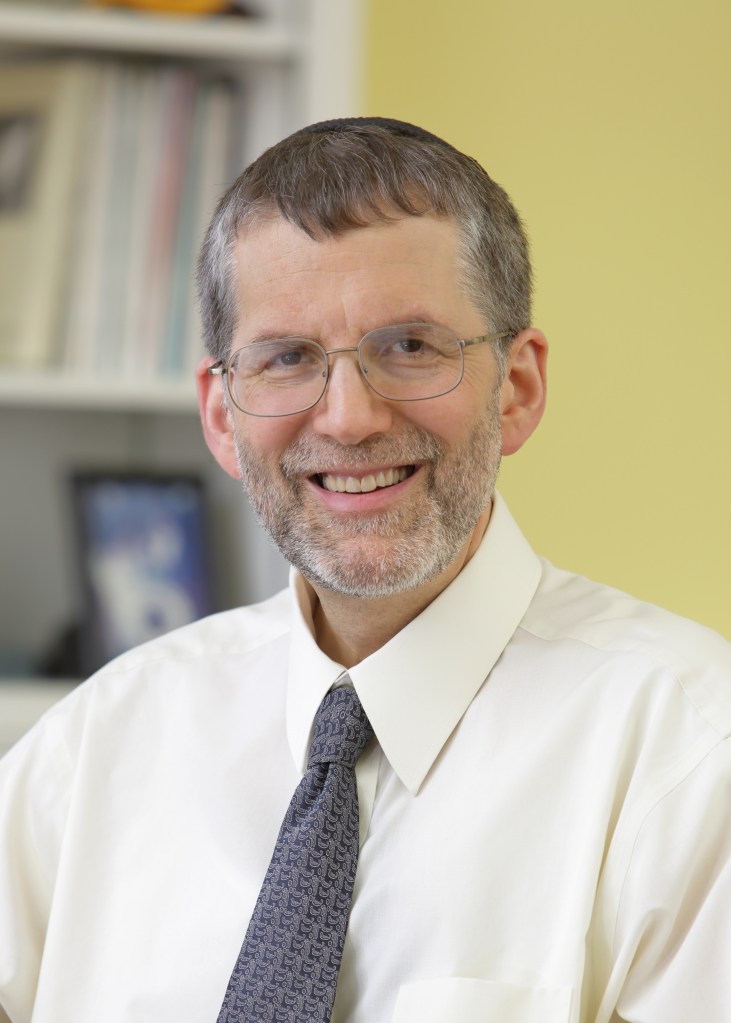
Mike Lauer, Deputy Director
for Extramural Research, NIH

When Mike Lauer, Deputy Director for Extramural Research for the National Institutes of Health, delivers his plenary presentation to NORDP, he’ll address research development from a variety of perspectives.

The title of his talk, to be delivered from 11:00 a.m. to noon on Tues., May 4, is “Extramural Research in the Era of COVID-19: An NIH Perspective.” In this context, he says, with three vaccines and effective treatments available, the perspective is that “in some respects science working exceedingly well.”

Lauer uses a sports analogy to stress the importance of diverse teams in research development, both in terms of the science and in terms of the institutional support provided to a team. “A team of quarterbacks, for example, would serve no one well,” he says.

While the term research development is a relatively new one to Lauer, he says he has been a fan of the concept for decades. He recalls a multidisciplinary proposal to NIH in the early 2000s that combined his talents as a practicing cardiologist with a special interest in epidemiology with that of a surgeon, a mathematician, and a statistician.

“We all looked at the world in very different ways, using different terms to say the same thing,” he recalls, noting that he found the mathematician’s perspective especially intriguing.

“We also had help from a colleague, a semi-retired scientist who gave us terrific suggestions. She helped us turn in a very good proposal that got a great score. She helped articulate the story, and provided great feedback on our writing.”

Today, Lauer notes that research development professionals can help researchers being better collaborators, which results in more competitive proposals coming into NIH. He calls this a blessing and a curse.

“Because we get better proposals, we can fund higher quality work that is likely to be productive,” he says. “At the same time, while a tremendous amount of work is funded, much is left on the table,” he adds, noting that the success rate hovers around 20-22 percent, down from a high of around 35% in the 1990’s, and up from a few years ago when it was round 16-17%.

Teamwork is the key to solving major challenges, Lauer says, noting that NIH grants are given to institutions, not individual scientists. Even the smaller R01 funding mechanism, he says, supports a team that usually includes principal investigators, co-investigators, postdocs, grad students, staff scientists, technicians, and others. Beyond that, teams of teams are often brought together for various consortium grants.

“Research development professionals help foster the idea with organizational and institutional support. It’s a team effort, all around,” he says. “The days of the individual scientist, brilliant and alone, is not the way the business is conducted now.”

Lauer’s presentation at NORDP 2021 will offer additional insights from his role at NIH, along with tips to help RD professionals best serve the researchers and teams they support.

NORDP fosters a culture of inclusive excellence by actively promoting and supporting diversity, inclusion and equity in all its forms to expand our worldview, enrich our work, and elevate our profession.

INORMS 2021 World Congress, May 24-27

The 2021 World Congress of the International Network of Research Management Societies (INORMS) will be hosted online from Hiroshima, Japan, May 24-27.

INORMS was formed in 2001 to bring together research management societies and associations from across the globe. Its objectives are: to internationalize the body of knowledge on research management; to exchange best practices; and to develop international approaches to supporting the research enterprise. NORDP has been an INORMS member since July 2020 and NORDP members qualify for the INORMS Member rate at the conference.

NORDP members Gretchen Kiser, Karen Eck and Jacob Levin will present a workshop at INORMS 2021: Research Development – A unique element of the research enterprise.

Please see the attached flyer for more information.

NORDP 2021 Schedule and Registration Available

The full schedule and registration are now available for the 13th Annual NORDP
Research Development Conference. The schedule at a glance and a downloadable PDF of the detailed schedule can be found HERE.

Registration is open on our registration page HERE. The Early Bird Member Registration price is $149; Early Bird Nonmember pricing is $249. Early bird rates close at the end of March – register soon to save!

NORDP 2021 features over three full days of content delivered virtually.

The bulk of the conference content will take place May 3-6. In addition,
Pre-conference events start April 26 and feature more than 7 hours of pre-recorded 20-minute oral sessions along with a number of roundtables. Post-conference events, starting May 10, feature even more roundtables. Registrants will have access to all the sessions from conference week.

We hope to see you at NORDP 2021!

Follow @NORDP_official on Twitter for all the latest #NORDP2021 updates.

NORDP fosters a culture of inclusive excellence by actively promoting and supporting diversity, inclusion and equity in all its forms to expand our worldview, enrich our work, and elevate our profession.