NORDP Career Navigator – Mentorship for Exploring Careers in RD

Written by: Kellie Gross, NORDP Career Navigator Program

For many, research development (RD) is a career that is discovered by chance, and with that discovery, questions abound: What jobs exist in RD? How do my existing experiences and skills apply to a job in RD? Is this field a good fit for me? The Career Navigator mentoring program was developed to help NORDP’s trainee members answer these questions and more. In this program, trainee members are paired with NORDP Career Navigators who share similar backgrounds and career paths of interest to the trainee. Through a mentee-driven relationship, trainees can learn more about the field of RD and find support for landing their first RD position.

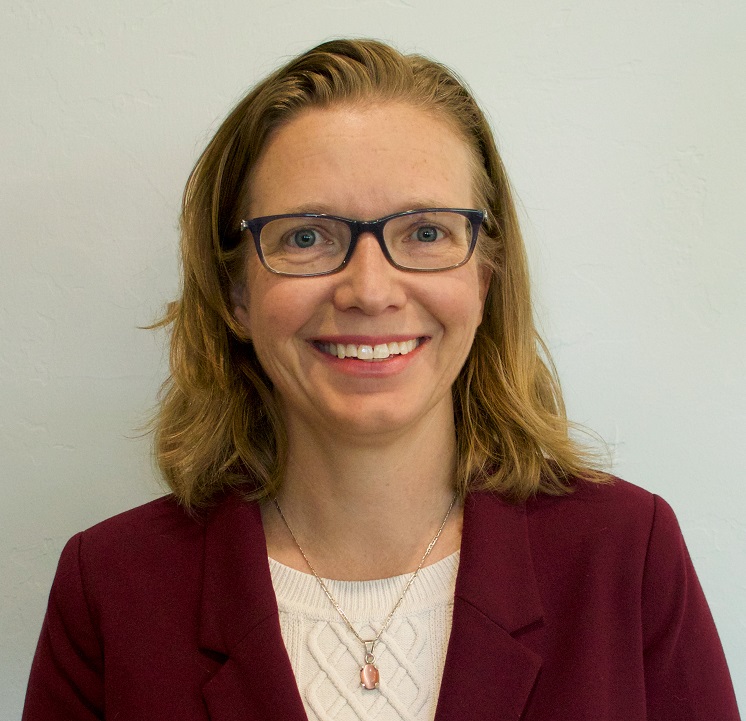
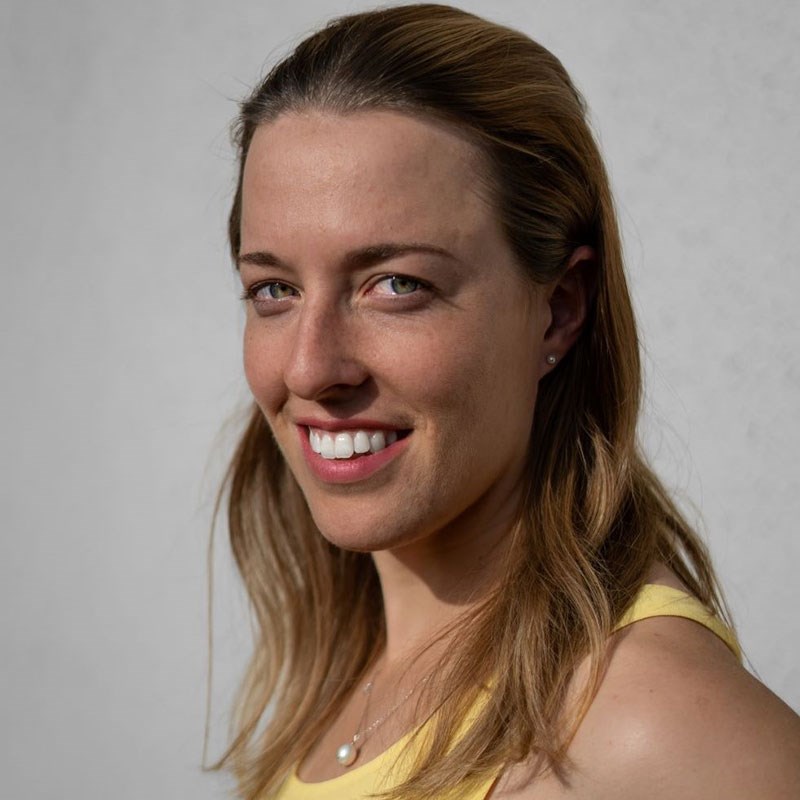
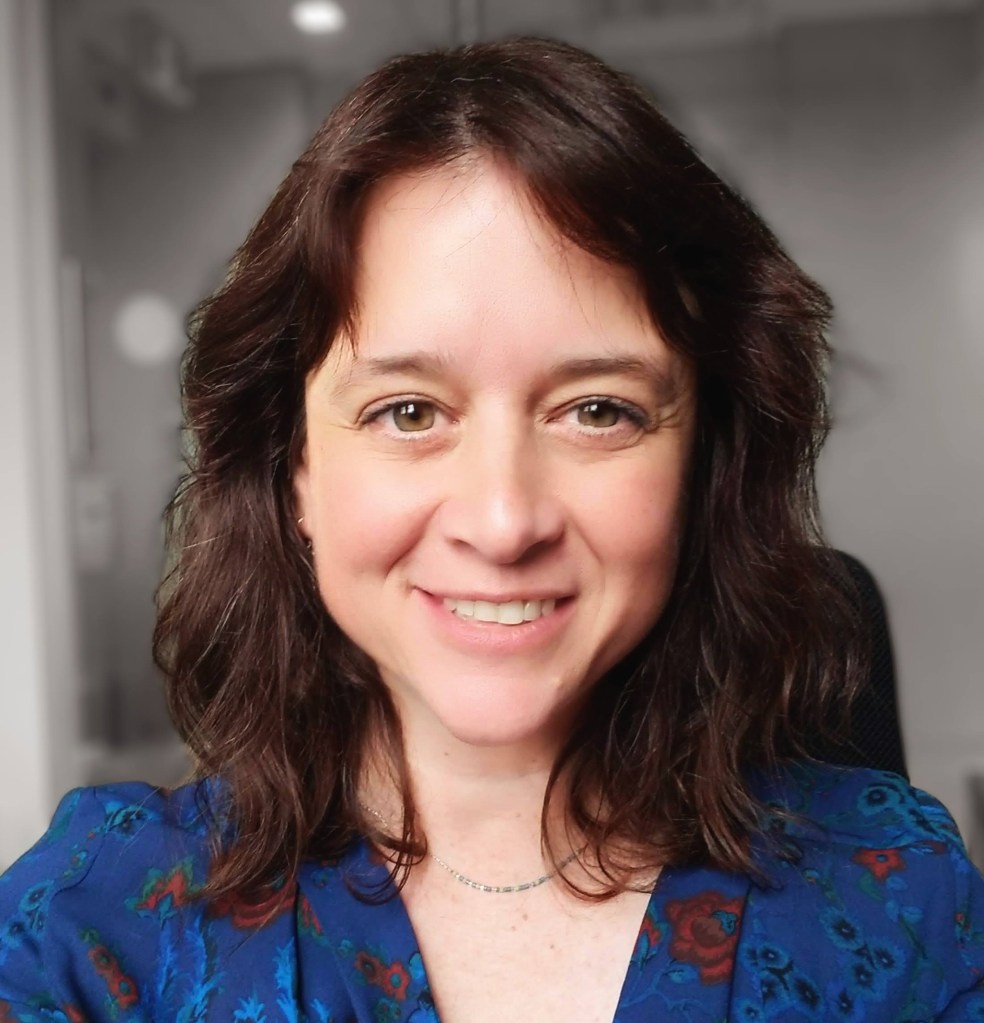
Kathy Partlow

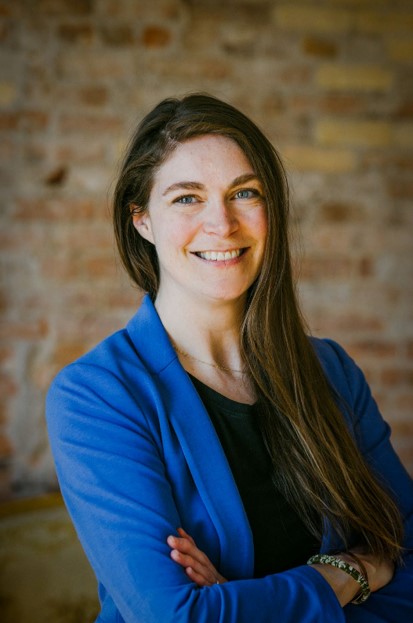
To date, this program has supported 10 NORDP trainee members. Mentor Dr. Kathy Partlow, who has promoted and supported interdisciplinary research development since 2012, and mentee Dr. Sofia D’Ambrosio, who transitioned into RD from her PhD in Environmental and Natural Resource Sciences, participated in the program in 2020. Over several months, Kathy and Sofia met to discuss topics such as Kathy’s path to RD, how to navigate an RD job search, and how to translate academic research skills to an RD job. Sofia credits a piece of advice from Kathy – build relationships with your local RD office – with helping her to land her first RD position at Washington State University, her PhD institution. She is now a Research Development Specialist within the Office of Research Development at the University of Massachusetts Lowell.

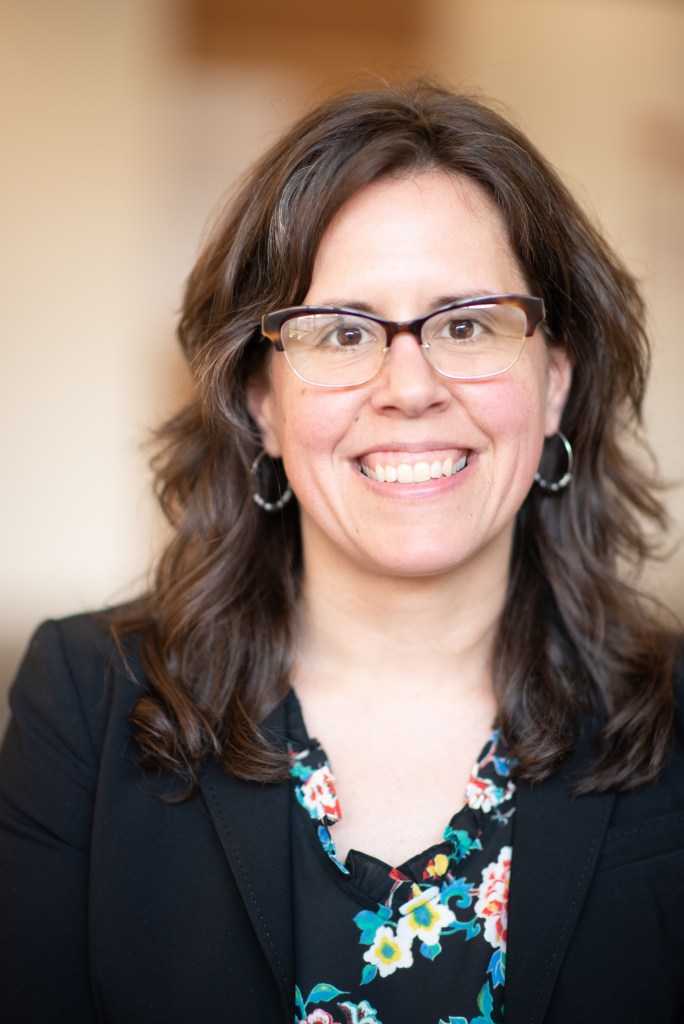
Sofia D’Ambrosio

Learn more as Sofia and Kathy reflect on their experiences with the Career Navigator Program:

What influenced you to join the Career Navigator program as a mentor or mentee?

Sofia: I first heard about the Career Navigator program through the NORDP listserv in 2020. I was a PhD student at the time and knew RD could be a potential career path for me after graduation. But I really wasn’t sure how to start with the job hunt as I approached the end of my degree. Where do I find RD job postings? What are typical RD positions I should be on the lookout for? And most importantly, how do you ‘spin’ your skills as an academic scientist towards an RD career?

The Career Navigator program seemed like an easy way to get advice from someone that had made the transition from PhD researcher to RD professional. As a busy PhD student, I was also drawn to the fact that the program offered an informal setting without too much time commitment or pressure.

Kathy: I’m passionate about mentoring and have experienced first-hand as a mentee and now as a mentor the impact mentoring can have on your professional and even personal growth. So many of us have stories about how we somewhat blindly stumbled into research development. I conducted informational interviews that were extremely helpful in supporting my transition to RD, but I think we can all look back and wish we had someone who was dedicated to shepherding us through the process. This is exactly what the Career Navigator program offers for NORDP trainee members who are aspiring RD professionals. I was excited for the opportunity to share my lessons learned and a-ha moments to make that transition easier for the next generation.

What was your favorite part about your mentoring relationship?

Sofia: Kathy made the transition from academic research to RD seem feasible. Prior to our mentoring relationship, I felt like all my research training had set me up for a postdoc, researcher, or faculty position after graduation – and not much else. Kathy opened my eyes to the possibility of leaving the bench for RD.

Kathy: When Sofia and I met, she was already making all the right moves for exploring RD as a career and gaining experience in writing, grantsmanship, and the RD101 course. She was extremely easy to mentor. I mostly reaffirmed that she was taking the right steps and shared my confidence which in turn built her confidence.

Sofia, you are now serving as a mentor in the Career Navigator program – what drew you to taking on this role?

Sofia: I wanted to help postdocs and PhDs understand that RD exists as a potential career path. I had no idea RD was a field until I happened to run into a NORDP member at a science communication conference during my PhD. And I had no idea I was actually qualified for positions within that field until I met mentors like Kathy showing me the path from academic research to RD! I wanted to show other academics that RD can be a brand-new way of contributing to the research ecosystem that they hadn’t thought of before.

What have you found most rewarding and most challenging about being a mentor?

Kathy: I always find the relationships formed to be the most rewarding aspect of mentoring. I learn just as much (and maybe even more) when I’m the mentor. The challenge can be overcoming common misconceptions (e.g., you need more experience, it takes too much time, etc.) that are not true and can prevent you from becoming a mentor. I found it very rewarding to share my experience and revisit what I learned when securing my first RD position. I’m amazed at the impact, as Sofia and I only met over the course of a few months. The Career Navigator program is very focused, where the mentees are graduate students or postdocs that are interested in pursuing a career in RD. If you took a similar career path, I highly encourage you to volunteer to be a mentor!

Any words of wisdom or encouragement to those who are considering a transition into an RD career?

Sofia: Don’t be afraid to cold contact RD professionals for an informational interview. Plenty of folks will never get back to you, but you’ll be surprised how many people say yes! Even just 10-15 minutes of someone’s time asking about their career path and any advice they have can be valuable. They may even connect you to another helpful resource or person that you would never know about otherwise.

Kathy: I think you can be intentional and thoughtful about your transition to RD. NORDP and its community are supportive and have resources to help, so seek them out and you can make those stories about stumbling into RD part of the past.

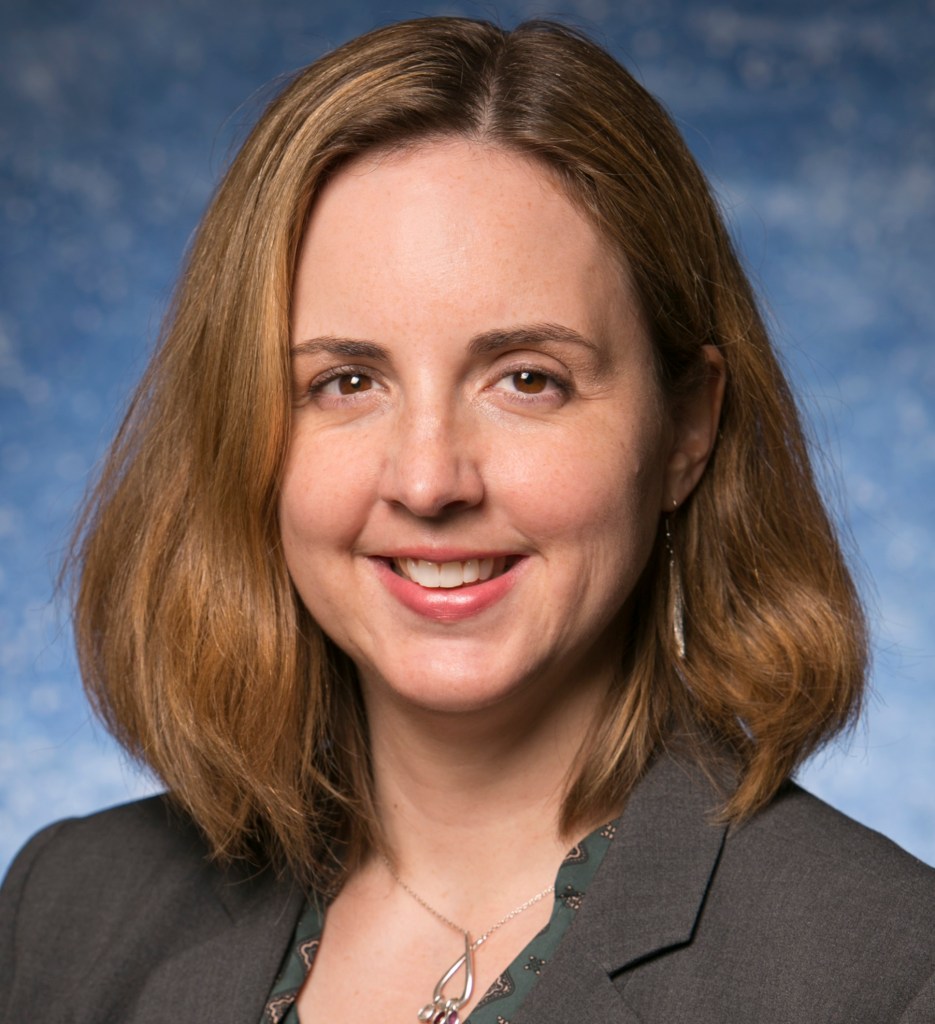
New NORDP Board Member Cameo: Dr. Carly Cummings

Who: Dr. Carly Cummings, Senior Director of Research and Faculty Development

Where: University of Idaho

Number of Years Working in RD: 12 years

Length of NORDP Membership: 7 years

Entering the field 

After receiving her PhD, Carly decided that she didn’t want a career in research, but she really enjoyed teaching, so she took a faculty position at a primarily undergraduate institution in New England. She started a lab there and supervised undergraduate research; she was funded for this research from a variety of sources. After some years, she decided on a change of course, so she resigned from that position and moved to Washington, DC, to start working in science policy. During her over two years in DC, she was a Science and Technology Policy fellow at the National Academies and worked at the American Association for the Advancement of Science (AAAS) in the Research Competitiveness Program, where she coordinated peer review processes to inform science and technology investments from state agencies and other nations. Part of this work involved writing requests for proposals (RFPs), soliciting proposals, managing the proposal evaluation process and making funding recommendations. Here, she gained deep knowledge of the peer review process and how federal agencies work. Next, Carly was recruited to a dean’s office at the college level, at Mississippi State University for a mixed RA-RD role. Over five years later, she moved to Utah State University and founded the RD office for the College of Science, which she led for almost two years. From there, she went on to start another RD office, this time a central office, at her current institution, the University of Idaho. She notes that she’s worked in a variety of capacities, but a common thread is that she likes to start things from scratch!

Her research development work

In her current role, Carly is charged with growing the research portfolio for the University of Idaho, an R2 institution with R1 aspirations. The creation of her office was part of a strategic plan, which includes supporting faculty in their pursuit of extramural funding. Her office takes a 360-degree approach to meeting their mission and achieving those goals. The office provides standard proposal development services, but they also place high emphasis on faculty development. For example, she developed the Faculty Success Seminar Series that ran for three years, with up to 16 seminars per academic year. Now, she is overseeing the creation of a library of resources with recorded presentations and slide decks available through their webpage. Her office has a focus on early-career faculty and runs the Proposal Development Academy: What You Need to Know Before You Write for a cohort of ~12 faculty who have been nominated by their deans for this opportunity. The focus is not on proposal writing but on learning about the organization structure of funding agencies and acquiring the broad range of skills required for developing competitive proposals. Her office also manages limited submissions and supports leadership training for early- and mid-career faculty through partnership with AtKisson Training Group.

Carly notes that in order to grow the business enterprise, it takes people who are capable and willing to write competitive proposals and then eventually write bigger proposals, and so on. She emphasizes supporting the people they have and likens this to planting seedlings and taking good care of them so they can grow into trees. At University of Idaho, Carly’s office started out as a team of three, and now they are an office of seven. She’s had great support from research leaders on campus, and she feels honored to have been able to grow the office as she has. The value of an RD office is definitely recognized!

Carly’s history with NORDP

Carly joined NORDP about seven years ago when she moved into an exclusively RD role at Utah State University. She found it very refreshing to learn that there are other people who had the kind of jobs she did because, until then, she didn’t really appreciate that there were other people doing the same kind of work at a university, which made her feel isolated. Over the years, she’s seen the real value of NORDP come from conversations and connections with people that she wouldn’t have met otherwise, including people she can call on when she needs some assistance. In fact, knowing that she has support through the NORDP community played a part in Carly deciding to take on the challenge of starting a central RD office from scratch. 

Carly has participated in every NORPD conference and presented a few times. She’s a regular conference volunteer; presenting and volunteering are priorities for her team, she sees that as how they give back. Carly was on the working group that helps reshape the Leadership Forum for a number of months, with the aim to make this leadership offering accessible to more individuals at varying stages of their career..

Her motivation to run for the NORDP Board

Carly was approached by a current board member to ask if she has considered running for the board, and at first she wasn’t sure what she could contribute!  However, after that conversation, she changed her mind. The conversation prompted her to think back on her experiences with RD, reflecting that everyone has their own path. She realized that representing a smaller, rural institution gives her a valuable perspective that she wants to share with others. She wants to let people know that they can advocate for resources and shared approaches to communicating with leadership about metrics, including putting them in perspective.  For example, she was able to grow her office in three years and used metrics that she set (and quickly met) to support that growth, helping make leadership comfortable with the investment.  She acknowledges that most in RD are scrappy and able to do a lot with little but that growing staff can be a reasonable goal.  She’s found growing her office immensely rewarding, feels fortunate to have had that opportunity, and hopes that this success can serve as encouragement to others to grow their offices or step into a director role. Carly also wants to represent the voice of those in EPSCoR and IDeA states, where she has a deep connection, not just through her work in Idaho but in Utah, Mississippi and Vermont, with an understanding of how difficult it is to capacity build. 

What Carly is most excited about as a new NORDP Board member

Carly plans to advocate for having institutions partner to achieve shared goals, something she would like to promote for the NORDP regions. She’s in Region V, and she is working with her partners in Montana, Nebraska, Nevada, and Utah to develop ways to share knowledge and resources, especially in the development of programming as well as faculty collaborations. She believes that this approach is keeping within the collaborative, rather than competitive, spirit of NORDP.  At a previous conference, she noted a poster from Region I that provided further inspiration on how well regional institutions can work together. The leadership Carly brings in capacity building and in growing RD within institutions will serve NORDP well!

The December 2023 Career Stories featured Sarah Robertson, Director of Sponsored Research at Bryn Mawr College

Sarah Robertson, PhD

Written by: Roshni Singh, LEAD Kindling Crew

Sarah Robertson is the Director of Sponsored Research at Bryn Mawr College. In this Primary Undergrad Institution (PUI) environment, she strategizes to enhance sponsored research programs, through grant trainings, editing, internal competitions, and creating networks for collaborative efforts in research, as well as managing compliance and financial issues related to research.

Dr. Robertson is an alumna of Bryn Mawr College where she completed her AB before earning her PhD in Cell and Molecular Biology at the University of Pennsylvania studying intracellular trafficking. She is delighted to have returned to her alma mater where she is helping the faculty members develop their ideas, think like a reviewer and get funded; as this type of work is also essential to her growth and sanity!

After almost a decade at grant funding foundations, Dr. Robertson returned to academia to start her research development career after she successfully convinced the University of the Sciences that they are in urgent need of a Research Development position to assist the faculty members more their research to the next stage. She replaced their first director, only 6 weeks before the uniform guidance went live. UG implementation was successful thanks to self-taught skills and great mentorship.

Dr. Robertson brings an extensive professional background in grants, both in grant administration and research development, to her role at Bryn Mawr and her volunteer roles. She has extensive experience in thinking like a funder and reviewer. This is due to her roles with oversight of the Susan G. Komen® research grant portfolio, educational programs, and the community health grant portfolio. In addition, at the American Association for Cancer Research, she worked closely with some of the leading experts in cancer research planning educational events, writing grants, and participating in the Foundation’s grant application review. She has also served as a reviewer for the NSF, NIH, and CUR.

The exposure to different areas of research, bringing in new ideas, and wearing different hats inspires her to go to work every day as she likes being on the ground, and she firmly believes that the “dreaming stage changes the world”. Her experience in customer service from an early age while working at her mother’s business has helped her hone her outgoing, relationship building skills despite being an introvert that is happy alone. She believes there are no dumb questions no matter what stage of life one is in. In her experiences, even reviewers can get nervous and have doubts, so faculty members are no different, and our jobs as RD professionals is to make them successful by not judging, but helping and supporting. She also firmly believes that women should be ready to take risk and apply for jobs even if they don’t qualify for 100% of the job description, as one should not be defined by bullet points.

Being a member of NORDP since 2015, Dr. Robertson has benefited from its resources ever since. She has served as a member of the Program Committee in 2019, served as a member of the Nomination Committee from 2020-2023, and has been active in the Mid-Atlantic Region executive committee since 2020. Given her role at a PUI, she joined the PUI Affinity Group in its first year and is delighted to serve as its Co-Chair this year. Her collaboration with the others in the PUI Affinity Group leadership led to the development of a funded NSF GRANTED conference grant.

Dr. Robertson’s tips for new RD members are to network, learn from others, utilize NORDP’s mentoring program, and use their resources as NORDP site has a wealth of resources.

Dr. Robertson loves working at Bryn Mawr College and hopes to retire here. We wish Dr. Robertson all the best in her role that her diversity, experiences, and passion for the RD profession brings her.

Dr. Roberston would love to answer any questions you have for her, so please feel free to email her at serobertso@brynmawr.edu.

To listen to her full interview by the career/kindle team, please click on this link ((you must log in as a NORDP member to access): MC LMS – NORDP LEAD presents: “Career Stories” – Sarah Roberts December 12, 2023

It’s the middle of the Mentoring Year — Check-in with your Mentoring Dyads and Cohorts

Collaboratively written by: Mentoring Committee Marketing and Communication (McMc) Communication subcommittee (Jessica Brassard, Vess Vassileva-Clarke, Brooke Gowl, Elizabeth Lathrop)

Mentoring Dyads and Mentoring Cohorts are paired in July and wrap up in June every year. That said, we are somewhere in the middle of the NORDP mentoring year. The “middle” is always a great time to touch base and check in with your mentoring groups and ask how things are going. 

The NORDP Mentoring Roadmap is a useful tool to reflect on what you can focus on during this time. The Roadmap can be found on the NORDP WisdomShare Mentoring platform under Learning. (NOTE: the links in this blog post will forward you to WisdomShare where you will need to have an account.)

The Roadmap highlights using the MESHH Network and the Individual Professional Development Plan (IPDP) as guides. 

The MESHH (Mentorship Expertise Support and Helping Hands) Network encourages us to identify the personal, community, and professional social capital in our lives. The people we name in the MESHH Network are the individuals who can help us reach our goals. A fillable MESHH form can be downloaded here or in the WisdomShare library here for participants to develop their professional network mentors.

REFINE: Month 3-6  (excerpted from the NORDP Mentoring Relationship Roadmap)

  • Review My MESHH Network in-depth. 
  • Think of types of people or position titles as appropriate. 
  • Use of My MESHH Network can inspire a close(r) look at one’s professional, community and personal social capital and how that capital can be better exercised to meet one’s professional needs and goals. 
  • The webinar (slides and video) and FAQ provide additional guidance. 

The Individual Professional Development Plan (IPDP) encourages reflection on strengths, challenges, setting SMART goals, and communication. If you have already used the IPDP this year, now is a great time to revisit and set some next steps for your growth. If you have not used the IPDP yet, now is a great time to open it up and see what you might focus on in the next few months. A fillable IPDP form can be downloaded here or in the WisdomShare library here for participants to develop their professional network mentors.

IMPLEMENT: Month 6-9 (excerpted from the NORDP Mentoring Relationship Roadmap)

  • Review the IPDP in-depth. 
  • Use of the IPDP can strengthen overall outcomes by focusing efforts for both mentor and mentee. 
  • The IPDP is excellent for action plan development and for structuring substantive future meetings. 
  • The webinar (slides and video) and FAQ provide additional guidance.

Mark your calendars! There is a McHuddle coming up (Wednesday, February 7 at 1pm Eastern). McHuddles are informal gatherings hosted by the NORDP Mentoring Committee facilitators, and give our members an opportunity to reflect, share ideas, ask questions, and collectively learn from other mentees/mentors in breakout sessions.

Celebrating the 2023 Winners of the NORDP President’s Commendation Award

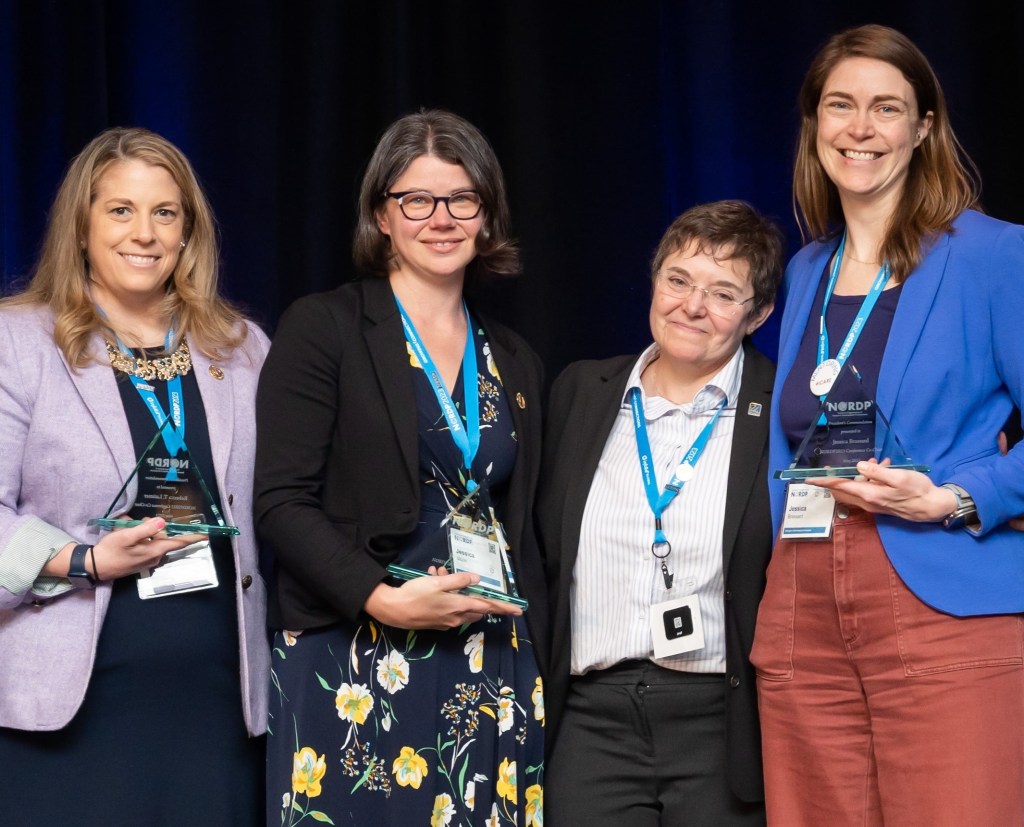
Celebrating at the annual conference (L to R): Becca Latimer, Jessica Moon, Anne Maglia, and Jessica Brassard.

As NORDP members gear up for the Annual Conference in Bellevue, WA, we take time to celebrate a set of three volunteers who led the effort to make NORDP’s first post-pandemic, in-person conference in 2023 a reality. Anne Maglia, past president of NORDP, says she was thrilled to recognize the leadership of Becca Latimer, Jessica Brassard, and Jessica Moon, co-chairs of the that conference with the 2023 President’s Commendation Award.

Latimer is the research program director in the University of Virginia’s Comprehensive Cancer Center. Brassard is director for research development and communication at Michigan Technological University. Moon is executive director for the Stanford Longevity, Equity, and Aging Research Consortium. Together, they spent hundreds of hours and worked with dozens of volunteers to make the 2023 Annual Conference a rousing success.

Maglia says that she is extremely grateful for the drive and commitment of these three NORDP leaders. They epitomize the volunteer spirit of the organization and were the obvious choice for this very special award, she says.

“Returning to our in-person conference in 2023 presented unique challenges, and these three were undaunted and went way, way above and beyond expectations. They set up sustainable systems and devoted hundreds of hours of their precious time to bring NORDP back together in person,” Maglia says.

The three awardees agree that the systems created before them and the NORDP volunteers who support this massive undertaking are keys to their “success.” For example, conference committees historically have co-chairs. Each year, at least one co-chair continues from the year prior, and two other co-chairs are added to the team. The conference committee includes nine sub-committees, and each of the co-chairs oversees three of them.

The structure allows for strong relationships to build. Latimer, who was a co-chair of the NORDP virtual conference in 2022, laughingly says that the “two Jesses were the first I talked to when I woke up and the last before I went to bed.” 

The updated conference committee structure allows them to have a tie-breaker for difficult decisions and to bring a diverse set of skills to the task. The structure also allows for a solid succession plan from year to year and for synergy to build between committee volunteers.

“So many of us in NORDP are here because we want to be engaged in research development,” Latimer says. “We want to help, mentor, learn, share, and advance RD. I like to live like that, and I enjoy being surrounded by people with those same values,” Latimer says about her colleagues.

Moon and Brassard had worked on the subcommittees on the 2022 virtual conference, and they both stepped up when Latimer asked them to help lead the 2023 conference. (The 2024 conference leadership includes Brassard, Moon, and Katherine Duggan. Latimer is the new lead of the Executive Conference Committee, a position usually taken by the exiting co-chair).

Moon describes the committee structure “small but mighty” and “nimble,” and she says that the three co-chairs “took care of each other,” stepping in and respecting boundaries when needed.

Brassard adds that the group of three led from their strengths based upon the unique skills each brought to the team. She encourages NORDP members to engage in this year’s conference activities, as schedules allow. She says she intentionally “gave myself permission to share my skills, to grow into the organization.” She calls the award for this work “icing on the cake” – the cake being the sense of community and pride that pulling off the 2023 conference afforded.

Watch for a call for volunteers to assist with conference activities and for other exciting announcements from this year’s conference committee.

NORDP Liaison Report – Canadian Association of Research Administration (CARA): An Interview with Gen Clark

Gen Clark, Research Facilitator
University of Saskatchewan

What is the mission of the Canadian Association of Research Administration (CARA)?

CARA provides professional development and networking opportunities to over 1100 professionals at research institutions across Canada. Founded in 1971, I believe it is the third oldest research administration society in the world, after NCURA and SRAI.

How did you become involved in CARA?

As a departmental Research Facilitator at the University of Saskatchewan, I support health science researchers in the College of Pharmacy and Nutrition, the College of Kinesiology, and in the School of Public Health. When I started my job in 2012, I was interested in meeting and learning as much as I could from people who did similar work. I work at a research-intensive university and so there is a large group of us who work in research facilitation on campus. I realized that we all do slightly different things depending on the organizational needs and culture of our departments, so I wanted to expand my network even further; the annual CARA conference allowed me to make these important connections and learn more about my profession.  At the same time, I discovered NORDP and was soon matched to Karen Eck through the NORDP mentorship program. We had a CARA connection as Karen had worked at McGill University in Montreal and was the CARA-NORDP liaison at the time. This is when research development’s place within the broader landscape of research administration and management started to become clearer for me.   

What is research facilitation? 

That is actually what we call research development in Canada, though the term research development is appearing more frequently in our professional terminology and in position and research office titles, which could be due to NORDP’s influence. Although, in Quebec, the literal translation “développement de la recherche” is a term commonly used. 

Is RD a part of CARA? 

Yes, about one third of CARA members say they perform grant facilitation, and conference sessions on research facilitation/development are always very well attended. While we currently lack a formal special interest group devoted to research development within CARA, I think there is interest in creating such a space. Last January, with two of my CARA colleagues, we created the Grant Facilitators’ Journal Club, a monthly online gathering where CARA members come to discuss current literature in grant facilitation. At a typical meeting, someone presents a paper, and a discussion ensues about the topic and its relevance to our work. We have close to a dozen attendees every month, so the journal club is creating that sense of community and filling a need.   

How is NORDP’s relationship with CARA mutually beneficial?

It’s always interesting and valuable to learn about practices across the international landscape, and I’m hoping to share some of my Canadian insights on RD at future NORDP events. I believe there are currently about a dozen Canadians within NORDP. While this is a small group, I could see it growing among those who identify as RD professionals, especially as the term and its distinct body of knowledge gain ground. Recently, NORDP and CARA established a Memorandum of Understanding as a first step in creating a formal framework to allow for deeper and more sustained exchanges involving professional development and networking through for example joint webinars and conferences. As the current CARA-NORDP liaison, I’m excited to be able to help facilitate these exchanges.  

You recently completed a study about research development in Canada. Could you tell us about it?

With my colleague and fellow CARA and NORDP member Anita Sharma of Thompson Rivers University in British Columbia, we embarked on empirically describing what research development looks like in Canada. The professionalization of RD has developed somewhat in parallel to that in the U.S., with the first university grant facilitators appearing in the late 1990s. Still, for a profession that’s been around for decades, there is very little scholarly Canadian literature about the function or the profession. So, Anita and I conducted a survey of RD professionals across Canada with a goal of comparing our findings with that of similar U.S. studies. We found many similarities between the two countries, such as the emphasis on building capacity, the demographics of staff, and the broad presence of RD professionals across different types of research institutions and organizational models. And some particularities came through as well. For example, we probed into the function vs. profession aspect of RD as many professionals have split roles, mainly involving more prescriptive research administration. Also, some of the questions in our survey focused on what we might call a fifth area of RD. Within NORDP, we often speak of the four areas as strategic advancement, proposal development, research communication, and team science. To this, we added “researcher development” a term used in the U.K. to refer to the personal, professional, and career development of researchers of all stages, from undergraduate students, postdoctoral fellows, and clinical residents, to early, mid, and late career faculty. Many respondents identified with this mentoring or teaching aspect.

What does researcher development mean to you?

To me, research-er development is another opportunity to strategically move the dial on research by helping researchers adapt to the constantly changing research landscape, and by gaining new research adjacent skillsets in research management, finances, ethics, communications, and other related topics. The leading resource on researcher development is the  Vitae website. Though much of it is accessible only to institutional members, it is still a valuable starting point for those who provide training and development support to researchers.

Interview conducted by Elizabeth Festa. For more information about the SAC Liaison program, contact her at eaf2@rice.edu.

NORDP 2023 Rising Star Award: Jessica Brassard

The NORDP Rising Star Award recognizes individuals for their outstanding, early volunteer contributions to NORDP and strong potential for future contributions to the organization and the profession or the field.

Who: Jessica Brassard

Where: Michigan Technological University

Number of years in research development: 9 years (started in 2015)

Length of NORDP membership: 9 years


What initiative are you the most proud of in your role as a NORDP volunteer?

I would say serving as a Conference Committee Co-Chair is a pretty proud moment. I come from a marketing and communications background, but I didn’t want to enter the field of research development and say, “This is how marketing and communications works.” Instead, I focused on learning more about NORDP as an organization and how NORDP members like to communicate. Initially, I straight-up avoided opportunities to let my marketing and communications skills shine, because I wanted the opportunity to develop other skills important to have in research development. And to be honest, I didn’t want to be pigeonholed as a person who knew marketing and comms. But around the time of the virtual conference (held in 2021) it felt like the right time to get involved and offer my energy to do things that I am good at. Organizing a conference is very analogous to other event-based projects I’ve been a part of, including foundation galas, summer camps, and even sled dog racing — I knew how these kinds of things work. Everybody was trying to pivot to running virtual events like a multi-day conference. And so it became an opportune moment for me to bring all of my marketing, communication, and event management experience into a space where everybody’s just trying to break stuff and put it back together in a way that is a good experience for people. I wanted to be a part of it, which is why I initially joined the Conference Committee.

Once I had served on the committee for a year, I was invited to be a committee co-chair. At first I said, “No.” I knew serving in this role would take a substantial amount of time and I wasn’t sure I could carve out that time. I want my life to be about my family, work, other volunteer commitments, as well as some things for me. I was nervous about keeping all that and also showing up and doing a good job organizing the NORDP conference. But after having conversations with people I trust and talking about the payoff of serving in this role, thinking about what I would be able to offer, and making it clear the boundaries I would establish to ensure that co-chairing the conference would not take over my life, I decided to say “yes” to becoming a conference co-chair.


How did you hear about NORDP and what made you join initially?

It was an expectation in my first RD position that I would also be a NORDP member. Everybody in our unit was a NORDP member and our organization already had a precedent for supporting NORDP membership for research development staff. 

As for how I found myself in research development in the first place: I worked in healthcare marketing and communications for a decade in a local hospital. Healthcare ownership and organization management has changed over the past couple of decades in America, and those changes finally reached the community-owned hospital where I worked. It became very apparent that I wouldn’t survive the shift — professionally, mentally, and emotionally. I was pretty desperate to find a position that would keep me in my community in northern Michigan that I love so much. I was also looking to build a career in which I could take pride in and have room to grow. It was a friend of mine, who was on a hiring committee at Michigan Tech, and who saw the potential for my skill set to fit and evolve within the Office of Research Development. I applied, interviewed, and got the job. (Thanks, Adam Johnson, for getting me into research development!)


What other roles have you played within NORDP?

I first started committee work within NORDP in 2021, when I joined the Mentoring Committee and the Great Lakes Executive Committee. As part of the Mentoring Committee, I was encouraged to join a subcommittee, the Marketing and Communications Group within the Mentoring Committee (known as the McMc). A year later, a liaison position opened between the mentoring committee and NORDP’s Communications Working Group (CWG), and taking on that role is how I got involved with the CWG. It was also around this time that I joined the Conference Planning Committee. 

One important element of my approach to service, both within NORDP as well as other organizations I care about, is to be deliberate in how I balance my commitments. I think of my commitments as falling into two buckets: professional and community. My goal is to only say “yes” to up to three things that fall into each bucket. So NORDP, for example, falls into my professional bucket, along with any other service activities for my employer. When I first started in RD, I was very involved at Michigan Tech, serving on the University Faculty and Staff Senate, an AdHoc Childcare Working Group, and several hiring committees. Those activities took up a lot of time. Once those responsibilities at Michigan Tech sunsetted, I was able to get involved in NORDP service. Given my current NORDP commitments, I continue to stay mindful of monitoring my bandwidth and making sure that I’m not over-committing myself (I just said “no” to two board/committee invitations this month). So, for example, right now I feel like I can still serve on a hiring committee or two, but I wouldn’t, say, join an editorial board or leadership academy. I would need to step away from one of my other volunteer activities to free up the space to do that. 

I maintain all this service intentionality in an Airtable base along with a wishlist of all the service opportunities I want to pursue in the future. I would love to serve NORDP in other ways someday, I just want to honor the opportunities by being fully committed during the time I serve.


What relationships have you built as a result of NORDP?

My mentoring relationships within NORDP have lasted well beyond the one-year programmatic year. I still have conversations with all of my former mentors and we meet at least quarterly and continue to help each other. Those relationships are foundational to the relationships that I have in NORDP. And then there are the people that I co-chair with who are really special friends. We’ve had to go through a lot of messy stuff together. It’s kind of like summer camp and I have these powerful shared experiences. We figure things out together, which leads to good communication and trust. That kind of trust is hard to generate spontaneously. I think getting into these service positions and serving with people, especially the co-chair positions, have been really crucial to building my sense of belonging within NORDP.


Describe how NORDP has changed from when you initially joined

My understanding of NORDP has really changed as I’ve gotten to know the organization and made more connections with other NORDies. NORDP has had a few years of change — just like everyone else in the world — and we had to learn how to stay connected and grow community through a pandemic. That was really hard for everyone. But we’ve made it through; we still are an organization after the pandemic. I can’t say the same for other organizations that I’ve been a part of. I think NORDP is stronger for it and we have a better sense of community, too. I’m proud of us! 

My service on the Great Lakes Executive Committee has also enabled me to see changes at the regional level. When I initially joined NORDP, I remember some comments that the Great Lakes region wasn’t very active and it was hard to get members to show up. But that started to change with two years of regional conferences hosted in Columbus and Ann Arbor. Then even as the pandemic happened, we were able to keep things going, holding virtual retreats, book club discussions, and a monthly DEIB discussion group. I’m proud to say that the Great Lakes region has gotten a little stronger over the last couple of years.


What recommendations do you have for members to get more involved with NORDP?

Define the amount of energy that you think is enough to bring benefit to your life, and stick with that. Don’t say yes to the first thing that people ask you to do — be intentional. For example, if all you want to do is show up to a committee meeting per month and dedicate one extra hour of action items beyond that, define that for yourself. Then communicate to the other people in that group that that’s what you’re able to give. Know your limits and don’t be afraid to communicate them so that you don’t overextend yourself.

I’d also encourage members to think about what’s going to stretch you. What are the skill sets you wish you had? And how can you, within whatever bandwidth limits you have, give your time in ways that will allow you to develop those new skills? This may point you to particular committees or working groups that will allow you to get outside of your comfort zone.
A New Year’s Resolution for Mentors:  Register for CIMER Mentor Training for RD Professionals

Contributors: Mentor Training Team Paula Carney, Loyola University Chicago and Kristen Boman, University of Minnesota, Twin Cities

Mentor Training for Research Development Professionals – Registration for January/February 2024 Workshop (UPDATE: Registration is closed and there is a waitlist)

Are you a mentor? A mentee? Do you find yourself formally or informally mentoring staff or faculty? Are you ready to explore mentoring competencies that can be utilized across the work of research development (RD)? This interactive workshop series covers the 9-module Entering Mentoring curriculum, initially developed for mentoring researchers and tailored for RD professionals.

“EXCELLENT training! The ideas presented are very applicable both to mentoring both within the research development profession and elsewhere in the research enterprise — the things I have learned and practiced in this course are incredibly valuable to me as I provide mentoring to faculty, particularly early stage investigators and junior faculty, in the area of grantsmanship.”

A recent workshop participant

Using evidence-based strategies, participants will build upon competencies crucial to the success of the mentoring relationship and expand mentor training across the research enterprise. Participants who complete the entire curriculum will receive a certificate of completion. The curriculum results from an association between the NORDP Mentoring committee and the University of Wisconsin Center for Improvement of Mentored Experiences in Research (CIMER) in collaboration with the National Research Mentoring Network (NRMN), organizations involved in developing and validating the original curriculum. RD professionals at all levels of mentoring will explore how mentoring (shown to improve career outcomes, impact employee engagement and retention, and lead to more inclusive work environments) can benefit mentors and mentees in RD.

Workshops  will be presented and facilitated by the NORDP Mentoring Committee; many are certified CIMER Trained Facilitators.

Webinar Schedule: 

Two (1.5-hour) sessions each week for 5 weeks (every Tuesday and Thursday)
January 30 – February 29, 2024
2–3:30 pm EST/11 am–12:30 pm PST

Register TODAY for the webinar series (35 participant limit): https://nordp.memberclicks.net/mtworkshop24

If this workshop doesn’t fit in your schedule, share your scheduling preferences to help us plan for future Mentor Training by completing a survey of your preferences. 

Questions?  Contact us at mentorprogram@nordp.org


Update: The January/February 2024 training is now full!

NORDP Cohort Mentoring Group Reflection

The 2023-24 Mentoring Program started in July, with an expanded cohort mentoring program in its 2nd year running. The Cohort Mentoring Group consists of matching three mentees with similar interests with one shared mentor based on the WisdomShare matching algorithm. The Mentoring Committee made 31 Cohort Mentoring Groups matches this year, an astonishing increase from last year’s pilot of 10.

The Mentoring Committee is actively seeking new volunteers to run the various mentoring programs offered to all NORDP members! If you have benefited from the mentoring services in the past, we encourage you to consider getting involved as the committee work is largely driven by volunteers. To learn more, we welcome everyone to join us at the Mentoring Committee Open House on Thursday, January 18, 2024, at 2pm Eastern. Register TODAY and/or email mentorprogram@nordp.org if you have any questions.

#PayItForward


Cohort Mentor:

Joanna Downer (JD) is Associate Dean for Research Development at Duke University School of Medicine. She previously worked in science writing and media relations at Duke and Johns Hopkins, has extensive experience in scientific editing, and is a Certified Professional Coach. Joanna holds an MA and PhD in nuclear chemistry from Washington University in St. Louis, and a BS with Honors in chemistry from Carnegie Mellon University. While in graduate school, she was a Mass Media Fellow of the American Association for the Advancement of Science.

Cohort Mentees:

Helena H. Fischer (HF) serves as Senior Grant Development Manager for the Alvarez School of Business at the University of Texas at San Antonio. She earned her Bachelors of Music Education from UTSA and taught choral music for a decade. She earned a Master’s degree in Education Leadership and Policy from the University of Texas at Austin where she developed her research interests in poverty in education. She currently attends St. Mary’s Law School. Her experiences as an educator, grant project director, student affairs professional, and law student inform her work.

Hailey LaVoy (HL) is Assistant Director for Humanities & Interdisciplinary Grant Support at Dartmouth College. She works closely with Dartmouth’s faculty, postdoctoral researchers, and graduate students in the Arts & Humanities and Interdisciplinary Divisions to identify and secure internal and external funding that will advance their research agendas. She holds a PhD in medieval studies from the University of Notre Dame.

Lindsay Ridpath (LR) is Program Manager for Industry Engagement for Research Development at the University of Arizona. She supports procurement of industry research sponsorships, collaborates with industry on federal proposals, and aids in securing student fellowships and internships. She uses her expertise in content creation for social media and web platforms to promote UArizona faculty, facilities, and other resources to potential collaborators. Lindsay has an MFA and holds a Certified Associate for Project Management (CAPM) status.

Q1: What influenced you to apply to be a mentor/mentee for the 2022-23 NORDP Mentoring Program? Why did you choose the cohort mentoring model?

HF: My dotted-line supervisor called me on my second day in my new role as Sr. Grant Development Manager. He suggested that I sign up and that the department would pay my membership fee.

HL: It was recommended by a former NORDP mentee whom I met at the NORDP conference in May. I’m new to research development, and it seemed like a great opportunity to learn more about the field. I preferred the cohort model to get more perspectives and to meet peers in varying stages of their RD careers.

LR: I’m new to Research Development. At the time I first applied to the cohort, I was working for our Foundation Relations department, which didn’t offer a lot of support or training and its team was very new. I had developed a relationship with one of the university’s Research Development members and explained my troubles, and she was nice enough to recommend NORDP. I chose the cohort model because I wanted a group to learn from, as well as others to fall back on. The cohort model relieved the pressure of maintaining a one-on-one commitment.

JD: I love helping others achieve their goals, and I could use the time saved from having finished my term on the NORDP Board of Directors to once again serve as a mentor. I offered to serve as either 1:1 or cohort mentor, and could be happier to have been placed with a cohort!

Q2: Have you participated in a 1:1 mentoring model before? How has this experience been different or similar?

HF: Yes, but it was far more organic. We would come with questions.

HL: Not formally.

LR: No, but I’d like to.

JD: I served as a 1:1 mentor in the 2022-2023 mentoring year, and had a great experience. As others have reported in previous mentor pair profiles, while I may have started as the mentor, by the time our year was drawing to a close, I was receiving as much mentoring as I was giving, which was great. We are continuing to meet and my 1:1 mentee also signed up again – the Mentoring Program is a great way to grow your network! And in the cohort this year, I love that each member has wisdom to offer. Sharing our paths, our challenges, our solutions also helps reassure all of us that we aren’t alone in whatever experiences or feelings we’re having!

Q3: What is your favorite part about this cohort mentoring model so far?

HF: Joanna is a great mentor. I appreciate her solutions and her deep listening. I also am learning so much from my cohort mates who are in new roles too and we are navigating together.

HL: Getting confidential support on a wide range of professional issues.

LR: The first cohort wasn’t very great. I don’t think our mentor was very engaged and a lot of the convening was initiated by myself. I’m really enjoying our second cohort, all members are more engaged, and we all have different roles within our organizations so I’m able to learn a lot more about their roles, leaving me feeling more well-rounded.

JD: I think the matching software did a great job!

Q4: How has your participation in the Mentoring Program so far helped broaden your horizons about Research Development in general and/or affected your daily work in particular?

HF: It has helped me understand that there is a wealth of resources for professionals

HL: It’s given me a broader perspective on RD-institutional context, helping me better understand what is particular to my department (personalities/politics) and what is considered standard across the professional field. To that end, as a newbie, it has decreased my anxiety about how I’m doing in my specific role. My own RD office is very small, so it has been informative to learn, by listening to my fellow mentees, about the varied types of roles that exist in RD, depending on the institution and its priorities.

LR: I’m realizing that it’s ok to come from an “unconventional” background as so many others do.

Q5: What has surprised you about being a mentor or a mentee so far? 

HL: That, in addition to learning from my mentor, that I would learn so much from my fellow mentees about professionalism, tenacity, courage, and the importance of mutual support!

LR: The field feels like it’s on the brink of exciting change and I’m happy to be part of it.

Q6: Any words of wisdom or encouragement for those wanting to apply next year? Any other thoughts you would like to share? 

HL: It is indeed a wonderful investment in your professional development and an opportunity to build relationships with colleagues whom you might not otherwise meet. I’m so grateful that this program exists.

LR: If the first year is a dud, apply again!

JD: Do it!


The 2023-24 NORDP Mentoring Program is now in full swing! Applications for the next cycle will open in the spring. Please keep an eye out for an announcement from the NORDP. Additional mentoring opportunities are available through the Peer Mentoring Groups that are open for participation throughout the year via the WisdomShare platform.

An investment in mentoring is an investment in you!

Heads up – January is the National Mentoring Month!

Contributor: Vess Vassileva-Clarke

The National Mentoring Month is just around the corner and the NORDP Mentoring Committee has lined up exciting mentoring events and activities for all-level-of-experience mentors and mentees! Get excited and ready to:


CELEBRATE

We encourage you to observe these national and international days in a way that works for you. The Mentoring Committee has provided suggestions for how NORDP members can observe these days in January blog posts.

  • JANUARY 9 – I Am a Mentor Day 
    Suggestion: send a note to your mentee(s) with an encouraging message.
  • JANUARY 15 – Dr. Martin Luther King Jr. Day of Service 
    Suggestion: Seek opportunities in your local community to make an impact.
  • JANUARY 17 – International Mentoring Day 
    Suggestion: Highlight a local organization that provides mentoring opportunities. Talk about the organization in a meeting, on social media, or with your family. 
  • JANUARY 25 – Thank Your Mentor Day 
    Suggestion: Send a note to someone you value as a mentor and highlight one piece of advice that you’ve put into action.

ENGAGE & COLLABORATE at NORDP

Participate in one or all of the events, celebrations, and learning opportunities hosted by the NORDP Mentoring Committee throughout the month and beyond:

Mentor Training for RD Professionals Workshop — Get ready to explore mentoring competencies that can be utilized across the work of research development (RD)! This interactive workshop series will cover the 9-module Entering Mentoring curriculum, initially developed by CIMER for mentoring researchers and tailored for RD professionals. Registration will open in early Jan 2024. More information to come.

Mentoring Committee Open House — Join us on January 18, 2024, 2pm ET for our monthly meeting to learn more about what the Mentoring Committee does, and find out how to get involved and join us. We will talk about the committee’s work and achievements, celebrate our volunteer members, and brainstorm new ideas for the future. Register today!

McHuddles are informal gatherings hosted by NORDP Mentoring Committee facilitators and an opportunity to share ideas, ask questions, and collectively learn from other mentees/mentors in breakout sessions. Stay tuned for the 2024 dates.

You are invited!

Mentoring Committee Open House
Thursday, January 18, 2024
11am PT/12pm MT/1pm CT/2pm ET

The Committee will …

  • Celebrate our members and achievements
  • Brainstorm ideas to support NORDP members

New networks will be formed and a fun time will be had!

Questions? Email mentorprogram@nordp.org

REGISTER NOW

Peer Mentoring Group (PMG) meetings — Log in to WisdomShare and go to Dashboard to find out current PMGs and join the ones of interest to you.


DRIVE ACTION

Encourage a coworker and/or another NORDP member to join the mentoring movement — whether it’s seeking a NORDP mentor, offering mentorship, signing up for the mentor training workshop in January, or simply attending a mentoring event or a Mentoring Committee meeting.

Questions: mentorprogram@nordp.org 

#NORDPmentoring #MentoringMatters #MentorshipMatters