Written by: Roshni Singh with input from Natalie Baronian, Career Stories team
A Spectacular Path from Grantsmanship and Research Administration to Research Development
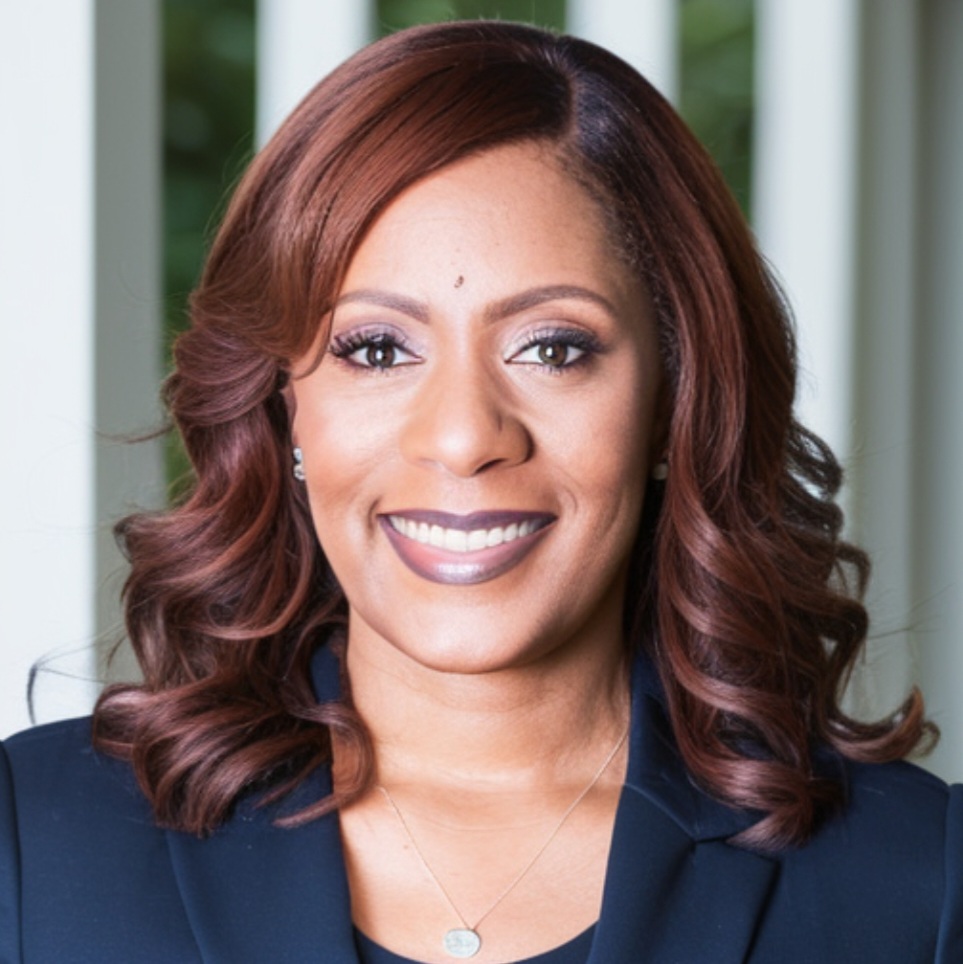
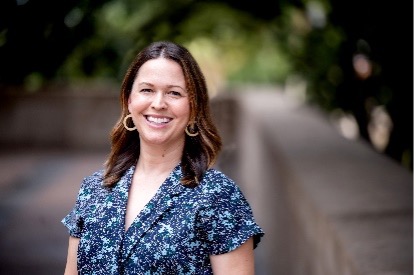
Dr. Melissa Hodge-Penn
Before joining the RD field, Dr. Melissa had various roles in higher education as a grant manager, a pre-award specialist, and someone who helped build programs for faculty members in grant writing and research initiatives. In these roles, she was unaware that she was crafting her path to the RD field.
Meet Melissa Hodge-Penn, the Interim Vice Chancellor for Research at North Carolina Agricultural & Technical State University (NC A&T), where she served as the Associate Vice Chancellor before her Interim role. Before joining NC A&T, Dr. Melissa served as Assistant Vice Chancellor for research and sponsored programs at the University of Mississippi, where she facilitated university-wide strategic research growth activities, strategic planning and implementation, and directed multiple and diverse constituencies in support of the research enterprise. Her experience began at Georgia State University, where she worked on community and workforce development projects. This exposure led her to Emory University, marking her formal entry into research administration.
Dr. Melissa brings a wealth of experience managing programs funded by multiple and diverse sources and providing administrative oversight and management for a research enterprise. This includes portfolio administration, complex and multidisciplinary project administration, research development, research compliance, and policy implementation. Her experience at different universities and systems has allowed her to gather best practices, provide influence around visioning, and align RD for the unique needs of the “next university” and place of employment.
Dr. Melissa is a demonstrated leader with experience across academia, government, and not-for-profit organizations who has successfully fostered private sector and community-based relationships. Adding her leadership qualities to her current role. Dr. Melissa advocates for research needs and supports faculty in research endeavors. She emphasizes the importance of strategic operational support for the research enterprise and through these develops networks amongst research professionals. She is inventive in maximizing and leveraging resources to support researchers and their students. She is not reluctant to speak on what potentially “could be seen as out of the box” and her always “willing to grow, move and learn all she can and having that front seat to innovation.” Hence, she finds fulfillment in mentoring junior faculty and supporting new research development officers, fostering a collaborative environment that encourages innovation.
As a Black woman in a leadership role, Dr. Melissa recognizes the significance of representation in academia. Therefore, she aims to inspire others by demonstrating that diverse paths can lead to success in research administration. Her tip to everyone is that while moving around to grow your career, absorb the best and let it expand your worldview — particularly around research. She also advises to “Document Your Journey” by keeping detailed notes of your experiences and insights. These can be invaluable for future reference and for helping others.
Her RD pro-tip/hack is to give yourself grace and don’t take yourself too seriously, you know what you know. She also recommends taking part in professional development and networking teams you might not otherwise as this will have a great impact on you and your career.
Dr. Melissa would love to answer any questions you have for her, so please feel free to email her at mhodgepenn@ncat.edu.
The link to the interview to Dr. Melissa’s November Career Stories will be posted on the LMS when available.
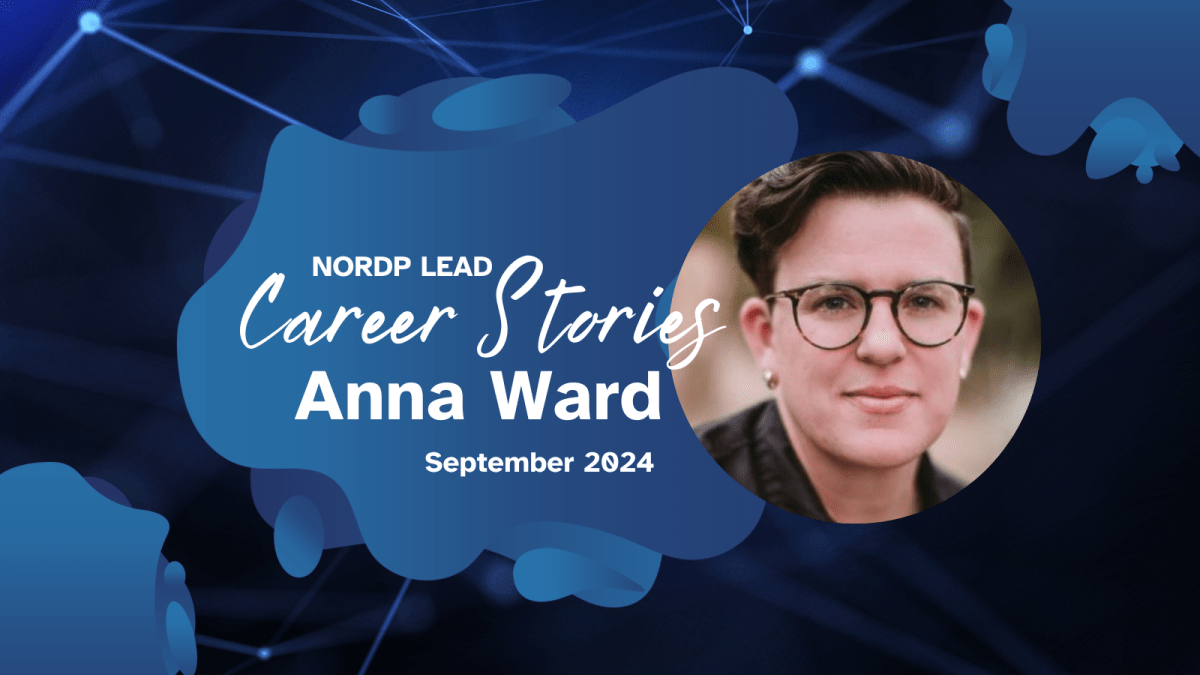
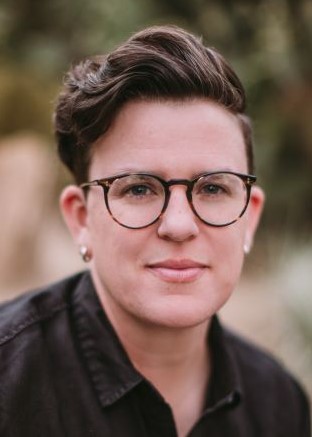
Drawn by a research background, funding structures, and opportunities, Dr. Anna Ward shares that her journey to the RD profession is a gift where she is fascinated by the many ways you can address the same question.
In September Careers Stories, we shared the journey of Dr. Ward, who brings over 15 years’ experience in academic research, teaching, program management, and research development, including previous roles as a Program Officer in UCRI and a Grants and Program Manager at University of California at Davis. Dr. Ward received her BA degree in Politics and Women’s Studies from UC Santa Cruz and doctoral degree in Women’s Studies from UCLA. Prior to returning to UC, where she is the Director of University of California Research Initiatives (UCRI), part of the Research Grants Program Office at the systemwide Office of the President, Dr. Ward was previously a Visiting Assistant Professor and Program Coordinator of the Gender and Sexuality Studies Program at Swarthmore College and a lecturer in the Program for the Study of Women and Gender at Smith College.
After being affiliated with different UC campuses, Dr. Ward grew fascinated with the complexity and scale of the UC system which includes 10 unique campuses, as well as systemwide entities like Agriculture and Natural Resources (ANR), the 42-site Natural Reserves System, and the three UC-affiliated national laboratories. In her current role, she oversees a suite of research grant programs designed to encourage collaboration across the UC system, spur new directions in interdisciplinary research, and generate novel solutions to challenges facing California communities.
Dr. Ward is deeply involved in NORDP and was a Co-Chair of NORDP’s Committee on Inclusive Excellence. In NORDP, she found a welcoming community to identify with and says “the connections that we make are gold.” She thinks that RD professionals can do a better job articulating their contributions beyond proposal development and encourages exploration beyond just “churning out proposals and competing for the same pool of money.” Also, according to Dr. Ward, RD doesn’t get enough credit for the potential role it can play in retention, especially with minoritized faculty.
Dr. Ward advises new RD professionals to perform informational interviews and participate in the NORDP Mentoring program. She benefited immensely from mentorship and her NORDP mentor encouraged her to think creatively, which led her to multiple informational interviews being instrumental in her career. She made herself “vulnerable and talked to some heavy hitters”, aiming to do something in 5 years that would normally take 15 years. Now she advises others, “to be vulnerable but also know what you want to do” as the informational interviews goes both ways where both parties are investing in each other.
Dr. Wards’ impact and legacy is creating a safe space for difficult conversations, doing everything with pride and honor, treating everyone with the respect they deserve, while making their paths easier.
Dr. Ward would love to answer any questions you have for her, so please feel free to email her at anna.ward@ucop.edu
The link to the interview to Dr. Ward’s Career Stories by the NORDP LEAD Career Stories team will be posted in the NORDP LMS when available.
When Dr. Helms was asked to write his first grant in Biotech, he was a little hesitant, however, the role grew on him and he became an expert and a go-to person for all the grants in his company. While in the industry, Dr. Helms received funding from NIH and served on the NIH SBIR study section.
Michael K. Helms, PhD, MBA
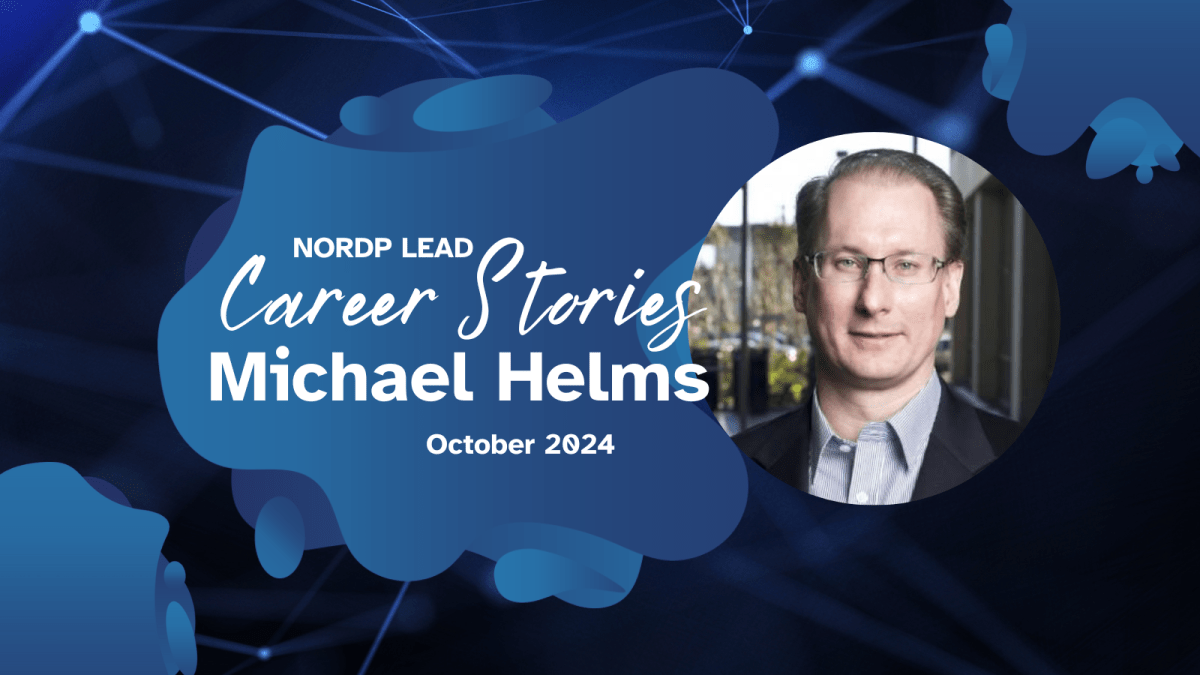
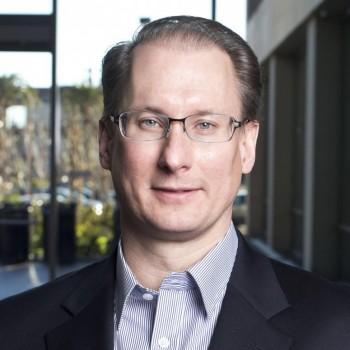
The October Career Stories featured Dr. Micheal Helms, Director of Research Development and Team Science in the Department of Medicine at Stanford University School of Medicine. Dr. Helms has an MBA degree with specializations in managing innovation and technology and international business, and BS and PhD degrees in biochemistry. Mike founded the first-ever research development office at Stanford, the Stanford Research Development Office (SRDO), and managed it for 5 years. His journey started as a scientist, project manager, director, and general manager in the biotechnology industry in the San Francisco Bay Area, eventually making his way into academia.
In 2008, when the economy was crashing, Dr. Helms started consulting and looking for new opportunities. Through his work with NIH, he realized that most federal funding was awarded to universities, so he started focusing his job search in academia. With his wealth of experience, in 2009, he was hired by Stanford University and since then has helped hundreds of faculty members find and apply to funding opportunities, resulting in over $400 million in new funding from federal and foundation sponsors. He counts among his successes the Stanford CTSA, Stanford Diabetes Research Center, Stanford Alzheimer’s Disease Research Center, SPHERE Center, and many others. For the past 15 years Mike’s main responsibility has been assisting faculty obtaining large grants. He directly works with experienced and knowledgeable faculty members and provides them with hands on help through coaching, development, and holding strategy and coaching meetings. Additionally, he runs a seed grant program for junior faculty who are clinically active.
Dr. Helms likes to “get the wins” and bring in the money, which aligns to faculty interests and aspirations. Helping faculty nurture their career to do “all good things” inspires him. He has supported 2 early career faculty – K Awards – funded with perfect scores of 10.
In reflecting on his impact and legacy, Dr. Helms points to helping Stanford raise >$400 m in new grant funding, introducing and establishing the importance of research development into Stanford, and the relationship and impact he has had on others’ career. Lately, he has been reflecting on future career moves. He recognizes that most RD professionals are in staff roles, which may put him in a much weaker position within an institution for rising to the VP level. However, he maintains that networking is key and can possibly have people on your side, so never stop learning, asking questions, and maintaining good relationships with people.
Mike would love to answer any questions you have for him, so please feel free to email him at mkhelms@stanford.edu.
The link to the interview to Dr. Helms October Career Stories will be posted on the LMS when available.
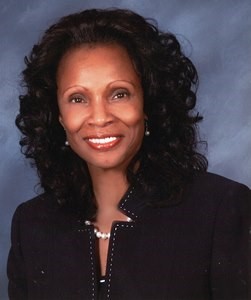
This month’s career story featured Dr. Shelia McClure, the Senior Associate Dean for Research Development at Morehouse School of Medicine (MSM), who is also the founding director of the MSM Office of Research Development (ORD). ORD provides technical assistance to faculty, post-docs, students and staff in planning, developing, implementing, and evaluating activities that facilitate scientific and educational research. Dr. McClure received her doctorate in cellular and developmental zoology from the University of California, Berkeley, completed post-doctoral training at the University of California and was a scientist in the Cancer and Viral Diseases Unit of the Upjohn Company in Kalamazoo, MI.
Dr. McClure began her professional career at Spelman College in Atlanta, GA where she rose to the rank of Associate Professor and was recognized for mentoring students and developing infrastructure and capacity for biomedical research that focused on faculty development, infrastructure improvements, and grant and contract development. She left Spelman for what she initially thought would be a brief stint at the National Institutes of Health (NIH). That “brief stint” ended up being almost 16 years, serving as a Program Director, Scientific Office, and Special Assistant to the Director of Research Infrastructure in the National Center for Research Resources, and as Chief of the Office of Research Training and Capacity Building in the Division of Scientific Programs at the National Institute on Minority Health and Health Disparities. However, her love for teaching, mentoring, and engaging learners as well as her passion for enhancing research capacity and helping diversify the biomedical research workforce brought her back to academia, where she could be fully engaged in research development.
Dr.McClure’s research development journey began with starting up a new lab as an Assistant Professor in a small institution that focused primarily on teaching. Once she garnered extramural funding from NSF, NIH, and a few foundations to establish her own research, she was equally engaged in developing research capacity, not only for herself, but for students, post-docs, and other faculty. She believes RD is in her blood and with a passion for RD, “she has never worked a day in life” but follows and enjoys her passion. She considers herself “very fortunate to have been a part of research development on a local level in the academy and at a national level while at NIH.” That same passion keeps Dr. McClure in RD as she enjoys seeing investigators obtaining their first grant and becoming successful in their research and professional careers. Since many of these investigators are from groups underrepresented in biomedical research, she has the added enjoyment of playing a role in helping diversify the scientific workforce. Her work has also resulted in advocacy efforts to increase funding for smaller institutions, HBCUs, and other MSIs that need resources to enhance research and training capacity.
She strongly believes that mentoring is an essential ingredient for success, and credits her parents, an NIH professional mentor, and her undergraduate research mentor for supporting her throughout her life and career. Specifically, she thanks her parents “for instilling in a young African American woman growing up in the South that she could be anyone she wanted to be, and the equalizer would be education.” Hence, she firmly believes that it is everyone’s responsibility to “pay it forward”, and as RD professionals, we should play a more active role in mentoring the next generation of researchers and RD professionals. We should also have a stronger voice in advocating for RD opportunities that will help to diversify the institutions and individuals contributing to the research enterprise.
Even with an extensive career in RD, she still learns from every investigator she works with and uses the information she learns to improve RD programming and operations. “Emotional intelligence is the key” when working with a broad cross-section of stakeholders, which is usually the case in the RD space. Mutual respect, and building and maintaining relationships have shaped her impact and legacy in RD.
Dr. McClure would love to answer any questions you have for her, so please feel free to email her at smcclure@msm.edu
The link to the interview to Dr. McClure’s Career Stories by the NORDP LEAD Career Stories team will be posted when available.
An exceptional Journey from Student Services to Research Development Professional and into Retirement
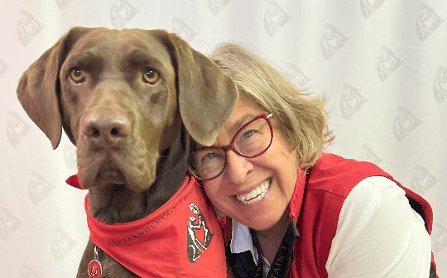
Jan and Izzie, her Certified Therapy Dog
She often says “she was doing RD, before RD was a thing.” Jan Abramson, a retired RD professional and Emeritus member of NORDP has had an exceptional professional journey. After receiving her master’s degree in Higher Education Administration from the University of Central Missouri, Jan worked in student leadership and development in England and the US. She arrived at the University of Utah (UofU) in 1995, with a goal of volunteering at the opening and closing ceremonies of the 2002 Winter Olympics. Goal achieved! as Company Manager for UofU’s Children’s Dance Theatre.
Following the Olympics, Jan took a foray into the nonprofit community, working primarily with arts organizations in various roles: grant writer, development director, volunteer coordinator, trainer, and interim Executive Director. Those experiences enhanced a skill set that allowed for a seamless transition to RD professional.
Returning to UofU in 2005, she began doing research development work in the Health Sciences, where she stayed, in various roles until retirement in 2020. Jan was introduced to NORDP in 2011 and became an active member, contributing her time, talents, skills, and knowledge to the NORDP community. As she says, “through NORDP, I found a professional home, which has helped me grow.” During her time with NORDP, she was primarily involved with the Mentoring Committee, served on the Board of Directors, and co-chaired the 2019 conference in Providence, RI. She is an Emeritus member, was recognized as a Charter Fellow in 2020, and received one of the two inaugural Mentoring Awards in 2022. She built life-long relationships with NORDP colleagues and works to build, nurture, and sustain those relationships.
COVID offered a chance for early retirement. Reflecting on retirement, Jan is convinced that one’s impact weaves throughout their life, touching others in ways we may not even know. The legacy of who we are and what we do is passed on and continues in ways we may not be aware of. Retirement offers new ways to #payitforward. Now, Jan volunteers in the community several times a week with her dog Izzie, for Intermountain Therapy Animals, spreading smiles in hospitals, schools, the airport, and other public places. She also volunteers for Salt Lake County Arts and Culture to get her arts fix.
Jan’s message to everyone is to network, take initiatives, and get involved in NORDP. There are so many ways to participate; reach out where you are interested, make time to engage with other RD professionals, and invite others in. Celebrate the good things about yourself and reflect on your impact and legacy.
For the author, Roshni Singh, Jan has been an inspirational woman and a great mentor. Roshni looks up to her and hopes to continue her professional relationship with her as there is so much to learn from her and learn to foster relationships like Jan does.
Jan would love to answer any questions you have, so please feel free to email her at janabramson.slc@gmail.com.
The link to the interview to Jan’s full Career Stories by the NORDP LEAD Career Stories team will be posted when available.
She Knew What She Wanted Even Before She Knew What to Call the Job
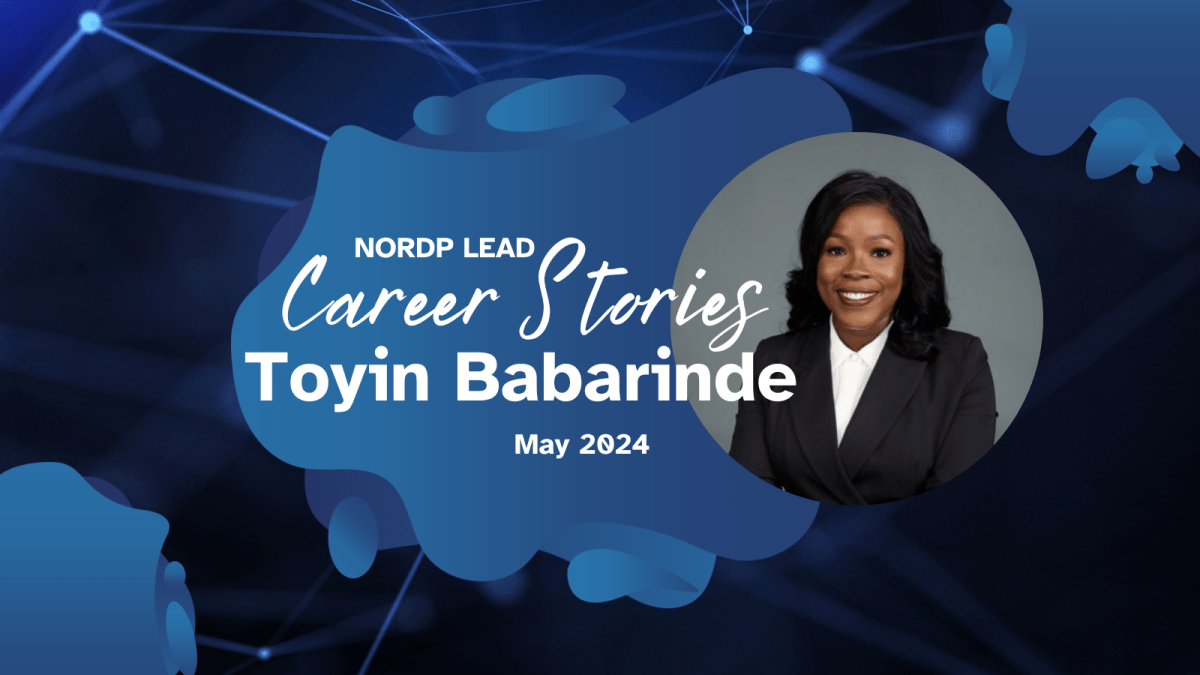
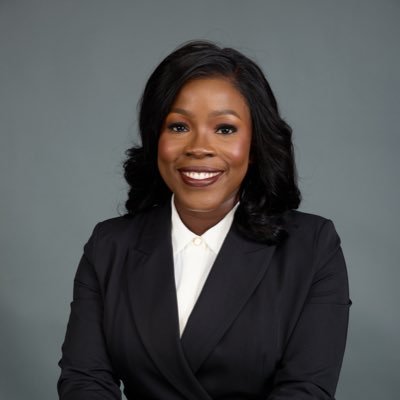
Dr. Toyin Babarinde
Meet Dr. Toyin Babarinde, whose persistence and creativity led to her dream role in RD and her exciting position as the inaugural Executive Director of the recently established Office of Strategic Research Development (OSRD) at the University of Texas Medical Branch (UTMB). After obtaining her PhD and two years of post-doctoral training, Dr. Toyin knew she did not want to continue bench research. With a deep passion for advancing science and research, she wasn’t sure what path to take and unaware of the exciting career of RD, she began searching for jobs using words like ‘research planning’, or ‘research organization’. After numerous Google searches, she started seeing positions that described her areas of interest and from there, she identified individuals with similar job titles. After several informational meetings and applying for countless jobs, she ended up as a consultant. However, she soon realized that a position in academia was more her style, so she kept applying for jobs and eventually received her first “official” RD position at The University of Texas, MD Anderson Cancer Center (MD Anderson).
Before joining UTMB, Toyin was the Associate Director of Research Planning and Development at MD Anderson. During her time at MD Anderson, she collaborated with faculty and staff across the institution and the Texas Medical Center developing large multidisciplinary research initiatives, identifying targeted funding opportunities, and assisting in the development and submission of research funding applications. While in this position, she sought opportunities to deliver A+++ service to all stakeholders. Back then, Toyin operated more linearly in thought, and as she contemplated her next growth opportunity, she began looking for director-level positions. When those opportunities did not materialize as she had hoped, she unexpectedly heard from not one, but two executive-level positions. She was reluctant at first to pursue either position because she was unsure, she could “skip a step on her career ladder.” However, she experienced an aha moment, when she asked herself, “who told you Toyin, that you can’t skip a step on the ladder.” In that moment, she realized that life doesn’t have to progress linearly. This aha moment motivated her to pursue the Executive Director position and ultimately led her to become the inaugural Executive Director at UTMB.
Throughout her career, Dr. Toyin understood that she had to advocate for herself and find creative ways to communicate her value. She is passionate about what she does and believes that the skills she uses in RD come naturally to her and align with her values, which are satisfying, feed her soul, and inspire her to pursue RD opportunities. Guided by her faith, she is able to keep her purpose in mind and operates with conviction. Dr. Toyin consistently strives for excellence, and she wants people to look back and say, “This research program has grown in depth and breadth because you were here,” as one of the chairs she worked with did once. This is the legacy she aspires to leave at every research organization she touches.
One of her RD pro-tips is to ‘develop and apply effective project management skills’, which are essential in every position. A second pro-tip would be to “invest in yourself and take the time to grow yourself, whether through employer-provided resources or on your own.”
Dr. Toyin is actively involved in NORDP and encourages everyone to network, which has helped her in her profession. As well, she wants to remind everyone that it’s okay to operate less linearly and embrace the dynamic possibilities that life has to offer.
Outside of her career, Dr. Toyin is active in her community, where she organizes STEM summer programs for children, volunteers with the Adventurer and Pathfinder youth clubs, and serves on the parent-teacher organization board of her children’s school. These community engagements bring her joy and valuable lessons that she uses in all aspects of her life.
Toyin would love to answer any questions you have for her, so please feel free to email her at tababari@utmb.edu
The link to the interview to Toyin’s full Career Stories by the NORDP LEAD Career Stories team will be posted when available.
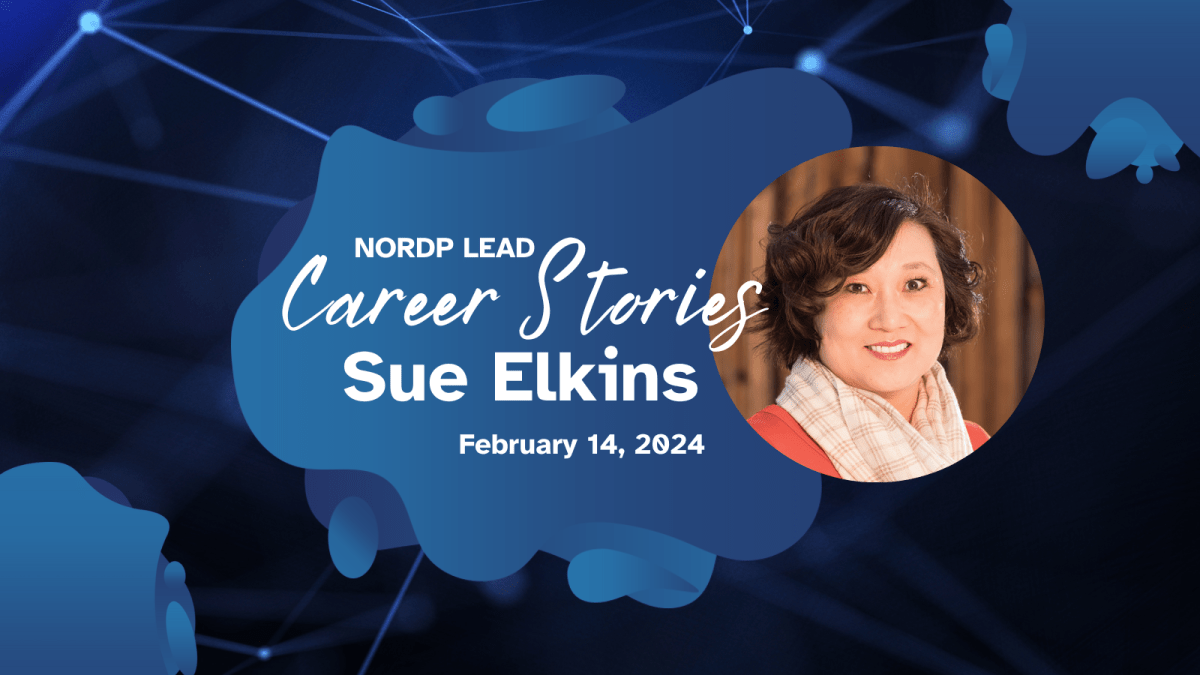
Sue Elkins, CRA • International & Research Services Manager • Drexel University
Sue Elkins, CRA is the International & Research Services Manager at Drexel University. In this role, she has been tasked with re-envisioning and developing research support from a Central Office, for the university. Sue has over 10 years of research administration experience in higher education and hospital settings with a wealth of understanding on research administration, networking, relationship building, professional development, and communication.
Prior to joining Drexel, Sue had worked at Auburn University and Rhode Island Hospital in positions that were RD adjacent, but lacked the work-life balance she required. In addition to these two roles, she had over 10 years’ experience in wrangling contracts and navigating legal systems through two prior positions as a real estate assistant/transaction manager, and a daycare/pre-school owner in a foreign country. In spring of 2021, she began planning an intentional career transition that would allow her the work/life balance she needed as well as advance her career. Sue wanted to get involved with increasing grantsmanship knowledge leading to increased efficiencies and better proposals in turn increasing an institution’s award rate. She strategically targeted institutions that were looking to measurably increase research expenditures and willing to increase training across campus as part of their strategic plan. Based on her desired career path, she designed a 24-month plan for the career transition and strategically started adding the skills she needed while at her prior role in Auburn University. She accomplished her goal, 6 months ahead of her deadline, joining Drexel as a Grants Administrator in October 2022. Sue has not let the lack of an advanced degree hold her back from pursuing her career goals and has successfully leveraged all prior experiences in conveying her aptitude for her desired positions. Understanding her soft skills helped Sue maximize her career advancement proving past employment outside of the field added to her ability to address the role Drexel University was looking to fill. Sue was promoted to her current position in April 2023.
With her role as the International & Research Services Manager in the Office of Sponsored Programs, Sue plans/creates/adds/fosters training opportunities for those across campus to improving institutional research support. Determining a road map to develop training for all involved with research to improve processes, knowledge base & community is Sue’s ultimate goal and the big picture aim for her current position. She also understands the constantly evolving demands of the field and that between now and completely setting up training our world will change and she is looking forward to helping Drexel University keep up! It is the thought of these upcoming and unknown challenges that keeps Sue interested in Research Development; understanding her soft skills has helped Sue maximize her career advancement.
Sue suggests networking as one of the best ways to connect, learn, and increase one’s knowledge base. When she worked directly with faculty and after a proposal and they asked if they could do anything for her, Sue asked that they write an email to her boss on how she was a beneficial part of the proposal. These faculty members turned out to be some of her best references. Additionally, in her experience NORDP is very welcoming, empowering, and accessible to everyone, and a great place to network. Another great way to network is to VOLUNTEER! Sue currently is involved with NORDP on a volunteer basis for the following roles: Co-Chair for the NORDP Professional Development (PD) Committee, Liaison for PD and the iKnoW on the NORDP Communications Working Group (CWG), PD representative for iKnoW, and a cohort mentor for this year’s Mentoring Program.
Fun Fact about Sue: Being a horrible test taker has been to Sue’s advantage. In order to pass the CRA exam she really had to understand the principles behind any question that could be asked; and thus, this knowledge is stuck in her head for the long haul! This is the same as understanding every grant that comes her way!
Sue would love to answer any questions you have for her, so please feel free to email her at sue.elkins@drexel.edu
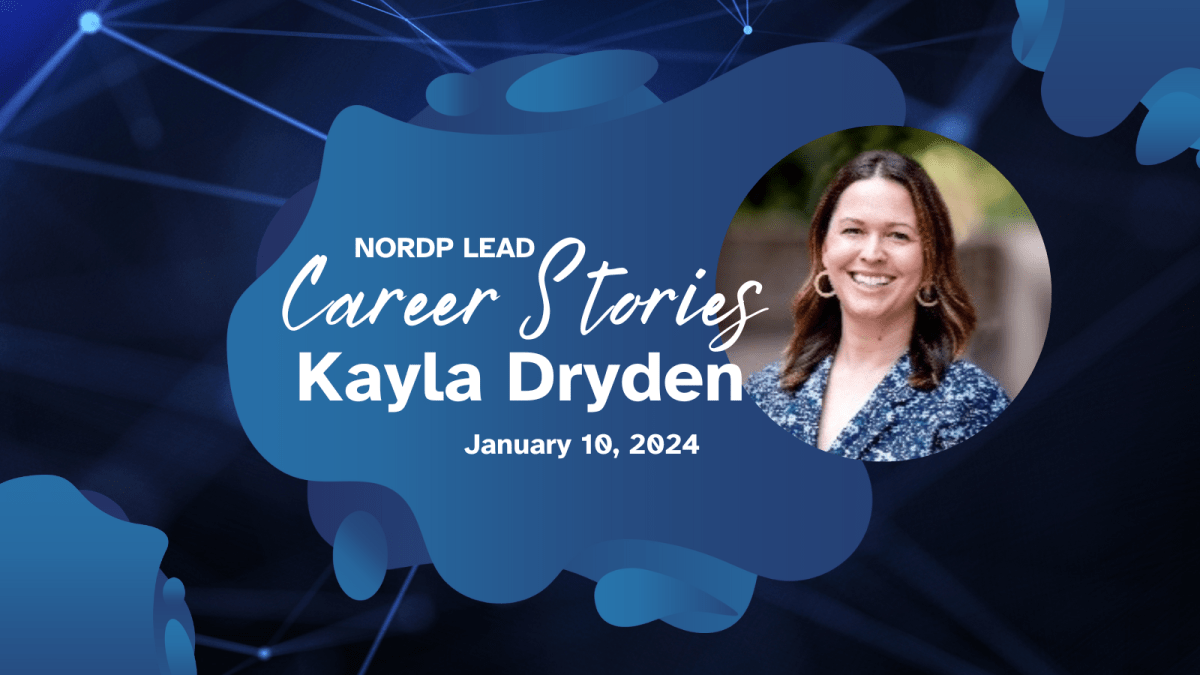
Kayla Dryden • Research Development Officer for Arts and Humanities • The University of Texas at Austin
Kayla Dryden is the first-ever Research Development Officer for Arts and Humanities at The University of Texas at Austin. In this role, she provides major proposal development support for faculty, facilitates skill-building and team research, and leads arts and humanities strategy in the central Office of the Vice President for Research, Scholarship, and Creative Endeavors
Kayla holds an MA in Museum Studies from NYU and as an undergraduate, studied English and Art History at Cornell University. Within NORDP, she is a member-at-large of the Creative Arts, Social Science, and Humanities affinity group and the co-chair of the Membership Services Committee.
As an undergrad, Kayla wanted to be an arts journalist or critic, however, after a couple of lackluster media internships, she realized that wasn’t her path. A summer job working at the university art museum led her to a career at the intersection of arts management and philanthropy. Before joining UT Austin in 2021, she spent 15 years both in-house and as a consultant to arts and cultural organizations and artists, specializing in grants, communications, and project management. She has worked at the Asian Art Museum (San Francisco), The Museum of Modern Art (New York City), and other museums, galleries, and grant-makers in the U.S. and in Asia.
During a seven-year tenure with MoMA, she led the grants portfolio and administered the internal Wallis Annenberg Fund for Innovation in Contemporary Art together with leadership at the museum and at the Annenberg Foundation. The cutting-edge projects supported by this fund were deemed unlikey to receive external funding, often pushing the boundaries of what was possible to present in a public institutional space. Kayla credits this experience with honing her ability to break any concieveable proposal down to component parts for review, and to steward a diverse group of stakeholders to “get to yes.”
All these experiences led her to her first “capital R” Research Development position at UT Austin and a niche that suits her skills and abilities both as a writer and administrator and as a people person. In her current role, she works to earn trust from arts and humanities faculty members who may have had a range of experiences with the research enterprise. She is inspired by the opportunity to advocate for these faculty, and by the importance and impact of their work.
Here are some questions from the Career story that went unanswered:
Q. How big is your office? How many RD staff members work with you in support of the faculty?
A: I sit in UT Austin’s central Office of the Vice President for Research, Scholarship, and Creative Endeavors. Our Research Development team has about 20 staff members, including program staff for our three grand challenges, an operations and events team, limited submissions and competitive intelligence specialists, research administrators, and more. I’m part of a cohort of three other Research Development Officers, including our Deputy VP for Research and fearless leader, Jennifer Lyon Gardner.
Q: What should other universities do to better support arts & humanities faculty in research funding?
A: If you are serious about fostering a culture of arts and humanities research, there must be an investment in infrastructure like post-award support at the local level. Central offices should consider if their offerings truly serve all disciplines, and think about their terminology. Do you really need to ask for a biosketch when any short bio will do, or use the term team science when you mean team research? Not all art and humanities scholars are going to be interested in pursuing external funding. Find those that are already doing this work (perhaps outside of the university), those who want to do this work, and those who are curious about it.
Q: Are there other staff members (not in the central office) who support these faculty with research development? How do you coordinate with them?
A: Local support for arts and humanities research varies widely across UT Austin’s 19 colleges and schools. I work very closely with college-level research administrators, associate deans of research, and staff in units like our Humanities Institute, as well as foundation relations and development. Some of these colleagues serve formally or informally as research development specialists in their college, and in other cases I am more hands-on. My role entails a large amount of internal coordination and relationship-building! However, it’s been so helpful to have a birds-eye view of what’s happening across campus: I can connect RAs who are supporting PIs on the same opportunity, introduce potential collaborators, or refer folks to resources available in another college.
Kayla would love to answer any questions you have for her, so please feel free to email her at kayla.dryden@austin.utexas.edu
Compiled by Daniel Campbell, Member Services Committee
Career Stories are a partnership of NORDP LEAD, the Professional Development Committee, and the Member Services Committee. These informal “fireside chats” highlight the professional trajectories of NORDP members by showcasing the multiple ways that members end up in research development as well as the variety of paths available for career growth and advancement.
NORDP Charter Fellow and Emeritus Member, Jan Abramson, was part of the group that worked to create this series of conversations. Jan adds, “Career Stories is always a highlight of my month. We have a great team of volunteers who make this event happen, and it is always fun to connect through conversation with NORDP members. Career Stories is a great way to start volunteering or sharing your personal path with NORDP colleagues.”
These 30-minute listen and learn sessions along with participant Q&A, began in January 2021 with Karen Fletcher, Director of Grants Resources & Services at Appalachian State University, and have continued monthly since then.
Gagan Bajaj, PhD, Grant Proposal Developer at the University of Vermont notes,“I joined the team at Career Stories in September 2021, bang in the middle of the pandemic—I was craving human connection, and boy, did the series deliver! Career Stories is my monthly dose of inspiration, and I am so grateful for all the wonderful people I have met through this forum.”
Career Stories from this year are listed below with a bit of background bio on the featured members. All Career Stories have been recorded and are accessible by NORDP members through the NORDP LMS.
January – Sammy Rodriguez Flecha (Washington State University)
Sammy Rodriguez Flecha, PhD is currently the director of the Washington State University’s Team Mentoring Program, a network serving underserved undergraduate students pursuing degrees in science, technology, engineering, math (STEM) and health fields. Prior to this new role, he served as interim director for the WSU Office of Research Advancement & Partnerships. His research development and administration career has spanned over 10 years. His PhD is in educational psychology and his Master’s degree is in English literature. He’s been a member of NORDP’s Nominating Committee, a mentor for NORDP’s mentoring program and participated in the inaugural cohort of NORDP LEAD.
February – Jaime Rubin (Columbia University)
Dr. Jaime Rubin is currently the Vice Chair for Investigator Development in the Department of Medicine at Columbia University. She has held senior level positions at Columbia University Medical Center, including Acting Associate Dean for Graduate Affairs, was the founding Director of the Office of Graduate Affairs, and served as the Acting Associate Vice President/Acting Associate Dean for Research Administration – and was one of the founders of the Office of Research Administration. Dr. Rubin completed her PhD at the Ontario Cancer Institute, University of Toronto. She is currently a Fulbright Scholar awardee with the Republic of Kosovo’s Ministry of Education, Science, Technology and Innovation. Her responsibilities include working on projects to increase extramurally-funded research with international partners.
March - Elizabeth Lathrop (University of Maryland)
Elizabeth Lathrop works as a Proposal Development Specialist for the A. James Clark School of Engineering at the University of Maryland. She provides critical support to the Clark School's capacity for complex, multidisciplinary research initiatives in response to targeted funding opportunities. Elizabeth is a Professional Track Faculty with degrees in sciences and was the Associate Director of Programs for a DOE EFRC: Energy Frontier Research Center - Science of Precision Multifunctional Nanostructures for Electrical Energy Storage.  Elizabeth is currently a co-chair of the Mentoring Committee, and participates in the iKnoW, (immigrant Knowledge and Wisdom) Affinity Group.
April - Jason Charland (University of Maine)
Jason Charland serves as Senior Advisor to the President and Executive Director of Research Development at the University of Maine. He oversees research development service provision to faculty and researchers across the University of Maine System, which comprises five primarily undergraduate institutions, a regional comprehensive university, a law school, and an R1 research university distributed across a rural state. He is also responsible for implementing university-wide extramural funding strategies for federal, state, and foundation funding and executing strategic research initiatives.
May - Elizabeth Festa (Rice University)
Elizabeth Festa is a Research Development Specialist in the Office of Research Development at Rice University. She received her Ph.D. from Vanderbilt University and her B.A. from the University of Notre Dame. She is an IRB affiliate at Baylor College of Medicine and a past screener for the Fulbright-National Geographic Fellowship. Before transitioning into RD, Elizabeth was Associate Director of the Program in Writing in Communication at Rice, and the Associate Director of the Center for Academic and Professional Communication. Elizabeth holds leadership positions in NORDP’s Strategic Alliances Committee and Member Services Committee.
June - Camille Coley (University of San Francisco)
Camille Coley, JD, CRA is the inaugural Associate Vice Provost for Sponsored Programs and External Partnerships at the University of San Francisco.  She has worked in research administration and research development for more than 20 years including at the American Museum of Natural History (in New York City, NY), Florida Atlantic University (FAU), and Southeast National Marine Renewable Energy Center and the Center for Biomedical and Marine Biotechnology at FAU. She is a certified Research Administrator as well as a Certified Mediator. Camille shares her experience and expertise through the NORDP PEERD program and is a consultant for NORDP’s Pilot Project for Historically Black Colleges and Universities.
July – Eric Wayne Dickey (Oregon State University)
Eric holds an Honors Bachelor of Arts in English and a Master of Fine Arts in Creative Writing, both from Oregon State University (OSU), and is a certified Project Management Professional by the Project Management Institute. He is also a published poet, children's author, and translator of German Poetry, and his work can be found online and in print. In July 2022, Eric began a new role as the first ever Director of Sponsored Programs for OSU’s Division of Extension and Engagement. He has 20 years of experience in research development and proposal and project management and has worked for OSU’s College of Forestry and College of Liberal Arts, for Oregon Sea Grant, and at Western Oregon University where he established its inaugural Sponsored Projects Office. For NORDP, Eric currently serves on the Member Services Committee and is a co-representative for the Pacific Region. He is also on the Mentoring Committee and has recently agreed to serve on the Conference Committee.
August - Jessica Venable (Thorn Run Partners)
Jessica Venable, PhD is known for her work in higher education policy and reform, particularly as it pertains to how underserved and underrepresented individuals, institutions and groups are represented in, and benefit from, the Federal funding landscaper. In her career, she worked in RD at Virginia Commonwealth University, and at NASA Langley Research Center and NASA Headquarters. She has also served as a grant reviewer for numerous federal agencies, and prior to joining Thorn Run Partners served as Vice President at McAllister & Quinn.
Elizabeth Festa noted, “As a person who transitioned to RD mid-career, the experience of being interviewed for Career Stories was a validating one. The field of RD is still emerging and the opportunity to draw upon a wide variety of experiences and skills to impact the profession, as opposed to following a clearly defined path, has ultimately been rewarding. Career Stories made me recognize the value in my unique path, and those of my NORDP colleagues.”
If you are interested participating as a conversation facilitator, technical host or sharing your own story please contact Gagan Bajaj at gagan.bajaj@med.uvm.edu.


 NORDP News