Navigating the Federal Landscape: A Preview of Sarah Spreitzer’s NORDP 2025 Keynote

Written by Kate Duggan, Conference Planning Committee
NORDP 2025 Keynote Speaker, Sarah Spreitzer

As research development professionals and NORDP members, we pride ourselves on our flexibility, versatility, and ability to meet the moment. This year’s NORDP Conference closing keynote, Sarah Spreitzer, utilizes many of these same skills in her role as Vice President and Chief of Staff of Government Relations for the American Council on Education (ACE). Her May 1 keynote will provide an update from Washington, DC on the new administration’s actions and policies relevant to higher education and research, the response from Congress, and how NORDP members can draw upon their own skills and experience to understand, interpret, and advocate in the evolving federal landscape.

Sarah was drawn to federal advocacy by way of her passion for education, which was inspired by her mother and grandmother, both elementary school teachers. After earning her bachelor’s degree from Beloit College in Wisconsin and a master’s degree from The Catholic University of America in Washington, DC, Sarah was aiming for a career as an academic when she took a break from being a student to work for the University of Washington’s Federal Relations office. That one post-graduation job turned into a career for Sarah, who went on to become a Senior Government Relations Representative/ Lobbyist for Lewis-Burke Associates and then Director of Federal Relations for the University of Missouri System before joining ACE in 2017.

In her role at ACE, Sarah represents 1600+ institutions of higher education, working to unite the postsecondary community around topics of mutual concern and interest. At present, these topics include the proposed decrease of federal facilities and administrative (F&A) rates to a maximum of 15%; opposing the DETERRENT Act, which would add extensive new faculty and staff foreign gift reporting requirements; and immigration policies that affect international students and faculty.

While the current moment is presenting some unique challenges to the national academic research enterprise, Sarah still sees reason to be optimistic. On considering how higher education reacts to adversity and might respond in this moment, Sarah reflected that “we’re a little slow, but we are flexible. And I think that that was really demonstrated during COVID. If you had told me that all of our institutions would be able to transition online within a week and address all of the needs of our international students who suddenly weren’t sure if they were going to stay, or if they were going to have to go. I would be like, there’s no way we could do that. We did it. We did it and I think that that is the strength of higher education.”

Beyond drawing upon the resiliency our institutions cultivated during the pandemic, Sarah has more advice for NORDP members on how to handle the headlines:

Pause: “When something new comes out…it’s important to take a breath and pause before you react … understand what’s actually happening, that there is supposed to be a rule of order for the implementation, that a lot of things that are happening are being stopped by the courts.”

Share: “Sharing information during this really confusing time is incredibly important, because I may have an NIH grant that got canceled because of the DEI executive order. You may not have had a grant canceled yet, but perhaps the program officer isn’t returning your phone calls or something’s happened when you try and draw down the funding. And so sharing that information and being part of this larger community is really really important.”

Advocate: “I also think talking about what messages work, like when you’re talking to individual members of Congress,” can be helpful in giving RDPs the tools we need to demonstrate the value and contributions of our institutions with elected officials and members of the public who may not be familiar with how college and university funding is allocated, governed, and what kinds of research and programming it makes possible in our communities.


Despite the uncertainty many of us are experiencing, Sarah has “complete confidence in the ability of higher education to respond to the challenges during this time, and I’m kind of excited to see how we do respond….the relationship between higher education and the federal government is going to be very different. There’s going to be a lot of things thrown at us, but I know that higher education will come out at the other end okay; it’ll just be different.” For more Washington insights and a dash of related optimism, be sure to attend Sarah Spreitzer’s May 1 closing keynote; conference attendees are encouraged to submit questions for Sarah by navigating to the keynote session in the Whova app.


Building Human Infrastructure in STEM: A Preview of Lou Woodley’s NORDP 2025 Keynote

Written by Kelly A. Moore, Conference Planning Committee
NORDP 2025 Keynote Speaker, Dr. Lou Woodley

NORDP 2025 conference attendees are in for an inspiring and thought-provoking keynote by Lou Woodley, a scientist-turned-community-builder who has dedicated her career to supporting human infrastructure in science. Lou is the Founder and Director of the Center for Scientific Collaboration and Community Engagement (CSCCE), an organization that offers evidence-based professional development training, online resources, and consultancy for scientific community managers.

So, what exactly is a scientific community manager? According to Lou, if you’re the person in a collaborative project who is thinking about the human side of how work gets done—how meetings are run, how decisions are made, how knowledge is shared and documented—chances are, you’re doing community management. And, much like research development professionals, you might not even realize you’re doing it.

In a recent conversation with the NORDP conference team, Lou shared her journey from the lab bench to advocating for the professionalization of community management in STEM around the world. Her path included founding a student-run popular science magazine during her graduate studies in the UK and establishing online and in-person community engagement spaces in her role at Nature Publishing Group, early signs of her passion for connecting people and building collaborative ecosystems.

That passion eventually led her to securing a grant from the Alfred P. Sloan Foundation while at AAAS, which supported the creation of the first professional development curriculum for STEM community managers via the Community Engagement Fellows Program. From there, CSCCE was born, offering online trainings, a multi-component certification program, consultancy for a range of different organizations in the STEM ecosystem, and an online community of practice that includes nearly 900 professionals worldwide.

Lou emphasizes that community management is often a less visible but critical function in scientific enterprises—much like physical infrastructure, you might only notice its absence when things fall apart. This lack of visibility poses challenges, including a dearth of professional development opportunities and a lack of institutional recognition of the value of professional community managers.

To address these challenges, CSCCE focuses on three key areas: professional development, consultancy, and research. Their flagship course, Scientific Community Engagement Fundamentals, has trained over 15 cohorts since it launched in 2020 and is backed by longitudinal evaluation data showing measurable impacts at three levels of scale – on individuals, organizations, and the broader STEM ecosystem.

Importantly, the parallels between community management and research development are striking. Both are emerging fields filled with professionals who often have advanced degrees, especially PhDs, and who act as change agents and systems thinkers within their organizations. Both fields are also heavily gendered and require ongoing advocacy to ensure the value of their contributions is recognized.

Lou also notes the importance of developing shared language and frameworks that help community managers articulate their impact. Whether it’s creating collaboration playbooks or developing new norms for inclusive engagement, the work of community managers is about more than just logistics—it’s about building culture.

NORDP members working in training, proposal development, research communication, or community engagement will find much to relate to in Lou’s keynote. Her message of strategic collaboration, systems thinking, and empowering human infrastructure will resonate deeply across our diverse professional roles.

We can’t wait to welcome Lou Woodley to NORDP 2025 and to learn from her insights about how we can strengthen our communities, our collaborations, and ourselves.

NORDP 2024 Keynote: Building your Unicorn Career with Alaina Levine

Written by: Eric Dickey, Conference Planning Committee

Alaina Levine can pinpoint when she began her career in professional development and networking to a specific, catalyst moment in her life. And it all hinged on one word: Nothing.

She has degrees in Math and in Anthropology and studied in Cairo, Egypt which provided her with a Middle-Eastern studies and Arabic background. But she knew she didn’t want to be a mathematics researcher or an academic. She sought the advice from her mathematics advisor and asked him what her job prospects outside of academia were, and he literally used the word “nothing.”

Career development in STEM is too rarely discussed. Alaina herself noted that she never got the job talk during her mathematics training. Later while at the University of Arizona, she found herself in a position teaching STEM students about career development, soft skills, networking, and negotiation. She helped them identify their own unique gifts to build what she calls their “Unicorn Careers.”

What is a Unicorn Career? Alaina defines it as a customized, authentic career that aligns with one’s values and humanity. It allows you to be yourself 100% of the time and it is a career that brings joy, meaning, and money. As humans, we are diverse and have unique gifts, skills, abilities, and perspectives.

In her keynote talk, Alaina will discuss strategies by which we as RD professionals can make our jobs into our own Unicorn Careers by aligning our skills and abilities with the needs of our institutions and clients. We can use our interests to focus on who we are, and by doing so, we can honor our full authenticity and full humanity. We can make an impact by simply being ourselves through mentoring and creating safe spaces and trust.

We all know that taking such a leap of faith in ourselves, of stepping into our full humanity, will include emotions like doubt and fear. To Alaina, feelings are fantastic data. We can analyze data about ourselves to discover what we can do differently, better, or more. By building our own mental fitness in low-stake scenarios, we can position ourselves to use it in high-stakes scenarios.

As the current President of Quantum Success Solutions, LLC, Alaina is a prolific speaker and writer on career development and professional advancement for STEM Nerds (engineers, scientists, and technical leaders). She also helps Research Development offices land transformative funding through her site visit consultation and speaking and innovation coaching. 

She was drawn to NORDP because she believes her diverse background mirrors the diversity and backgrounds of research development professionals and leaders. She respects and values the collective and diverse wisdom that RD professionals bring to the profession and to the institutions, communities, and scholarship that we serve. She looks forward to sharing her data-driven and process-oriented approach and providing tools which will enable conference attendees to position themselves for success.

Help us welcome her to the NORDP stage in Bellevue, WA.

NORDP 2023 Keynote: Diversity in the Data with Dr. Christine Yifeng Chen

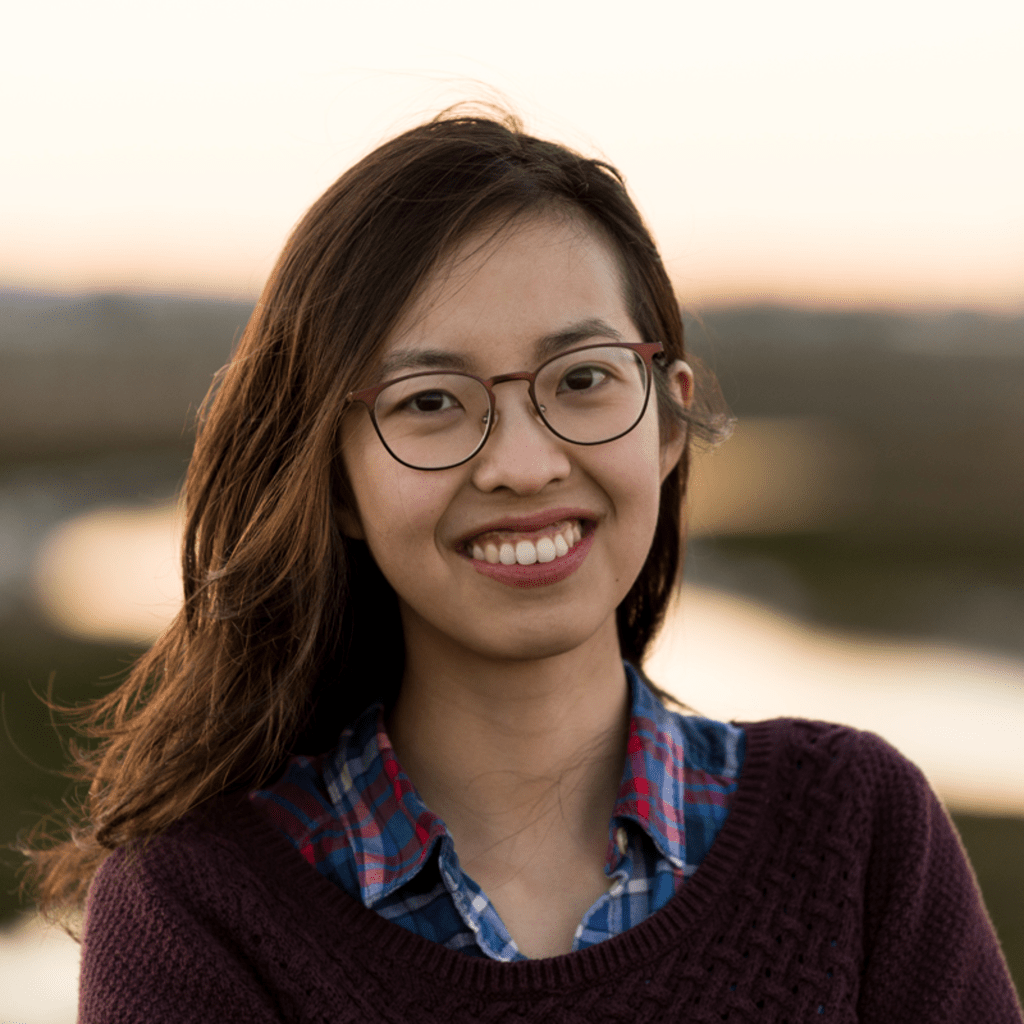
NORDP 2023 Keynote Speaker, Dr. Christine Yifeng Chen

From a young age, Christine Yifeng Chen had an affinity for the outdoors. Growing up in upstate New York, she spent many afternoons amusing herself in the local woods observing plants, rocks, and passing wildlife. When the sun was down or the weather was poor, she watched nature documentaries on public television and read books about historical expeditions and voyages, captivated by stories of field scientists working in far-flung places. Despite her enthusiasm, she never considered that outdoor field research was something she could ever do herself. After all, she had no camping or hiking experience, and hardly traveled outside of her hometown, as the costs of such activities were prohibitive.

That all changed when she “won the lottery,” as Chen puts it, by gaining admittance to Princeton University for her undergraduate studies with a full tuition financial aid package. Scanning the catalog of course offerings, she noticed that the earth science department offered classes with field trips, all expenses paid. Soon enough, in her first semester, she found herself in California, gazing at snow-capped mountains, climbing up sand dunes, and walking amongst ancient pine trees for the very first time. This formative experience set the stage for Chen’s future in field geology. “It was a complete culture shock,” Chen says. “Suddenly, I had access to all these resources at this school, to do all the things I’d always read about or seen on TV. It was nothing short of life changing.”

Chen understands first-hand the impact that access to social and material resources can have on one’s career. She will deliver the 2023 NORDP Conference opening keynote address, entitled “Racial disparities in research funding.” In her remarks, she will highlight results from a recent study she led showing systematic racial disparities in funding rates at the National Science Foundation (NSF). Using publicly available data, Chen and her colleagues showed that from 1999 to 2019, proposals by white researchers at NSF were funded at rates higher than most other non-white groups, and that these trends held regardless of scientific discipline and proposal type. Since similar patterns have been observed at the National institutes of Health, NASA, and other philanthropic funding organizations, they are likely widespread throughout the research funding ecosystem.

Despite countless of initiatives at colleges and universities to diversify the professoriate, data on faculty demographics indicate that higher education institutions appear to have little to show for it. Chen believes that the long-standing funding disparities have played a significant role in stymieing diversity goals: “Eliminating inequalities in STEM and academia will require a reorganization of what causes inequality in the first place: unequal access to social prestige and material resources.”

As a geologist and geochemist by training, Chen is very familiar with the lack of diversity amongst faculty. The geosciences are the least diverse field of all STEM disciplines in terms of race and ethnicity; less than 10% of geoscience PhD recipients are people of color, and little has changed in the last 40 years. And unlike other STEM disciplines, Asians are underrepresented amongst geoscience PhD recipients.

That statistic, along with the rise in anti-Asian sentiments during the pandemic, spurred Chen and two of her colleagues to start an affinity group, Asian Americans and Pacific Islanders in Geosciences (AAPIiG), to build community for AAPIs in the discipline. It was through one of the early virtual AAPIiG community gatherings that Chen first learned from a senior academic about the “open secret” that Asian researchers have the lowest proposal success rates at the NSF. The rest is history.

Chen is eager to engage with the NORDP community about these widespread funding disparities and what we can do about them, both as individuals as well as a collective organization. She hopes that we might consider the funding data at our own institutions from both public and private funders with a critical eye. Chen also hopes that NORDP can mobilize a coordination action in response to these trends, given our unique vantage point as being embedded in the research community at multiple levels and sectors. “NORDP is ideally positioned to guide and catalyze action around this issue. If not you, who else?”

Chen is now at a national lab where she continues her geological and geochemistry research.

Help us welcome her to the NORDP stage in May.

Follow @NORDP_official on Twitter for all the latest #NORDP2023 updates.

NORDP fosters a culture of inclusive excellence by actively promoting and supporting diversity, inclusion, and equity in all its forms to expand our worldview, enrich our work, and elevate our profession.