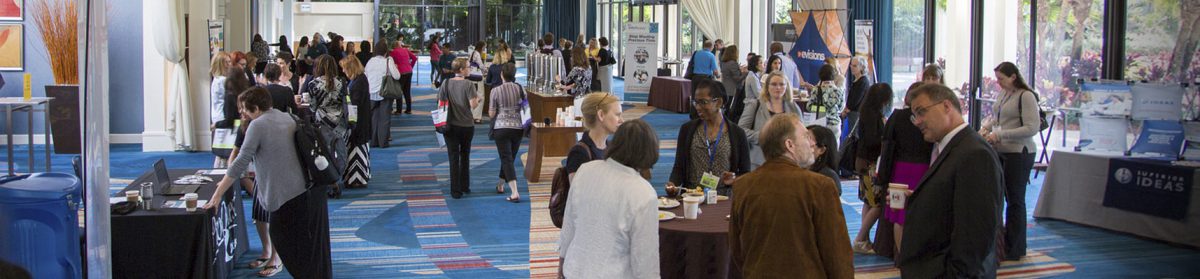
#NORDP2018 starts Monday, May 7 in Arlington, VA. Keep checking back here at the blog and on our Twitter feed (@NORDP_official) for live conference updates. Register here: http://www.nordp.org/conferences.
_______________________________________________________
Who: Kirk Knestis, PhD
Where: Hezel Associates
Number of years in research development: 10
Length of NORDP membership: 1
Number of NORDP conferences attended: 2017 will be my first one!
When you were a kid, what did you want to be when you grew up? Marine biologist
As an evaluator and manager of education studies, I have been working with research development professionals for years on external evaluations of grant-funded research projects. While I sometimes partner with institutions to serve in a subaward research role for PIs who specialize in programming (so need someone to do the “research” part of a project), my team is generally charged with designing a study that examines the timeliness, quality, and results of activities funded by the award.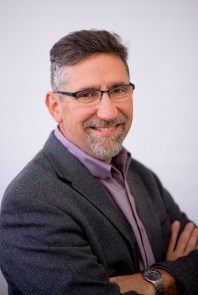
If things are working as they should, we external evaluators spend substantial time planning with the PI, co-PIs, partners, procurement staff, and RD managers. We collaborate to explicate program theories-of-change (i.e., logic models), clarify the design of proposed activities, adopt or develop standards of quality for implementation, define data-collection strategies and analyses to assess the goals and objectives of the funded work, and prepare budgets and documentation required for proposal submission. I like to think I have a good understanding of how those pre-proposal processes work, based on more than a decade of experience collaborating on dozens of proposals each year.
Once one of those proposals goes in, our direct work with RD staff and PIs typically goes on a hiatus until we hear one way or another about a decision on the award. If the project isn’t funded, that may be the end of discussion until the next grant opportunity, or the beginning of plans to resubmit. What I am only beginning to understand, however, is what goes on “behind the curtain” for our higher education clients when their grants ARE awarded, during post-award management and, most interesting to me, during the transition from pre- to post-award functions.
I’ve come to believe that there are things that an external evaluation partner can do in the time between proposal submission and starting the evaluation to help RD managers increase the likelihood of good results – with the evaluation certainly, but also for the funded project more generally. Similarly, I think that there are some key pieces of information about the “care and feeding of the external evaluator” that can benefit research development office staff and ultimately help evaluator-client relationships be more effective and efficient.
My involvement in NORDP – and my participation in my first annual conference – is driven by my interest in better understanding this intersection of needs. My operational theory is that the symbiotic relationships among research developers, PIs, and external evaluators can be improved by each better understanding the roles, contributions, and priorities of the others. I am excited about the opportunity not only to present on this topic with an established RD professional, but also to hear from others to test and elaborate that theory.
_______________________________________________________
We hope to see you at the Conference, which will be held May 7-9, 2018 at the Hyatt Regency Crystal City in Arlington, VA. For more information about the conference program or to register, visit http://www.nordp.org/conferences. Follow @NORDP_official on Twitter for all the latest #NORDP2018 updates.
NORDP fosters a culture of inclusive excellence by actively promoting and supporting diversity, inclusion and equity in all its forms to expand our worldview, enrich our work, and elevate our profession.

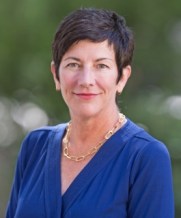 she attended Carnegie-Mellon University, where she completed her M.S. in Industrial Administration, followed by her Ph.D. in Organizational Behavior and Human Resources Management from the University of Maryland. Her research examines how organizations leverage individual and collective knowledge. She examines the performance of teams, especially those teams engaged in knowledge work such as professional services, new product development, and project-based tasks. Recently, Lewis served as a Division Chair in the Academy of Management and Senior Editor for Organization Science.
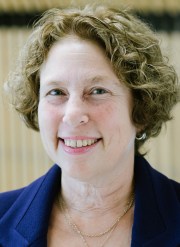 and Behavioral Sciences, and interim vice provost for academic affairs. She was the lead program officer for the National Science Foundation’s ADVANCE program to promote gender equity in academic STEM (Science, Technology, Engineering, and Mathematics). Mitchneck has a dual research focus on migration and displaced populations with an emphasis on countries of the former Soviet Union including Georgia and Ukraine, and on gender equity in STEM. She has served on national boards for the Social Science Research Council and the Kennan Institute, and editorial boards for the Annals of the Association of American Geographers and Soviet Geography. She has received substantial funding from the National Science Foundation and other federally funded agencies. She holds a Ph.D. in Geography from Columbia University and an A.B. in Russian Studies from Bryn Mawr College.
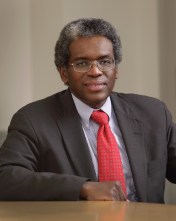 aryland Baltimore County (UMBC) and his Ph.D. in biology from The Johns Hopkins University. He began his career at NIH as a National Research Service Award Fellow in the National Institute of Child Health and Human Development (NICHD), and in 1988 received an Intramural Research Training Award in the National Institute of Diabetes and Digestive and Kidney Diseases (NIDDK). He became a principal investigator in NIDDK in 1992, and he was tenured in 1998. Roland’s research focused on adeno-associated virus type-2 (AAV2). In 2002 he was selected as Mentor of the Year by the UMBC Meyerhoff Scholarship Program. In 2010, Dr. Owens won an NIH Director’s Award for co-leading the trans-NIH Earl Stadtman tenure-track investigator search. In 2011, he won an NIH Merit Award “in recognition of the exemplary support to NIH Leadership’s establishing diversity programs.”
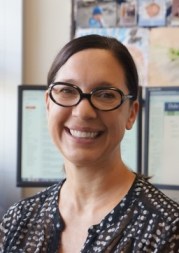 with social science faculty members. She also develops and leads campus diversity and inclusion initiatives. She is Lead PI on an NSF ADVANCE award “Center for Research, Excellence, and Diversity in Team Science (CREDITS).” She is the co-author of the book, Funding Your Research in the Humanities and Social Sciences: A Practical Guide to Grant and Fellowship Proposals. Endemaño Walker first joined UCSB as a post-doctoral scholar at the National Center for Geographic Information and Analysis. Her research has been funded by the National Science Foundation, the National Oceanic and Atmospheric Administration, the Department of Education, the Social Science Research Council, the Elsevier Foundation, and the MacArthur Foundation, among others. She has a Ph.D. and M.A. in Geography from UC Berkeley and a B.A. in Anthropology and African Studies from UCLA. She was the founding treasurer of NORDP.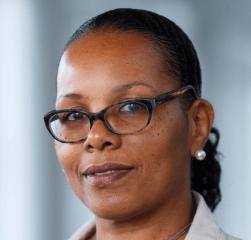
 NORDP News