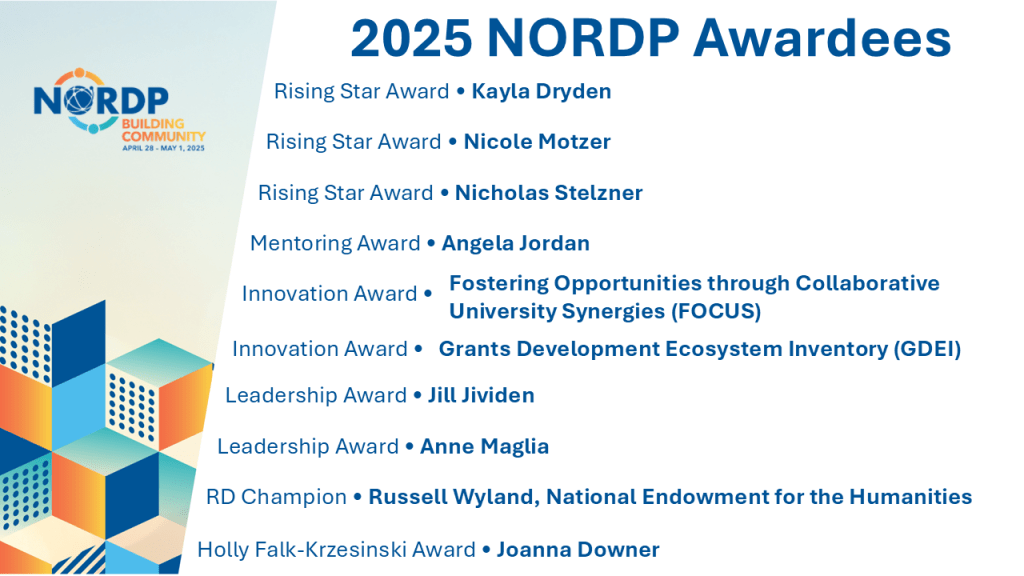
NORDP is powered by the excellence and impact of its members. Each year, NORDP Awards celebrate the outstanding accomplishments of NORDP members making exemplary contributions to the organization as well as the practice and/or study of research development. NORDP Awards honor the distinctive achievements and contributions of individuals, collaborative groups or work teams, programs or projects, and organizations.
Recipients of 2025 NORDP Awards were recognized during the annual NORDP Conference held virtually from April 28 – May 1. In the coming months, you will have a chance to learn more about each awardee through in-depth interviews that will be shared through NORDP News. Congratulations to all of the fantastic awardees for your service to our organization and profession!
Rising Star Award
Kayla Dryden, The University of Texas at Austin
Nicole Motzer, Montana State University
Nicholas Stelzner, University of Washington
Mentoring Award
Angela Jordan, University of South Alabama
Innovation Award
Fostering Opportunities through Collaborative University Synergies (FOCUS): Tracy Gatlin and Nicole Motzer (Montana State University), Carly Cummings and Ryan McAllister (University of Idaho), Heather Borck, Matthew Dwyer, Nathan Meier, Jackson Hardin, and Tisha Gilreath Mullen (University of Nebraska-Lincoln), Carrie Busha and Aurora Pinkey (University of Nevada, Reno), Jeri Hansen and Dawnie Elzinga (Utah State University)
Grants Development Ecosystem Inventory (GDEI): Kara Luckey (Seattle University), Jennifer Glass (University of Massachusetts Dartmouth), Dean Gerstein (Pomona College), Sarah Robertson (Bryn Mawr College), Amy Chan-Hilton (University of Southern Indiana)
Leadership Award
Jill Jividen, University of Michigan
Anne Maglia, University of Massachusetts Lowell
Research Development Champion Award
Russell Wyland, National Endowment for the Humanities
Who: Dr. Eva Allen, Senior Research Development Specialist, Biological Sciences Division
Name of organization/institution where they work: University of Chicago
Number of Years Working in RD: 23 years
Length of NORDP Membership: 13 years
When and how did you enter the field? What kind of research development work do you do?
Eva found herself in a tough situation in her first year of graduate school at Indiana University (IU) for evolutionary biology when she learned that she didn’t share common research interests with the lab she was working with. Because of this, she cobbled together two different advisors for a topic she developed. However, neither of them had grant funding for her work. So, Eva wrote proposals, drawing on her strengths as a writer; she grew up with an English professor father and served as a writing tutor as an undergraduate.
After earning her PhD, she stayed on at IU providing research development support to her department. This role expanded over 20 years, as described in the 2020 New Board Member Cameo blog post. In 2021, she became the Assistant Director for Research Advancement of IU’s Environmental Resilience Institute.
From IU, Eva was recruited to ASU, where she worked in the central RD office, founded and led by Faye Farmer and Karen Walker. This role had a very strong emphasis on proposal management, and it’s where she realized that proposal management is what she had been doing all throughout the years developing complex proposals.
After a year at ASU, an opportunity presented itself within the Biological Sciences Division at University of Chicago. There, the Research Development Team supports approximately 400 investigators, both tenure-track faculty and clinical investigators, focusing on large, complex applications. When there’s downtime, they will work on smaller submissions or consult with PIs who are planning large submissions. With an RA on the team who handles most paperwork, like biosketches and budgets, Eva can focus on engaging with the researchers on the science and how they’re articulating it. She ensures that communication is clear, from high-level concepts down to editing the document.
What’s your history with NORDP? How have you engaged with the organization (committee work, conferences attended/presented)?
When Eva first joined the campus level team at IU in 2012, she learned about NORDP from colleagues and attended the national conference. She’s attended every conference since then, and presented at many of them. In 2014, she joined the Conference Workshops Organizing Committee, eventually co-chairing the group for the 2018 and 2019 conferences. After a year on the Executive Committee for the 2020 conference, she stepped away from that work to join the Board of Directors.
During Eva’s first year on the Board she trained as Assistant Treasurer, and served as Treasurer in 2021 and 2022. During 2023, the fourth year of her first term, Eva was an informal immediate-past treasurer, consulting and supporting the transition. In the current Board term, she is not serving in an executive office. Her primary responsibilities are being a liaison for the Professional Development Committee and leading a task force to update NORDP’s website to make it more useful for prospective and current members.
What motivated you to run for the NORDP Board for a second term?
Eva credits her first Board term as being a very valuable professional development experience. Expanding her network and deepening relationships during this first term proved extremely rewarding. Last May, near the end of her first term, the Board laid out a strategic roadmap, and Eva wanted to stay on to be part of leading implementation of those plans.
What are you most excited about as a new NORDP Board member?
One pillar of this roadmap is cultivating volunteer opportunities for growth. The board recognizes the importance of ensuring that volunteer pathways are available, accessible and clear, and that expectations are well-laid-out and reasonable. This is important so that volunteers do not burn out. Also, the board wants to increase the professional growth, positive experience, and active engagement of volunteers. Eva is aiming to leverage the updated website to highlight information on volunteering and on the benefits of being a member of NORDP.
Established in 2021, the NORDP Consultants Program is dedicated to expanding the national research ecosystem by providing research development services to minority-serving institutions and emerging research institutions (ERIs) to build research capacity. These engagements are supported by a cadre of peer-approved consultants and are always provided at no cost to the partnering institutions via the support of external sponsored funds.
With funding from the National Science Foundation (OIA-2331578), the NORDP Consultants Program is pleased to announce the partners joining Cohort IV. Each institution has recently expressed or renewed its commitment to strengthening its research activity and connecting scholarship to student learning and societal impact. They are:
California State University Bakersfield, a public Hispanic-Serving Institution in California;
City University of New York John Jay College, a public Hispanic-Serving Institution in New York;
Quinnipiac University, a private emerging research institution in Connecticut; and
Winston-Salem State University, a public Historically Black University in North Carolina.
In the cohort model of engagement, ERIs receive up to 600 hours of consultant support, an investment in their research infrastructure, and access to professional development and networking activities. Cohort IV will kick off their two-year intensive engagement in October 2025. The request for proposals for ERIs to join Cohort V will launch in January 2026. Interested ERIs and friends of the program can sign up for communications here.
The NORDP Consultants Program’s reach is expanding! With sponsorship from the Carnegie Corporation through the University Administrators Support Program (UASP) managed by The International Research & Exchanges Board (IREX), the NORDP Consultants Program is also pleased to serve as the virtual host for the 2025 UASP Fellows in Research Development. Six fellows from five universities across the African continent, Addis Ababa University (Ethiopia), University of Ghana (Ghana), Kwame Nkrumah University of Science & Technology (Ghana), Obafemi Awolowo University (Nigeria), and University of Lagos (Nigeria), will join NORDP Consultant Program staff and experts from Emory University to explore various topics in research development in a multilateral exchange during several months in spring 2025.
Thank you to the more than 40 individuals who work and volunteer for the NORDP Consultants Program!
Written by the Mentoring Committee Marketing and Communications sub-committee
Don’t miss out! Applications for the 2025–2026 NORDP Mentoring Program close this Friday, May 16. All NORDP members are encouraged to apply again this year as a mentor, mentee, or both—mentors are especially needed! This program offers invaluable opportunities for research development professionals to connect with experienced colleagues who volunteer their expertise and support. Participants can join repeatedly and choose between two matching options: the traditional 1:1 Dyad or the dynamic 1:3 Mentoring Cohort.
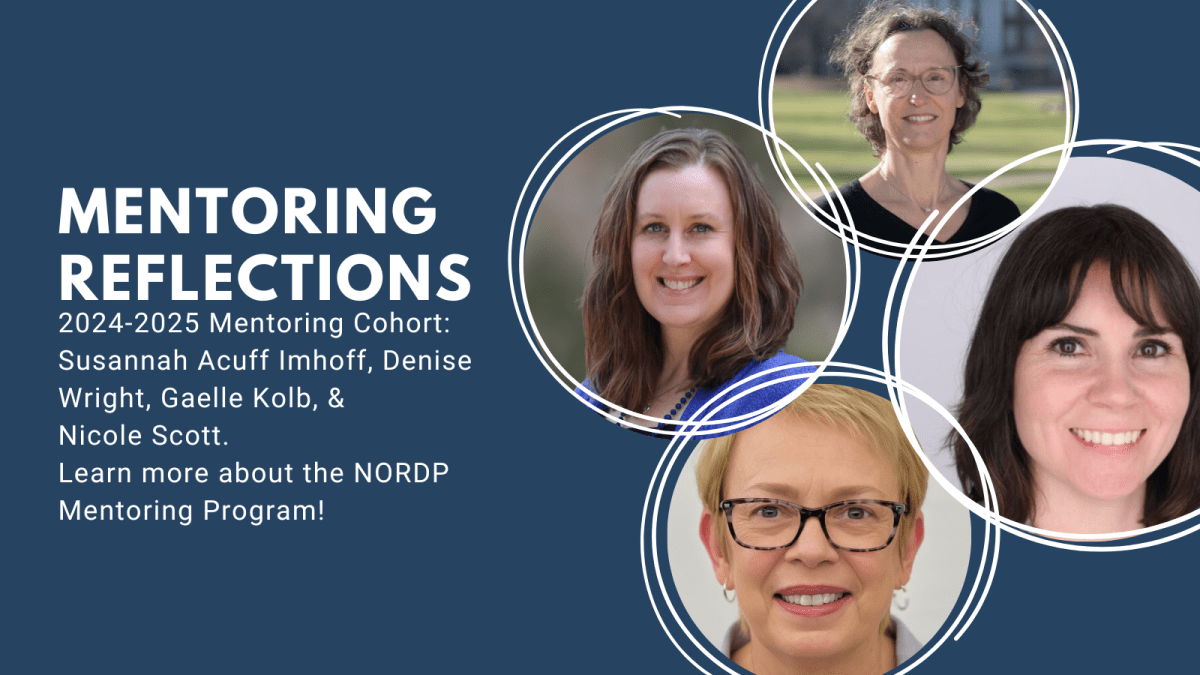
The program kicks off on July 1. Be sure to register by May 15 and mark your calendars for the NORDP Mentoring Program Orientation on Wednesday, June 25, from 1:00 to 2:30 PM ET. To inspire both new and returning participants, we’re excited to share insights from a 2024-2025 Mentoring Cohort, highlighting their motivations and appreciation for this unique format. Meet the cohort …
Susannah Acuff Imhoff
Susannah Acuff Imhoff (SAI) Susannah Acuff Imhoff manages Transcend Initiatives as Senior Associate Director of Research Development at Washington University in St. Louis, supporting interdisciplinary research networks and team science. Previously, she was Assistant Director of Research Development at Vanderbilt University, aiding faculty in strategy and proposal development. Her experience includes roles at the U.S. Pharmacopeia and in higher education, including teaching Cultural Anthropology. Susannah holds degrees from the University of Memphis.
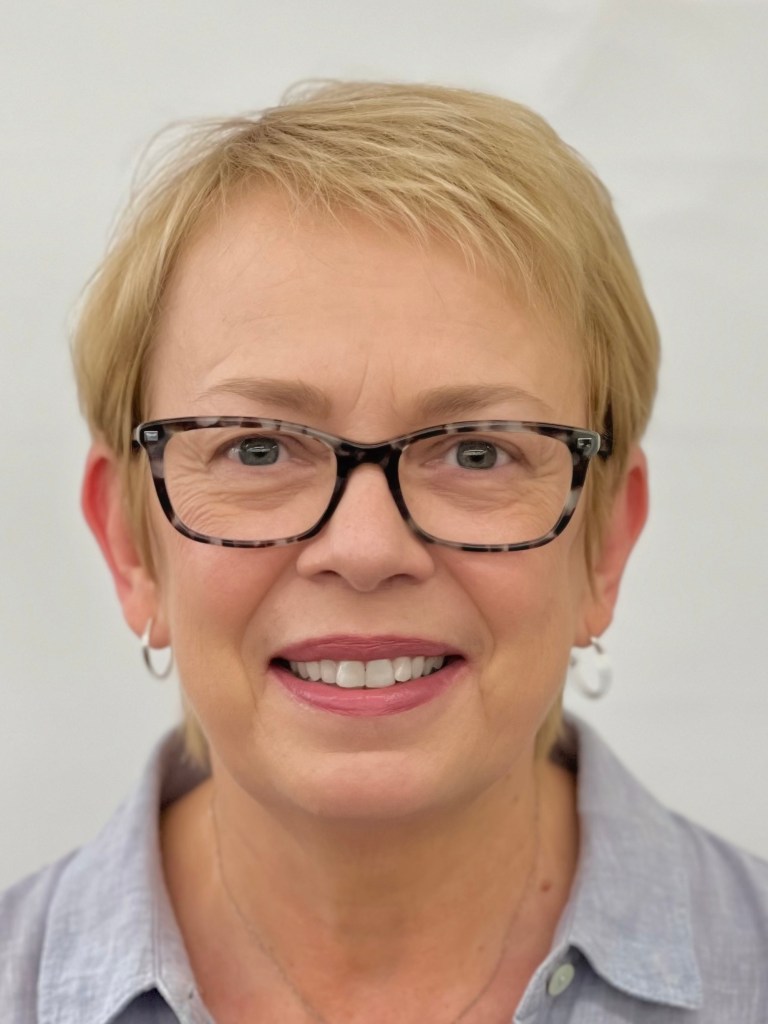
Denise E. Wright
Denise E. Wright (DW) is a Research Development Officer at Emory University, focusing on mega proposals and strategic initiatives. Her background includes higher education publishing with significant project management and editorial experience. Denise earned a PhD in History from the University of Georgia and a BS in Political Science from Kennesaw State University.
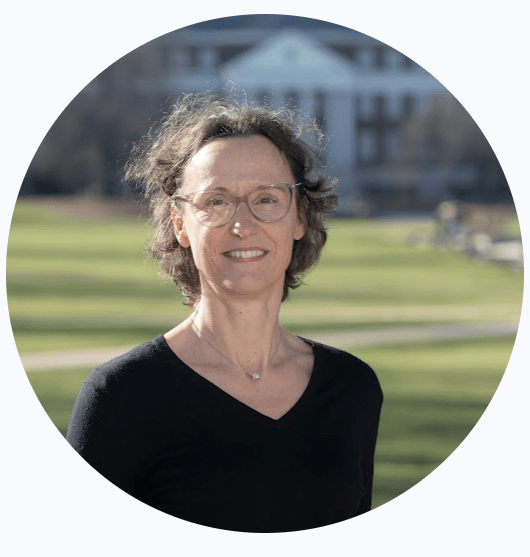
Gaelle F. Kolb
Gaelle F. Kolb (GK) is a Proposal Development Manager at the University of Maryland College Park, previously serving as Grants Development Specialist for Neuroscience and Cognitive Science. Earlier roles include positions at Johns Hopkins Medical Institutions and the National Institute for Allergy and Infectious Diseases (NIAID). Gaelle holds advanced degrees in Biology-Health from the University Victor Segalen in France and completed a postdoc at NIAID.
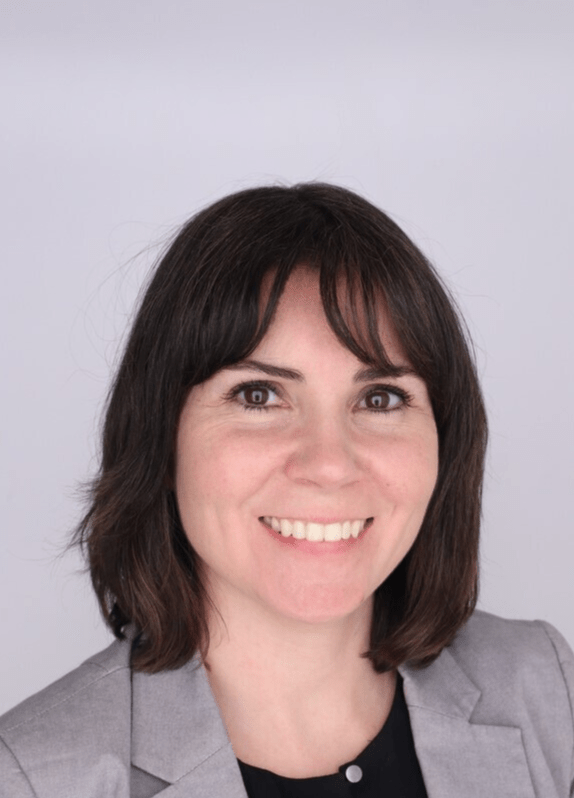
Nicole M. Scott
Nicole M. Scott (NS) is a Research Project Manager at Iowa State University, contributing to the new ResearchPOST unit that supports project management. Prior to this, she managed projects on individual grants at the university. Nicole holds degrees in biology from Iowa State, primatology from Roehampton University, and cognitive science.
Q1: What influenced you to apply to be a mentor and a mentee for the NORDP Mentoring Program? Why did you choose the cohort mentoring model?
Denise Wright (DW): I applied to be a mentee because, having served as both a mentor and mentee in other professional capacities, I recognize the value of peer mentoring. In August 2023, I was new to research development. After enrolling in RD101, I began to understand just how much I did not know. A mentoring cohort seemed the obvious place to gain from others’ experiences.
Gaelle Kolb (GK): Being a mentor myself to students and professionals I met in my previous career, I realized the need to find a mentor and mentoring group in which we can bounce ideas about my current professional aspirations. RD being so broad and so broadly interpreted, I feel that a cohort model is better for hearing more diverse voices.
Nicole Scott (NS): Being newer to NORDP, I knew there was a wealth of knowledge out there I could tap into to learn about the field quicker than if I had tried to pick it all up as I went. Being part of a cohort modeling meant that instead of learning from one person, I could learn from 3! And they have taught me so much!
Susannah Acuff Inhoff (SAI): I applied to be a mentor in the hope that some of the experience that I’ve gained through my years in RD could be of service to others who may be facing similar encounters or circumstances, and with the expectation of gaining my own new insights and perspectives from collegial relationships in RD outside of my pre-existing university orbits. I was excited to learn that I’d be mentoring a cohort in partnership with three other people.
Q2: Have you participated in a 1:1 mentoring model before? How has this experience been different or similar?
GK: Yes, I still meet regularly with my mentor who was my supervisor and retired a decade ago. Early on, our meetings were more focused on my career paths and professional preparation. Since our 1:1 mentoring has been ongoing for more than a decade, our relationship has evolved to share our passion for diverse cuisines.
NS: In other organizations, I’ve been both a mentor and a mentee in a 1:1 model. Being part of a cohort meant that there was less pressure on me to drive the conversation and I got to hear multiple perspectives.
SAI: I have participated in 1:1 in other fields, and informally in RD. I found the cohort model to be more robust in terms of the full group (including the mentor) benefiting from shared discussion and ideas. Together, I felt we could solve or make headway on any challenge, even those that may have been outside of my direct experience. It also felt self-sustaining and truly more of a partnership.
Q3: What was your favorite part about this cohort mentoring model?
DW: My favorite part is the community we have created. The members of our group have different job titles and areas of interest/specialty, but all are generous, thoughtful professionals. During this particularly trying time for anyone involved in the research enterprise in the U.S., this group has been a place to share information, commiserate about challenges, and seek advice from a trusted circle.
GK: Initially, I was fond of how different our professional roles looked. Now, after a few months, I really enjoy the natural way discussions pop up during our meetings. Our mentor is not directing any discussion with a set agenda allowing us to reflect and share in a natural way. I always look forward to our meetings!
NS: Getting to meet three fabulous people!
SAI: The camaraderie and sense that we are all checking in on and rooting for one another – and that every participant has incredible value to offer.
Q4: How has participation in the NORDP Mentoring Program helped broaden your horizons about Research Development in general and/or affected your daily work in particular?
DW: Because the members of our cohort have such varied specialties, I have a greater understanding of the diversity of roles within the research development community.
GK: It helped me make sense of why I felt that I was doing so many different jobs. I am also inspired by my mentor who shows great composure. I value my cohort very much as it opened my horizons on how much more we can do in RD and help shape my career ambitions.
NS: Participation in this group has broadened my horizons in RD by providing me with the space and access to others doing this work at other universities. There are so many ways to be successful in this area so hearing from others and how they are successful (or not) expands my toolbox and sparks new ideas.
SAI: I’ve applied much of my colleagues’ advice on everything from daily work-life balance to how to approach team science with different types of groups. It is confidence-building to realize that there is consensus on an approach because others have the same experience, for example, or to have access to a broader set of ideas on sensitive subjects that may relate to the profession but are too candid for certain professional forums outside of a mentoring relationship.
Q5: What surprised you about being a mentor or a mentee?
DW: There were no real surprises other than the pleasant one of finding that my cohort fell rather quickly into comfortable conversations.
GK: As a mentee, I am still learning and looking forward to learning more!
NS: I was surprised at how quickly we could fill an hour of conversation.
SAI: The reciprocal knowledge and friendship that grew naturally out of our shared support of one another.
Q6: Any words of wisdom or encouragement for those wanting to apply this year? Any other thoughts you would like to share?
DW: I would encourage anyone who, like me, is new to research development to join a mentoring cohort. By connecting with people outside your office and institution, you can begin to grasp just how multifaceted research development is. You’ll also develop professional relationships and may, if you’re as lucky as I have been, make some new friends.
GK: I would suggest a cohort model as it is professionally enriching to learn how RD looks at other institutions. I also like the geographic diversity of our group!
NS: My motto is “always learning.” There is always something new you can learn from someone else, no matter how experienced you are, and in mentor/mentee relationships that learning happens both ways.
SAI: I encourage folks to try, especially to try the cohort model! Your voice is needed. I think we all have a lot to offer that may not only be based on years of experience. Don’t hold back because there is a place for everyone. Those with a lot of RD experience can also benefit from participating in a cohort model as a mentee. It has enriched my professional experience. Through participation in our wider NORDP community, you will make it stronger and expand your own sense of purpose and place.
The 2025-26 NORDP Mentoring Program registration will close this Friday, May 16. Do not wait and complete your application today! Additional mentoring opportunities are available through the Peer Mentoring Groups that are open throughout the year via the WisdomShare platform.
An investment in mentoring is an investment in you!
 NORDP News