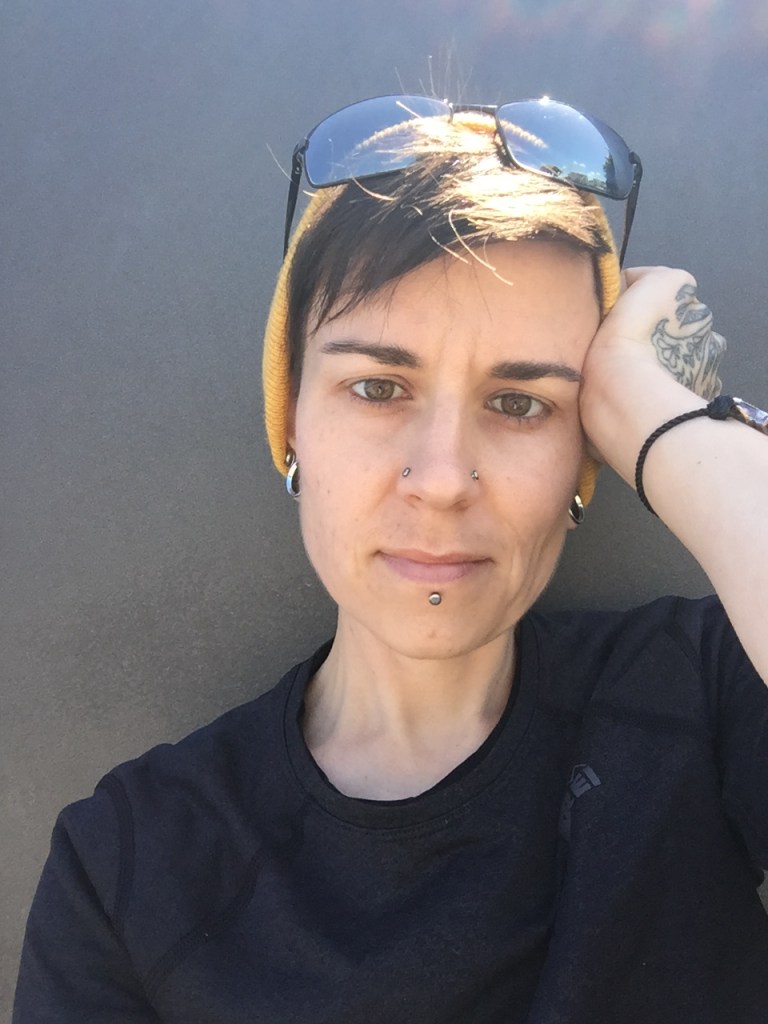
New Board Member Cameo

Carter Lea, PhD

Director of Proposal Development

The City College of New York (CCNY)

4.5 years in RD positions + more during PhD & postdocs

NORDP member for about four years

When and how did you enter the field? What kind of research development work do you do?

Like a lot of folks in RD, I kind of stumbled into it. I was in academia—did my PhD, then two postdocs—and realized what I really enjoyed wasn’t so much the day-to-day lab work, but the act of crafting proposals. I loved thinking through the research design, figuring out how to make it all happen, and, imagining all the fun things we could do with the right funding. Writing proposals just clicked for me. After watching faculty members spend more time on administrative tasks than actual research, I knew I didn’t want that. So, when a full-time RD position opened up at Tulane University in New Orleans, I made the leap to proposal development focused on federal agencies. I’ve very recently shifted to a new position at CCNY with a broader set of responsibilities, which I’m excited about.

One of my favorite parts of the job? The deadlines! There’s something so satisfying about having a hard stop and knowing that once a proposal is submitted, it’s finished. No endless revisions. Just done. It’s kind of perfect for my personality.

What’s your history with NORDP? How have you engaged with the organization (committee work, conferences attended/presented)?

I joined NORDP shortly after starting at Tulane. Honestly, I don’t remember exactly when (because…COVID), but it was probably within the first couple of months of being hired. I was encouraged to get involved with the Committee on Inclusive Excellence (CIE) after I spoke up during a breakout session at a NORDP event. I honestly don’t remember the details, but Gretchen Kiser reached out, and I’ve been with the committee ever since. I haven’t presented at a NORDP conference yet but have aspirations. I’ve been thinking about leading a workshop on visualizations—something that I think is missing in a lot of proposal writing. My goal is to show how design principles can elevate a proposal, making it not just technically sound but also engaging and visually appealing. We’re not just writing for the brain; we’re also writing for the heart, and I want to help people craft proposals that spark excitement and interest in the reader.

What motivated you to run for the NORDP Board?

Funny story—running for the board wasn’t really on my radar. It was Samar Sengupta who nominated me, so she’s the one to blame! We had a few conversations about it, and she convinced me that my perspective would be valuable to the board. I think it’s because I come at things with a mix of design thinking and a focus on social justice.

RD is such an interdisciplinary field, and that’s part of what I love about it. We don’t have to stay in our silos. I can work with a biomedical engineer one day and someone from literary history the next. I think it gives us this unique opportunity to influence scholarship in a broader sense, and being on the board means I can help shape how NORDP moves forward, especially as the organization grows.

What are you most excited about as a new NORDP Board member?

For me, it’s all about pushing new ideas. I’m really excited to bring more focus on design thinking into RD—creating proposals that not only communicate ideas but do so in a way that’s visually engaging. I also think we need to be more critical when it comes to AI. There’s a lot of buzz around it, but I’m particularly concerned about how we might start relying on large language models for things like writing letters of support. We need to think about the ethical implications before we just dive in.

NORDP is at this interesting inflection point. We’re not quite a “small” organization anymore, but we’re also not a giant, well-established one, either. It’s a bit of an awkward growing phase, but it’s also a huge opportunity. I’m looking forward to helping us navigate that growth in a sustainable and resilient way, making sure we’re adaptable to the changes happening across academia and research funding.

Anything else you’d like to add?

I guess the big thing on my mind is resilience. The way research funding and academia operate right now feels… precarious. I don’t have a crystal ball, so I can’t say what the world will look like in five or ten years, but I think we need to be ready for big shifts. If I can help bring some new ideas to the table that make NORDP and the RD community more adaptable, that’s what I’d love to contribute.
Kicking Off the 2025-2026 NORDP Mentoring Program Year in Style

Vessela Vassileva-Clarke, Co-Chair of the NORDP Mentoring Committee 

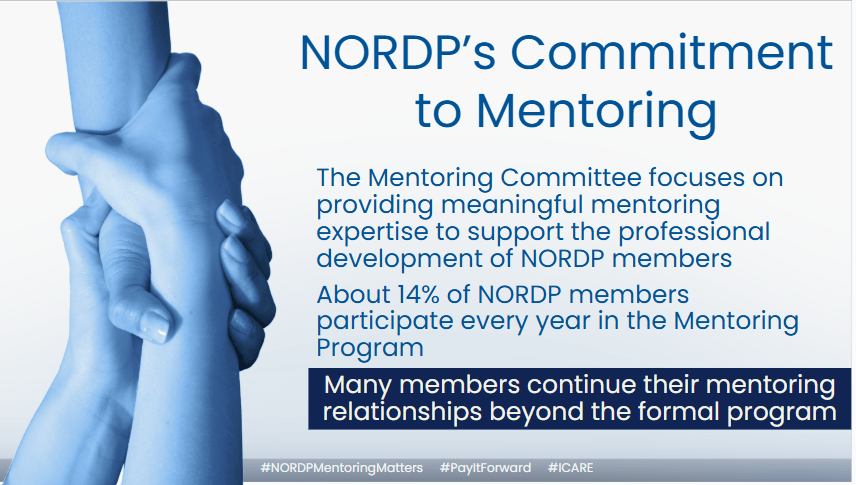
Fall marks an exciting start to a new mentoring cycle at NORDP! The 2025-2026 mentoring year runs from July through June, and we’re thrilled to welcome all mentors and mentees—whether matched in a dyad or part of a mentoring cohort—into this year’s program.

The June 25 Mentor Program Orientation featured this year’s NORDP Mentoring Award recipient and Mentoring Committee Co-Chair, Angela Jordon.  New and returning participants were introduced to the program and joined breakout sessions based on their role—mentor or mentee—and format—dyad or cohort—to learn more about what to expect in the year ahead.

Behind the scenes, the Mentoring Committee, including the Match Team and the Mentoring Leadership Team, has worked diligently to make that stellar start possible. Updating our WisdomShare platform, opening the application window, carefully reviewing and confirming matches to ensure the best possible pairings for all participants, answering numerous emails about program registration, mentoring profiles, etc., are just a few of the tasks they completed. On behalf of both current and past NORDP Mentor Program participants, we extend our heartfelt appreciation and thank them for making the entire process feel easy and seamless!

We are especially excited to continue our mentoring cohorts, now in their fourth year! In this model, three mentees are matched with one mentor, creating a small community for ongoing peer‑mentoring discussions. Thank you to the many dedicated individuals who volunteered to serve as mentors—whether in dyads or cohorts—this year. Your willingness to share your time and expertise makes this program thrive.

Tips for New Mentors and Mentees

If you’re just getting started, here are a few quick tips to help you make the most of your experience:

  • Log in to WisdomShare for your mentor/mentee’s contact information, messaging tools, and suggested milestones
  • Explore the Learning tab in WisdomShare for guidance on where to begin
  • Visit your WisdomShare Dashboard to find active Peer Mentoring Groups (PMGs), and join the ones that interest you—no matching is required for PMGs!
  • If your mentor or mentee(s) hasn’t reached out yet, don’t wait—take the initiative to connect! There’s no single “right” way to engage
  • Attend the monthly Mentoring Committee Meetings (3rd Thursday of the month all year) to learn the latest mentoring news and share your mentoring experiences and ideas with a group of NORDP members who are truly into mentoring
  • Watch for upcoming McHuddles—informal gatherings hosted by Mentoring Committee facilitators where you can share ideas, ask questions, and learn from others through supportive and fun interactions 
  • Have questions, concerns, or suggestions? Reach out to us anytime at mentorprogram@nordp.org

Share Your Story!

The Mentoring Committee is always looking to highlight mentoring experiences. If you were part of a 2024–25 mentoring dyad or cohort and would like to share your story in a future blog post, please contact the McMc team at mentorprogram@nordp.org.

Here’s to a successful and inspiring 2025-2026 mentoring year—thank you for being part of it!

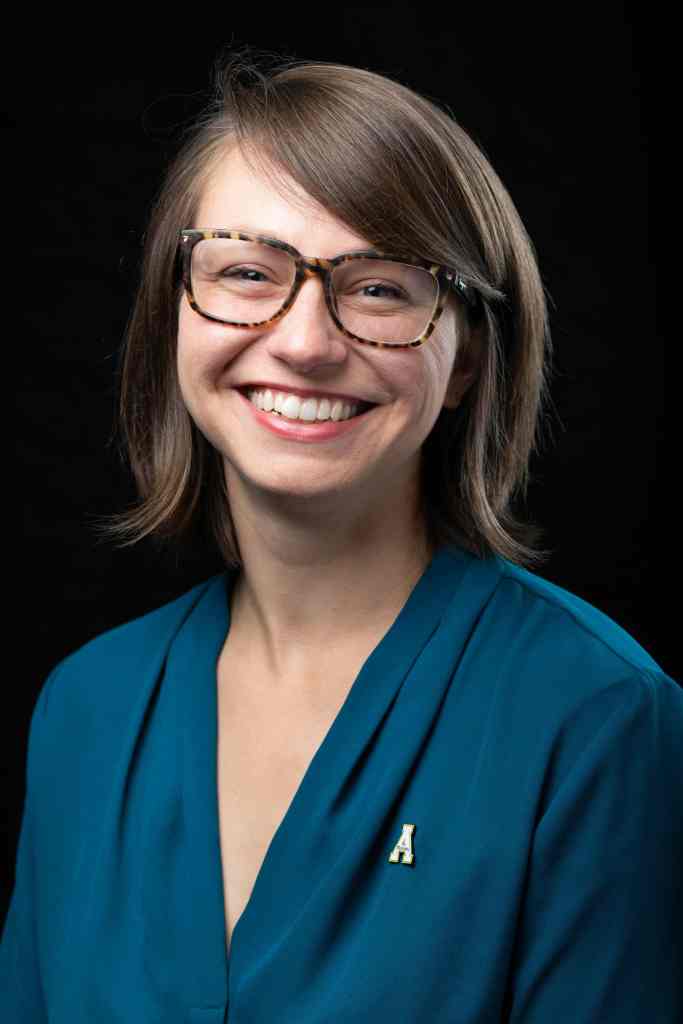
New Board Member Cameo

Katie Shoaf, PhD

Appalachian State University

Ten years in Research Development

NORDP member for eight years

When and how did you enter the field?

May 2015 as the Assistant Director of Grants Resources and Services (GRS), I’m now the Associate Director of GRS.

What kind of research development work do you do?

I work on all areas of RD: disseminating funding opportunities, workshops, internal competitions, proposal research development. I currently work on larger-scale, institutional initiatives and collaborative research support primarily. We started as an office of two and are now up to four full time employees in our research development unit (GRS).

What’s your history and involvement with NORDP?

In 2017, I joined the organization and immediately got involved with the Professional Development Committing and the Mentoring Committee. I’ve recently stepped down from the PD committee due to board duties but am still involved with the mentoring committee peer mentoring activities and as a convenor. I was a Conference Co-Chair in 2020/2021 & 2021/2022 and Co-chaired the Virtual Recon Conference in the fall of 2023. I have been part of the RD101 leadership team since 2018/2019 and am currently involved with the development of RD200 series (pilot was just concluded last fall).I was also one of the original developers of the LEAD (Leadership, Engagement, And Development.) program, it runs an annual cohort and fireside career chats came out of this. And finally, most recently, I was elected to the NORDP Board in 2024!

What motivated you to run for the NORDP Board?

I had been nominated multiple times and ran once in the past, but I was not elected. I decided that once I had finished my PhD I would run again. And this time, I was elected! I was motivated to run for the board because I wanted to continue being of service to NORDP. This is also a great opportunity to continue growing in a leadership role.

What are you most excited about as a new NORDP Board member?

I’m excited about getting to work on the strategic pillar driving activities to move the organization forward. I look forward to being involved and seeing results as I’ve just started my four-year board appointment. 

The strategic pillars are as follows: 

  1. Cultivating Volunteer Opportunities for Growth
  2. Future-Proofing Core Infrastructure for Sustainability
  3. Defining & Positioning RD & NORDP to Partners
  4. Catalyzing Coordinated Strategies to Promote Equity & Inclusion

Would you like to leave our readers with any last thoughts?

Joining and being a part of NORDP has been one of the best decisions… Look for opportunities to engage that are meaningful to you!

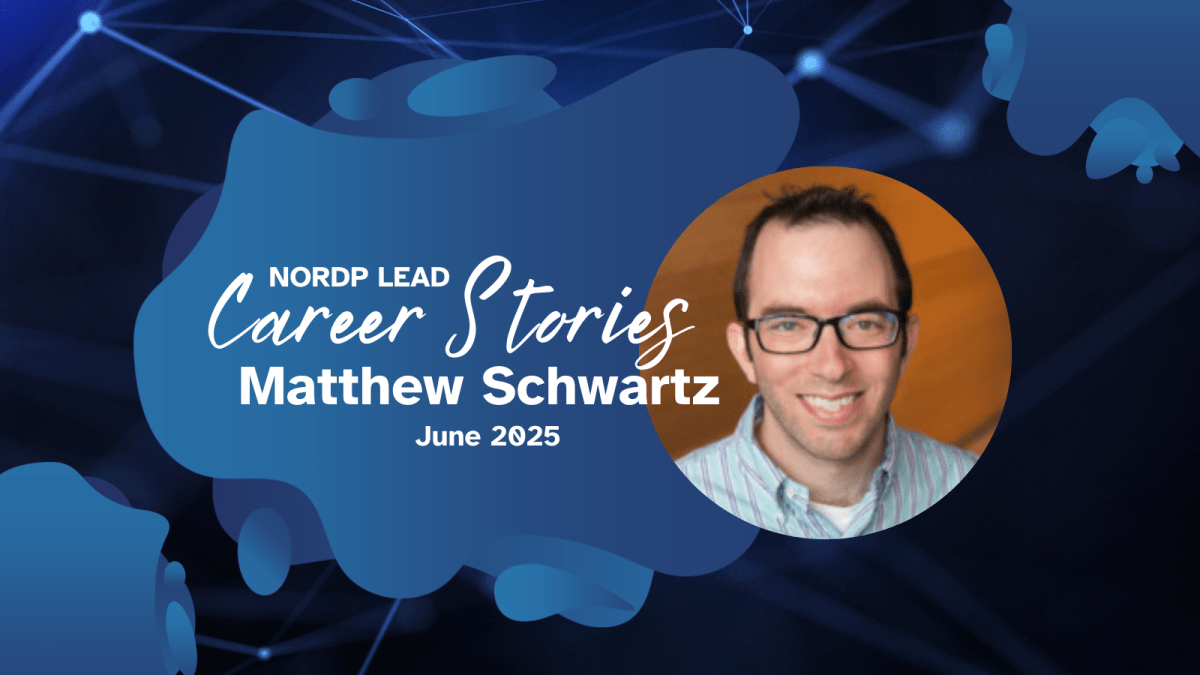
June 2025 Career Stories featured Matthew Schwartz, PhD, at University of Massachusetts Chan Medical School

Written by: Roshni Singh Career Stories team

Faculty Development Curriculum and Mentorship Networks

Matthew Schwartz

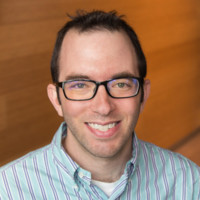
For June career stories, we interviewed Matthew Schwartz, PhD, who redefines what it means to support early-career faculty, building faculty development programming and mentorship networks to support academic success at UMass Chan Medical School. Matt is Senior Program Manager for Faculty Development in the Investigator Career Advancement Program (iCAP) at UMass Chan Medical School’s Office of Health Equity. At UMass Chan, Matt’s main responsibility is to design, manage, facilitate, and evaluate faculty development programs and mentorship activities aimed at enhancing the productivity, satisfaction, retention, and success of early-career research faculty, particularly those from groups historically underrepresented in science.

Certified as a facilitator by the Center for the Improvement of Mentored Experiences in Research (CIMER) and a graduate of both Ciencia Puerto Rico’s inaugural Inclusive and Reflexive Facilitation Fellowship and the 2025 Linton-Poodry SACNAS Leadership Institute, Dr. Schwartz is a national leader in faculty development and mentorship. He is an active member of NORDP, where he organizes the Faculty Development Peer Mentoring Group and serves on both the Mentor Training Team and Mentoring Committee. Fifteen-Twenty NORDP members regularly participate in monthly meetings of the Faculty Development Peer Mentoring Group, and any NORDP member is welcome to participate by signing up via WisdomShare. This Spring, along with several members of the Mentor Training Team, he facilitated a CIMER training through NORDP to further elevate mentorship practices by NORDP members across institutions.

Dr. Schwartz brings a wealth of experience to his role. He holds a PhD in Genetics and Genomics from Harvard University and a BA in Biological Sciences from Northwestern University. His academic career began as an Assistant Teaching Professor at Simmons University, where he also collaborated with the Center for Faculty Excellence, under the leadership of Dr. Jennifer Herman, as the Faculty Fellow for Teaching Excellence. Early on, he recognized a passion for creating systemic changes in academia through faculty development, curriculum innovation, and mentorship after a transformational experience as a participant in a Summer Teaching Institute at Simmons. Since then, at UMass Chan, he has been leading the creation and implementation of a holistic, tailored faculty development curriculum to support the success of four successive cohorts of early-career research-focused faculty.

Dr. Schwartz has led over 75 professional development workshops, incorporating active learning techniques such as case study analysis and role play, reflective practices, and restorative justice principles to facilitate authentic conversations and create transformational faculty development experiences. He regularly collects faculty feedback for continuous improvement of iCAP and to ensure he is meeting faculty needs. With 2-hour iCAP sessions every two to three weeks, some outsiders express concerns about taking up too much faculty time, but the effect is the opposite, with iCAP participants noting how much time they are saving later because of iCAP’s support for advancing their careers and learning how to effectively lead their research groups.

When asked to distinguish between faculty development and research development, Dr. Schwartz shares: “Faculty development takes a holistic view—it’s about mentorship, career development, and fostering belonging and wellbeing in addition to research development skills like proposal writing, managing budgets, and navigating collaboration.”  He regularly uses his research development skills, however, to dig in, understand the literature, and apply evidence-based best practices in creating both the structure of iCAP’s cohort-based peer mentorship group, and for all of the faculty development sessions he develops, on topics ranging from research mentor training to navigating difficult conversations, effective networking, and fostering wellbeing.

Focusing on mentorship, Dr. Schwartz believes in building networks, supporting faculty in identifying and filling gaps in their mentorship networks, and cultivating his own large network of people whom he can consult and who can support his own career success and development.

Dr. Schwartz is happy to answer any questions you have and especially encourages readers to reach out to him if they are looking for mentorship and support in creating their own faculty development initiatives. Please feel free to contact him at matthew.schwartz3@umassmed.edu.

To listen to his full interview by the career/kindle team, please click on this link (you must log in as a NORDP member to access): https://nordp.org/store/viewproduct.aspx?id=24459276; Chapter 48: Matthew Schwartz