
NORDP 2022 Keynote: Dr. Susan Renoe Champions Impact

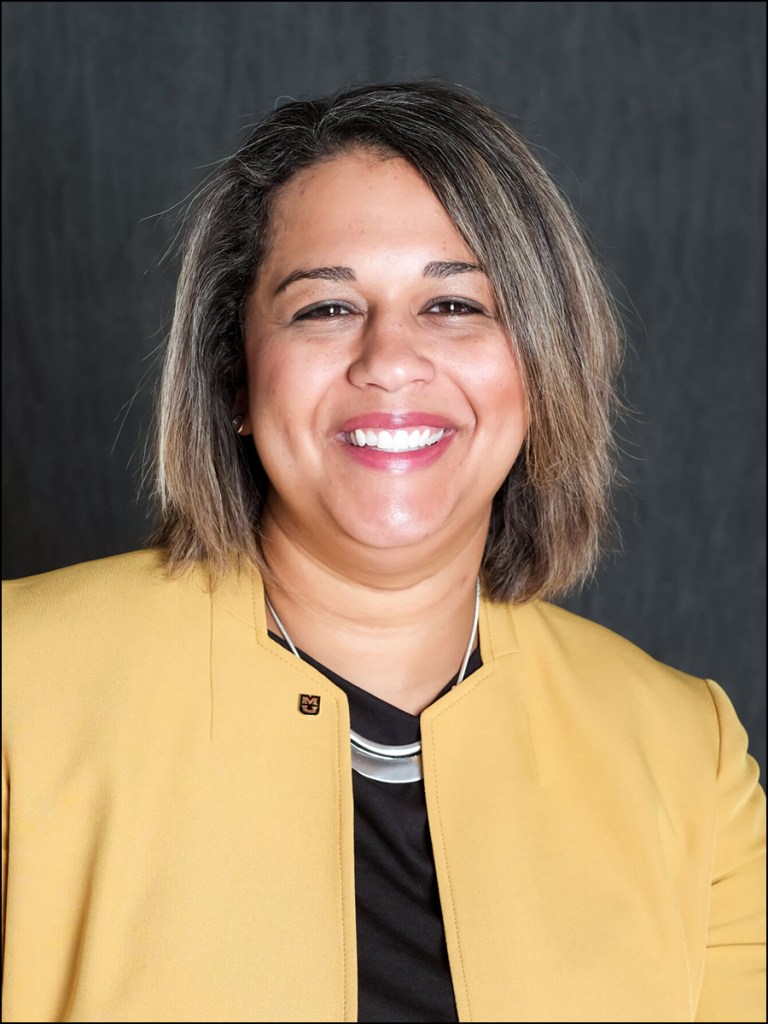
Susan Renoe, NORDP April 25 Keynote Speaker

“Impact” is a word that has come to define Dr. Susan Renoe’s career. Currently the Associate Vice Chancellor for Research, Extension, & Engagement at the University of Missouri, Renoe also serves as the Executive Director of the NSF-funded Center for Advancing Research Impact in Society (ARIS). In fact, Renoe has been working in the impact space since before she even realized that what she was doing was broader impacts work. “When I tell people that I’ve been doing broader impacts for more than 20 years, it’s because I was doing it as a graduate student, recalls Renoe. “I just didn’t know that’s what it was.” 

Renoe will deliver the 2022 NORDP Conference keynote address, entitled Broader Impacts: A Strategy for Research Development. In her remarks, she will provide a brief overview of ARIS, highlight the ARIS-NORDP partnership that began in fall 2021, and explore the ways in which universities are using broader impacts to support proposal development and enhance societal impact. 

While a partnership between NORDP and ARIS was formalized last fall, Renoe notes that the two organizations share a connection that goes back much farther – all the way to the National Alliance for Broader Impacts (NABI), the predecessor to ARIS. As a founding member of NABI, Renoe recalls, “NORDP was the model for NABI. When we first got together to write the grant and to think about our approach to building a network, we met with NORDP leadership to really think about what made sense organizationally. Those conversations were instrumental in helping us get off the ground.” 

Throughout her career, Renoe has witnessed firsthand the connections between research development and research impact. “For me, broader impacts and research development are inextricably linked. I came to research development through broader impacts. On our own campus, our broader impacts work has been championed, in part, because it fits the research development mission. Being able to connect communities and researchers together really strengthens a proposal and increases its chance of getting funding. All agencies have some funding mechanisms that support what we think of as broader impacts, whether it’s training grants, K-12 outreach, or broadening participation. I see it as an additional revenue stream to grow research expenditures. In that way, it really is underpinning a lot of what we do in research development.” 

Renoe describes ARIS as a big-tent organization. “The types of people who are involved in ARIS are very broad, and we keep it that way on purpose.” she noted. “We cast a wide net for ARIS because we recognize that the path for broader impacts support is very wide and includes a lot of different people, and we want people to be able to see themselves in areas but also to contribute to the conversation.” As the partnership between NORDP and ARIS develops, Renoe hopes that members will see themselves and their work reflected within both organizations. “What we want is for people to be able to seamlessly move between these two worlds and get what they need, and feel like, ‘I’m at home within NORDP, but I’m also at home within ARIS.’” 

When it comes to institutional alignment of research development and research impact, Renoe is excited about what the future holds. “We’re seeing more and more offices of research and innovation, research impact, and research and engagement. And I think that’s encouraging. I also see just working with new faculty that our early career faculty are coming in wanting to be more engaged. They want to have work that is meaningful. They want to have do research that has an impact on communities.” 
NORDP 2022 Plenary: Dr. Sherilynn Black Identifies Solutions and Spurs Action Toward Achieving Equity 

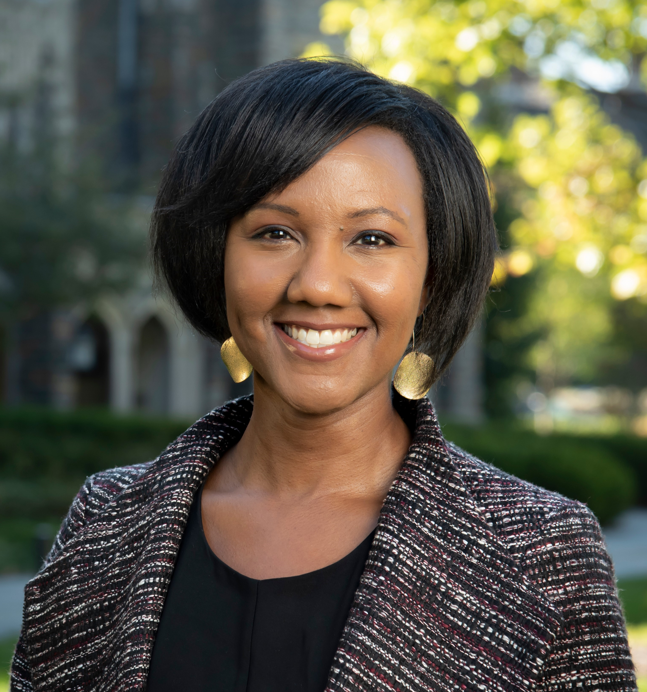
Sherilynn Black, NORDP April 27 Plenary Speaker

An unyielding commitment to equity and inclusion has been a through-line of Dr. Sherilynn Black’s career, from her graduate training as a neurobiologist to her current position as Associate Vice Provost for Faculty Advancement at Duke University. “I always had a desire to contribute to the scientific workforce in a way that was led by my values, and also led by a desire to expand knowledge and to expand people’s ability to understand and have access to science,” noted Black, reflecting on her professional journey, which has combined neuroscience, human behavior, higher education administration, and diversity work. 

Black will give a plenary address to NORDP conference attendees entitled Examining Barriers and Identifying Solutions Toward Achieving Equity in STEM. In her remarks, she will explore the ways in which research development professionals can empower themselves and their colleagues to promote equity within their institutional environments and offer practical and easily adoptable steps toward changing systems and structures in academic organizations.  

Black’s current work, which has been funded by HHMI, NIH, and Burroughs Wellcome Fund (among others), focuses on developing and measuring the effectiveness of interventions designed to promote diversity in academia. When asked about the ways in which her research interests have evolved she responded, “I was still interested in doing research, but wanted to do it in a way that really touched on the areas that were very important to me. I ended up transitioning from basic neuroscience to social neuroscience and then started focusing on race and equity more specifically.” As for how her research has informed her work as an administrator, Black points out, “My work is to design interventions. I study large scale datasets and look at the ways to design interventions to shift human behaviors towards equity. So, for me, the research that I do ties in very closely with a lot of the administrative roles I’ve held.” 

While the connection between Black’s neurobiology background and her current research might not seem intuitive at first blush, the connection is clear to her. “To me, as a scientist, thinking about academia as an ecosystem is no different than thinking about a biological structure. Using statistical models has helped me learn how variables interact with one another. If you change one element of a model, how will it affect the downstream indicators of the rest of the model?” And Black is a strong proponent of applying the same rigorous scientific approach to her current work that she brought to the bench as a graduate student and postdoctoral researcher, noting,” I think a lot of times when it comes to work on diversity and equity topics people go off of their gut, or they see a successful initiative somewhere else, and they try to apply it locally without any contextual knowledge or evidence that it will be effective. They are not informed by the literature or by scholarly expertise. I like to use data to inform the practices that I develop for interventions. And I really do think that’s a big part of why they’ve been successful – because they’re evidence-based methodologies that are focused extensively on understanding the contextual knowledge, understanding the affective parts of motivation and behavior, and understanding the desired outcomes.” 

Black views research development professionals and other academic staff as vital changemakers within their institutions when it comes to promoting a culture of inclusivity noting, “Research development professionals are critical for this work, because they are the ones who can create the culture, tone, and climate of training and work environments. Often times, students cycle in and out, and faculty may come and go, but staff play a critical role because they are often the longitudinal forces creating the culture that others cycle through.” 

As Black is well aware, the hierarchy that can exist within academic institutions and companies alike can make changing the culture a challenging endeavor. “Ultimately, hierarchy can lead to a strong desire to cling to different norms for self-preservation. Anything that disrupts positionality or disrupts power structures can lead to challenges when you’re thinking about equity.” But despite these challenges, she notes the imperative for institutional change, stating “If the culture and climate is not one that allows all individuals to thrive, we will continue to see underrepresentation and attrition, or we will bring in scientists who have to assimilate to the current inequitable environment to survive. This means that we’re actually losing the benefit of the diversity that we sought to recruit in in the first place. Science will not be the best that it can be, and we won’t be as strong or as innovative of a field.” 

Above all else, Black hopes that plenary attendees will come away with a sense of empowerment to step up at their own institutions. “I think that the more we create spaces where people feel that they have the agency and the right to speak up on what’s right and wrong, and the more that we all agree to subscribe to the norm that every person has the right to thrive and excel. That includes all students, faculty and staff.  I think this will help more scientists to feel like they have the power to speak up when they see something going on.” 

Member Services Committee Recommended Awards

Earlier this year the Member Services Committee (MSC) organized a competition for established Regional and Affinity groups and recommended awards to a variety of groups. The intention of the competition was to assist groups with retention, recruitment, and engagement of members throughout NORDP.

The PUI Affinity Group’s project, Landscape of Research Development (RD) at Predominantly Undergraduate Institutions (PUIs), is using mixed-method data collection and analysis to examine the unique identity of RD staff at PUI’s. The initiative will fund a graduate student to analyze survey data collected in summer 2021 and provide incentives for focus groups in the Spring & Summer that will provide qualitative data to complement the survey. The ultimate plan is to prepare a white paper to be shared within NORDP and a draft manuscript for peer-review and outside distribution.

If you are interested in learning more about the PUI Affinity Group’s work please contact Kara Luckey at kluckey@seattleu.edu.

The Great Lakes Region received support for their annual retreat that was held in January. The event had 30 attendees from 17 organizations with the theme Wellness and Diversity, Equity, Inclusion, and Belonging (DEIB). Attendees heard from a guest speaker, Denise Williams, Ph. D, who discussed How Trust Levels and “Thinking Traps” Influence Work Team Engagement and Effectiveness, followed by a group discussion on approaches to DEIB at the attendees’ institutions. In an effort to maintain longer-term member engagement the region has also created a book club and provided books to ten members (by random drawing). More details about the retreat can be found here.

If you are interested in getting involved with the Great Lakes regional group please contact Ellen Freeman at efreeman@umn.edu.

The Northeast Region’s initiative is planning to examine Justice-Equity-Diversity-Inclusion + Belonging (JEDI+B) related to RD units and DEI units. The group hopes to examine questions such as, “How can RD professionals be given RD-specific allyship training? Can we design a toolkit to be used at the institutional level to enable RD-DEI collaboration best practices intramurally? Can we build an inter-institutional regional strategy? How can we diversify the RD community itself?” NORDP-NE hopes to work with representatives from the National Association of Diversity Officers in Higher Education (NADOHE) and other groups to adapt and modify a multi-institutional climate survey that will complement NORDP’s overall CIE survey. Ultimately the plan is to share the survey with NORDP-NE members and provide insights to the region and NORDP as a whole to help recruit, retain and engage members. 

If you are interested in learning more about this initiative please contact Mariah Nobrega at m.nobrega@northeastern.edu

Elizabeth Festa, co-chair of MSC, said, “We are excited by the innovative way in which these three groups have rooted their engagement efforts in research inquiry as well as diversity, equity, and inclusion. Their events and projects will contribute not only to advancing knowledge in the field of RD but to embodying the values of NORDP. “

Compiled by Daniel Campbell, Member Services Committee