NORDP Liaison Report: Advancing Research Impact in Society (ARIS)

photoKPatten
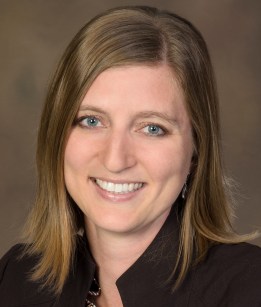
Kim Patten

With a holistic view of the research life cycle and an emphasis on societal impacts of research, Kim Patten, director of Research Development Services, leads a team of RD professionals at the University of Arizona (UArizona). She also serves as a NORDP Strategic Alliances Liaison to ARIS, an organization formerly known as the National Alliance for Broader Impacts (NABI).

Patten, who joined NORDP in 2014, became a NORDP liaison to ARIS in late 2019. She hoped to attend their national conference in 2019 as it was located in Tucson, AZ (home to UArizona). However, the ARIS conference was scheduled at the same time of the NORDP conference, so she had to miss it but was able to send members of the UArizona RD team. In this time of COVID-19, her liaison work so far has been simple but informative conversations via phone or Zoom.
photoJFields
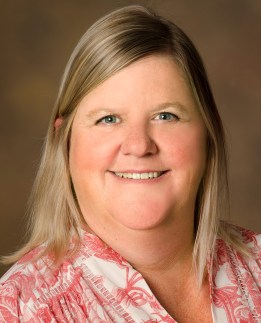
Jennifer Fields

She admits some of this has been a bit self-serving, helping support the launch of a new Office of Societal Impacts at UArizona.  In Nov. 2019, RD professional Jen Fields transitioned from the Research Development unit to director of the Office of Societal Impacts. Fields was able to present at the 2020 ARIS virtual conference and currently sits on the ARIS Leadership Council. Patten and Fields’ units continue collaborating together in support of high-quality proposals demonstrating a synergy between support units.

“The societal impact of research has been one of our university’s priorities for a while,” Patten says, noting that she serves a Hispanic-Serving Institution (HSI), which is defined by federal law.  For example, UArizona maintains both a Hispanic Serving Initiatives Office and a Native Peoples Technical Assistance Office, which serves individuals from 22 sovereign federally designated tribal nations as well as the individuals wishing to conduct research in collaboration with the nations.

“In the future, I look forward to deeper engagement with our ARIS colleagues, seeking opportunities to co-present and inform best practices,” Patten says. In fact, ARIS will be presenting a 90-minute session titled, “Incorporating Societal Impacts into Proposal Development” on Monday, September 14, 2020 at 2pm EDT as part of the Virtual NORDP 2020.

Her passion for societal impact has been nurtured throughout her career.  She was previously associate director of the Arizona Geological Survey, where she managed a DOE Center and was CoPI on an NSF community engagement project. She began her career at a science-based non-profit and has a master’s degree in environmental planning and resource management.

In addition to serving the Strategic Alliances Committee as a liaison, Patten is chair of the nominating committee, having served on that committee for four years. She also has participated as both mentor and mentee, and is a member of the Leadership and Career & Professional Development Peer Mentoring Group.

Patten encourages NORDP members to consider becoming a liaison to a group important to them. “Be passionate about the organization you want to liaise with.  In addition to building new relationships with the partner organization, this is an excellent opportunity for you to get more familiar with NORDP,” she says.

For more information about the NORDP Strategic Alliances Liaison Program, visit the committee page https://www.nordp.org/nordp-liaison.

Compiled by Sharon Pound, Strategic Alliances Committee

NORDP fosters a culture of inclusive excellence by actively promoting and supporting diversity, inclusion and equity in all its forms to expand our worldview, enrich our work, and elevate our profession.
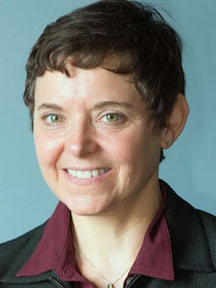
New Board Member Cameo: Anne Maglia

Anne_Maglia_headshot

Who: Anne Maglia, PhD, Associate Vice Chancellor for Research
Where: University of Massachusetts Lowell
Number of Years in RD: 12
Length of NORDP Membership: 4.5

When and how did you enter the field? What kind of RD work do you do?

Prior to my role at the University of Massachusetts Lowell, I spent six years at the National Science Foundation, as a science adviser and program director. The majority of my work at NSF was RD related, things like helping people write grants and managing portfolios of funding.  Also, with my research in bioinformatics and evolutionary biology, I had my own successes in grant writing and funding.

My current position encompasses four main areas: research integrity, research administration, research communications, and research development. The RD core includes a small team that facilitates team science and large proposal development, runs faculty development events, and develops social media, written communication, and on-campus events about research.  We also oversee the internal seed funding programs and assign contracted grant writers for our faculty. In addition, I provide administrative oversight for about 24 centers and institutes.  As a certified project management professional (PMP), my background in project management comes out no matter what, especially as we work in RD to bring together groups of people strategically and efficiently.

What’s your history with NORDP? How have you engaged with the organization (committee work, conferences attended/presented)?

When I first joined UMass Lowell, I saw so much opportunity to help the Research and Innovation group build our funding portfolio. I wanted to leverage my knowledge of federal agencies and funding priorities, and upon joining NORDP and reading more about RD, I worked with Julie Chen, my boss, the Vice Chancellor for Research to centralize and formalize our research development activities. It took about a year, and we created a new unit called Research Support Services and hired into four new positions.

My roles with NORDP largely include presenting at meetings and mentoring; I have two mentees this year. I’ve presented several times at NORDP’s annual conference and NE Region meetings, and my group co-hosted the virtual regional meetings this year. Since joining NORDP, I’ve generally become more active in advocating for research development; for example, I’ve developed a three-week summer writing course, several grant writing workshops, and a website with short videos such as “How to Talk to Program Officers,” and “How to Write Your Synergistic Activity Section” that have been well received

What relationships have you built as a result of NORDP (new colleagues, connections to institutions where you previously had no point of contact)?

My NORDP relationships have been built through involvement with the NE Region group, especially leaders like Kathy Cataneo who has been an incredible mentor to me, and meeting NORDP members like Sharon Pound at the annual conference. Sharon presented a poster on project management in RD, and I was so excited to see another PMP that we started talking immediately, and subsequently co-presented a workshop at the 2019 annual conference. Going to meetings, jumping into committees, giving collaborative presentations, and working in small groups has been very easy. Everyone in NORDP is so dang friendly and very supportive!

Presenting at the project management workshop with Sharon gave us both a lot of visibility. I met a lot of NORDP colleagues after that, which, as an introvert, is not very easy!  I’ve come to be an evangelist for using formalized project management skills in RD because of the opportunities it presents. There’s such a close link between RD and PM, and as careers shift, the project management skills can provide opportunities. This year I developed and taught a course in the UMass Lowell Project Management Certificate program on Project Management for Researchers, which had about 20 researchers and RD professionals enrolled.

What are you most excited about as a board member?

NORDP introduced me to the finer aspects of the field of research development. Although I had been doing RD, I didn’t know I was doing RD until I joined NORDP.  I want to help with outreach to other professionals who are doing RD but may not know about NORDP. I spent time as faculty at smaller institutions where people were doing RD without knowing it.  NORDP has further opportunities for inclusion and equity by reaching out to those schools where vice provosts, deans, center directors, project managers, and department chairs are doing the RD and could benefit from our NORDP community and resources.

While I haven’t been a member of NORDP for long, I felt that serving on the Board now, while my NSF experiences are still fresh in my mind and my relationships are still strong, provided a unique opportunity to build partnerships. There is a lot of overlap with the best practices promoted by NSF and NORDP, and we should explore opportunities to build closer connections with federal funders by collaborating with them on joint workshops, webinars, and trainings.

Compiled by Sharon Pound, Communications Working Group

NORDP fosters a culture of inclusive excellence by actively promoting and supporting diversity, inclusion and equity in all its forms to expand our worldview, enrich our work, and elevate our profession.

Rising Star Award Cameo: Daniel Campbell

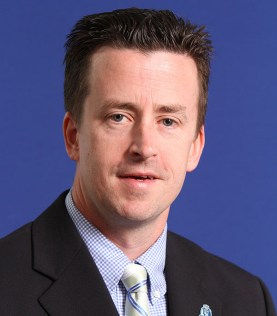
Campbell Photo2Who: Daniel Campbell, Research Development Program Manager
Where: Old Dominion University Office of Research
Number of years in research development: 6
Length of NORDP membership: 6

What recommendations do you have for members to get more involved with NORDP?

I would suggest looking for opportunities to get involved on a committee, create a poster, or present at a national or regional conference.  If you have an idea, bring it to a committee or someone in leadership. There is sure to be someone who would be interested in working with you on it. Whatever your area of interest, there is something for you here.  From regional involvement to mentoring to webinars, there is always something happening at NORDP that could benefit from your time and talent.

How has your service to NORDP enhanced your career?

After working in the areas of alumni and advancement, where my experience was primarily in special events, my active involvement in NORDP greatly enhanced my transition to RD. Attending my first NORDP conference helped me learn what was going on in the field and bring it back to my institution. Working on a campus can be an insular experience sometimes, so engagement with NORDP gives me a measuring stick to compare what I am doing with colleagues across the country. Through writing various blogs for NORDP News, I have improved my writing & editing skills. Plus, I tend to work behind the scenes, so this role has forced me to get out there!

How did you hear about NORDP and what made you join initially?

My supervisor, Karen Eck, has been involved with NORDP for a long time. When I started in RD, she encouraged me to check out what the organization had to offer.  I attended my first conference in Orlando, followed by Denver, DC, and Providence. I started working with Kay Tindle and Kathy Cataneo on the Member Services Committee and never looked back.

What relationships have you built as a result of NORDP (new colleagues, connections to institutions where you previously had no point of contact)?

I’ve met colleagues across the country through my involvement on various committees, including the Conference Marketing Committee, the Program Committee, and NORDP’s Communications Working Group. It seems each activity leads to another. Through the process, I’ve become more confident in my work and more validated in what I’m doing. For example, my poster presentation on our Science Pubs community outreach generated a lot of interest.  It was helpful to bring that back to the office; it tells you that you’re going in the right direction.

If you’re new to this field, there are many people in this organization who are willing to help you. Members value what you to bring to the table and they find a place where you can make a difference in NORDP.  I would say that the more people you meet through your engagement with NORDP, the more connected you are and the greater a resource you are to both NORDP and your institution.

Compiled by Sharon Pound, Communications Working Group

NORDP fosters a culture of inclusive excellence by actively promoting and supporting diversity, inclusion and equity in all its forms to expand our worldview, enrich our work, and elevate our profession.

Droegemeier Shares Insights and Tips for RD

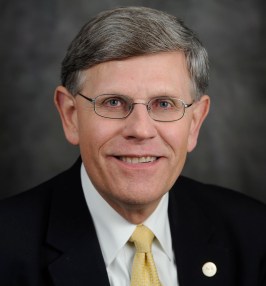
141155_Drogemeier-in-articleDr. Kelvin Droegemeier, Director of The White House Office of Science and Technology Policy (OSTP) and former vice president for research at the University of Oklahoma (OU), who was scheduled to speak at the 2020 NORDP conference, instead joined more than 100 NORDP members via Zoom on July 9. NORDP president Kimberly Eck facilitated the Q&A session.

Droegemeier began by crediting Dr. Alicia Knoedler (NORDP president, 2013-14) for teaching him about the discipline of research development during their time together at OU, where she helped create a successful research development center. He says he continues to learn from her, and cited her strengths as a learner and a listener, a thought leader and partner making a difference.

He noted that he had previously presented to NORDP’s annual conference in 2014, and he has witnessed the rapid growth in the discipline, as evidenced by NORDP’s membership surpassing 1,000 members. While researchers don’t simply wake up knowing how to best pursue their research ideas, he says that RD professionals know how to present solid arguments, craft narratives, and contextualize scientific research. They can help researchers develop those necessary soft skills, he suggests.

When asked about his two terms serving on the National Science Board, which governs the National Science Foundation, Droegemeier encouraged RD professionals and the researchers they represent to discuss their ideas with NSF program officers, noting that these staff are extremely interested in new ideas and in helping researchers succeed. He advised individuals not to be reluctant to contact the NSF to explore new ideas and challenges.

Another tip he shared relates to the federal government’s budgeting process.  He explained that the process begins with the Office of Management and Budgeting (OMB) and OSTP publishing a joint research and development guidance memo for 26 research and development agencies. He expects that document for FY22 to be released soon, and suggested that the American Association for the Advancement of Science is a good source for information on this process. The guidance memo for FY21 can be found  here.

Droegemeier shared some of his thoughts on leadership, noting that RD professionals demonstrate leadership in their daily responsibilities, regardless of their title. He emphasized that leadership is more about what you do, such as empowering people, protecting people’s voice, providing resources and understanding the big picture.

His analogy likens RD work to planting a lawn – you plant the seeds, fertilize the ground, grow the grass, and then you mow. Without the grass, there’s nothing to mow.

Droegemeier concluded the Q&A session by encouraging RD professionals to stay positive. He described RD professionals as exceptional leaders, called to advance U.S. research. He encouraged everyone to look to the future and plan with positivity no matter what challenges they face. He called out NORDP members’ willingness to share knowledge, noting that research is not a zero-sum game. He encouraged NORDP members and researchers to contact him with ideas, noting that the only way to advance is to get ideas on the table.

Prior to conducting this Q&A session, Droegemeier recorded his plenary session, which is available to NORDP members here (members must log in).

NORDP fosters a culture of inclusive excellence by actively promoting and supporting diversity, inclusion and equity in all its forms to expand our worldview, enrich our work, and elevate our profession.

Get involved in NORDP!

Register Now for Committee Roundtable, Rescheduled for July 24

NORDP has rescheduled the Committee Roundtable (technical difficulties on our first attempt) for Friday, July 24, from 11:00 – 12:30 EDT. (10:00 – 11:30 CDT, 9:00-10:30 MDT, and 8:00-9:30 PDT), to explain the many committee activities underway and how members can get involved. Register for the roundtable here (NORDP members only).

“NORDP depends heavily on volunteers, and it takes a lot of dedicated research development professionals to support our growing profession.  We hope NORDP members, especially our new members, will join us at this roundtable to find opportunities to contribute to that effort,” says Karen Fletcher, NORDP past president. “Regardless of where you are in your RD career, your expertise is needed. Veteran or beginner, title or no title, the diversity of our membership is what has enabled NORDP to grow so rapidly.”

Brief descriptions of the committees are included below, and each committee has created a poster to summarize their most recent activities, available here.

Committee on Inclusive Excellence (CIE) – Works to operationalize inclusive excellence within NORDP.

Member Services Committee (MSC) – Recruits and retains members, assesses member needs, and provides member benefits and services.

Mentoring Committee – Offers meaningful mentoring expertise, support, and resources.

Nominating Committee – Facilitates board nominations and the election process.

Professional Development Committee (PD) – Coordinates the development and delivery of training and resources for members.

Strategic Alliances Committee (SAC) – Builds mutually beneficial relationships with related organizations.

Additional information on NORDP committees can be found at the NORDP website, and upcoming committee meetings can be found at the NORDP online calendar.

NORDP fosters a culture of inclusive excellence by actively promoting and supporting diversity, inclusion and equity in all its forms to expand our worldview, enrich our work, and elevate our profession.


Get involved in NORDP!

Committee Roundtable Scheduled June 25

NORDP has scheduled a Committee Roundtable on Thurs., Jun. 25, at 3:00 p.m., Eastern Daylight Time (EDT) (2:00 CDT, 1:00 MDT, and noon PDT), to explain the many committee activities underway and how members can get involved. Register for the roundtable here (NORDP members only).

“NORDP depends heavily on volunteers, and it takes a lot of dedicated research development professionals to support our growing profession.  We hope NORDP members, especially our new members, will join us at this roundtable to find opportunities to contribute to that effort,” says Karen Fletcher, NORDP president.

In the process of committee work, Fletcher notes, members create rich relationships with RD professionals across the country. She describes this new two-step committee engagement process as: (1) attend the committee roundtable to explore opportunities, and (2) attend your chosen committee’s July meeting. “Regardless of where you are in your RD career, your expertise is needed,” Fletcher adds. “Veteran or beginner, title or no title, the diversity of our membership is what has enabled NORDP to grow so rapidly.”

Brief descriptions of the committees are included below, along with the date of each committee meeting. Each committee has created a poster to summarize their activities, available here.

NORDP’s committees are listed below, along with meeting times during July. Members can sign up to join in on these July meetings by registering here.

Committee on Inclusive Excellence (CIE) – Works to operationalize inclusive excellence within NORDP.  While there is no meeting set for July, you can contact Gretchen Kiser at gretchen.kiser@ucsf.edu or Etta Ward at emward@iupui.edu for more information.

Member Services Committee (MSC) – Recruits and retains members, assesses member needs, and provides member benefits and services.  Committee meeting on Jul. 6, 1:00 p.m. EDT (noon CDT, 11:00 MDT, and 10:00 PDT).

Mentoring Committee – Offers meaningful mentoring expertise, support and resources – Committee meeting on Jul. 23, 2:00 p.m. EDT (1:00 CDT, noon MDT, and 11:00 PDT).

Nominating Committee – Facilitates board nominations and the election process.  While there is no meeting set for July, you can contact Kim Patten at kjpatten@arizona.edu for more information.

Professional Development Committee (PD) – Coordinates the development and delivery of training and resources for members. Committee meeting on ­­­July 16, 3:00 p.m. EDT (2:00 CDT, 1:00 MDT, and noon PDT).

Strategic Alliances Committee (SAC) – Builds mutually beneficial relationships with related organizations.  While there is no meeting set for July, you can contact Karen Eck at keck@odu.edu  for more information.

Additional information on NORDP committees can be found at the NORDP website.

NORDP fosters a culture of inclusive excellence by actively promoting and supporting diversity, inclusion and equity in all its forms to expand our worldview, enrich our work, and elevate our profession.


2020 NORDP Salary Survey Results

Salary Calculator Allows Comparisons, Informs RD Staffing

A snapshot of salaries across the research development profession is now available, with the release of the 2020 NORDP salary survey available to NORDP members here here. This survey updates the information gathered in the most recent survey completed in 2015.

“Research development and human resource offices across the country have used this salary information to inform hiring decisions and RD staffing at universities,” says Kimberly Eck, president-elect of NORDP and assistant vice chancellor of research development at the University of Tennessee.

For example, Karen Eck, assistant vice president for research at Old Dominion University and past president of NORDP, says she used the 2015 survey data to advocate for more senior positions in her office.

“With 3,000 employees at our university, our HR office welcomed this critical data,” she says.  “The 2015 NORDP salary survey helped us craft our strategic case and get two senior grant development specialist positions approved. Data always wins, especially in the academic environment.”

NORDP members can access the results, which includes a salary report and salary calculator, which enables users to enter parameters such as degree, job title, type of organization, and region to obtain mean salaries, based on the 2020 survey.

A webinar is scheduled for May 29, 1:00 – 2:00 p.m EST, to highlight key findings and demonstrate the calculator. NORDP members can register for the webinar here.

The confidential online survey was administered to approximately 1,000 NORDP members and received a robust 34% response rate. As in past years, the 2020 survey collected member institution zip codes, enabling paired analyses using both actual reported salaries and normalized salaries using the 2019 county cost-of-living index table from the Council for Community and Economic Research. This allows users of the salary calculator to compare similar positions in different geographic areas.

The report addresses multiple institutional and individual variables including: institution type (public or private), institution geographic location and size (based on research expenditures); job category (professional title); RD office size (as measured by FTEs); and respondent demographics (gender, race, ethnicity, and education). Added this year, the survey also collected information about job functions.

NORDP members serving as salary survey investigators included:

  • Kimberly Eck, assistant vice chancellor, University of Tennessee, Knoxville
  • Karen Eck, assistant vice president for research, Old Dominion University
  • Mary Fechner, proposal development specialist, University of Massachusetts
  • Rebecca Latimer, director of proposal development, University of Virginia
  • Kayla Tindle, assistant vice president, Texas Tech University

Additionally, salary survey subcommittee members included:

  • Gretchen Kiser, executive director, University of California San Francisco
  • Heather McIntosh, manager, School of Community Medicine, University of Oklahoma-Tulsa Schusterman Campus

NORDP fosters a culture of inclusive excellence by actively promoting and supporting diversity, inclusion and equity in all its forms to expand our worldview, enrich our work, and elevate our profession.

NORDP Conference Educational Program Available Online, Easy to Download

To explore the 12th Annual NORDP Research Development Conference lineup, you now have easy access to a downloadable PDF version of the complete NORDP 2020 Educational Program.  Click here to find the link to the PDF file, “Download a PDF of Educational Programming.”

The 30-page document describes more than 100 workshops, concurrent sessions, roundtables, and lightning talks along with room assignments and instructor/facilitator names. Please note that room assignments are subject to change (an app will keep conference attendees informed on a daily basis). To see the full program, including keynote and plenary speakers, the Ideas Showcase, social events, committee and regional meetings, and education programming, click here. A link to the Educational Programming PDF is also available there.

_______________

We hope to see you at the Conference, which will be held May 17 – 20, at the Hyatt Regency Hill Country Resort and Spa in San Antonio, TX. The conference room block can be accessed HERE

For more information about the conference or to register, visit http://www.nordp.org/conferences. Follow @NORDP_official on Twitter for all the latest #NORDP2020 updates.

NORDP fosters a culture of inclusive excellence by actively promoting and supporting diversity, inclusion and equity in all its forms to expand our worldview, enrich our work, and elevate our profession.

Save the Date!

NORDP Conference Registration Opens Feb. 4

As you make plans for a happy and prosperous New Year, don’t forget the 12th Annual NORDP Research Development Conference, set for May 17-20, 2020, in San Antonio, TX.

The program is being finalized, and presenters will soon be contacted.  The entire program will be available, along with registration information, on Feb. 4, 2020.

Hope to see you there, and Happy Holidays!

EDs60whU4AIDtey

12th Annual NORDP Research Development Conference

NORDP Liaison Report: Society for Neuroscience

Annual Meeting Report: Special News Related to NIH Early Stage Investigators

Inês Tomás Pereira, Research Development and Support Specialist at Brown University’s Carney Institute for Brain Science, serves as a NORDP liaison to the Society for Neuroscience (SfN), where she has been a member for 15 years.  She recently attended the SfN Annual Meeting in Chicago, IL, and offers the following summary.

The SfN annual meeting typically gathers almost 30,000 people for a five-day conference covering all aspects of neuroscience, with hundreds of concurrent lectures, symposia, minisymposia, nanosymposia, posters sessions, and professional development workshops. This year’s conference was special because the Director of Pereira’s institute, Diane Lipscombe, was also the President of SfN.

The session most relevant for NORDP members was entitled “Optimize Your Grant Application: News You Can Use From the NIH.” This session was targeted at Early Stage Investigators (ESI) and included information that was useful broadly to all grant applicants and research development professionals. The first presentation included advice from a representative from the NIH Center for Scientific Review, explaining the review process at NIH generally.

A senior member of NIMH provided statistics for NIMH funding for FY19 ($1.87B for FY19) and stated that the institute expects a relative increase in appropriations for next year. The R61/R33 program was highlighted as a mechanism that is being used to fund novel interventions. In regard to funding priorities for the NIMH, suicide prevention continues to be a topic of interest. In addition, RD professionals can find upcoming concept clearances from NIMH Council meetings for RFAs, Pas, and RFPs here. Specifically for ESI, the institute highlighted their NIMH BRAINS initiative, which is similar to the NIH DP2 and DP5 awards.

NINDS staff presented next. This is the largest of the neuroscience-related NIH institutes, with a budget of $2.27B in FY19 (~60% R01, ~10% BRAIN Initiative). The institute has reported a decrease in funding of basic research, and their analysis indicates that there is a comparable decrease in applications in that area. They would like to see those numbers increase and strongly stated that NINDS research does not need to be disease related. The main special initiatives at the Institute continue to be the BRAIN Initiative, efforts in Alzheimer’s Disease and Alzheimer’s Disease-Related Dementias research (partnering with NIA), and the new HEAL Initiative (with NIDA) to enhance pain management and improve treatments for opioid misuse and addiction. The strongest message to ESI was that the institute has a payline boost for ESI only for R01 mechanisms, not R21, R03 or U01 (or multi-PI proposals with a non-ESI PI). NINDS encourages early career researchers to apply through R01 mechanisms, highlighting that alignment with large initiatives may further help their funding chances.

The session continued with a presentation from the NIA. Their main focus in the neurosciences space is predictably in Alzheimer’s Disease and Alzheimer’s Disease-Related Dementias. The NIA general payline is 20%-23% depending on funding mechanism, but it is 28%-31% for AD/ADRD topics. These have temporarily been reduced due to the continuing resolution that the NIH is operating under. The NIA then highlighted three new R03 small research grant calls in AD/ADRD: PAS-19-391, PAS-19-392, and PAS-19-393. Their strong message to ESI was to utilize all resources available. The NIH generally encourages researchers to contact institute personnel to ask questions about funding mechanisms and the fit of their research to the different Institutes.

The session closed with a presentation from a NIDA senior staff member. NIDA currently has a $1.4B budget, of which ~$264M is dedicated to AIDS research and ~$250M to opioid-related research. New institute interests focus on the effect of cannabis on the most vulnerable populations: prenatal, adolescents, and older adults. NIDA highlighted that different NIH institutes may fund different aspects of cannabis studies, so it is crucial to check with each agency to ensure that the proposal fits their mandates. Their opioid funding efforts are aggregated under the HEAL Initiative. Finally, NIDA highlighted the ABCD Adolescent Brain Cognitive Development program and emphasized that this is an open science effort, so data is available for further studies.

If anyone has any questions regarding SfN, the recent annual meeting, or if you are also a member of SfN and would like to connect Ines, send an email to ines_tomas_pereira@brown.edu.