Mentor/Mentee Spotlight: The NORDP Mentoring Program in Five

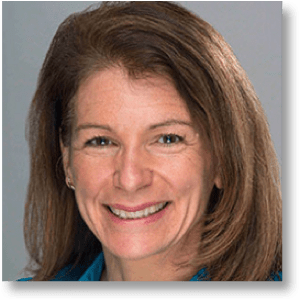
Name: Vanity Campbell
Institution: University of California, Division of Agriculture and Natural Resources (UC ANR)
Are you a Mentor? Mentee? Both?  Both

1)      What influenced you to become a mentor or mentee?
Upon being introduced to the field of research development, a dear colleague recommended two things, first join NORDP and second, join the organization’s Mentoring Program. After three years of being a not so active member, I realized, not only was I not fully benefiting from the power of NORDP’s robust network but also not adequately serving an organization that I had so greatly benefited from professionally through conference engagements, sharing of resources and best practices. I was determined that I wanted and needed to become a more active member. That initial mentoring program suggestion now deeply resonated with me, and I sought the opportunity to serve as both a mentor and mentee.

2)      What surprised you about being a mentor and/or mentee?
Over my professional career, I have taken on a mentorship role with staff and academics alike. However, what was most surprising as both a NORDP mentor and mentee was how easy, natural, and fun it has been.

3)      How has participating in the NORDP mentoring program impacted your day-to-day work?
A goal that I set this year with my mentor was to seek out and initiate a professional mentoring relationship within my home institution. I now meet regularly with my new non-research development mentor, gaining valuable institutional perspectives that impact my ‘day-to-day’ research development work.

4)      What is one way being in the mentoring program has helped increase or broaden your understanding of research development?
As both a mentee and mentor, I have found that it is more than possible to carve out space and time to grow professionally. In doing so, I have found ways where I can be a more active and effective contributor to the overall RD field, ways that I know will have a direct feedback on furthering my understanding of our growing field of research development as well.

5)      Are there any additional thoughts would you like to share about the NORDP mentoring program?
There is no better way to get to know NORDP than to engage with its members.  The Mentoring Program has been an amazing opportunity to build a one-on-one relationship with another member, growing, learning, sharing, all while having fun together.

The NORDP Mentoring Program
The NORDP Mentoring Program offers a formalized pairing process to match a mentor and a mentee with similar professional interests and different levels of experience in order to frame a relationship that offers mutual guidance and support. Once pairs are matched, the mentoring process is an informal one based on the needs of each individual pair.

We encourage Research Development Professionals who have been in the Research Development field for a few years to consider volunteering to be a mentor; and we encourage members who are new (or relatively new) to the field to sign up as a mentee. But feel free to sign up for whatever you feel you need. You can even sign up to be a mentee AND a mentor!

Open Enrollment to the Mentoring Program can be accessed through the following link. The survey will be available through March 16, 2018.

Interested in learning more? Check out the website.

If you have any questions, please send an email to mentorprogram@nordp.org.

Interested in learning how you can leverage principles of mentoring at your institution?
You are invited to attend a NORDP Pre-Conference Workshop to learn strategies for advancing the research enterprise through building and supporting effective mentoring relationships as well as developing on-campus mentoring programs: Taking the Research Development Professsional to the Next Level Through Effective Mentoring.
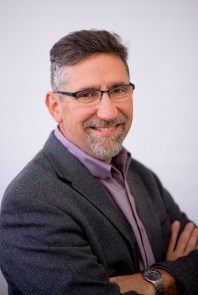

NORDP 2018 Conference Cameo: Kirk Knestis

#NORDP2018 starts Monday, May 7 in Arlington, VA. Keep checking back here at the blog and on our Twitter feed (@NORDP_official) for live conference updates. Register here: http://www.nordp.org/conferences.
_______________________________________________________

Who: Kirk Knestis, PhD
Where: Hezel Associates
Number of years in research development: 10
Length of NORDP membership: 1
Number of NORDP conferences attended: 2017 will be my first one!
When you were a kid, what did you want to be when you grew up? Marine biologist

As an evaluator and manager of education studies, I have been working with research development professionals for years on external evaluations of grant-funded research projects. While I sometimes partner with institutions to serve in a subaward research role for PIs who specialize in programming (so need someone to do the “research” part of a project), my team is generally charged with designing a study that examines the timeliness, quality, and results of activities funded by the award.KnestisHeadshot2014.jpg

If things are working as they should, we external evaluators spend substantial time planning with the PI, co-PIs, partners, procurement staff, and RD managers. We collaborate to explicate program theories-of-change (i.e., logic models), clarify the design of proposed activities, adopt or develop standards of quality for implementation, define data-collection strategies and analyses to assess the goals and objectives of the funded work, and prepare budgets and documentation required for proposal submission. I like to think I have a good understanding of how those pre-proposal processes work, based on more than a decade of experience collaborating on dozens of proposals each year.

Once one of those proposals goes in, our direct work with RD staff and PIs typically goes on a hiatus until we hear one way or another about a decision on the award. If the project isn’t funded, that may be the end of discussion until the next grant opportunity, or the beginning of plans to resubmit. What I am only beginning to understand, however, is what goes on “behind the curtain” for our higher education clients when their grants ARE awarded, during post-award management and, most interesting to me, during the transition from pre- to post-award functions.

I’ve come to believe that there are things that an external evaluation partner can do in the time between proposal submission and starting the evaluation to help RD managers increase the likelihood of good results – with the evaluation certainly, but also for the funded project more generally. Similarly, I think that there are some key pieces of information about the “care and feeding of the external evaluator” that can benefit research development office staff and ultimately help evaluator-client relationships be more effective and efficient.

My involvement in NORDP – and my participation in my first annual conference – is driven by my interest in better understanding this intersection of needs. My operational theory is that the symbiotic relationships among research developers, PIs, and external evaluators can be improved by each better understanding the roles, contributions, and priorities of the others. I am excited about the opportunity not only to present on this topic with an established RD professional, but also to hear from others to test and elaborate that theory.

_______________________________________________________

We hope to see you at the Conference, which will be held May 7-9, 2018 at the Hyatt Regency Crystal City in Arlington, VA.  For more information about the conference program or to register, visit http://www.nordp.org/conferences. Follow @NORDP_official on Twitter for all the latest #NORDP2018 updates.

NORDP fosters a culture of inclusive excellence by actively promoting and supporting diversity, inclusion and equity in all its forms to expand our worldview, enrich our work, and elevate our profession.

NORDP Webinars: Developing More Engaging Meetings and Workshops

NORDP Webinars:  Developing More Engaging Meetings and Workshops

Part One:  March 7 12:30-1:30 ET
Part Two: March 16 1:00-2:00 ET

Meetings and workshops are a necessary part of a research development professional’s life. It’s important to bring people together, learn from each other, and/or have contact and stay oriented toward the same objectives. But too often we can slip into the traditional (we’ll say it, even boring). People lose interest and focus. That’s when meetings become a waste of everyone’s time and workshops lose the opportunity to fully engage and convey our messages.

This doesn’t have to be the case. There’s no reason for a meeting to be boring and there are so many ways to spice up your workshops. You can make all the events you lead more interesting, productive, and effective by using different kinds of interactive exercises: from simple ice-breakers and energizers to team-building and problem-solving exercises.

Whether it’s a formal presentation, an informal meeting with a smaller team or even a meeting with just one individual, using activities and exercises to set the right tone for the meetings you lead can make them more interesting, engaging, and, ultimately, more productive.

Andy Burnett, a recovering academic, and Donnalyn Roxey, a research development professional, both from Knowinnovation (KI), are deeply passionate about team science and working with research development professionals around the world. Knowinnovation is a global team of creatives that specializes in facilitating and accelerating academic, scientific, interdisciplinary innovation. They focus most of their attention on the academic environment, putting their unique method – based on the science of deliberate creativity – in palatable terms for scientists and academics.  Combined they have lead hundreds of workshops, for federal sponsors such as NSF, NIH, and NASA as well as academic institutions large and small around the world.

NORDP’s Professional Development Committee invites members to attend this two-part webinar series, Developing More Engaging Meetings and Workshops. These webinars will be full of strategies and tips for planning your event, the physical and psychological environment, engaging your audience, and much more. Registration is required for all webinars.

Part One: People and Place 
March 7 12:30 to 1:30 pm Eastern Time 

Register here. After registering, you will receive a confirmation email containing information about joining the webinar.

Whether you are going it alone, or presenting with others, it is important to think about your presentation from the audience’s perspective. Who are they, what are their preferences, what do they hope to get from you? How might you strategically select the participants, or more likely, how might you make the best with whom you must have in the room? In addition to discussion audience, we will spend time discussing the setting of your presentation. What kind of space do you have to work with and how might you best arrange it to maximize interactions?  What are small things you can do to make the space more enjoyable? This webinar will focus on the audience and ambiance you set for your presentation.

Part Two: Agendas and Planning
March 16, 2018 1:00 to 2:00 Eastern Time

Register hereAfter registering, you will receive a confirmation email containing information about joining the webinar.

What might be new ways to build an interactive agenda to maximize innovation and idea exchange? How might you entice participants to attend, and come back? What is a tried and true method for soliciting useful feedback in any group? What might be some tips and techniques for executing your agenda? This webinar will focus on building an agenda for your meeting or workshop and facilitation tips and watch-outs for implementing your agenda.

These webinars will be presented by Andy Burnett, a recovering academic, and Donnalyn Roxey, a research development professional, both from Knowinnovation (KI).  Both are deeply passionate about team science and working with research development professionals around the world. Knowinnovation is a global team of creatives that specializes in facilitating and accelerating academic, scientific, interdisciplinary innovation. They focus most of their attention on the academic environment, putting their unique method – based on the science of deliberate creativity – in palatable terms for scientists and academics.  Combined they have lead hundreds of workshops, for federal sponsors such as NSF, NIH, and NASA as well as academic institutions large and small around the world.

For questions or additional information, contact Kari Whittenberger-Keith (kariwk@uwm.edu). We hope to “see” you at the webinar!

Posted on behalf of the NORDP Professional Development Committee

Mentor/Mentee Spotlight: The NORDP Mentoring Program in Five

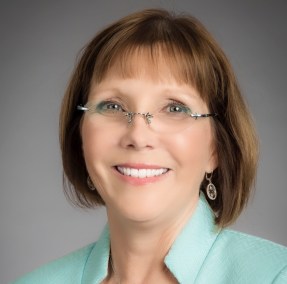
Name: Linda Vigdor
Institution: Advanced Science Research Center at the Graduate Center of the City University of New York
Are you a Mentor? Mentee? Both? Mentee

1)       What influenced you to become a mentor or mentee?
When I started in my new position, at an institution in start-up mode, I realized I was in an environment where no one understood what my role was, how it fit into a larger grants picture, or even the value of my services. I sought a NORDP mentor to help me navigate this murky terrain. An additional motivation was that I wanted help in figuring out how to define and be effective in my role, within the grants office and the institution.

2)       What surprised you about being a mentor and/or mentee?
Having never really had a mentor in previous careers, I was pleasantly surprised by how being able to discuss real issues with someone with actual “skin-in-the-game” was so much more beneficial than mulling over issues with a friend. I think I was also surprised by how useful it is to be able to talk over issues with someone working in a similar environment with relatively similar challenges.

3)       How has participating in the NORDP mentoring program impacted your day-to-day work?
My mentor helped me identify and implement productive strategies for working through some difficult challenges as well as to strategize for new programming that I wanted to implement. She also helped me see the big-picture and put things into perspective – for example, in helping me learn to step back and to take a longer, more de-personalized view in trying to implement a cultural change.

4)       What is one way being in the mentoring program has helped increase or broaden your understanding of research development?
NORDP’s mentoring program helped me see research development as more nuanced than I had thought, in that it encompasses not just activities but also organizational culture. My mentor helped see that there are strategies for navigating challenges and effecting change.

5)       Are there any additional thoughts would you like to share about the NORDP mentoring program?
The NORDP mentoring program is a valuable resource, especially when there is a good fit between mentor and mentee.

The NORDP Mentoring Program
The NORDP Mentoring Program offers a formalized pairing process to match a mentor and a mentee with similar professional interests and different levels of experience in order to frame a relationship that offers mutual guidance and support. Once pairs are matched, the mentoring process is an informal one based on the needs of each individual pair.

We encourage Research Development Professionals who have been in the Research Development field for a few years to consider volunteering to be a mentor; and we encourage members who are new (or relatively new) to the field to sign up as a mentee. But feel free to sign up for whatever you feel you need. You can even sign up to be a mentee AND a mentor!

Open Enrollment to the Mentoring Program can be accessed through the following link. The survey will be available through March 16, 2018.

Interested in learning more? Check out the website.

If you have any questions, please send an email to mentorprogram@nordp.org.

Mentor/Mentee Spotlight: The NORDP Mentoring Program in Five

Name: Kathy Partlow
Institution: University of Illinois, Urbana-Champaign
Are you a Mentor? Mentee? Both? Both

1)      What influenced you to become a mentor or mentee?
I was excited about the NORDP mentoring program opportunity and signed up right after becoming a NORDP member. Being new to RD, I was looking for guidance and support, especially since I was an office of one. I benefited greatly from this program and after 5 years of being a mentee naturally wanted to pay it forward by being a mentor.

2)      What surprised you about being a mentor and/or mentee?
Whether your mentor has 1 or 20 more year(s) of experience, you both benefit equally from the relationship. As a mentor this year, I realized that I didn’t need to wait until I had 5 years of experience to volunteer. With any level of experience, we all can contribute to a fellow colleague’s professional development. Also, I think you’d be surprised that it’s not a big time commitment (~1 hr/month).

3)      How has participating in the NORDP mentoring program impacted your day-to-day work?
I credit the success I’ve had in my daily work to having a mentor through this program. I’ve always based the agenda for our meetings on current or upcoming topics, where I sought feedback or advice. My mentor and mentees are my team, and the quality of my work is raised to a higher level that I couldn’t achieve on my own.

4)      What is one way being in the mentoring program has helped increase or broaden your understanding of research development?
Although I’ve learned a lot about RD at other institutions through the E-list and conference, I’ve received a more in-depth view through monthly meetings with colleagues (my mentor and mentees) outside my institution. I have a broadened perspective that helps me work outside of my silo.

5)      Are there any additional thoughts would you like to share about the NORDP mentoring program?
I feel strongly that participating in this program and developing a good relationship with my mentor has contributed to my professional development and success.  Regardless of where we are in our career, we all have something to gain by being a mentor and a mentee.

The NORDP Mentoring Program
The NORDP Mentoring Program offers a formalized pairing process to match a mentor and a mentee with similar professional interests and different levels of experience in order to frame a relationship that offers mutual guidance and support. Once pairs are matched, the mentoring process is an informal one based on the needs of each individual pair.

We encourage Research Development Professionals who have been in the Research Development field for a few years to consider volunteering to be a mentor; and we encourage members who are new (or relatively new) to the field to sign up as a mentee. But feel free to sign up for whatever you feel you need. You can even sign up to be a mentee AND a mentor!

Open Enrollment to the Mentoring Program can be accessed through the following link. The survey will be available through March 16, 2018.

Interested in learning more? Check out the website.

If you have any questions, please send an email to mentorprogram@nordp.org.


NORDP MENTORING PROGRAM – Applications Now Open!

The NORDP Mentoring Program is a benefit available to all NORDP Members. This program enables research development professionals to network with NORDP colleagues who have volunteered to share their expertise, guidance, and support.

Previous NORDP Mentees are particularly encouraged to pay it forward by offering to serve as Mentors. If you are interested in being a Mentor, a Mentee, or both, please take approximately 10 minutes to complete a short, online form which will be used to guide mentor/mentee matches.

The deadline for applications is Friday, March 16, 2018. Individual Mentor/Mentee matches will be notified prior to the 2018 NORDP Annual Conference in Arlington, Virginia (May 7-9).

Apply to the NORDP Mentoring Program

How it Works
An underlying philosophy of the program is the Mentee drives the relationship and the relationship is reciprocal in nature. Participants have access to a variety of resources to enhance the mentoring relationship.

Participants are matched based upon criteria such as specific area of interest, institution type, years in research development, and goals. Once matched, the two individuals develop and coordinate the collaboration that works best for them. Although there are no formal rules for managing the interactions, we encourage a regular schedule of communication, whether meeting in person or connecting by e-mail, Skype, WebEx, telephone—and certainly getting together at NORDP meetings!

Need More Info?

For questions or to request additional information, email MentorProgram@nordp.org

Consider attending the annual mentorship webinar:

Investing in You: The NORDP Mentor Program for Professional Development
Date: Tuesday, February 20, 2018
Time: 2:00 – 3:00 PM EST

Program participants Vanity Campbell and Kathy Partlow will share information about the Mentoring Program, and their experiences as mentee and mentor.

Those interested in participating in this webinar opportunity must register to attend. Please complete registration at the link below.

REGISTER

NORDP fosters a culture of inclusive excellence by actively promoting and supporting diversity, inclusion and equity in all its forms to expand our worldview, enrich our work,
and elevate our profession.

NORDP 2018 Registration Open

Register for the NORDP Annual Research Development Conference
May 7 – 9, 2018, in Arlington, Virginia

The Early Bird deadline ends on March 16, 2018

lincoln-memorial

The 10th Annual NORDP Research Development Conference will be held May 7-9, 2018 at the Hyatt Regency Crystal City at Reagan National Airport in Arlington, Virginia (Washington, D.C. metro area).

Take advantage of our special discounted conference rate, book your room now with this NORDP-specific hotel reservation link.

Pre-Conference Workshop Topics

  • Enhancing Effectiveness of Collaborative Teams by Engaging Individual Motivation
  • Ready…Set…Go!  Taking the Research Development Professional to the Next Level through Effective Mentoring
  • Strengthening Capacity for Diverse Research Teams through Research Development
  • Understanding the Name of the Game: Inside an National Science Foundation (NSF) Panel Review
  • Large Proposals 101

Find out more about the 2018 NORDP conference…

Stay Connected!

Follow @NORDP_official on Twitter for all the latest conference updates, including featured speaker confirmations, exciting topics to be discussed, and more.

Email: rdconf@nordp.org

Conference Attendance Grants for NORDP Members

As in previous years, we are offering Conference Attendance Grants to members. Click here for more information or to apply.

Have questions? Contact Jan Abramson, Member Services Committee.

NORDP fosters a culture of inclusive excellence by actively promoting and supporting diversity, inclusion and equity in all its forms to expand our worldview, enrich our work, and elevate our profession.

NORDP 2018 Plenary: Effective Communication for Research Development Professionals with Dr. Laura Lindenfeld

Effective Communication for Research Development Professionals: Building Basics with the Alda Method™

Inspired by Alan Alda’s statement that, “real listening is the willingness to let the other person change you,” this interactive session will introduce you to the Alda Method™, a sequence of improvisational theater techniques developed to help you speak more vividly and expressively about research. The Alda Method™ helps you to create common ground and use conversational language to foster more genuine connections with your audience. The techniques introduced will help you focus on listening, relating, ordering information and defining meaningful goals to make your message stick.

Lindenfeld_Alda

Skills gained will be relevant to RD professionals in the course of their own work, allowing them to better connect with diverse audiences such as groups of interdisciplinary PIs. RD professionals can also bring these concepts back to their own institutions and introduce them to other researchers and administrators.

This session will be run by Dr. Laura Lindenfeld, director of the Alda Center and professor in the School of Journalism at Stony Brook University. She holds a Ph.D. in cultural studies from the University of California, Davis. As a communication researcher, her work draws inspiration from the idea that we can make better, more informed decisions about how we shape our collective future.

The Alan Alda Center was formally established in 2009 with support from Stony Brook University, Stony Brook School of Journalism, Brookhaven National Laboratory, and Cold Spring Harbor Laboratory and is located at Stony Brook University on Long Island, New York. Training methodologies are inspired by the empathy, clarity, and vivid storytelling brought to life by Alan Alda and hundreds of experts on the PBS television show Scientific American Frontiers.

Dr. Laura Lindenfeld will be the afternoon plenary speaker for the 10th Annual NORDP Research Development Conference on May 9. We hope to see you at the Conference, which will be held May 7-9, 2018 at the Hyatt Regency Crystal City in Arlington, VA. Follow @NORDP_official on Twitter for all the latest #NORDP2018 updates.

New Member Cameo: Donn Miller-Kermani

Welcome to NORDP: Donn Miller-Kermani
Where: Florida Institute of Technology
Number of Years in Research Development: 1
Joined NORDP: 2017

What is your RD work?

profiledonnI serve as the Associate Vice President for Research Administration at the Florida Institute of Technology. Our 7 person team manages pre & post award, compliance, accounting and research development. We work with faculty at all stages of the process including brainstorming, building budgets, proposal submission, and keeping faculty focused to become more competitive. My area of focus is improving processes to become more efficient in everything from electronic workflow of proposal submissions to invoicing to help create a seamless flow through all stages of the process.
What is your professional background?

I joined the RD world about a year ago, but I have worked at FIT for thirty years in a number of settings across the university. I served as Associate Dean of the Business School, Deputy Chief Operating Officer, Founding Director of the Women’s Business Center, and Assistant Director of the National Center for the Small Business Administration. I have experience on both sides of research having written numerous grants earlier in my career.

What attracted you to NORDP?

I met a number of members through my involvement with the Florida Research & Development Alliance who encouraged me to join. NORDP offered me the chance to sharpen my skill set, meet colleagues from across the country, and improve our RD services for our campus.

How will your NORDP membership enhance your own career?

The professional development available through NORDP provides a valuable set of tools that I can bring to support FIT’s Pillars of Excellence that are part of our Strategic Vision.  Earlier in my career I served as a PI and membership will help me re-engage in the field and reinforce things I have learned in my other roles on campus. NORDP allows me to see the broader picture of RD that I can bring to support both my staff and faculty here at FIT.

Compiled by Daniel Campbell, Member Services Committee

NORDP 2018 Opening Keynote: From Tweaks to Transformation with Saul Kaplan

From Tweaks to Transformation: Do Research Development Professionals need to explore new business models to ensure institutional competitiveness? 

Saul Kaplan, Founder and Chief Catalyst of the Business Innovation Factory (BIF), argues the answer is yes. For Kaplan, the barrier to delivering better value are humans and our institutions—both stubbornly resistant to change—impeding our ability to network people, resources, and capabilities within and across organizations. Kaplan calls for a safe, manageable environment to explore new business models, a real-world testbed to innovate collaboratively without disrupting current operations.

“Most organizational leaders today have only had to lead a single business model throughout his or her entire career,” says Kaplan. “And most haven’t had to significantly change a business model in order to sustain the organization competitively. Organizational leaders of tomorrow will have to change their business model several times over the course of a career and the successful leader will establish an ongoing process to explore new business models, even models that might threaten the current one.”

SaulKaplan
Saul Kaplan

Kaplan started BIF in 2005 with a mission to enable collaborative innovation. BIF is creating a real-world laboratory for innovators to explore and test system level solutions in areas of high social importance including health care, education, and energy.

Before focusing on business model and system level innovation at BIF and Innomodels LLC, Kaplan served as the Executive Director of the Rhode Island Economic Development Corporation and as the Executive Counselor to the Governor on Economic and Community Development. Prior to his state leadership role in economic development, Kaplan served as a Senior Strategy Partner in Accenture’s Health & Life Science practice and worked broadly throughout the pharmaceutical, medical products, and biotechnology industry.

Kaplan holds an MBA from Rensselaer Polytechnic Institute focusing on the strategic management of technology and a BS in Pharmacy from the University of Rhode Island. He shares his innovation musings on Twitter (@skap5) and his blog (It’s Saul Connected), and as a regular contributor to the Harvard Business Review, Fortune, and Bloomberg Businessweek. Kaplan is also the author of The Business Model Innovation Factory.

Saul Kaplan will be the opening keynote speaker for the 10th Annual NORDP Research Development Conference on May 7. We hope to see you at the Conference, which will be held May 7-9, 2018 at the Hyatt Regency Crystal City in Arlington, VA. Follow @NORDP_official on Twitter for all the latest #NORDP2018 updates.