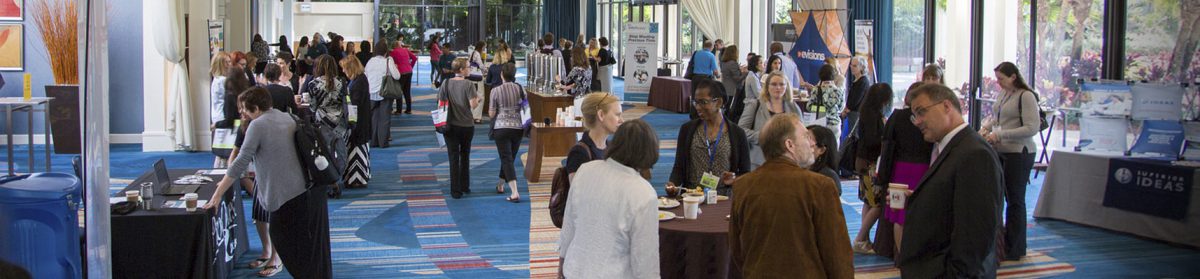
#NORDP2019 starts Monday, April 29, in Providence, RI. Keep checking back here at the blog and on our Twitter feed (@NORDP_official) for conference updates. Register at https://www.nordp.org/conferences.
_______________
Who: Jennifer Schaefer, Research Concierge Administrator
Where: Penn State College of Medicine
Number of years in research development: 5
Length of NORDP membership: 4 years
Number of NORDP conferences attended: 4
How do you unwind? Spend time with my dog & horse
My journey to a career in Research Development could best be described as unconventional. After earning my Master’s degree in Geography, I spent the better part  of 18 years in private consulting, working my way up the career ladder with a Pennsylvania-based firm that specializes in community planning and funding strategies. As a senior associate, I supported a wide variety of projects for clients in both the public and private sectors, doing everything from writing grant proposals and drafting support letters to facilitating focus groups and briefing elected officials. A significant focus of the firm’s work was the development and implementation of public funding strategies – a government relations function that required direct engagement with local communities, strong relationships with state and federal legislative delegations, and a working knowledge of the federal appropriations and state budget processes. As a project manager, I was frequently responsible for managing client communications, developing congressional briefing documents, and project white papers. I enjoyed the challenges of my work, but after 18 years in consulting, I was looking for a career opportunity that would allow me to grow in new directions.
In Summer 2013, I came across a job posting for a Research Concierge Administrator at the Penn State College of Medicine. The position was established to strengthen the research support infrastructure for investigators at the College of Medicine and would work closely with the Penn State Clinical and Translational Science Institute (Penn State CTSI). Because the Research Concierge Service (RCS) was a newly created unit in the Office of the Vice Dean for Research and Graduate Studies, I would have an opportunity to build the unit from the ground-up, working in partnership with the Director of Research Development. The position has afforded me the opportunity to leverage the skills I amassed in private consulting and presented me with new learning opportunities. At its core, the Research Concierge Administrator serves as a physical and virtual coordinating hub for research support services at the College of Medicine. As a service of Research Development, I work closely with a variety of key stakeholders to connect investigators to potential research collaborators, to help build research teams, to strengthen grantsmanship skills, to maintain web-based resources through the Research Concierge Service website, to promote the field of interdisciplinary research by organizing seminars and talks, and to serve as a project manager for strategic initiatives. At first glance, it might seem that my previous work experience is incongruous to my current role. But I have found that, in many ways, the skills I amassed in private consulting were invaluable preparation for my current role.
I attended my first NORDP conference in Spring 2015 and have continued attending NORDP conferences since that time. NORDP conferences are a great place to network with peers from a diversity of institutions. This broad exposure to professional colleagues is a value-added of NORDP conferences. If you are attending the conference with other team members from your institution, I recommend you review the conference schedule as a team to determine which sessions each of you will attend. To achieve the greatest return on investment, “divide and conquer” by spreading team members across the conference schedule. If you are attending the NORDP conference as your organization’s sole representative, review the conference schedule with your team members to identify key questions you will keep in your back pocket for presenters. Whether flying solo or attending the conference with co-workers, remember to step out of your comfort zone — introduce yourself to someone new. We all find comfort in the familiar, but it is often when we step outside of our comfort zone that growth happens.
_______________
Visit the NORDP Store online now through March 15!
We hope to see you at the Conference, which will be held April 29 – May 1, 2019, at the Omni Providence Hotel in Providence, RI. For more information about the conference program or to register, visit http://www.nordp.org/conferences. Follow @NORDP_official on Twitter for all the latest #NORDP2019 updates.
NORDP fosters a culture of inclusive excellence by actively promoting and supporting diversity, inclusion and equity in all its forms to expand our worldview, enrich our work, and elevate our profession.
 to work in both public and private research universities and at the department, central, and school level. Starting out at the department level working with faculty in a large research center was wonderful training for my later work in a central office—it made me very aware of the challenges department colleagues face and the value of their contributions. In the central office position, I supported proposal development efforts across the University for large scale grants and individual investigator grants, and developed programming and resources for new faculty. During my time in that position we were successful in increasing our annual research volume from $60M annually to $100M with no additional resources. We also received an EPSCoR grant to build our state’s research infrastructure. In 2010, I was offered an opportunity to build a new research development office at Harvard University in the Faculty of Arts and Sciences. With the help of wonderful colleagues and an incredibly talented team, we built a new office. We have since expanded our team to serve our engineering school as well.
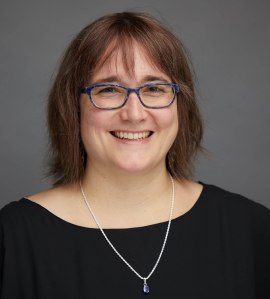 I was involved in research development before I knew it was a field. I worked as a lab manager in my first job after getting my PhD and found out about research administration from an internal training program. After looking for positions in research administration, I was recruited into the School of Engineering to work on an NSF Engineering Research Center proposal and then became the grants manager in the largest engineering research institute on campus. I heard about research development when a new Vice Provost for Research started at Vanderbilt and was hiring for a position to start a dedicated research development program at Vanderbilt. I was immediately hooked when I heard of the opportunity, and my grants management experience with large proposals luckily made me a strong candidate.
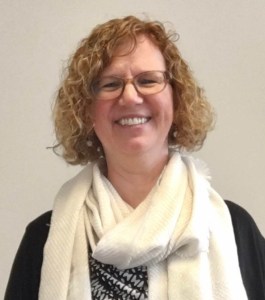 The biggest part of my job is managing our ever-growing collaborative seed grant program (CORNET Awards), which stimulates innovative, interdisciplinary, team-based research. In 2016, we started with a cross-college collaborative, and from there, the CORNETs have grown to include collaborations between regional universities, the UT system, industry, and international universities. We have run competitions focused on cancer, health disparities, regenerative medicine, and substance abuse, to name a few. This program is very competitive and incredibly popular with the faculty here at UTHSC. My office of two also runs all of the limited submission competitions and two internal bridge funding mechanisms, provides funding opportunities to our faculty, and organizes on and off-campus symposiums and workshops.
 As we move headlong into a cashless society, apps like
  NORDP News