The Transition from Postdoc to Research Development: Gaelle F. Kolb

The following is part of a limited blog series from the Strategic Alliances Committee highlighting NORDP members who have transitioned from postdoctoral positions to careers in research development.

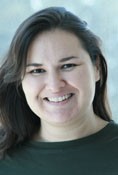
Kolb-Photo
Gaelle F. Kolb, Proposal Development Manager, Office of Research Development, Division of Research, University of Maryland

Describe your work in research development (RD): I am currently a proposal development manager in the Office of Research Development within the Division of Research at the University of Maryland. I am responsible for managing multidisciplinary teams of scientists and leading them to submit highly prestigious, multi-million dollars grants to various sponsors. The teams vary with the open calls and so do the represented disciplines.

Describe your postdoc work: My scientific background is in infectious diseases. During my first postdoc, I investigated the role of a host protein in waking up Herpes Simplex Virus type 1 from latency in infected neurons. The work was seminal in demonstrating that, in fact, a host protein was indispensable for that event to start, and another postdoc demonstrated that it recruited a whole complex of proteins to re-activate the viral transcription. In a shorter second postdoc, I identified a Heat Shock protein as binding to Ebola Virus genome, and in a later publication on which I am a collaborative author, the team demonstrated that this protein was indispensable to viral replication, making it a potential drug target.

Describe your transition from your postdoc/research background to RD: I was very involved in professional and career development during my postdoc, helping other postdocs (and myself) find the career of their dream. I became the grants and training development specialist in one of the NIH institutes, which totally opened up my love for proposal development and helping others better write how much their science would impact our society.

Describe the benefits your postdoc work provided to your skill set related to RD: I was a restless postdoc, always getting involved in “other/administrative” internships. I became a great listener and talker as well.

What words of wisdom do you have for postdocs who might consider an RD career? As a postdoc, you have cultivated the passion for science. Now, keep the breadth and forget about the depth.

What has been your best experience, so far, with your work in RD? Moving to my current position has been the best experience in research development. Before that, I felt that I was only allowed to dabble, expressing other people’s way of doing. Now, I become part of the team every time I support a new proposal development. I am learning about their subject matter so I can provide critical feedback to their proposed research. I continue to read everything about science (I am member of the AAAS, reader of Science magazine, reader of Nature and The Scientist, in addition to NSF and NIH news).

Why do you think RD is a good career choice? Well, I like the fact that I don’t have to drill too deep into one subject anymore; instead, I can dream big with a team, and differently as I move on to the next team. I like the fast pace and flexible hours. I don’t mind taking on a few hours of work at night or on weekends provided that I can work flexibly otherwise.

What other insights might be relevant to postdocs considering an RD career? Be patient and nurture your professional network. Be professional and always give the best of yourself, which is why I feel I was offered my current position!

Save the Date(s)!

conference-2019The 2019 NORDP Annual Research Development Conference will take place on April 29-May 1, 2019, at the Omni in Providence, Rhode Island. Mark your calendar! Much, much more to come about our 11th annual conference in the coming weeks and months.

Conference Workshop Webinar

NORDP Community, have you imagined yourself as a workshop presenter at the 2019 NORDP? If so, it’s time to start thinking about your workshop proposal. Mark your calendar for 1 PM EST, Thursday, September 20, 2018, for a NORDP webinar timed to coincide with the release of this year’s call for workshop proposals. The webinar is designed to prepare anyone interested in designing a workshop and ensure that applicants know how to prepare a winning application. Stay tuned for more information about the RFP and webinar in the coming days!

NORDP fosters a culture of inclusive excellence by actively promoting and supporting diversity, inclusion and equity in all its forms to expand our worldview, enrich our work, and elevate our profession.
Help the National Science Foundation think outside the box; enter the NSF 2026 Idea Machine competition!

Message below from the National Science Foundation:

Dear Colleague,

The National Science Foundation (NSF) announces the launch of the NSF 2026 Idea Machine, a prize competition to help set the U.S. agenda for fundamental research in science, technology, engineering, and mathematics (STEM) and STEM education. Participants can earn cash prizes and receive public recognition by suggesting the pressing research questions that need to be answered in the coming decade, the next set of “Big Ideas” for future investment by NSF. It’s an opportunity for researchers, the public and other interested stakeholders to contribute to NSF’s mission to support basic research and enable new discoveries that drive the U.S. economy, enhance national security and advance knowledge to sustain the country’s global leadership in science and engineering.

Entries will be accepted through October 26, 2018. For more information, including entry instructions, eligibility, rules, and judging criteria, please visit the NSF 2026 Idea Machine website.

The Transition from Postdoc to Research Development: Miquella Chavez Rose

The following is part of a limited blog series from the Strategic Alliances Committee highlighting NORDP members who have transitioned from postdoctoral positions to careers in research development.

Rose
Miquella Chavez Rose, Executive Director, Research Triangle MRSEC

Describe your work in research development (RD): I’ve been engaged for about six months now, first as helping coordinate a NSF Materials Research Science and Engineering Center (MRSEC) resubmission, then other various NSF center applications coming from the former faculty from our current MRSEC.

Describe your postdoc work: My postdoc was focused on trying to grow teeth. More specifically, we were using the ever-growing mouse incisor stem cells and trying to create a 3D biomaterial platform to control the homeostasis and differentiation of these cells into enamel producing ameloblasts.

Describe your transition from your postdoc/research background to RD: I transitioned from my postdoc into my current position as Executive Director of the Research Triangle MRSEC, and found that the proposal development and team building aspect of the resubmission was something I very much enjoyed and wanted to pursue.

Describe the benefits your postdoc work provides to your skill set related to RD: Being able to think of the science “big picture” is something really necessary for a good postdoc, and those skills come in handy in research development, as well as the independent nature of the postdoc translates well into research development.

What words of wisdom do you have for postdocs who might consider an RD career? Volunteer to be part of the grant writing process in any form in your current lab (helping write sections for you PI, or submitting your own) will help you in the long run. Also, reach out to your RD office on campus; you may be able to shadow or volunteer with their group to see if you really would enjoy the day to day experience of a RD professional.

What has been your best experience, so far, with your work in RD? Of course, it is great when you hear something you worked on was funded, but sometimes it is a simple as getting the proposal out the door, knowing you helped make it the best it could be.

Why do you think RD is a good career choice? I really like the collaborative nature of the work; when you work with a really good team, it is really fun and exciting. The work is deadline driven and can be long hours during grant season, but as a postdoc we are used to the long hours, and it’s actually less hours than a typical postdoc, and the deadline is actually a nice change from bench work, in which there is always that “next experiment.”

What other insights might be relevant to postdocs considering an RD career? The NORDP group is really a great group of people that are super friendly and helpful, so if you are thinking of this type of career, just keep in contact with the representative and they will help you get connected!

Posted on behalf of the Strategic Alliances Committee committee

Don’t Just Sit There!

On the campus of Texas Tech (my institution) is a bronze sculpture of Will Rogers on his horse, Soapsuds. A vaudeville performer, stage and motion picture actor, radio personality, and newspaper columnist, Will Rogers was first and foremost a great American Cowboy. He was also known for his aphorisms, which served as a humorous social commentary. One aphorism relevant to Research Development (RD) offices is “Even if you’re on the right track, you’ll get run over if you just sit there.”

Are you moving forward or are you sitting still?  Does your RD office need a jumpstart?  NORDP’s Program for External Evaluation of Research Development (PEERD) can be the spark to get your RD office in forward motion. PEERD provided my institution, Texas Tech, with best practices and ideas for improvement and expansion that are propelling us on the right track.

Don’t just sit there! Contact PEERD@nordp.org for a no-obligation cost estimate. More information can be found at https://www.nordp.org/peerd-consulting-program

Submitted on behalf of Kayla Tindle

NORDP-logo_lockup-PEERD[1]

NORDP Liaison Notes: The 2018 NIH Regional Seminar

Conference Attendee: Jennifer Webster, University of Tennessee, Knoxville
Conference: The NIH Regional Seminar on Program Funding and Grants Administration
Date and Location: May 2-4 2018, in Washington, DC

nih-logo-large.pngConference Description from NIH: “These seminars are intended to help demystify the application and review process, clarify Federal regulations and policies, and highlight current areas of special interest or concern. The seminars serve the NIH mission of providing education and training for the next generation of biomedical and behavioral scientist. NIH policy, grants management, review and program staff provide a broad array of expertise and encourage personal interaction between themselves and seminar participants. The seminars are appropriate for grants administrators, researchers new to NIH, and graduate students.”
The purpose of my attendance was threefold:

  1. Meet with program officers to build relationships and clarify questions of specific interest to my faculty and institution;
  2. Represent NORDP in my capacity as NIH Liaison from the Strategic Alliances Committee; and
  3. Attend seminar sessions to maintain my general knowledge about the sponsor.

This is my fourth year (in a row!) attending the NIH Regional Seminar. For the first three years, I organized faculty travel to the event to provided them with a baseline understanding of NIH and to prepare them to meet one-on-one with program officers. This year, I didn’t take any faculty, and I split my time between meeting with program officers and attending sessions of interest.

The sessions this year didn’t reveal any new information about pending initiatives or major changes at NIH, but my time meeting with program officers, even with very loose agendas, was quite productive. I met with program officials in areas of specific interest to my institution and those conversations clarified questions and provided additional information that we have already used to realign some of our ongoing work with faculty and to push forward into new areas. My conversations also revealed awareness of research development (and NORDP) that ranged from puzzled to enthusiastic, which confirmed that there’s a lot more outreach to be done!

I highly recommend the NIH Regional Seminar to NORDP members, especially for the opportunities to meet one-on-one with many program officers from most institutes and centers.

Submitted by Jennifer Webster

The Transition from Postdoc to Research Development: Rebecca Terns

The following is part of a limited blog series from the Strategic Alliances Committee highlighting NORDP members who have transitioned from postdoctoral positions to careers in research development.

Terns
Rebecca Terns, Proposal Enhancement Officer, Office of the Vice President for Research, University of Georgia

Describe your work in research development (RD): I work in the Office of the Vice President for Research at the University of Georgia. My responsibility is to help investigators across campus develop strong, successful research proposals. I facilitate large, complex proposals including those involving multiple investigators, multiple institutions, and multiple disciplines. I help investigators (both individuals and teams) assess research plans and effectively communicate critical points. I also organize and present programs to help investigators identify funding sources, understand the proposal evaluation process, and improve grant-writing skills.

Describe your postdoc work: In my postdoctoral studies at the University of Wisconsin – Madison, I identified molecular and genetic factors critical for epidermal development in C. elegans. C. elegans and Madison are wonderful!

Describe your transition from your postdoc/research background to RD: Following my postdoctoral work, I co-directed a large research group in the Department of Biochemistry and Molecular Biology at the University of Georgia. We made significant contributions to the fields of small RNA biology, telomerase and cancer, and CRISPR-Cas biology. I obtained extensive experience in scientific analysis and funding, project management, and collaborative research development and writing. I developed and taught graduate-level courses on effective science communication. I developed a strong interest in extending the impact of my work across a broader landscape.

Describe the benefits your postdoc work provides to your skill set related to RD: During the first weeks of my postdoc, I immersed myself in a brand-new research field and wrote an NIH fellowship proposal that funded my postdoctoral studies. My enjoyment of that experience is recapitulated regularly in the work that I now do in university research development. The scientific knowledge base and analytical thinking that I developed during my postdoctoral work and subsequent years is also essential to my effectiveness.

What words of wisdom do you have for postdocs who might consider an RD career? Effective writing is a key skill in research development. All of the great writers that I meet say that writing is a struggle for them at times – that feeling does not mean that you are not a skilled writer.

What has been your best experience, so far, with your work in RD? Without a doubt, it is the extent of the appreciation of the investigators with whom I work!

Why do you think RD is a good career choice? It is a great career choice for scientists with particular aptitudes that complement their scientific training and experience (e.g. big picture focus, project management, collaboration, effective communication). Beyond your postdoc, experience in a faculty position is helpful to develop valuable broader perspectives.

New NORDP Board Member Cameo: Paul Tuttle

Paul Tuttle is one of three new elected NORDP Board Members in 2018. We thank Paul for his service to NORDP!

Who: Paul Tuttle, Director of Proposal Development
Where: Office of Research Services & Project Management, North Carolina A&T State University
Number of years in research development: 18
Length of NORDP membership: 7

What’s your history in RD? When and how did you enter the field? What kind of RD work do you do?newest Paul Tuttle headshot (August 5, 2018).jpg

I began working in the field of research administration at North Carolina A&T from 2000 to 2003 and returned as the Director of Proposal Development in 2015. In the interim, I worked at Winston-Salem State University as their Associate Director of Sponsored Programs and as a grants consultant and later the Managing Grants Consultant for Hanover Research advising client colleges and universities on strategic research advancement. Like many of us, I had been doing RD work without realizing it—I felt that I had “found my people” after attending my first conference in 2012 in Alexandria.

I have spent my entire career working to strengthen higher education institutions’ research enterprises. In my current role at North Carolina A&T,  I help faculty understand the funding landscape, oversee and facilitate grantsmanship training, coordinate new faculty research orientation, help faculty express their project visions in words, facilitate interdisciplinary teaming for research across campus, and help guide the strategic directions of the Division of Research and Economic Development. I feel that I have come home to my dream job, in which I not only help individuals and teams to grow, but departments and colleges as well.

What’s your history with NORDP? How have you engaged with the organization (committee work, conferences attended/presented)?

I began my engagement with NORDP first as a conference attendee and presenter, marrying my background in business and technical writing with my current career in positioning, developing, and writing proposals. Over time, I became curious about how the pre-conference workshop planning was done, so I joined the committee. Because I have always been interested in professional development, I also joined the PD committee. Throughout my involvement with NORDP, I have had numerous informal mentors in how to do RD better; these mentors’ guidance and the chance to see NORDP up close and in action have helped me grow. I see my participation in and service to NORDP as a way to give back to the organization, which has given me so much.

What relationships have you built as a result of NORDP (new colleagues, connections to institutions where you previously had no point of contact)?

I have met countless people at NORDP conferences over the years, building many relationships serendipitously after conversations at lunch, on breaks, at receptions, and so forth. I try to follow up on these conference contacts via phone or email to continue our conversations: it has been so helpful to me that so many NORDP members are so friendly and willing to share their knowledge and experiences.

What inspired you to run for a position on the NORDP board?

I was actually nominated by two members of the NORDP board. I had not been expecting it at all; I was tremendously flattered by this surprising and validating gesture. I was honored and humbled to be accepted by the board as a candidate and voted on by the NORDP membership. I view my nomination, candidacy, and election to the NORDP Board as the single largest professional compliment I have ever received.

What initiative are you most excited about in your new role as a board member?

The RD field and NORDP are both maturing, and I am excited about the chance to help guide that process. Recognition of the differing career paths toward becoming an RD professional are a sign of that maturation. We are getting closer to being able to define not only the skill sets of a NORDP RD professional but also what RD is or can be for people at different levels in a higher education institution, from a VPR at an R1 to the newest, most entry-level departmental research administration. I am also very interested in diversity and inclusion initiatives, and not simply because I currently work at the largest HBCU in the U.S.: I want to ensure that all are represented and have an opportunity to voice their perspectives and that as a discipline and an organization we appreciate and utilize the richness of the diverse viewpoints among both existing and potential NORDP members.

Compiled by Daniel Campbell, Member Services Committee

NORDP fosters a culture of inclusive excellence by actively promoting and supporting diversity, inclusion and equity in all its forms to expand our worldview, enrich our work, and elevate our profession.

NORDP 2018 Conference Notes: Plenary: Diversity Panel – Inclusive Excellence and the Research Enterprise: The Role of Research Development Professionals

Presenters:

  • Kyle Lewis, University of California Santa Barbara
  • Beth Mitchneck, University of Massachusetts Lowell
  • Roland Owens, Office of Intramural Research, NIH
  • Barbara Endemaño Walker (Moderator), University of California Santa Barbara

Thanks to our session scribe, Don Takehara, University of Illinois at Urbana-Champaign!

Key points from the session. We learned:

  1. Why is diversity important for science? The literature shows that diverse teams produce better science and create more publications. Women have been shown to be highly collaborative on teams. In the same vein, having a diverse team creates stronger cultural competence which allows for a wider dissemination of the results.
  2. How can research development professionals engage diverse faculty? The presenters encouraged RD professionals to be proactive in attracting, recruiting, and retaining diverse teams. They also suggested the benefits of attending an anti-bias workshop. A recommended book was Why So Slow? by Virginia Valian.
  3. How can diverse faculty be retained? Attracting, recruiting, and retaining a diverse faculty needs to be considered simultaneously. If a faculty member feels isolated, they will be less likely to stay. The question, “Is she/he ready to be a full professor?” needs to be treated with objectivity and not subjectivity. Additionally, mentoring is important at every step when retaining faculty.
  4. What else can RD professionals do? The presenters argued that when RD professionals engage directly with diverse faculty, it makes a difference. Institutional transformation is often necessary, and it is also important to be informed of your institution’s data and trends in this area. Another resource to consider is NSF’s ADVANCE program.

What did you hear at this presentation that surprised you?

There is extensive literature on the benefits of diversity that RD professionals should seek out and consider when approaching their work.

What resources did you discover at this presentation?

The panel members may create a suggested reading list based on the topics discussed in this session.

What was the most interesting question asked by an audience member, and what was the presenter(s) response?

An audience member asked how the use of mentors might be more effective. The presenters explained the importance of choosing mentors carefully, providing mentors with appropriate training, and considering a faculty member’s interest and ability to serve as a mentor throughout their careers.

What else from this session should NORDP members know?

RD professionals can make a difference in encouraging diversity both within team science and their universities as a whole. It is important for RD professionals to be educated on these issues, and also to help communicate their importance to decision makers.


The Transition from Postdoc to Research Development: Kathryn Partlow

The following is part of a limited blog series from the Strategic Alliances Committee highlighting NORDP members who have transitioned from postdoctoral positions to careers in research development.

Partlow
Kathryn Partlow, Senior Proposal Development Coordinator, University of Nebraska, Lincoln

Describe your work in RD: I’ve worked in RD for almost 6 years. I recently advanced from being an entry-level specialist to a senior-level coordinator. My role in brief is to support proposal development for early-career and tenured faculty with research interests spanning engineering, life and social sciences. This includes refining project ideas, finding collaborators, identifying funding opportunities, and ensuring timely submission of a competitive proposal. When developing the proposal, I work to present the proposed research in a way that is logical and easily understood by reviewers, including development of the storyline or schematics. I also ensure the proposal meets the evaluation criteria, funding agency priorities, and other requirements such as broader impacts.

Describe your postdoc work: I developed a passion for research during a summer internship at a pharmaceutical company and went on to earn a PhD in molecular cell biology. My postdoc experience involved the development and characterization of novel drugs for cancer.

Describe your transition from your postdoc/research background to RD: While conducting cancer research during my graduate and postdoctoral training, I always gravitated toward interdisciplinary research and enjoyed communicating with people from different backgrounds and areas of expertise. During this time, I became passionate about facilitating interdisciplinary research. I believe bringing researchers together from diverse disciplines and backgrounds is the only way to address some of society’s greatest challenges. Often times, developing a proposal for a funding opportunity can be the nucleus that brings these teams together.

Describe the benefits your postdoc work provides to your skill set related to RD: For success in research development, it definitely helps to have a strong background in science and research. One of the most rewarding experiences during my postdoctoral time was mentoring the undergraduate and graduate students within the lab. I enjoyed sharing my experiences, challenging students to think outside the box, assisting them in coming to conclusions on their own, and aiding in their development as scientists. These same skills definitely help when working with early-career faculty and teams.

What words of wisdom do you have for postdocs who might consider an RD career? During my postdoc, I did some informational interviews with NORDP members, which was beneficial. I also attended an annual NORDP meeting before starting my job in research development, which was a great way to be introduced to the field. I found research to be consuming and struggled with work-life balance. Although I still work hard, the one degree of separation and the fact that you can work from anywhere has been good for me.

 What has been your best experience, so far, with your work in RD? I find helping teams become greater than the sum of their parts extremely rewarding. I also really enjoy working with early-career faculty. I was surprised with how much I enjoy working across disciplines, including with the social sciences. When you’re doing your own research, you are so focused and don’t realize you have a limited view. I am a better-rounded person now and have greatly expanded my scientific knowledge and expertise.

Why do you think RD is a good career choice? I’ve found research development to be a rewarding career that builds upon my experience and training. I also feel like I’m able to use my skills more fully in research development than if I had taken a research path. Working at a higher level within the research enterprise enables you to make a bigger impact.

Posted on behalf of the Strategic Alliances Committee