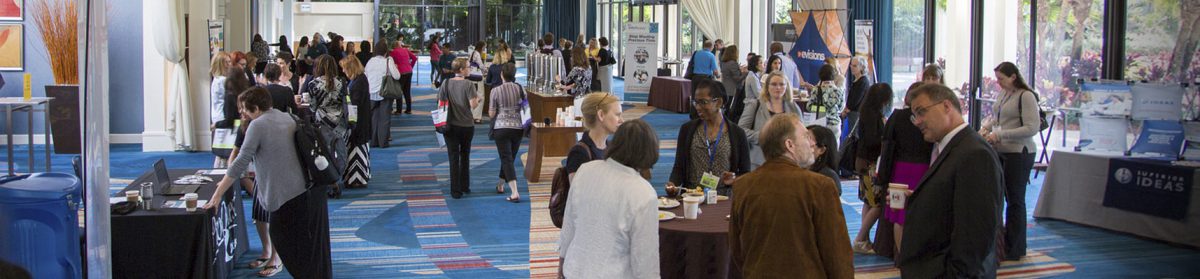
#NORDP2019 starts Monday, April 29, in Providence, RI. Keep checking back here at the blog and on our Twitter feed (@NORDP_official) for conference updates.
_______________
Who: Dr. Martin Kirk, Operations Director (Research & Researchers)
Where: King’s College London
Number of years in research development: More than 20
Length of NORDP membership: 4 years
Number of NORDP conferences attended: 3
When you were a kid, what did you want to be when you grew up? A chemist
From an early age I was very interested in science. I always planned to study for a science degree and most likely work in research in industry. However, after spending 10 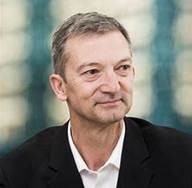 years in research, I realized that I enjoyed research administration and research development much more than doing actual research. I absolutely relish working with investigators and hearing about their research and helping them reach their goals.
I began my RD career at the University of Calgary where I realized that researchers could greatly benefit from help from an RD team. We started by supporting a specific research infrastructure program that had a novel grant proposal format that challenged researchers and was extremely impact-focused. The RD team/process led to great success and gained national attention because of the disproportionate success rates, etc. I had a fruitful 10 years in research admin and RD at the UofC.
In 2007, I was headhunted to the University of British Columbia (UBC) to lead their research administration and RD unit. Again, a strengthening of the RD unit led to more success. Another 10 years slipped by in a wink.
The headhunters came calling again in 2018, this time looking to fill a position at King’s College London leading the central research admin: awards management, contracts, technology transfer, core facilities, clinical trials, post-grad scholarships, compliance and of course RD.
While at UBC I heard about NORDP and attended my first conference. It was a revelation having a conference dedicated to RD and a program entirely focused around success in RD. I learned many techniques and systems. I was amazed at how much sharing of ideas happened at the conference. I met many fellow RD professionals and found the networking opportunity to be invaluable.
I am very much looking forward to catching up with my colleagues and learning new ideas. RD is a rapidly evolving profession and NORDP, a very exciting forum.
_______________
For more information about the conference program, visit http://www.nordp.org/conferences. Follow @NORDP_official on Twitter for all the latest #NORDP2019 updates.
NORDP fosters a culture of inclusive excellence by actively promoting and supporting diversity, inclusion and equity in all its forms to expand our worldview, enrich our work, and elevate our profession.
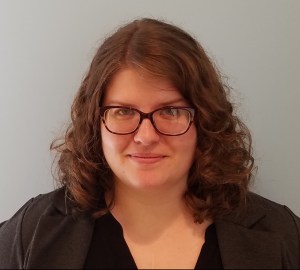 defense as I write this – woo hoo!). But like many people in our field, I’d been doing research development work for some time before my first “official” RD role.
 When a position became available within the Office of Research Development in 2018, I jumped at the opportunity. As Lead Advisor for Research Training & Outreach Initiatives, I am responsible for sustaining and enhancing MUSC’s training grants, with a specific emphasis on educating the research community about best practices for grant applications. In addition, I coordinate and manage professional development workshops and webinars and provide funding consultations for investigators focusing on training and career development awards. My experiences as someone who was supported by both individual and institutional training grants, in addition to managing training programs at MUSC and having an understanding of the statewide needs and the patient population that MUSC serves, has proved invaluable in the development of training programs designed to shift the training landscape here on campus.
 different disciplines, organizations and communities to engage in research and address public health needs. I realized that I was far more effective facilitating research than working in a lab as a faculty member and joined a start-up that provided online learning to health systems. That experience was invaluable as I learned to identify opportunities, innovate products and services, and develop collaborative relationships.
 My main role as a writing consultant is to help researchers make their grants (and research manuscripts) more compelling. I provide input on everything related to readability – mechanics, aesthetics, clarity – as well as on scientific aspects of the work. I also regularly teach scientific writing and, occasionally, help to organize large-scale proposals and guide authors to funding opportunities and collaborators. Finally, I have had several opportunities to train scientific editing interns; this facilitated the transition of my two-department editing service to a core facility for the college in 2017.
 to work in both public and private research universities and at the department, central, and school level. Starting out at the department level working with faculty in a large research center was wonderful training for my later work in a central office—it made me very aware of the challenges department colleagues face and the value of their contributions. In the central office position, I supported proposal development efforts across the University for large scale grants and individual investigator grants, and developed programming and resources for new faculty. During my time in that position we were successful in increasing our annual research volume from $60M annually to $100M with no additional resources. We also received an EPSCoR grant to build our state’s research infrastructure. In 2010, I was offered an opportunity to build a new research development office at Harvard University in the Faculty of Arts and Sciences. With the help of wonderful colleagues and an incredibly talented team, we built a new office. We have since expanded our team to serve our engineering school as well.
 I was involved in research development before I knew it was a field. I worked as a lab manager in my first job after getting my PhD and found out about research administration from an internal training program. After looking for positions in research administration, I was recruited into the School of Engineering to work on an NSF Engineering Research Center proposal and then became the grants manager in the largest engineering research institute on campus. I heard about research development when a new Vice Provost for Research started at Vanderbilt and was hiring for a position to start a dedicated research development program at Vanderbilt. I was immediately hooked when I heard of the opportunity, and my grants management experience with large proposals luckily made me a strong candidate.
 NORDP News