New Board Member Cameo: Michael Preuss

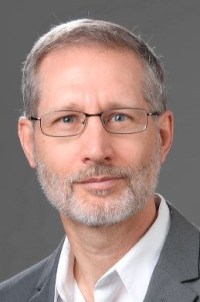
Who: Michael Preuss, EdD – Executive Director, West Texas Office of Evaluation and Research
Where: West Texas A&M University
Number of Years in RD: 16 years
Length of NORDP Membership: Nine years

When and how did you enter the field? What kind of RD work do you do?

I started in research development by writing proposals. I was administering a large federally-funded project and people began asking me to help them with proposals for other projects. My involvement in the field expanded from there although I have maintained involvement with proposal development all 16 years I have been involved with RD.Michael_Preuss_ Headshot (1)

At present, I am the Executive Director of an evaluation and research services unit. I provide external evaluation service for grant-funded projects, almost exclusively for Minority-Serving Institutions and on projects seeking to advance representation of females and minorities in STEM. To maintain a “case load” that will fund my position and entity, I continue to work in proposal development. I critique and even rewrite proposals for teams who are listing me as the proposed external evaluator. I also add the evaluation sections to these proposals. On my funded projects I offer advice about funders, can get involved in interactions with Program Officers, help teams form or expand collaborative networks, offer formative and summative assessment of processes, products, and outcomes, and suggest avenues to pursue in ancillary or future projects. I am also an active researcher. My research focuses on areas of change and need in higher education, again almost exclusively with or at MSIs.

What’s your history with NORDP? How have you engaged with the organization?

I have presented frequently at conferences, participated in the mentoring program, served as a conference volunteer, been a conference “buddy” for first time attendees, and been a NORD grant awardee. I also proposed a research project in 2016 that involved negotiation with the NORDP board to gain access to information and permission to contact the membership to complete a survey. Two peer-reviewed publications have resulted from that effort and we are conducting some follow-on activity now that should provide data for a third article.

What relationships have you built as a result of NORDP?

I have many current relationships that originated at NORDP conferences. They span the continent and extend to Europe and the UK. These relationships have helped me learn about patterns and ideas used in a variety of contexts, provided opportunities for personal and professional growth, and have, in several cases, grown into collaborations. The ability to approach people at all levels of RD and interact with them has been a consistent and positive experience for me at the NORDP conferences. I look forward to meeting many more members while serving on the board.

What are you most excited about as a board member?

Learning and personal growth through board responsibilities and interaction with all the incredible people NORDP can place in your path, finding ways to help NORDP members be as equipped and effective as possible, and helping the organization adapt as it grows and flexes with the changes in our professional and personal environments.

Compiled by Daniel Campbell, Member Services Committee

NORDP fosters a culture of inclusive excellence by actively promoting and supporting diversity, inclusion and equity in all its forms to expand our worldview, enrich our work, and elevate our profession.

A Message from NORDP’s President

Hello NORDP!

EckThank you for the opportunity to serve you this year as NORDP’s next President. NORDP is at a critical point in our evolution as an organization. Earlier this year, NORDP crossed a major threshold with 1,000 active members and rolled out our new three-year strategic plan, but had to cancel the much-anticipated Annual Conference because of COVID-19. At the same time, a national conversation about racism has sparked a wide range of emotions, dialogue, and opportunities for change across the country.

In my opening message to you, I wanted to reflect on these events and think about the future.

As our organization grows, I want to emphatically reiterate NORDP’s statement on inclusiveness that we formally adopted nearly three years ago:

NORDP fosters a culture of inclusive excellence by actively promoting and supporting diversity, inclusion and equity in all its forms to expand our worldview, enrich our work, and elevate our profession.

NORDP is deeply committed to creating an inclusive environment, but in order to live an anti-racist life, we must act, so we are continually looking for more ways to demonstrate these values. In the past month, for example, we asked proposers responding to our event management RFP to describe their organization’s commitment to diversity and inclusivity and how it is embodied in their work with clients and within their organization so that we can ensure that our event planner shares our values. We actively sought bids from minority-owned event management companies. We also launched a series called Conversation Roadblocks: A Dialogue with NORDP’s Committee on Inclusive Excellence, which provides a forum for conversation about current events that provides a safe space for our members to share their feelings, connect with colleagues, and suggest actions that we can take together and at our home institutions. I encourage you to join upcoming discussions, which you can find on the NORDP events calendar.

Looking ahead, our strategic plan calls for the development of a robust action plan toward inclusive excellence throughout the organization. I look forward to sharing the working group’s recommendations for NORDP so that we can act together in the near future.

Speaking of the strategic plan, in September 2019, the Board of Directors used the feedback from the membership survey to develop our next three-year strategic plan, which we formally adopted and began sharing with members in early 2020. To keep you informed of our progress, we created a new strategic plan website where working groups will post updates throughout the year. You will also be able to see the membership of each working group. If you’d like to get involved in an ongoing or future working group, please contact the champion identified.

After canceling the 2020 Annual Conference, the Board of Directors and I have spent a lot of time reflecting on the value of NORDP membership beyond the Annual Conference. We remain committed and even more enthusiastic about several objectives in the strategic plan that will bring value to members even when we cannot convene in-person.

Building on our years of successful programming and in addition to the 2020 conference content that we are bringing to you virtually, we are creating more coordinated, professional development content and programs for RD folks at all levels:

  • This year we will launch NORDP LEAD, a leadership development program that leverages peer mentoring groups.
  • This year we will launch RD 101, a new signature training, for early career RD professionals and those hoping to enter the field.
  • The mentoring program continues to serve members and evolve with more peer mentoring groups forming.
  • We’ve re-designed the Leadership Forum that will be a part of the 2021 Annual Conference.

And there’s more on the horizon: We will be planning to develop year-round content that will benefits members at all stages of their careers and exploring the possibility of RD certification or credentialing for RD professionals.

Before I wrap up, I want to thank our outgoing Board of Directors, Kathryn Cataneo, Karen Fletcher, David Stone, Kari Whittenberger-Keith. Your service to this organization has helped us grow in so many ways. Let me say welcome to our incoming Board of Directors members, Eva Allen, Anne Maglia, Anne Pascucci, and Michael Preuss, with whom I look forward to working. The biggest T-H-A-N-K  Y-O-U goes out to our dozens and dozens of members who volunteers their time in big and small ways to help NORDP achieves its mission.

Lastly, I want to keep in touch. Starting next month, I will be hosting monthly drop-in office hours with other members of the Executive Committee on the first Monday of the month at 11am EST/EDT. Keep an eye on the NORDP events calendar for the zoom link so you can access these monthly office hours.

Throughout the year, please make use of the listserv to ask your colleagues about RD and subscribe to the NORDP Blog for relevant NORDP and RD news. If you have any questions or comments about NORDP and/or the Research Development field, just “Ask the President” by emailing president@nordp.org.

I look forward to working with all of you in the upcoming year!

Sincerely,

Kimberly Eck

Kimberly Eck, MPH, PhD
Assistant Vice Chancellor of Research Development
University of Tennessee, Office of Research & Engagement
Blount Hall, 1534 White Ave, Knoxville, TN 37996-1529

President 2020-2021
National Organization of Research Development Professionals (NORDP)
http://www.nordp.org


New Board Member Cameo: Eva Allen

Who: Eva Allen, Assistant Director, Environmental Resilience Institute
Where: Indiana University
Number of Years in RD: 18
Length of NORDP Membership: 10

When and how did you enter the field? What kind of RD work do you do?

I learned to write proposals to fund my graduate research in evolutionary biology, and after graduating, I shifted directly into a career at Indiana University in research development, initially as a one-person shop providing proposal support to my graduate department. When the VP for Research created a central team to support strategic proposals and faculty development, I joined the team as a research development specialist with a specialty in complex, team-based proposals. I eventually served as director of that team for a couple years, while also still working with teams developing proposals.Indiana University Office of the Vice Provost for Research 05.09

When one of those teams earned a 5-year internal “Grand Challenge” award, I accepted the position of assistant director for the initiative, which I still hold. Although less connected to proposal work in this role, I have had the privilege to experience the next phase of the grant process, helping a group of researchers implement their proposed plans to launch a “grand challenge” initiative, which has honed my skills as an administrator, and has given me valuable insight into the ways in which the articulation of a proposal’s project plan can impact post-award implementation. I have also been an active participant in the growing RD community of practice surrounding university-led Grand Challenges and other audacious research initiatives.

What’s your history with NORDP? How have you engaged with the organization?

When I joined IU’s campus-level proposal team in early 2012, I had colleagues for the first time, and one of the first things they taught me was about the existence of NORDP. I joined immediately, and have attended every national and Great Lakes regional conference since then, several times as a presenter or panelist.

I became involved with NORDP’s Professional Development Committee in 2014, and shifted to the Pre-conference Workshops Committee when that function was split off before the 2015 conference. I learned the ropes as co-chair under Kari Whittenberger-Keith for the 2017 conference, and chaired that committee for the 2018 and 2019 conferences. In that role I also served as liaison to the Conference Organizing Committee for the 2018 and 2019 conferences. This year, I joined the core team organizing the 2020 conference with co-chairs Jill Jividen and Jenna McGuire, for which I led the workshops working group and served as liaison with the evaluation working group before the pandemic canceled the conference.

I am honored to have been elected to NORDP’s Board of Directors, and look forward to serving the organization in this new way.

What relationships have you built as a result of NORDP?

I knew from my very first conference that I’d found “my people.” Through NORDP conferences and committee work I’ve met so many people I consider to be not just acquaintances, but true friends. We share information, offer advice, follow each other’s careers, and look forward to seeing each other. I’ve also developed fond relationships with a couple of the people I’ve met through NORDP’s mentoring program, and still check in with them long after our formal year together has ended.

What are you most excited about as a board member?

Most of the committee work I’ve done for NORDP has been seasonal, so I’m looking forward to working with NORDP colleagues on a year-round basis. It’s an exciting time to be joining the board, as the organization begins to implement our new strategic plan, and also as COVID-19 has so dramatically shifted people’s approach to in-person work, which I think offers interesting opportunities both for the practice of research development and for NORDP as a geographically-dispersed organization.

Compiled by Daniel Campbell, Member Services Committee

NORDP fosters a culture of inclusive excellence by actively promoting and supporting diversity, inclusion and equity in all its forms to expand our worldview, enrich our work, and elevate our profession.

New Board Member Cameo: Anne Maloney Pascucci

Who: Anne Maloney Pascucci, Director Office of Sponsored Programs
Where: Christopher Newport University
Number of Years in RD: 20+
Length of NORDP Membership: 10+

When and how did you enter the field? What kind of RD work do you do?

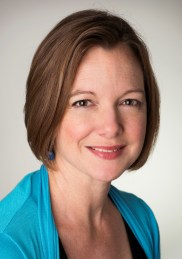
I don’t know that I officially entered the field. Back in the early 2000’s I worked at Rhode Island College for the Research Administration office. There was very little engagement with faculty or encouragement for them to seek external funding. I took it upon myself to become familiar with state politicians and other public entities to bring “RIC” into the forefront and showcase our faculty’s efforts. I held proposal development sessions, collaborativePascucci 2020 Board Photoopportunities and gave my office a face. Since then, I have done similar work for Radford University and Christopher Newport University. While being the lead research administrator at a PUI, I also engage in RD. I have organized Collaborative Ecosystems Summits that brought various experts from around the state to discuss the other aspects of research, such as science communications, measuring impact and niche careers for students. I enjoy getting to know my faculty and their research. The best feeling is when you put them together with others who can develop a program with real impact. So, what kind of RD do I do?  Not official, make it up as I go, attempting to bring creative forces together to improve the human situation and its impact on the earth.

What’s your history with NORDP? How have you engaged with the organization?

I believe my first conference was in 2010. I’ve been involved on and off with the Nominations Committee, the Enhancing Collaboration Working Group, PUI Working Group, have presented at multiple conferences and have been fortunate enough to have won a travel award twice. I consider myself to be an ambassador for NORDP to many peers from PUIs to R1s.

What relationships have you built as a result of NORDP?

Mark Milutinovich was the first, followed by Holly Falk-Krzesinski. She has been an incredible resource and I’ve roped Mark into doing some pretty terrific sessions with a wide variety of folks. Jeff Agnoli is someone that I rely on for advice and innovation. Susan Carter is always one to bring out the best in me. Jorja Kimball is near and dear to my heart and someone that I would not hesitate to reach out to for help. Karen Eck has been right down the road and a great inspiration to me.

It is funny how my NORDP engagement has come full circle. In 2006 I took NCURA’s Leadership Development Institute. In my cohort was Joseph McNicholas, Jeanne Viviani, Nancy Daneau, MaryBeth Curtain who are all now members. I have been preaching about NORDP to them for years with Joseph getting involved when he was at a PUI years ago. It was fun in Providence for us all to get together like a reunion!

 What are you most excited about as a board member?

I am so excited to be able to speak on behalf of NORDP with some leverage.  I’ve reached out to various groups as a member or thrown ideas out there for others to run with.  Now I feel like I can really make a difference encouraging membership diversity and growth. I sort of consider myself the underdog. In Rhode Island, RIC was sort of the “red haired middle child” that seemed to be overlooked. Christopher Newport University is very similar. It is in an extremely research rich environment with Jefferson Lab, NASA Langley, museums and NOAA all nearby. Somehow, we do get overlooked, but I make sure that our presence is known and that we are great collaborators. It takes a while to shift the self-image that an institution has and projects to the community. We are getting there and I like to think that I am playing a role in elevating the presence of CNU as a scholarly, research engaged institution.

Compiled by Daniel Campbell, Member Services Committee

NORDP fosters a culture of inclusive excellence by actively promoting and supporting diversity, inclusion and equity in all its forms to expand our worldview, enrich our work, and elevate our profession.

Call for PEERD Expert Applications

NORDP-logo_lockup-PEERD[1]

NORDP’s Program for External Evaluation of Research Development (PEERD) is excited to announce a call for PEERD experts. NORDP PEERD experts will serve a three-year term, beginning October 1, 2020 and ending on September 30, 2023. NORDP PEERD experts will be called on to provide the following services:

Job Function Details Expert’s Payment
PEERD Review Conduct an onsite review of an institution’s research development office and/or programming. Provide a PEERD report with recommendations for the institution. $4,200 per expert + travel
PEERD Presentation Provide a 1- or 2-hour presentation on a research development topic requested by the institution. Also offered virtually. 1hr = $300 + travel

2hr = $600 + travel

PEERD Workshop Conduct an onsite (4hr) workshop on research development (including its overlapping mission but distinct activities from research administration). Small groups will work through various RD scenarios, including but not limited to the following: proposal development, strategic research advancement, enhancement of collaboration and team science, research communication and knowledge mobilization, among others. $1,200 + travel
PEERD Virtual Consultation Provide a PEERD virtual consultation packet, including an institutional survey for institutions to administer on their campus. Analyze survey results and provide a virtual consultation, including a report on next steps for the institution. $2,400
PEERD Competitive Analysis Work with the institution to identify peers and aspirational peers, a goal/focus for the analysis, and interview questions. Conduct data analysis and provide results, along with recommendations to institution. $3,600
PEERD Informational Briefs Working in teams, develop informational briefs on topics of importance to the NORDP membership (as identified in the member needs survey). No remuneration; part of expert responsibilities
PEERD Resources Develop the PEERD consultation packet, as well as other resources beneficial to PEERD experts. No remuneration; part of expert responsibilities

PEERD Expert Application Forms, along with a C.V./resume, are due to PEERD@nordp.org by August 31, 2020 at 5:00 p.m. EST. Applicants must strictly adhere to all word limits. The PEERD review committee decisions will be made by mid-September 2020. Any inquiries should be directed to PEERD@nordp.org.

NORDP Postdoc Cameo: Jeremiah Paulus

Members come to NORDP via many paths. This cameo is part of a series featuring members who came to NORDP following postdoc experiences.

Who: Jeremiah Paulus, Grants & Contracts Specialist
Where: The University of Texas at Austin
Number of Years in RD: 5 years
Length of NORDP Membership: 6 years

What’s your history in RD? When and how did you enter the field? What kind of RD work do you do?

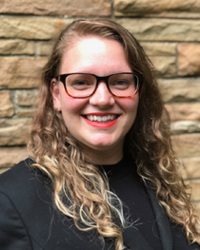
As I was finishing my postdoc in 2014, I was trying to decide what to do next. I had always enjoyed discussing other people’s research and how to improve it during lab meetings and conferences, but wasn’t sure how those skills could translate into a career. Paulus PhotoFortunately, my postdoc organization, the Medical College of Wisconsin, had a fantastic career seminar series for graduate students and postdocs. From there, I learned about research administration and development, and by talking to a number of people I already knew, I learned about NORDP. After learning even more about the field at my first NORDP meeting, I was confident about the type of job I could apply for and later that year started my career in research development.

At the University of Texas at Austin, I am a Grants & Contracts Specialist in the Department of Molecular Biosciences. I perform all the administrative duties involved in grant submission, including submitting internal paperwork, uploading documents into submission portals and acting as a liaison with our central sponsored projects office. In addition, I also find and evaluate funding opportunities, edit documents for grammar and responsiveness to the opportunity, draft budgets and other documents and make model figures.

What’s your history with NORDP? How have you engaged with the organization (committee work, conferences attended/presented)?

I attended my first annual NORDP conference in 2014, while I was still trying to decide whether research administration was the correct career path for me. While there, I had many opportunities to network with people in the field, as well as have more formal meetings with attendees that had similar backgrounds to my own. This experience helped me to decide to go into research administration, including using the job boards to find my first position. Since then, I have attended the annual NORDP conference 3 more times (in 2015, 2016 and 2018). I also gave a poster presentation in 2018, and sometimes engage in the listserv.

What relationships have you built as a result of NORDP (new colleagues, connections to institutions where you previously had no point of contact)?

I primarily built up relationships at my first meeting when I was still trying to figure out what I wanted to do. I called on those connections I made to learn more about their particular job duties as well as the culture at their institutions. This helped me more fully understand the diversity of RD careers, as well as help define my job searches. I have also made connections with a group of science writers, who have been able to provide more specific advice to the types of job duties I have.

How has your service to NORDP enhanced your career?

Every conference I’ve attended has produced a wealth of notes that I have taken back to my colleagues. With the information I have gained through NORDP, I have helped improve the grant submissions I work on, as well as more fully understand the different sponsors. This has helped me excel at my job and helped as I studied and received my Certified Research Administrator (CRA) Certificate.

How do you see that NORDP functions as a resource for RD professionals coming from post doctoral positions?

I think NORDP can help instruct postdocs on the various bureaucratic and administrative aspects of research development that they may not have had much experience with. In addition, NORDP can be beneficial to helping postdocs translate their research, communication and planning skills to research development position they may have never known about or previously considered.

What recommendations do you have for prior postdoc members to get more involved with NORDP?

I would recommend staying involved with the community. That could mean contributing to the listserv discussions, and attending the meetings.

What tips do you have for trainee members of NORDP or other postdocs looking to find a career in RD?

I would highly recommend becoming a member to have access to the listserv and job boards. Those proved invaluable as I was transitioning to a career in research development. I also recommend attending the meetings, or even reviewing the slides and notes from previous meetings. I’ve learned so much and continue to do so.

Compiled by Daniel Campbell, Member Services Committee

NORDP fosters a culture of inclusive excellence by actively promoting and supporting diversity, inclusion and equity in all its forms to expand our worldview, enrich our work, and elevate our profession.

NORDP Postdoc Cameo: Diana Sama

Members come to NORDP via many paths. This cameo is part of a series featuring members who came to NORDP following postdoc experiences.

Who: Diana Sama, Proposal Development Officer
Where: University of Kentucky
Number of Years in RD: 4 ½ years
Length of NORDP Membership: 3 years

What’s your history in RD? When and how did you enter the field? What kind of RD work do you do?

I became interested in science communication during my training in biomedical neuroscience. Throughout my training, I helped my mentors and collaborators write proposals with increasing involvement as time progressed. I also received my own individual fellowship and really enjoyed the application process. While in my postdoc, I served as a ghostwriter my university’s health care marketing team and worked on recruiting materials, stock power point slides, and articles for their quarterly _DSC7929DianaMathisSamapublication. This gave me experience writing for a lay audience and interacting with clients. When it came time for the next career step, I decided to try my hand at RD and found a position outside academia with small educational nonprofit. I quickly developed skills in team building, networking, and grant writing outside my field of expertise. I also became well versed in scoping out potential sponsors. While I loved working with that group, I missed science and ended up returning to the university setting. I’ve been in the University of Kentucky Proposal Development Office for about three years now, and I feel like I’ve found my niche. Our most popular service is proposal review, where we read content for clarity, flow, organization, adherence to guidelines, and perform a gap analysis. Our other services include consultations for proposal guidance and advice, collaborator searches, funding opportunity disseminations, personalized funding searches, and grant-related workshop training for the campus community. We work on individual investigator proposal, as well as complex/multicomponent proposals.

What’s your history with NORDP? How have you engaged with the organization (committee work, conferences attended/presented)?

I have been a member of NORDP for 2 ½ years. I have attended the national conference, as well as the SE regional meeting. I found the presentations in both settings very informative for my current position. Topics included best-practices to innovative initiatives to networking with others in the field. I plan to become more involved over time as I learn more about NORDP and all of the committees. I have participated in surveys and conversations with a few committees, providing input where able.

What relationships have you built as a result of NORDP (new colleagues, connections to institutions where you previously had no point of contact)?

At my first NORDP conference I attended a networking dinner with other RD professionals who transitioned from postdocs, and the group has sporadically stayed in touch, thanks to the organizer of that dinner (Samar Sengupta) who rallies the group together every so often for NORDP-related input and conversation. The interaction with colleagues from similar training backgrounds has helped me feel welcomed and like I have a place and identity in the organization.

How has your service to NORDP enhanced your career?

I still have a lot of progress to make in this area, BUT I think just having a group to identify with—both NORDP as an organization, and former postdocs as RD professionals—has helped me validate my career choice. I think postdocs often struggle with the decision to leave their subject behind, but seeing many others in the same situation has eased my mental journey to this career.

How do you see that NORDP functions as a resource for RD professionals coming from post doctoral positions?

What I find interesting and unique about RD and RD professionals is that it is such a mixed group, in terms of training and career backgrounds. Coming from a disciplinary background, we always considered our professional societies to be the authority on everything we needed for our career, and I think NORDP comfortably fills that role for RD professionals. Finding such an organization felt very natural and helped ease the transition from my discipline to the RD profession. I know I can rely on NORDP for invaluable resources, conferences centered on professional learning, policy updates, innovative research, networking, career mentoring and advice, and job postings. The list serve is full of resources and advice, and I highly recommend signing up, just to see what questions other RDs pose and to see the vast historical, regulatory, and professional knowledge that the collective membership offers. I think NORDP helps all RD professionals feel like we belong and contribute to something bigger than our organization.

What recommendations do you have for prior postdoc members to get more involved with NORDP?

The best way to start getting involved is by attending the national and regional conferences. I highly recommend the networking dinners at the national conference. Find a topic or host that interest you and sign-up early because the dinners fill up fast. Also attend the committee meetings to see what they are all about and consider joining a committee or working with a committee.

What tips do you have for trainee members of NORDP or other postdocs looking to find a career in RD?

There are many paths to becoming an RD professional. If the career interests you, try to take advantage of your local network to get some relevant experiences while in your postdoc, even if it is outside the RD field. Work on building skills such as breaking down complex information for a lay audience, writing proposals and papers, or working with clients. Also, don’t overlook volunteer work to help build your skillset. If you enjoy the experience, start looking at job ads to get an idea of who is hiring and where, and what kind of work is available. Also look at national resources for RD information and careers, and keep in mind that the professional society in your discipline may have some information to offer, so ask around at your national conferences. Finally, keep in mind there are many settings in which you can work as an RD professional. Some people find the perfect fit with their first position, but sometimes it takes one or two job changes to get that ideal fit. So, don’t give up and feel free to reach out to those of us in NORDP who have already navigated the career transition.

Compiled by Daniel Campbell, Member Services Committee

NORDP fosters a culture of inclusive excellence by actively promoting and supporting diversity, inclusion and equity in all its forms to expand our worldview, enrich our work, and elevate our profession.

NORDP 2020 Candidate Forum Follow Up Questions

The following questions were asked by the membership during the NORDP Board Candidates’ Forum. Please find below, in alphabetical order, their responses. The responses are unedited. The candidate briefs, links to their CVs, and a link to the recorded forum are available here: https://www.nordp.org/2020-board-candidate-profiles.

1. Our org has grown exponentially in the last few years – and yet that growth has not reflected an equally exponential growth in the diversity of our RD professionals. What will each of you do in your first 100 days on the board to advance the inclusive excellence of NORDP and RD enterprise?

Allen

Although the more visible categories of diversity – gender and race – clearly remain a challenge for NORDP, the organization actually has quite a bit of less visible diversity.  Our organization encompasses members who arrived at RD by way of research administration, industry, writing and editing professions, project management, university administration and the professoriate, among many other paths; we have members representing R1 institutions, HBCUs, MSIs, PUIs, and medical schools; and we have members with large centralized RD teams, offices of one, decentralized networks, or no formal RD responsibilities at all.  Along these axes, NORDP has grown increasingly responsive to planfully supporting the different strengths and needs of our members through conference tracks, webinars, various mentoring venues, and regional groups.  I look forward to learning from my NORDP colleagues about where the organization could be better serving the existing diversity of our membership, and opportunities to encourage additional diversity within the organization.

Maglia

In the first 100 days, I would reach out to the Inclusive Excellence Committee to understand their priorities, activities, and strategic plan for the next year. Specifically, I would be interested in learning about activities focused on externa and internal stakeholders. For external activities, I would be looking for events such as listening sessions, partnerships with MSIs, and recruitment of minorities through organizations such as SACNES, SHPE, NACME, NHPE, OSTEM, AISES, and others. I would also be interested in activities focused internally on NORDP members and leadership, including activities to assure that the organization is welcoming and promoting diversity. Such activities may include reviewing and rewriting policies though an inclusion lens, assuring that cultural competency is weaved throughout all meetings and sponsored events, ensuring that diverse voices are represented and celebrated in all meetings and activities, training all organizational leadership in cultural competency, and developing resources to help members promote and support diversity and inclusion in their workplace. I would support and promote the activities the committee has developed, and would offer to work with them on additional opportunities in these areas.

Pascucci

As I mentioned in my opening comments, I am an action-oriented person and so am always ready to go!  I am known for the connections that I make on LinkedIn and have long been reaching out to Indigenous populations for purposes of inclusivity. Being a board member is a tremendous opportunity for me to formalize that outreach through NORDP.  The Native Learning Center (NLC) is one group that I am connected to on LinkedIn that I would reach out to in order to gage interest and seek suggestions for individual institutions that might have an interest in participating with NORDP.

Another area of diversity that I would like to focus on is that of Community Colleges.  As our country re-aliens some priorities, I believe that community colleges are ripe to enter the RD world in a more formal way. I LinkedIn with Martha Kanter when she was the Under Secretary for Education during the Obama presidency and reporting to Arne Duncan.  Now ExeMartha has a accountcutive Director, College Promise & Senior Fellow, New York University Martha Kanter would be my first choice in connections to tap on behalf NORDP and our efforts to be inclusive and innovative.

The composition of NORDP’s membership must to reflect our world. We can only succeed if we are diverse and inclusive and appreciate what everyone has to offer.  These two groups would be my primary focus.

Preuss

I agree that NORDP needs to be an inclusive and diverse organization and that it lacks strong representation of people of color. I would start as I intend to go on by working with all potential stakeholders to clearly identify what can be known about various types of diversity in the research development community, what can serve as appropriate measures of NORDP’s diversity, and to formulate outreach plans to achieve, and if possible, exceed the diversity goals set.

That the percentage of African-Americans, Asians, Hispanics/Latinos, Native Americans, etc. has not changed as the organization has grown is a matter of significant concern. I would, though, point out that the situation is not as simple as the question makes it sound. First, we can’t say definitively the NORDP membership is not representative because we don’t have demographics for all research development professionals. All that is known is the racial and ethnic identities reported by the NORDP membership, a sample rather than the population from which it is drawn. Second, to the best of our knowledge research development professionals are an usual group, more the exception than the rule. That over 80% are female and over 85% hold advanced degrees is sufficient evidence of this exceptionality. Therefore, national averages for racial diversity and even race and ethnicity figures for higher education will not be appropriate standards for RD. Those are the normal patterns which should not be seen as applicable to a specialized and exceptional subset. Third, people of color are underrepresented among faculty and administrative staff in higher education, the very population from which RD professionals are drawn. We can and should support change in this area but that is a different concern, recruitment and training. Finally, we cannot assume a standard staffing pattern for MSIs. While HBCUs employ high percentages of African-Americans, Asians, Hispanics, etc., the same cannot be said of HSIs, Tribal Colleges and Universities (TCU), and Asian American and Pacific Islander Serving Institutions (AAPISI). The data I am familiar with suggests that four of every five employees at HSIs are non-Hispanics and the figure is closer to nine out of ten when the focus is narrowed to HSIs that are four year institutions. Staffing at TCUs and AAPISIs are much closer to this pattern than that characteristic of HBCUs.

We also need to recognize the limited penetration of NORDP in the MSI community. And, it is at that point where we may find an appropriate standard for diversity in NORDP and a means of setting realizable goals and assessing progress. The counts of HBCUs, HSIs, TCUs, and AAPISIs are known as is the distribution of institutions across the various Carnegie classifications. I would suggest that a goal for NORDP would be to have equal representation from all spheres of higher education and that tracking this, percentage of HBCUs, HSIs, TCUs, AAPISIs, R1s, R2s, etc. with NORDP members, would be a beneficial way of approaching this concern. At present, NORDP is strongly skewed in the direction of R1s and R2s and away from MSIs. It is this trend I would suggest we correct as we are a professional organization seeking the fullest representation across the higher education spectrum. The types of institutions represented rather than the traits of individuals chosen on various campuses to fill RD roles is, in my opinion, a clearer, more appropriate, more accurate, and actionable focus. The racial and ethnic diversity of employees at MSIs lies entirely with the institution but recruiting members from a broader range of institutions is something NORDP can target and achieve.

2. As new members of a leadership group, you have lots of energy and new ideas. You may be met with people who are resistant to change and lots of historical knowledge to back up their resistance. How do you plan to navigate this dynamic?

Allen

This has been a fairly common dynamic in my current position — we’re creating new ways of fostering collaboration within my institution, and there can be a lot of systemic and cultural resistance to overcome.  Sometimes, learning the history of what hasn’t worked before changes my thinking about whether some goal is achievable at all, but sometimes the context has changed enough that learning the history helps me to refine my thinking about new approaches to achieving the goal.  I think this will be equally true with NORDP: the organization has grown rapidly in recent years, and is no longer a young start-up.  Things that may not have been possible in the past may now be possible, while things that have worked well in the past may no longer suit the organization as well, and fresh eyes will be able to bring new perspectives on carrying out the organization’s mission and goals.

Maglia

Change can be stressful, especially to those who have worked hard to develop the current practices and policies. As a new board member, it is critical that I recognize the challenges that change creates for those who are comfortable with the current way of doing.  There are several behaviors and approaches I would take to get buy-in for new activities and ways of doing. First, I would celebrate the successes and accomplishments of the current approaches and try to make links between current/previous successes and the new way of doing things. Second, I would try to be open and honest about the expectations, vision, and expected outcomes of the change. By outlining the reasons behind the change, I would try to develop buy-in for the approach.  Finally I would listen to concerns, discuss pros and cons of proposed changes, clearly articulate why the changes are needed, and outline a path for making the change happen in a stepwise fashion if needed. And I would be open to adjustments to the process and approach for implementing the change.

Pascucci

Navigating this dynamic is how I was raised. Institutional history is as valuable as the strategic plan for its future.  Respecting the knowledge and experience of those who might be resistant to change starts with understanding their perspective.  While I am very enthusiastic, I understand the need to rein in that enthusiasm when suggesting change.  I find that when proposing new initiatives, a well thought out plan of how, when, who and delineating the impacts.  Just like when working with faculty on proposals, I try to anticipate questions or issues that may raise a red flag and be prepared to discuss.  Patience is a virtue which I possess as is the realization that I will not win every time, but I can do my best.

Preuss

I have spent most of my professional life operating as an agent of change including five years helping Czech non-profits transition from a communist to a free-market setting. I have learned a number of key strategies that I regularly enact when working with PIs, teams, and organizations. First, I approach each situation as a learner. I emphasize understanding purposes and perspectives above advocating for my own. Second, I recognize that as a party entering a setting with existing relationships, alliances, historic patterns, and power structures, I have very little immediate authority. Any impact I hope to have as a new board member will be limited to one or two areas. I will work hard to choose mission critical concerns as the points I will emphasize. I will also look for areas that have the broadest impact so they naturally form platforms for conversations about other topics. Third, I emphasize relational and experiential authority. On the board, I seek to establish and strengthen relationships with my counterparts and use my experience/expertise to establish footholds and then build out from those.

I have worked extensively with at least three members of the current board and with one of my co-nominees so I won’t be starting from ground zero. There are also several board members who know me and who have worked successfully with me in the past. That will make the task of entering the board setting easier.

For influential parties within NORDP who are not members of the board, I will employ the same strategies. I will seek to understand, attempt to establish/maintain transparent and trusting relationships, and work toward critical and therefore shared purposes. To those I will add a sincere interest in understanding the setting and influences that led to the current commitments or patterns. In these settings, being a current board member will establish some positional authority but that would not be an emphasis in my relationship with these individuals. Like with the existing board, I believe I am in a fairly advantageous position. Having worked within NORDP investigating research development, I already have cordial relationships with many of the past presidents and board members. This will be helpful should concern about new directions arise.

3. Would you please elaborate (for Anne M) or discuss (for Anne P., Eva, Michael) a bit on how you would engage federal sponsor representatives in partnerships with NORDP for mutual benefit? That is, what is in it for them? What is the incentive for doing things together?

Allen

The model being used by NSF, DOE and DHS for the ongoing CIVIC funding competition is an interesting example of how RD can contribute to federal sponsors’ priorities.  In addition to the typical involvement by the program officers, this competition is also supported by an external team that works with stage 1awardees to build team capacity and develop strong stage 2 proposals.  This is a twist on the Ideas Lab model, in which the agency holds ideation and team formation events that are a prerequisite for submitting a full proposal.  Both these models are entirely compatible with RD practices, and offer an opportunity for NORDP to partner with program officers.  For example, NORDP could develop a program similar to PEERD but focused on working with program officers to run complex competitions.  In such a scenario, the incentives for “doing things together” are bi-directional: the funding program would receive stronger applications, and the RD professionals would gain new experience, expand their networks, and contribute to NORDP as well.

Maglia

I would take advantage of the current budget situation at most universities and agencies limiting professional development and travel opportunities and focus on online/virtual workshops. I would identify two or three areas for which both federal agencies and NORDP have strong interest in promoting success (such as “how to effectively articulate the broader impacts of your research” or “effective approaches to managing and fostering diverse research  teams”) and propose content and approaches that matched the needs of the agency and NORDP. I would then reach out to people with whom I have existing relationships (especially at NSF and NIH) and propose to work with them to do the “heavy lifting” on developing content and logistics. Knowing that outreach is a critical activity for funding agencies, I would leverage and align our complementary priorities to promote improvements in proposal and research development.

Pascucci

I have had the great fortune to get to know some leaders in a couple of Federal Agencies.  Jean Feldman is the Head Policy Analyst for the National Science Foundation.  She very graciously came to Christopher Newport University this past December.  She presented to our faculty as well as some of the surrounding college and university research folks.  She was extremely generous with her time.  For me, the greatest outcome was Jean’s statement that she had forgotten how difficult it was for PUIs to find the time to write successful proposals.  Patricia Moore Shaffer, Deputy Director at the National Endowment for the Arts also came to CNU.  She presented a sort of TED Talk for the CNU Chapter of ACE Women in Higher Education.  She also presented at NORDP in Arlington a couple of years ago at my request.

The one thing that I can say about sponsors is that they want good proposals that match their funding strategies.  It is in their best interest to affiliate with NORDP.  My personal connections can not create the relationship that the question is addressing, however, I believe that a seat at the table with FDP and similar groups may provide that entre.  I strongly suggest that as an organization, NORDP seek that seat with FDP as well as a seat a COGR.  The goal of these organizations melds well with FDP.  We seek good relationships with government that benefits all involved.

Preuss

I have experience approaching federal program officers about project ideas, clarification of requirements, and just in time requests or project related concerns. While I am not an expert in how to engage a federal sponsor at the program or policy definition level, I expect Anne Maglia will be an invaluable resource in that respect. Mutual benefit is, however, a topic I can address.

NSF’s recent additions and changes related to Hispanic-Serving Institutions are a good example. Federal funders benefit from clear understanding of the context in which they are seeking to encourage activity and/or enact change. That is why they employ scientists as program officers and bring in scholars on rotation rather than just hiring portfolio managers with MBAs. In my example, actionable information was lacking in respect to HSIs and NSF requested that the higher education community propose means of generating this information. The result was a virtuous circle. Information generated has and continues to inform NSF’s offerings related to HSIs which are now more accurately focused on the needs of the institutions and their students.

NORDP and its members have the ability, given the breadth and the depth of experience in a wide variety of research, intervention, performance, and community service endeavors, to provide valuable insight and actionable information to federal agencies. We can convene groups of people and gather and help interpret information that can initiate conversations about future directions, modify priorities within existing programs, or simply fine tune the way some offerings are presented. This can create a funding environment that is even more closely tailored for and responsive to the current research efforts and educational needs than is now the case. The experts on review panels and advisory boards can also provide this type of information but NORDP has the capability of sampling specific subsets of institutions, project types, etc. These patterns then benefit the teams and institutions applying and potentially produce more effective projects which serve the interests of all stakeholders and so on. It may seem like a “pie in the sky” perspective but this is the way the Hispanic-Serving Institution label came into being, the means by which Title V was added to the CFDA 84.031 group, and how NSF is working to identify ways to aid HSIs. As Margaret Meade said, “Never doubt that a small group of thoughtful, dedicated citizens can change the world; indeed, it is the only thing that ever has.”
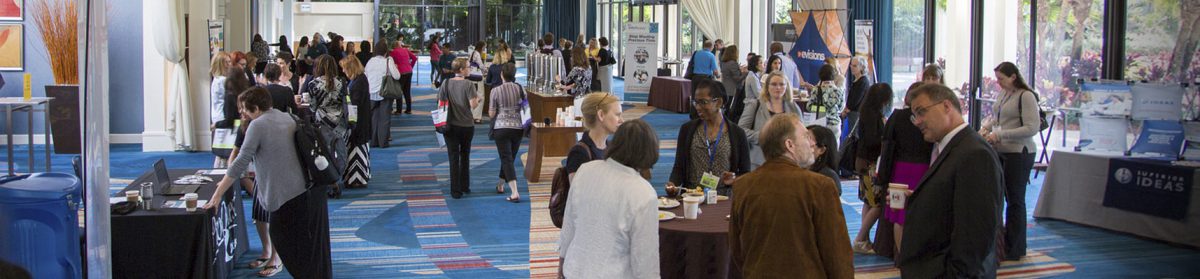
2020 NORDP Service Award Winners

The National Organization of Research Development Professionals (NORDP) is pleased to announce the 2020 winners of the Rising Star Award and the Holly J. Falk-Krzesinski Service Award.

Each year, the Rising Star Award recognizes up to three NORDP members who have made outstanding volunteer contributions to NORDP. Nominations for this award may be submitted by any NORDP member. The 2020 Rising Star Awardees are Daniel Campbell, Vanity Campbell and Sarah Messbauer:

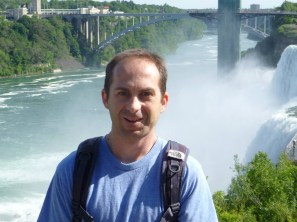
  • Daniel Campbell (Old Dominion University)Dan_Campbell1 is a five-year NORDP member. In this time, Dan has developed into a reliable and devoted volunteer, writing many NORDP News blog posts. He joined the Member Services Committee (MSC) – Communications Sub-committee in 2016 and then became the MSC liaison to the Communications Working Group. He has conducted the research and interviews necessary to author numerous blog posts, including multiple member/conference cameos. Dan also serves on the Conference Marketing Committee and the Conference Program Committee and is a key member of the Communications Working Group.
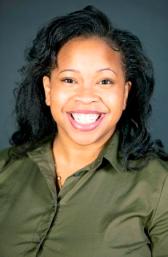
  • Vanity Campbell (University of California, Agricultural and Natural Resources) Vanity_Campbellis active on the Committee on Inclusive Excellence Committee (CIE) and represents CIE on the Member Services Committee. In this role, she led the active recruitment of Minority Serving Institutions into NORDP, including a successful outreach campaign between NORDP members and existing contacts at prospective MSIs. Vanity is also the Region VII (Pacific) chair and led the region’s conference committee through its inaugural Pacific Regional Conference in October 2019, which was attended by more than 70 individuals.
  • Sarah Messbauer (University of California, Davis)messbauerheadshot-e1551978072774is making distinctive contributions to the Member Services Committee (MSC) and to NORDP. She is MSC’s co-representative for Region VII and has co-facilitated a professional development workshop, co-managed the Ambassador Program and New Member Orientation and Networking, and co-hosted a new member networking dinner. As an MSC co-chair, Sarah works to enhance members’ experiences. Sarah drafted Access Guidelines for Presenters, providing NORDP with practical steps to make conference sessions and presentations accessible to attendees with permanent or temporary disabilities and/or special needs.

The Holly J. Falk-Krzesinski Service Award is named in honor of the organization’s founding president. The award, voted on by the Board of Directors, is given annually to a NORDP member in recognition of outstanding service to the organization and to the research development profession. The 2020 recipient of the Holly J. Falk-Krzesinski Service Award is Kathy Cataneo:

  • Kathy Cataneo (University of New Hampshire) Kathy Cataneois a NORDP Board member and serves as liaison to the Member Services Committee (MSC), which she formerly chaired. She guided MSC with creativity, enthusiasm and capable management. Under Kathy’s leadership, NORDP has grown to around 1,000 members, and long-term members have enjoyed a renewed sense of engagement with the organization. Kathy’s contributions to NORDP include regional recruitment strategies, new member welcome receptions, member surveys, enhanced service awards and the creation of numerous policy/guideline documents. A true servant leader, Kathy has contributed to other NORDP committees and initiatives almost too numerous to count. Her colleagues perceive her as humble, reasoned, curious and kind. Kathy’s distinctive brand of deliberative, member-centric leadership honors NORDP’s history and traditions while enthusiastically embracing growth and change. Her influence within our organization will be felt for a long time.
Click here to view recorded remarks from Holly Falk-Krzesinski recognizing Kathy.

For information about past recipients of the NORDP Service Awards, click here.

NORDP fosters a culture of inclusive excellence by actively promoting and supporting diversity, inclusion and equity in all its forms to expand our worldview, enrich our work, and elevate our profession.

NORDP Postdoc Cameo: Robert Lawrence

Members come to NORDP via many paths. This member cameo is the first of a series featuring members who came to NORDP following postdoc experiences.

Who: Robert Lawrence, Research Development Specialist, Office of Strategic Research Initiatives
Where: Binghamton University
Number of Years in RD: 2
Length of NORDP Membership: 2

What’s your history in RD? When and how did you enter the field? What kind of RD work do you do?

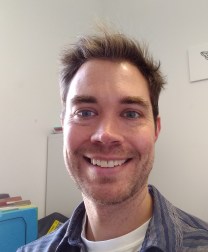
Although I did enjoy working in the lab as a grad student and postdoc, I found that I enjoyed the communication aspect of research as well – the writing publications, proposals, and other materials intended for a wider audience. Toward the end of my postdoc period, I looked for opportunities to do some science writing as a way to expand my skillset and meet the requirements to join the National Association of Science Robert Lawrence photoWriters. In the next phase of my career, I wanted to step toward something that would involve science and research communication on some level. I wasn’t initially aware of research development as a profession per se, but the job descriptions I was interested in led me there eventually. I began working in research development in 2018 at Binghamton University, where I still am now. I am enjoying the diversity of tasks that this field encompasses: shaping the content of proposals, building interdisciplinary teams, drafting internal research communications and developing workshops. I appreciate that these activities are never redundant, and all touch on my experience in research and science communication. They also give me the chance to interact with a lot of bright faculty and be in the academic environment, which I feel like is my natural habitat. 

What’s your history with NORDP? How have you engaged with the organization (committee work, conferences attended/presented)?

I was introduced to NORDP by my supervisor, who is always supportive of our involvement in NORDP. Along with others in my office, I have attended two NORDP conferences so far and enjoyed connecting with new people there and also reconnecting with some of my former colleagues from research that also went into research development. In talking with others at these meetings, I’ve gained a better sense of the range of activities research development professionals are engaged with at different institutions.

What relationships have you built as a result of NORDP (new colleagues, connections to institutions where you previously had no point of contact)?

We’ve had postdoc dinner meet ups at the conferences that I’ve found helpful. Having that common ground helped me establish some connections outside of my institution, which are always good to have.

How has your service to NORDP enhanced your career?

So far my NORDP service has just been in the form of volunteering to help with different aspects of running the conferences. As expected, this has been a great way to become introduced to others at these meetings and learn from their experience.

How do you see that NORDP functions as a resource for RD professionals coming from post doctoral positions?

I went from wearing a lab coat over shorts and a t-shirt in the lab to wearing slacks and a button up shirt when I made the transition to research development. I think that change in wardrobe is symbolic of a lot of other changes and adjustments that come with moving one’s career from the lab to the office. It’s not impossible, but you do have to rethink how you organize your schedule, how you fit into the university, and so on. There is a whole new lexicon of acronyms and terminology to learn too. Although postdocs are familiar with some things related to the process of research, there is a lot of unfamiliar territory on the administrative side of research that NORDP and good mentors can help you to navigate.

What recommendations do you have for prior postdoc members to get more involved with NORDP?

Attend and volunteer at the meetings the next time you are able to attend. In the meantime, stay involved on the email chats and don’t be afraid to start a new thread when you have a question. Those threads have been very useful in supporting some of the day-to-day activities in our office. And sometimes they can also be a helpful way to be introduced to someone by name, which makes it easier to introduce yourself to them in person when you have the chance.

What tips do you have for trainee members of NORDP or other postdocs looking to find a career in RD?

Find ways to cultivate a continued interest in research, particularly the work going on that the institution where you work (or plan to work). For me, following particular researchers, research development professionals, media outlets, departments or institutions on Twitter has been an easy way to stay current with what is happening in fields that interest me or are relevant to the work I do. The tools used by researchers as well as research development professionals will always be in flux, especially in this post-COVID era that we are transitioning into. So stay interested in that process, and be prepared to bring new ideas from your experience along with you into the field!

Compiled by Daniel Campbell, Member Services Committee

NORDP fosters a culture of inclusive excellence by actively promoting and supporting diversity, inclusion and equity in all its forms to expand our worldview, enrich our work, and elevate our profession.