Save the Date(s)!

conference-2019The 2019 NORDP Annual Research Development Conference will take place on April 29-May 1, 2019, at the Omni in Providence, Rhode Island. Mark your calendar! Much, much more to come about our 11th annual conference in the coming weeks and months.

Conference Workshop Webinar

NORDP Community, have you imagined yourself as a workshop presenter at the 2019 NORDP? If so, it’s time to start thinking about your workshop proposal. Mark your calendar for 1 PM EST, Thursday, September 20, 2018, for a NORDP webinar timed to coincide with the release of this year’s call for workshop proposals. The webinar is designed to prepare anyone interested in designing a workshop and ensure that applicants know how to prepare a winning application. Stay tuned for more information about the RFP and webinar in the coming days!

NORDP fosters a culture of inclusive excellence by actively promoting and supporting diversity, inclusion and equity in all its forms to expand our worldview, enrich our work, and elevate our profession.

Help the National Science Foundation think outside the box; enter the NSF 2026 Idea Machine competition!

Message below from the National Science Foundation:

Dear Colleague,

The National Science Foundation (NSF) announces the launch of the NSF 2026 Idea Machine, a prize competition to help set the U.S. agenda for fundamental research in science, technology, engineering, and mathematics (STEM) and STEM education. Participants can earn cash prizes and receive public recognition by suggesting the pressing research questions that need to be answered in the coming decade, the next set of “Big Ideas” for future investment by NSF. It’s an opportunity for researchers, the public and other interested stakeholders to contribute to NSF’s mission to support basic research and enable new discoveries that drive the U.S. economy, enhance national security and advance knowledge to sustain the country’s global leadership in science and engineering.

Entries will be accepted through October 26, 2018. For more information, including entry instructions, eligibility, rules, and judging criteria, please visit the NSF 2026 Idea Machine website.

Don’t Just Sit There!

On the campus of Texas Tech (my institution) is a bronze sculpture of Will Rogers on his horse, Soapsuds. A vaudeville performer, stage and motion picture actor, radio personality, and newspaper columnist, Will Rogers was first and foremost a great American Cowboy. He was also known for his aphorisms, which served as a humorous social commentary. One aphorism relevant to Research Development (RD) offices is “Even if you’re on the right track, you’ll get run over if you just sit there.”

Are you moving forward or are you sitting still?  Does your RD office need a jumpstart?  NORDP’s Program for External Evaluation of Research Development (PEERD) can be the spark to get your RD office in forward motion. PEERD provided my institution, Texas Tech, with best practices and ideas for improvement and expansion that are propelling us on the right track.

Don’t just sit there! Contact PEERD@nordp.org for a no-obligation cost estimate. More information can be found at https://www.nordp.org/peerd-consulting-program

Submitted on behalf of Kayla Tindle

NORDP-logo_lockup-PEERD[1]

NORDP Liaison Notes: The 2018 NIH Regional Seminar

Conference Attendee: Jennifer Webster, University of Tennessee, Knoxville
Conference: The NIH Regional Seminar on Program Funding and Grants Administration
Date and Location: May 2-4 2018, in Washington, DC

nih-logo-large.pngConference Description from NIH: “These seminars are intended to help demystify the application and review process, clarify Federal regulations and policies, and highlight current areas of special interest or concern. The seminars serve the NIH mission of providing education and training for the next generation of biomedical and behavioral scientist. NIH policy, grants management, review and program staff provide a broad array of expertise and encourage personal interaction between themselves and seminar participants. The seminars are appropriate for grants administrators, researchers new to NIH, and graduate students.”

The purpose of my attendance was threefold:

  1. Meet with program officers to build relationships and clarify questions of specific interest to my faculty and institution;
  2. Represent NORDP in my capacity as NIH Liaison from the Strategic Alliances Committee; and
  3. Attend seminar sessions to maintain my general knowledge about the sponsor.

This is my fourth year (in a row!) attending the NIH Regional Seminar. For the first three years, I organized faculty travel to the event to provided them with a baseline understanding of NIH and to prepare them to meet one-on-one with program officers. This year, I didn’t take any faculty, and I split my time between meeting with program officers and attending sessions of interest.

The sessions this year didn’t reveal any new information about pending initiatives or major changes at NIH, but my time meeting with program officers, even with very loose agendas, was quite productive. I met with program officials in areas of specific interest to my institution and those conversations clarified questions and provided additional information that we have already used to realign some of our ongoing work with faculty and to push forward into new areas. My conversations also revealed awareness of research development (and NORDP) that ranged from puzzled to enthusiastic, which confirmed that there’s a lot more outreach to be done!

I highly recommend the NIH Regional Seminar to NORDP members, especially for the opportunities to meet one-on-one with many program officers from most institutes and centers.

Submitted by Jennifer Webster

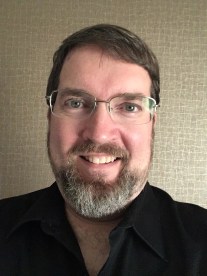
New NORDP Board Member Cameo: Paul Tuttle

Paul Tuttle is one of three new elected NORDP Board Members in 2018. We thank Paul for his service to NORDP!

Who: Paul Tuttle, Director of Proposal Development
Where: Office of Research Services & Project Management, North Carolina A&T State University
Number of years in research development: 18
Length of NORDP membership: 7

What’s your history in RD? When and how did you enter the field? What kind of RD work do you do?newest Paul Tuttle headshot (August 5, 2018).jpg
I began working in the field of research administration at North Carolina A&T from 2000 to 2003 and returned as the Director of Proposal Development in 2015. In the interim, I worked at Winston-Salem State University as their Associate Director of Sponsored Programs and as a grants consultant and later the Managing Grants Consultant for Hanover Research advising client colleges and universities on strategic research advancement. Like many of us, I had been doing RD work without realizing it—I felt that I had “found my people” after attending my first conference in 2012 in Alexandria.

I have spent my entire career working to strengthen higher education institutions’ research enterprises. In my current role at North Carolina A&T,  I help faculty understand the funding landscape, oversee and facilitate grantsmanship training, coordinate new faculty research orientation, help faculty express their project visions in words, facilitate interdisciplinary teaming for research across campus, and help guide the strategic directions of the Division of Research and Economic Development. I feel that I have come home to my dream job, in which I not only help individuals and teams to grow, but departments and colleges as well.

What’s your history with NORDP? How have you engaged with the organization (committee work, conferences attended/presented)?

I began my engagement with NORDP first as a conference attendee and presenter, marrying my background in business and technical writing with my current career in positioning, developing, and writing proposals. Over time, I became curious about how the pre-conference workshop planning was done, so I joined the committee. Because I have always been interested in professional development, I also joined the PD committee. Throughout my involvement with NORDP, I have had numerous informal mentors in how to do RD better; these mentors’ guidance and the chance to see NORDP up close and in action have helped me grow. I see my participation in and service to NORDP as a way to give back to the organization, which has given me so much.

What relationships have you built as a result of NORDP (new colleagues, connections to institutions where you previously had no point of contact)?

I have met countless people at NORDP conferences over the years, building many relationships serendipitously after conversations at lunch, on breaks, at receptions, and so forth. I try to follow up on these conference contacts via phone or email to continue our conversations: it has been so helpful to me that so many NORDP members are so friendly and willing to share their knowledge and experiences.

What inspired you to run for a position on the NORDP board?

I was actually nominated by two members of the NORDP board. I had not been expecting it at all; I was tremendously flattered by this surprising and validating gesture. I was honored and humbled to be accepted by the board as a candidate and voted on by the NORDP membership. I view my nomination, candidacy, and election to the NORDP Board as the single largest professional compliment I have ever received.

What initiative are you most excited about in your new role as a board member?

The RD field and NORDP are both maturing, and I am excited about the chance to help guide that process. Recognition of the differing career paths toward becoming an RD professional are a sign of that maturation. We are getting closer to being able to define not only the skill sets of a NORDP RD professional but also what RD is or can be for people at different levels in a higher education institution, from a VPR at an R1 to the newest, most entry-level departmental research administration. I am also very interested in diversity and inclusion initiatives, and not simply because I currently work at the largest HBCU in the U.S.: I want to ensure that all are represented and have an opportunity to voice their perspectives and that as a discipline and an organization we appreciate and utilize the richness of the diverse viewpoints among both existing and potential NORDP members.

Compiled by Daniel Campbell, Member Services Committee

NORDP fosters a culture of inclusive excellence by actively promoting and supporting diversity, inclusion and equity in all its forms to expand our worldview, enrich our work, and elevate our profession.
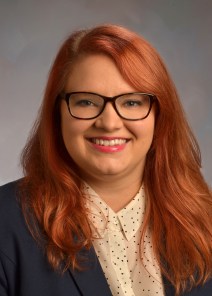
New NORDP Board Member Cameo: Kimberly Eck

Kimberly Eck is one of three new elected NORDP Board Members in 2018. We thank Kimberly for her service to NORDP!

Who: Kimberly Eck, MPH, PhD, Director of Research Development
Where: University of Tennessee, Knoxville
Number of years in research development: 9
Length of NORDP membership: 4

What’s your history in RD? When and how did you enter the field? What kind of RD work do you do?Eck_Pic.jpg

I started in RD in 2009 working for a small consulting company with clients in the healthcare and public health sector. Like many RD professionals, I had never heard of “research development” and didn’t know I was a research development professional until I had been working in my role for several years. After several years of consulting, I moved to higher education and found my niche. Today, as the Director of Research Development at the University of Tennessee, Knoxville, I lead a team that specializes in interdisciplinary teaming, long-range planning, and supporting major, multi-million proposals. I have taken a major leadership role in a university-wide cluster hire and grand challenge initiative and am increasingly involved in supporting our university centers and institutes.

What’s your history with NORDP? How have you engaged with the organization (committee work, conferences attended/presented)?

During the past year, I served as the Chair of the Southeast NORDP Region (SE NORDP). In this role, I led the region and SE NORDP Executive Committee in becoming an officially-recognized affinity group, launching a regional meeting series, and creating a regional RD job shadow experience. I’ve also regularly presented at the NORDP conference with colleagues and contributed to committees. I’ve really enjoyed presenting my original research with a great group of collaborators that I met through NORDP.

What relationships have you built as a result of NORDP (new colleagues, connections to institutions where you previously had no point of contact)?

Being a part of NORDP has allowed me to develop a nation-wide network. I know so many people at so many institutions throughout the country that I would have otherwise never met. In particular, working with my collaborators on research projects and my fellow SE NORDP Executive Committee members has been very rewarding. It is great to have a group of professional colleagues to learn from, bounce ideas off of, and share frustration with. I love catching up with colleagues every year at the NORDP conference.

What inspired you to run for a position on the NORDP board?

I am passionate about the field of research development and NORDP. Over the next four years, I hope to help NORDP continue to grow and serve its members. 

What initiative are you most excited about in your new role as a board member? 

I have often commiserated with fellow research development professionals about the lack of understanding and consistency in titles, roles, and responsibilities. There is a new initiative that I am planning to propose that relates to cataloging and describing the typical titles, roles, and responsibilities of research development positions. This a complex task that builds on the original research conducted by myself and colleagues and will require substantial input from the NORDP community. Ultimately, I hope to lead a working group to create a set of guidelines that will be useful to NORDP as well as human resources, administration, and institutional leadership.

Compiled by Daniel Campbell, Member Services Committee

NORDP fosters a culture of inclusive excellence by actively promoting and supporting diversity, inclusion and equity in all its forms to expand our worldview, enrich our work, and elevate our profession.
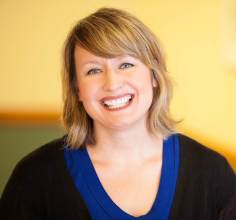
New NORDP Board Member Cameo: Jill Jividen

Jill Jividen is one of three new elected NORDP Board Members in 2018. We thank Jill for her service to NORDP!

Who: Jill Jividen, Assistant Director for Research Development
Where: Medical School Office of Research, University of Michigan
Number of years in research development: 4.5
Length of NORDP membership: 4.5

What’s your history in RD? When and how did you enter the field? What kind of RD work do you do?

I finished my PhD in literature just before the recession hit in 2008 and the academic job market dried up. After teaching as an adjunct for two years, I took a position as a research administrator in the U-M Medical School, where my background in editing and writing appealed to leadership and researchers. I spent a year learning the basics of NIH grants, then moved to the School of Information, where I worked on NSF and foundations proposals.Jividen - Headshot_2014_7_CROPPED.jpg

I landed my first RD position without really knowing what the field was. I sought out a couple of mentors who did RD work; they connected me to NORDP, and, locally, we started to build a grassroots RD community to share resources and best practices. One of those mentors recruited me to her position as she retired. In my current role as Assistant Director for Research Development, I coordinate a junior faculty mentorship program (the R01 Boot Camp); connect faculty to funding opportunities and resources; present grant writing workshops; provide editing; and manage limited submissions.

What’s your history with NORDP? How have you engaged with the organization (committee work, conferences attended/presented)?

My mentors introduced me to NORDP. I went to my first conference two months after starting that first RD position. It was an eye-opening experience, and I was inspired by the creative problem-solving that our peers undertake to support faculty. I have attended every conference since 2014. I began volunteering at the conference registration desk and as a session scribe at the conferences. I gradually increased participation, joining the Member Services Committee and now the board. I feel grateful to have the confidence of my peers—that they know I’ll work collaboratively to ensure that we have a high-quality organization that provides resources and benefits to all members, at every stage of their RD careers.

What relationships have you built as a result of NORDP (new colleagues, connections to institutions where you previously had no point of contact)?

While I’ve enjoyed and benefited from the relationships I’ve built with my amazing colleagues across the nation, NORDP has actually helped me build relationships on my own campus. We have a large research enterprise, spread across the city of Ann Arbor, as well as in Dearborn and Flint. NORDP has inspired us to connect with the hundreds of people who support research, in various capacities—to generate and share ideas, and to inspire interest and investment in RD activities. We are currently planning our 3rd annual “mini NORDP”—a half-day conference where we can present best practices and successful models, and really showcase the innovative programs and resources that are being developed and used in our diverse Schools and Colleges. NORDP also has helped build relationships with other in-state institutions and provides us a point of contact to share knowledge and resources with our local colleagues.

What inspired you to run for a position on the NORDP board?

I am passionate about RD and NORDP; I joke that I’m the campus “evangelist” for RD—touting the value of this field and organization to anyone who will give me a platform. I’ve had successes in rallying people around a common cause on my campus, and I want to bring that enthusiasm and momentum to the national level. I think that good things come from connecting people around knowledge and ideas. Serving as a board member will allow me to do more to improve member resources and benefits, thereby improving the value of the organization and keeping members engaged.

What initiative are you most excited about in your new role as a board member?

One of my projects will be to overhaul the member resources page to best serve both new and more advanced members. I’d like to collaborate on an onboarding tool kit that will offer incoming members a strong starting point for engaging with NORDP. I want to offer members practical resources that will guide them at their own institutions, in their own work and careers. I also hope to contribute to current initiatives like NORD, to encourage research on research, and dissemination of these results, all in an effort to continue to grow the RD field nationally.

Compiled by Daniel Campbell, Member Services Committee

NORDP fosters a culture of inclusive excellence by actively promoting and supporting diversity, inclusion and equity in all its forms to expand our worldview, enrich our work, and elevate our profession.

NORDP 2018 Conference Notes: Resiliency: Research Development Strategies to Engage and Promote Faculty Flourishing

Resiliency: Research Development Strategies to Engage and Promote Faculty Flourishing

Presenters:

  • Kerry Morris, Valdosta State University
  • Susannah Gal, Penn State-Harrisburg
  • Marilyn Korhonen, University of Oklahoma
  • Barbara Wygant, Van Andel Research Institute

Thanks to our session scribe, Laura Sherwin, University of Nebraska at Omaha!

Key points from the session. We learned:

  • Listen to faculty and customize your approach to each of them. You want faculty to see you as a partner in their success.
  • Target specific faculty or groups of faculty. In particular, look for faculty with a passion for their research who are struggling to obtain external funding. Your work with them can have high impact.
  • Identify faculty key players to develop funding strategies. Look to where students are gravitating.
  • For new faculty, start with internal seed grants, then foundation and corporate seed grants to collect data for larger grant submissions.
  • Connect first with a small group of key “champions” and build from there.

What did you hear at this presentation that surprised you?

  • Many research development offices have a close working relationship with institution development officers.
  • It is more common in research development offices to “cold call” faculty than I realized.

What resources did you discover at this presentation?

Aspirational 7” – seven concepts for research faculty: scale up, stabilize, re-direct, diversify, re-invent, engage, persevere.

What was the most interesting question asked by an audience member, and what was the presenter(s)’ response?

Q: What is the role of the institution’s development office vs. the institution’s sponsored programs office?

A: There can be some overlap and confusion on which office performs which functions. The presenter recommended working with the institution’s development office to create a checklist that each office can use to decide if a particular funding mechanism is a grant, contract, or gift. This is also important because money for philanthropic vs research efforts is located in different “buckets” in an institution.

What else from this session should NORDP members know?

Some specific things presenters have used to engage and promote faculty:

  • Facilitate writing groups for proposals and papers
  • Hold an annual networking event for researchers and business/industry contacts
  • Publicize researchers and their work via free videos (YouTube)
  • Include a “Research News” button on the research development or institution’s website that highlights overall research, not just research that has been funded externally.

Also, see the handout from the presentation: NORDP resiliency session handout

NORDP 2018 Conference Notes: Responding RAPIDly and Remaining NIIMBL in the Manufacturing USA Proposal Development Landscape

Responding RAPIDly and Remaining NIIMBL in the Manufacturing USA Proposal Development Landscape: Adapting Resources in a Changing Research Landscape

Presenters:

  • Leigh Botner, University of Delaware
  • Kathleen Sanford, University of Delaware
  • Dawn Jory, University of Delaware

Thanks to our session scribe, Kristyn Jewell, Purdue University!

Key points from the session. We learned:

  • Team learned from their initial failure with Accelerate America NNMI submission to succeed with NIIMBL.
  • For NIIMBL, the core scientific team coalesced before the FOA was released.
  • The RD support moved from a college/departmental approach for the failed application to a central integrated approach for the successful application and broke the proposal support team into core functions (Governance & Membership Strategy, Budget Planning, Proposal Writing, etc.).
  • Core proposal team kept working together after the concept paper submission assuming that they would be selected.
  • This experience ultimately changed their structure to encourage large collaboratory efforts with an Associate Vice President for Research hire focused on research development.

What did you hear at this presentation that surprised you?

They held workshops across the country to present to potential stakeholders and provided up-to-the-minute changes/updates with voting in order to get industry buy-in with acceptable terms & conditions.

What resources did you discover at this presentation?

Teamwork app for project management.

What was the most interesting question asked by an audience member, and what was the presenter(s)’ response?

Q: For the management of the institute, what was the 501(c)3 proposed?

A: It was supposed to be a new 501(c)3 established upon award. However, the award execution needed to happen so quickly before inauguration that it was awarded to UD to give the 501(c)3 time to be established and fully operational before taking over management of the partnership.

What else from this session should NORDP members know?

The proposal RD support staff were chosen for their prior experience and skills level, not based on who had worked with the faculty group in the past. The team was cherry picked to get the best possible results.

NORDP 2018 Conference Notes: Proposals Like It’s 2019: Writing and Illustrating Grant Proposals for the Information Age

Proposals Like It’s 2019: Writing and Illustrating Grant Proposals for the Information Age

Presenters:

  • Tobin Spratte, Arizona State University
  • Michael Northrop, Arizona State University
  • Jessica Brassard, Michigan Technological University

Thanks to our session scribe, Erin Johnson, University of Utah!

Key points from the session. We learned: 

  • Key design rules: balance, rhythm, proportion, dominance, unity
  • It’s not about the tool – even PPT can make beautiful graphics
  • Cultivate a culture of imagery and design
  • Your proposal is an extension of your branding – use logo, color, spacing, visuals to look the part
  • Use action captions to pull text out of your paragraphs and put it in the figure caption instead

What did you hear at this presentation that surprised you?

People might only be paying attention to 20% of what you show them.

What resources did you discover at this presentation?

Useful twitter feeds to get ideas: #dataviz, #scicomm, #sciart

What was the most interesting question asked by an audience member, and what was the presenter(s)’ response?

Q: How to convey to the faculty the needed time for graphics?

A: I actually like late requests because there isn’t time for a ton of revisions! But, I also like being involved in early meetings so know what they need and what their primary content will be really well. Some offices will only work on grants with large dollar requests. And they will require early involvement.

General notes

  • The times are changing – we’re in an information overload and people don’t have time to read
  • Changed consumption habits
    • Transient Attention span of 8 seconds, sustained attention span in 20 minutes
    • Reading on a screen, and reading print
    • People might be reading only 20% of what’s presented to them – we want to draw their attention to useful parts of the proposal for that 20%
  • Need to be resilient to the changes
  • Data visualization- on twitter follow #dataviz and #scicomm to get ideas about how people are visualizing data
    • #sciart great resource for graphics
  • Making the most of graphics
    • Simple graph can be made more readable by tweaking where legends and titles are, taking away boundary lines
  • Key design rules
    • Balance
    • Rhythm (e.g., eye leads naturally from left to right and top to bottom)
    • Proportion
    • Dominance (think about what needs to be the star of the graphic)
    • Unity (tie it together)
    • Repetition of form
  • PPT still a useful tool for nice looking images – you don’t need the fancy tool
    • But space does matter. How much room do you have for this graphic?
  • Quick figures – things that don’t take long to construct
    • e.g., use a molecule and define the parts for your proposal
  • Org chart
    • Make it look different than everyone else – like a pedigree perhaps
  • Tables
    • Add color
    • Keep tables consistent in form
  • Infographics better than a bulleted list – just find a graphic to go in the middle and put the bulleted list around the outside
  • Design is not a silver bullet, but can be a silver lining
  • Branding and identity – a proposal is an extension of your brand.
    • Beyond color and logo. Headings, spacing
    • Figure on first page — grab attention!
  • Action caption
    • The caption can take text out of paragraphs by adding action to it (e.g., caption to org chart talks about ability to respond to needs)
  • Know your audience!
    • They are likely to have divided attention that you’ll need to capture
    • They may not know your area as well as you do – be clear!
    • Keep in mind what’s in it for them
  • To convince others, need to combine and convey: ethos (expertise, authority), pathos (emotion) and logos (reason)
  • Cultivate a culture
    • The field resists right now
    • We have opportunities to work with those who aren’t as resistant to start making changes
    • Talk with people about possibilities of deleting whole paragraph and using a graphic instead
    • Transform faculty from mechanics to artists — get them into their creative minds using pointed questions about what the reviewers need to understand and see
    • Find people you can hire – if you’re talking about millions of dollars, it’s worth a little money up front. Be sure to talk to the designer about how they got to their end products in their portfolio.
      • Freelancers who do science comics
      • Get to know your university marketing and communications team
      • Hire a student!
    • Help them think about what they want their final images to look like