
Preamble from the NORDP Governance Committee: The Board of Directors is considering making changes to the NORDP Bylaws, as described below. Before implementing any changes, the Board posts the proposed changes so that NORDP members may review them and comment.
Dear NORDP members,
At the October 23, 2018 Board of Directors meeting, the Board unanimously voted to amend Article VIII, Section I of the NORDP Bylaws (adopted 12/22/2015), which discusses the role of the NORDP Immediate Past President (IPP) on the NORDP Board. Per NORDP policy, we are publishing the proposed amendment for membership review and comment.
The current Bylaws stipulate the IPP shall be an officer of the Board, with voting privileges. The IPP is meant to serve in this officer role by providing advice and counsel, as a former NORDP President, to the Board. The assumption was that the IPP would still be serving in their Board term during their IPP year (the term for a NORDP President is one year, meaning that we have a new IPP every year).
A Board member has a four-year Board term, and a Board member can serve as President in their fourth year. However, if a Board member serves as President in their fourth year, they roll off the Board when they are IPP and they no longer have voting privileges. Even so, the Board still desires to benefit from the IPP’s perspective and experience. For this reason, the Board has decided to exercise its ability to appoint members by appointing an IPP whose Board term has ended as an ex-officio, non-voting member of the Board.
To reflect this decision, the Board proposes to amend Article VIII (Officers and Agents), Section I (Election and Term of Office) of the Bylaws as follows (added text in italics):
The officers of the Corporation shall be elected by the Board at the annual meeting of the Board of Directors, or at another regular or special meeting called for that purpose, after due notice has been given. The Secretary and the Treasurer shall serve for two years. The Vice President normally serves one year as Vice President and then a second year as President. If a member is elected directly to the presidency, the term shall be for one year. The President shall then serve one year as Immediate Past President. In the event that the President will not be a member of the Board during their Immediate Past President year, either through resignation or completion of the term as a Board member, they will retain their Immediate Past President role as advisor to the Board by serving as an ex-officio, non-voting member.
If you are a NORDP member, and you have comments or concerns about the proposed change to the Bylaws described above, please post your comments here, on the blog. You may also post them to the NORDP listserv. The comment period closes on May 3, 2019. At that time, all comments received will be reviewed and considered by the Board. Thank you for your review and input!
 When and how did you enter the field? What kind of RD work do you do? I had just finished my PhD in literature and was teaching at a community college in Portland, Oregon. Four tenure-track positions were open in my department, and I couldn’t bring myself to apply to any of them. I love community colleges—they are the most innovative thing about American higher education—but I knew that this wasn’t my path. My dean told me that a research institute at Oregon Health & Science University was looking for a contractor to teach science writing to their trainees. I applied, was hired, and never looked back. I had virtually no science background but my training in philosophy and literature, as well as my teaching many undergraduate sections of composition, served me well—I could decode. I could follow a variable through a process and identify inconsistencies and contradictions. I also had grant writing experience, so that helped. I loved the work—I loved learning about all the molecules and models, the norms of scientific culture, all of it.
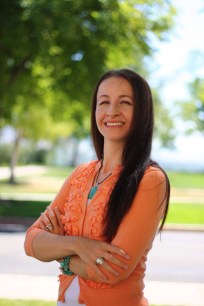 Four years into that position, in 2008, I was asked by the VPR to explore establishing a proposal writing institute for faculty. That same year, the VPR decided to create an Office of Proposal Development. I applied for the manager position and was hired. As the years passed, the office’s portfolio of work grew to encompass much more than proposal development. So, the name was changed to Research Development and I became director. Nowadays, my focus is on implementing and improving resources for faculty – tools, trainings, internal funding, people – to help them increase their competitiveness in the external funding realm.
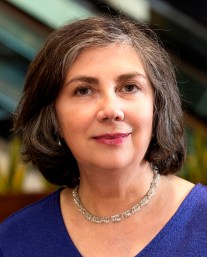
 external funding. On the basis of that scan, I saw that faculty at mid-tier institutions like NIU needed assistance with what I call positioning (strengthening their standing in the literature, as researchers, and as grant writers) in order to compete with their colleagues who were selected out of grad school by larger research universities. On that basis, I created a hybrid job that I called research development specialist, a single role that handled the standard pre-award requirements, but who also worked very closely with faculty to strengthen their positioning prior to (and then throughout) their efforts are seeking funding. I am now the chief research officer at Oakland University, where I have made research development integral to our office.


 NORDP News