Written by: NORDP’s Mentoring Committee Marketing and Communications (MCMC) Team
January is officially the Mentoring Month, and the NORDP Mentoring Committee (MC) is excited to showcase a lineup of resources, stories, and opportunities to help you thrive in your mentoring journey. Whether you’re an experienced mentor or just starting out, there’s something for everyone. Here is what our mentors and mentees said about the NORDP Mentoring Program:
Mentoring Committee Open House
Join us on January 15, 2pm ET for our monthly meeting to learn more about what the Mentoring Committee does, and find out how to get involved and join us. Rising Co-chair and former clinical psychologist Gerry Foo, Ph.D., will make a presentation on the psychological benefits of mentoring. We will also have invited panelists sharing their “A Day in the Life” of a Mentoring Committee member.
Dr. Gerry Foo is a Senior Research Development Specialist at Tufts University. Prior to this, he spent almost two decades as a clinical psychologist providing consultation to families, schools, clinics, and hospitals. Gerry recently transitioned to this role in research development to leverage his extensive background and experience in psychology to effectively consult with teams of investigators to improve strategy to secure funding for their research.
Key dates on Mentoring for 2026:
January 1, 2026: National Mentoring Month begins. January 7, 2026: I Am a Mentor Day. January 15, 2026: Mentoring Committee Open House January 19, 2026: Dr. Martin Luther King Jr. Day of Service. January 21, 2026: Thank Your Mentor Day. January 27–February 26, 2026: Mentor Training for Research Development Professionals (registration is full) February 4-6, 2026: National Mentoring Summit.
From a first-generation college student to Assistant Vice President of Research Development: The Journey of Dr. Angela Jordan
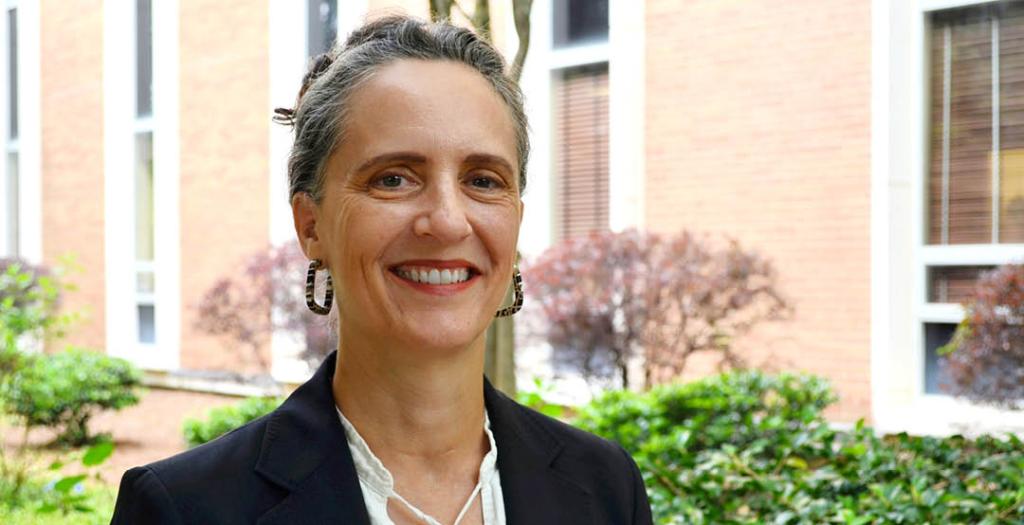
Angela Jordan Assistant Vice President of Research Development
For October’s Career Stories, we were fortunate to host Dr. Jordan, a proud first-generation college student with an undergraduate, master’s, and ABD in English, and a doctorate in instructional design. Like many of us in the field, Dr. Jordan did not plan a career in research development; her path began as a secretary and has taken her to AVP. Before entering the RD world, Dr. Jordan tried her hand at web design but quickly realized it wasn’t for her. After spending several years as a stay-at-home mom, she joined the University of South Alabama, where she accepted a secretarial position, the only open role in one of the colleges. There, she was assigned to her first proposal development project: a $10 million NSF EPSCOR statewide collaboration. From there, she never looked back. The crash course in RD showed her how much she loved it. With the encouragement of strong mentors, she began taking on more responsibilities, moving from departmental support to the university’s central research office. Over a dozen years, Angela worked her way up through the ranks, eventually being promoted to Assistant Vice President for Research Communications, Development, and Learning.
Discussing her day-to-day activities, Dr. Jordan explained that she is currently running an exciting and challenging research strategic planning process as the university plans a transition to Carnegie R1 status. She facilitates meetings with each college, talking to deans and faculty, gathering insights, and strengthening connections, collecting data, listening for priorities, and keeping the overall mission of the university in the forefront.
Dr. Jordan identifies a few key turning points in her journey. One was the moment she realized she could lead. After her colleague, Dr. Kim Littlefield, left the AVP role and encouraged her to think about leadership, Angela realized that to move up at her institution, she needed a Ph.D. Instructional design was tied directly to the faculty development work she was doing. Her degree not only advanced her career, it deepened her understanding of how people learn, collaborate, and innovate together. Dr. Jordan’s leadership philosophy is deeply rooted in mentorship, a value she discovered through her connection with NORDP. In her first few years as a member, she “coasted” along before getting involved in the Mentoring Committee at the 2018 conference, motivated by the idea of giving back. Formal mentoring was something Angela hadn’t experienced before joining NORDP, so by participating in the matched program, the committee, and mentor training, she has learned a lot about best practices in mentoring and is committed to facilitating mentee growth. She also remains engaged in CASSH and other collaborative initiatives that strengthen NORDP’s community of practice.
We congratulate Dr. Angela Jordan on her recent promotion to Assistant Vice President for Research Communications, Development, and Learning at the University of South Alabama, and on her well-deserved 2025 NORDP Mentoring Award.
Her journey reminds us that there’s no single path to success in RD, just the courage to say yes, the wisdom to learn as we go, and the generosity to lift others along the way.
Dr. Angela Jordan is happy to answer any questions you have for her, so please feel free to contact her at ajordan@southalabama.edu
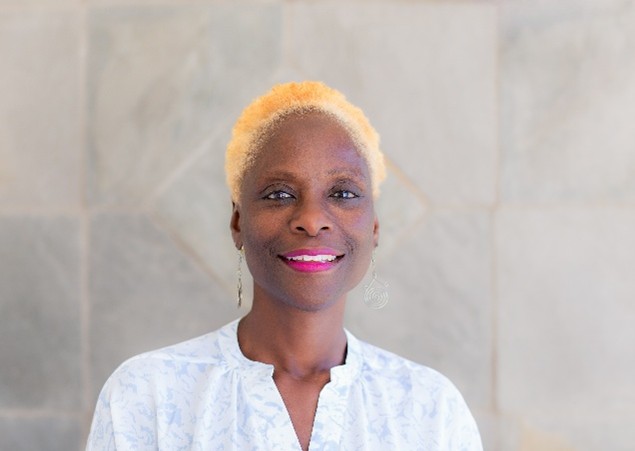
Dr. Carolynn Julien: Leading with Purpose and Mentorship
Carolynn Julien Fairleigh Dickinson University
Dedicated to a life of service and with almost 4 decades of experience in research development, Dr. Carolynn Julien has built her career around nurturing meaningful relationships, mentoring others, and advancing research excellence. As the Associate Provost for Research and Sponsored Projects at Fairleigh Dickinson University (FDU), Carolynn collaborates with faculty, staff, and students to implement strategies and proactive approaches for securing funding and enhancing institutional competitiveness.
Her journey in RD started at Hunter College of City University of New York (CUNY). Her first position was in research administration and contracts; she saw the job opening in a newspaper, one she still keeps a clipping of today, where she thought, “I think I can do this, and I am going to figure this out….” She felt happy to be in higher education, but didn’t realize until later how lucky she was to be in higher education.
When asked about her move from Hunter College of CUNY to FDU, Dr. Julien describes it as an intentional leap of faith. “You have one life to live, and you have to live it without regrets,” she says. “Trust yourself. The right time, the right place, the right reason—preparation is key.” She feels like no one day is ever the same, and the newness of each day has kept her in RD for almost 4 decades. Her strength as a writer has supported her journey in RD.
Always going back to her parents’ guiding principle to use your life for something bigger than what you are, she uses her mentoring skills to mentor RD professionals across the country. In 2023, she received the NORDP Mentoring Award, recognizing her unique ability to create an engaging, supportive, and inclusive environment that fosters professional and personal growth in the research development community.
During COVID, Carolynn became more invested and more involved with NORDP. She has served as a mentor and mentee, been appointed to, and then elected to, the NORDP Board of Directors, and been a member of the Mentoring Committee, Conference Committee, and the Committee on Inclusive Excellence (CIE), deepening her engagement with the RD community.
“When George Floyd was murdered, CIE created spaces for people to talk and process,” she explains. “A small group of us met monthly throughout COVID. We discussed everything—from our personal experiences to joint presentations. Mentoring and CIE were the vehicles that allowed me to fully engage with NORDP.” One of her contributions to NORDP was to ideate and implement NORDP’s Got Heart—a way for members to contribute to the RD community and to the local community at conferences.
When asked to summarize her leadership philosophy, she emphasizes that the focus is not on what you build but how you build it. Dr. Julien offers a quote of her own creation—one that speaks to her purpose as a leader and mentor: “I lead not to be seen, but so that others may see what is possible.”
Dr. Carolynn Julien is happy to answer any questions you have for her, so please feel free to contact her at c.julien@fdu.edu
The traditional mentoring dyad (1:1 mentor-mentee) program has been a NORDP member feature since 2012. The Cohort Mentoring Group, piloted in July 2022, consists of matching three mentees with similar interests with one shared mentor. Both the dyad and cohorts are matched based on the WisdomShare matching algorithm.
This month, we caught up with a dyad mentee-mentor pair, Brady Liss (Mentee) and Becky Milczarek (Mentor) from the 2024-2025 mentoring program year to share their experiences with NORDP.
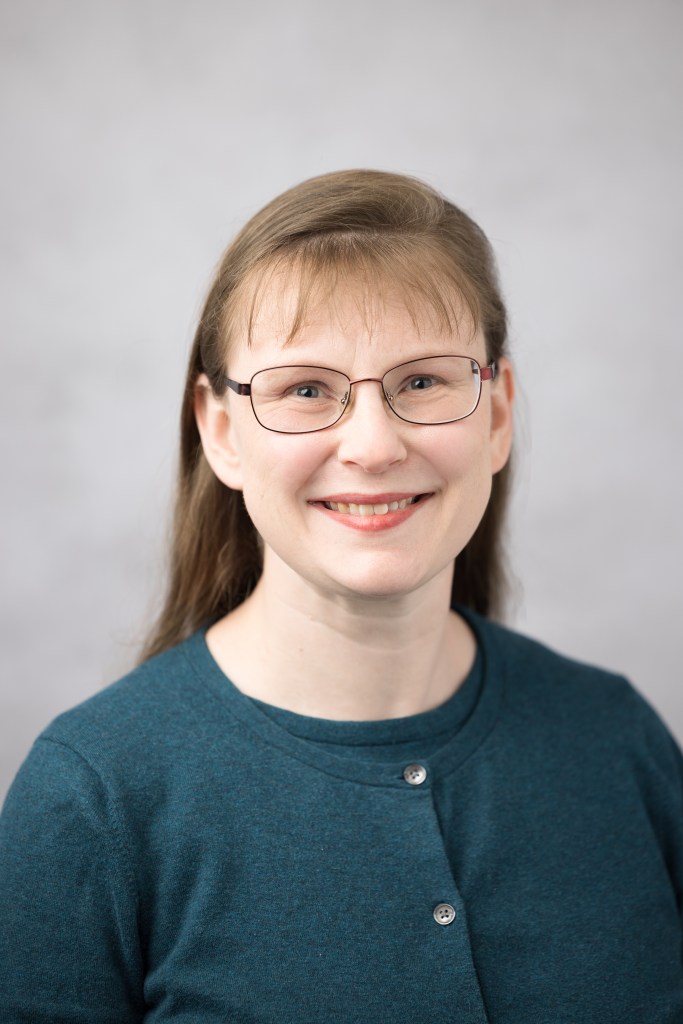
Becky Milczarek (she/her), mentor Assistant Director, Office of Research Development University of Illinois Chicago
Rebecca (Becky) Milczarek, Ph.D., University of Illinois Chicago (UIC) • Becky is an Assistant Director in the campus-level Office of Research Development at the University of Illinois Chicago (UIC). Dr. Milczarek’s formal training is in Food Science and Chemical Engineering, and she spent the first decade of her career in the roles of researcher and proposal reviewer in the federal government before pivoting to academic RD in 2021. Becky elevates the UIC research enterprise by connecting investigators with collaborators and funding, managing the limited submissions process for the campus, and guiding early career and seasoned investigators alike toward a reviewer-centric approach to proposal narrative development.
Brady Liss (he/him), mentee Grant Proposal Developer University of Vermont
Brady Liss, PhD, University of Vermont • Brady is a Grant Proposal Developer for the College of Arts and Sciences at the University of Vermont. Brady completed his PhD in Anthropological Archaeology at the University of California San Diego, before joining the Research Development team in May 2023. As archaeology is uniquely situated at the intersection of the humanities, social sciences, and natural sciences, he leverages his previous research experiences to best support faculty across a variety of departments and disciplines in the college.
Q1: What influenced you to apply to be a mentor and a mentee for the 2024-2025 NORDP Mentoring Program?
Brady: Like many research development professionals, I didn’t anticipate (or frankly even know about) a career in research development until I applied for my current position as a grant proposal developer at the University of Vermont. In turn, I was looking for opportunities to develop professionally in this new (to me) field. The NORDP Mentoring Program seemed like the perfect opportunity to gain insights from someone with more experience. Further, as I can find networking in larger settings intimidating or overwhelming, the opportunity to join a 1:1 dyad was very appealing!
Becky: I had previous positive experiences as a mentee in a NORDP mentoring dyad in 2022-2023 and a cohort in 2023-2024. Although I’m still relatively new to the field of RD, I felt confident enough to start paying it forward as a mentor in 2024-2025. I still recognize I have a lot to learn, though, and thus also participated as a mentee in 2024-2025 – I really enjoyed being a part of a “mentorship sandwich” and am continuing this approach in the current program year.
Q2: What is your favorite part of your relationship?
Brady: My favorite part about my mentor-mentee relationship with Becky was the open and fluid conversations. We established specific topics for each of our monthly meetings, but allowed the conversation to naturally progress to other subjects. I also enjoyed the opportunity to discuss navigating the current federal funding landscape in a multi-generational NORDP mentor-mentee meeting; Becky’s former mentor joined the conversation.
Becky: For better or worse, it was really “misery loves company” in the 2024-2025 academic year. All in the RD profession will recognize the myriad challenges and upheavals during this period, and it was grounding to have regular, candid conversations with a colleague going through the same experiences.
Q3:How has participation in the Mentoring Program helped broaden your horizons about Research Development in general and/or affected your daily work in particular?
Brady: My participation in the mentoring program certainly broadened my horizons concerning research development. Sometimes as a grant proposal developer, I can become hyper-focused on supporting the individual grant. However, research development is bigger than any one grant. Meeting with Becky helped reiterate this concept. For example, we explored issues of inclusive language and transparency in funding announcements, leveraging LinkedIn to expand resources and connections, engaging with other fields entirely, etc. Based on Becky’s insights and suggestions, I am exploring new avenues to raise awareness about research development careers among archaeologists.
Becky: My discussions with Brady gave me a deeper appreciation for both the diversity of RD activities and the commonalities across the profession. Nominally, Brady and I do not have much overlap in our day-to-day RD responsibilities: Brady primarily supports proposal development within a college, while I focus on campus-wide faculty professional development, funding opportunity discovery, and limited submissions. It was enlightening for me to hear more about the proposal development side of the shop, and I’m hoping Brady learned a bit about some more upstream RD activities. At the same time, we definitely identified and explored common themes, mostly having to do with better understanding and serving our clientele. Enabling productive communication with various stakeholders, offering the right support at the right time, and navigating a rapidly shifting research funding landscape are (I will declare here) universal RD themes that we touched on this past year.
Q4: What surprised you about being a mentor or a mentee?
Brady: I don’t think I was necessarily surprised by any particular aspect of being a mentee, but the program did emphasize the unique collegiality of NORDP members (which was a bit of a surprise compared to previous professional organizations I have participated in). Whenever I have a conversation about NORDP, a primary talking point is always the kindness of the members and their willingness to help. Despite being in a slightly different role and having more experience in the field, Becky exemplified this in her openness to discussing any topic of interest and through dedicating her time to this process.
Becky: I knew the NORDP mentoring program was intended to be mentee-driven, but I was surprised at how graciously Brady took up this mantle. He kept us on track with our discussion topics and was proactive in (re)scheduling our meetings, but he always showed flexibility when new circumstances or opportunities arose. I suppose I should not have been surprised at this!
Q5: What made you decide to maintain a longer-term mentoring relationship, and how has it impacted you?
Brady: I really value the opportunity to learn from others, especially when they have more and/or different experience(s) in a given space; Becky fits both these qualifications. Being fairly new to research development with a background in the humanities, I was grateful for the opportunity to learn from Becky, who has served as an assistant director of research development for over four years with a background in food engineering. Our meetings were also consistently comfortable, open, and insightful, making it an easy decision to maintain a longer-term mentoring relationship to continue learning and sharing.
Becky: It was a pleasure to connect with Brady through this program, so I was happy to suggest we touch base a few times a year as we both progress in our careers. I’m looking forward to hearing about Brady’s accomplishments, challenges, and a-ha! moments.
Q6: Any words of wisdom or encouragement for those wanting to apply next year? Any other thoughts you would like to share?
Brady: In the past, I likely would have avoided this type of opportunity. I decided to go for it based on two factors: 1) my experiences interacting with research development professionals, which were always cordial, collegial, and kind, and 2) the smaller setting (a 1:1 dyad) with low-stakes (open discussion, one-hour meetings, once per month) sounded ideal. Now having “completed” the program, I am grateful I did, and I would encourage others to do the same.
Becky: NORDP has built a wonderful mentorship infrastructure, so I highly recommend getting involved as a mentee, mentor, or both. Having been in both a cohort and a few dyads, I can say both models have their strengths. Dyads offer more customizability and focus for a mentee with clear goals going into the program. Cohorts provide instant networking and a wider variety of perspectives and experiences. I encourage prospective mentees and mentors to try both options at least once and keep in mind that every mentoring relationship will be different, regardless of the number of folks involved.
On a practical note – be aware of the program signup window! In early spring, the start of the mentoring year may seem a long way off, but don’t miss your chance to participate.
Applications for the 2026-2027 mentoring match cycle will open in the spring of 2026 — keep an eye out for NORDP announcements. Additional mentoring opportunities are available through the Peer Mentoring Groups that are open for participation throughout the year via the WisdomShare platform [LINK: https://nordpmentoring.mywisdomshare.com/]. Contact the NORDP Mentoring Committee if you have any questions at mentoringprogram@nordp.org.
An investment in mentoring is an investment in you!
4.5 years in RD positions + more during PhD & postdocs
NORDP member for about four years
When and how did you enter the field? What kind of research development work do you do?
Like a lot of folks in RD, I kind of stumbled into it. I was in academia—did my PhD, then two postdocs—and realized what I really enjoyed wasn’t so much the day-to-day lab work, but the act of crafting proposals. I loved thinking through the research design, figuring out how to make it all happen, and, imagining all the fun things we could do with the right funding. Writing proposals just clicked for me. After watching faculty members spend more time on administrative tasks than actual research, I knew I didn’t want that. So, when a full-time RD position opened up at Tulane University in New Orleans, I made the leap to proposal development focused on federal agencies. I’ve very recently shifted to a new position at CCNY with a broader set of responsibilities, which I’m excited about.
One of my favorite parts of the job? The deadlines! There’s something so satisfying about having a hard stop and knowing that once a proposal is submitted, it’s finished. No endless revisions. Just done. It’s kind of perfect for my personality.
What’s your history with NORDP? How have you engaged with the organization (committee work, conferences attended/presented)?
I joined NORDP shortly after starting at Tulane. Honestly, I don’t remember exactly when (because…COVID), but it was probably within the first couple of months of being hired. I was encouraged to get involved with the Committee on Inclusive Excellence (CIE) after I spoke up during a breakout session at a NORDP event. I honestly don’t remember the details, but Gretchen Kiser reached out, and I’ve been with the committee ever since. I haven’t presented at a NORDP conference yet but have aspirations. I’ve been thinking about leading a workshop on visualizations—something that I think is missing in a lot of proposal writing. My goal is to show how design principles can elevate a proposal, making it not just technically sound but also engaging and visually appealing. We’re not just writing for the brain; we’re also writing for the heart, and I want to help people craft proposals that spark excitement and interest in the reader.
What motivated you to run for the NORDP Board?
Funny story—running for the board wasn’t really on my radar. It was Samar Sengupta who nominated me, so she’s the one to blame! We had a few conversations about it, and she convinced me that my perspective would be valuable to the board. I think it’s because I come at things with a mix of design thinking and a focus on social justice.
RD is such an interdisciplinary field, and that’s part of what I love about it. We don’t have to stay in our silos. I can work with a biomedical engineer one day and someone from literary history the next. I think it gives us this unique opportunity to influence scholarship in a broader sense, and being on the board means I can help shape how NORDP moves forward, especially as the organization grows.
What are you most excited about as a new NORDP Board member?
For me, it’s all about pushing new ideas. I’m really excited to bring more focus on design thinking into RD—creating proposals that not only communicate ideas but do so in a way that’s visually engaging. I also think we need to be more critical when it comes to AI. There’s a lot of buzz around it, but I’m particularly concerned about how we might start relying on large language models for things like writing letters of support. We need to think about the ethical implications before we just dive in.
NORDP is at this interesting inflection point. We’re not quite a “small” organization anymore, but we’re also not a giant, well-established one, either. It’s a bit of an awkward growing phase, but it’s also a huge opportunity. I’m looking forward to helping us navigate that growth in a sustainable and resilient way, making sure we’re adaptable to the changes happening across academia and research funding.
Anything else you’d like to add?
I guess the big thing on my mind is resilience. The way research funding and academia operate right now feels… precarious. I don’t have a crystal ball, so I can’t say what the world will look like in five or ten years, but I think we need to be ready for big shifts. If I can help bring some new ideas to the table that make NORDP and the RD community more adaptable, that’s what I’d love to contribute.
May 2015 as the Assistant Director of Grants Resources and Services (GRS), I’m now the Associate Director of GRS.
What kind of research development work do you do?
I work on all areas of RD: disseminating funding opportunities, workshops, internal competitions, proposal research development. I currently work on larger-scale, institutional initiatives and collaborative research support primarily. We started as an office of two and are now up to four full time employees in our research development unit (GRS).
What’s your history and involvement with NORDP?
In 2017, I joined the organization and immediately got involved with the Professional Development Committing and the Mentoring Committee. I’ve recently stepped down from the PD committee due to board duties but am still involved with the mentoring committee peer mentoring activities and as a convenor. I was a Conference Co-Chair in 2020/2021 & 2021/2022 and Co-chaired the Virtual Recon Conference in the fall of 2023. I have been part of the RD101 leadership team since 2018/2019 and am currently involved with the development of RD200 series (pilot was just concluded last fall).I was also one of the original developers of the LEAD (Leadership, Engagement, And Development.) program, it runs an annual cohort and fireside career chats came out of this. And finally, most recently, I was elected to the NORDP Board in 2024!
What motivated you to run for the NORDP Board?
I had been nominated multiple times and ran once in the past, but I was not elected. I decided that once I had finished my PhD I would run again. And this time, I was elected! I was motivated to run for the board because I wanted to continue being of service to NORDP. This is also a great opportunity to continue growing in a leadership role.
What are you most excited about as a new NORDP Board member?
I’m excited about getting to work on the strategic pillar driving activities to move the organization forward. I look forward to being involved and seeing results as I’ve just started my four-year board appointment.
The strategic pillars are as follows:
Cultivating Volunteer Opportunities for Growth
Future-Proofing Core Infrastructure for Sustainability
Defining & Positioning RD & NORDP to Partners
Catalyzing Coordinated Strategies to Promote Equity & Inclusion
Would you like to leave our readers with any last thoughts?
Joining and being a part of NORDP has been one of the best decisions… Look for opportunities to engage that are meaningful to you!
Written by: Roshni Singh with input from Natalie Baronian, Career Stories team
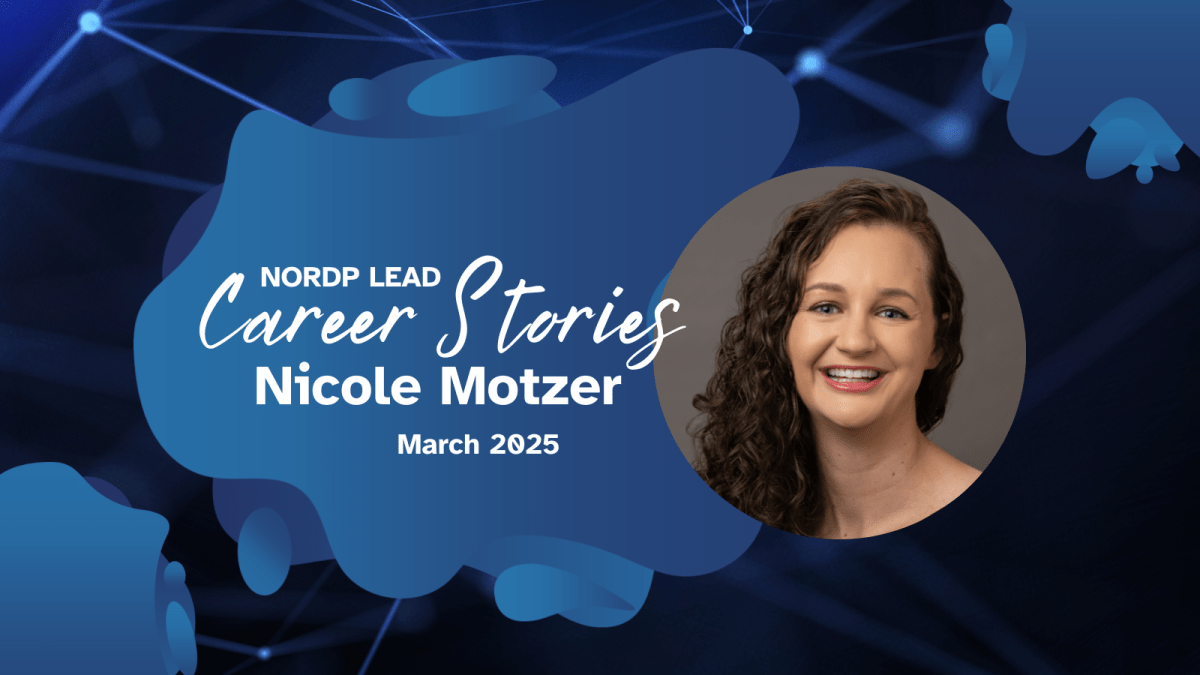
Nicole Motzer
In our March Career Stories, we spotlight Nicole Motzer, the founding director of the Office of Research Development at Montana State University (MSU). Leading a small but mighty team of research development professionals, Nicole’s journey is one of passion, perseverance, and innovation. With a Ph.D. in Geographical Sciences from the University of Maryland, College Park, Nicole has been awarded over $1 million in funding from NSF, NASA, and the Gordon and Betty Moore Foundation. Before joining MSU three years ago, Nicole served as the Assistant Director for Interdisciplinary Science at the National Science Foundation-funded National Socio-Environmental Synthesis Center (SESYNC). There, she played a critical role in facilitating science teams, supporting interdisciplinary proposals and research programs, and developing first-of-their-kind training programs. As SESYNC sunsetted, through lots of googling, Nicole discovered the research development field and the position at MSU that allows her to continue doing what she loves.
Transitioning from working with a single sponsor (NSF) and supporting projects focused only on socio-environmental systems research at a research center to launching a broad-reaching RD office at an R1 university was an exciting challenge, but also a steep learning curve. By spending time getting to know MSU faculty and research needs, attending countless NORDP webinars, and building strong relationships with NORDP colleagues and peer institutions, Nicole turned MSU’s Office of Research Development from a nascent idea into a thriving campus unit in just a few years.
More than three years into the role, Nicole feels good about what she and her team have built through a process of “trial and error.” MSU’s RD programming and services have shifted as the office has matured, starting with a regular schedule of bi-weekly lunch-and-learns (e.g. EPSCoR, international research, etc.) to now including biannual Research Development Days, three-day writing retreats, and multi-week grant writing workshop series. Additionally, broader impacts support now features more prominently in her office following her participation in multiple Center for Advancing Research Impact in Society (ARIS) programs, as does support for graduate student research fellowships such as the NSF GRFP. Nicole’s office further provides innovative, multi-institutional opportunities for NIH R01-ready investigators and for faculty interested in other priority funding programs through her participation in the FOCUS (Fostering Opportunities Through Collaborative University Synergies) community, alongside the University of Idaho, University of Nebraska-Lincoln, Utah State University and University of Nevada Reno.
Nicole credits her lessons in leadership to her mentor, Dr. Jonathan Kramer, former Director of Interdisciplinary Science at SESYNC, who provided her with a supportive environment, increasing responsibilities, and trusting space to experiment and fail safely. She tries to emulate this model with her own team to help grow the profession of RD. She also mentioned an important part of her legacy will be to serve institutions where she feels she can make a significant impact. Nicole initially experienced imposter syndrome as a novice RD director and now advises everyone, especially early-career women, to never doubt themselves and their capabilities. Her advice to RD professionals just starting out is to slow-walk proposal feedback, understand how people want to receive feedback, and customize their approach to individuals.
Nicole is actively involved in NORDP, having participated in the Mentoring Program, NORDP LEAD, and the Professional Development Committee. A favorite part of her job is collaborating on innovative programming with NORDP colleagues across the country. At the 2025 NORDP conference, Nicole received NORDP’s Rising Star award as well as the Innovation award for her involvement with the FOCUS team. In 2024, Nicole was appointed to the National Academies of Sciences, Engineering, and Medicine’s Committee on Research and Application in Team Science, representing both her research development and team science practitioner perspectives in one space. Nicole lives in Bozeman, MT, surrounded by mountains, with her family.
Nicole would love to answer any questions you have for her, so please feel free to email her at nicole.motzer@montana.edu
Established in 2021, the NORDP Consultants Program is dedicated to expanding the national research ecosystem by providing research development services to minority-serving institutions and emerging research institutions (ERIs) to build research capacity. These engagements are supported by a cadre of peer-approved consultants and are always provided at no cost to the partnering institutions via the support of external sponsored funds.
With funding from the National Science Foundation (OIA-2331578), the NORDP Consultants Program is pleased to announce the partners joining Cohort IV. Each institution has recently expressed or renewed its commitment to strengthening its research activity and connecting scholarship to student learning and societal impact. They are:
California State University Bakersfield, a public Hispanic-Serving Institution in California;
City University of New York John Jay College, a public Hispanic-Serving Institution in New York;
Quinnipiac University, a private emerging research institution in Connecticut; and
Winston-Salem State University, a public Historically Black University in North Carolina.
In the cohort model of engagement, ERIs receive up to 600 hours of consultant support, an investment in their research infrastructure, and access to professional development and networking activities. Cohort IV will kick off their two-year intensive engagement in October 2025. The request for proposals for ERIs to join Cohort V will launch in January 2026. Interested ERIs and friends of the program can sign up for communications here.
The NORDP Consultants Program’s reach is expanding! With sponsorship from the Carnegie Corporation through the University Administrators Support Program (UASP) managed by The International Research & Exchanges Board (IREX), the NORDP Consultants Program is also pleased to serve as the virtual host for the 2025 UASP Fellows in Research Development. Six fellows from five universities across the African continent, Addis Ababa University (Ethiopia), University of Ghana (Ghana), Kwame Nkrumah University of Science & Technology (Ghana), Obafemi Awolowo University (Nigeria), and University of Lagos (Nigeria), will join NORDP Consultant Program staff and experts from Emory University to explore various topics in research development in a multilateral exchange during several months in spring 2025.
Thank you to the more than 40 individuals who work and volunteer for the NORDP Consultants Program!
Board Membership: Carly and Nathan’s Journey of Commitment
The February 2025 installment of Career Stories highlighted NORDP board members Carly Cummings and Nathan Meier. Carly and Nathan have made significant contributions to NORDP and to research development (RD), and they shared valuable insights about their professional journeys, the impact of board service, and advice for those considering leadership roles within NORDP. The February installment of Career Stories was co-hosted by the Nominating Committee (NomCom), which facilitates the annual board of directors’ nomination, application, and election processes.
Carly Cummings
Senior Director of the Office of Research and Faculty Development at the University of Idaho
Carly Cummings, NORDP board member elected in 2023, is the Senior Director of the Office of Research and Faculty Development at the University of Idaho—a newly minted Carnegie R1, rural, land-grant institution. Carly started this office in 2018, establishing a team of six Research Development Specialists to deliver a 360-degree approach to enhancing the competitiveness of extramural research proposals at the University. This approach includes offering a suite of faculty development programming and seminars, tailored internal competitions for limited submission funding programs, and managing internal funding opportunities. Prior to the University of Idaho, Carly held college-level RD and RD/RA roles at two other land—grant institutions. Carly serves as an advocate for developing and implementing innovative collaborative RD approaches to achieving institutional research goals.
Nathan Meier
Associate Vice Chancellor for Research, Capacity and Competitiveness, within the Office of Research and Innovation at the University of Nebraska-Lincoln (UNL)
Nathan Meier, NORDP director and immediate past president, is the Associate Vice Chancellor for Research, Capacity and Competitiveness within the Office of Research and Innovation at the University of Nebraska-Lincoln (UNL). Directing UNL’s Research Development Group, Nathan increases faculty and institutional success by providing leadership for internal funding, proposal development, research impact, external recognition, and faculty research development programs. During the last two decades, Nathan and his team have partnered to help the UNL community secure more than $870 million in external funding. Examples of Nathan’s impact to NORDP are him serving on the working group that developed NORDP Leadership, Engagement and Development (LEAD) and initiating the Career Stories series.
Carly is in the middle of her first term, and Nathan is nearing the end of two terms on the NORDP Board, having served as the organization’s president. Reflecting on their experiences, Carly and Nathan expressed appreciation for their time as board members and emphasized that board service does not require being senior in one’s career but a deep commitment to NORDP and the RD community. Though serving on the board comes with responsibilities to ensuring the continued growth of NORDP is accompanied by the necessary administrative support and governance structures, the benefits of this service are significant. One benefit mentioned was gaining a deeper appreciation of faculty experiences and challenges, such as large proposal development processes, and managing team dynamics and collaborative work. Carly and Nathan also mentioned that board service benefits include the satisfaction of contributing to our professional organization and shaping its future, networking opportunities with other directors through regular meetings and annual campus visits, and collaborative initiatives toward shaping NORDP’s future. The takeaway is that this service engages in strengths-based, collaborative initiatives where the whole is greater than the sum of its parts, with the ultimate goal of enhancing the growth, credibility, and visibility of RD professionals.
When asked to share pro tips for those considering board service or increased involvement with NORDP, Carly and Nathan advised it is important to consider when the time is ripe to take on a leadership role and the importance of nominating others you see as strong candidates. Additionally, they noted the importance of understanding the requirements for nonprofit board service, in general, and the responsibilities and expectations of NORDP board members in particular. To help with this, they recommended conducting informational interviews with current or recent board members to gain firsthand insights as a way to better understand and prepare for the role. Nathan uses a set of six questions to guide these discussions, which he is happy to share. He also recommended accessing a copy of What Every Board Member Needs to Know, Do, and Avoid, which is a quick guide recommended to him by prior members of the NORDP board.
Carly and Nathan share a deep commitment to supporting NORDP and an enthusiasm for RD. They are both open to continued dialogue and would love to answer any questions you have for them regarding their roles as board members or their involvement in NORDP. Carly may be reached at ccummings@uidaho.edu, and Nathan may be reached at nlm@unl.edu.
We hope this blog provides some practical insights and resources to help you consider your involvement within NORDP and the plusses and potential of serving on the board. If you would like to continue the conversation, reach out to NomCom at nomcom@nordp.org or to Career Stories team member Chetna Chianese at cchianes@syr.edu.
Written by: Roshni Singh with input from Natalie Baronian, Career Stories team
From Solo RD to a Team of Eleven!
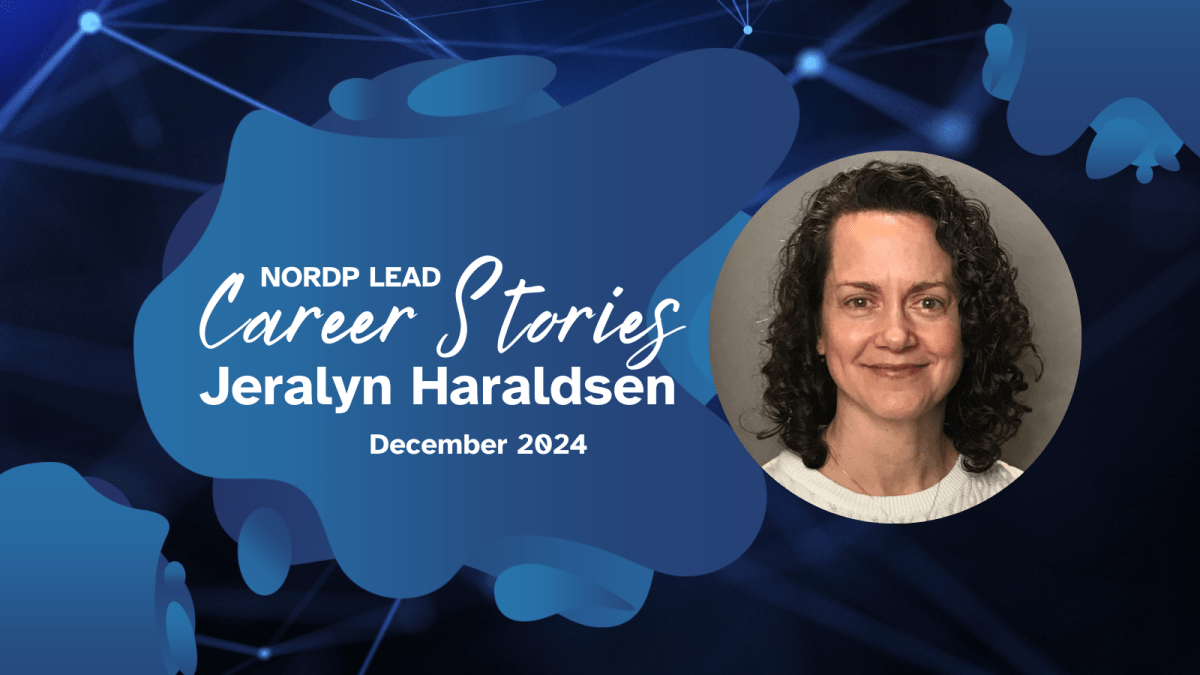
Dr. Jeralyn Haraldsen
In December career stories, we are honored to feature Jeralyn Haraldsen, the founding Director of Research Development at the University of Vermont (UVM). Dr. Haraldsen leads a team of Research Development staff who provide strategic grantsmanship, writing, and project management support to faculty seeking extramural funding to support research, creative, and scholarly activities. She and her team, under the guidance of the Vice President for Research, provide professional development opportunities to early-career faculty, coordinate writing and project management support for large-scale, high-impact proposals, manage UVM’s internal limited submission process, and ensure that faculty across the University are aware of and prepared for new research grant opportunities.
Dr. Haraldsen’s career path into research development started in grad school when she attended a career panel about alternative career paths and heard a speaker discuss research development work. Although she always received positive feedback on her writing skills and knew she would be capable in such a role, she was not ready to make that jump and went on to a postdoctoral position. As a post-doc at UVM, she realized the work-life balance of laboratory work was not the best option for her and her growing family. Her priorities shifted after a family tragedy and she started exploring writing careers more broadly, not just RD, as she loved writing and editing papers. It is at this time she started doing informational interviews and connected with Peg AtKisson (an alum of the same graduate school). By the end of their conversation, Dr. Haraldsen was hired as a remote, independent contractor which allowed her to also accept freelance work with faculty at UVM.
These experiences led her to an interim position at UVM under a new Vice President of Research who was familiar with research development. With their support, she created a new RD office and singlehandedly provided research development support for up to five (5) years before growing and forming a team of eleven members. As exciting as it has been to grow a team, it’s come with many “growing pains” like managing people and struggling to obtain more resources. The transition from direct support to a larger strategic role was more challenging (surprise!) as she discovered that she had underestimated the skill involved in managing people. However, these are the challenges that keep Dr. Haraldsen in RD. The ever-evolving environment, opportunities for professional growth, and challenges with managing a growing team and a growing portfolio highlight the importance of the RD field. Moreover, fostering strong collaborations and building relationships while working on proposals and piloting limited submissions keeps Dr. Haraldsen inspired and engaged in her role. For Dr. Haraldsen these are her impact and legacy: to come together to work and to enjoy it. As such, her RD pro-tips are to “take a step back and think about the process, be innovative, and stay calm under pressure.”
Jeralyn would love to answer any questions you have for her, so please feel free to email her at Jeralyn.Haraldsen@uvm.edu.
To listen to her full interview by the career/kindle team, please click on this link (you must log in as a NORDP member to access): https://nordp.org/store/viewproduct.aspx?id=24459276; Chapter 44: Jeralyn Haraldsen




 NORDP News