Thursday, March 20, 2025 @3pm Eastern (zoom link below)
Learn what the NORDP Professional Development Committee is all about: what we can do for you as well as volunteering opportunities!
The objective of this committee is to provide NORDP members meaningful, timely, and engaging opportunities to expand their research development knowledge and add valuable skills to both their professional and personal toolboxes. The PD Committee goals are to:
Develop, implement and organize engaging and worthwhile professional development content based on the needs of the NORDP membership;
Provide opportunities for NORDP members to offer their relevant expertise and to gain valuable leadership skills by leading webinars and developing other professional development materials;
Recruit knowledge experts to contribute time and relevant intellectual resources to the NORDP community;
Collect and disseminate best practices in research development, for use by NORDP members;
Compile and maintain a database of professional development resources for NORDP membership.
Pictured from left to right are Amber Mason, Tekla Smith, Kelly Ann Moore, and Dena Reinoso.
Who:
Kelly Moore, Director, Training Grant Support Office, Emory University
Amber Mason, Associate Director of Evaluation, Training Grant Support Office, Emory University
Dena Reinoso, Assistant Director, Training Grant Support Office, Emory University
Tekla Smith, Project Support Specialist, Training Grant Support Office, Emory University
Where: Emory University
Number of years in research development: Kelly 4 years, Dena 3 years, Amber & Tekla 2 years each
Length of NORDP membership: Same as above!
The NORDP Innovation Award recognizes individuals, groups, or teams, functional units, or organizations who leverage unique skills or resources to kick-start innovation in research development and advance the profession or the field in ways that generate evidence of promise or demonstrable results. Innovators leverage partnerships, experiment with tools and techniques, or generate and share knowledge to advance NORDP and the work of its members.
The interview was conducted with Dr. Kelly Moore, on behalf of the Training Grants Support Office Team.
What is the Training Grant Support Office and how did you first become interested in establishing TGSO?
The Training Grant Support Office (TGSO) at Emory University is dedicated to bolstering the sustainability of our current training programs while also identifying and fostering new areas for program development. We achieve this by providing specialized expertise, tools, and resources that are essential for the success of our research training initiatives. I founded the TGSO in December 2020, driven by a strategic vision from Dr. Deborah Bruner, Emory’s Senior Vice President of Research, who recognized the critical need for enhanced support of research training within the larger research ecosystem at Emory.
Prior to joining Emory, I was involved in training grant and fellowship support as part of a broader set of responsibilities at the University of Texas MD Anderson Cancer Center UTHealth Houston Graduate School of Biomedical Sciences. There, I was managing a training grant, everything from processing payroll for trainees to programming, running their seminars, bringing in speakers, etc. That’s what really got me into this world of training grants and being in an academic environment, although it was in the Dean’s office, so we looked at it from a very different perspective, that is, from an educational standpoint. As part of my other duties, I started helping students and faculty apply for fellowships and training grants. At that time, it was a small portion of what I did, but that’s what started to get me interested in extending more full time into training grants. After a few years, some duties shifted, and my fellowship and training grant responsibilities expanded, and then that’s when I saw the position at Emory to start the TGSO.
Moving from an academic to an RD office was really interesting. Being in a Research Office, we are able to provide equitable support to everyone, regardless of where they are located in the University and across career stages to include predoctoral and postdoctoral grants.
The opportunity to establish the TGSO allowed me to focus exclusively on this vital area. I was particularly drawn to Emory because it provided the platform to not only enhance the support for training grants but also to create and implement comprehensive, university-wide initiatives that would strengthen our programs for years to come.
What was the process of building out TGSO and how did your membership in NORDP play a role in your efforts?
Building out the Training Grant Support Office (TGSO) was a strategic and iterative process. We started small, but with a clear vision. Initially, it was just me, but over time, we’ve expanded to a team of four dedicated professionals. In the early stages, we focused on engaging with stakeholders across the university to understand the existing landscape of training grant support. This involved assessing what resources were already in place, identifying gaps, and determining where there was room for improvement.
To get started, I did a listening tour with our faculty and our central research offices. I also consulted with the Graduate School and the Office of Postdoctoral and Mentored Trainee Education, the Office of Sponsored Programs, and Research Compliance to learn what was currently happening at Emory. When I looked behind the curtain, I began to realize that training grants are really important to a small corner of the world.
At Emory, last fiscal year, we secured over $1.1 billion in sponsored research awards, with $15.6 million of that coming from training grants. While training grants represent a very small piece of the pie, it’s a really, really important piece. These grants play a critical role in sustaining and advancing the research ecosystem by cultivating the next generation of researchers and ensuring the long-term vitality of Emory’s research enterprise. A lot of Emory’s processes and policies are built for the big piece of the pie — the research grants. There were no specific policies and procedures for training grants, and so a lot of my work was looking at what had been done, because within a particular department or division, training grants may be been managed very well. I wanted to learn from what as working well and amplify it to all of the programs.
Getting started, we had to be strategic in our approach, so we chose to focus first on pre-award services, knowing that a solid foundation here would be crucial before we could effectively build out post-award supports. A key principle throughout this process was ensuring equity among our programs—we were committed to not offering a service to one program unless we could ensure it would be available to all.
I didn’t know about RD until I met my Dr. Kim Eck, my supervisor. NORDP really helped me gain an understanding of the institutional standpoint: What is our capacity for taking on training? What areas are we strong in? What are our core research areas that we focused in? And how can we develop programs on top of those core research areas? We used a lot of competitive intelligence to determine our top funding areas and to find natural groups of faculty that we can build programs around.
My membership in NORDP has been instrumental in shaping TGSO’s approach. Nationally, training grant support is often housed within academic-based offices, such as a university’s graduate school or postdoctoral affairs office. Emory is unique in that TGSO is situated within the Office of Research Development, which gives us a distinct advantage. Having previously worked within an academic affairs office, my perspective on training was rooted in traditional academic frameworks. However, through NORDP, we’ve been able to integrate these educational approaches with RD principles, creating a hybrid model that enhances the support we offer for training grants at Emory.
What relationships have you built as a result of NORDP, and how have these relationships influenced your work?
The relationships I’ve built through NORDP have been incredibly rewarding and have significantly influenced my work. In addition to my role with the TGSO, I’m the co-founder and current Vice President of the National Training Grant Community of Practice (NTGCOP). Founded in early 2021 by training grant support offices from Emory, Georgetown University, Northwestern University, and the University of Wisconsin-Madison, NTGCOP aims to support leaders nationwide through tri-annual meetings focused on NIH guidelines, resource sharing, and training grant administration.
We started NTGCOP because training grants can be a very lonely space. NIH guidelines, like most federal guidelines, are muddy at best. A lot of it’s open to interpretation and experiences. Having someone you know to ask best practices, or, how do you read this, was really important to us, and it didn’t exist from an administrative space. NIH is very faculty heavy, and they have lots of groups and conferences for the faculty, but not so much for the administration. NORDP was a huge factor in our growth, because, as all of my counterparts all sit in academic offices, they didn’t even know what NORDP was. We took our presentation to NORDP, and there was a light bulb moment in the room; everyone was like, oh my gosh, help with training grants! Today, we have nearly 500 members from over 100 institutions, many of whom are also NORDP members. These relationships have been integral to our growth and success.
We’ve submitted some responses to NIH requests for information that relate to training grants, and we were told that one of the letters and RFIs that we submitted actually had an impact on changes NIH has implemented. We’ve now built some strong relationships with NIH, both within particular institute’s like NIGMS, some various program managers, and also with Dr. Ericka Boone, Director of the NIH Division of Biomedical Research Workforce.
More recently, we’ve co-presented with the Federal Demonstration Project (FDP) and the NIH on reducing administrative burdens for NIH training grants. We’ve also recently become a 501(c)(3) non-profit organization, which is a significant milestone for us. It was a NORDP member who connected us with the FDP, whose purpose is to evaluate administrative burden in research. We connected this effort with NIH, and the three organizations co-presented on training grants, with over 600 people attending. We conducted a survey of the audience and came up with a one pager of tips and tricks for first time applicants that we’re now sharing as a resource.
One of NORDP’s greatest strengths is its strong and supportive community. Since joining, I’ve developed numerous connections through my participation in the NORDP Mentoring Training Series and as a recent member of the NORDP conference planning committee. These connections have provided invaluable insights, collaboration opportunities, and support, greatly enhancing my work with TGSO and NTGCOP.
What other innovations have you observed within NORDP (or the field of research development) since you first joined?
One of the most impactful innovations we’ve embraced since joining NORDP is the use of competitive intelligence within research development—a strategy recognized by NORDP with a previous Innovation Award. By applying various competitive intelligence analyses, TGSO has shifted from a reactive to a proactive approach, working closely with faculty to initiate and develop strategic, multi-departmental, and multi-institutional proposals. This approach has also led to the integration of new training program expectations into all major Senior Vice President for Research investments, such as centers and university-wide initiatives.
We have a small group of US private institutions with medical schools that we benchmark against, and we will do a lot of competitive intelligence reporting on that to benchmark where we are make decisions on what type of programs we should be focusing on. And that competitive intelligence piece has been really critical, because if we have the data to back up a decision, it is much more palatable for the faculty. For example, if we can come back and tell them, that lately, applications that go in without any sort of refined career development for trainees only have x percent of success, the faculty are much more inclined to rethink what they’re doing.
The results have been tangible and impressive. Emory is now ranked among the top 20 institutions in the country for NIH-funded training grants. We’ve seen our training grant submissions double, and the average scores of these submissions have improved by 30%, often falling at or below the current NIH funding lines. Notably, Emory has achieved a perfect score (10) on multiple training grant proposals for four consecutive years—something that hadn’t been accomplished in over a decade. In FY22, the Emory TGSO experienced a 125% increase in awarded proposals, more than doubling the number funded in FY20 and FY21.
What advice do you have for NORDP members leading their own innovative initiatives within the field of RD?
My number one piece of advice would be to embrace ambition. Don’t be afraid to pursue bold and ambitious ideas. Some of the most impactful innovations come from daring to think big. If you believe in your idea, pursue it with confidence, knowing that innovation often requires stepping outside of the conventional. Also, it is important to build a strong network. Collaboration is key in RD. Cultivate relationships with key stakeholders, both within your institution and across the wider RD community. Networking can provide valuable insights, resources, and support as you navigate the challenges and opportunities of leading your own innovative initiative.
Personally, I wouldn’t be here where I am today without being ambitious and taking the shot. And so that’s my biggest piece for anyone, especially for moving into leadership in any capacity. Whether you lead a team or you’re a part of a team, bring up your ideas. Don’t feel like any ideas you know not good enough to pursue, because if someone told me it’s absolutely crazy for y’all to be reaching out to the NIH about this, then I would not be where I am today, in partnership with NIH to help make change.
I have to say, NORDP, hands down, is my absolute favorite professional organization I’ve ever been a member of. We have a great sense of community and heart and care for members. I did the NORDP mentor training series earlier this year, and the relationships I built with everyone there were fascinating. Moving forward, there’s a lot to pursue at the intersection of training grant support from an academic perspective and training grant support from a research perspective. We are happy to help others working in that area, however that may be.
Written by: Roshni Singh with input from Natalie Baronian, Career Stories team
A Spectacular Path from Grantsmanship and Research Administration to Research Development
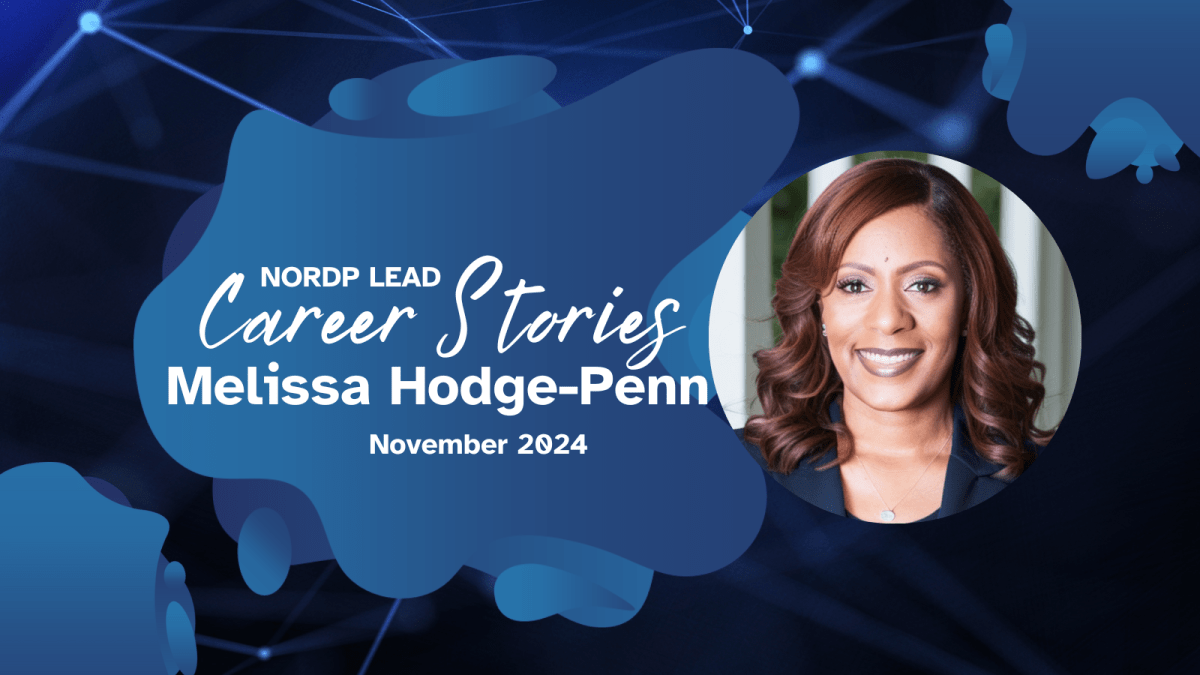
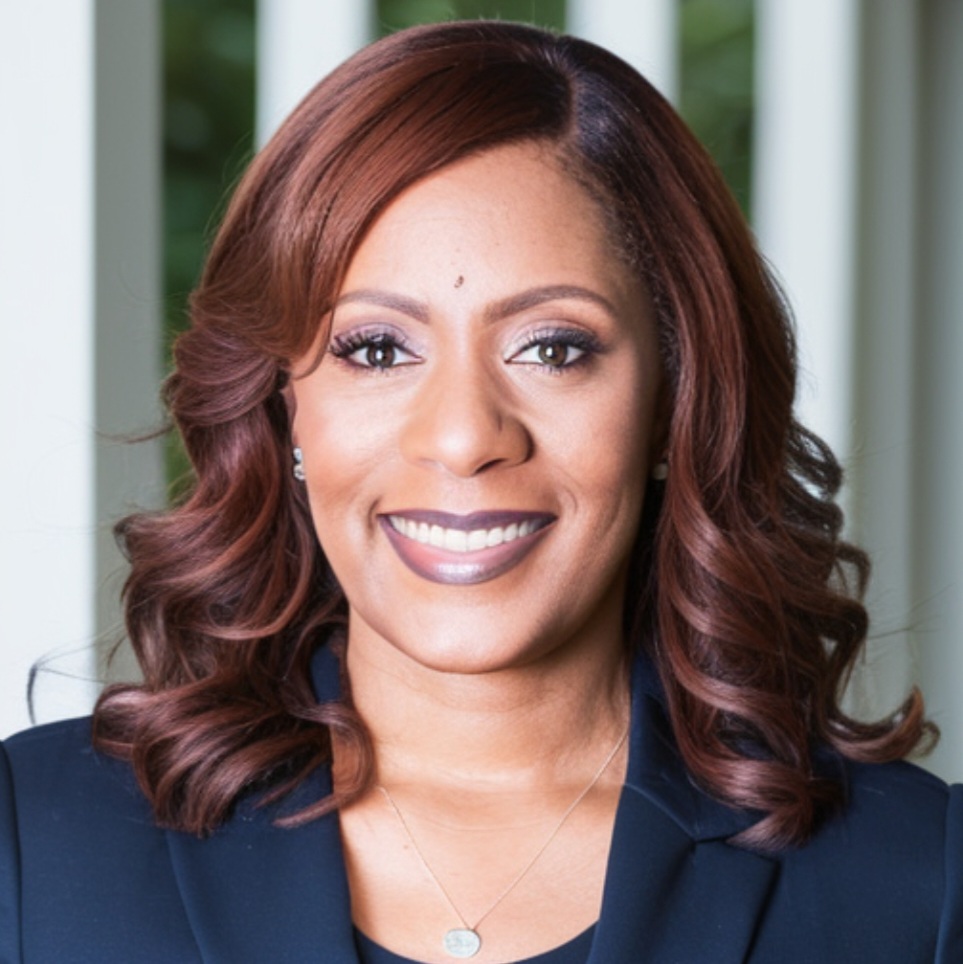
Dr. Melissa Hodge-Penn
Before joining the RD field, Dr. Melissa had various roles in higher education as a grant manager, a pre-award specialist, and someone who helped build programs for faculty members in grant writing and research initiatives. In these roles, she was unaware that she was crafting her path to the RD field.
Meet Melissa Hodge-Penn, the Interim Vice Chancellor for Research at North Carolina Agricultural & Technical State University (NC A&T), where she served as the Associate Vice Chancellor before her Interim role. Before joining NC A&T, Dr. Melissa served as Assistant Vice Chancellor for research and sponsored programs at the University of Mississippi, where she facilitated university-wide strategic research growth activities, strategic planning and implementation, and directed multiple and diverse constituencies in support of the research enterprise. Her experience began at Georgia State University, where she worked on community and workforce development projects. This exposure led her to Emory University, marking her formal entry into research administration.
Dr. Melissa brings a wealth of experience managing programs funded by multiple and diverse sources and providing administrative oversight and management for a research enterprise. This includes portfolio administration, complex and multidisciplinary project administration, research development, research compliance, and policy implementation. Her experience at different universities and systems has allowed her to gather best practices, provide influence around visioning, and align RD for the unique needs of the “next university” and place of employment.
Dr. Melissa is a demonstrated leader with experience across academia, government, and not-for-profit organizations who has successfully fostered private sector and community-based relationships. Adding her leadership qualities to her current role. Dr. Melissa advocates for research needs and supports faculty in research endeavors. She emphasizes the importance of strategic operational support for the research enterprise and through these develops networks amongst research professionals. She is inventive in maximizing and leveraging resources to support researchers and their students. She is not reluctant to speak on what potentially “could be seen as out of the box” and her always “willing to grow, move and learn all she can and having that front seat to innovation.” Hence, she finds fulfillment in mentoring junior faculty and supporting new research development officers, fostering a collaborative environment that encourages innovation.
As a Black woman in a leadership role, Dr. Melissa recognizes the significance of representation in academia. Therefore, she aims to inspire others by demonstrating that diverse paths can lead to success in research administration. Her tip to everyone is that while moving around to grow your career, absorb the best and let it expand your worldview — particularly around research. She also advises to “Document Your Journey” by keeping detailed notes of your experiences and insights. These can be invaluable for future reference and for helping others.
Her RD pro-tip/hack is to give yourself grace and don’t take yourself too seriously, you know what you know. She also recommends taking part in professional development and networking teams you might not otherwise as this will have a great impact on you and your career.
Dr. Melissa would love to answer any questions you have for her, so please feel free to email her at mhodgepenn@ncat.edu.
The link to the interview to Dr. Melissa’s November Career Stories will be posted on the LMS when available.
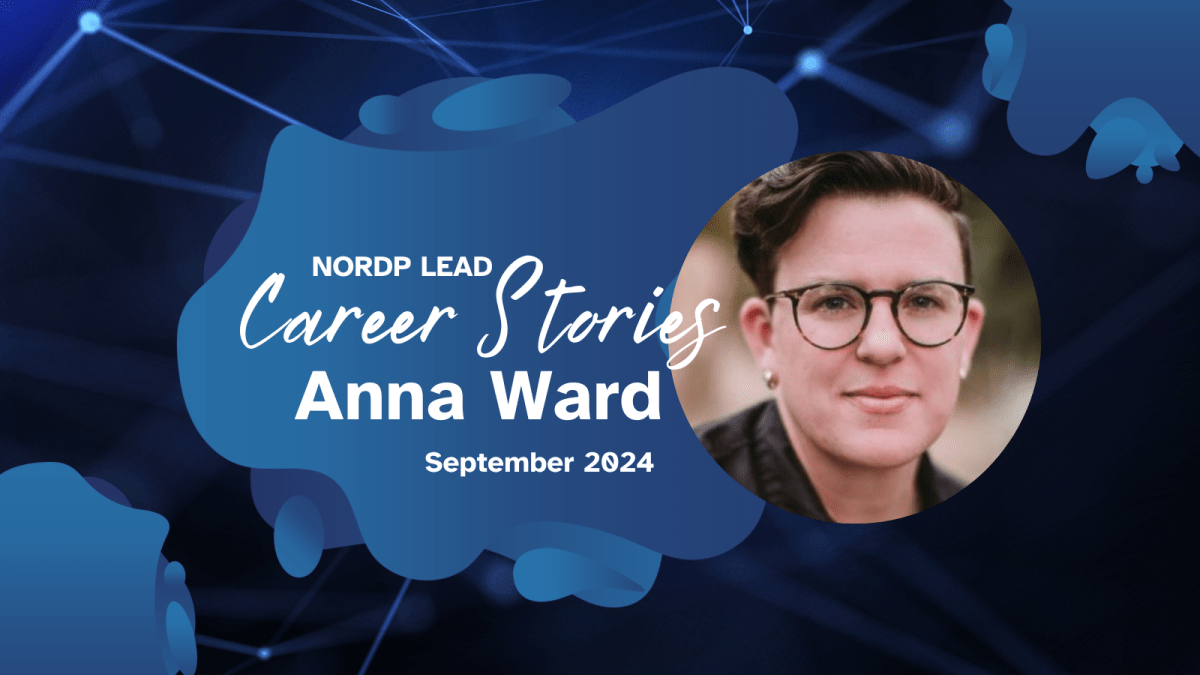
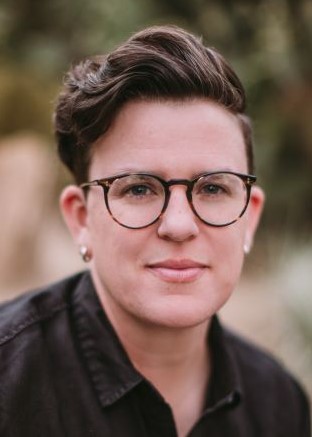
Drawn by a research background, funding structures, and opportunities, Dr. Anna Ward shares that her journey to the RD profession is a gift where she is fascinated by the many ways you can address the same question.
In September Careers Stories, we shared the journey of Dr. Ward, who brings over 15 years’ experience in academic research, teaching, program management, and research development, including previous roles as a Program Officer in UCRI and a Grants and Program Manager at University of California at Davis. Dr. Ward received her BA degree in Politics and Women’s Studies from UC Santa Cruz and doctoral degree in Women’s Studies from UCLA. Prior to returning to UC, where she is the Director of University of California Research Initiatives (UCRI), part of the Research Grants Program Office at the systemwide Office of the President, Dr. Ward was previously a Visiting Assistant Professor and Program Coordinator of the Gender and Sexuality Studies Program at Swarthmore College and a lecturer in the Program for the Study of Women and Gender at Smith College.
After being affiliated with different UC campuses, Dr. Ward grew fascinated with the complexity and scale of the UC system which includes 10 unique campuses, as well as systemwide entities like Agriculture and Natural Resources (ANR), the 42-site Natural Reserves System, and the three UC-affiliated national laboratories. In her current role, she oversees a suite of research grant programs designed to encourage collaboration across the UC system, spur new directions in interdisciplinary research, and generate novel solutions to challenges facing California communities.
Dr. Ward is deeply involved in NORDP and was a Co-Chair of NORDP’s Committee on Inclusive Excellence. In NORDP, she found a welcoming community to identify with and says “the connections that we make are gold.” She thinks that RD professionals can do a better job articulating their contributions beyond proposal development and encourages exploration beyond just “churning out proposals and competing for the same pool of money.” Also, according to Dr. Ward, RD doesn’t get enough credit for the potential role it can play in retention, especially with minoritized faculty.
Dr. Ward advises new RD professionals to perform informational interviews and participate in the NORDP Mentoring program. She benefited immensely from mentorship and her NORDP mentor encouraged her to think creatively, which led her to multiple informational interviews being instrumental in her career. She made herself “vulnerable and talked to some heavy hitters”, aiming to do something in 5 years that would normally take 15 years. Now she advises others, “to be vulnerable but also know what you want to do” as the informational interviews goes both ways where both parties are investing in each other.
Dr. Wards’ impact and legacy is creating a safe space for difficult conversations, doing everything with pride and honor, treating everyone with the respect they deserve, while making their paths easier.
Dr. Ward would love to answer any questions you have for her, so please feel free to email her at anna.ward@ucop.edu
The link to the interview to Dr. Ward’s Career Stories by the NORDP LEAD Career Stories team will be posted in the NORDP LMS when available.
When Dr. Helms was asked to write his first grant in Biotech, he was a little hesitant, however, the role grew on him and he became an expert and a go-to person for all the grants in his company. While in the industry, Dr. Helms received funding from NIH and served on the NIH SBIR study section.
Michael K. Helms, PhD, MBA
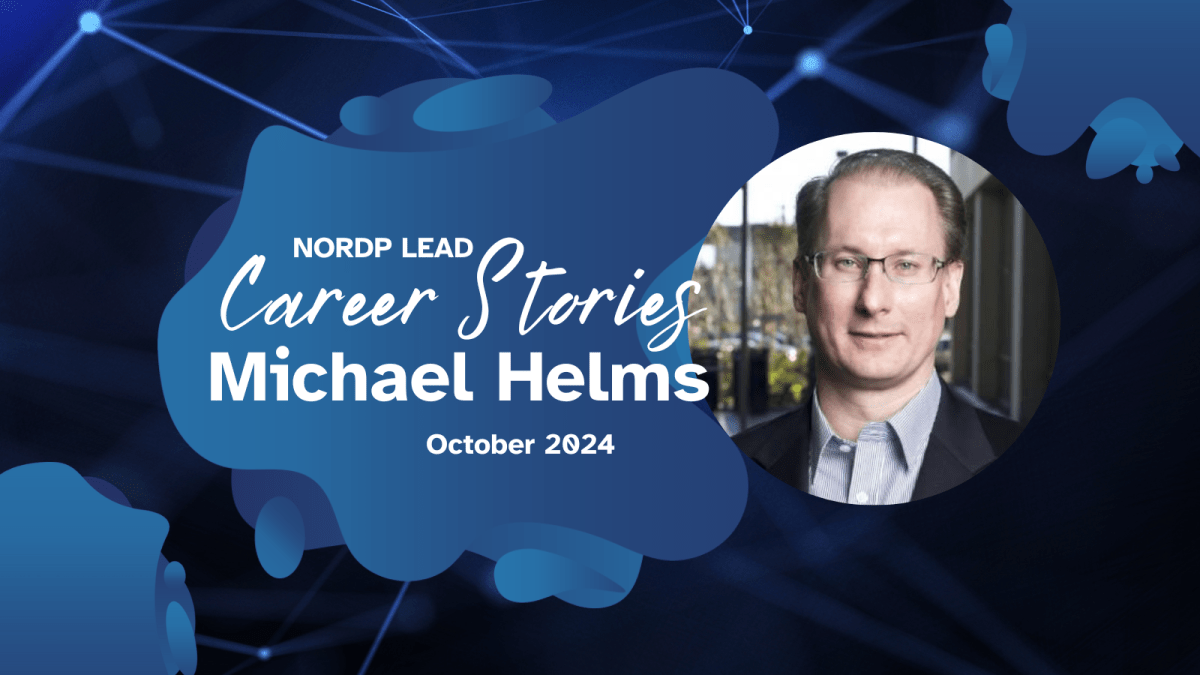
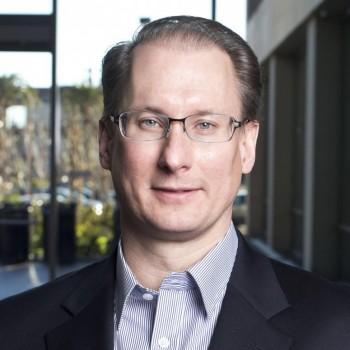
The October Career Stories featured Dr. Micheal Helms, Director of Research Development and Team Science in the Department of Medicine at Stanford University School of Medicine. Dr. Helms has an MBA degree with specializations in managing innovation and technology and international business, and BS and PhD degrees in biochemistry. Mike founded the first-ever research development office at Stanford, the Stanford Research Development Office (SRDO), and managed it for 5 years. His journey started as a scientist, project manager, director, and general manager in the biotechnology industry in the San Francisco Bay Area, eventually making his way into academia.
In 2008, when the economy was crashing, Dr. Helms started consulting and looking for new opportunities. Through his work with NIH, he realized that most federal funding was awarded to universities, so he started focusing his job search in academia. With his wealth of experience, in 2009, he was hired by Stanford University and since then has helped hundreds of faculty members find and apply to funding opportunities, resulting in over $400 million in new funding from federal and foundation sponsors. He counts among his successes the Stanford CTSA, Stanford Diabetes Research Center, Stanford Alzheimer’s Disease Research Center, SPHERE Center, and many others. For the past 15 years Mike’s main responsibility has been assisting faculty obtaining large grants. He directly works with experienced and knowledgeable faculty members and provides them with hands on help through coaching, development, and holding strategy and coaching meetings. Additionally, he runs a seed grant program for junior faculty who are clinically active.
Dr. Helms likes to “get the wins” and bring in the money, which aligns to faculty interests and aspirations. Helping faculty nurture their career to do “all good things” inspires him. He has supported 2 early career faculty – K Awards – funded with perfect scores of 10.
In reflecting on his impact and legacy, Dr. Helms points to helping Stanford raise >$400 m in new grant funding, introducing and establishing the importance of research development into Stanford, and the relationship and impact he has had on others’ career. Lately, he has been reflecting on future career moves. He recognizes that most RD professionals are in staff roles, which may put him in a much weaker position within an institution for rising to the VP level. However, he maintains that networking is key and can possibly have people on your side, so never stop learning, asking questions, and maintaining good relationships with people.
Mike would love to answer any questions you have for him, so please feel free to email him at mkhelms@stanford.edu.
The link to the interview to Dr. Helms October Career Stories will be posted on the LMS when available.
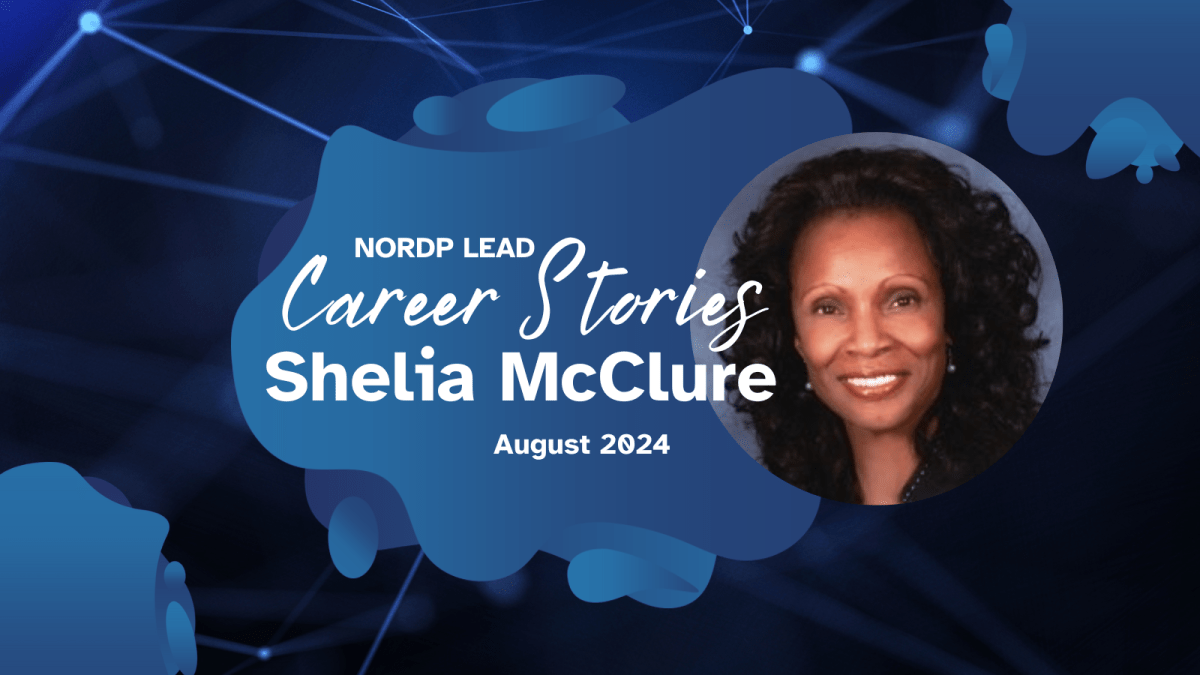
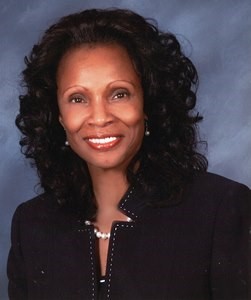
This month’s career story featured Dr. Shelia McClure, the Senior Associate Dean for Research Development at Morehouse School of Medicine (MSM), who is also the founding director of the MSM Office of Research Development (ORD). ORD provides technical assistance to faculty, post-docs, students and staff in planning, developing, implementing, and evaluating activities that facilitate scientific and educational research. Dr. McClure received her doctorate in cellular and developmental zoology from the University of California, Berkeley, completed post-doctoral training at the University of California and was a scientist in the Cancer and Viral Diseases Unit of the Upjohn Company in Kalamazoo, MI.
Dr. McClure began her professional career at Spelman College in Atlanta, GA where she rose to the rank of Associate Professor and was recognized for mentoring students and developing infrastructure and capacity for biomedical research that focused on faculty development, infrastructure improvements, and grant and contract development. She left Spelman for what she initially thought would be a brief stint at the National Institutes of Health (NIH). That “brief stint” ended up being almost 16 years, serving as a Program Director, Scientific Office, and Special Assistant to the Director of Research Infrastructure in the National Center for Research Resources, and as Chief of the Office of Research Training and Capacity Building in the Division of Scientific Programs at the National Institute on Minority Health and Health Disparities. However, her love for teaching, mentoring, and engaging learners as well as her passion for enhancing research capacity and helping diversify the biomedical research workforce brought her back to academia, where she could be fully engaged in research development.
Dr.McClure’s research development journey began with starting up a new lab as an Assistant Professor in a small institution that focused primarily on teaching. Once she garnered extramural funding from NSF, NIH, and a few foundations to establish her own research, she was equally engaged in developing research capacity, not only for herself, but for students, post-docs, and other faculty. She believes RD is in her blood and with a passion for RD, “she has never worked a day in life” but follows and enjoys her passion. She considers herself “very fortunate to have been a part of research development on a local level in the academy and at a national level while at NIH.” That same passion keeps Dr. McClure in RD as she enjoys seeing investigators obtaining their first grant and becoming successful in their research and professional careers. Since many of these investigators are from groups underrepresented in biomedical research, she has the added enjoyment of playing a role in helping diversify the scientific workforce. Her work has also resulted in advocacy efforts to increase funding for smaller institutions, HBCUs, and other MSIs that need resources to enhance research and training capacity.
She strongly believes that mentoring is an essential ingredient for success, and credits her parents, an NIH professional mentor, and her undergraduate research mentor for supporting her throughout her life and career. Specifically, she thanks her parents “for instilling in a young African American woman growing up in the South that she could be anyone she wanted to be, and the equalizer would be education.” Hence, she firmly believes that it is everyone’s responsibility to “pay it forward”, and as RD professionals, we should play a more active role in mentoring the next generation of researchers and RD professionals. We should also have a stronger voice in advocating for RD opportunities that will help to diversify the institutions and individuals contributing to the research enterprise.
Even with an extensive career in RD, she still learns from every investigator she works with and uses the information she learns to improve RD programming and operations. “Emotional intelligence is the key” when working with a broad cross-section of stakeholders, which is usually the case in the RD space. Mutual respect, and building and maintaining relationships have shaped her impact and legacy in RD.
Dr. McClure would love to answer any questions you have for her, so please feel free to email her at smcclure@msm.edu
The link to the interview to Dr. McClure’s Career Stories by the NORDP LEAD Career Stories team will be posted when available.
Written by: Vess Vassileva-Clarke and the Mentoring Committee Marketing & Communication Team
January is National Mentoring Month! The NORDP Mentoring Committee has lined up exciting mentoring events and activities for all-level-of-experience mentors and mentees! Join us and participate in one or all of the planned events and learning opportunities:
Mentor Training for RD Professionals Workshop — Get ready to explore mentoring competencies that can be utilized across the work of research development (RD)! This interactive workshop series will cover the 10-module Entering Mentoring curriculum, initially developed by CIMER for mentoring researchers and tailored for RD professionals. Registration is now open – 35 participant limit and the course will fill up fast!
Mentoring Committee Open House — Join us on January 16, 2pm ET for our monthly meeting to learn more about what the Mentoring Committee does, and find out how to get involved and join us. We will talk about the committee’s work and achievements, celebrate our volunteer members, and brainstorm new ideas for the future. Register today!
Dyad Reflection — Throughout the year, we strive to find the most inspiring stories from mentor-mentee dyads and share them with you. We will start this year with Angela Jordan’s and Wendi Jensen’s reflections on their mentor-mentee relationship and what it means to them. Read it on our blog on Jan 20, 2025.
Peer Mentoring Group (PMG) meetings — Log in to WisdomShare and go to Dashboard to find out current PMGs and join the ones of interest to you.
Career & Professional Development: exploring how to become more efficient and effective in our roles
Coaching and RD: Developing and implementing coaching as part of the Research Development (RD) skillset
Collaboration & Team Science: building collaborations and interdisciplinary research programs
Faculty Development: Supporting RD professionals who perform faculty development through programming and workshops
Leadership & Management: leading in both official and unofficial capacities
Proposal Development & Project Management for Research: Supporting proposal development for faculty grant-seeking and leveraging project management tools and methodologies to enhance efficiency and success in securing extramural funding
Strategic Planning & Advancement: guiding policy and planning for enhanced research and scholarship
Written by: Vess Vassileva-Clarke and the Mentoring Committee Marketing & Communication Team
The end of the year is always a good time to pause for reflection that inspires New Year success. The Mentoring Committee would like to do just that—a recap of NORDP mentor program participants’ reflections. In preparation for the National Mentoring Month in January, we are ready to dive into a new year of sharing and shared mentoring experiences. Below are a few highlights of the thoughts, comments, and opinions of current and past participants in the NORDP mentoring program for inspiration. See what your peers have had to say since 2018 about the NORDP Mentoring program and its meaning to them.
Be inspired. Be inspirational. Explore new ways to connect and grow every day. Become a NORDP mentor/mentee!
“Being a mentor has helped me be more reflective about my own roles and has helped me develop some characteristics that might not have gotten my attention otherwise. One of my mentees was in a big growth period to begin with and had an unexpected career change opportunity that came up during the mentoring year, and I felt like I had to be very intentional in providing them mentoring support through that tricky period.”
“[The NORDP mentoring program allowed me to be able] to discuss issues/challenges and get advice as well as share experiences.”
“Both mentor and mentee benefit from the relationship. I’ve developed long-lasting relationships and even friendships with the people I’ve been paired with through the Mentoring Program. I’m a lot more aware of the field of RD and what is happening at other institutions because of the network I’ve built through the Mentoring Program, which brings value back to my own institution.”
“[The NORDP Mentoring program] enabled me] to meet with people from a wide range of backgrounds and experiences. I particularly love being able to talk through best practices with other mentors.”
“[The NORDP Mentoring program gave me the] ability to troubleshoot on issues with mentor/peers and validation of frustrations that I experience.”
“[The NORDP Mentoring program helped me with] building a close-knit network of individuals throughout NORDP. The mentees and mentor I’ve been matched with through the program have become close colleagues and friends. The relationships lasted well beyond the formal one year duration of the program.”
“[A benefit of participating in the NORDP Mentoring program is] connecting with others and getting another perspective.”
“Every year, I find the learning and exchange of institutional practices, solutions, and approaches to be the most valuable. Whether it’s me or my mentor, there’s always someone who is going through something new or trying to work a problem and the external conversation always starts new pathways forward.”
From a Marketing and Visual Communication Background into RD—A Magical Profession
A Covid detour, career experimentation, and recognizing the need for something new led her to a role in RD.
Jessica Brassard
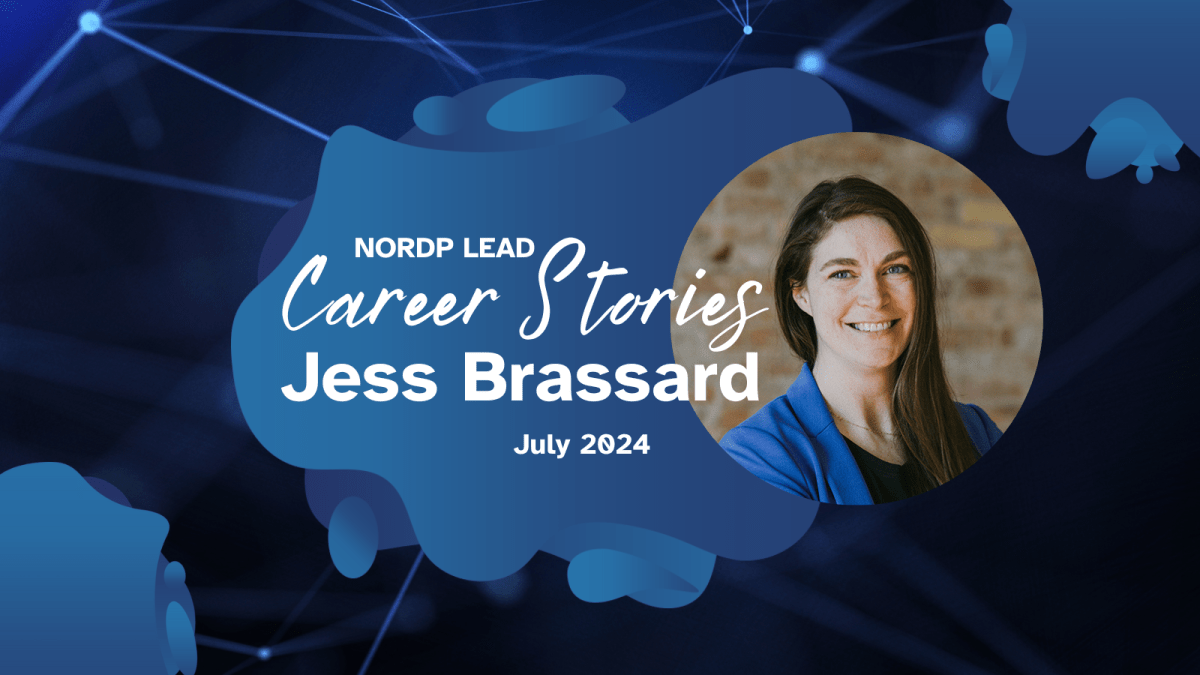
Meet Jessica Brassard, the Director of Research Development and Communication at Michigan Technological University. In her role, she creates visuals for high-impact/high-value research proposals, supports science communication for research, enables team building around research initiatives, and designs faculty development events and workshops. Before joining this “magical profession”, as Jess describes her role in RD, in 2015, she was in healthcare marketing and communications.
Jessica describes how she found RD as an “act of desperation.” Her position in a local healthcare organization was slowly draining the joy from her work and she needed something new. In 2015, a friend at Michigan Tech helped her look past the RD title and position description, and a new chapter in her career was born. In 2021, Jess was drawn to a position at the University of Michigan which was the perfect alignment of her love of visual communication and helping researchers tell their stories, giving her an opportunity for career experimentation. During this career experimentation, she learned that her own bucket is filled when she can help researchers through a wide variety of services and support. This led her back to Michigan Tech. Her career transition was possible because of her built relationships and network. Jess highly recommends nurturing relationships as it can do wonders.
Jess believes RD is a field where one can help in so many different, fulfilling ways. To her, keeping a whole heart is important in doing service-oriented work. Sending pieces of your heart in the work you do can result in the power of your happiness being controlled by other people. Jess puts forth her best effort and quality work while keeping her heart firmly hers. She believes that others cannot control her; thus, not to become stressed by her emotional reaction toward her work. It makes the work enjoyable and encourages people to be themselves, which is also Jessica’s legacy and RD pro tip.
Jess uses OOO away messages and email footers intentionally to make incremental culture change. In her personal Gmail account, she wrote a sort of “mini LinkedIn” footer to nod to where she’s been and where she currently spreads her energy. Inspired by Karen Caitlin’s weekly Better Allies newsletter, Jess writes her OOO messages to describe what she is doing away from work. This small act of honesty helps her be more present while at work and supports building relationships. The people Jess surrounds herself with make an impact and help her grow into the person she wishes to be.
Outside of her RD position, Jess has had a hand in multiple nonprofits. In 2013, she founded Keweenaw Young Professionals (KYP), a non-profit for young professionals to connect and grow through community engagement. She has served local non-profits, service organizations, and on committees at Michigan Tech and the University of Michigan. Jess coaches the local Ski Tigers cross-country ski club level 1 skiers (ages 5 and 6)!
In NORDP, Jess currently serves on the Mentoring Committee and the McMc (marketing and communications) subcommittee, co-chairs the Communication Working Group (CWG) with Kelsey Haasevoort, and serves on the national Conference Planning Committee. One of her favorite volunteer projects is helping with the Conference Planning Committee with the #MugMottoTaskForce. She helps solicit phrases and ideas from NORDP, then makes designs and illustrations that are uploaded to a RedBubble shop, RDDrinkApperati Shop on Redbubble, where NORDP members can get them on mugs, shirts, stickers, and other products. The unique mottos capture the spirit and dedication of research development professionals and each design celebrates and inspires RD professionals. Sales from these items generate a modest profit (less than $200) and help to pay for appreciation gifts for the conference planning committee volunteers. It’s a small token to recognize the countless volunteer hours committed to enriching our community and advancing the field of research development.
Jess is happy to answer any questions you have, so please feel free to email her at jnbrassa@mtu.edu.
The link to Jess’ full Career Stories by the NORDP LEAD Career Stories team will be posted when available.
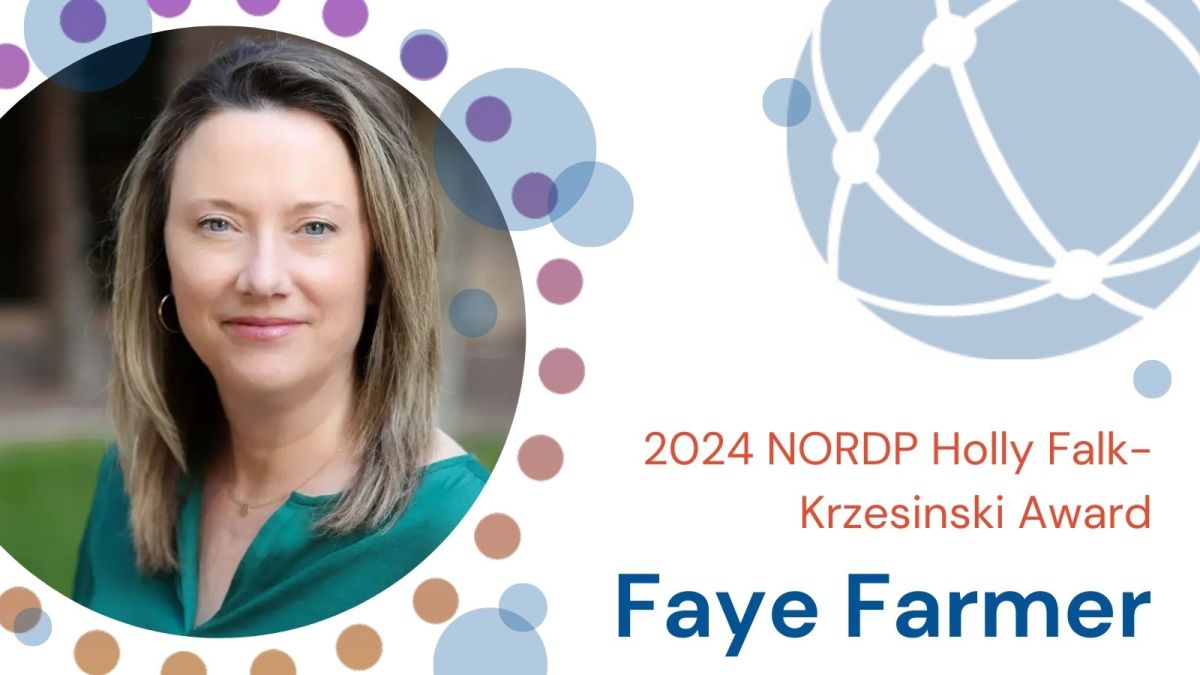
Named for NORDP’s founding President, this award is voted on by the Board of Directors and given annually to a NORDP Member in recognition of outstanding service to the organization, to the research development profession or field, and to peers.
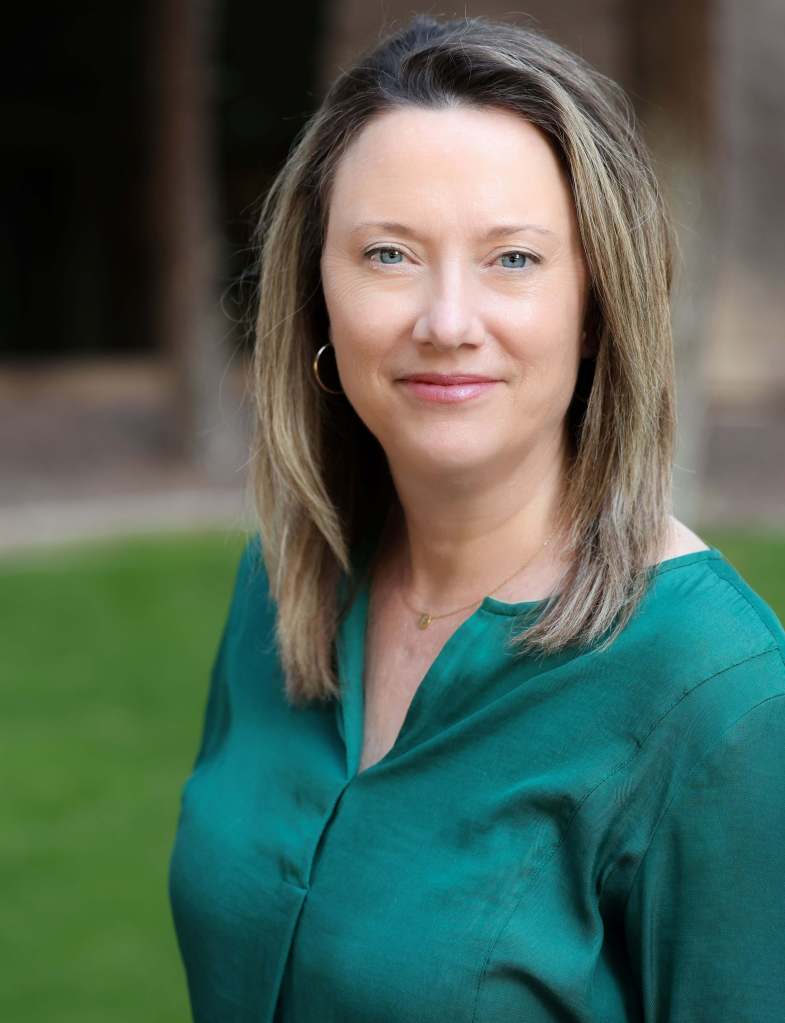
Who: Faye Farmer
Where: Director of Enterprise Design Initiatives at Arizona State University
Number of years in research development: Faye started working on proposals as an editor at a scientific institute at ASU in 2008. She moved to the University’s central office in 2011. She co-founded the central Research Development office in 2015 and worked there until 2023.
Length of NORDP membership: 15 years
You have served NORDP in numerous roles and capacities over the years. Could you share a bit about what that journey has been like?
The journey has been fantastic. Faye has held both formal and informal leadership roles in NORDP. Faye considers her greatest contributions to be in the area of conference presentations, where she shared about ASU’s experience alongside other universities. When she ran for the Board, it was a culmination of the conference experience, working with the Mentoring Committee and working with the PEERD consulting program.
NORDP has always depended on volunteers. Holding this truth close during her Board service was important to Faye. She served on the Board from 2019 to 2023. While on the Board, she contributed to two Board initiatives. Both leveraged the work of volunteers in the organization. One was the task force for certification. This involved working with several passionate and motivated individuals through a series of steps that culminated in a report that was published this year.
The second effort involved a task force on NORDP policy review and updating. Faye organized individuals interested in creating more inclusive policies within the organization. This work reflected a dynamic, evolving membership in the thousands and tried to future-proof the organization as it grows. The original bylaws were essential to the founding of NORDP, but the policies needed to address size and diversity of the organization’s membership. This work resulted in a set of policy drafts that were provided to the Board in November of 2023.
In your view, what makes an effective leader, and how has your philosophy of leadership informed your work within NORDP?
Faye believes in the power of collaboration. NORDP has taught her this. She also recognizes that she still has a lot to learn about interpersonal relations and communications. Leading in NORDP means that you are good at what you do and also invested in other’s success. Research development is a coopetition, where members balance their own university or college interests while benefiting from each other’s knowledge and experience. This balance is achievable because of the strong sense of community. Leadership means growing the scope and scale of this balance through the many layers of institutional types, career rungs, and time in the profession.
What do you see as the biggest rewards, and challenges, of serving in leadership roles within NORDP?
As far as challenges, the path to organizational change can sometimes feel glacial. But Faye believes it is slow because NORDP values community insight and input. Achieving a well-grounded, high-quality outcome that has meaning for many in the organization often requires contributions from many people over time. As an organizational leader, Faye recognizes that she does not speak for herself but for the people who put her there. This requires frequent checking-ins and creating inclusive and transparent processes.
Faye has found that the biggest reward of working in NORPD is expanding networks upon networks of professionals in research development. Even as her career has shifted in the last year, she still gets emails asking for her thoughts, advice, or connection. At ASU, Faye encouraged her team to engage with NORDP, especially by presenting at conferences. By sharing our experience, NORDP reduces barriers to engagement for its professionals. The result is better, faster, higher-quality, and more effective research development services and support nationwide.
More recently, you have played a crucial role in revitalizing the New Opportunities in Research Development (NORD) Committee. What has that process been like, and what do you see as the greatest opportunities for the field of research development moving forward?
Faye sees incredible opportunities in research development. She believes that there is momentum toward more purposeful strategy development. Faye often touts the importance of strategic (competitive) intelligence, which builds upon institutional analysis and expands it to include national program and policy trends. These early, pre-funding opportunity activities allow research development professionals to answer questions like, who is funded and why. These answers become actionable insight among university leaders, ultimately translating into more efficient funding pursuits.
What advice do you have for NORDP members who aspire to greater service within NORDP or the field at large?
Volunteer! Faye sees a parallel to the advice we give faculty and other researchers. Just step up and get involved. Faye recognizes that people want and should be paid for their work, but volunteering is critical to creating a more inclusive organization. Volunteering provides a unique skill set that may not be accessible through our work. She also recommends that NORDP members call in anyone and everyone to the organization. She says NORDP needs all levels of education, experience, and backgrounds to be successful. It is incumbent upon members to create a more diverse organization with intention and care.


![Image with two testimonials. The testimonials are as follows:
"[The NORDP Mentoring program provided me with] a lot of support for navigating an uncertain organizational situation."
"I loved my mentor and she was incredibly helpful. She provided advice about how she and her institution did certain things, and it was just great to have a friend!"](https://nordpnews.org/wp-content/uploads/2024/12/being-a-mentor-has-helped-me-be-more-reflective-about-my-own-roles-and-has-helped-me-develop-some-characteristics-that-might-not-have-gotten-my-attention-otherwise.-one-of-my-mentees-was.png?w=1024)
 NORDP News