Written by: Vess Vassileva-Clarke and the Mentoring Committee Marketing & Communication Team
January is National Mentoring Month! The NORDP Mentoring Committee has lined up exciting mentoring events and activities for all-level-of-experience mentors and mentees! Join us and participate in one or all of the planned events and learning opportunities:
Mentor Training for RD Professionals Workshop — Get ready to explore mentoring competencies that can be utilized across the work of research development (RD)! This interactive workshop series will cover the 10-module Entering Mentoring curriculum, initially developed by CIMER for mentoring researchers and tailored for RD professionals. Registration is now open – 35 participant limit and the course will fill up fast!
Mentoring Committee Open House — Join us on January 16, 2pm ET for our monthly meeting to learn more about what the Mentoring Committee does, and find out how to get involved and join us. We will talk about the committee’s work and achievements, celebrate our volunteer members, and brainstorm new ideas for the future. Register today!
Dyad Reflection — Throughout the year, we strive to find the most inspiring stories from mentor-mentee dyads and share them with you. We will start this year with Angela Jordan’s and Wendi Jensen’s reflections on their mentor-mentee relationship and what it means to them. Read it on our blog on Jan 20, 2025.
Peer Mentoring Group (PMG) meetings — Log in to WisdomShare and go to Dashboard to find out current PMGs and join the ones of interest to you.
Career & Professional Development: exploring how to become more efficient and effective in our roles
Coaching and RD: Developing and implementing coaching as part of the Research Development (RD) skillset
Collaboration & Team Science: building collaborations and interdisciplinary research programs
Faculty Development: Supporting RD professionals who perform faculty development through programming and workshops
Leadership & Management: leading in both official and unofficial capacities
Proposal Development & Project Management for Research: Supporting proposal development for faculty grant-seeking and leveraging project management tools and methodologies to enhance efficiency and success in securing extramural funding
Strategic Planning & Advancement: guiding policy and planning for enhanced research and scholarship
Written by: Vess Vassileva-Clarke and the Mentoring Committee Marketing & Communication Team
The end of the year is always a good time to pause for reflection that inspires New Year success. The Mentoring Committee would like to do just that—a recap of NORDP mentor program participants’ reflections. In preparation for the National Mentoring Month in January, we are ready to dive into a new year of sharing and shared mentoring experiences. Below are a few highlights of the thoughts, comments, and opinions of current and past participants in the NORDP mentoring program for inspiration. See what your peers have had to say since 2018 about the NORDP Mentoring program and its meaning to them.
Be inspired. Be inspirational. Explore new ways to connect and grow every day. Become a NORDP mentor/mentee!
“Being a mentor has helped me be more reflective about my own roles and has helped me develop some characteristics that might not have gotten my attention otherwise. One of my mentees was in a big growth period to begin with and had an unexpected career change opportunity that came up during the mentoring year, and I felt like I had to be very intentional in providing them mentoring support through that tricky period.”
“[The NORDP mentoring program allowed me to be able] to discuss issues/challenges and get advice as well as share experiences.”
“Both mentor and mentee benefit from the relationship. I’ve developed long-lasting relationships and even friendships with the people I’ve been paired with through the Mentoring Program. I’m a lot more aware of the field of RD and what is happening at other institutions because of the network I’ve built through the Mentoring Program, which brings value back to my own institution.”
“[The NORDP Mentoring program] enabled me] to meet with people from a wide range of backgrounds and experiences. I particularly love being able to talk through best practices with other mentors.”
“[The NORDP Mentoring program gave me the] ability to troubleshoot on issues with mentor/peers and validation of frustrations that I experience.”
“[The NORDP Mentoring program helped me with] building a close-knit network of individuals throughout NORDP. The mentees and mentor I’ve been matched with through the program have become close colleagues and friends. The relationships lasted well beyond the formal one year duration of the program.”
“[A benefit of participating in the NORDP Mentoring program is] connecting with others and getting another perspective.”
“Every year, I find the learning and exchange of institutional practices, solutions, and approaches to be the most valuable. Whether it’s me or my mentor, there’s always someone who is going through something new or trying to work a problem and the external conversation always starts new pathways forward.”
From a Marketing and Visual Communication Background into RD—A Magical Profession
A Covid detour, career experimentation, and recognizing the need for something new led her to a role in RD.
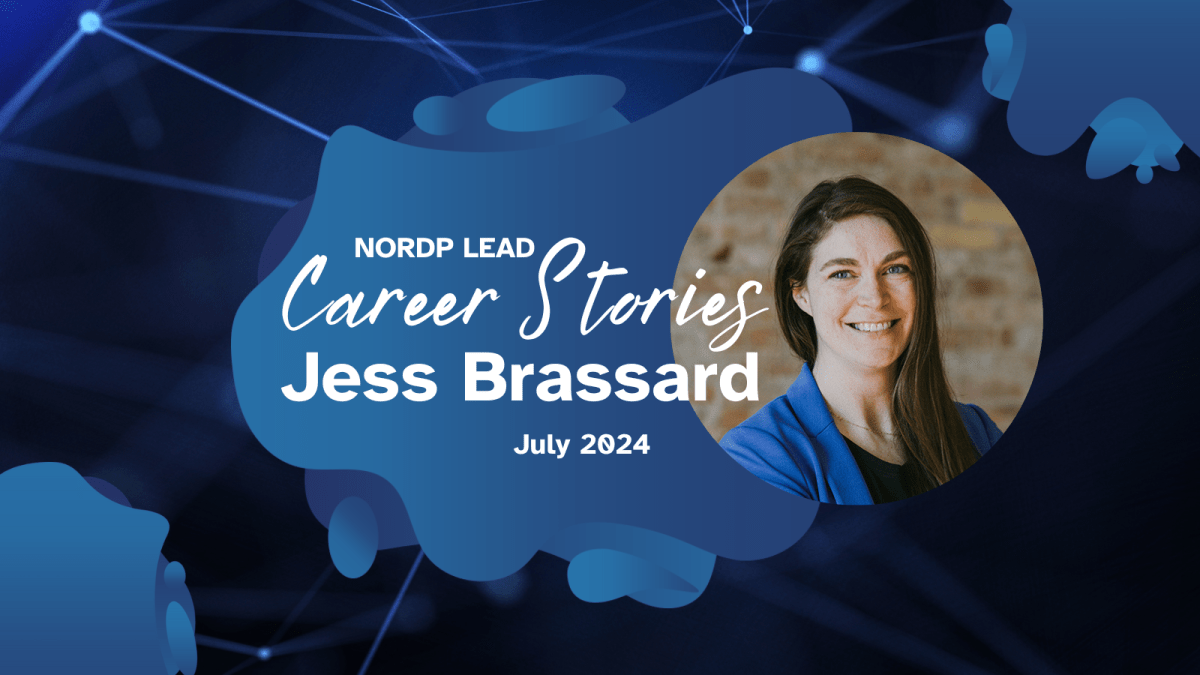
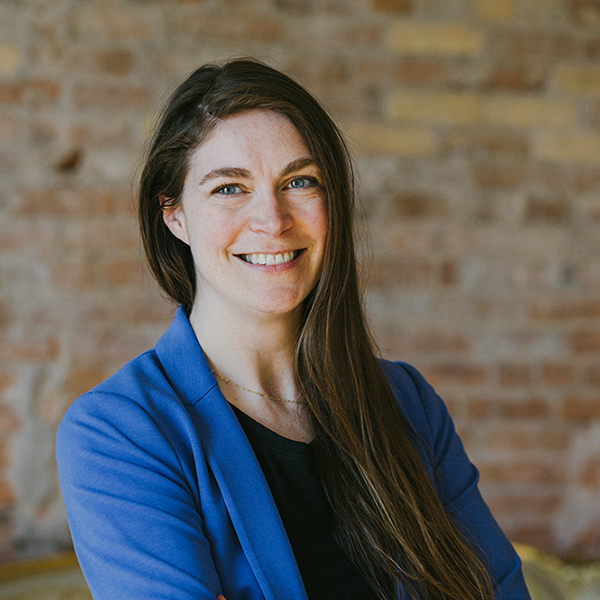
Jessica Brassard
Meet Jessica Brassard, the Director of Research Development and Communication at Michigan Technological University. In her role, she creates visuals for high-impact/high-value research proposals, supports science communication for research, enables team building around research initiatives, and designs faculty development events and workshops. Before joining this “magical profession”, as Jess describes her role in RD, in 2015, she was in healthcare marketing and communications.
Jessica describes how she found RD as an “act of desperation.” Her position in a local healthcare organization was slowly draining the joy from her work and she needed something new. In 2015, a friend at Michigan Tech helped her look past the RD title and position description, and a new chapter in her career was born. In 2021, Jess was drawn to a position at the University of Michigan which was the perfect alignment of her love of visual communication and helping researchers tell their stories, giving her an opportunity for career experimentation. During this career experimentation, she learned that her own bucket is filled when she can help researchers through a wide variety of services and support. This led her back to Michigan Tech. Her career transition was possible because of her built relationships and network. Jess highly recommends nurturing relationships as it can do wonders.
Jess believes RD is a field where one can help in so many different, fulfilling ways. To her, keeping a whole heart is important in doing service-oriented work. Sending pieces of your heart in the work you do can result in the power of your happiness being controlled by other people. Jess puts forth her best effort and quality work while keeping her heart firmly hers. She believes that others cannot control her; thus, not to become stressed by her emotional reaction toward her work. It makes the work enjoyable and encourages people to be themselves, which is also Jessica’s legacy and RD pro tip.
Jess uses OOO away messages and email footers intentionally to make incremental culture change. In her personal Gmail account, she wrote a sort of “mini LinkedIn” footer to nod to where she’s been and where she currently spreads her energy. Inspired by Karen Caitlin’s weekly Better Allies newsletter, Jess writes her OOO messages to describe what she is doing away from work. This small act of honesty helps her be more present while at work and supports building relationships. The people Jess surrounds herself with make an impact and help her grow into the person she wishes to be.
Outside of her RD position, Jess has had a hand in multiple nonprofits. In 2013, she founded Keweenaw Young Professionals (KYP), a non-profit for young professionals to connect and grow through community engagement. She has served local non-profits, service organizations, and on committees at Michigan Tech and the University of Michigan. Jess coaches the local Ski Tigers cross-country ski club level 1 skiers (ages 5 and 6)!
In NORDP, Jess currently serves on the Mentoring Committee and the McMc (marketing and communications) subcommittee, co-chairs the Communication Working Group (CWG) with Kelsey Haasevoort, and serves on the national Conference Planning Committee. One of her favorite volunteer projects is helping with the Conference Planning Committee with the #MugMottoTaskForce. She helps solicit phrases and ideas from NORDP, then makes designs and illustrations that are uploaded to a RedBubble shop, RDDrinkApperati Shop on Redbubble, where NORDP members can get them on mugs, shirts, stickers, and other products. The unique mottos capture the spirit and dedication of research development professionals and each design celebrates and inspires RD professionals. Sales from these items generate a modest profit (less than $200) and help to pay for appreciation gifts for the conference planning committee volunteers. It’s a small token to recognize the countless volunteer hours committed to enriching our community and advancing the field of research development.
Jess is happy to answer any questions you have, so please feel free to email her at jnbrassa@mtu.edu.
The link to Jess’ full Career Stories by the NORDP LEAD Career Stories team will be posted when available.
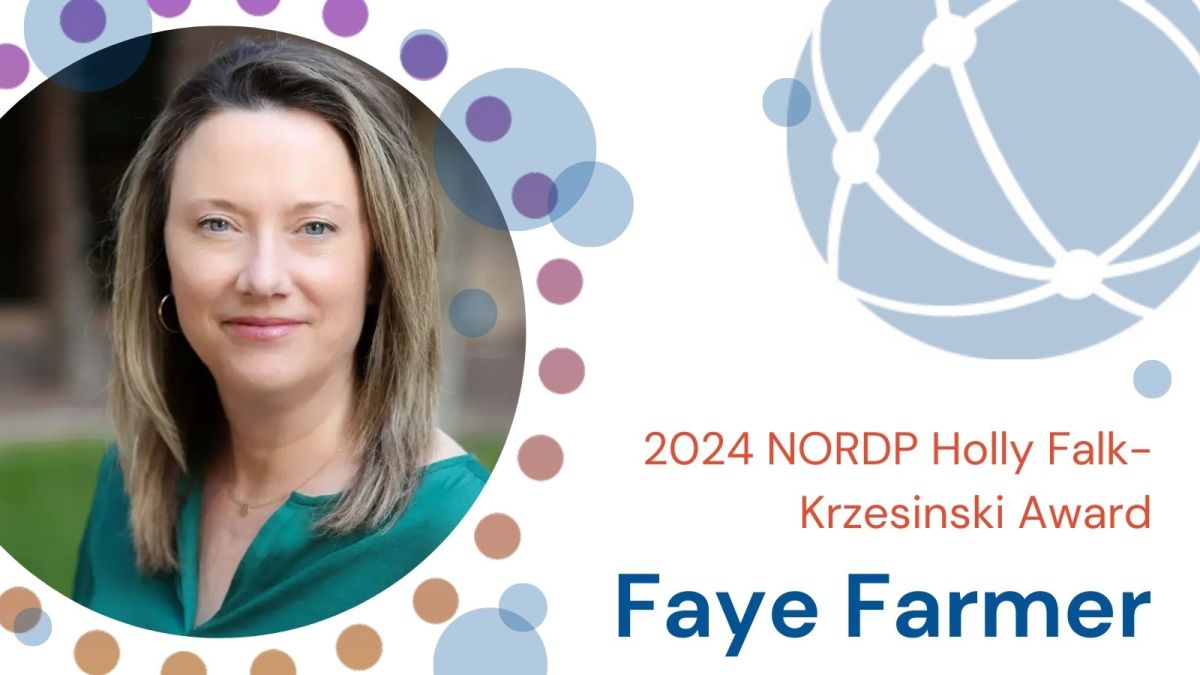
Named for NORDP’s founding President, this award is voted on by the Board of Directors and given annually to a NORDP Member in recognition of outstanding service to the organization, to the research development profession or field, and to peers.
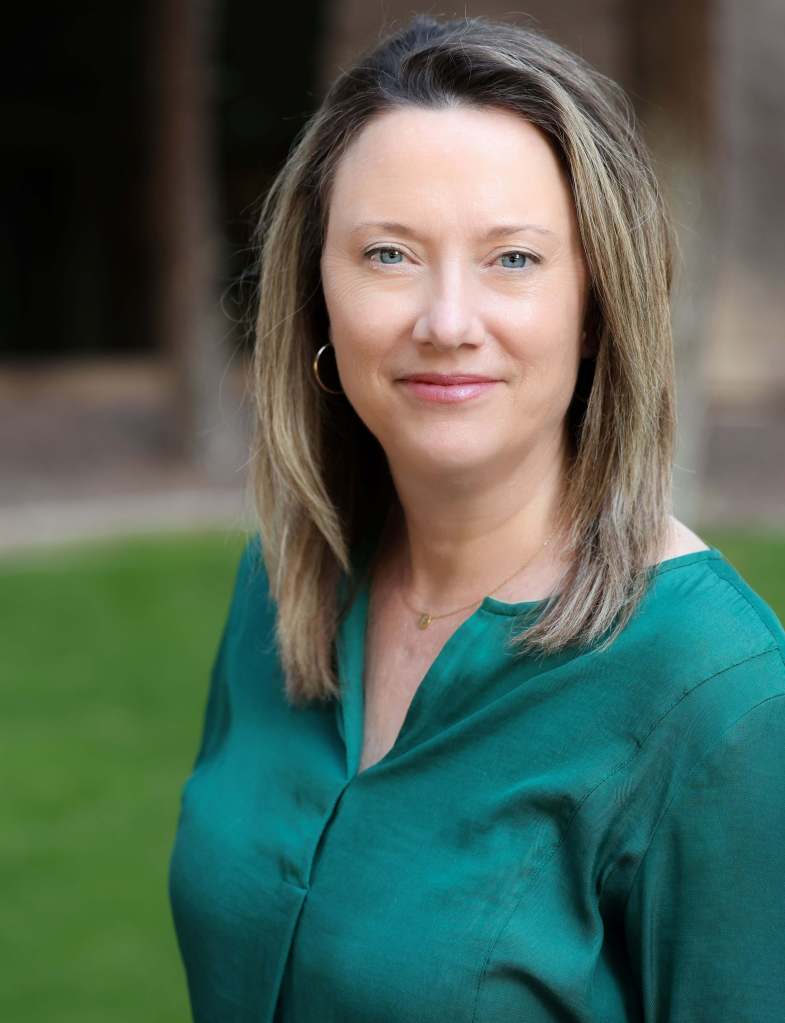
Who: Faye Farmer
Where: Director of Enterprise Design Initiatives at Arizona State University
Number of years in research development: Faye started working on proposals as an editor at a scientific institute at ASU in 2008. She moved to the University’s central office in 2011. She co-founded the central Research Development office in 2015 and worked there until 2023.
Length of NORDP membership: 15 years
You have served NORDP in numerous roles and capacities over the years. Could you share a bit about what that journey has been like?
The journey has been fantastic. Faye has held both formal and informal leadership roles in NORDP. Faye considers her greatest contributions to be in the area of conference presentations, where she shared about ASU’s experience alongside other universities. When she ran for the Board, it was a culmination of the conference experience, working with the Mentoring Committee and working with the PEERD consulting program.
NORDP has always depended on volunteers. Holding this truth close during her Board service was important to Faye. She served on the Board from 2019 to 2023. While on the Board, she contributed to two Board initiatives. Both leveraged the work of volunteers in the organization. One was the task force for certification. This involved working with several passionate and motivated individuals through a series of steps that culminated in a report that was published this year.
The second effort involved a task force on NORDP policy review and updating. Faye organized individuals interested in creating more inclusive policies within the organization. This work reflected a dynamic, evolving membership in the thousands and tried to future-proof the organization as it grows. The original bylaws were essential to the founding of NORDP, but the policies needed to address size and diversity of the organization’s membership. This work resulted in a set of policy drafts that were provided to the Board in November of 2023.
In your view, what makes an effective leader, and how has your philosophy of leadership informed your work within NORDP?
Faye believes in the power of collaboration. NORDP has taught her this. She also recognizes that she still has a lot to learn about interpersonal relations and communications. Leading in NORDP means that you are good at what you do and also invested in other’s success. Research development is a coopetition, where members balance their own university or college interests while benefiting from each other’s knowledge and experience. This balance is achievable because of the strong sense of community. Leadership means growing the scope and scale of this balance through the many layers of institutional types, career rungs, and time in the profession.
What do you see as the biggest rewards, and challenges, of serving in leadership roles within NORDP?
As far as challenges, the path to organizational change can sometimes feel glacial. But Faye believes it is slow because NORDP values community insight and input. Achieving a well-grounded, high-quality outcome that has meaning for many in the organization often requires contributions from many people over time. As an organizational leader, Faye recognizes that she does not speak for herself but for the people who put her there. This requires frequent checking-ins and creating inclusive and transparent processes.
Faye has found that the biggest reward of working in NORPD is expanding networks upon networks of professionals in research development. Even as her career has shifted in the last year, she still gets emails asking for her thoughts, advice, or connection. At ASU, Faye encouraged her team to engage with NORDP, especially by presenting at conferences. By sharing our experience, NORDP reduces barriers to engagement for its professionals. The result is better, faster, higher-quality, and more effective research development services and support nationwide.
More recently, you have played a crucial role in revitalizing the New Opportunities in Research Development (NORD) Committee. What has that process been like, and what do you see as the greatest opportunities for the field of research development moving forward?
Faye sees incredible opportunities in research development. She believes that there is momentum toward more purposeful strategy development. Faye often touts the importance of strategic (competitive) intelligence, which builds upon institutional analysis and expands it to include national program and policy trends. These early, pre-funding opportunity activities allow research development professionals to answer questions like, who is funded and why. These answers become actionable insight among university leaders, ultimately translating into more efficient funding pursuits.
What advice do you have for NORDP members who aspire to greater service within NORDP or the field at large?
Volunteer! Faye sees a parallel to the advice we give faculty and other researchers. Just step up and get involved. Faye recognizes that people want and should be paid for their work, but volunteering is critical to creating a more inclusive organization. Volunteering provides a unique skill set that may not be accessible through our work. She also recommends that NORDP members call in anyone and everyone to the organization. She says NORDP needs all levels of education, experience, and backgrounds to be successful. It is incumbent upon members to create a more diverse organization with intention and care.
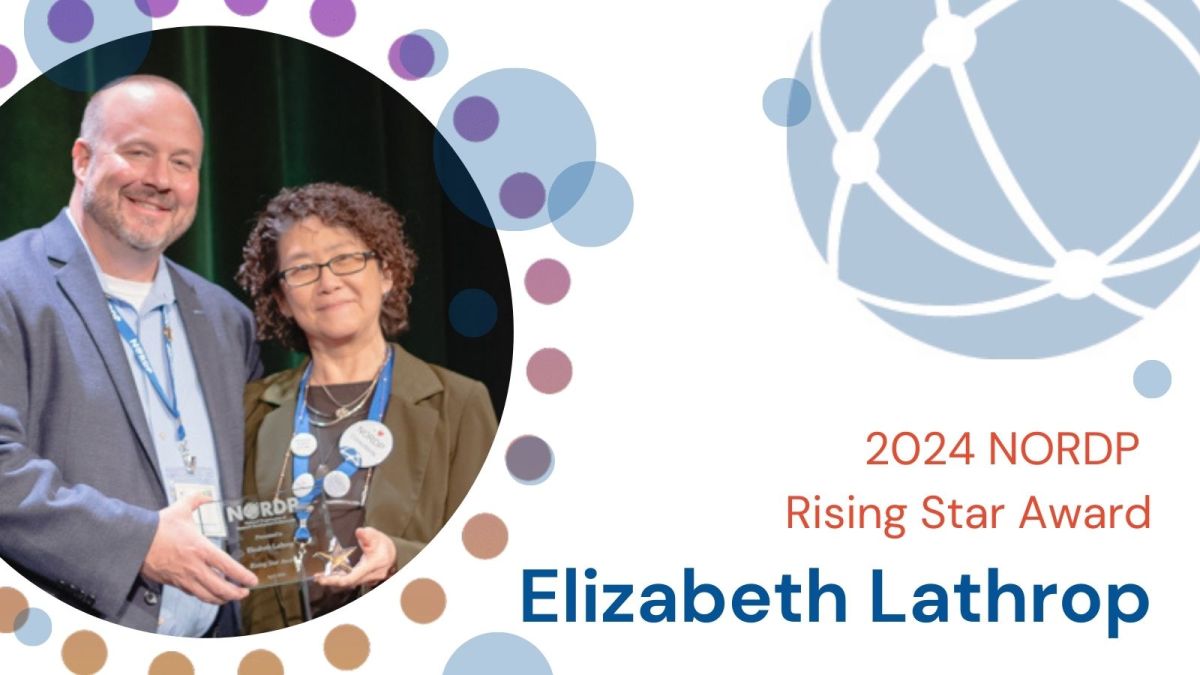
The NORDP Rising Star Award recognizes individuals for their outstanding, early volunteer contributions to NORDP and strong potential for future contributions to the organization and the profession or the field.
Who: Elizabeth Lathrop, PhD
Where: University of Maryland
Number of years in research development: 9 years (started unofficially ~2016)
Length of NORDP membership: 7 years since 2018
What initiative are you the most proud of in your role as a NORDP volunteer?
Mentoring committee definitely! After being a new NORDP member for a year, I picked the NORDP Mentoring Committee to get involved because I identify with the values of this committee of #Payitforward. I started as a trainee in the Mentoring Training workshop and then volunteered on various MC subcommittees which led to becoming one of the Co-Chairs. I feel very privileged to continue the work others had laid the ground work for in the past years. It takes continuous time investment and thoughtfulness to improve the various mentoring services that are available to all NORDP members. I believe my participation in the committee makes a difference in the contributions of the Mentoring Committee toward the overall success of NORDP.
How did you hear about NORDP and what made you join initially?
As part of my professional development, my boss (the Engineering Associate Dean of Research at University of Maryland) suggested that I join when first hired in my current research development position. That was in 2018. I gave myself one year to get oriented to the NORDP organization and very soon realized the grounding value of NORDP is in the relationships.
Like many other research professionals, I held various other roles wearing many hats before.
In my attempt to identify my responsibilities in an “office of one”, I learned that I must define boundaries and identify ways to collaborate with others to maximize impacts. I have learned these practices from my NORDP colleagues.
What relationships have you built as a result of NORDP?
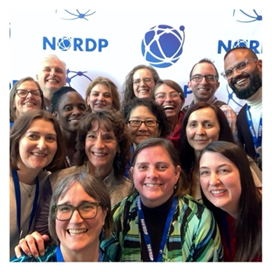
Network, Network, and Network! Networking with a range of research professionals provides me the opportunities to improve my own skillset through collaboration and listening. Through the Mentoring Committee, I have developed trusting relationships with many NORDP colleagues through our committee work (I love the photo taken at the 2024 NORDP Conference at Bellevue, WA this year) as well as through my participation in the mentoring program as a mentor/mentee. They have taught me the essence of the Can-Do mindset by learning through doing, which continues to guide the work I do for NORDP and at the University of Maryland. Most importantly, I consider many of them friends with whom I identify with a sense of belonging, something I treasure immensely.
Describe how NORDP has changed from when you initially joined
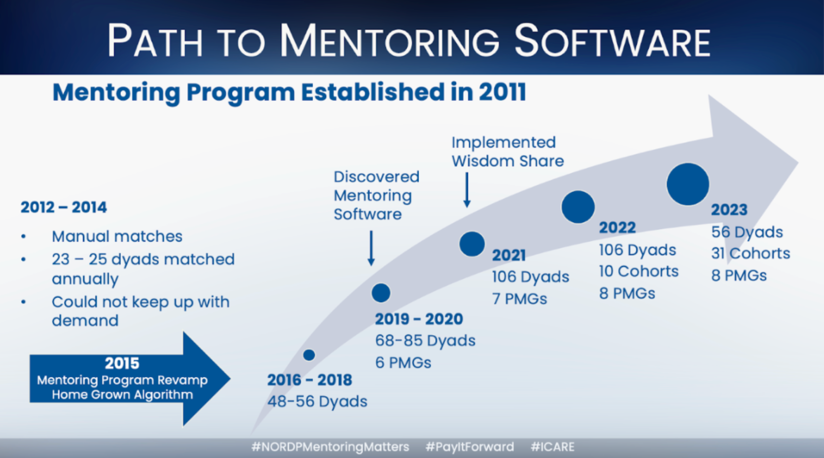
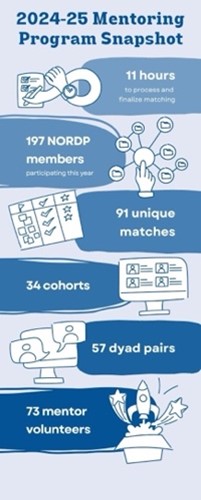
The expansion of the NORDP community is evidenced by a rapid increase in member participation in the Mentoring Program since its inception in 2012 (see the mentoring program evolution figure below). Along the way, the Mentoring Committee has continued to find new ways to provide resources and support for our growing member base. With the strong support of the NORDP Board, the Mentoring Committee implemented the Wisdom Share software in 2021 to try to streamline the matching process; in 2022, we subsequently adopted the new 1:3 Mentor:Mentees Cohort mentoring to address the need for more research development mentors. Even though I only joined NORDP since 2018, I have personally benefited from all of these improvements. I would like to give a big shoutout to everyone for their generosity and enthusiasm for sharing and volunteering.
Figure Credits: Mentoring Committee Past Co-chair Kathy Partlow (l) and Mentoring Committee Market & Communication subcommittee (McMc) team member Jessica Brassard (r)
What recommendations do you have for members to get more involved with NORDP?
Just do it and learn by doing!
Don’t be afraid to take a risk and gets your hands wet. No matter how we think we are prepared or not prepared, the only way to make an impact is by doing. Even though the process could be at times challenging and perhaps with occasional frustration, I think you would also be surprised by how rewarding it feels when accomplishments are completed as well as the camaraderie along the way. I can personally attest to the experience; it is worth it.
It takes a Village to build the NORDP Community and beyond!
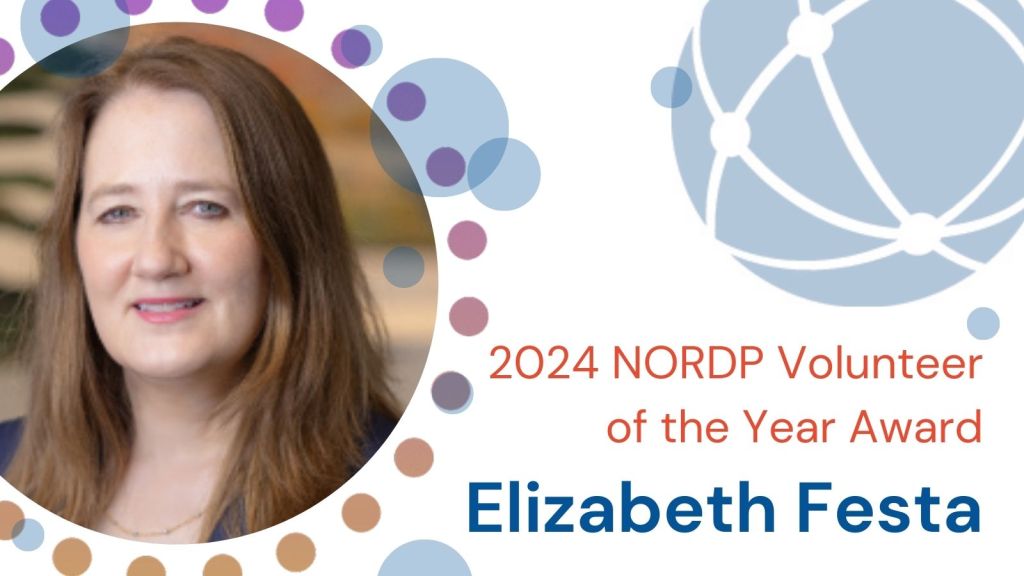
The NORDP Volunteer of the Year Award celebrates a NORDP member who has made an exceptional volunteer contribution to the organization during the past 12 months, recognizing them for going beyond what may be reasonably expected with respect to volunteer duties and responsibilities.
Who:Elizabeth Festa, Managing Director of Grants and Fellowships, Research Universities Practice
Where: McAllister & Quinn
Number of years in research development: 8-10 years
Length of NORDP membership: 5 years
What initiative are you the most proud of in your role as a NORDP volunteer? I oversee the Liaison Program for NORDP’s Strategic Alliances Committee (SAC). In that role, I’m most proud of writing reports from SAC liaisons who exchange information between NORDP and the many organizations in the global research enterprise. Over a dozen Liaison Reports can be found in the NORDP News blog, which is easily accessed from NORDP’s main webpage.
Over the last couple of years, I’ve had the pleasure of interviewing SAC liaisons with:
Advancing Research in Science (ARIS)
Alliance for Hispanic Serving Institution Educators (AHSIE)
Canadian Association of Research Administrators (CARA)
Colleges of Liberal Arts Sponsored Programs (CLASP)
International Network of Research and Management Societies (INORMS)
Network of Academic Corporate Relations Officers (NACRO)
NORDP currently has approximately 20 liaison partners, all of which offer significant opportunities for collaboration with NORDP. This delivers great value to NORDP’s members, their institutions, and NORDP as a whole.
How did you hear about NORDP and what made you join initially? Before beginning my position at McAllister and Quinn, I worked at Rice University for 17 years. I initially served as a faculty lecturer and as associate director of a campus-wide Academic Affairs program for writing and communication. In those roles, I supported graduate and undergraduate students across all schools of study in multi-modal academic communication and advised faculty on how best to teach and assess skills in research writing and presentation. I became interested in research development while I was working in this program. In 2014, I served as a reviewer for the Fulbright-National Geographic Digital Storytelling fellowship. Shortly after, I began coaching doctoral students applying for federal grants, such as the NSF GRFP, NSTRF, and NDSEG. As I pursued a career in research development, Dr. Phyllis McBride, who was director of Rice’s Office of Research Development Services, suggested I get involved in NORDP. In fact, I ended up joining NORDP even before I had a full-time position in RD,
I was drawn to RD because of the competitiveness of the grant world. Early in my post-graduate career, I went on the academic job market and received a tenure-track offer. Ultimately, I decided not to pursue that opportunity. That was a major turning point in my career, as I wasn’t sure what my next step should be. I realized though, that I wanted to stay in touch with the research world. In my current job, I get to meet faculty across a range of institutions and disciplines and to learn about their research. I love the dynamism and forward-oriented genre of the proposal. There is an excitement in developing a strong plan that leverages resources, anticipates and mitigates risk, and imagines potential outcomes and impacts of research.
What relationships have you built as a result of NORDP? My involvement in NORDP has resulted in extremely close working relationships and friendships that I truly treasure. Many of my NORDP colleagues are senior to me, and I’ve benefitted from their mentorship. As just one example, with their input, I’ve focused on how to run a more effective meeting. Watching leaders like Karen Eck, Kim Patten, Sharon Pound, Jessica Venable, Faye Farmer, Peggy Sundermeyer, Jess Brassard, and others has taught me so much, whether it be focusing on my career path or learning how to use communications tools.
Describe how NORDP has changed from when you initially joined. I’ve witnessed the tremendous growth of NORDP, with our membership reaching 1,400 and over 700 attendees at the annual conference. During my time on the Membership Services Committee (MSC), we approved three new affinity groups. Within the Strategic Alliances Committee (SAC), we have also approved several new liaisons over the last two years. This is an exciting time for NORDP, with new challenges and opportunities as we expand our membership and external networks.
Of particular note, our 2024 membership survey and RD certification and credentialing surveys revealed the diverse roles and institutions in which RD members are serving, and raised questions about how we define the field of research development. Additionally, I’ve seen a shift to RD professionals working more in hybrid and remote roles. MSC’s upcoming salary survey which will launch in the spring of 2025 is sure to give us new insights into the career choices and career paths of our membership.
One other evolution in membership was revealed at the new member breakfast at this year’s conference. There seems to be a heightened interest in NORDP as a professional development venue, with new training provided virtually to entire RD offices at member locations and targeted programs for both entry-level and advanced RD professionals.
What recommendations do you have for members to get more involved with NORDP? I can encourage others to follow some of the steps I’ve taken to get engaged in NORDP. First, attend your regional group and find affinity groups that match your interests. Second, attend the annual conference and join in on the activities like networking dinners and the poster session. Third, join NORDP Groups (these replaced Circles); these are great virtual spaces for collaboration. Fourth, attend the annual Committee Round Robin online event. Finally, utilize LinkedIn to connect to NORDP members and don’t be afraid to connect to or follow leaders whose work inspires you. NORDP is one of the most welcoming professional organizations I have been a part of, and I am invested in helping others find their place in our community.
She Knew What She Wanted Even Before She Knew What to Call the Job
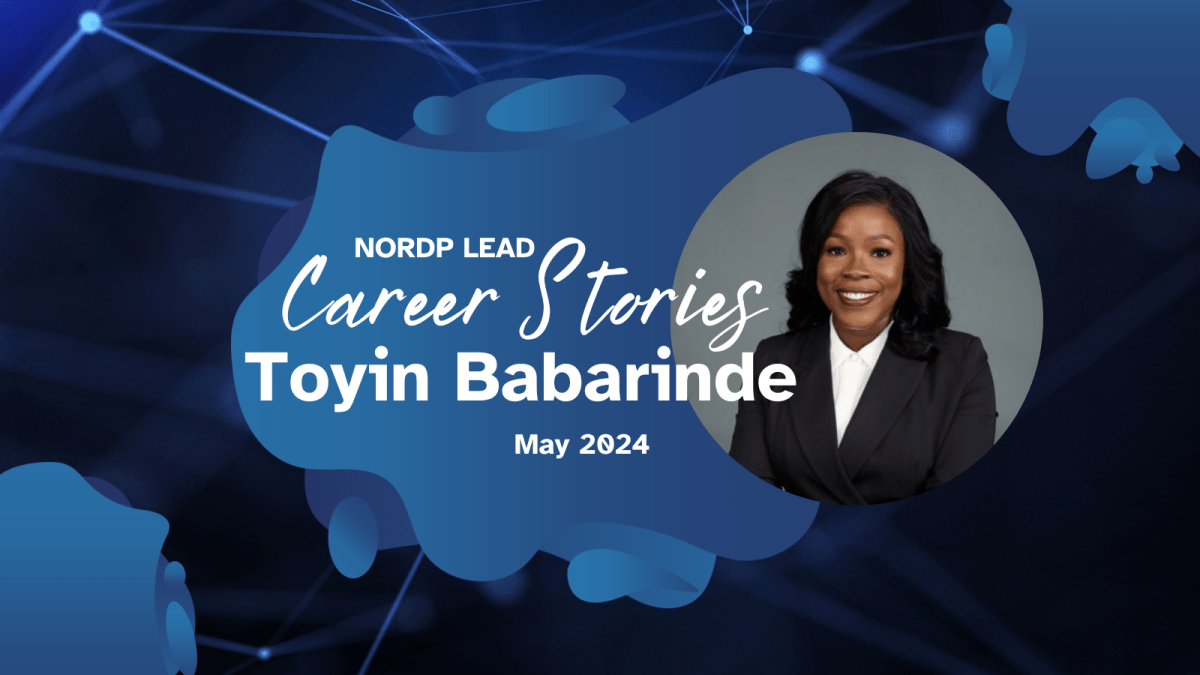
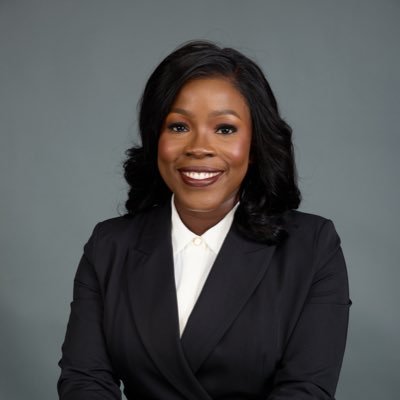
Dr. Toyin Babarinde
Meet Dr. Toyin Babarinde, whose persistence and creativity led to her dream role in RD and her exciting position as the inaugural Executive Director of the recently established Office of Strategic Research Development (OSRD) at the University of Texas Medical Branch (UTMB). After obtaining her PhD and two years of post-doctoral training, Dr. Toyin knew she did not want to continue bench research. With a deep passion for advancing science and research, she wasn’t sure what path to take and unaware of the exciting career of RD, she began searching for jobs using words like ‘research planning’, or ‘research organization’. After numerous Google searches, she started seeing positions that described her areas of interest and from there, she identified individuals with similar job titles. After several informational meetings and applying for countless jobs, she ended up as a consultant. However, she soon realized that a position in academia was more her style, so she kept applying for jobs and eventually received her first “official” RD position at The University of Texas, MD Anderson Cancer Center (MD Anderson).
Before joining UTMB, Toyin was the Associate Director of Research Planning and Development at MD Anderson. During her time at MD Anderson, she collaborated with faculty and staff across the institution and the Texas Medical Center developing large multidisciplinary research initiatives, identifying targeted funding opportunities, and assisting in the development and submission of research funding applications. While in this position, she sought opportunities to deliver A+++ service to all stakeholders. Back then, Toyin operated more linearly in thought, and as she contemplated her next growth opportunity, she began looking for director-level positions. When those opportunities did not materialize as she had hoped, she unexpectedly heard from not one, but two executive-level positions. She was reluctant at first to pursue either position because she was unsure, she could “skip a step on her career ladder.” However, she experienced an aha moment, when she asked herself, “who told you Toyin, that you can’t skip a step on the ladder.” In that moment, she realized that life doesn’t have to progress linearly. This aha moment motivated her to pursue the Executive Director position and ultimately led her to become the inaugural Executive Director at UTMB.
Throughout her career, Dr. Toyin understood that she had to advocate for herself and find creative ways to communicate her value. She is passionate about what she does and believes that the skills she uses in RD come naturally to her and align with her values, which are satisfying, feed her soul, and inspire her to pursue RD opportunities. Guided by her faith, she is able to keep her purpose in mind and operates with conviction. Dr. Toyin consistently strives for excellence, and she wants people to look back and say, “This research program has grown in depth and breadth because you were here,” as one of the chairs she worked with did once. This is the legacy she aspires to leave at every research organization she touches.
One of her RD pro-tips is to ‘develop and apply effective project management skills’, which are essential in every position. A second pro-tip would be to “invest in yourself and take the time to grow yourself, whether through employer-provided resources or on your own.”
Dr. Toyin is actively involved in NORDP and encourages everyone to network, which has helped her in her profession. As well, she wants to remind everyone that it’s okay to operate less linearly and embrace the dynamic possibilities that life has to offer.
Outside of her career, Dr. Toyin is active in her community, where she organizes STEM summer programs for children, volunteers with the Adventurer and Pathfinder youth clubs, and serves on the parent-teacher organization board of her children’s school. These community engagements bring her joy and valuable lessons that she uses in all aspects of her life.
Toyin would love to answer any questions you have for her, so please feel free to email her at tababari@utmb.edu
The link to the interview to Toyin’s full Career Stories by the NORDP LEAD Career Stories team will be posted when available.
From a Chemical Engineering Researcher to Research Development
Dr. Don Takehara
“Discover your passion, discover your purpose, and go with it!” and this is exactly what he did. Meet Dr. Don Takehara, a former research chemical engineer at Dow Chemical whose passion and purpose led him to the world of Research Development.
Don Takehara, PhD is the Director for Research, at the University of Illinois Urbana-Champaign Grainger College of Engineering. Before joining Research Development, Don was an R&D chemical engineer at Dow Chemical (16 years) and Professor and Director of the Center for Research & Innovation at Taylor University (9 years). He uses this background, his experience as a certified coach, and 9 years at the University of Illinois to support engineering faculty and teams as they grow their research portfolios. Career and leadership coaching/training, as well as team science training, are current areas of focus for Don.
Don’s life purpose and mission are to be a catalyst for people to go from surviving to thriving and bringing people together to do the unimaginable. As a certified coach, which he thoroughly enjoys, he coaches faculty on career and leadership development and helps them deepen their understanding regarding a decision, a struggle, the future, etc. — allowing them to confidently move forward. Don believes that this “no advice” coaching is helpful for everyone and implementing being more “coach-like” within academia (in mentoring and everyday life) would be transformational.
Don’s key to a successful career is understanding his life purpose and bringing that into career decisions, building relationships with others, and getting involved when opportunities line up with this overarching purpose. He strongly believes that God has opened up doors including being “at the right place at the right time” — an example being when his Associate Dean offered training to be a certified coach.
Don advises his colleagues to understand their 4-8 top core values by evaluating mountain top moments in life and reflecting on “what made them so special.” Continuously being conscious of core values and using them for life decisions can have a huge impact, resulting in unexpected impact and legacy as evidenced by surprising words of appreciation — “You never know the ripple effects of what you do, and who you engage with — #PayItForward.” When asked about RD pro-tip or hack, Don passionately answered that “Research involves people; remember that there are emotions around the process of RD and find joy in helping people with their research.”
Don is on the Strategic Alliance Committee and the liaison to NACRO (Network for Academic Corporate Relations Officers) where he is working on a “grassroots” approach where Corporate Relations and RD folks work together to support the NSF Engines program. Don highly endorses NORDP as a place he fits in. Don is a NORDP Consultant, helped start the Coaching and RD Peer Mentoring Group (PMG), participates in the Collaboration and Team Science PMG, and with the iKNOW (Immigrant Knowledge and Wisdom) Affinity Group. He is also a consultant for the AtKisson Training Group.
As someone close to retirement, these opportunities will help shape Don’s retirement plan including continuing to be involved with RD and helping people move from surviving to thriving.
Don would love to answer any questions you have, so please feel free to email him at dtakehar@illinois.edu
The link to the interview to Don’s full Career Stories by the NORDP LEAD Career Stories team will be posted when available.
The profession of research management has been gaining recognition worldwide, but what exactly is it? The profession is new, ever-evolving, and shaped by its place-based culture.
Produced by the International Network of Research Management Societies (INORMS) of which NORDP is an affiliate member, a recent article, “Navigating the evolving role of research managers: Insights from INORMS Council members,” shares views from five passionate and leading research managers from the UK, Norway, Ireland, the Netherlands, and West Africa.
Learn why they think the profession helps drive innovation, widen perspectives, and raise reputation.
Are you interested in international research development? For more information on INORMS, contact NORDP’s INORMS liaison, Colin O’Brien-Lux at colin.o’brien-lux@nottingham.ac.uk. For more information about NORDP’s growing International Working Group, contact Liz Lance at ealance@syr.edu.
Thanks to Colin O’Brien-Lux for sharing this information!
Chetna Chianese, PhD • Senior Director of Research Development • Syracuse University
Dr. Chetna Chianese is the Senior Director of Research Development at Syracuse University, serving as the lead for the central RD office since 2023. In this role, Dr. Chianese assists faculty across Syracuse University with the development of new research priorities and proposals. She provides research development leadership for the university-identified research priorities, facilitates multi-million-dollar and inter-school/college proposal submissions, and leads internal funding programs provided by the Office of Research. Chetna has a Ph.D. in inorganic chemistry from the University of North Carolina – Chapel Hill and a B.S. in chemistry from Vanderbilt University.
Prior to her appointment as the Senior Director of Research Development, Chetna had served as the office’s Associate Director since 2019. She has also served as the Associate Director of Research at SyracuseCoE, a Syracuse University research center, aiding faculty on research proposals and projects related to energy and the environment.
Before arriving at Syracuse University, Chetna spent three years as an AAAS Science and Technology Policy Fellow in the U.S. Department of Energy’s Office of Energy Efficiency and Renewable Energy. She discovered the AAAS fellowship program during grad school, which sounded better than being a bench scientist. This led her first to serve as a program manager for the DOD contractor SAIC at the Naval Research Labs in Washington DC. There, Chetna learned the basics of proposal development and project management. She took those skills to DOE where she became an expert in critical minerals and eventually designed a grant funding program with a portfolio of $120 million.
However, she quickly realized the government bureaucracy was not for her and found her niche in Research Development. RD allows her to leverage her prior experiences which translates into successful proposals for the faculty members. Chetna gets a “rush when things work out” and she feels she has made a difference.
In her current role, Chetna has spearheaded the expansion of the central RD office from 2.5 FTE to ~7, and plans to keep building opportunities to allow her team’s roles to evolve. She is focused on creating opportunities for her team to grow and develop their niche and she works to effectively communicate strategic priorities while removing barriers. Her desired impact and legacy are to lead the office effectively during a period of change and come up with a framework for her office, given its larger budget and institutional leadership support.
In her current role, Chetna leverages strategic intelligence to understand funding programs and their priorities. She often hears herself saying to the faculty members “read the review criteria” and, “it depends on the funder”. From her experiences, she has learned to be cautious and applies the same strategy when working with the faculty members as she thinks “we only know what we’ve been exposed to and otherwise we’re making an educated guess.”
Chetna is a member of the NORDP Nominating Committee and the Fireside Chat/Career Stories Kindling Crew. She has previously served as the Region II Co-Chair and a member of the Member Services Committee. She highly recommends NORDP and thinks it’s great place to network and learn from everyone.
Fun Fact: While working at the DOE, Chetna had the opportunity to participate on two White House interagency working group.
Chetna would love to answer any questions you have for her, so please feel free to email her at cchianes@syr.edu
![Image with two testimonials. The testimonials are as follows:
"[The NORDP Mentoring program provided me with] a lot of support for navigating an uncertain organizational situation."
"I loved my mentor and she was incredibly helpful. She provided advice about how she and her institution did certain things, and it was just great to have a friend!"](https://nordpnews.org/wp-content/uploads/2024/12/being-a-mentor-has-helped-me-be-more-reflective-about-my-own-roles-and-has-helped-me-develop-some-characteristics-that-might-not-have-gotten-my-attention-otherwise.-one-of-my-mentees-was.png?w=1024)