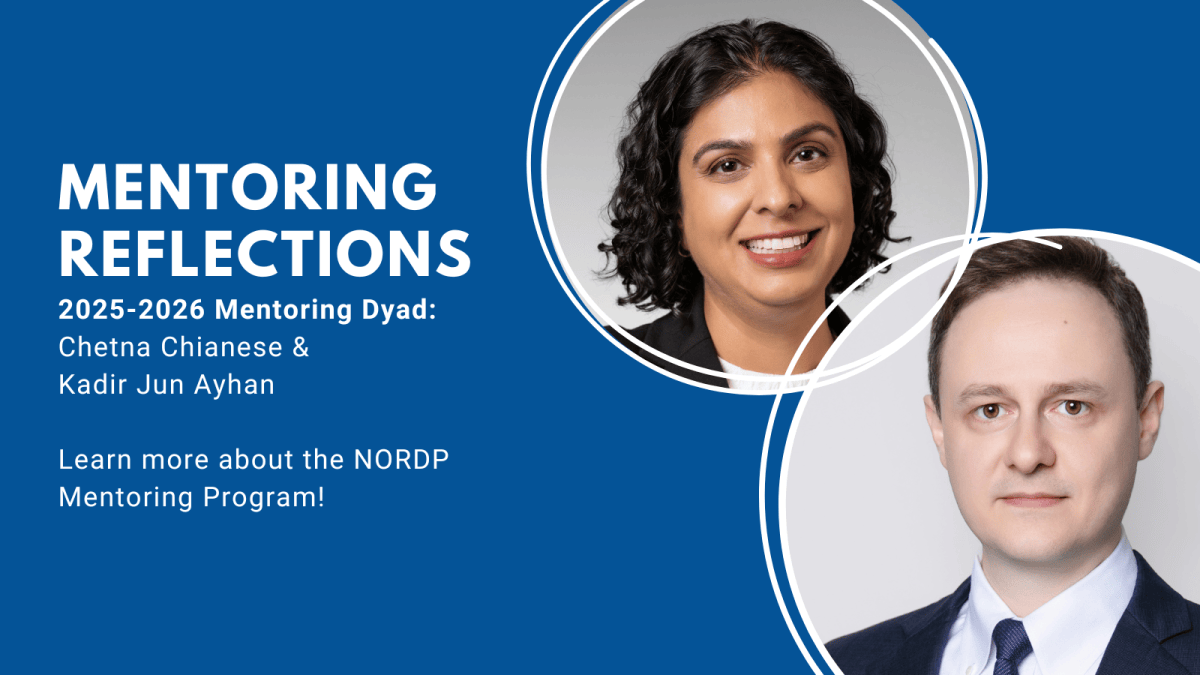
The NORDP Mentoring Program matches members in either 1:1 dyad or 1:3 cohort matches annually, with open registration starting in April each year. Chetna Chianese was matched as a mentor and Kadir Jun Ayhan as a mentee in the 2025-2026 NORDP Mentoring Program.
Chetna Chianese, Ph.D., Syracuse University
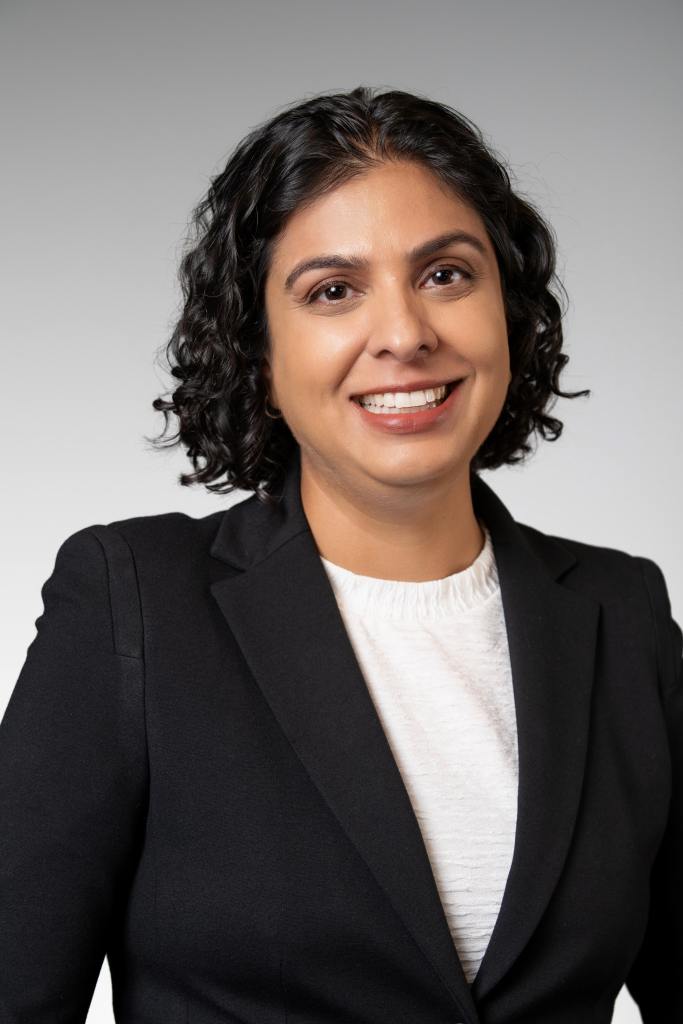
Dr. Chetna Chianese is the Senior Director of Research Development at Syracuse University, serving as the lead for the central RD office since 2023. Prior to her appointment, Chetna was the Associate Director in the same office, working there since 2019. She has also served as the Associate Director of Research for Syracuse University’s research center for energy and environment.
Before arriving at Syracuse University, Chetna spent three years as a AAAS Science and Technology Policy Fellow in the U.S. Department of Energy’s Office of Energy Efficiency and Renewable Energy. She also served as a program manager for SAIC at the Naval Research Labs in Washington DC. Chetna has a Ph.D. in inorganic chemistry from the University of North Carolina – Chapel Hill and a B.S. in chemistry from Vanderbilt University. Within NORDP, she currently serves as Co-Chair of the Nominating Committee and co-convener of Career Stories. She has served previously as Region II Co-Chair and a member of the Member Services Committee.
Kadir Jun Ayhan, Ph.D., James Madison University
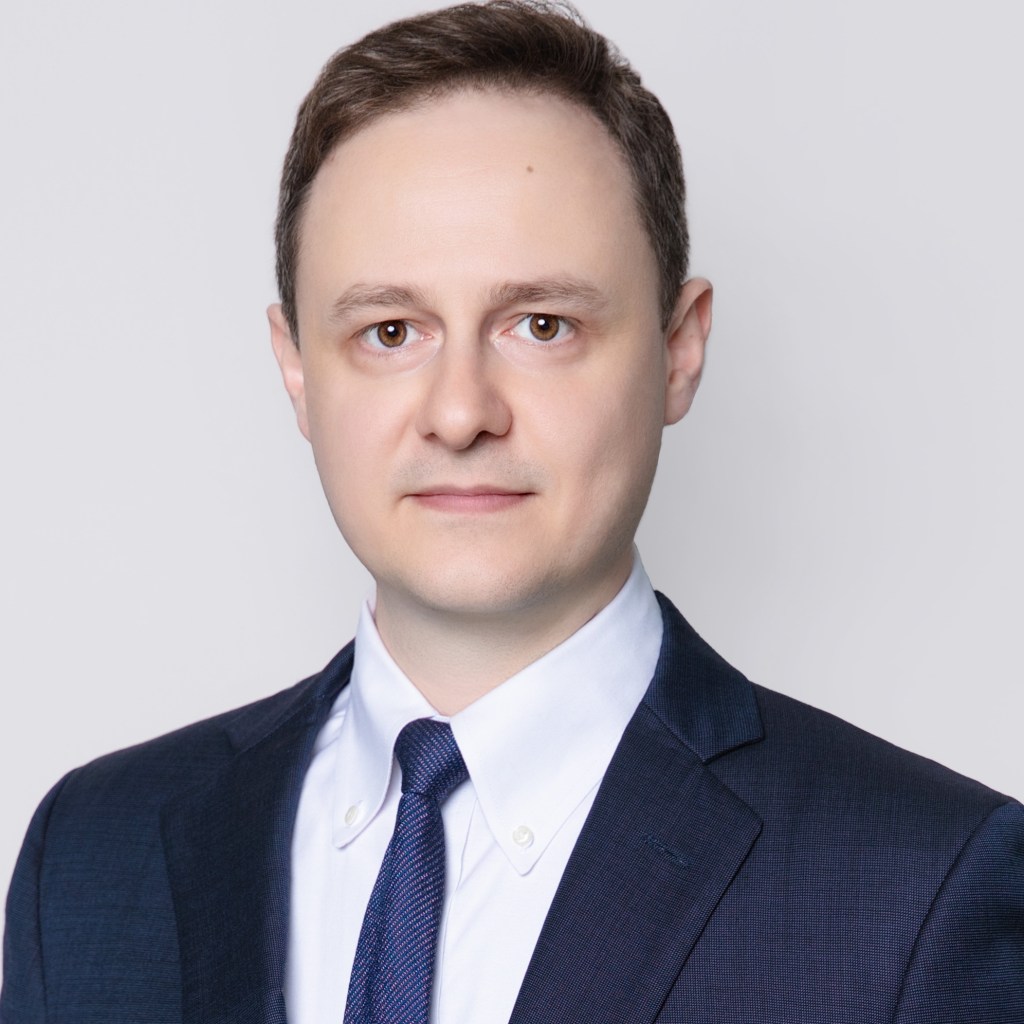
Kadir is the Associate Director of Research Development at James Madison University. He helps build institutional research capacity by supporting working groups, facilitating interdisciplinary research clusters and convergence teams, developing incentive mechanisms, supporting proposal development, occasionally writing large institutional grant proposals, coordinating complex proposals, fostering international research collaborations with internal and external stakeholders, and overseeing the work of college-based Research Development Associates and Managers.
Before joining James Madison University, Kadir served as an Associate Professor of International Relations at Ewha Womans University in Seoul. He earned his Ph.D. in International Studies from Seoul National University. Kadir is also active in NORDP communities, including the Alliance for International Research Development (AIRD), Competitive Intelligence Working Group and the AI in RD Peer Mentoring Group.
Q1: What influenced you to apply to be a mentor and a mentee for the 2025-2026 NORDP Mentoring Program?
Kadir: I was a faculty member in South Korea before transitioning into the research development profession last year. My experience with grants had been solely from a faculty perspective. Our office is also quite new, and I am part of the team that has been building our research development services from the ground up. I was eager to learn as much as possible about best practices and about this field, which I did not even know existed until recently. When I saw the opportunity to participate in the NORDP Mentoring Program, I felt it was a great chance to learn about best practices, explore career paths in the profession, and discuss new ideas with someone experienced in the field.
Chetna: I’ve been participating in the mentoring program for 5 years now, first as a mentee and now as a mentor. It’s been hugely rewarding to me to learn from others. I love hearing how others approach their situations and circumstances.
Q2: What is your favorite part of your relationship?
Kadir: Chetna is the kindest and most helpful mentor I could have hoped for. Personally, I am quite independent and find it extremely difficult to ask for favors. Because mentoring relationships tend to be somewhat one-sided, with the mentee receiving support from the mentor, I was somewhat hesitant at first. However, Chetna’s welcoming and approachable personality made it very easy for me to contact her with any question or request I had.
Chetna: Kadir is an extremely thoughtful professional. He is constantly seeking to improve and has so many ideas. What he lacked was the history with research development. I loved hearing his ideas and being able to share with him how it relates to my knowledge of RD and peer institutions. It was also motivating to me to think of new ways to approach my own programs.
Q3: How has participation in the Mentoring Program helped broaden your horizons about Research Development in general and/or affected your daily work in particular?
Kadir: As our office is still in the early stages of development, an important part of my role has been preparing benchmarking reports based on best practices at other institutions and making recommendations to our leadership about what might work well at our university. I learned a great deal from my own online research and from attending the 2025 NORDP virtual conference, but what I learned from Chetna was on an entirely different level. Whenever I asked her about specific programs, mechanisms, processes, or workflows, she generously provided detailed explanations, not only about what her office does, but also about approaches they had tried that proved less effective. She also shared workflows and templates that I was able to adapt in my own work. The resources she provided improved our efficiency and were truly eye-opening for both me and our office. I believe I learned more about research development through this mentorship relationship with Chetna than I might have learned on my own in several years.
Chetna: Mentoring Kadir helped me to think more deeply about my own work. Explaining our office’s programs and workflows to Kadir made me articulate the reasoning behind decisions I had made years earlier. It reminded me that a lot of what feels obvious to me after a decade is genuinely useful information for someone early in their RD career. It has pushed me to document and share more of what we do rather than assume it is not worth writing down.
Q4: What surprised you about being a mentor or a mentee?
Kadir: What surprised me most about being a mentee was realizing how much dedicated time for strategic thinking this relationship created for me. I recently told someone that I try to be more strategic and proactive in my work, rather than simply reacting to whatever comes across my desk. They asked me how much time I actually set aside for strategic thinking. That question made me realize that the most intentional time I spend thinking strategically is when I prepare the agenda for my meetings with Chetna, during our conversations, and while implementing what I learn from our discussions and the resources she shares. It was a real aha moment for me.
Chetna: What surprised me most was how much I reconsidered my own processes based on Kadir’s questions. His perspective, coming from a faculty background and a brand-new office, gave me a different lens on how we approach RD.
Q5: What made you decide to maintain a longer-term mentoring relationship, and how has it impacted you?
Kadir: I was new to research development and to administrative leadership in higher education at a U.S. university. There was so much to learn, and I was eager to keep learning, especially because I was gaining so much from my conversations with Chetna. I always came away with new questions and new insights. Another factor was the promotion I received halfway through our mentoring relationship. Stepping into a leadership role in the central office meant that I needed even more guidance, and Chetna was always incredibly open and supportive. I hope we can continue our relationship, and that, over time, there may also be opportunities for me to share a thing or two with Chetna.
Chetna: Once we started, it was easy to keep going. Kadir came to every conversation with questions and follow-through, so I could see the relationship was making a difference for him. That made it easy to keep prioritizing our meetings. I have definitely learned from Kadir and he’s shared a lot with me, particularly his ability to organize complex information sources.
Q6: Any words of wisdom or encouragement for those wanting to apply next year? Any other thoughts you would like to share?
Kadir: I have already encouraged a colleague, who is also new to the research development profession, to apply for the mentoring program and shared how much it benefited me. They have already begun their mentorship program. I strongly encourage anyone who is new to the profession to consider this wonderful opportunity and learn from the generous mentors who are so willing to share their experience and wisdom. I would also emphasize NORDP’s advice that “the mentee drives the relationship.”
Chetna: My advice to anyone considering the program, as a mentor or a mentee, is to devote the time for it every month. The relationship works best when the mentee comes prepared with specific questions and the mentor is generous with the details, not just the big picture. Kadir would email me his agenda before the meeting, and I would think carefully about my answers before we met. I would also encourage people not to wait until they feel like an expert to become a mentor. Some of the best insight comes from people who are still relatively early in their own careers.

