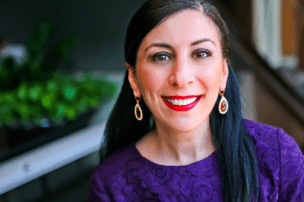
Lessons Learned From My Experience As A Grant Applications Reviewer by Domarina Oshana, Ph.D.

Picture1.pngLet’s face it, although reviewers are asked to remove themselves from potential conflicts of interest and to park their biases at the door, the reality is that embedded within their scientific experiences are their own personal pet peeves and lived experiences, which can be difficult to extract from the review process. Still, the overall lesson I learned from my experience as a grant reviewer was that while it’s impossible for an applicant to please all reviewers on a panel, it’s quite possible to please most of them. Therefore, if you want your application to be deemed competitive and worthy of funding, your aim should be to think like a reviewer and write your application to please most reviewers. Here are some tips I recommend from serving as a reviewer in the nonprofit and government sectors:

Honestly assess the fit of the RFA to your proposal concept.

If you can clearly articulate that your proposal honestly responds to the purpose of the request for applications (RFA), then it’s very likely that your application will be deemed competitive. Unfortunately, sometimes applicants don’t always honestly assess the appropriateness of the RFA. For example, an applicant may see an RFA as an opportunity to fund work that they are already doing, when in fact the RFA may not be intended for such activity. So, in an attempt to acquire general operating funds, the applicant packages the proposal in a way that is seemingly responsive to the priorities of the RFA, when in fact, overall, it’s not. Reviewers often see through this approach and while many reviewers can understand the need, they are not impressed by the applicant’s proposal. This is because applicants that indirectly request funding for general operating expenses fail to convince the reviewers of how the work they are doing will advance scientific knowledge, if awarded funding.

Another instance that fails to convince reviewers that there is a good fit between the proposal concept and the RFA is when the applicant does not have the experience to carry out the work proposed. For example, if an applicant with experience only in collecting and analyzing archival data proposes a study in which he/she will collect and analyze data from direct contact with human participants, and offers no information about whether a consultant with experience in working with human participants will be hired, then the reviewers will question the goodness of fit between the applicant’s experience and the skill required to carry out the work of the proposed study. As an applicant, your job is to convince the reviewer of the scientific merit of your proposed study and your ability to carry out the work. An honest assessment with yourself about why you are responding to the RFA is a good first step to ensure that you can convince the reviewers that your concept and ability are meritorious.

Craft a thorough literature review.

This can be quite challenging to do. If your field is immense, it’s almost impossible to write a comprehensive literature review within the page limitations of a grant application. Nevertheless, effort should be made to provide a strong conceptual framework and to cite the work of authors that have done substantial work in the area you wish to further study. Often, these persons can be sitting on the review panel and if they see that you haven’t credited or acknowledged their work, they may conclude that you are uninformed. Beware of these reviewers, as their extremely poor score of your application can skew the ranking of your application.

Clearly articulate your research design and data analysis plan.

In the eyes of many reviewers, it is your study approach that will accelerate or decelerate your candidacy for funding. Yes, it’s that important! Ideally, reviewers want to see a concise, clear, innovative, and doable research plan. And, they want to see that you’ve not only thought about data collection procedures, but data coding and analysis procedures as well. Reviewers want to see a plan that is appropriate for the research questions being asked and the aims of the study. If your research plan is inadequate, chances are that the reviewers will be unconvinced of the scientific merit of your study and/or your ability to carry out the work you have proposed. To avoid such pitfalls, here are some questions you must be certain to answer in your research design:

  • Are your research questions and hypotheses clearly stated and rationalized (i.e., grounded in a strong conceptual framework and preliminary evidence)?
  • Are your research questions appropriate to the target population you have proposed to study and/or the aims of the proposed project?
  • Have you clearly translated your research questions into statistical questions?
  • Did you address how you will recruit participants and what you will do if your initial recruitment strategy fails to yield the anticipated number of participants?
  • Have you offered a justifiable rationale for your recruitment strategy?
  • If you are proposing a non‐experimental or quasi‐experimental study, did you provide a clear rationale for this type of design as opposed to a randomized control trial design and/or other designs?
  • Did you indicate or explain the psychometric properties of any data gathering instruments you propose to use?
  • Did you outline a concrete data analysis plan and how you will handle missing data?
  • Did you provide an acceptable rationale for your choice of analytic techniques?
  • Have you consulted with a statistician or proposed to engage the services of a statistician?

Make friends with an Institutional Review Board (IRB).

Just because grant application guidelines may state that you don’t need to have an IRB on record at the time that you submit your proposal, that doesn’t mean that you should underestimate the importance of addressing potential risks to human participants and your procedures for minimizing the risks. Reviewers want to see that you have very thoughtfully considered all the possibilities and how you will handle them. You need to consider the “what ifs” of working with human participants and what you will do to ameliorate the “what ifs” as they arise. For example, “what if” a participant decides to drop from your study midway through the project? How will you treat that participant? What will you do with their data? What does your data safety and monitoring plan delineate? You need to convince the reviewers that you are committed to protecting human participants. Having an IRB in place before you submit the application is extremely helpful because IRB members can help you think through all the “what ifs” and what to do about them in an ethical and responsible way.

Provide authentic letters of support.

Reviewers are quite savvy and can clearly see when you have employed the use of a template for your letters of support. When they see that you have used the same template for all of your letters, they are not impressed. Their discontent can be attributed to the fact that your template‐generated letters translate to a lack of commitment from your potential collaborators. While it can be argued that writing letters of support may be an intimidating and new experience for some members of your networks, for example, and that the provision of a template is to ease their fears, that doesn’t mean that each of your letters of support should look exactly the same with only a change in the signature. If you are going to write your own letters of support (on behalf of your collaborators), make sure each one is authentic and believable.

Carefully follow the instructions of the grant application.

This may sound unbelievable, but there are reviewers who will take the time to count the number of characters in your proposal title and if they find that your title exceeds the guideline of the application, they will actually carry their disgruntlement with your inability to follow directions throughout their review of your application. They will even question how it was possible that your application made it to the scientific review panel, when in their eyes, it should have clearly been eliminated for failure to follow application instructions. For example, the PHS‐398 instructions are highly thorough. All the information needed to complete the forms is well explained. Little things matter; make sure you don’t overlook them.

Submitted by Domarina Oshana, a social scientist and research development professional. She uses her scientific expertise and soft skills to advance knowledge discovery and address pressing human challenges. To learn more about her perspective, please visit her LinkedIn


NORDP 2018 Conference Notes: From Seed to Harvest: Designing, Monitoring and Improving Internal Funding Programs

From Seed to Harvest: Designing, Monitoring and Improving Internal Funding Programs

Presenters:

  • Kathryn Partlow, University of Nebraska-Lincoln
  • Daniel Campbell, Old Dominion University
  • David Bond, Rochester Institute of Technology
  • Carl Batt, Cornell University

Thanks to our session scribe, Regina Coles, Virginia Commonwealth University!

Key points from the session. We learned: 

  • RFP design should include an Eligibility section, Purpose, Goals/Objectives, and provide clear Expectations/Reporting.
  • Include a request for feedback at each step of the process (e.g. submission, review, during the award and closeout).
  • Develop an award agreement and have key persons sign to encourage accountability.
  • Return on investment (ROI) should be tracked throughout the lifecycle and can comprise books, articles, proposals submitted, etc.
  • Require faculty to be in good standing to be eligible; delinquent reporting will make them ineligible for future internal funding.

What did you hear at this presentation that surprised you?

This really shouldn’t surprise many, but the notion that program evaluation is critical to improving and understanding the benefits of the program. Essentially, if you are not collecting feedback you cannot improve the program.

What resources did you discover at this presentation?

The data that were provided were based on a survey sent out to the NORDP listserv last year. Thus this baseline data is an available resource for others that need it to support their own programs.

What were the most interesting questions asked by an audience member, and what was the presenters’ response?

Q: What outcomes can actually be attributed to the SEED funding and which are tangential to the funding?
A: Is difficult to untangle this however if you are clear in the RFP about what the focus of the funding should be then that will help guide this.

Q: How long do you measure and track outcomes?
A: Depends on the initial focus of the program – must be specific about the goals.

Q: How do you incentivize your reporting?
A1: Create an agreement and include a reporting schedule.
A2: Send reminder emails with a report template.

Q: How many years were data collected for programs that were ultimately sunsetted/discontinued (as provided in example)?
A: About 7 years.

Q: How do you manage faculty that are already well-funded versus un-funded/early career faculty?
A: Eligibility criteria for program should be clear as to which population the funding will support.

What else from this session should NORDP members know?

  • Provide FAQs if possible to help faculty/administrators.
  • Consider the submission platform – email vs. online.
  • The review process management should include setting expectations for reviewers, managing conflicts, and developing review criteria.
  • Consider targeted programs for junior faculty or postdocs/grad students.
  • Most seed programs are for funding amounts of $5K-$25K thus an emphasis should be on piloted ideas that are less polished instead of a focus on broader impacts.
  • Suggestion to incorporate a professional development plan for early career faculty in the submission.

NORDP 2018 Election Results

nordp logo_compressed

June 19, 2018

Dear Colleagues,

I want to thank the Chair of the Nominating Committee, Nathan Meier (University of Nebraska-Lincoln) and the 2018 Nominating Committee: Jan Abramson (University of Utah), Rachel Goff-Albritton (Florida State University), Jeri Hansen (Utah State University), Mady Hymowitz (University of Western Ontario), Augusta Isley (Ball State University), Kim Patten (University of Arizona), Barbara Walker (UC-Santa Barbara), for their work soliciting and evaluating applications and nominations for this year’s Board of Directors election. Further, we appreciate their liaising with NORDP’s election provider, Survey & Ballot Systems, to communicate the 2018 election results which were ratified by the Board of Directors on June 12, 2018.

We are pleased to welcome three new members and one returning member who will serve a 4-year term (2018-2022) beginning July 1, 2018:

  • Kimberly Eck, University of Tennessee, Knoxville
  • Jill Jividen, University of Michigan Medical School
  • Paul Tuttle, North Carolina A&T State University
  • Etta Ward, Indiana University – Purdue University Indianapolis

Congratulations to the new Board members and thank you to all the candidates for their participation.

We look forward to your leadership, energy and ideas as we strive to meet NORDP’s mission to support a robust national and international peer network of RD professionals whose broad goals include enabling competitive individual and team research, enhancing institutional competitiveness and catalyzing new research and institutional collaborations thereby facilitating research excellence.

Sincerely,

Karen Eck
Vice President/President-Elect 2017-2018

NORDP fosters a culture of inclusive excellence by actively promoting and supporting diversity, inclusion and equity in all its forms to expand our worldview, enrich our work, and elevate our profession.

NORDP 2018 Conference Notes: Building Research Resilience Through International Cooperation: The Example of Horizon 2020

Building Research Resilience Through International Cooperation: The Example of Horizon 2020

Presenters:

  • Mary Kavanagh, Delegation of the European Union
  • Cole Donovan, U.S. Department of State
  • Victoria Bodnorova, EURAXESS North America
  • Claire Chen, National Council of University Research Administrators

Key points from the session. We learned: 

H2020

  • Goals of international cooperation: identify talent, tackle global challenges, identify business opportunities.
  • H2020 is the biggest multi-national and multi-lateral research program in the world.

DOS

  • Transatlantic enterprise is valued at $800 billion US and comprised of federal and philanthropic funding.
  • US-Ireland cooperative supports simultaneous proposals submitted from US and Ireland to NSF or NIH; funded projects based on US review are then supported by each country (to their resident researchers).

EURAXESS North America

  • Three mechanisms:
    • EURAXESS (jobs & funding; partnering tool & hosting (good for developing consortia); information & assistance; EURAXESS worldwide).
    • Marie Sklodowka-Curie Actions (innovative training methods; individual fellowships; research and innovation staff exchange; co-funding of regional, national and international programs).
    • European Research Council (starting grants; consolidator grants; advanced grants; synergy grants).
  • Established to support researchers moving from overseas to the EU; over 200 centers in every European country; all services are free of charge. Euraxess.org – “assistance and support” section.

NCURA

  • BILAT USA 4.0 has four goals: facilitate pilot dialog; foster transatlantic partnerships; identify emerging research topics; engage the private sector. Has 6 US partners and 10 EU partners.
  • Hosted resources: report on US funding opportunities for EU researchers; database on funding opportunities; terminology guide; research connection symposium at NCURA annual meeting (free and public event).

What did you hear at this presentation that surprised you?     

  • DOS may have international opportunities that are well aligned to research; don’t overlook DOS as a funding source.
  • Almost 1000 applications for US Nationals to the Marie Sklodosdka-Curie with 18% success rate for US Nationals (versus 13% overall for EURAXESS).

What resources did you discover at this presentation?

What was the most interesting question asked by an audience member, and what was the presenter(s)’ response?

  • Q: Is the “implementing arrangement” the name of the funding opportunity?
    • A: Using the terminology “invoke the US-EU implementing arrangement” for the EU partner should be sufficient.
  • Q: How should an ADR advise US faculty to become involved in EU opportunities when there is not an existing US opportunity? Do they find an EU partner?
    • A-Kavanagh: EU funds health research overall and developing countries directly. Existing US funding can be leveraged, rather than pursuing new funds.
    • A-Donovan: NSF is exploring the convergence model as an attempt to increase transdisciplinary work, largely to involve more social scientists.

What else from this session should NORDP members know?

US Department of State wants to assist with connecting with European partners – US-EU implementing partnerships that enable work with EU partners without H2020 eligibility; EU partner must invoke the benefit.

2018 NACRO Annual Conference

NACRO

Join the premier organization for corporate-university relations professionals at our annual conference! Now open to anyone interested in corporate relations, university/industry partnerships, and our organization, this year’s conference will be in Atlanta, GA on July 24-26, 2018 at the Hyatt Regency Atlanta Downtown. Whether you’re new to the industry or a veteran, you’ll find opportunities to connect, learn and collaborate with peer institutions and industry representatives throughout the 20+ sessions and breakout groups. For program details and to register visit www.nacrocon.org.

NEW FOR 2018: NORDP members will receive a 25% discount off of conference registration! Contact shymes@asginfo.net for details.

NORDP Member Etta Ward Awarded a Fulbright Scholars Grant


#NORDPMentoringMatters

Congratulations to Mentoring Committee member Etta Ward, Assistant Vice Chancellor for Research and Development at Indiana University-Purdue University of Indianapolis, who has been awarded a Fulbright Scholars grant for the International Education Administrators Seminars in France, for two weeks in the fall of 2018. Her work as a Fulbright Scholar will center on effective mentorship as a strategy for professional and research development, especially for women and minorities in the academy. She listed NORDP one of three organizations to potentially benefit from this tremendous opportunity. Etta’s participation in the program will provide insights on international and cultural aspects of mentoring from multiple perspectives. Specifically, she anticipates that it will offer a more global understanding of competencies that effectively address the needs and challenges facing different populations participating in formal mentoring programs and initiatives.

Jan NORDP mentor picture edit
Peer Mentors Etta Ward (right) and Jan Abramson meeting in person at National Research Mentoring Network Facilitator Training

Etta has been an integral partner in the development of the Mentoring Committee as a platform to equip research development professionals for success by offering meaningful mentoring expertise, support and resources. She leads by example in a working group that develops and provides tools for Mentoring Program participants to facilitate successful NORDP mentoring experiences. Etta’s expertise and commitment to the importance of mentoring has inspired us to provide an ever-expanding curated set of resources for NORDP members. She will work closely with the Mentoring Committee to explore best practices and innovative strategies to integrate elements of international cultural awareness in various aspects of it work.

The Mentoring Committee is always looking for NORDP members who would like to participate in the work we are doing. As a committee, we mentor each other, grow together and celebrate successes: today, we celebrate Etta’s Fulbright.

If you are interested, email us at mentorprogram@nordp.org, or visit with us at the Annual Conference.

More information on the Fulbright International Education Administrators Seminars can be found here.

Funding Agency Sessions at NORDP 2018

It’s almost conference time! Concurrent Session abstracts are linked on the NORDP Conference Schedule. Below, four sessions hosted by representatives from funding agencies are highlighted: 

Building Research Resilience Through International Cooperation: The Example of Horizon 2020 (Concurrent Session 1, Tidewater 2, 2nd floor)

eu_flag-2015PRESENTERS

  • Mary Kavanagh, Delegation of the European Union
  • Claire Chen, National Council of University Research Administrators
  • Viktoria Bodnarova, EURAXESS North America
  • Cole Donovan, U.S. Department of State

Perspectives from Federal Funding Agencies: NSF / DoD/ USDA (Concurrent Session 2, Potomac III)

nsfUSDA.jpgSTICKER%2520ALL%2520UNITED%2520STATES%2520DEPARTMENT%2520OF%2520DEFENSE%2520NEW__90328.1411489515.290.290.jpg

PRESENTERS

  • Dale Ormond, Principal Director, Research, Assistant Secretary of Defense, Research & Engineering
  • Brian Bornstein, Program Director, Law and Social Sciences, National Science Foundation
  • Mark Mirando, National Program Leader of Animal Nutrition, Growth and Reproduction, National Institute of Food and Agriculture, US Department of Agriculture
  • Moderator: Mary Beth Curtain, Binghamton University

Perspectives from Federal Agencies NEH and IMLS (Concurrent Session 3, Roosevelt, 3rd floor)

neh.jpgimls_logo_2c.jpg

PRESENTERS

  • Brett Bobley, National Endowment for the Humanities
  • Ashley Sands, Senior Library Program Officer, Institute of Museum and Library Services

Plenary: Dr. Michael Lauer, Deputy Director for Extramural Research, NIH: “Update from NIH: Perspectives on Extramural Scientists and Science,” Regency Ballroom (Wednesday, 11:45am-12:30pm, Regency Ballroom)

NIH_Master_Logo_With_Tag_2Color-PNG.png


_______________________________________________________

We hope to see you at the Conference, which will be held May 7-9, 2018 at the Hyatt Regency Crystal City in Arlington, VA.  For more information about the conference program or to register, visit http://www.nordp.org/conferences. Follow @NORDP_official on Twitter for all the latest #NORDP2018updates.

NORDP fosters a culture of inclusive excellence by actively promoting and supporting diversity, inclusion and equity in all its forms to expand our worldview, enrich our work, and elevate our profession.

Mentor/Mentee Spotlight: The NORDP Mentoring Program in Five

Name: David Widmer

Institution: Memorial Sloan Kettering Cancer Center

Are you a Mentor? Mentee? Both? Both

1)      What influenced you to become a mentor or mentee?
When I joined NORDP, I found a community dedicated to sharing best practices with a newbie, so I signed up for the first class of mentors and mentees.  My mentor helped me acclimate to this brave new world of Research Development and guided me through the projects my new role held for me.  We actually continued beyond the official 12-month span of the program.  Then, I became a mentor hoping to provide similar grounding to new NORDP members.  Now, years later, I signed up as a mentee again.  My current mentor challenges me in very different ways to reach the next level in my career as an RD professional.

2)      What surprised you about being a mentor and/or mentee?
As a former teacher, it actually didn’t surprise me to find that I learned from my mentees.  However, when I returned as a mentee years later, I was surprised at how my learning style had morphed since the first time.  That means I can approach the relationship with my current mentor in ways that were not part of my thinking as a new RD professional.  I am experiencing this match in a new light where my current mentor can be a combined guide, coach, and peer.

3)      How has participating in the NORDP mentoring program impacted your day-to-day work?
My NORDP mentors – past and present – have given me opportunities to talk through conundrums, strategies, or projects.  Their fresh insights, from the outside looking in, have provided me with new avenues of thought and/or confirmed that I was on the right avenue already.

4)      What is one way being in the mentoring program has helped increase or broaden your understanding of research development?
The Mentoring Program matching application pinpoints just the right information so that the mentor/mentee pairs share skills and interests that are complimentary but not identical.  These very differences between me and my mentors and mentees gave me an expanded view of the RD community that wouldn’t have been visible from my desk.

5)      Are there any additional thoughts would you like to share about the NORDP mentoring program?
I encourage new members to apply for a mentor, but more importantly, I challenge all past mentees to pay it forward and sign up to mentor another NORDP-ite.  You will find it very rewarding.  The NORDP resources available to mentors and mentees are extensive, and you’ll have a whole community behind you to provide you with support.

The NORDP Mentoring Program
The NORDP Mentoring Program offers a formalized pairing process to match a mentor and a mentee with similar professional interests and different levels of experience in order to frame a relationship that offers mutual guidance and support. Once pairs are matched, the mentoring process is an informal one based on the needs of each individual pair.

We encourage Research Development Professionals who have been in the Research Development field for a few years to consider volunteering to be a mentor; and we encourage members who are new (or relatively new) to the field to sign up as a mentee. But feel free to sign up for whatever you feel you need. You can even sign up to be a mentee AND a mentor!

Open Enrollment to the Mentoring Program can be accessed through the following link. The survey will be available through March 16, 2018.

Interested in learning more? Check out the website.

If you have any questions, please send an email to mentorprogram@nordp.org.

Interested in learning how you can leverage principles of mentoring at your institution?
You are invited to attend a NORDP Pre-Conference Workshop to learn strategies for advancing the research enterprise through building and supporting effective mentoring relationships as well as developing on-campus mentoring programs: Taking the Research Development Professsional to the Next Level Through Effective Mentoring.

Breaking Records – Early Bird Registration Extended to 3/23

lincoln-memorial#NORDP2018 starts Monday, May 7 in Arlington, VA. Keep checking back here at the blog and on our Twitter feed (@NORDP_official) for live conference updates. Register here: http://www.nordp.org/conferences.
_______________________________________________________

NORDP and the Research Development profession is breaking new ground. As we approach 850 members strong, we have set a new membership record for our ten-year-old organization. In addition, during this Early Bird Registration period, over 400 people have registered for the 10th Annual Conference. Therefore, NORDP leadership has elected to extend the Early Bird deadline until March 23, 2018. We are aware that many campuses are currently on spring break or working through the travel approval process. Help us set a new record for early-bird registration and register today.

The industry standard for association conference attendance is about 20% of the organization’s membership attending any given conference. Our organization can currently boast a 47% attendance rate for NORDP 2018 – let’s push that number even higher!

_______________________________________________________

We hope to see you at the Conference, which will be held May 7-9, 2018 at the Hyatt Regency Crystal City in Arlington, VA.  For more information about the conference program or to register, visit http://www.nordp.org/conferences. Follow @NORDP_official on Twitter for all the latest #NORDP2018 updates.

NORDP fosters a culture of inclusive excellence by actively promoting and supporting diversity, inclusion and equity in all its forms to expand our worldview, enrich our work, and elevate our profession.

Mentor/Mentee Spotlight: The NORDP Mentoring Program in Five

Name: Mary K. Green

Institution: Univ. of Massachusetts Amherst

Are you a Mentor? Mentee? Both? Mentee

1)      What influenced you to become a mentor or mentee? I became a mentee because I had a mentor in my job and it had been a great experience.

2)      What surprised you about being a mentor and/or mentee? How helpful my mentor could be about very specific issues. My mentor provided a sounding board as well as opinions, suggestions and advice.

3)      How has participating in the NORDP mentoring program impacted your day-to-day work? I credit my mentor’s help with success in landing my current job and she has helped me figure out how to navigate my new office.

4)      What is one way being in the mentoring program has helped increase or broaden your understanding of research development? It has been helpful to get my mentor’s perspective of my experience and skills in comparison to other RD professionals she has known in several institutions. There was no position like mine at my former institution.

5)      Are there any additional thoughts would you like to share about the NORDP mentoring program? Thank you!

The NORDP Mentoring Program
The NORDP Mentoring Program offers a formalized pairing process to match a mentor and a mentee with similar professional interests and different levels of experience in order to frame a relationship that offers mutual guidance and support. Once pairs are matched, the mentoring process is an informal one based on the needs of each individual pair.

We encourage Research Development Professionals who have been in the Research Development field for a few years to consider volunteering to be a mentor; and we encourage members who are new (or relatively new) to the field to sign up as a mentee. But feel free to sign up for whatever you feel you need. You can even sign up to be a mentee AND a mentor!

Open Enrollment to the Mentoring Program can be accessed through the following link. The survey will be available through March 16, 2018.

Interested in learning more? Check out the website.

If you have any questions, please send an email to mentorprogram@nordp.org.

Interested in learning how you can leverage principles of mentoring at your institution?
You are invited to attend a NORDP Pre-Conference Workshop to learn strategies for advancing the research enterprise through building and supporting effective mentoring relationships as well as developing on-campus mentoring programs: Taking the Research Development Professsional to the Next Level Through Effective Mentoring.