Answering Calls to Answering RD Questions: Kate’s Path to Associate Director in RD
Kate Duggan
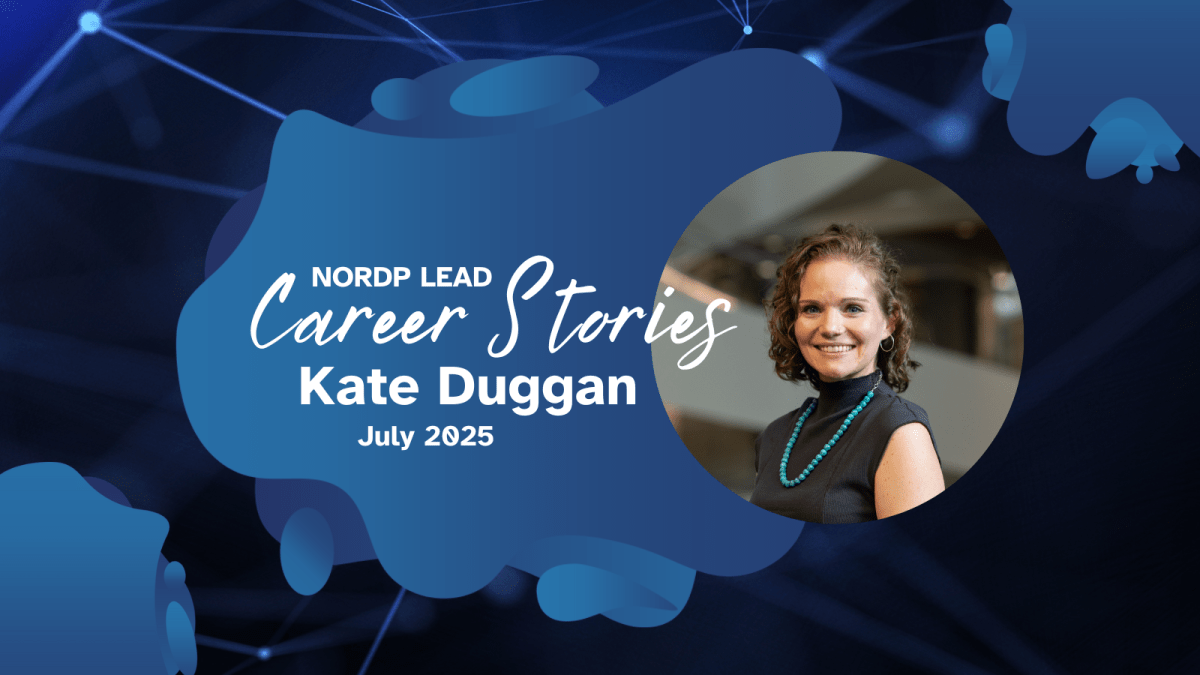
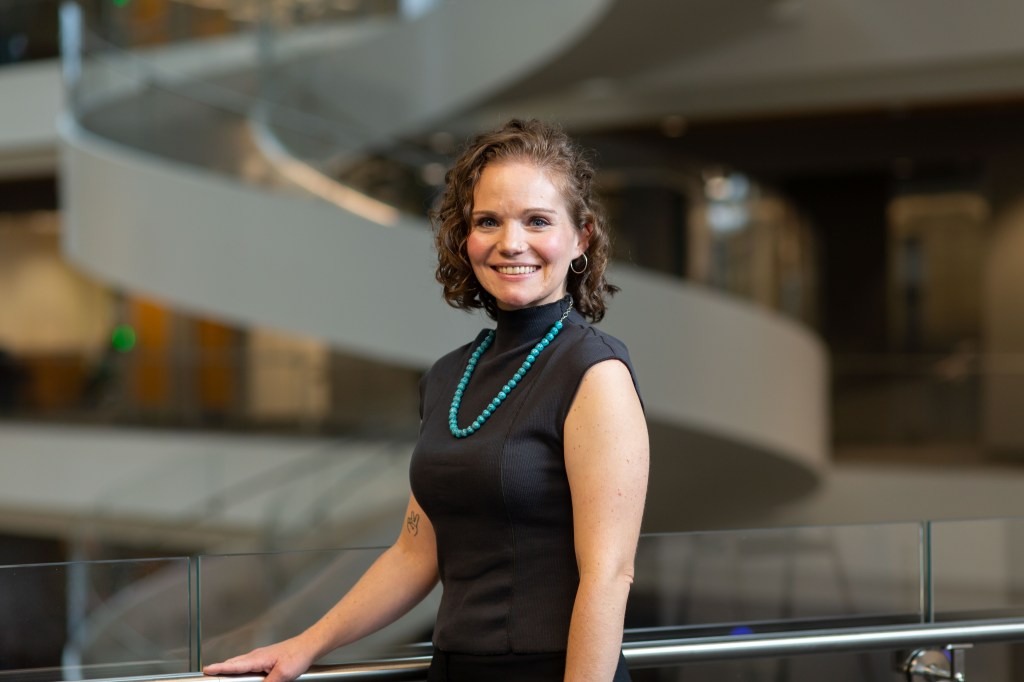
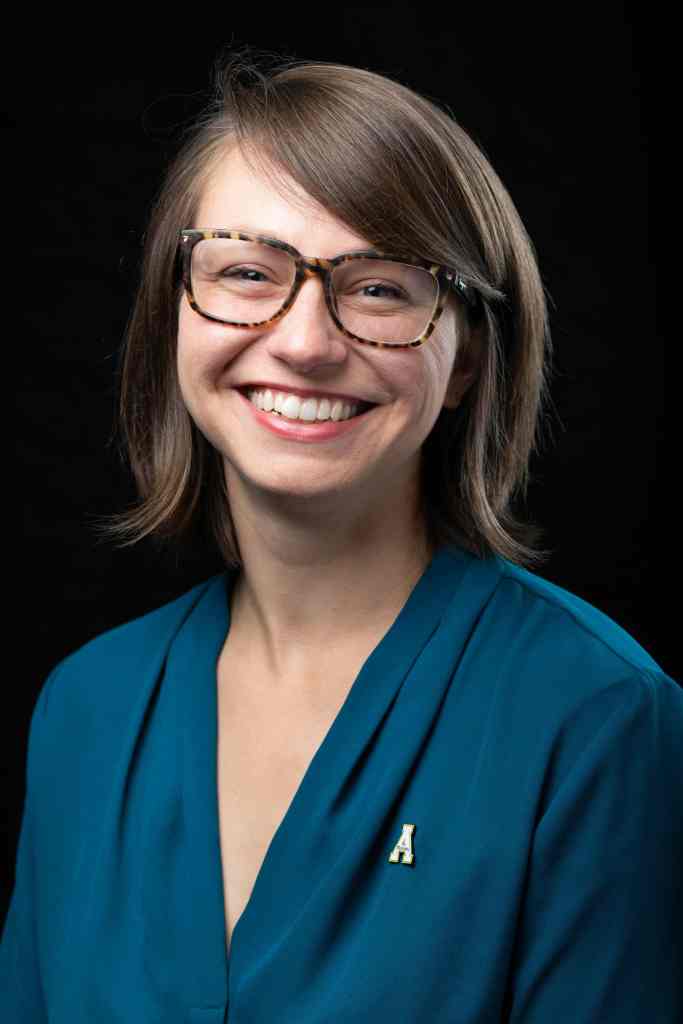
The July Career Stories featured Kate Duggan, MEd, Associate Director of Research Development in Northeastern University’s College of Social Sciences and Humanities. Kate holds a Bachelor of Arts in Geography and French and Francophone Studies from the University of Massachusetts Amherst and a Master of Education from Northeastern’s College of Professional Studies.
In her current role, Kate provides a wide range of support to researchers, from identifying funding opportunities and connecting faculty with grant resources to running internal funding programs and facilitating competitive research proposals. She has a special interest in data-informed research strategies and improving research development processes.
Kate’s journey wasn’t as easy as it sounds. In 2008, during the recession, when she was looking into study abroad adviser roles, something she enjoyed doing in college, she instead found her first post-college role in a call center. While not her dream job, it gave her valuable customer service skills and public speaking experience—tools she still relies on today when working with faculty.
However, she never gave up and eventually ended up in Brown University’s Med School dean’s office serving as an executive assistant. She later transitioned into graduate and postdoctoral affairs before joining Brown’s newly launched research development office in 2017 as an analyst, one of just a few early team members. In this role, Kate was responsible for gathering resources, supporting faculty, and running workshops—an experience that set the foundation for her future growth.
Quickly making her way up, in 2022, Kate was able to secure a new position, doing what she loves doing, that is, creating workshops, bringing in speakers, sending around funding announcements, meeting with faculty, and other “hardcore RD functions”, supporting about 300 faculty at different career stages across the college. Kate enjoys learning from these faculty at different career stages and especially in Social Sciences, where faculty are working on topics like juvenile justice, gentrification, and more.
Despite Kate’s accomplishments, she is always looking for new opportunities, like helping others with their work where needed. Also, Kate enjoys taking new courses to enhance her career, such as a four-course series on AI applications, which she has already utilized to compare solicitations and pull out differences. While her passion for international education and federal relations grows as potential future areas for professional growth, she has found enjoyment in her RD role.
Kate is an active member of NORDP. She serves as a Northeast Region co-representative and contributes to the Member Services Committee, a two-time conference co-chair on the Conference Planning Committee, and is a founding member of the Creative Arts, Social Sciences, and Humanities (CASSH) Affinity Group.
Kate is happy to answer any questions you have for her, so please feel free to contact her at k.duggan@northeastern.edu or kadresdev@gmail.com
To listen to her full interview by the career/kindle team, please click on this link (you must log in as a NORDP member to access): https://nordp.org/store/viewproduct.aspx?id=24459276; Chapter 49: Kate Duggan
Peer Mentoring Group (PMG) Conveners: Sujatha Koduvayur, Worcester Polytechnic Institute; and Brooke Gowl, Appalachian State University
The AI in RD Peer Mentoring Group (PMG) is now being launched to provide a vehicle for supporting NORDP members interested in using artificial intelligence (AI) in their research development (RD) practice, such as instructing researchers on how to securely and efficiently incorporate AI in their work.
The 2025 NORDP Conference included several sessions that addressed the use of AI in RD. AI, when used judiciously, can significantly impact research endeavors by strengthening the practice of RD. Currently, RD professionals are using AI to perform targeted grant searches; assist with proposal development by creating summaries, checklists, and other resources from notice of funding opportunities (NOFOs) and other solicitation guidelines; and support team science practices by creating ideation meeting summaries and identifying potential collaborators. Having a PMG to disseminate these practices, learn from each other, and jointly find better and more efficient ways to leverage AI tools in our work directly aligns with NORDP’s mission to advance RD as a profession.
The AI in RD PMG will share current practices and explore new ways to:
include AI in our RD daily practice,
learn about privacy and ethical concerns,
discuss program director-invited presentations on AI applications,
design and develop faculty resources on best practices for AI-assisted grantwriting,
converse about other AI-related topics in RD.
The PMG will invite external experts for guest lectures in addition to the discussion of case studies encountered by PMG members who currently use AI in their daily tasks.
NORDP Members can view and join PMGs via the WisdomShare Platform or you can email Sujatha Koduvayur or Brooke Gowl to learn more about and get involved with the new AI in RD PMG. Questions about the WisdomShare platform can be directed to mentorprogram@nordp.org.
NORDP Members interested in learning more about all eight active PMGs, including AI in RD, can join the 2025-2026 Peer Mentoring Group Kickoff on Tuesday, October 14, 2025, from 1:00–2:00 PM Eastern.
In addition to the new AI in RD PMG, the following seven PMGs are also currently active:
AI in RD: exploring the use of AI in research development workflow and applications
Career & Professional Development:exploring how to become more efficient and effective in our roles
Coaching & RD:developing and implementing coaching as part of the research development (RD) skillset
Collaboration & Team Science:building collaborations and interdisciplinary research programs
Faculty Development:supporting RD professionals who perform faculty development through programming and workshops
Leadership & Management:leading in both official and unofficial capacities
Proposal Development & Project Management for Research:Supporting proposal development for faculty grant seeking and leveraging project management tools and methodologies to enhance efficiency and success in securing extramural funding
Strategic Planning & Advancement:guiding policy and planning for enhanced research and scholarship
4.5 years in RD positions + more during PhD & postdocs
NORDP member for about four years
When and how did you enter the field? What kind of research development work do you do?
Like a lot of folks in RD, I kind of stumbled into it. I was in academia—did my PhD, then two postdocs—and realized what I really enjoyed wasn’t so much the day-to-day lab work, but the act of crafting proposals. I loved thinking through the research design, figuring out how to make it all happen, and, imagining all the fun things we could do with the right funding. Writing proposals just clicked for me. After watching faculty members spend more time on administrative tasks than actual research, I knew I didn’t want that. So, when a full-time RD position opened up at Tulane University in New Orleans, I made the leap to proposal development focused on federal agencies. I’ve very recently shifted to a new position at CCNY with a broader set of responsibilities, which I’m excited about.
One of my favorite parts of the job? The deadlines! There’s something so satisfying about having a hard stop and knowing that once a proposal is submitted, it’s finished. No endless revisions. Just done. It’s kind of perfect for my personality.
What’s your history with NORDP? How have you engaged with the organization (committee work, conferences attended/presented)?
I joined NORDP shortly after starting at Tulane. Honestly, I don’t remember exactly when (because…COVID), but it was probably within the first couple of months of being hired. I was encouraged to get involved with the Committee on Inclusive Excellence (CIE) after I spoke up during a breakout session at a NORDP event. I honestly don’t remember the details, but Gretchen Kiser reached out, and I’ve been with the committee ever since. I haven’t presented at a NORDP conference yet but have aspirations. I’ve been thinking about leading a workshop on visualizations—something that I think is missing in a lot of proposal writing. My goal is to show how design principles can elevate a proposal, making it not just technically sound but also engaging and visually appealing. We’re not just writing for the brain; we’re also writing for the heart, and I want to help people craft proposals that spark excitement and interest in the reader.
What motivated you to run for the NORDP Board?
Funny story—running for the board wasn’t really on my radar. It was Samar Sengupta who nominated me, so she’s the one to blame! We had a few conversations about it, and she convinced me that my perspective would be valuable to the board. I think it’s because I come at things with a mix of design thinking and a focus on social justice.
RD is such an interdisciplinary field, and that’s part of what I love about it. We don’t have to stay in our silos. I can work with a biomedical engineer one day and someone from literary history the next. I think it gives us this unique opportunity to influence scholarship in a broader sense, and being on the board means I can help shape how NORDP moves forward, especially as the organization grows.
What are you most excited about as a new NORDP Board member?
For me, it’s all about pushing new ideas. I’m really excited to bring more focus on design thinking into RD—creating proposals that not only communicate ideas but do so in a way that’s visually engaging. I also think we need to be more critical when it comes to AI. There’s a lot of buzz around it, but I’m particularly concerned about how we might start relying on large language models for things like writing letters of support. We need to think about the ethical implications before we just dive in.
NORDP is at this interesting inflection point. We’re not quite a “small” organization anymore, but we’re also not a giant, well-established one, either. It’s a bit of an awkward growing phase, but it’s also a huge opportunity. I’m looking forward to helping us navigate that growth in a sustainable and resilient way, making sure we’re adaptable to the changes happening across academia and research funding.
Anything else you’d like to add?
I guess the big thing on my mind is resilience. The way research funding and academia operate right now feels… precarious. I don’t have a crystal ball, so I can’t say what the world will look like in five or ten years, but I think we need to be ready for big shifts. If I can help bring some new ideas to the table that make NORDP and the RD community more adaptable, that’s what I’d love to contribute.
Vessela Vassileva-Clarke, Co-Chair of the NORDP Mentoring Committee
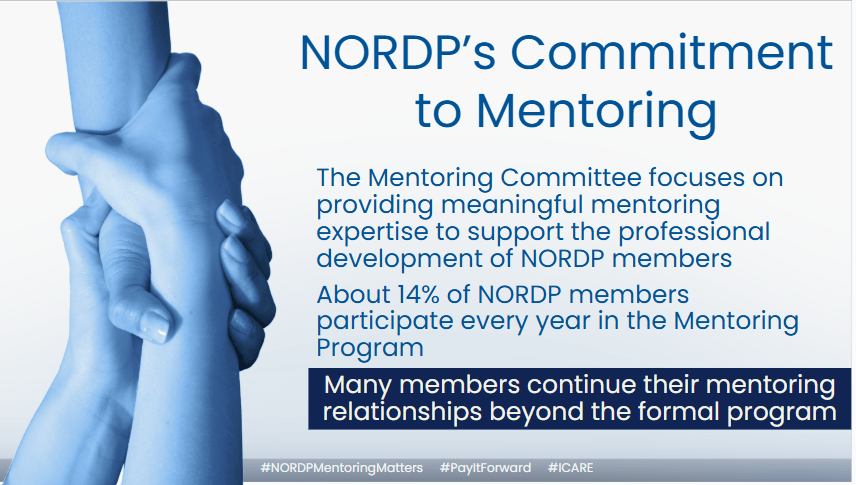
Fall marks an exciting start to a new mentoring cycle at NORDP! The 2025-2026 mentoring year runs from July through June, and we’re thrilled to welcome all mentors and mentees—whether matched in a dyad or part of a mentoring cohort—into this year’s program.
The June 25 Mentor Program Orientation featured this year’s NORDP Mentoring Award recipient and Mentoring Committee Co-Chair, Angela Jordon. New and returning participants were introduced to the program and joined breakout sessions based on their role—mentor or mentee—and format—dyad or cohort—to learn more about what to expect in the year ahead.
Behind the scenes, the Mentoring Committee, including the Match Team and the Mentoring Leadership Team, has worked diligently to make that stellar start possible. Updating our WisdomShare platform, opening the application window, carefully reviewing and confirming matches to ensure the best possible pairings for all participants, answering numerous emails about program registration, mentoring profiles, etc., are just a few of the tasks they completed. On behalf of both current and past NORDP Mentor Program participants, we extend our heartfelt appreciation and thank them for making the entire process feel easy and seamless!
We are especially excited to continue our mentoring cohorts, now in their fourth year! In this model, three mentees are matched with one mentor, creating a small community for ongoing peer‑mentoring discussions. Thank you to the many dedicated individuals who volunteered to serve as mentors—whether in dyads or cohorts—this year. Your willingness to share your time and expertise makes this program thrive.
Tips for New Mentors and Mentees
If you’re just getting started, here are a few quick tips to help you make the most of your experience:
Log in to WisdomShare for your mentor/mentee’s contact information, messaging tools, and suggested milestones
Explore the Learning tab in WisdomShare for guidance on where to begin
Visit your WisdomShare Dashboard to find active Peer Mentoring Groups (PMGs), and join the ones that interest you—no matching is required for PMGs!
If your mentor or mentee(s) hasn’t reached out yet, don’t wait—take the initiative to connect! There’s no single “right” way to engage
Attend the monthly Mentoring Committee Meetings (3rd Thursday of the month all year) to learn the latest mentoring news and share your mentoring experiences and ideas with a group of NORDP members who are truly into mentoring
Watch for upcoming McHuddles—informal gatherings hosted by Mentoring Committee facilitators where you can share ideas, ask questions, and learn from others through supportive and fun interactions
Have questions, concerns, or suggestions? Reach out to us anytime at mentorprogram@nordp.org
Share Your Story!
The Mentoring Committee is always looking to highlight mentoring experiences. If you were part of a 2024–25 mentoring dyad or cohort and would like to share your story in a future blog post, please contact the McMc team at mentorprogram@nordp.org.
Here’s to a successful and inspiring 2025-2026 mentoring year—thank you for being part of it!
May 2015 as the Assistant Director of Grants Resources and Services (GRS), I’m now the Associate Director of GRS.
What kind of research development work do you do?
I work on all areas of RD: disseminating funding opportunities, workshops, internal competitions, proposal research development. I currently work on larger-scale, institutional initiatives and collaborative research support primarily. We started as an office of two and are now up to four full time employees in our research development unit (GRS).
What’s your history and involvement with NORDP?
In 2017, I joined the organization and immediately got involved with the Professional Development Committing and the Mentoring Committee. I’ve recently stepped down from the PD committee due to board duties but am still involved with the mentoring committee peer mentoring activities and as a convenor. I was a Conference Co-Chair in 2020/2021 & 2021/2022 and Co-chaired the Virtual Recon Conference in the fall of 2023. I have been part of the RD101 leadership team since 2018/2019 and am currently involved with the development of RD200 series (pilot was just concluded last fall).I was also one of the original developers of the LEAD (Leadership, Engagement, And Development.) program, it runs an annual cohort and fireside career chats came out of this. And finally, most recently, I was elected to the NORDP Board in 2024!
What motivated you to run for the NORDP Board?
I had been nominated multiple times and ran once in the past, but I was not elected. I decided that once I had finished my PhD I would run again. And this time, I was elected! I was motivated to run for the board because I wanted to continue being of service to NORDP. This is also a great opportunity to continue growing in a leadership role.
What are you most excited about as a new NORDP Board member?
I’m excited about getting to work on the strategic pillar driving activities to move the organization forward. I look forward to being involved and seeing results as I’ve just started my four-year board appointment.
The strategic pillars are as follows:
Cultivating Volunteer Opportunities for Growth
Future-Proofing Core Infrastructure for Sustainability
Defining & Positioning RD & NORDP to Partners
Catalyzing Coordinated Strategies to Promote Equity & Inclusion
Would you like to leave our readers with any last thoughts?
Joining and being a part of NORDP has been one of the best decisions… Look for opportunities to engage that are meaningful to you!
Faculty Development Curriculum and Mentorship Networks
Matthew Schwartz
For June career stories, we interviewed Matthew Schwartz, PhD, who redefines what it means to support early-career faculty, building faculty development programming and mentorship networks to support academic success at UMass Chan Medical School. Matt is Senior Program Manager for Faculty Development in the Investigator Career Advancement Program (iCAP) at UMass Chan Medical School’s Office of Health Equity. At UMass Chan, Matt’s main responsibility is to design, manage, facilitate, and evaluate faculty development programs and mentorship activities aimed at enhancing the productivity, satisfaction, retention, and success of early-career research faculty, particularly those from groups historically underrepresented in science.
Certified as a facilitator by the Center for the Improvement of Mentored Experiences in Research (CIMER) and a graduate of both Ciencia Puerto Rico’s inaugural Inclusive and Reflexive Facilitation Fellowship and the 2025 Linton-Poodry SACNAS Leadership Institute, Dr. Schwartz is a national leader in faculty development and mentorship. He is an active member of NORDP, where he organizes the Faculty Development Peer Mentoring Group and serves on both the Mentor Training Team and Mentoring Committee. Fifteen-Twenty NORDP members regularly participate in monthly meetings of the Faculty Development Peer Mentoring Group, and any NORDP member is welcome to participate by signing up via WisdomShare. This Spring, along with several members of the Mentor Training Team, he facilitated a CIMER training through NORDP to further elevate mentorship practices by NORDP members across institutions.
Dr. Schwartz brings a wealth of experience to his role. He holds a PhD in Genetics and Genomics from Harvard University and a BA in Biological Sciences from Northwestern University. His academic career began as an Assistant Teaching Professor at Simmons University, where he also collaborated with the Center for Faculty Excellence, under the leadership of Dr. Jennifer Herman, as the Faculty Fellow for Teaching Excellence. Early on, he recognized a passion for creating systemic changes in academia through faculty development, curriculum innovation, and mentorship after a transformational experience as a participant in a Summer Teaching Institute at Simmons. Since then, at UMass Chan, he has been leading the creation and implementation of a holistic, tailored faculty development curriculum to support the success of four successive cohorts of early-career research-focused faculty.
Dr. Schwartz has led over 75 professional development workshops, incorporating active learning techniques such as case study analysis and role play, reflective practices, and restorative justice principles to facilitate authentic conversations and create transformational faculty development experiences. He regularly collects faculty feedback for continuous improvement of iCAP and to ensure he is meeting faculty needs. With 2-hour iCAP sessions every two to three weeks, some outsiders express concerns about taking up too much faculty time, but the effect is the opposite, with iCAP participants noting how much time they are saving later because of iCAP’s support for advancing their careers and learning how to effectively lead their research groups.
When asked to distinguish between faculty development and research development, Dr. Schwartz shares: “Faculty development takes a holistic view—it’s about mentorship, career development, and fostering belonging and wellbeing in addition to research development skills like proposal writing, managing budgets, and navigating collaboration.” He regularly uses his research development skills, however, to dig in, understand the literature, and apply evidence-based best practices in creating both the structure of iCAP’s cohort-based peer mentorship group, and for all of the faculty development sessions he develops, on topics ranging from research mentor training to navigating difficult conversations, effective networking, and fostering wellbeing.
Focusing on mentorship, Dr. Schwartz believes in building networks, supporting faculty in identifying and filling gaps in their mentorship networks, and cultivating his own large network of people whom he can consult and who can support his own career success and development.
Dr. Schwartz is happy to answer any questions you have and especially encourages readers to reach out to him if they are looking for mentorship and support in creating their own faculty development initiatives. Please feel free to contact him at matthew.schwartz3@umassmed.edu.
To listen to his full interview by the career/kindle team, please click on this link (you must log in as a NORDP member to access): https://nordp.org/store/viewproduct.aspx?id=24459276; Chapter 48: Matthew Schwartz
The NORDP Consultants Program is partnering with the Center for Enhancing Research Capacity for MSIs, which is led by the City University of New York (CUNY) John Jay College of Criminal Justice (NIJ-CERC-MSIs-JJC) and funded by the National Institute of Justice (NIJ), an institute within the Department of Justice.
NIJ-CERC-MSIs-JJC aims to bolster the research infrastructure and capabilities of MSIs within criminal justice. The center’s mission is threefold: to increase MSIs’ competitiveness in research, to support the growth of research funding for MSI investigators, and to broaden the community of MSI researchers engaged in addressing criminal and juvenile justice issues.
“We are delighted to partner with the NORDP Consultants Program and leverage the program’s expertise strengthening research infrastructure,” said Dr. Joel Capellen, Associate Professor of Criminal Justice at John Jay College and principal investigator of NIJ-CERC-MSIs-JJC, “together, we hope to not only support criminal justice researchers but also research enterprise leaders, who are critical to the supporting research infrastructure.”
The NORDP Consultants Program will leverage its expertise in a new collaborative initiative called the Research Enterprise Administrators and Leaders (REAL) Cohort, a one-year cohort program that will provide a forum for research enterprise leaders to engage with peers and national experts to explore topics relevant to strengthening the MSI research enterprise. Research enterprise leaders interested in participating in this virtual program can apply here by September 17, 2025.
Becoming Herself in Research Development: Katie Pelland
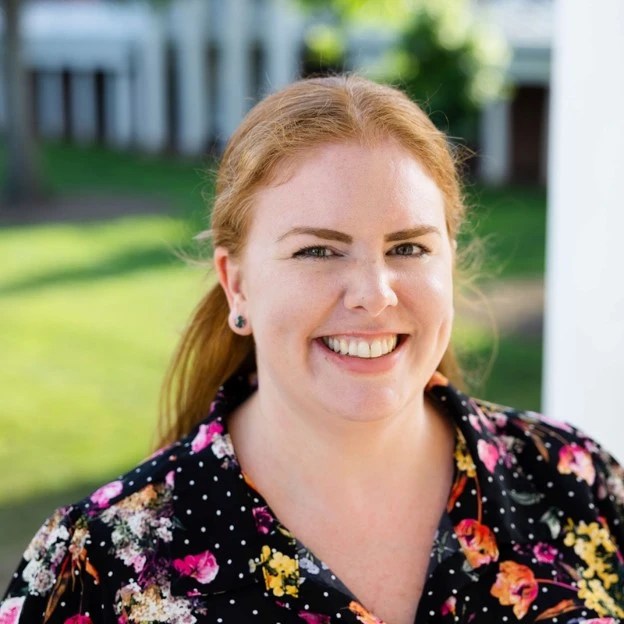
Katie Pelland
Katie Pelland, Senior Research Program Officer for the University of Virginia (UVA) Brain Institute, did not set out for a career in research development. Instead, leveraging her bachelor’s degree in mathematics from Pomona College and a PhD from UVA Engineering, her path into RD was shaped more by curiosity and conversations than a clear plan.
The May Career stories featured Katie Pelland, whose current role at the UVA Brain Institute supports research development and team science activities for neuroscience researchers around the university.
While finishing her graduate work, Katie began conducting informational interviews with individuals in academic, non-faculty roles around the university. She connected with the then Director of Proposal Development, Becca Latimer, who was excited that Katie was excited about RD work and proposed an internship on the central RD team. That opportunity, which began with compiling NIH T32 data tables (!), transitioned into a full-time role jointly housed in the central RD and graduate & postdoctoral affairs offices.
During the COVID-19 pandemic, Katie relocated to Lincoln, Nebraska, and joined the University of Nebraska–Lincoln (UNL) Office of Proposal Development team, where she focused on proposal development and programming and honed her skills. However, Katie’s entire family is in Virginia and Maryland, so after a couple of years at UNL, she returned to Virginia in a new role as the primary RD person for the UVA Brain Institute. Founded in 2016, the UVA Brain Institute serves as the hub of interdisciplinary neuroscience at UVA and fosters collaborative research groups across 150–200 affiliated faculty.
When starting out, Katie knew little about RD but constantly took notes, looked things up, and asked questions of the team, which helped her figure out the work as she went along. Katie appreciates that RD work lets her use both sides of her brain, from organizing spreadsheets to getting creative with a proposal figure. What she values most, though, are the relationships with researchers, her current and former colleagues, and the RD community at UVA and through NORDP.
Katie joined NORDP within a month of landing her RD internship, and she started by subscribing to the sometimes-overwhelming listserv. Hoping to get involved, she jumped at an opportunity to volunteer on the Nominating Committee (NomCom). Since then, Katie has been an active member of NomCom and recently completed her two-year term as lead co-chair. She has also participated in the NORDP Mentoring Program as a mentor and mentee, the Conference Planning Committee, the Communications Working Group, and NORDP LEAD. At the 2024 NORDP conference, Katie was recognized with a NORDP Rising Star award.
Katie finds her NORDP volunteer work incredibly rewarding, but recognizes how easy it is to get excited about opportunities and become overcommitted. She encourages fellow members to be intentional about the commitments they take on and strive for activities that bring satisfaction, spark joy, or support professional growth.
To listen to her full interview with the Career Stories team, please click on this link (you must log in as a NORDP member to access): https://nordp.org/store/viewproduct.aspx?id=24459276; Chapter 47: Catherine (Katie) Pelland
Written by: Roshni Singh with input from Natalie Baronian, Career Stories team
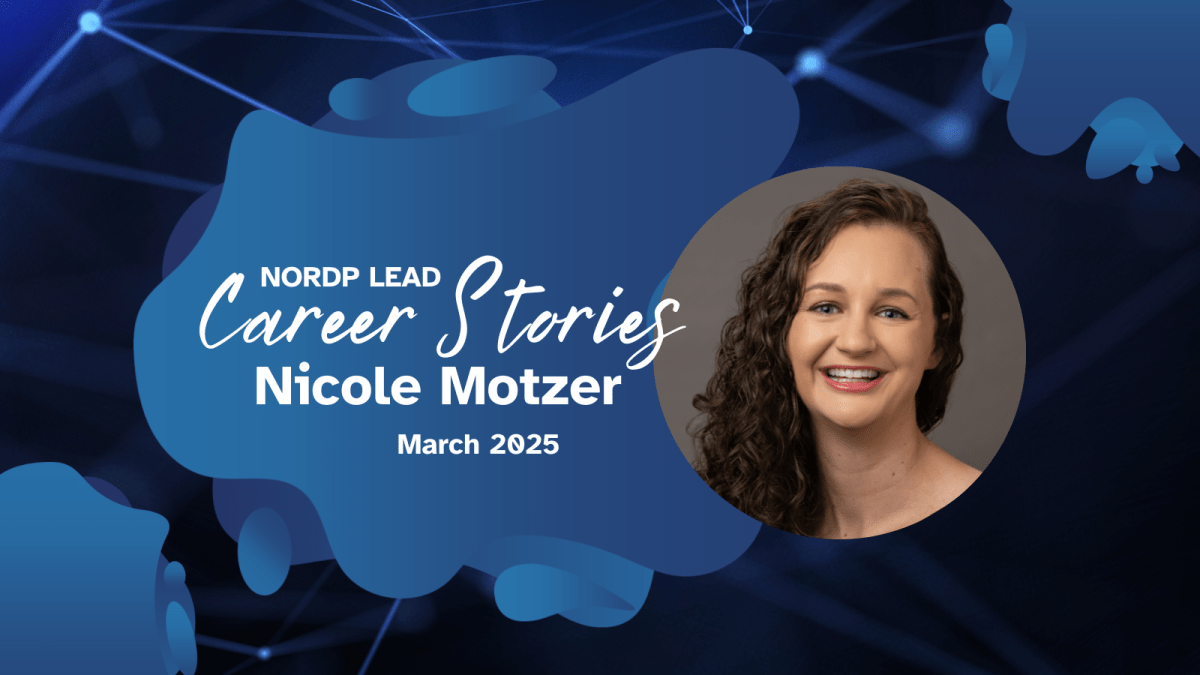
Nicole Motzer
In our March Career Stories, we spotlight Nicole Motzer, the founding director of the Office of Research Development at Montana State University (MSU). Leading a small but mighty team of research development professionals, Nicole’s journey is one of passion, perseverance, and innovation. With a Ph.D. in Geographical Sciences from the University of Maryland, College Park, Nicole has been awarded over $1 million in funding from NSF, NASA, and the Gordon and Betty Moore Foundation. Before joining MSU three years ago, Nicole served as the Assistant Director for Interdisciplinary Science at the National Science Foundation-funded National Socio-Environmental Synthesis Center (SESYNC). There, she played a critical role in facilitating science teams, supporting interdisciplinary proposals and research programs, and developing first-of-their-kind training programs. As SESYNC sunsetted, through lots of googling, Nicole discovered the research development field and the position at MSU that allows her to continue doing what she loves.
Transitioning from working with a single sponsor (NSF) and supporting projects focused only on socio-environmental systems research at a research center to launching a broad-reaching RD office at an R1 university was an exciting challenge, but also a steep learning curve. By spending time getting to know MSU faculty and research needs, attending countless NORDP webinars, and building strong relationships with NORDP colleagues and peer institutions, Nicole turned MSU’s Office of Research Development from a nascent idea into a thriving campus unit in just a few years.
More than three years into the role, Nicole feels good about what she and her team have built through a process of “trial and error.” MSU’s RD programming and services have shifted as the office has matured, starting with a regular schedule of bi-weekly lunch-and-learns (e.g. EPSCoR, international research, etc.) to now including biannual Research Development Days, three-day writing retreats, and multi-week grant writing workshop series. Additionally, broader impacts support now features more prominently in her office following her participation in multiple Center for Advancing Research Impact in Society (ARIS) programs, as does support for graduate student research fellowships such as the NSF GRFP. Nicole’s office further provides innovative, multi-institutional opportunities for NIH R01-ready investigators and for faculty interested in other priority funding programs through her participation in the FOCUS (Fostering Opportunities Through Collaborative University Synergies) community, alongside the University of Idaho, University of Nebraska-Lincoln, Utah State University and University of Nevada Reno.
Nicole credits her lessons in leadership to her mentor, Dr. Jonathan Kramer, former Director of Interdisciplinary Science at SESYNC, who provided her with a supportive environment, increasing responsibilities, and trusting space to experiment and fail safely. She tries to emulate this model with her own team to help grow the profession of RD. She also mentioned an important part of her legacy will be to serve institutions where she feels she can make a significant impact. Nicole initially experienced imposter syndrome as a novice RD director and now advises everyone, especially early-career women, to never doubt themselves and their capabilities. Her advice to RD professionals just starting out is to slow-walk proposal feedback, understand how people want to receive feedback, and customize their approach to individuals.
Nicole is actively involved in NORDP, having participated in the Mentoring Program, NORDP LEAD, and the Professional Development Committee. A favorite part of her job is collaborating on innovative programming with NORDP colleagues across the country. At the 2025 NORDP conference, Nicole received NORDP’s Rising Star award as well as the Innovation award for her involvement with the FOCUS team. In 2024, Nicole was appointed to the National Academies of Sciences, Engineering, and Medicine’s Committee on Research and Application in Team Science, representing both her research development and team science practitioner perspectives in one space. Nicole lives in Bozeman, MT, surrounded by mountains, with her family.
Nicole would love to answer any questions you have for her, so please feel free to email her at nicole.motzer@montana.edu
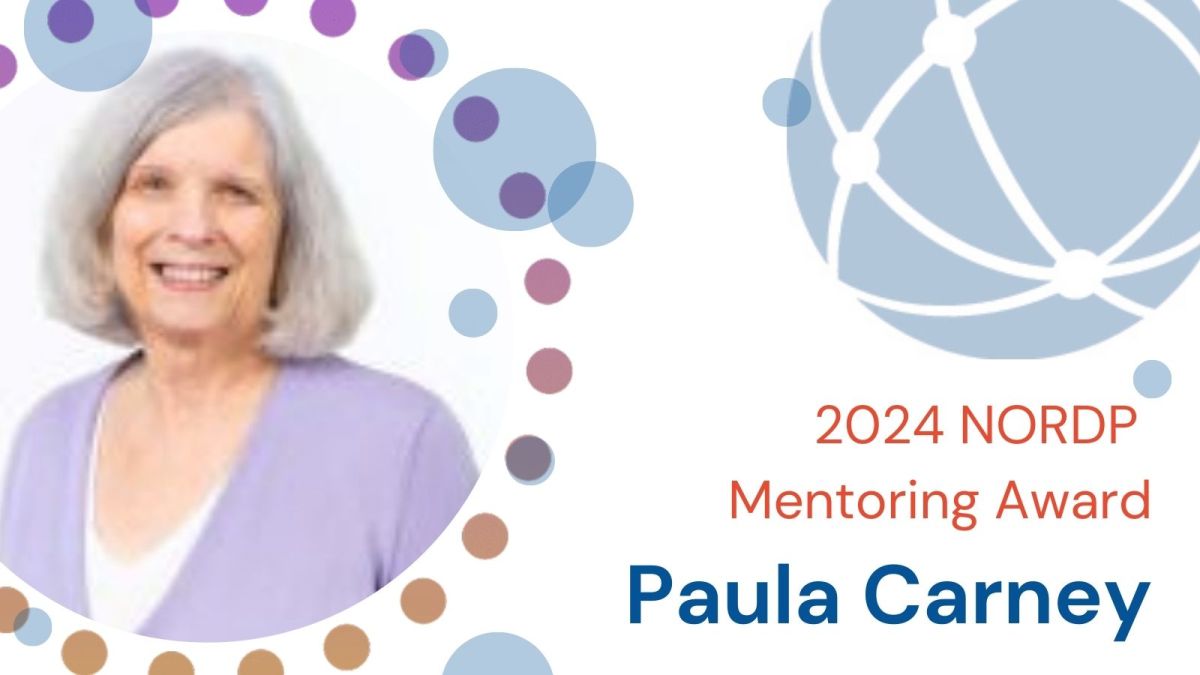
First awarded in 2022, the NORDP Mentoring Award recognizes an individual NORDP member’s unique ability to provide an engaging, supportive, and inclusive environment for professional and/or personal growth through mentorship in the research development community. This award is bestowed with the acknowledgment that effective mentoring occurs through formal and informal channels and may vary in style and substance.
Who: Paula Carney
Where: Loyola Chicago University
Number of years in research development: It depends. Paula started doing what she likes to call “Research Career Development” when she was a faculty member, perhaps beginning in the 2008/2009 timeframe.
Length of NORDP membership: 6 years
Q: How did you first get involved with research development and mentoring?
A: My journey with research career development—focusing on the person doing the research—began when I was a faculty member in Nutrition and Public Health at the University of Tennessee. As one of the only social scientists in a primarily basic science department, I often found myself explaining, mentoring, and bridge-building.
When I relocated to Chicago and joined Northwestern University, I worked with Holly Falk-Kryzisinki as our team developed their Clinical and Translational Science Award (CTSA). I served as the PhD director for all education and training programs through the CTSA in the medical school. My role included adapting Chris Pfund’s training program for clinical and translational researchers, with significant involvement in curriculum development—this was around 2009.
I later expanded my mentor training at Northwestern to include the medical school and eventually the entire university. I discovered that having an effective approach to mentoring was crucial, especially for those situations where a mentee gets the greatest, best-known mentor in the world, but isn’t getting any actual mentoring.” We developed programs for postdocs and junior faculty before there was an established curriculum.
My career path then led me to Chicago State University, a minority-serving institution, where I served as dean, associate provost, and professor. Though we didn’t have a formal program, I continued with informal mentoring, which was always my approach. After some family needs arose, I stepped back and joined Loyola’s School of Social Work, where I could concentrate on people and outcomes in an urban environment, both very near to my heart.
When the pandemic hit, I pivoted to focus more on consulting individuals—the one-to-one aspects of mentoring rather than group activities. Despite the challenges along the way, it’s been an extremely satisfying experience professionally, allowing me to apply all my previous experiences in new contexts.
Q: What was your initial understanding of mentoring and how has that grown over time?
A: I think I initially came to mentoring through my role as a faculty member. I’ve always been drawn to it because it’s such a natural part of career development. When we consider the various developmental roles in research—mentoring, consulting, educating, training, and supervising—I found myself naturally moving between these roles depending on the needs of the interaction.
For me, mentoring was always an extension of my role as an educator. I quickly learned that just because you train people doesn’t mean they’ll succeed—there are different tests and challenges they’ll face. That’s why I look at things both at the individual and organizational level, and everywhere in between.
My understanding has evolved to become more visual over time. I see mentoring as existing along several continuums—from individual to organizational, and from organic to more structured approaches. The key is figuring out the space you need to be in and what the person, group, or organization needs at any point in time. It’s very dynamic.
This perspective has been valuable in our work with the NORDP Mentoring Committee, where we’re recognized as an exemplar for association-based mentoring. We’re now exploring how to extend this approach to other job classifications and components of the research enterprise.
Q: What does being a good mentor mean to you?
A: Good mentoring means mentoring from the side. I picture the mentoring relationship as two (or more) people sitting together—none having more power than another. It’s about figuring out how to help each other. I also believe that research development professionals have so much knowledge and influence to help faculty. So good mentoring means owning that influence and building that knowledge and influence into service for faculty.
Q: What do you wish you had known when you began your mentoring journey?
A: Trust yourself. Trust your intuition. Nothing’s going to break, and you’re not going to do anything wrong. I’d also recommend reading and exploring broadly and taking time for reflection.
I often use the iceberg metaphor—what you see is just 10% of what’s there. The real learning comes from getting beneath your neck and out of your head. It’s about trusting and recognizing your intuition through reflection and taking time to explore the softer side of mentoring.
I wish I had known sooner that we all have our saboteurs—those little voices that sit on your shoulder saying, “Don’t do that. Nobody’s going to be interested in that.” You need to silence those voices.
Another important realization is that while you should focus on the mentee, much of what they need is already inside them. You’re just guiding them a little bit, helping them discover their own path. I had one mentee who realized at the end of our formal relationship that she didn’t want to be in this field at all. So our work shifted to figuring out where she actually wanted to be.
That’s the beauty of mentoring relationships—sometimes they evolve beyond the original context. The connections continue because you genuinely like each other and continue to learn together. It’s really, really cool.
Q: What have you found most rewarding, and most challenging, about being a mentor?
A: One of the most rewarding aspects has been developing a vision for how mentoring can function at both individual and organizational levels. The dynamic nature of finding the right space to meet people’s needs at any given moment is both challenging and fulfilling.
A particularly rewarding project was developing a logic model last year with Kristin Boumann that positions NORDP as an exemplar in association-based mentoring. This work has allowed us to think about how we can extend our approach to other job classifications and components of the research enterprise.
For example, we’re now meeting with Clinical Research Coordinator groups at several universities on a multi-year project where I’m serving in a consulting role. It’s challenging work that takes us beyond our usual NORDP initiatives, but it’s incredibly rewarding to see our mentoring model being adapted and implemented more broadly.
The challenge is always balancing the organic, relationship-based aspects of mentoring with the need for structured programs that can be scaled and measured. But that tension is also what makes mentoring work so interesting and impactful.
Q: What advice do you have for others within NORDP who wish to follow in your footsteps?
A: Just get involved. Just do something and say something. NORDP is an organization that is remarkably flat in its structure, as is the field of research development itself. That openness creates numerous opportunities for contribution.
I think that’s what makes our organization and association special—there’s a place for everyone. Having worked in more hierarchical environments where I was responsible for things like accreditation, I really appreciate the collaborative nature of NORDP.
Your experience might vary depending on your institutional context—working in the humanities will be different than in an engineering school—but the key is to find your niche and contribute from your unique perspective. Faculty involve research development professionals very differently from other people in the system, which gives us a special vantage point.
The beauty of NORDP is that you can bring your whole self to the organization. Whether you’re interested in mentoring, professional development, or other aspects of research development, there’s space for your voice and contributions. Don’t wait for an invitation—just jump in and get started.


 NORDP News