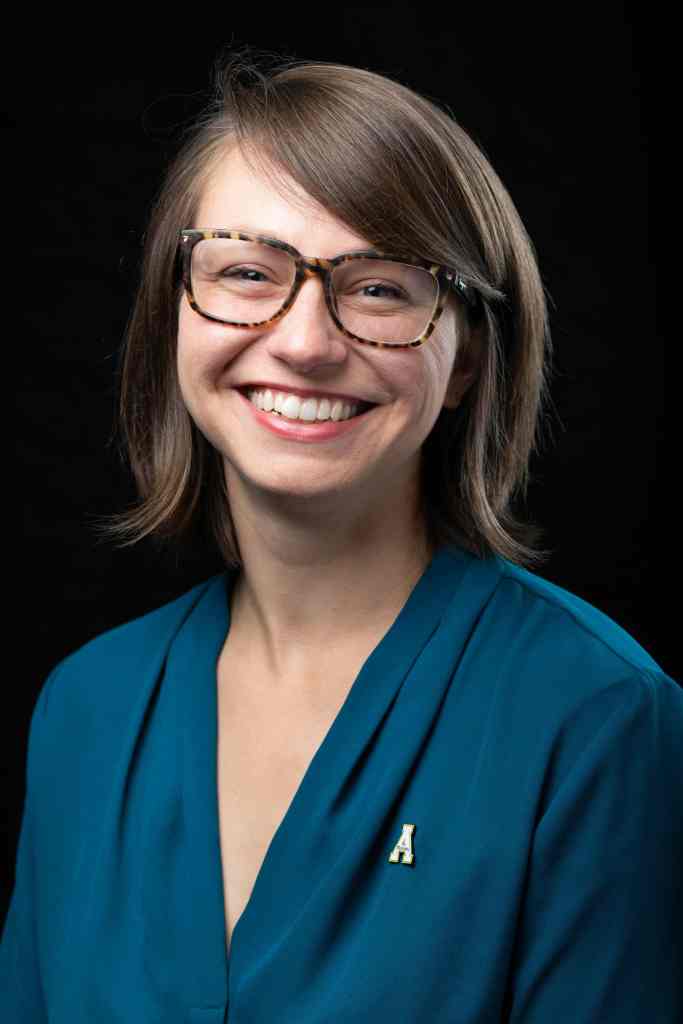
Vessela Vassileva-Clarke, Co-Chair of the NORDP Mentoring Committee
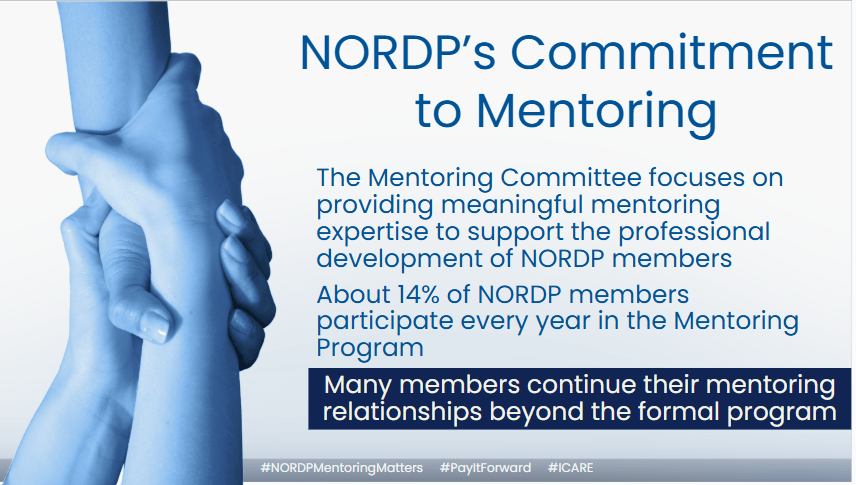
Fall marks an exciting start to a new mentoring cycle at NORDP! The 2025-2026 mentoring year runs from July through June, and we’re thrilled to welcome all mentors and mentees—whether matched in a dyad or part of a mentoring cohort—into this year’s program.
The June 25 Mentor Program Orientation featured this year’s NORDP Mentoring Award recipient and Mentoring Committee Co-Chair, Angela Jordon. New and returning participants were introduced to the program and joined breakout sessions based on their role—mentor or mentee—and format—dyad or cohort—to learn more about what to expect in the year ahead.
Behind the scenes, the Mentoring Committee, including the Match Team and the Mentoring Leadership Team, has worked diligently to make that stellar start possible. Updating our WisdomShare platform, opening the application window, carefully reviewing and confirming matches to ensure the best possible pairings for all participants, answering numerous emails about program registration, mentoring profiles, etc., are just a few of the tasks they completed. On behalf of both current and past NORDP Mentor Program participants, we extend our heartfelt appreciation and thank them for making the entire process feel easy and seamless!
We are especially excited to continue our mentoring cohorts, now in their fourth year! In this model, three mentees are matched with one mentor, creating a small community for ongoing peer‑mentoring discussions. Thank you to the many dedicated individuals who volunteered to serve as mentors—whether in dyads or cohorts—this year. Your willingness to share your time and expertise makes this program thrive.
Tips for New Mentors and Mentees
If you’re just getting started, here are a few quick tips to help you make the most of your experience:
Log in to WisdomShare for your mentor/mentee’s contact information, messaging tools, and suggested milestones
Explore the Learning tab in WisdomShare for guidance on where to begin
Visit your WisdomShare Dashboard to find active Peer Mentoring Groups (PMGs), and join the ones that interest you—no matching is required for PMGs!
If your mentor or mentee(s) hasn’t reached out yet, don’t wait—take the initiative to connect! There’s no single “right” way to engage
Attend the monthly Mentoring Committee Meetings (3rd Thursday of the month all year) to learn the latest mentoring news and share your mentoring experiences and ideas with a group of NORDP members who are truly into mentoring
Watch for upcoming McHuddles—informal gatherings hosted by Mentoring Committee facilitators where you can share ideas, ask questions, and learn from others through supportive and fun interactions
Have questions, concerns, or suggestions? Reach out to us anytime at mentorprogram@nordp.org
Share Your Story!
The Mentoring Committee is always looking to highlight mentoring experiences. If you were part of a 2024–25 mentoring dyad or cohort and would like to share your story in a future blog post, please contact the McMc team at mentorprogram@nordp.org.
Here’s to a successful and inspiring 2025-2026 mentoring year—thank you for being part of it!
May 2015 as the Assistant Director of Grants Resources and Services (GRS), I’m now the Associate Director of GRS.
What kind of research development work do you do?
I work on all areas of RD: disseminating funding opportunities, workshops, internal competitions, proposal research development. I currently work on larger-scale, institutional initiatives and collaborative research support primarily. We started as an office of two and are now up to four full time employees in our research development unit (GRS).
What’s your history and involvement with NORDP?
In 2017, I joined the organization and immediately got involved with the Professional Development Committing and the Mentoring Committee. I’ve recently stepped down from the PD committee due to board duties but am still involved with the mentoring committee peer mentoring activities and as a convenor. I was a Conference Co-Chair in 2020/2021 & 2021/2022 and Co-chaired the Virtual Recon Conference in the fall of 2023. I have been part of the RD101 leadership team since 2018/2019 and am currently involved with the development of RD200 series (pilot was just concluded last fall).I was also one of the original developers of the LEAD (Leadership, Engagement, And Development.) program, it runs an annual cohort and fireside career chats came out of this. And finally, most recently, I was elected to the NORDP Board in 2024!
What motivated you to run for the NORDP Board?
I had been nominated multiple times and ran once in the past, but I was not elected. I decided that once I had finished my PhD I would run again. And this time, I was elected! I was motivated to run for the board because I wanted to continue being of service to NORDP. This is also a great opportunity to continue growing in a leadership role.
What are you most excited about as a new NORDP Board member?
I’m excited about getting to work on the strategic pillar driving activities to move the organization forward. I look forward to being involved and seeing results as I’ve just started my four-year board appointment.
The strategic pillars are as follows:
Cultivating Volunteer Opportunities for Growth
Future-Proofing Core Infrastructure for Sustainability
Defining & Positioning RD & NORDP to Partners
Catalyzing Coordinated Strategies to Promote Equity & Inclusion
Would you like to leave our readers with any last thoughts?
Joining and being a part of NORDP has been one of the best decisions… Look for opportunities to engage that are meaningful to you!
Faculty Development Curriculum and Mentorship Networks
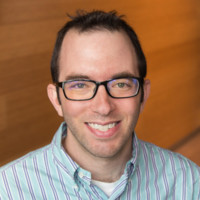
Matthew Schwartz
For June career stories, we interviewed Matthew Schwartz, PhD, who redefines what it means to support early-career faculty, building faculty development programming and mentorship networks to support academic success at UMass Chan Medical School. Matt is Senior Program Manager for Faculty Development in the Investigator Career Advancement Program (iCAP) at UMass Chan Medical School’s Office of Health Equity. At UMass Chan, Matt’s main responsibility is to design, manage, facilitate, and evaluate faculty development programs and mentorship activities aimed at enhancing the productivity, satisfaction, retention, and success of early-career research faculty, particularly those from groups historically underrepresented in science.
Certified as a facilitator by the Center for the Improvement of Mentored Experiences in Research (CIMER) and a graduate of both Ciencia Puerto Rico’s inaugural Inclusive and Reflexive Facilitation Fellowship and the 2025 Linton-Poodry SACNAS Leadership Institute, Dr. Schwartz is a national leader in faculty development and mentorship. He is an active member of NORDP, where he organizes the Faculty Development Peer Mentoring Group and serves on both the Mentor Training Team and Mentoring Committee. Fifteen-Twenty NORDP members regularly participate in monthly meetings of the Faculty Development Peer Mentoring Group, and any NORDP member is welcome to participate by signing up via WisdomShare. This Spring, along with several members of the Mentor Training Team, he facilitated a CIMER training through NORDP to further elevate mentorship practices by NORDP members across institutions.
Dr. Schwartz brings a wealth of experience to his role. He holds a PhD in Genetics and Genomics from Harvard University and a BA in Biological Sciences from Northwestern University. His academic career began as an Assistant Teaching Professor at Simmons University, where he also collaborated with the Center for Faculty Excellence, under the leadership of Dr. Jennifer Herman, as the Faculty Fellow for Teaching Excellence. Early on, he recognized a passion for creating systemic changes in academia through faculty development, curriculum innovation, and mentorship after a transformational experience as a participant in a Summer Teaching Institute at Simmons. Since then, at UMass Chan, he has been leading the creation and implementation of a holistic, tailored faculty development curriculum to support the success of four successive cohorts of early-career research-focused faculty.
Dr. Schwartz has led over 75 professional development workshops, incorporating active learning techniques such as case study analysis and role play, reflective practices, and restorative justice principles to facilitate authentic conversations and create transformational faculty development experiences. He regularly collects faculty feedback for continuous improvement of iCAP and to ensure he is meeting faculty needs. With 2-hour iCAP sessions every two to three weeks, some outsiders express concerns about taking up too much faculty time, but the effect is the opposite, with iCAP participants noting how much time they are saving later because of iCAP’s support for advancing their careers and learning how to effectively lead their research groups.
When asked to distinguish between faculty development and research development, Dr. Schwartz shares: “Faculty development takes a holistic view—it’s about mentorship, career development, and fostering belonging and wellbeing in addition to research development skills like proposal writing, managing budgets, and navigating collaboration.” He regularly uses his research development skills, however, to dig in, understand the literature, and apply evidence-based best practices in creating both the structure of iCAP’s cohort-based peer mentorship group, and for all of the faculty development sessions he develops, on topics ranging from research mentor training to navigating difficult conversations, effective networking, and fostering wellbeing.
Focusing on mentorship, Dr. Schwartz believes in building networks, supporting faculty in identifying and filling gaps in their mentorship networks, and cultivating his own large network of people whom he can consult and who can support his own career success and development.
Dr. Schwartz is happy to answer any questions you have and especially encourages readers to reach out to him if they are looking for mentorship and support in creating their own faculty development initiatives. Please feel free to contact him at matthew.schwartz3@umassmed.edu.
To listen to his full interview by the career/kindle team, please click on this link (you must log in as a NORDP member to access): https://nordp.org/store/viewproduct.aspx?id=24459276; Chapter 48: Matthew Schwartz
The NORDP Consultants Program is partnering with the Center for Enhancing Research Capacity for MSIs, which is led by the City University of New York (CUNY) John Jay College of Criminal Justice (NIJ-CERC-MSIs-JJC) and funded by the National Institute of Justice (NIJ), an institute within the Department of Justice.
NIJ-CERC-MSIs-JJC aims to bolster the research infrastructure and capabilities of MSIs within criminal justice. The center’s mission is threefold: to increase MSIs’ competitiveness in research, to support the growth of research funding for MSI investigators, and to broaden the community of MSI researchers engaged in addressing criminal and juvenile justice issues.
“We are delighted to partner with the NORDP Consultants Program and leverage the program’s expertise strengthening research infrastructure,” said Dr. Joel Capellen, Associate Professor of Criminal Justice at John Jay College and principal investigator of NIJ-CERC-MSIs-JJC, “together, we hope to not only support criminal justice researchers but also research enterprise leaders, who are critical to the supporting research infrastructure.”
The NORDP Consultants Program will leverage its expertise in a new collaborative initiative called the Research Enterprise Administrators and Leaders (REAL) Cohort, a one-year cohort program that will provide a forum for research enterprise leaders to engage with peers and national experts to explore topics relevant to strengthening the MSI research enterprise. Research enterprise leaders interested in participating in this virtual program can apply here by September 17, 2025.
Becoming Herself in Research Development: Katie Pelland
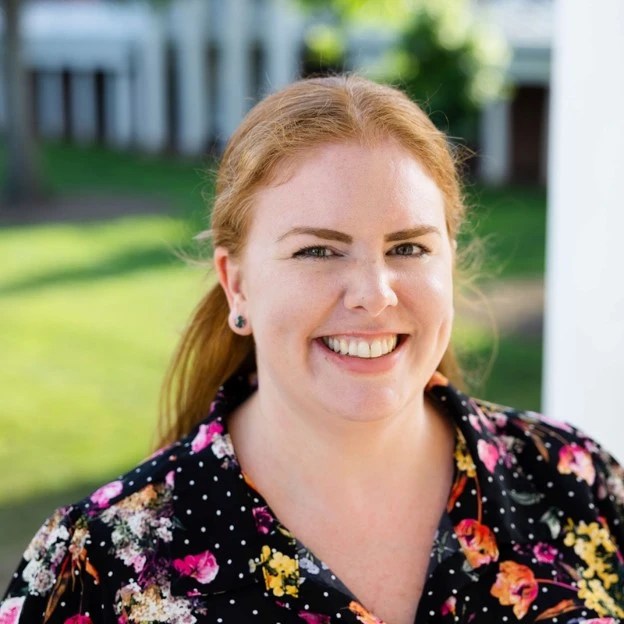
Katie Pelland
Katie Pelland, Senior Research Program Officer for the University of Virginia (UVA) Brain Institute, did not set out for a career in research development. Instead, leveraging her bachelor’s degree in mathematics from Pomona College and a PhD from UVA Engineering, her path into RD was shaped more by curiosity and conversations than a clear plan.
The May Career stories featured Katie Pelland, whose current role at the UVA Brain Institute supports research development and team science activities for neuroscience researchers around the university.
While finishing her graduate work, Katie began conducting informational interviews with individuals in academic, non-faculty roles around the university. She connected with the then Director of Proposal Development, Becca Latimer, who was excited that Katie was excited about RD work and proposed an internship on the central RD team. That opportunity, which began with compiling NIH T32 data tables (!), transitioned into a full-time role jointly housed in the central RD and graduate & postdoctoral affairs offices.
During the COVID-19 pandemic, Katie relocated to Lincoln, Nebraska, and joined the University of Nebraska–Lincoln (UNL) Office of Proposal Development team, where she focused on proposal development and programming and honed her skills. However, Katie’s entire family is in Virginia and Maryland, so after a couple of years at UNL, she returned to Virginia in a new role as the primary RD person for the UVA Brain Institute. Founded in 2016, the UVA Brain Institute serves as the hub of interdisciplinary neuroscience at UVA and fosters collaborative research groups across 150–200 affiliated faculty.
When starting out, Katie knew little about RD but constantly took notes, looked things up, and asked questions of the team, which helped her figure out the work as she went along. Katie appreciates that RD work lets her use both sides of her brain, from organizing spreadsheets to getting creative with a proposal figure. What she values most, though, are the relationships with researchers, her current and former colleagues, and the RD community at UVA and through NORDP.
Katie joined NORDP within a month of landing her RD internship, and she started by subscribing to the sometimes-overwhelming listserv. Hoping to get involved, she jumped at an opportunity to volunteer on the Nominating Committee (NomCom). Since then, Katie has been an active member of NomCom and recently completed her two-year term as lead co-chair. She has also participated in the NORDP Mentoring Program as a mentor and mentee, the Conference Planning Committee, the Communications Working Group, and NORDP LEAD. At the 2024 NORDP conference, Katie was recognized with a NORDP Rising Star award.
Katie finds her NORDP volunteer work incredibly rewarding, but recognizes how easy it is to get excited about opportunities and become overcommitted. She encourages fellow members to be intentional about the commitments they take on and strive for activities that bring satisfaction, spark joy, or support professional growth.
To listen to her full interview with the Career Stories team, please click on this link (you must log in as a NORDP member to access): https://nordp.org/store/viewproduct.aspx?id=24459276; Chapter 47: Catherine (Katie) Pelland
Written by: Roshni Singh with input from Natalie Baronian, Career Stories team
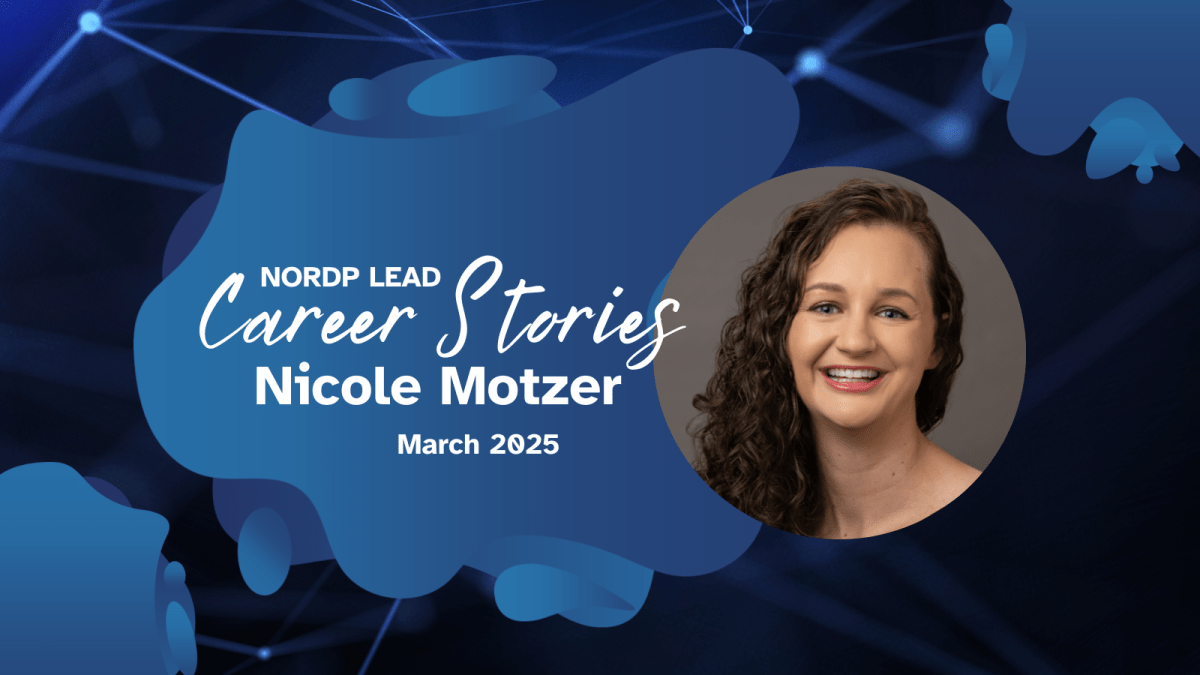
Nicole Motzer
In our March Career Stories, we spotlight Nicole Motzer, the founding director of the Office of Research Development at Montana State University (MSU). Leading a small but mighty team of research development professionals, Nicole’s journey is one of passion, perseverance, and innovation. With a Ph.D. in Geographical Sciences from the University of Maryland, College Park, Nicole has been awarded over $1 million in funding from NSF, NASA, and the Gordon and Betty Moore Foundation. Before joining MSU three years ago, Nicole served as the Assistant Director for Interdisciplinary Science at the National Science Foundation-funded National Socio-Environmental Synthesis Center (SESYNC). There, she played a critical role in facilitating science teams, supporting interdisciplinary proposals and research programs, and developing first-of-their-kind training programs. As SESYNC sunsetted, through lots of googling, Nicole discovered the research development field and the position at MSU that allows her to continue doing what she loves.
Transitioning from working with a single sponsor (NSF) and supporting projects focused only on socio-environmental systems research at a research center to launching a broad-reaching RD office at an R1 university was an exciting challenge, but also a steep learning curve. By spending time getting to know MSU faculty and research needs, attending countless NORDP webinars, and building strong relationships with NORDP colleagues and peer institutions, Nicole turned MSU’s Office of Research Development from a nascent idea into a thriving campus unit in just a few years.
More than three years into the role, Nicole feels good about what she and her team have built through a process of “trial and error.” MSU’s RD programming and services have shifted as the office has matured, starting with a regular schedule of bi-weekly lunch-and-learns (e.g. EPSCoR, international research, etc.) to now including biannual Research Development Days, three-day writing retreats, and multi-week grant writing workshop series. Additionally, broader impacts support now features more prominently in her office following her participation in multiple Center for Advancing Research Impact in Society (ARIS) programs, as does support for graduate student research fellowships such as the NSF GRFP. Nicole’s office further provides innovative, multi-institutional opportunities for NIH R01-ready investigators and for faculty interested in other priority funding programs through her participation in the FOCUS (Fostering Opportunities Through Collaborative University Synergies) community, alongside the University of Idaho, University of Nebraska-Lincoln, Utah State University and University of Nevada Reno.
Nicole credits her lessons in leadership to her mentor, Dr. Jonathan Kramer, former Director of Interdisciplinary Science at SESYNC, who provided her with a supportive environment, increasing responsibilities, and trusting space to experiment and fail safely. She tries to emulate this model with her own team to help grow the profession of RD. She also mentioned an important part of her legacy will be to serve institutions where she feels she can make a significant impact. Nicole initially experienced imposter syndrome as a novice RD director and now advises everyone, especially early-career women, to never doubt themselves and their capabilities. Her advice to RD professionals just starting out is to slow-walk proposal feedback, understand how people want to receive feedback, and customize their approach to individuals.
Nicole is actively involved in NORDP, having participated in the Mentoring Program, NORDP LEAD, and the Professional Development Committee. A favorite part of her job is collaborating on innovative programming with NORDP colleagues across the country. At the 2025 NORDP conference, Nicole received NORDP’s Rising Star award as well as the Innovation award for her involvement with the FOCUS team. In 2024, Nicole was appointed to the National Academies of Sciences, Engineering, and Medicine’s Committee on Research and Application in Team Science, representing both her research development and team science practitioner perspectives in one space. Nicole lives in Bozeman, MT, surrounded by mountains, with her family.
Nicole would love to answer any questions you have for her, so please feel free to email her at nicole.motzer@montana.edu
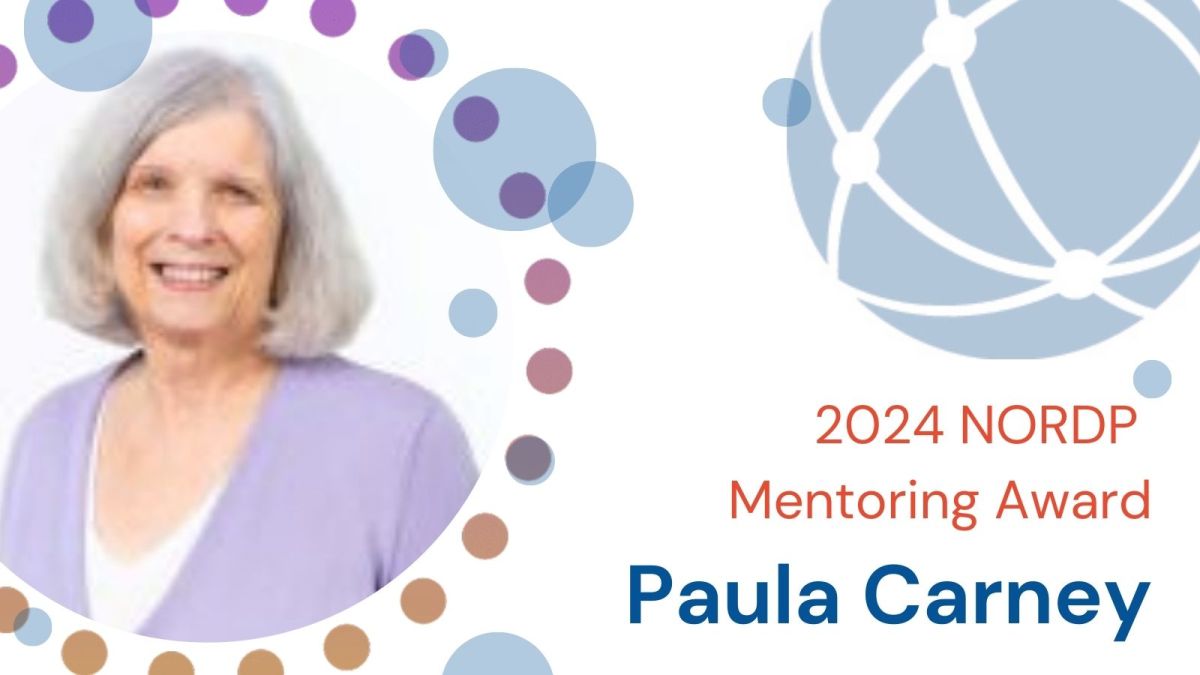
First awarded in 2022, the NORDP Mentoring Award recognizes an individual NORDP member’s unique ability to provide an engaging, supportive, and inclusive environment for professional and/or personal growth through mentorship in the research development community. This award is bestowed with the acknowledgment that effective mentoring occurs through formal and informal channels and may vary in style and substance.
Who: Paula Carney
Where: Loyola Chicago University
Number of years in research development: It depends. Paula started doing what she likes to call “Research Career Development” when she was a faculty member, perhaps beginning in the 2008/2009 timeframe.
Length of NORDP membership: 6 years
Q: How did you first get involved with research development and mentoring?
A: My journey with research career development—focusing on the person doing the research—began when I was a faculty member in Nutrition and Public Health at the University of Tennessee. As one of the only social scientists in a primarily basic science department, I often found myself explaining, mentoring, and bridge-building.
When I relocated to Chicago and joined Northwestern University, I worked with Holly Falk-Kryzisinki as our team developed their Clinical and Translational Science Award (CTSA). I served as the PhD director for all education and training programs through the CTSA in the medical school. My role included adapting Chris Pfund’s training program for clinical and translational researchers, with significant involvement in curriculum development—this was around 2009.
I later expanded my mentor training at Northwestern to include the medical school and eventually the entire university. I discovered that having an effective approach to mentoring was crucial, especially for those situations where a mentee gets the greatest, best-known mentor in the world, but isn’t getting any actual mentoring.” We developed programs for postdocs and junior faculty before there was an established curriculum.
My career path then led me to Chicago State University, a minority-serving institution, where I served as dean, associate provost, and professor. Though we didn’t have a formal program, I continued with informal mentoring, which was always my approach. After some family needs arose, I stepped back and joined Loyola’s School of Social Work, where I could concentrate on people and outcomes in an urban environment, both very near to my heart.
When the pandemic hit, I pivoted to focus more on consulting individuals—the one-to-one aspects of mentoring rather than group activities. Despite the challenges along the way, it’s been an extremely satisfying experience professionally, allowing me to apply all my previous experiences in new contexts.
Q: What was your initial understanding of mentoring and how has that grown over time?
A: I think I initially came to mentoring through my role as a faculty member. I’ve always been drawn to it because it’s such a natural part of career development. When we consider the various developmental roles in research—mentoring, consulting, educating, training, and supervising—I found myself naturally moving between these roles depending on the needs of the interaction.
For me, mentoring was always an extension of my role as an educator. I quickly learned that just because you train people doesn’t mean they’ll succeed—there are different tests and challenges they’ll face. That’s why I look at things both at the individual and organizational level, and everywhere in between.
My understanding has evolved to become more visual over time. I see mentoring as existing along several continuums—from individual to organizational, and from organic to more structured approaches. The key is figuring out the space you need to be in and what the person, group, or organization needs at any point in time. It’s very dynamic.
This perspective has been valuable in our work with the NORDP Mentoring Committee, where we’re recognized as an exemplar for association-based mentoring. We’re now exploring how to extend this approach to other job classifications and components of the research enterprise.
Q: What does being a good mentor mean to you?
A: Good mentoring means mentoring from the side. I picture the mentoring relationship as two (or more) people sitting together—none having more power than another. It’s about figuring out how to help each other. I also believe that research development professionals have so much knowledge and influence to help faculty. So good mentoring means owning that influence and building that knowledge and influence into service for faculty.
Q: What do you wish you had known when you began your mentoring journey?
A: Trust yourself. Trust your intuition. Nothing’s going to break, and you’re not going to do anything wrong. I’d also recommend reading and exploring broadly and taking time for reflection.
I often use the iceberg metaphor—what you see is just 10% of what’s there. The real learning comes from getting beneath your neck and out of your head. It’s about trusting and recognizing your intuition through reflection and taking time to explore the softer side of mentoring.
I wish I had known sooner that we all have our saboteurs—those little voices that sit on your shoulder saying, “Don’t do that. Nobody’s going to be interested in that.” You need to silence those voices.
Another important realization is that while you should focus on the mentee, much of what they need is already inside them. You’re just guiding them a little bit, helping them discover their own path. I had one mentee who realized at the end of our formal relationship that she didn’t want to be in this field at all. So our work shifted to figuring out where she actually wanted to be.
That’s the beauty of mentoring relationships—sometimes they evolve beyond the original context. The connections continue because you genuinely like each other and continue to learn together. It’s really, really cool.
Q: What have you found most rewarding, and most challenging, about being a mentor?
A: One of the most rewarding aspects has been developing a vision for how mentoring can function at both individual and organizational levels. The dynamic nature of finding the right space to meet people’s needs at any given moment is both challenging and fulfilling.
A particularly rewarding project was developing a logic model last year with Kristin Boumann that positions NORDP as an exemplar in association-based mentoring. This work has allowed us to think about how we can extend our approach to other job classifications and components of the research enterprise.
For example, we’re now meeting with Clinical Research Coordinator groups at several universities on a multi-year project where I’m serving in a consulting role. It’s challenging work that takes us beyond our usual NORDP initiatives, but it’s incredibly rewarding to see our mentoring model being adapted and implemented more broadly.
The challenge is always balancing the organic, relationship-based aspects of mentoring with the need for structured programs that can be scaled and measured. But that tension is also what makes mentoring work so interesting and impactful.
Q: What advice do you have for others within NORDP who wish to follow in your footsteps?
A: Just get involved. Just do something and say something. NORDP is an organization that is remarkably flat in its structure, as is the field of research development itself. That openness creates numerous opportunities for contribution.
I think that’s what makes our organization and association special—there’s a place for everyone. Having worked in more hierarchical environments where I was responsible for things like accreditation, I really appreciate the collaborative nature of NORDP.
Your experience might vary depending on your institutional context—working in the humanities will be different than in an engineering school—but the key is to find your niche and contribute from your unique perspective. Faculty involve research development professionals very differently from other people in the system, which gives us a special vantage point.
The beauty of NORDP is that you can bring your whole self to the organization. Whether you’re interested in mentoring, professional development, or other aspects of research development, there’s space for your voice and contributions. Don’t wait for an invitation—just jump in and get started.
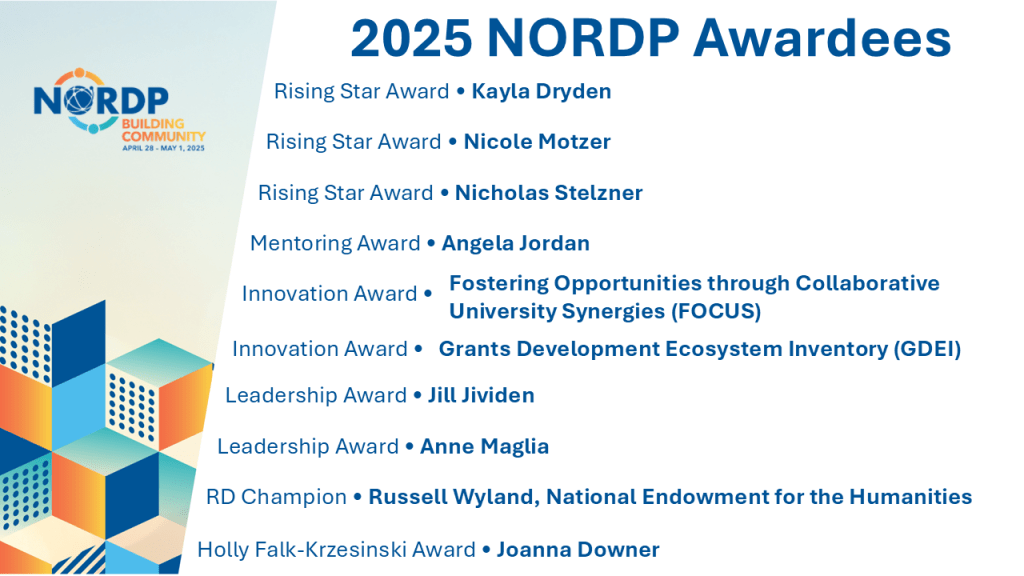
NORDP is powered by the excellence and impact of its members. Each year, NORDP Awards celebrate the outstanding accomplishments of NORDP members making exemplary contributions to the organization as well as the practice and/or study of research development. NORDP Awards honor the distinctive achievements and contributions of individuals, collaborative groups or work teams, programs or projects, and organizations.
Recipients of 2025 NORDP Awards were recognized during the annual NORDP Conference held virtually from April 28 – May 1. In the coming months, you will have a chance to learn more about each awardee through in-depth interviews that will be shared through NORDP News. Congratulations to all of the fantastic awardees for your service to our organization and profession!
Rising Star Award
Kayla Dryden, The University of Texas at Austin
Nicole Motzer, Montana State University
Nicholas Stelzner, University of Washington
Mentoring Award
Angela Jordan, University of South Alabama
Innovation Award
Fostering Opportunities through Collaborative University Synergies (FOCUS): Tracy Gatlin and Nicole Motzer (Montana State University), Carly Cummings and Ryan McAllister (University of Idaho), Heather Borck, Matthew Dwyer, Nathan Meier, Jackson Hardin, and Tisha Gilreath Mullen (University of Nebraska-Lincoln), Carrie Busha and Aurora Pinkey (University of Nevada, Reno), Jeri Hansen and Dawnie Elzinga (Utah State University)
Grants Development Ecosystem Inventory (GDEI): Kara Luckey (Seattle University), Jennifer Glass (University of Massachusetts Dartmouth), Dean Gerstein (Pomona College), Sarah Robertson (Bryn Mawr College), Amy Chan-Hilton (University of Southern Indiana)
Leadership Award
Jill Jividen, University of Michigan
Anne Maglia, University of Massachusetts Lowell
Research Development Champion Award
Russell Wyland, National Endowment for the Humanities
Who: Dr. Eva Allen, Senior Research Development Specialist, Biological Sciences Division
Name of organization/institution where they work: University of Chicago
Number of Years Working in RD: 23 years
Length of NORDP Membership: 13 years
When and how did you enter the field? What kind of research development work do you do?
Eva found herself in a tough situation in her first year of graduate school at Indiana University (IU) for evolutionary biology when she learned that she didn’t share common research interests with the lab she was working with. Because of this, she cobbled together two different advisors for a topic she developed. However, neither of them had grant funding for her work. So, Eva wrote proposals, drawing on her strengths as a writer; she grew up with an English professor father and served as a writing tutor as an undergraduate.
After earning her PhD, she stayed on at IU providing research development support to her department. This role expanded over 20 years, as described in the 2020 New Board Member Cameo blog post. In 2021, she became the Assistant Director for Research Advancement of IU’s Environmental Resilience Institute.
From IU, Eva was recruited to ASU, where she worked in the central RD office, founded and led by Faye Farmer and Karen Walker. This role had a very strong emphasis on proposal management, and it’s where she realized that proposal management is what she had been doing all throughout the years developing complex proposals.
After a year at ASU, an opportunity presented itself within the Biological Sciences Division at University of Chicago. There, the Research Development Team supports approximately 400 investigators, both tenure-track faculty and clinical investigators, focusing on large, complex applications. When there’s downtime, they will work on smaller submissions or consult with PIs who are planning large submissions. With an RA on the team who handles most paperwork, like biosketches and budgets, Eva can focus on engaging with the researchers on the science and how they’re articulating it. She ensures that communication is clear, from high-level concepts down to editing the document.
What’s your history with NORDP? How have you engaged with the organization (committee work, conferences attended/presented)?
When Eva first joined the campus level team at IU in 2012, she learned about NORDP from colleagues and attended the national conference. She’s attended every conference since then, and presented at many of them. In 2014, she joined the Conference Workshops Organizing Committee, eventually co-chairing the group for the 2018 and 2019 conferences. After a year on the Executive Committee for the 2020 conference, she stepped away from that work to join the Board of Directors.
During Eva’s first year on the Board she trained as Assistant Treasurer, and served as Treasurer in 2021 and 2022. During 2023, the fourth year of her first term, Eva was an informal immediate-past treasurer, consulting and supporting the transition. In the current Board term, she is not serving in an executive office. Her primary responsibilities are being a liaison for the Professional Development Committee and leading a task force to update NORDP’s website to make it more useful for prospective and current members.
What motivated you to run for the NORDP Board for a second term?
Eva credits her first Board term as being a very valuable professional development experience. Expanding her network and deepening relationships during this first term proved extremely rewarding. Last May, near the end of her first term, the Board laid out a strategic roadmap, and Eva wanted to stay on to be part of leading implementation of those plans.
What are you most excited about as a new NORDP Board member?
One pillar of this roadmap is cultivating volunteer opportunities for growth. The board recognizes the importance of ensuring that volunteer pathways are available, accessible and clear, and that expectations are well-laid-out and reasonable. This is important so that volunteers do not burn out. Also, the board wants to increase the professional growth, positive experience, and active engagement of volunteers. Eva is aiming to leverage the updated website to highlight information on volunteering and on the benefits of being a member of NORDP.
Established in 2021, the NORDP Consultants Program is dedicated to expanding the national research ecosystem by providing research development services to minority-serving institutions and emerging research institutions (ERIs) to build research capacity. These engagements are supported by a cadre of peer-approved consultants and are always provided at no cost to the partnering institutions via the support of external sponsored funds.
With funding from the National Science Foundation (OIA-2331578), the NORDP Consultants Program is pleased to announce the partners joining Cohort IV. Each institution has recently expressed or renewed its commitment to strengthening its research activity and connecting scholarship to student learning and societal impact. They are:
California State University Bakersfield, a public Hispanic-Serving Institution in California;
City University of New York John Jay College, a public Hispanic-Serving Institution in New York;
Quinnipiac University, a private emerging research institution in Connecticut; and
Winston-Salem State University, a public Historically Black University in North Carolina.
In the cohort model of engagement, ERIs receive up to 600 hours of consultant support, an investment in their research infrastructure, and access to professional development and networking activities. Cohort IV will kick off their two-year intensive engagement in October 2025. The request for proposals for ERIs to join Cohort V will launch in January 2026. Interested ERIs and friends of the program can sign up for communications here.
The NORDP Consultants Program’s reach is expanding! With sponsorship from the Carnegie Corporation through the University Administrators Support Program (UASP) managed by The International Research & Exchanges Board (IREX), the NORDP Consultants Program is also pleased to serve as the virtual host for the 2025 UASP Fellows in Research Development. Six fellows from five universities across the African continent, Addis Ababa University (Ethiopia), University of Ghana (Ghana), Kwame Nkrumah University of Science & Technology (Ghana), Obafemi Awolowo University (Nigeria), and University of Lagos (Nigeria), will join NORDP Consultant Program staff and experts from Emory University to explore various topics in research development in a multilateral exchange during several months in spring 2025.
Thank you to the more than 40 individuals who work and volunteer for the NORDP Consultants Program!