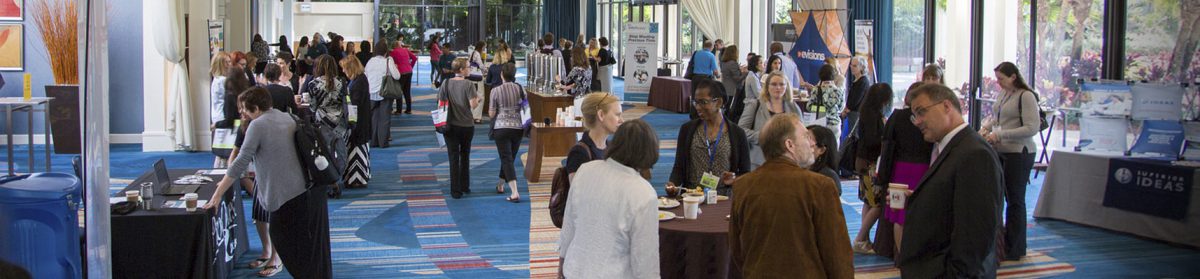
#NORDP2019 starts Monday, April 29, in Providence, RI. Keep checking back here at the blog and on our Twitter feed (@NORDP_official) for conference updates.
_______________
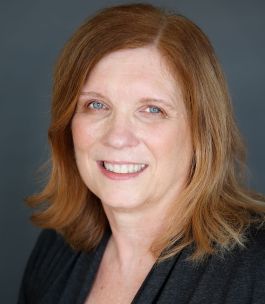
Who: Sarah Messbauer, Coordinator, Grantsmanship Programs
Where: University of California, Davis
Number of years in research development: 1
Length of NORDP membership: 1 year
Number of NORDP conferences attended: 1
What is the most interesting place you’ve visited? Citadelle Laferrière, near Okap, Haiti
I’m quite new to NORDP and the RD world, having started my first position with the fine folks at UC Davis less than a year ago (in fact, it’s the one-year anniversary of my doctoral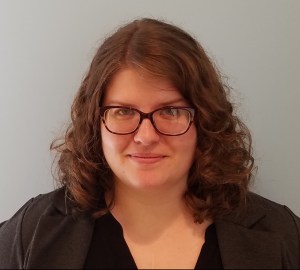 defense as I write this – woo hoo!). But like many people in our field, I’d been doing research development work for some time before my first “official” RD role.
My undergraduate background was in STEM (biochemistry and neuroscience), but my doctoral degree is in ethnomusicology (anthropology and music). That interdisciplinarity helped push me toward doctoral research on grant institutions, and I ended up serving as an unofficial grants consultant for folks at my university. My educational path was a bit unusual, to put it mildly, and I often found that people just… didn’t quite know what to do with me. That is, until I met the Director of our RD unit, Sheryl Soucy-Lubell. She knew exactly what to do: she hired me!
In my current role, I wear many hats: I run proposal development services for small and medium grants, develop campus-wide grantsmanship trainings, provide professional development support for decentralized RD staff, and contribute to special projects in consultation with our Strategic Initiatives team. I enjoy the challenge of balancing so many different projects and the opportunity to work directly with faculty, staff, and senior campus leadership to advance the mission of our institution.
Fundamentally, what I enjoy most about RD is that it caters to the role I love to play, which is that of the primary support person. I don’t have to manage research projects myself, but I play a vital role in making sure they happen by providing whatever a PI needs to do the work. Essentially, I get to be everyone’s “second banana,” their strong right hand. It’s a job that depends on quality teamwork, and I love being part of that process.
NORDP is an excellent reflection of the interdisciplinarity and teamwork that define our field, and I was so excited by the community-driven mission of the group that I immediately started volunteering. I attended last year’s D.C. conference just over a month after I was hired, and ended up having great discussions with the Member Services Committee about support for new NORDP members. This year, I’m co-facilitating a four-hour workshop, co-managing the Ambassador Program, co-running my regional meeting (go Pacific!), co-developing a “Networking Marathon” activity, co-writing a proposal for expanded resources on the NORDP website, and co-hosting a networking dinner for new members.
As you can tell, it’s no co-incidence (terrible pun intended) that NORDP members so frequently cite relationship-building as the number one benefit of membership. And as I’ve learned first-hand, there’s no better way to build those relationships by jumping right into the deep end of the pool and getting involved. So whether you’re brand-new or a seasoned vet, I encourage you to consider volunteering with us this year. Jump on in! The water is fine.
_______________
For more information about the conference program, visit http://www.nordp.org/conferences. Follow @NORDP_official on Twitter for all the latest #NORDP2019 updates.
NORDP fosters a culture of inclusive excellence by actively promoting and supporting diversity, inclusion and equity in all its forms to expand our worldview, enrich our work, and elevate our profession.
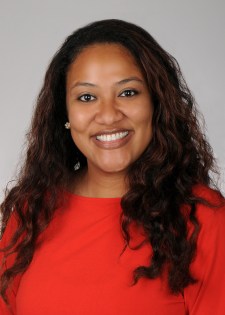 When a position became available within the Office of Research Development in 2018, I jumped at the opportunity. As Lead Advisor for Research Training & Outreach Initiatives, I am responsible for sustaining and enhancing MUSC’s training grants, with a specific emphasis on educating the research community about best practices for grant applications. In addition, I coordinate and manage professional development workshops and webinars and provide funding consultations for investigators focusing on training and career development awards. My experiences as someone who was supported by both individual and institutional training grants, in addition to managing training programs at MUSC and having an understanding of the statewide needs and the patient population that MUSC serves, has proved invaluable in the development of training programs designed to shift the training landscape here on campus.
 different disciplines, organizations and communities to engage in research and address public health needs. I realized that I was far more effective facilitating research than working in a lab as a faculty member and joined a start-up that provided online learning to health systems. That experience was invaluable as I learned to identify opportunities, innovate products and services, and develop collaborative relationships.
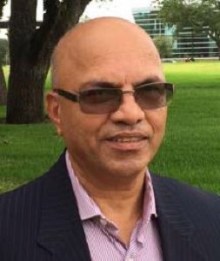
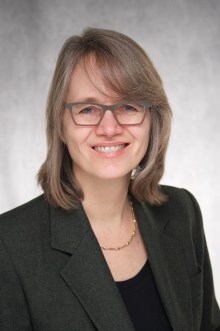 My main role as a writing consultant is to help researchers make their grants (and research manuscripts) more compelling. I provide input on everything related to readability – mechanics, aesthetics, clarity – as well as on scientific aspects of the work. I also regularly teach scientific writing and, occasionally, help to organize large-scale proposals and guide authors to funding opportunities and collaborators. Finally, I have had several opportunities to train scientific editing interns; this facilitated the transition of my two-department editing service to a core facility for the college in 2017.
 NORDP News