#NORDP2019 starts Monday, April 29, in Providence, RI. Keep checking back here at the blog and on our Twitter feed (@NORDP_official) for conference updates. Register at https://www.nordp.org/conferences.
_______________
Who: R. Krish, Director of Research Services & Center Initiatives
Where: Prairie View A&M University
Number of years in research development: 3
Length of NORDP membership: 2 years
Number of NORDP conferences attended: 1
When you were a kid, what did you want to be when you grew up? A professor
I actually transitioned into research administration from the “dark side”—I always wanted to become a college professor. When I was a high school or college student, I loved watching movies that portrayed teachers or universities as the central theme. After getting a Master’s degree in chemistry, I worked for a couple of years in the Emulsion Department of a photo-film manufacturing company in India. I was so captivated by the Eastman Kodak research publications that I wanted to pursue doctoral studies at the Rochester Institute of Technology (RIT). However, a chemistry doctorate was not offered at RIT in 1978, so I earned my PhD from the University of California-Davis in 1983.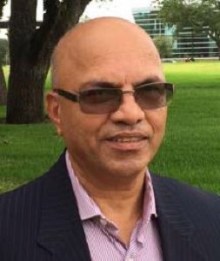
Following post-doctoral work at Purdue and the University of Wisconsin-Madison, I had a fulfilling career as a faculty member in the Department of Biochemistry & Molecular Biophysics at Kansas State University, Manhattan from 1986 to 2015.
I left K-State to join my wife and son, as my wife, whom I first met at UC-Davis as a fellow graduate student with a bright smile, was hired by Texas A&M University at College Station. I joined Prairie View A&M University, a member of the Texas A&M University System (TAMUS), as Director of Research Services. I metamorphosed into Director of Research and Sponsored Programs the following year, and for a year and a half, I have been the Director of Research Services and Center Initiatives, overseeing, among other tasks, the performance of 14 research centers on the campus. Sponsored Research Services (SRS) at TAMUS prepared me well to take on a role I had no idea about before. I have attended annual conferences of SRAI and NCURA to augment my research administration knowledge.
I first attended the NORDP Annual Conference last year. I received information about the conference by email, and after going through the NORDP website, I very much wanted to attend the conference. And I am glad that I did! Networking with colleagues from other universities was fun. The topics discussed were more relevant to me; a research development person has the unenviable task of motivating and assisting faculty members in the development and submission of grant proposals solely by cajoling.
I particularly enjoyed the workshop on Large Proposals. It covered RFA requirements, elements of a good proposal, stages of proposal development, execution, and submission of the proposal with the enthusiastic participation of the attendees. The discussion on how to assemble a team of investigators and get that team to stick to a schedule and make progress was especially interesting and useful to me. I also have been using the practical tips I got from the other attendees to develop and submit multi-disciplinary proposals.
No matter how many NORDP Annual Conferences you have attended, you will always get useful information and tips from your colleagues!
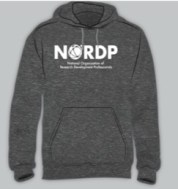
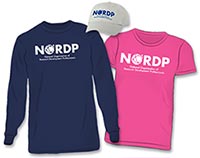
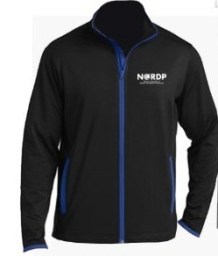
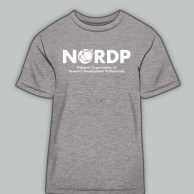
Visit the NORDP Store online now through March 15!
We hope to see you at the Conference, which will be held April 29 – May 1, 2019, at the Omni Providence Hotel in Providence, RI. For more information about the conference program or to register, visit http://www.nordp.org/conferences. Follow @NORDP_official on Twitter for all the latest #NORDP2019 updates.
NORDP fosters a culture of inclusive excellence by actively promoting and supporting diversity, inclusion and equity in all its forms to expand our worldview, enrich our work, and elevate our profession.
 My main role as a writing consultant is to help researchers make their grants (and research manuscripts) more compelling. I provide input on everything related to readability – mechanics, aesthetics, clarity – as well as on scientific aspects of the work. I also regularly teach scientific writing and, occasionally, help to organize large-scale proposals and guide authors to funding opportunities and collaborators. Finally, I have had several opportunities to train scientific editing interns; this facilitated the transition of my two-department editing service to a core facility for the college in 2017.
 of 18 years in private consulting, working my way up the career ladder with a Pennsylvania-based firm that specializes in community planning and funding strategies. As a senior associate, I supported a wide variety of projects for clients in both the public and private sectors, doing everything from writing grant proposals and drafting support letters to facilitating focus groups and briefing elected officials. A significant focus of the firm’s work was the development and implementation of public funding strategies – a government relations function that required direct engagement with local communities, strong relationships with state and federal legislative delegations, and a working knowledge of the federal appropriations and state budget processes. As a project manager, I was frequently responsible for managing client communications, developing congressional briefing documents, and project white papers. I enjoyed the challenges of my work, but after 18 years in consulting, I was looking for a career opportunity that would allow me to grow in new directions.
 to work in both public and private research universities and at the department, central, and school level. Starting out at the department level working with faculty in a large research center was wonderful training for my later work in a central office—it made me very aware of the challenges department colleagues face and the value of their contributions. In the central office position, I supported proposal development efforts across the University for large scale grants and individual investigator grants, and developed programming and resources for new faculty. During my time in that position we were successful in increasing our annual research volume from $60M annually to $100M with no additional resources. We also received an EPSCoR grant to build our state’s research infrastructure. In 2010, I was offered an opportunity to build a new research development office at Harvard University in the Faculty of Arts and Sciences. With the help of wonderful colleagues and an incredibly talented team, we built a new office. We have since expanded our team to serve our engineering school as well.

