The Transition from Postdoc to Research Development: Alexis Nagel

The following is part of a limited blog series from the Strategic Alliances Committee highlighting NORDP members who have transitioned from postdoctoral positions to careers in research development.

Nagel2
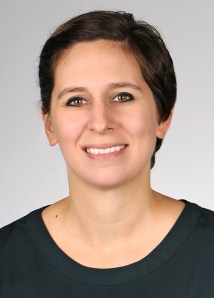
Alexis Nagel, Research Development Strategist, Office of Research Development, Medical University of South Carolina

Describe your work in research development (RD): I help to identify and advertise funding opportunities that are aligned with faculty research interests and institutional priorities. I also work with research interest groups on campus to build long-term strategies for funding. I manage my institution’s annual shared instrumentation (NIH) and research infrastructure improvement (NSF) grant application submissions, and assist with preparation of multi-component program and center proposals. Also, I lead informational sessions and faculty enrichment activities, including a grant writing workshop that I developed.

Describe your postdoc work: I received my PhD in Biochemistry and Molecular Biology in 2010. During my first postdoc, I studied the role of metabolic-sensing O-GlcNAc post-translational modifications in bone health and development using mass spectrometry (MS) based techniques. For my second postdoc, I applied MS-based molecular networking approaches to discover and characterize natural product drug leads.

Describe your transition from your postdoc/research background to RD: It was during my second postdoc that I discovered an aptitude for grant writing and proposal management that set the stage for my eventual transition to RD. Toward the end of my first postdoc I began to have doubts about the tenure-track faculty path for a variety of reasons and recognized the need for a career reassessment. I then learned of a newly hired senior faculty member who had relocated to our institution and needed help assembling proposals while reestablishing his lab. Because I was already considering an alternative career path, I was open to dialing back my research responsibilities to accommodate grant preparation activities. Over time I found I enjoyed this role; however, I also understood that I needed to move up and out of my postdoctoral training phase if I was serious about pursuing a different career trajectory. When a position opened up in my institution’s RD office several months later I applied and was hired as a Research Development Officer.

Describe the benefits your postdoc work provides to your skill set related to RD: Senior postdocs and early-career faculty members face many challenges while attempting to build funding for their research programs. As someone who traveled down this road for a time, I understand these frustrations and I am attempting to translate lessons learned from these experiences into training opportunities and resources that will serve and support these groups at my institution.

What words of wisdom do you have for postdocs who might consider an RD career? To be effective in RD you will need to build a diverse set of relationships with faculty and staff members at your institution and possibly other partnering entities and funding agencies. So make sure you like talking to people! In RD, interpersonal skills are probably just as important as writing experience and will serve you well when navigating the political landscape.

What has been your best experience, so far, with your work in RD? Observing the successful outcomes of long-term team funding efforts. When you start at the ground floor with a faculty group and continue to work alongside them the entire way, it is gratifying to see the combined hard work and planning of the team pay off as they reach their funding goals.

Why do you think RD is a good career choice? While I am no longer directly involved in academic research, I continue to have a tremendous passion for the sciences and respect for those working within the various fields. After being completely immersed in one subject area for so many years, I now appreciate the “20,000-foot view,” as it were, of the latest science taking place at my institution and across the nation. Additionally, I think if I had pursued a traditional faculty path I would have needed many more years of seniority before I was in a position to give back to the faculty research community through training and education, which is another aspect of this position that I really enjoy.

What other insights might be relevant to postdocs considering an RD career? To these postdocs – it is important to keep in mind that your investment in scientific training is not a sunk cost! My guess is that you have many transferrable skills that simply require an adjustment in focus. I would suggest reading current RD position announcements to get a feel for the field, and reaching out to RD professionals either at your institution or through NORDP. Schedule informational interviews and inquire how these individuals came to be in their current role. Then think about how you can re-tailor or otherwise build upon your existing training to ideally position yourself for such a role in the future.

Posted on behalf of the Strategic Alliances Committee committee

NORDP 2018 Conference Notes: The Little RD Office That Could: Lessons Learned from RD Program Flops

The Little RD Office That Could: Lessons Learned from RD Program Flops

Presenters:

  • Karen Fletcher, Appalachian State University
  • Katie Howard, Appalachian State University

Thanks to our session scribe, Suzanne Lodato, Indiana University Bloomington!

Key points from the session. We learned:

  • Unsuccessful programming gives you an opportunity to rethink and revise your programming and move forward.
  • If you observe your audience while you are facilitating a program, you will see it is obvious when they are beginning to lose focus. Exercises like stretching breaks can help participants refocus.
  • Sometimes it is more effective to split longer workshops into smaller, more digestible sessions. For example, for finding funding, an overview session can be followed up by a separate hands-on funding database workshop.
  • Often a single session is more effective than a series of multiple sessions, particularly if you can gather some feedback within the single session. Participants tend to drop out of multi-week programs.
  • Workshops that require registration draw much better participation than drop-in workshops.

What did you hear at this presentation that surprised you?

  • Appalachian State is a PUI, but is currently recruiting more faculty who are “research intensive.”
  • Most participants who attend a finding funding workshop do not think it works well.
  • A two hour finding funding workshop tends to be ineffective because too much material is presented in one sitting and people lose focus.

What were the most interesting questions asked by audience members, and what was the presenters’ response?

  • For finding funding, some research development professionals encourage faculty to set up profiles before attending a hands-on database session.
  • What didn’t work: one person organized drop-in days for consultations on finding funding that were poorly attended.
  • Appalachian State has a separate office for undergrad research.

What else from this session should NORDP members know?

Here are two grant writing workshop models that worked well:

  • A multi-week program that required a sign-off from the faculty member’s department chair. Participants submitted a white paper to apply for the workshop, and the white papers were judged by means of a competitive process. Faculty had to commit to attending a specified minimum number of sessions. Participants identified a scientific mentor. Staff identified a senior mentor with whom the participant met once a month. Participants were also mentored by staff and peers. Only senior mentors were paid, because they had to meet with participants once per month and report back. Mentoring and accountability to the mentor were the reasons for the success of the program. Participants talked about more than just their current proposal with their mentor, so they developed their career paths, too.
  • Short, internal grant writing workshops 1.5 hours in length. The grant program is reviewed in the session, and participants spend time discussing their proposal ideas to receive feedback. An exercise may encourage participants to write for a very short period of time (e.g., 90 seconds), but they are not required to write during the workshop.


Reminder: 2018 NACRO Annual Conference – Registration ends soon!

NACRO

Join the premier organization for corporate-university relations professionals at our annual conference! Now open to anyone interested in corporate relations, university/industry partnerships, and our organization, this year’s conference will be in Atlanta, GA on July 24-26, 2018 at the Hyatt Regency Atlanta Downtown. Whether you’re new to the industry or a veteran, you’ll find opportunities to connect, learn and collaborate with peer institutions and industry representatives throughout the 20+ sessions and breakout groups. For program details and to register visit www.nacrocon.org.

NEW FOR 2018: NORDP members will receive a 25% discount off of conference registration! Contact shymes@asginfo.net for details.

The Transition from Postdoc to Research Development: Courtney Hunt

The following is part of a limited blog series from the Strategic Alliances Committee highlighting NORDP members who have transitioned from postdoctoral positions to careers in research development.

hunt
Courtney Hunt, Assistant Director, Center for Drug Discovery, College of Pharmacy, University of Houston

Describe your work in RD: I am currently the Assistant Director, starting up a new research center. I just transferred to this position. Previously, I was in the central Research Development Office in the Division of Research for three years. My current responsibilities include establishing the center recruiting members, developing the research program, educational program, and external outreach; managing the submission of multi-PI and core facility proposals; etc. My former position entailed identifying funding opportunities and matching them to appropriate faculty, running the limited submission program, getting teams together to discuss the potential for large, multi-disciplinary proposal submissions, hosting program officers, hosting or conducting grant writing workshops, etc.

Describe your postdoc work: I did a two-year postdoc at MD Anderson Cancer Center. Along with the expected experimental design, performing experiments, and data analysis, I got involved in a lot of other activities. I mentored summer students and doctoral students in the Graduate School for Biomedical Sciences, was an active member (including a board member) of the Postdoctoral Association, researched and negotiated equipment acquisition, was awarded a PhRMA Foundation Postdoctoral Fellowship, and gave seminars at other departments’ seminar series. I also participated in any career development activity that MDACC offered. My postdoc advisor also went on sabbatical for the second year of my postdoc fellowship, so I operated with a high level of independence.

Describe your transition from your postdoc/research background to RD: My transition was a bit serendipitous. I was looking around and happened upon an interesting job posting at the University of Houston for a Research Liaison Officer. This required a PhD and seemed to fit my skill set and interests quite well. I contacted someone via LinkedIn who previously held the position and got some additional information about what they were really looking for, tailored my application materials accordingly, and prepared thoroughly for the interview.

Describe the benefits your postdoc work provides to your skill set related to RD: My postdoc allowed me to perform with a level of independence that I didn’t have in graduate school, especially with my advisor out of the country and having obtained my own funding. This developed the critical thinking and problem solving that is necessary for a career in research development. It also provided the opportunity to personally talk with faculty members in the department, which is also vital to an RD position. Perhaps equally important are all of the “other” skills that I refined during my postdoc – writing, communication (both email, phone and in person), serving in leadership positions, editing other researcher’s manuscript, abstracts, etc.

What words of wisdom do you have for current postdocs who might consider an RD career? In RD, you will learn a little about all sorts of different research, but it will no longer be YOUR project and you will not be the expert. Make sure you are ready for that. In exchange, you GET to learn about many different disciplines, which is intellectually rewarding. You enter RD because you want to stay close to science and help people be more successful.

What has been your best experience, so far, with your work in RD? Having a faculty member tell me, “I couldn’t have done this without you.” Being awarded a $10 million grant that I spent hours on was a pretty great experience, too!

Why do you think RD is a good career choice? RD enables you to stay tied to cutting-edge research without focusing on the same protein for your entire career. It is intellectually rewarding while also keeping your nights and weekends free. This is a growing field, with more institutions building RD offices, especially with the funding climate shifting to multidisciplinary research.

Posted on behalf of the Strategic Alliances Committee committee

NORDP 2018 Conference Notes: Perspectives from Federal Agencies – NEH and IMLS

Perspectives from Federal Agencies – NEH and IMLS

Presenters:

  • Brett Bobley, National Endowment for the Humanities
  • Ashley Sands, Institute of Museum and Library Studies

Session Scribe: Paige Belisle, Harvard University

Key points from the session. We learned:

  • Both the NEH and IMLS can fund a wide range of project types. The best way to learn about all of the individual programs offered is to visit the funders’ websites.
  • Both agencies recommend that prospective PIs reach out to a program officer to discuss their proposed projects prior to applying. Program officers can also read proposal drafts.
  • NEH encourages faculty members from outside of the humanities to apply via interdisciplinary projects.
  • IMLS has a broad definition of what constitutes a museum or library – so it’s good to check to see if a PI’s project might fit within this agency by looking at the requirements of the individual programs.
  • Both agencies have an interest in funding projects in the digital humanities and in digital infrastructure.

What did you hear at this presentation that surprised you?

Many faculty and research development professionals alike are under the impression that all research projects supported by the National Endowment for the Humanities must result in a scholarly book. However, this is not the case! The NEH supports a wide range of projects, including programs for the public, preservation and access, and the digital humanities.

What resources did you discover at this presentation?

Both of the program officers emphasized that samples of successful proposals are available on their agencies’ respective websites, organized by individual program.

What was the most interesting question asked by an audience member, and what was the presenters’ response?

One audience member asked how to advise faculty who wanted program officer feedback after the stated draft deadline had passed. Both program officers suggested such faculty members reach out to their respective program officers directly to ask about sending a draft regardless—this is sometimes a feasible option and can be mutually beneficial.

What else from this session should NORDP members know?

NEH and IMLS staff are available to travel to give outreach presentations at institutions. For NEH/IMLS budgeting purposes, it is helpful to request such a presentation well in advance. The presenters also recommended partnering with other institutions in your region to host a joint event, as having the opportunity to present to multiple/larger groups allows the program officers to justify their budget requests more successfully.

Considering the NORDP Elevator Pitch

“We support the people who make research happen.”

This was the elevator pitch used recently when I joined Michael Spires, NORDP board president, at the National Postodoctoral Association (NPA). As NORDP’s Strategic Alliances Committee liaison with the NPA, I helped staff the NORDP booth that welcomed 73 people who picked up brochures and information.

One of the first things Michael and I had to do was to perfect our elevator pitch on what RD as a career path looks like and how NORDP fits in the equation. This was warranted because people had difficulties differentiating us, a professional development organization, from a company that provides professional services like grant writing or grants management (a legitimate confusion, given that there were other companies and organizations there that offered these services). We were, however, able to get over this problem by comparing ourselves to the NPA, which is an analogous organization.

In the past year, NORDP has developed a new professional relationship with the National Postdoctoral Association (NPA). To develop this blossoming friendship, the two organizations decided to conference swap. NORDP was invited to attend the NPA annual meeting, with two complementary registrations and exhibit table. In return, Kristen Scott, NPA board member, attended the 10th annual NORDP conference. NORDP’s goal was to advocate for RD as a non-traditional career path, to build awareness of NORDP and its resources, and to increase NORDP membership. The Strategic Alliances Committee developed a four-page brochure that described RD basics and transitions into RD careers from postdoc positions.

The NORDP Board, Communications Working Group, and Strategic Alliances Committee are working on an official elevator pitch and other communications tools. They would love to harness the wisdom of the crowd and invite you to share your thoughts.

What is the elevator pitch you use to explain your job to your faculty, to your research administration, to your friends and to your grandma? If you have ideas that we can use to stitch together to come up with a common voice, send them to us by email at liaison@nordp.org.

Submitted by Samarpita Sengupta.


NORDP 2018 Conference Notes: Proposals Like It’s 2019: Writing and Illustrating Grant Proposals for the Information Age

Proposals Like It’s 2019: Writing and Illustrating Grant Proposals for the Information Age

Presenters:

  • Tobin Spratte, Arizona State University
  • Michael Northrop, Arizona State University
  • Jessica Brassard, Michigan Technological University

Thanks to our session scribe, Erin Johnson, University of Utah!

Key points from the session. We learned: 

  • Key design rules: balance, rhythm, proportion, dominance, unity
  • It’s not about the tool – even PPT can make beautiful graphics
  • Cultivate a culture of imagery and design
  • Your proposal is an extension of your branding – use logo, color, spacing, visuals to look the part
  • Use action captions to pull text out of your paragraphs and put it in the figure caption instead

What did you hear at this presentation that surprised you?

People might only be paying attention to 20% of what you show them.

What resources did you discover at this presentation?

Useful twitter feeds to get ideas: #dataviz, #scicomm, #sciart

What was the most interesting question asked by an audience member, and what was the presenter(s)’ response?

Q: How to convey to the faculty the needed time for graphics?

A: I actually like late requests because there isn’t time for a ton of revisions! But, I also like being involved in early meetings so know what they need and what their primary content will be really well. Some offices will only work on grants with large dollar requests. And they will require early involvement.

General notes

  • The times are changing – we’re in an information overload and people don’t have time to read
  • Changed consumption habits
    • Transient Attention span of 8 seconds, sustained attention span in 20 minutes
    • Reading on a screen, and reading print
    • People might be reading only 20% of what’s presented to them – we want to draw their attention to useful parts of the proposal for that 20%
  • Need to be resilient to the changes
  • Data visualization- on twitter follow #dataviz and #scicomm to get ideas about how people are visualizing data
    • #sciart great resource for graphics
  • Making the most of graphics
    • Simple graph can be made more readable by tweaking where legends and titles are, taking away boundary lines
  • Key design rules
    • Balance
    • Rhythm (e.g., eye leads naturally from left to right and top to bottom)
    • Proportion
    • Dominance (think about what needs to be the star of the graphic)
    • Unity (tie it together)
    • Repetition of form
  • PPT still a useful tool for nice looking images – you don’t need the fancy tool
    • But space does matter. How much room do you have for this graphic?
  • Quick figures – things that don’t take long to construct
    • e.g., use a molecule and define the parts for your proposal
  • Org chart
    • Make it look different than everyone else – like a pedigree perhaps
  • Tables
    • Add color
    • Keep tables consistent in form
  • Infographics better than a bulleted list – just find a graphic to go in the middle and put the bulleted list around the outside
  • Design is not a silver bullet, but can be a silver lining
  • Branding and identity – a proposal is an extension of your brand.
    • Beyond color and logo. Headings, spacing
    • Figure on first page — grab attention!
  • Action caption
    • The caption can take text out of paragraphs by adding action to it (e.g., caption to org chart talks about ability to respond to needs)
  • Know your audience!
    • They are likely to have divided attention that you’ll need to capture
    • They may not know your area as well as you do – be clear!
    • Keep in mind what’s in it for them
  • To convince others, need to combine and convey: ethos (expertise, authority), pathos (emotion) and logos (reason)
  • Cultivate a culture
    • The field resists right now
    • We have opportunities to work with those who aren’t as resistant to start making changes
    • Talk with people about possibilities of deleting whole paragraph and using a graphic instead
    • Transform faculty from mechanics to artists — get them into their creative minds using pointed questions about what the reviewers need to understand and see
    • Find people you can hire – if you’re talking about millions of dollars, it’s worth a little money up front. Be sure to talk to the designer about how they got to their end products in their portfolio.
      • Freelancers who do science comics
      • Get to know your university marketing and communications team
      • Hire a student!
    • Help them think about what they want their final images to look like

NORDP 2018 Holly J. Falk-Krzesinski Service Award: Jeff Agnoli

The Holly J. Falk-Krzesinski Service Award is conferred by the NORDP Board of Directors in recognition of the commitment of a NORDP member to the growth of NORDP as an organization, strong efforts toward furtherance of the research development profession, and service to peers. It is named in honor of NORDP’s founder and first president, Holly J. Falk-Krzesinski. An award is presented at the annual conference to one NORDP member in good standing. The 2018 Awardee is Jeff Agnoli.

jeff holly large.jpg
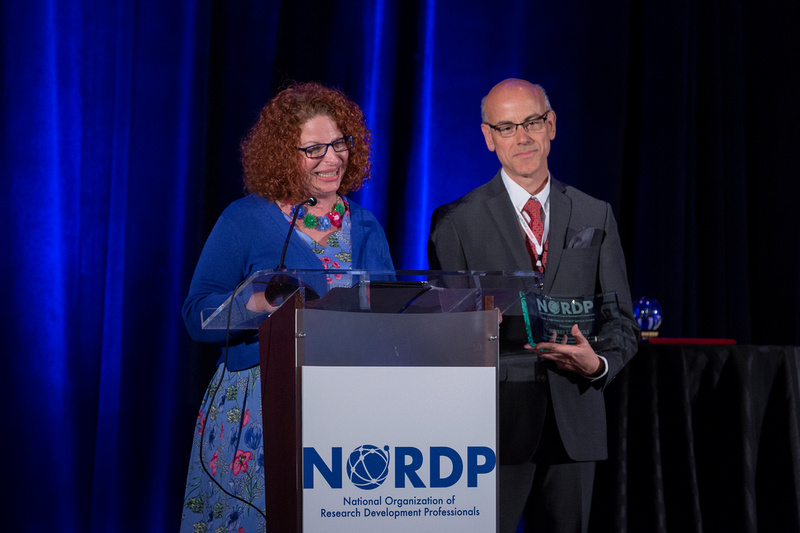
Jeff Agnoli receiving the award from Holly Falk-Krzesinski at the 2018 NORDP Conference in Arlington, VA.

Who: Jeffrey T. Agnoli; Education, Funding and Research Development; Office of the Vice President for Research
Where: The Ohio State University
Number of years in research development: 25
Length of NORDP membership: 8

What initiative are you the most proud of in your role as a NORDP volunteer?

I have enjoyed my role in enhancing the general and fiscal operations of NORDP as well as my contributions to the field through presentations and pre-conference workshops.

How has your service to NORDP enhanced your career?

My understanding of the RD professional role/function and how it works on different campuses enables me to adopt best practices for my own university.

Describe how NORDP has changed from when you initially joined.

When I joined NORDP in 2012 we had ~600 members and we are now close to ~900 members and still growing. Our committee structure and organizational operation have morphed from what was a small nonprofit to a much more sophisticated organization. As we have grown, we have been able to offer more services to our members and contribute to expanding the RD profession. Two-thirds of our members are early-career professionals — that was not the case in 2009 when NORDP began.

Compiled by Daniel Campbell, Member Services Committee. Read more about Jeff’s efforts on behalf of NORDP here. Congrats, Jeff!

NORDP fosters a culture of inclusive excellence by actively promoting and supporting diversity, inclusion and equity in all its forms to expand our worldview, enrich our work, and elevate our profession.

Webinar Series for Mentors and Mentees

The Mentoring Committee is part way through a series of webinars to support mentors/mentees/peer mentors. The series focuses on tools provided within the OnBoarding Packet. The remaining webinars will help provide direction for your mentoring relationship, as well generally support your professional development. This includes assessing your skills to identify strengths and gaps, identifying individuals in your network that can provide mentorship, expertise, support or helping hands (my MESHH Network), and developing an individual professional development plan.
These webinars are open to the entire NORDP community, regardless of current participation in the NORDP Mentoring Program. Join us for one or all, and committee members will share tips as to how to use the tool, strategies for success, and other best practices.

We invite you to join us for the final three webinars in this series:

June 27, 1:00 pm EST
NORDP Webinar: Mentoring Program—Self Assessment Worksheet
Registration link: https://zoom.us/webinar/register/WN_l2GQLqN5Tlu5Gt-JxLLV-w

July 11, 1:00 pm EST
NORDP Webinar:  Mentoring Program—My MESHH Networks
Registration link: https://zoom.us/webinar/register/WN_5wSBXtwXSpW6uQ-H7qKTeg

July 18, 1:00 pm EST
NORDP Webinar:  Mentoring Program—Individual Professional Development Plan
Registration link: https://zoom.us/webinar/register/WN_EzDFBNnYRoqsWlmnIWQyLA

WEBINAR DESCRIPTIONS

Self-Assessment Worksheet: Capitalizing on Strengths and Targeting Areas of Growth for Professional Development (June 27)
Where do you want to be professionally in one year? In five years? What skills do you need to achieve your career goals? Self-awareness is an important part of professional development. The OnBoarding Packet contains a Self-Assessment Worksheet. The tool has several categories of skills that are relevant for research development, as well as open sections so that it can be tailored to each individual. The skills assessment can foster continual professional improvement for both mentees and mentors. By completing the skills assessment you can identify and target areas of growth needed to achieve your career goals. You can develop a plan to improve those skills with the help of your mentoring (MESHH) network. Over time, you can evaluate your growth by reassessing your skills, which can lead to new target areas for your professional development.

Presenter:
Kathy Partlow, Ph.D., University of Nebraska-Lincoln

My MESHH Network: Developing Your Own Personalized Mentoring Network to Achieve Your Goals (July 11)
Now that you have had the opportunity to assess your skills, abilities, strengths, and challenges with your mentor/mentee/peer mentor, what are some good ways to organize and manage your personal and professional development? This webinar will help you weave your network of support.  A MESHH network consists of those people who provide Mentorship, Expertise, Support, and Helping Hands. The My MESHH Network tool builds on the Initial Conversation Guide and the Self-Assessment Worksheet to help you identify and connect with key individuals who can support your success. This webinar will provide an overview of the tool and explore how to form a customized mosaic of support.

Presenter:
Christina Papke, Ph.D., Texas A&M University

The NORDP Individual Professional Development Plan (IPDP): Your Personalized Map for Success (July 18)
The primary goal of a mentoring relationship is to ensure the mentee is well-positioned for targeted success and meaningful outcomes. Critical components of an effective mentoring experience are knowing the mentee’s needs, understanding how your mentor (and others identified through your MESHH network) can help address or meet your needs, and ultimately mapping out a course for your personal and professional development. Pulling from effective professional development plan models and based on the SMART goals concept, the NORDP IPDP serves as a tangible tool and thoughtful guidepost toward success and enrichment. The IPDP serves as a template for the mentor/mentee pair to work from to set their relationship up for success, both during and beyond the NORDP mentoring experience. This webinar session will briefly explain the importance of creating a professional development plan, walk participants through elements of the NORDP IPDP tool, offer examples of specific content in response to each section, and provide some additional resources to help develop the plan.

Presenters:
Etta Ward, M.A., NORDP Board, Indiana University – Purdue University Indianapolis (IUPUI)
Hilda McMackin, Ph.D., Vanderbilt University

Lessons Learned From My Experience As A Grant Applications Reviewer by Domarina Oshana, Ph.D.

Picture1.pngLet’s face it, although reviewers are asked to remove themselves from potential conflicts of interest and to park their biases at the door, the reality is that embedded within their scientific experiences are their own personal pet peeves and lived experiences, which can be difficult to extract from the review process. Still, the overall lesson I learned from my experience as a grant reviewer was that while it’s impossible for an applicant to please all reviewers on a panel, it’s quite possible to please most of them. Therefore, if you want your application to be deemed competitive and worthy of funding, your aim should be to think like a reviewer and write your application to please most reviewers. Here are some tips I recommend from serving as a reviewer in the nonprofit and government sectors:

Honestly assess the fit of the RFA to your proposal concept.

If you can clearly articulate that your proposal honestly responds to the purpose of the request for applications (RFA), then it’s very likely that your application will be deemed competitive. Unfortunately, sometimes applicants don’t always honestly assess the appropriateness of the RFA. For example, an applicant may see an RFA as an opportunity to fund work that they are already doing, when in fact the RFA may not be intended for such activity. So, in an attempt to acquire general operating funds, the applicant packages the proposal in a way that is seemingly responsive to the priorities of the RFA, when in fact, overall, it’s not. Reviewers often see through this approach and while many reviewers can understand the need, they are not impressed by the applicant’s proposal. This is because applicants that indirectly request funding for general operating expenses fail to convince the reviewers of how the work they are doing will advance scientific knowledge, if awarded funding.

Another instance that fails to convince reviewers that there is a good fit between the proposal concept and the RFA is when the applicant does not have the experience to carry out the work proposed. For example, if an applicant with experience only in collecting and analyzing archival data proposes a study in which he/she will collect and analyze data from direct contact with human participants, and offers no information about whether a consultant with experience in working with human participants will be hired, then the reviewers will question the goodness of fit between the applicant’s experience and the skill required to carry out the work of the proposed study. As an applicant, your job is to convince the reviewer of the scientific merit of your proposed study and your ability to carry out the work. An honest assessment with yourself about why you are responding to the RFA is a good first step to ensure that you can convince the reviewers that your concept and ability are meritorious.

Craft a thorough literature review.

This can be quite challenging to do. If your field is immense, it’s almost impossible to write a comprehensive literature review within the page limitations of a grant application. Nevertheless, effort should be made to provide a strong conceptual framework and to cite the work of authors that have done substantial work in the area you wish to further study. Often, these persons can be sitting on the review panel and if they see that you haven’t credited or acknowledged their work, they may conclude that you are uninformed. Beware of these reviewers, as their extremely poor score of your application can skew the ranking of your application.

Clearly articulate your research design and data analysis plan.

In the eyes of many reviewers, it is your study approach that will accelerate or decelerate your candidacy for funding. Yes, it’s that important! Ideally, reviewers want to see a concise, clear, innovative, and doable research plan. And, they want to see that you’ve not only thought about data collection procedures, but data coding and analysis procedures as well. Reviewers want to see a plan that is appropriate for the research questions being asked and the aims of the study. If your research plan is inadequate, chances are that the reviewers will be unconvinced of the scientific merit of your study and/or your ability to carry out the work you have proposed. To avoid such pitfalls, here are some questions you must be certain to answer in your research design:

  • Are your research questions and hypotheses clearly stated and rationalized (i.e., grounded in a strong conceptual framework and preliminary evidence)?
  • Are your research questions appropriate to the target population you have proposed to study and/or the aims of the proposed project?
  • Have you clearly translated your research questions into statistical questions?
  • Did you address how you will recruit participants and what you will do if your initial recruitment strategy fails to yield the anticipated number of participants?
  • Have you offered a justifiable rationale for your recruitment strategy?
  • If you are proposing a non‐experimental or quasi‐experimental study, did you provide a clear rationale for this type of design as opposed to a randomized control trial design and/or other designs?
  • Did you indicate or explain the psychometric properties of any data gathering instruments you propose to use?
  • Did you outline a concrete data analysis plan and how you will handle missing data?
  • Did you provide an acceptable rationale for your choice of analytic techniques?
  • Have you consulted with a statistician or proposed to engage the services of a statistician?

Make friends with an Institutional Review Board (IRB).

Just because grant application guidelines may state that you don’t need to have an IRB on record at the time that you submit your proposal, that doesn’t mean that you should underestimate the importance of addressing potential risks to human participants and your procedures for minimizing the risks. Reviewers want to see that you have very thoughtfully considered all the possibilities and how you will handle them. You need to consider the “what ifs” of working with human participants and what you will do to ameliorate the “what ifs” as they arise. For example, “what if” a participant decides to drop from your study midway through the project? How will you treat that participant? What will you do with their data? What does your data safety and monitoring plan delineate? You need to convince the reviewers that you are committed to protecting human participants. Having an IRB in place before you submit the application is extremely helpful because IRB members can help you think through all the “what ifs” and what to do about them in an ethical and responsible way.

Provide authentic letters of support.

Reviewers are quite savvy and can clearly see when you have employed the use of a template for your letters of support. When they see that you have used the same template for all of your letters, they are not impressed. Their discontent can be attributed to the fact that your template‐generated letters translate to a lack of commitment from your potential collaborators. While it can be argued that writing letters of support may be an intimidating and new experience for some members of your networks, for example, and that the provision of a template is to ease their fears, that doesn’t mean that each of your letters of support should look exactly the same with only a change in the signature. If you are going to write your own letters of support (on behalf of your collaborators), make sure each one is authentic and believable.

Carefully follow the instructions of the grant application.

This may sound unbelievable, but there are reviewers who will take the time to count the number of characters in your proposal title and if they find that your title exceeds the guideline of the application, they will actually carry their disgruntlement with your inability to follow directions throughout their review of your application. They will even question how it was possible that your application made it to the scientific review panel, when in their eyes, it should have clearly been eliminated for failure to follow application instructions. For example, the PHS‐398 instructions are highly thorough. All the information needed to complete the forms is well explained. Little things matter; make sure you don’t overlook them.

Submitted by Domarina Oshana, a social scientist and research development professional. She uses her scientific expertise and soft skills to advance knowledge discovery and address pressing human challenges. To learn more about her perspective, please visit her LinkedIn