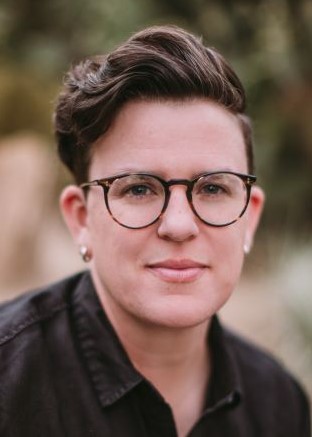
Drawn by a research background, funding structures, and opportunities, Dr. Anna Ward shares that her journey to the RD profession is a gift where she is fascinated by the many ways you can address the same question.
In September Careers Stories, we shared the journey of Dr. Ward, who brings over 15 years’ experience in academic research, teaching, program management, and research development, including previous roles as a Program Officer in UCRI and a Grants and Program Manager at University of California at Davis. Dr. Ward received her BA degree in Politics and Women’s Studies from UC Santa Cruz and doctoral degree in Women’s Studies from UCLA. Prior to returning to UC, where she is the Director of University of California Research Initiatives (UCRI), part of the Research Grants Program Office at the systemwide Office of the President, Dr. Ward was previously a Visiting Assistant Professor and Program Coordinator of the Gender and Sexuality Studies Program at Swarthmore College and a lecturer in the Program for the Study of Women and Gender at Smith College.
After being affiliated with different UC campuses, Dr. Ward grew fascinated with the complexity and scale of the UC system which includes 10 unique campuses, as well as systemwide entities like Agriculture and Natural Resources (ANR), the 42-site Natural Reserves System, and the three UC-affiliated national laboratories. In her current role, she oversees a suite of research grant programs designed to encourage collaboration across the UC system, spur new directions in interdisciplinary research, and generate novel solutions to challenges facing California communities.
Dr. Ward is deeply involved in NORDP and was a Co-Chair of NORDP’s Committee on Inclusive Excellence. In NORDP, she found a welcoming community to identify with and says “the connections that we make are gold.” She thinks that RD professionals can do a better job articulating their contributions beyond proposal development and encourages exploration beyond just “churning out proposals and competing for the same pool of money.” Also, according to Dr. Ward, RD doesn’t get enough credit for the potential role it can play in retention, especially with minoritized faculty.
Dr. Ward advises new RD professionals to perform informational interviews and participate in the NORDP Mentoring program. She benefited immensely from mentorship and her NORDP mentor encouraged her to think creatively, which led her to multiple informational interviews being instrumental in her career. She made herself “vulnerable and talked to some heavy hitters”, aiming to do something in 5 years that would normally take 15 years. Now she advises others, “to be vulnerable but also know what you want to do” as the informational interviews goes both ways where both parties are investing in each other.
Dr. Wards’ impact and legacy is creating a safe space for difficult conversations, doing everything with pride and honor, treating everyone with the respect they deserve, while making their paths easier.
Dr. Ward would love to answer any questions you have for her, so please feel free to email her at anna.ward@ucop.edu
The link to the interview to Dr. Ward’s Career Stories by the NORDP LEAD Career Stories team will be posted in the NORDP LMS when available.
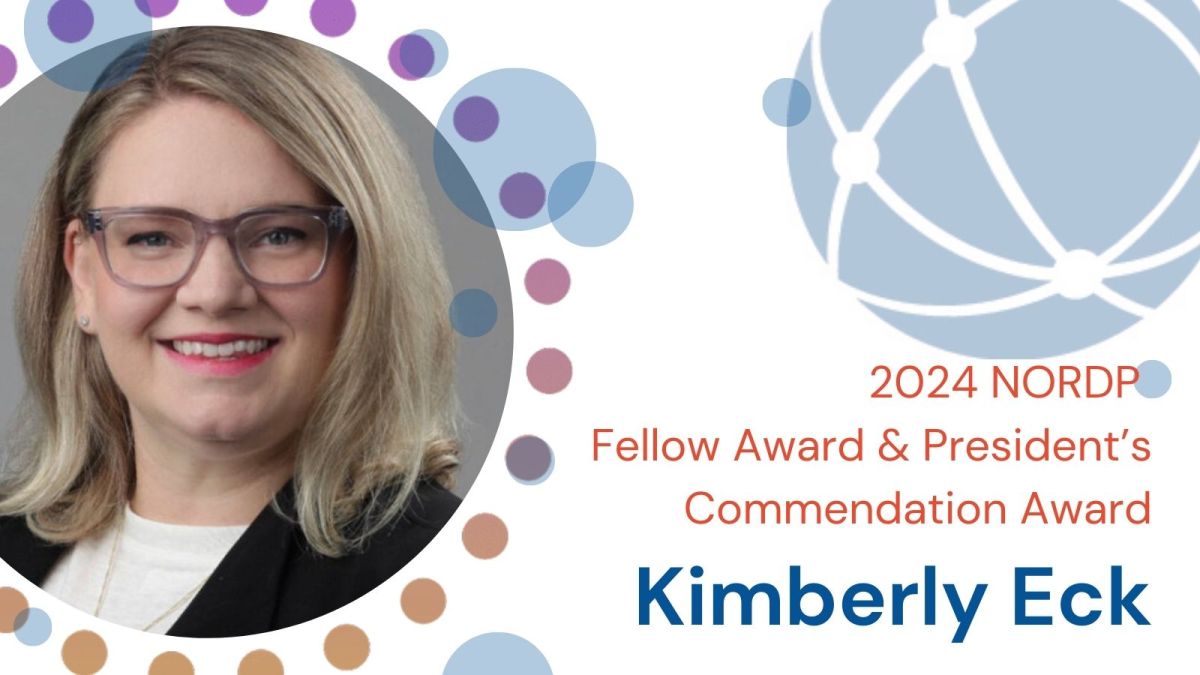
This commendation recognizes individuals for exemplary service to NORDP and is presented at the discretion of the outgoing NORDP President to individuals who have contributed to the success of their presidential year.
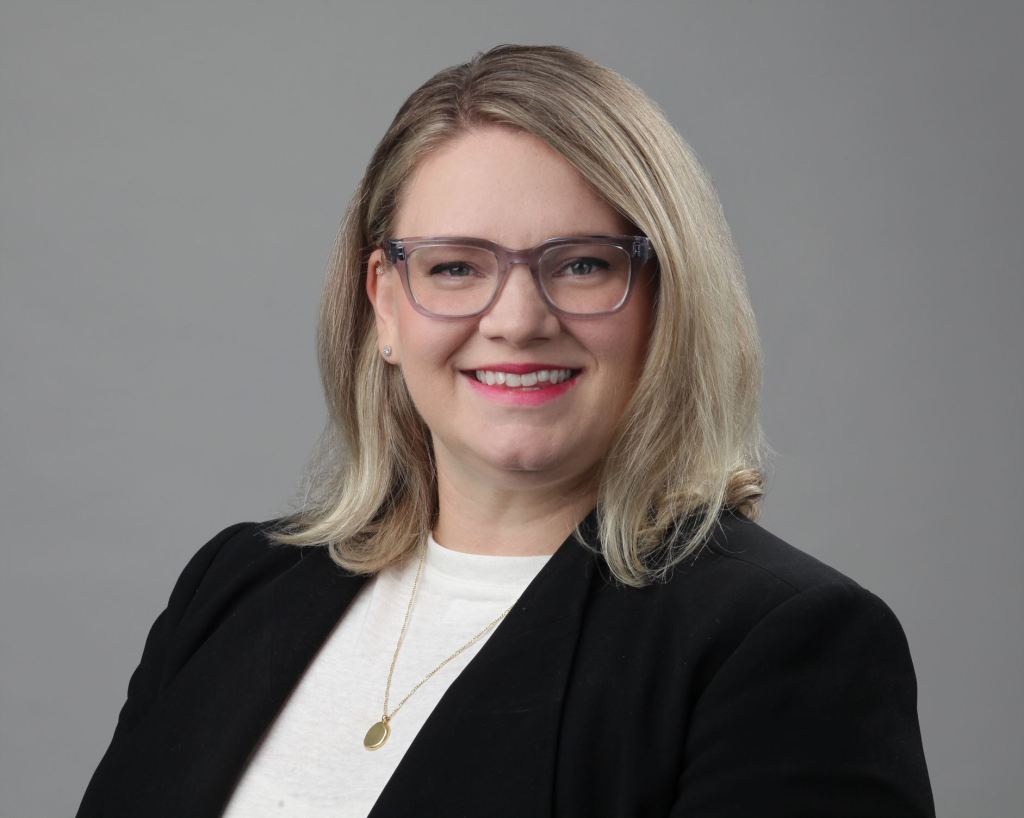
Who: Dr. Kimberly Eck, Senior Associate Vice President for Research at Emory University & Senior Director of the NORDP Consultants Program
Where: Emory University
Number of years in research development: 16 years
Length of NORDP membership: 10 years
What initiative are you the most proud of in your role as a NORDP volunteer?
I am so proud of the NORDP Consultants Program! The NORDP Consultants Program is dedicated to expanding the national research ecosystem by providing research development services to build research capacity at MSIs and ERIs at no cost to those institutions. I am deeply grateful for the recognition that I do this work as a volunteer without personal compensation.
The Program was originally conceived of by a group of NORDP thought leaders. At the time the original pilot project was presented, I was on the Board and we agreed to move forward with the concept.
When we started in 2021, we were working with four HBCUs, funded by a private foundation. We have now worked with 172 institutions of higher education. We’ve helped these institutions with engagements that have secured more than $90 million in funding. I think we will get to $100+ million in mid-2025. Those 172 institutions come from 44 states and jurisdictions, including Puerto Rico and the U.S. Virgin Islands. So, we have a significant reach.
There are three ways to engage with the Program: One is through our cohort model, and that’s where we recruit MSIs. They apply through a competitive process, and we select them based on the alignment of their goals and the activities that they hope to pursue with support from the Consultants. Then, the MSIs engage in a two-year intensive period with us. There’s also follow-on engagement and support opportunities. This cohort model is what the original four HBCUs went through. We’ve already started the second and third cohorts.
The second model of engagement is when we embed into a federally funded proposal process. Here, the funder comes to us and indicates that they would like support for all of the applicants that will be involved in this process. This requires really close collaboration with the funder, understanding what the funders goals are, and then working on one specific proposal with usually a multi-institutional group to submit that proposal and get it panel ready. So that’s a single shot, but all the programs that we’ve engaged with have really been focused on building innovation and research capacity, so that has been very well aligned with what we’re doing.
The third model is partner initiated. Here, an ERI or MSI, reaches out to us and lets us know they are planning to apply for an opportunity and that they need research development expertise. In this case, the partner is leading the submission, and we’re coming along and supporting with specific activities, for example, a capacity assessment. Our first partner-initiated project is led by Delaware State University, an HBCU that successfully competed in the first round of the NIH STRONG program.
I am very privileged to have had the support from Emory University and NORDP to pursue opportunities to grow this program as the Director – and I had a lot of help! More than 20 NORDP members volunteered to help launch the program in summer and fall of 2021. As the program has evolved, MANY NORDP members have contributed to its success.
How did you hear about NORDP and what made you join initially?
I heard about NORDP from a colleague while working at the State University of New York around 2013. I was delighted to learn other people were doing proposal development but in a way that was different than research administration. Like many others have described upon joining NORDP, I felt like I found my people.
What relationships have you built as a result of NORDP? I deeply value having a national network of people I can call on with different areas of expertise, different experiences, and unique insights. My closest NORDP relationships were built by volunteering together. Attending the annual conference feels like a reunion. Being a part of NORDP has also allowed me to build relationships with other associations, like ARIS, and funders, especially NSF. I cherish everyone that has contributed and/or currently works in the NORDP Consultants Program.
Describe how NORDP has changed from when you initially joined
NORDP’s membership has grown significantly! It is fantastic to continue to see such vibrant in-person conferences alongside virtual offerings that are more accessible. I am excited to see NORDP evolve to meet its members’ needs and new paths of sustainability.
What recommendations do you have for members to get more involved with NORDP?
Consider co-authoring a resource for the Equipping Minoritized and Emerging Research Institutions to Grow their Enterprises (EMERGE) Library. This library features co-created and peer-reviewed knowledge articles and case studies that address MSI and ERI research enterprise priorities and provides context specific implementation strategies and insights. The NORDP Consultants Program hosts writing sprints that bring together RD experts from MSIs and ERIs and more resourced institutions to produce resources. It’s a fantastic way to get involved with the NORDP Consultants Program!
When structuring the articles, we take a factual approach, but we very actively try to not simply regurgitate language in the solicitation. We try to make it more understandable, for example by using more colloquial language. We strive for a balance of what your buddy at your institution would tell you if they could and the factual content. We have published three resources through these sprints in collaboration with the NORD Committee and three more are in development.
The traditional mentoring dyad (1:1 mentor-mentee) program has been a NORDP member feature since 2012. The Cohort Mentoring Group, piloted in July 2022, consists of matching three mentees with similar interests with one shared mentor. Both the dyad and cohorts are matched based on the WisdomShare matching algorithm. This is a reflection of one of the traditional mentoring dyads from the 2020-2021 mentoring year.
Angela Jordan
Mentor Angela Jordan, University of South Alabama • Angela is the Director of Research Development at the University of South Alabama and is responsible for strategic, catalytic, and capacity-building activities designed to promote faculty development and enhance their ability to attract external funding. With a background in the social sciences and humanities, Angela brings an interdisciplinary perspective that is informed by the principles of collaboration and community engagement. She has been the Co-Chair of the Mentoring Committee since 2023, actively engaging NORDP members to support mentoring for research development professionals.
Wendi Jensen
Mentee Wendi Chiarbos Jensen, University of Nebraska Medical Center • Wendi is the Director of Research and Grants Development in the College of Public Health at the University of Nebraska Medical Center. Wendi provides all proposal development support, works on strategic endeavors, and helps promote research across the College of Public Health at the University of Nebraska Medical Center. Her experience in working in an institutional-level office as well as a busy academic unit has helped her understand the value that external funding plays in research progress, creative discovery, and educational programming. Wendi participates in NORDP’s Academic Medicine/Affiliate Medical Center Affinity Group and is part of the NORDP Region V: Midwest/Mountain.
Q1: What influenced you to apply to be a mentor and a mentee for the 2020-21 NORDP Mentoring Program?
Angela: 2020 was my fourth year participating in the matched mentoring program, and my third year as a mentor. While I originally joined the program in 2016 because I thought I would benefit from mentoring, with some encouragement I leaped into being a mentor myself, and I found it rewarding. By that point, I knew that every mentoring relationship is unique and was looking forward to another year of being on that journey with some more NORDP members as we worked through problems and thought about goals, whatever shape that would take. Of course that was also the first COVID year, which gave us some additional challenges to talk about!
Wendi: I was hired for a new position in my college so I did not have others doing the same RD work as I did. The NORDP Mentoring Program allowed me the chance for collegiality when there were no other co-workers at my job site. I had hoped to find a good resource for discussion of my professional goals and challenges. The Program did this by matching me with Angela Jordan!
Q2: What is your favorite part about your relationship?
Angela: Wendi was really great, very grounded, and open to the self-reflection process that is essential for growth. Like many new to research development, she brought invaluable experience and transferable skills from previous jobs, and she was very motivated. Every mentee is different and has different types of goals; Wendi had some very specific things she wanted to work on, which was fun for me.
Wendi: It’s reassuring to connect with another RD professional who can relate to my experiences and help me process any issues I am having. Angela’s insights into how to navigate situations I was encountering always included helpful and concrete approaches she had used. And I appreciated her calm delivery and approach to work.
Q3: How has participation in the Mentoring Program helped broaden your horizons about Research Development in general and/or affected your daily work in particular?
Angela: Being involved in the mentoring program has reinforced my understanding of what great people we have in NORDP. People bring diverse backgrounds and face unique challenges in their jobs and careers, yet at the same time, so many of us share characteristics like having a growth mindset and being very open to sharing experiences, tools, and tricks of the trade. In some professional contexts, the knowledge economy is built on scarcity and controlled access, but in our profession, we have a knowledge economy built on abundance, and it has benefitted my professional growth tremendously. It also informs my thinking about the importance of mentoring in other contexts, such as for faculty and staff development, as well as its use as a component in proposals.
Wendi: I enjoyed our regular discussions about what was going on in our campus and unit environments. Hearing my mentor’s perspective on the RD field was also beneficial as I considered my own workload and how to manage time.
Q4: What surprised you about being a mentor or a mentee?
Angela: To be honest I spent much of my life with an antiestablishment mindset, and would have resisted thinking of myself as a mentor. I didn’t have great mentors as an undergraduate or during my first stint in graduate school, but also wasn’t primed to be a good mentee either. By the time I joined NORDP, I was much more receptive to the idea that being a mentor or mentee did not need to fit into a narrowly defined box and could be a really beneficial opportunity for growth in either role. After having positive mentoring experiences within NORDP, I know that the roles are adaptable to the unique context and needs of each relationship. Although both roles are essential, mentorship is really about the mentee, and in the NORDP context should be driven by the mentee; the mentor can be thought of as a facilitator for mentee exploration and development.
Wendi: I have benefitted from tremendously skilled mentors going back to my undergraduate student days. Early in my career, I may not have realized that i sought mentoring but certainly recognized its impact after the fact. With the NORDP partnering, Angela and I were able to forge a relationship through regular initial meetings and then maintained it by spacing out our meetings a bit. This worked well for me and I hope for Angela. I was surprised how quickly I felt a connection with her.
Q5: What made you decide to maintain a longer-term mentoring relationship and how has it impacted you?
Angela: One thing that came out organically over the course of the year is that, partly in conversation with me about the PhD I was working on at the time, but largely because of Wendi’s work with faculty in her college, she came to realize that she had the capacity and desire to do research herself, which led her to enroll in a PhD program. We’ve kept in touch and I am excited to see her continuing down that path!
Wendi: I was hopeful that we would have a good personal connection, but there are no guarantees that people doing the same kind of work will necessarily like each other. I found Angela to be approachable about not just work but also her personal experiences. We were of similar age and family situations but had followed different career paths. I appreciated the personal commonalities we discovered and how they impacted our professional lives.
Q6: Any words of wisdom or encouragement for those wanting to apply next year? Any other thoughts you would like to share?
Angela: I know that taking the leap to be a mentor can intimidate people if they’ve never been in that role; it’s really easy to talk yourself out of doing it by thinking you don’t have enough experience or the right experience, or that you don’t fit what you imagine a mentor should be. But if someone is considering it then chances are that they do have something to offer, and even if they’re junior in the profession I guarantee that we always have people who are brand new to the field who can benefit from their mentorship.
Another challenge is that, because every relationship is different, someone’s first experience as a mentor might not be exactly what they had imagined. At that point, it’s easy to think ‘mentoring isn’t for me.’ However, I’d encourage people who’ve had that thought to try it again, because they may find that the next time around it’s a truly rewarding experience.
Wendi: I have subsequently served as a mentor every year since my mentee experience with Angela. NORDP provides a great service through this program and has helped me connect with colleagues all over the US. My advice is the same given to all of my mentees: continue participating in this program and serve as both mentor and mentee. The 360-degree perspective these roles provide will enhance your professional capacity and enrich your personal attributes.
Applications for the 2025-2026 mentoring match cycle will open in the spring — keep an eye out for NORDP announcements. Additional mentoring opportunities are available through the Peer Mentoring Groups that are open for participation throughout the year via the WisdomShare platform [LINK: https://nordpmentoring.mywisdomshare.com/]. Contact the NORDP Mentoring Committee if you have any questions [link: mentoringprogram@nordp.org].
An investment in mentoring is an investment in you!
When Dr. Helms was asked to write his first grant in Biotech, he was a little hesitant, however, the role grew on him and he became an expert and a go-to person for all the grants in his company. While in the industry, Dr. Helms received funding from NIH and served on the NIH SBIR study section.
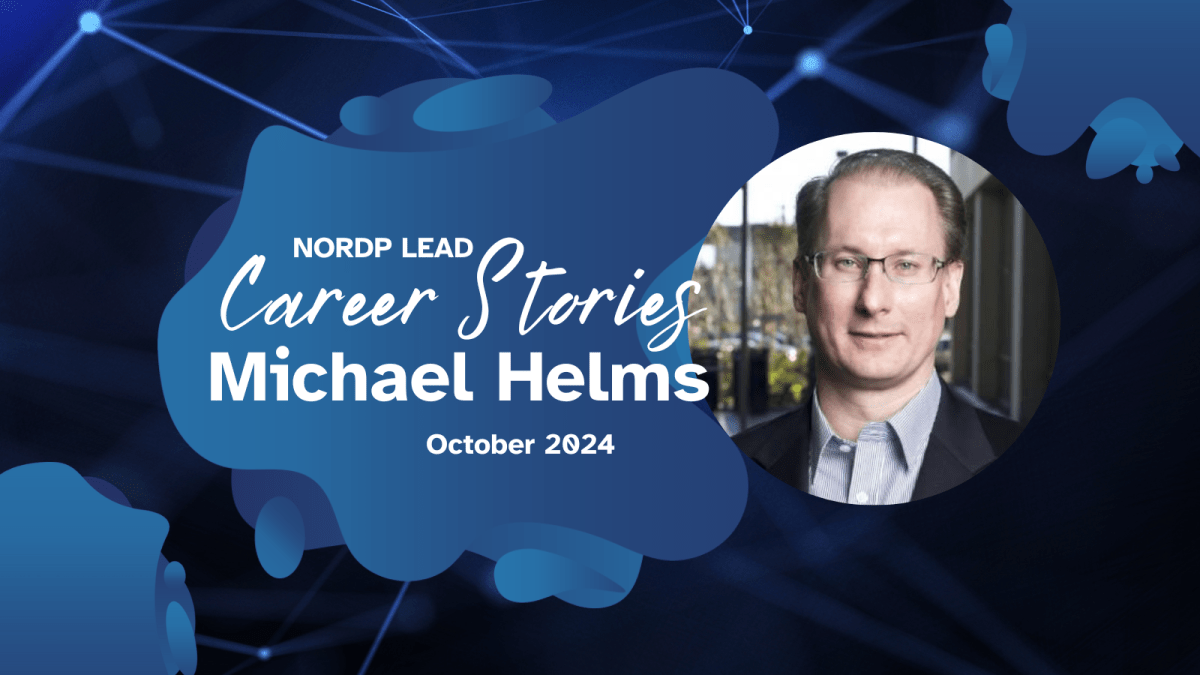
Michael K. Helms, PhD, MBA
The October Career Stories featured Dr. Micheal Helms, Director of Research Development and Team Science in the Department of Medicine at Stanford University School of Medicine. Dr. Helms has an MBA degree with specializations in managing innovation and technology and international business, and BS and PhD degrees in biochemistry. Mike founded the first-ever research development office at Stanford, the Stanford Research Development Office (SRDO), and managed it for 5 years. His journey started as a scientist, project manager, director, and general manager in the biotechnology industry in the San Francisco Bay Area, eventually making his way into academia.
In 2008, when the economy was crashing, Dr. Helms started consulting and looking for new opportunities. Through his work with NIH, he realized that most federal funding was awarded to universities, so he started focusing his job search in academia. With his wealth of experience, in 2009, he was hired by Stanford University and since then has helped hundreds of faculty members find and apply to funding opportunities, resulting in over $400 million in new funding from federal and foundation sponsors. He counts among his successes the Stanford CTSA, Stanford Diabetes Research Center, Stanford Alzheimer’s Disease Research Center, SPHERE Center, and many others. For the past 15 years Mike’s main responsibility has been assisting faculty obtaining large grants. He directly works with experienced and knowledgeable faculty members and provides them with hands on help through coaching, development, and holding strategy and coaching meetings. Additionally, he runs a seed grant program for junior faculty who are clinically active.
Dr. Helms likes to “get the wins” and bring in the money, which aligns to faculty interests and aspirations. Helping faculty nurture their career to do “all good things” inspires him. He has supported 2 early career faculty – K Awards – funded with perfect scores of 10.
In reflecting on his impact and legacy, Dr. Helms points to helping Stanford raise >$400 m in new grant funding, introducing and establishing the importance of research development into Stanford, and the relationship and impact he has had on others’ career. Lately, he has been reflecting on future career moves. He recognizes that most RD professionals are in staff roles, which may put him in a much weaker position within an institution for rising to the VP level. However, he maintains that networking is key and can possibly have people on your side, so never stop learning, asking questions, and maintaining good relationships with people.
Mike would love to answer any questions you have for him, so please feel free to email him at mkhelms@stanford.edu.
The link to the interview to Dr. Helms October Career Stories will be posted on the LMS when available.
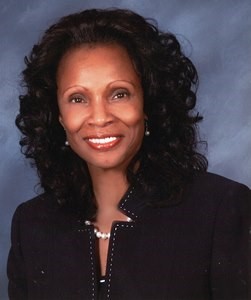
This month’s career story featured Dr. Shelia McClure, the Senior Associate Dean for Research Development at Morehouse School of Medicine (MSM), who is also the founding director of the MSM Office of Research Development (ORD). ORD provides technical assistance to faculty, post-docs, students and staff in planning, developing, implementing, and evaluating activities that facilitate scientific and educational research. Dr. McClure received her doctorate in cellular and developmental zoology from the University of California, Berkeley, completed post-doctoral training at the University of California and was a scientist in the Cancer and Viral Diseases Unit of the Upjohn Company in Kalamazoo, MI.
Dr. McClure began her professional career at Spelman College in Atlanta, GA where she rose to the rank of Associate Professor and was recognized for mentoring students and developing infrastructure and capacity for biomedical research that focused on faculty development, infrastructure improvements, and grant and contract development. She left Spelman for what she initially thought would be a brief stint at the National Institutes of Health (NIH). That “brief stint” ended up being almost 16 years, serving as a Program Director, Scientific Office, and Special Assistant to the Director of Research Infrastructure in the National Center for Research Resources, and as Chief of the Office of Research Training and Capacity Building in the Division of Scientific Programs at the National Institute on Minority Health and Health Disparities. However, her love for teaching, mentoring, and engaging learners as well as her passion for enhancing research capacity and helping diversify the biomedical research workforce brought her back to academia, where she could be fully engaged in research development.
Dr.McClure’s research development journey began with starting up a new lab as an Assistant Professor in a small institution that focused primarily on teaching. Once she garnered extramural funding from NSF, NIH, and a few foundations to establish her own research, she was equally engaged in developing research capacity, not only for herself, but for students, post-docs, and other faculty. She believes RD is in her blood and with a passion for RD, “she has never worked a day in life” but follows and enjoys her passion. She considers herself “very fortunate to have been a part of research development on a local level in the academy and at a national level while at NIH.” That same passion keeps Dr. McClure in RD as she enjoys seeing investigators obtaining their first grant and becoming successful in their research and professional careers. Since many of these investigators are from groups underrepresented in biomedical research, she has the added enjoyment of playing a role in helping diversify the scientific workforce. Her work has also resulted in advocacy efforts to increase funding for smaller institutions, HBCUs, and other MSIs that need resources to enhance research and training capacity.
She strongly believes that mentoring is an essential ingredient for success, and credits her parents, an NIH professional mentor, and her undergraduate research mentor for supporting her throughout her life and career. Specifically, she thanks her parents “for instilling in a young African American woman growing up in the South that she could be anyone she wanted to be, and the equalizer would be education.” Hence, she firmly believes that it is everyone’s responsibility to “pay it forward”, and as RD professionals, we should play a more active role in mentoring the next generation of researchers and RD professionals. We should also have a stronger voice in advocating for RD opportunities that will help to diversify the institutions and individuals contributing to the research enterprise.
Even with an extensive career in RD, she still learns from every investigator she works with and uses the information she learns to improve RD programming and operations. “Emotional intelligence is the key” when working with a broad cross-section of stakeholders, which is usually the case in the RD space. Mutual respect, and building and maintaining relationships have shaped her impact and legacy in RD.
Dr. McClure would love to answer any questions you have for her, so please feel free to email her at smcclure@msm.edu
The link to the interview to Dr. McClure’s Career Stories by the NORDP LEAD Career Stories team will be posted when available.
Contributors: NORDP Mentor Training Team Paula Carney, Loyola University Chicago, and Kristin Boman, University of Minnesota, Twin Cities
Mentor Training for Research Development Professionals – Registration Open forJanuary/February 2025 Workshop
Are you a mentor? A mentee? Do you find yourself formally or informally mentoring staff or faculty? Are you ready to explore mentoring competencies that can be utilized across the work of research development (RD)? This interactive workshop series covers the 9-module Entering Mentoring curriculum, initially developed for mentoring researchers and tailored for RD professionals. A past workshop attendee commented: “EXCELLENT training! The ideas presented are very applicable both to mentoring both within the research development profession and elsewhere in the research enterprise – the things I have learned and practiced in this course are incredibly valuable to me as I provide mentoring to faculty, particularly early stage investigators and junior faculty, in the area of grantsmanship.”
Using evidence-based strategies, participants will build upon competencies crucial to the success of the mentoring relationship and expand mentor training across the research enterprise. Participants who complete the entire curriculum will receive a certificate of completion. The curriculum results from an association between the NORDP Mentoring Committee and the University of Wisconsin Center for Improvement of Mentored Experiences in Research (CIMER) in collaboration with the National Research Mentoring Network (NRMN), organizations involved in developing and validating the original curriculum. RD professionals at all levels of mentoring will explore how mentoring (shown to improve career outcomes, impact employee engagement and retention, and lead to more inclusive work environments) can benefit mentors and mentees in RD.
Workshops will be presented and facilitated by the NORDP Mentoring Committee; many are certified CIMER Trained Facilitators. Over 100 NORDP members have been trained through this initiative.
Schedule:
Two 1.5-hour sessions each week for 5 weeks (every Tuesday and Thursday) 1/28/25 – 2/27/25 2–3:30 pm EST / 11 am–12:30 pm PST
As the format is highly interactive, participants must agree to participate in at least 9 of 10 workshops.
Cost: FREE!
Register TODAY for the workshop series – 35 participant limit and the course will fill up fast!
Written by: Vess Vassileva-Clarke and the Mentoring Committee Marketing & Communication Team
January is National Mentoring Month! The NORDP Mentoring Committee has lined up exciting mentoring events and activities for all-level-of-experience mentors and mentees! Join us and participate in one or all of the planned events and learning opportunities:
Mentor Training for RD Professionals Workshop — Get ready to explore mentoring competencies that can be utilized across the work of research development (RD)! This interactive workshop series will cover the 10-module Entering Mentoring curriculum, initially developed by CIMER for mentoring researchers and tailored for RD professionals. Registration is now open – 35 participant limit and the course will fill up fast!
Mentoring Committee Open House — Join us on January 16, 2pm ET for our monthly meeting to learn more about what the Mentoring Committee does, and find out how to get involved and join us. We will talk about the committee’s work and achievements, celebrate our volunteer members, and brainstorm new ideas for the future. Register today!
Dyad Reflection — Throughout the year, we strive to find the most inspiring stories from mentor-mentee dyads and share them with you. We will start this year with Angela Jordan’s and Wendi Jensen’s reflections on their mentor-mentee relationship and what it means to them. Read it on our blog on Jan 20, 2025.
Peer Mentoring Group (PMG) meetings — Log in to WisdomShare and go to Dashboard to find out current PMGs and join the ones of interest to you.
Career & Professional Development: exploring how to become more efficient and effective in our roles
Coaching and RD: Developing and implementing coaching as part of the Research Development (RD) skillset
Collaboration & Team Science: building collaborations and interdisciplinary research programs
Faculty Development: Supporting RD professionals who perform faculty development through programming and workshops
Leadership & Management: leading in both official and unofficial capacities
Proposal Development & Project Management for Research: Supporting proposal development for faculty grant-seeking and leveraging project management tools and methodologies to enhance efficiency and success in securing extramural funding
Strategic Planning & Advancement: guiding policy and planning for enhanced research and scholarship


 NORDP News