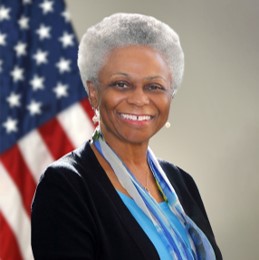
NORDP 2023 Fellow: Jennifer Lyon Gardner

The NORDP Fellow Award recognizes the long-term accomplishments of members who have made sustained contributions to NORDP and worked tirelessly to advance research development as a profession and/or as a field. Status as a NORDP Fellow is the highest professional distinction the organization may bestow on a member. 

Who: Jennifer Lyon Gardner, Deputy Vice President for Research

Where: The University of Texas at Austin

Number of years in research development: 16

Length of NORDP membership: 11 years

What does leadership mean to you? 

I think leadership means different things in different contexts. The way I operate as a leader in my role at UT Austin is really different from the way I’ve operated as a leader within NORDP. Within UT, I started out as an office of one and had to do all the things myself. This meant I had to be very strategic about my time management and prove that RD services could be of value to faculty in order to move toward my goal of establishing RD at an institutional level. Once we had a VPR in place who believed in this goal, I was able to build up a large team. But I never set out to be a supervisor of a large group of people. I don’t consider myself to be the greatest mentor, actually – it requires a degree of patience that I find challenging when I have a bunch of things I want to accomplish. But I’m extremely fortunate to have managers within my team who are incredible at providing that mentoring. This allows me to focus on leveraging my strengths to lead the team. I excel at setting a vision for my team. I’m good at advocating for what we need and working with top level administration to get things done and bridging the faculty-staff divide. 

Within NORDP on the other hand, when I was on the Board I sensed there was a need for something else. Within the Board, everybody is a leader. Everybody can set a good vision. What I saw was a need for someone who could put their head down and get stuff done. I spent so much of my time at UT being the person who makes all the decisions and justifies the existence of RD, it was honestly refreshing to have a group of peers to work with on the NORDP Board who already understood the value of RD so we could just get down to business. I took on the operational role of Board Secretary, which meant I spent a lot of time checking things off lists, keeping things organized, and doing a lot of behind-the-scenes work that I don’t think the average NORDP member will ever tangibly be able to see. But I’m proud that this behind-the-scenes work made the Board’s job easier and freed up their time to be able to focus on the important stuff, the same way that RD officers support faculty so the faculty can really focus on the scholarly content of a proposal and do their best work. And by contributing to the efficiency of how the Board and our organization runs, that ultimately benefits NORDP members.

What has your journey within NORDP looked like so far?

I came into NORDP not knowing anyone or anything about the organization. When I first joined (in 2013), I followed the listserv passively for a while and then I put a question out there. The question was about starting a seed funding program to incentivize cross-department collaboration (one of those perennial questions that still comes up on the listserv to this day). When I asked the question, Susan Gomes wrote me back and offered to chat and she had so much great RD-specific advice that I still share with others today. That first early interaction showed me how amazingly helpful and collaborative the RD community is and how important it is to have colleagues at other institutions who you can be frank with and compare notes. 

In 2015, Rachel Dresbeck encouraged me to run for the Board. And I did, but I wasn’t elected. But after putting myself out there, I was asked to co-chair the Conference Committee and I said yes. It was the first time I had ever chaired a conference; I’d never done something like that before. I had my first child in the middle of planning the conference, and going to that conference was the longest I had been away from my then-5-month-old daughter. But I felt like it was an important new kind of leadership experience for me to take on. In 2017, I was encouraged to run for the Board again, which I was really nervous about because I had done it once before and wasn’t chosen. But I decided to go for it, and this time I was elected. I had never served on a Board before, so it was a massive learning experience. It was Karen Fletcher (who was Board Secretary at the time) who took me under her wing and helped me find my voice and recognize what I could contribute. And so it means a lot to me to be named a NORDP Fellow in the same year as Karen because she has been one of my biggest supporters and aspirational peers within the field.  I had my second child while I was serving on the NORDP Board. And that’s something I’ve really liked about NORDP – how accommodating it is. I’ve always been able to find ways to remain engaged even as I was growing my family. That’s something that I think is particularly cool about our organization.

After I completed my time on the Board, I focused on revamping NORDP’s Leadership Forum. I was particularly interested in the Leadership Forum because I’ve been on a really rapid leadership trajectory within my own career. I became an AVP when I was 34, and I wanted to find a way to show more people in the organization that taking on that kind of position is not just a matter of waiting it out for someone to retire; you don’t have to be in your late 40s or 50s to be in a leadership role. I was also interested in finding a way to keep people engaged with NORDP and providing resources across all career stages. We opened up the leadership forum from an invitation-only to an application-based process to make it more inclusive and allow people to nominate themselves rather than depending on someone else in the organization to name them, which I’m really proud of. I’ve also continued to be involved in other NORDP events like the 3-part RD talent acquisition, retention, and development panel held in 2022-2023.

Throughout your time in NORDP, which relationships stand out to you? What led you to take on leadership roles within the organization?

My pursuit of leadership roles within NORDP would only have happened with the encouragement of Rachel Dresbeck and Gretchen Kiser. Initially, I didn’t see myself as “Board material.” They saw it in me before I saw it in myself. Once I was on the Board, Karen Fletcher, Karen Eck, and Jeff Agnoli played a big role in supporting me as a new Board member and helping me feel reassured that I do belong on the Board and that I do have something unique to contribute. 

Since being on the Board, I continue to get a lot of value out of the close relationships I’ve built with peers within the organization, people like Jill Jividen, Kim Patten, Faye Farmer, and Nathan Meier. These relationships are incredibly important; we compare notes about things that are going on in our institutions and support each other. Knowing that my peers in RD share some of the same frustrations that I do sometimes lets me know that I’m not just failing as an RD professional. 

What initiatives are you most proud of from your time as a NORDP volunteer?

Revamping NORDP’s Leadership Forum is certainly an initiative I’m proud to have led. There are also a few other things I’ve been involved in since being on the Board that stand out to me. One is serving as a recurring panelist for the three-part series hosted by Susan Carter and Nathan Meier focused on ‘Exploring the Research Development Talent System’, in which we employed a systems-thinking approach to jumpstart a larger conversation among NORDP members around recruiting, developing, and retaining RD talent. We got a lot of positive feedback from members after that series that they found the conversation helpful. 

Finally, as I was nearing the end of my term on the Board, I rebooted a then-dormant executive (internal/Board members only) committee, the Governance Committee. This was one of those behind-the-scenes things that you might only become aware of if the Bylaws get updated, or something procedural like that. But my committee members (including Karen Fletcher, Rachel, Faye, and Nathan mentioned above, as well as Etta Ward, Joanna Downer, and Paul Tuttle) and I had a deep collective trust in each other and were able to have some really frank conversations about organizational culture and things we knew we wanted to improve about the culture. Back then, we’d sometimes really struggle to get a full slate of candidates for Board elections each year. In more recent years, through both the GC’s early work and also the Nominating Committee’s sustained efforts, NORDP has benefitted from a huge wave of incredible Board members who bring such a wide and impressive set of competencies to the role. If representation on your Board matters to you, I highly encourage you to consider serving on the Nominating Committee! 

How has your involvement in NORDP impacted your career in research development?

My involvement in NORDP has undoubtedly had a positive impact on my career in research development as I’ve worked my way up from being a staff member providing RD support for a research center at UT Austin to where I am now. And one thing that has dawned on me more recently is that as I’m in the organization longer and longer, my role within NORDP is changing: it’s not so much anymore about what new knowledge NORDP can provide to me, or how NORDP is developing me as a person, but it’s more about how I can use my position and visibility within the organization and my position as a leader to bring others up. One personal goal I’ve set for myself going forward is that, at every conference, I want to do a presentation with a person I’ve not interacted with previously as a means to get to know them and give them greater visibility. So if you’re a NORDP member reading this and you want to hop on a collab for the 2025 conference, write to me! 

What are you most excited about when you think about the future of research development as a field?

What excites me most about the future of RD is its growing visibility and recognition as a legitimate profession and field. The field of Research Development is explicitly referenced in federal agency documents now! On a more personal note, whenever we hire a new dean or leader at UT and I introduce myself as “leading Research Development for the institution,” they now typically respond with, “That’s great! At my previous institution we had someone like you and they were so valuable!” More and more organizations are choosing to invest in RD as a strategic asset, and that means more career opportunities for all of us in the field. To be clear, all of us in NORDP should feel proud of this and take credit for elevating the legitimacy and profile of our field and profession. 

New at #NORDP2024 — the opening keynote will be a keynote panel!

Written by the Conference Committee Branding and Communications Working Group

NORDP has invited Dr. Marie Bernard, Rhonda Davis, and Dr. Travis York to deliver a keynote panel to kick-off the NORDP 2024 Conference on Monday, April 29, 2024. The structure of the panel will include opening remarks from each guest speaker outlining important diversity, equity, and inclusion initiatives at the National Institutes of Health (NIH), National Science Foundation (NSF), and the American Association for the Advancement of Science (AAAS). 

Travis York, AAAS

“When I think about how to make meaningful change to increase access and opportunities for all people, research development professionals are well-positioned to build the capacity of institutions and organizations through thoughtful design.” — Travis York (AAAS)


Marie Bernard, NIH

“My role as the NIH Chief Officer for Scientific Workforce Diversity is to work across NIH, visioning at the 50,000-foot-level, to foster a diversity of perspectives in science.” — Marie Bernard (NIH)


Rhonda Davis, NSF

“I am excited to share how NSF thinks both about the research integrity space and about supporting researchers as they currently exist.” — Rhonda Davis (NSF)


All the speakers are looking forward to engaging with the NORDP audience. The keynote panel will feature a moderated discussion and include time for audience questions. 

The invited panelists and the conference planning committee are so excited to share this conversation with #NORDP2024 attendees.

The March 2024 Career Stories featured Dr. Chetna Chianese, Senior Director of Research Development at Syracuse University

Written by: Roshni Singh, LEAD Kindling Crew

Chetna Chianese, PhD • Senior Director of Research Development • Syracuse University

Dr. Chetna Chianese is the Senior Director of Research Development at Syracuse University, serving as the lead for the central RD office since 2023. In this role, Dr. Chianese assists faculty across Syracuse University with the development of new research priorities and proposals. She provides research development leadership for the university-identified research priorities, facilitates multi-million-dollar and inter-school/college proposal submissions, and leads internal funding programs provided by the Office of Research. Chetna has a Ph.D. in inorganic chemistry from the University of North Carolina – Chapel Hill and a B.S. in chemistry from Vanderbilt University.

Prior to her appointment as the Senior Director of Research Development, Chetna had served as the office’s Associate Director since 2019. She has also served as the Associate Director of Research at SyracuseCoE, a Syracuse University research center, aiding faculty on research proposals and projects related to energy and the environment. 

Before arriving at Syracuse University, Chetna spent three years as an AAAS Science and Technology Policy Fellow in the U.S. Department of Energy’s Office of Energy Efficiency and Renewable Energy. She discovered the AAAS fellowship program during grad school, which sounded better than being a bench scientist. This led her first to serve as a program manager for the DOD contractor SAIC at the Naval Research Labs in Washington DC. There, Chetna learned the basics of proposal development and project management. She took those skills to DOE where she became an expert in critical minerals and eventually designed a grant funding program with a portfolio of $120 million.

However, she quickly realized the government bureaucracy was not for her and found her niche in Research Development. RD allows her to leverage her prior experiences which translates into successful proposals for the faculty members. Chetna gets a “rush when things work out” and she feels she has made a difference.

In her current role, Chetna has spearheaded the expansion of the central RD office from 2.5 FTE to ~7, and plans to keep building opportunities to allow her team’s roles to evolve. She is focused on creating opportunities for her team to grow and develop their niche and she works to effectively communicate strategic priorities while removing barriers. Her desired impact and legacy are to lead the office effectively during a period of change and come up with a framework for her office, given its larger budget and institutional leadership support.

In her current role, Chetna leverages strategic intelligence to understand funding programs and their priorities. She often hears herself saying to the faculty members “read the review criteria” and, “it depends on the funder”. From her experiences, she has learned to be cautious and applies the same strategy when working with the faculty members as she thinks “we only know what we’ve been exposed to and otherwise we’re making an educated guess.”

Chetna is a member of the NORDP Nominating Committee and the Fireside Chat/Career Stories Kindling Crew. She has previously served as the Region II Co-Chair and a member of the Member Services Committee. She highly recommends NORDP and thinks it’s great place to network and learn from everyone.

Fun Fact: While working at the DOE, Chetna had the opportunity to participate on two White House interagency working group.

Chetna would love to answer any questions you have for her, so please feel free to email her at cchianes@syr.edu

To listen to her full interview by the career/kindle team, please click on this link (you must log in as a NORDP member to access): MC LMS – NORDP LEAD presents: “Career Stories” – Chetna Chianese – March 5, 2024

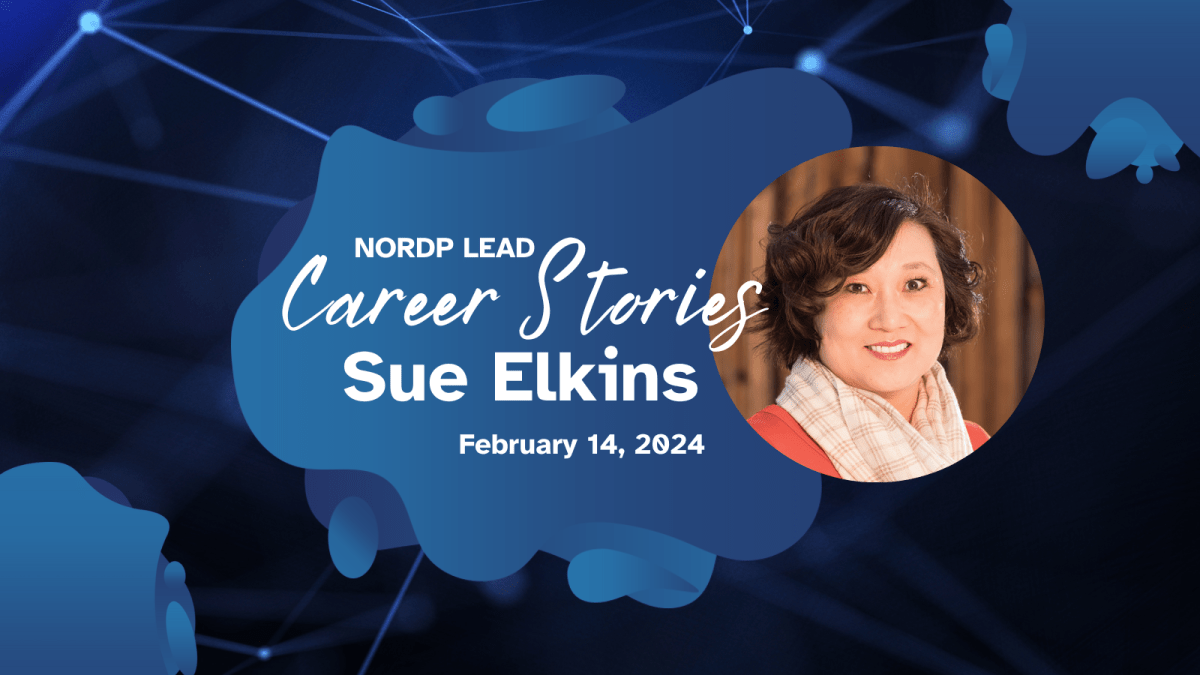
The February 2024 Career Stories featured Sue Elkins, International & Research Services Manager at Drexel University

Written by: Roshni Singh, Kindling Crew

Sue Elkins, CRA • International & Research Services Manager • Drexel University

Sue Elkins, CRA is the International & Research Services Manager at Drexel University. In this role, she has been tasked with re-envisioning and developing research support from a Central Office, for the university. Sue has over 10 years of research administration experience in higher education and hospital settings with a wealth of understanding on research administration, networking, relationship building, professional development, and communication. 

Prior to joining Drexel, Sue had worked at Auburn University and Rhode Island Hospital in positions that were RD adjacent, but lacked the work-life balance she required. In addition to these two roles, she had over 10 years’ experience in wrangling contracts and navigating legal systems through two prior positions as a real estate assistant/transaction manager, and a daycare/pre-school owner in a foreign country. In spring of 2021, she began planning an intentional career transition that would allow her the work/life balance she needed as well as advance her career. Sue wanted to get involved with increasing grantsmanship knowledge leading to increased efficiencies and better proposals in turn increasing an institution’s award rate. She strategically targeted institutions that were looking to measurably increase research expenditures and willing to increase training across campus as part of their strategic plan. Based on her desired career path, she designed a 24-month plan for the career transition and strategically started adding the skills she needed while at her prior role in Auburn University. She accomplished her goal, 6 months ahead of her deadline, joining Drexel as a Grants Administrator in October 2022. Sue has not let the lack of an advanced degree hold her back from pursuing her career goals and has successfully leveraged all prior experiences in conveying her aptitude for her desired positions. Understanding her soft skills helped Sue maximize her career advancement proving past employment outside of the field added to her ability to address the role Drexel University was looking to fill. Sue was promoted to her current position in April 2023. 

With her role as the International & Research Services Manager in the Office of Sponsored Programs, Sue plans/creates/adds/fosters training opportunities for those across campus to improving institutional research support. Determining a road map to develop training for all involved with research to improve processes, knowledge base & community is Sue’s ultimate goal and the big picture aim for her current position. She also understands the constantly evolving demands of the field and that between now and completely setting up training our world will change and she is looking forward to helping Drexel University keep up! It is the thought of these upcoming and unknown challenges that keeps Sue interested in Research Development; understanding her soft skills has helped Sue maximize her career advancement.

Sue suggests networking as one of the best ways to connect, learn, and increase one’s knowledge base. When she worked directly with faculty and after a proposal and they asked if they could do anything for her, Sue asked that they write an email to her boss on how she was a beneficial part of the proposal. These faculty members turned out to be some of her best references. Additionally, in her experience NORDP is very welcoming, empowering, and accessible to everyone, and a great place to network. Another great way to network is to VOLUNTEER! Sue currently is involved with NORDP on a volunteer basis for the following roles: Co-Chair for the NORDP Professional Development (PD) Committee, Liaison for PD and the iKnoW on the NORDP Communications Working Group (CWG), PD representative for iKnoW, and a cohort mentor for this year’s Mentoring Program.

Fun Fact about Sue: Being a horrible test taker has been to Sue’s advantage. In order to pass the CRA exam she really had to understand the principles behind any question that could be asked; and thus, this knowledge is stuck in her head for the long haul! This is the same as understanding every grant that comes her way!

Sue would love to answer any questions you have for her, so please feel free to email her at sue.elkins@drexel.edu

To listen to her full Career Stories interview, please click on this link (you must log in as a NORDP member to access): MC LMS – NORDP LEAD presents: “Career Stories” – Sue Elkins – February 14, 2024

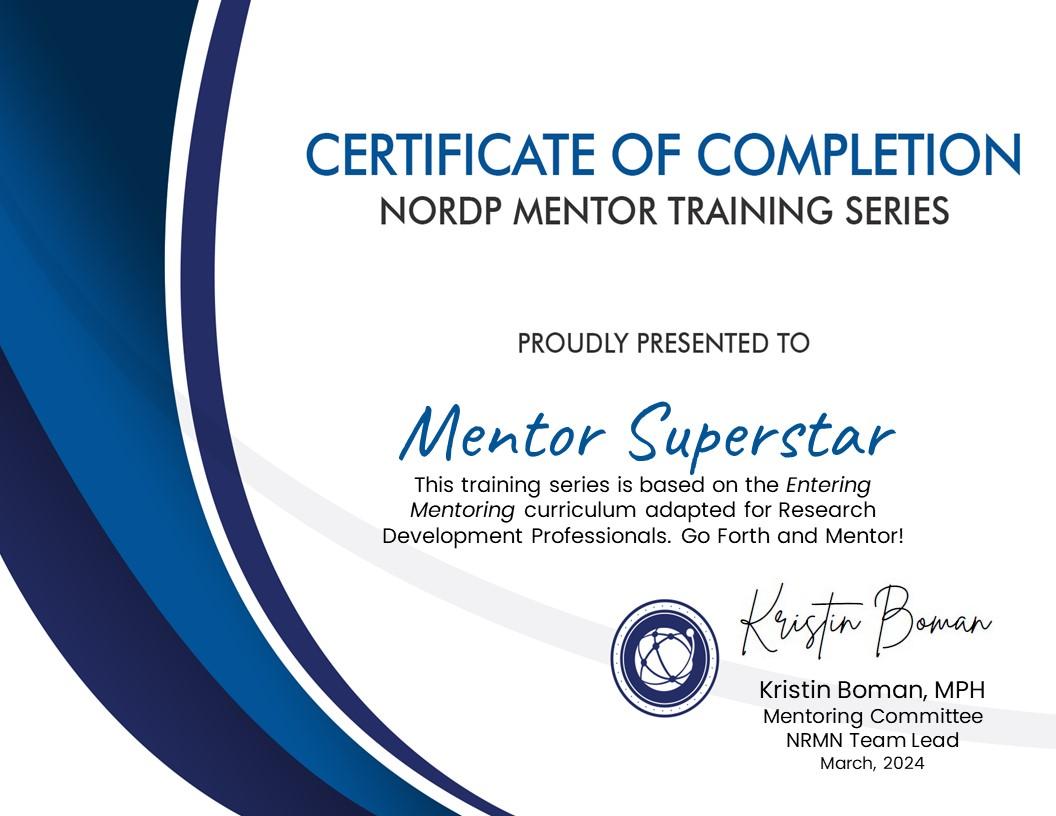
Hats Off to the 2024 NORDP Mentor Training Workshop Graduates!

Written by the Mentoring Committee

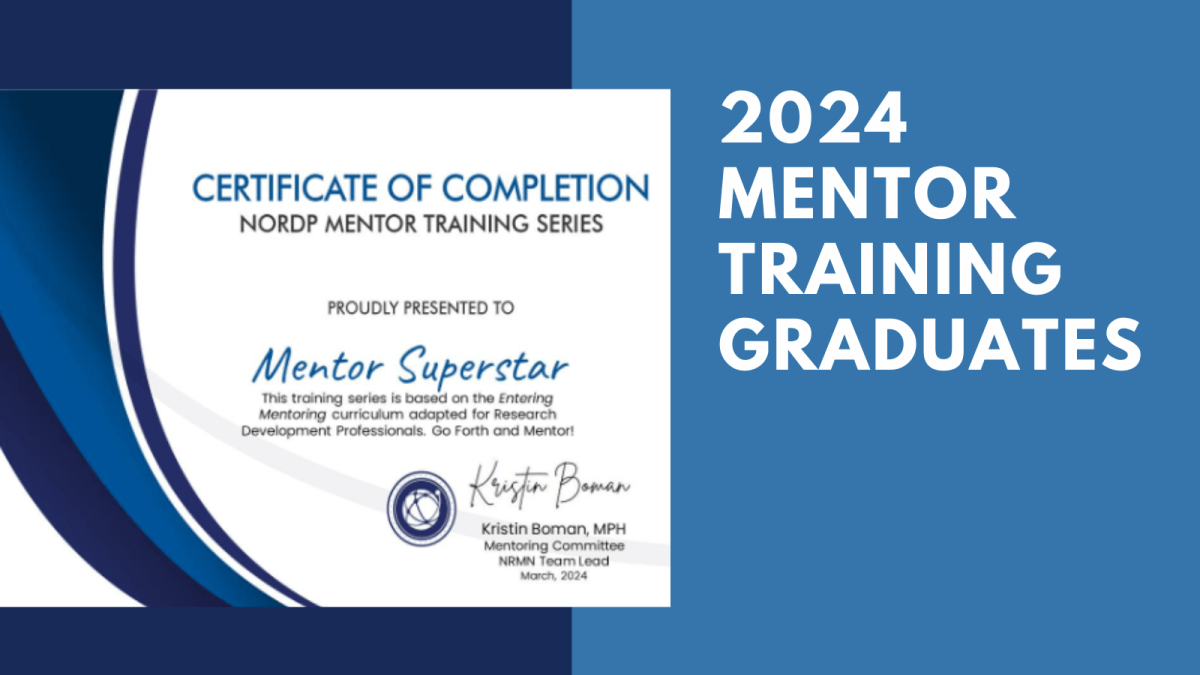
A certificate of completion with blue and white design

Description automatically generated

The NORDP Mentoring Committee’s Mentor Training Team held a mentor training workshop in January – March 2024. Nineteen NORDP members completed the 5-week workshop, covering the 9-module Entering Mentoring curriculum initially developed for research mentors and tailored by the NORDP Mentoring Committee for RD professionals in collaboration with the University of Wisconsin Center for Improvement of Mentored Experiences in Research (CIMER). Over 100 NORDP members have completed the Entering Mentoring Workshop and received certificates. 

RD professionals explored key mentoring competencies that can benefit RD mentors and mentees that have been associated with improved career outcomes, employee engagement and retention, and more inclusive work environments. The workshop was facilitated by NORDP members Jan Abramson, Kristin Boman, Paula Carney, Rachel Goff-Albritton, Melissa Li, Kathy Partlow, and Samar Sengupta.
The NORDP Mentoring Committee is committed to equipping Research Development professionals for success by offering meaningful mentoring expertise, support, and resources. If you would like to be contacted when the next Mentor Training workshop series is scheduled, please email mentorprogram@nordp.org.

Congratulations to the following 2024 NORDP Mentor Training graduates!

Sowmya AnandUniversity of Illinois
Vinita BharatStanford University
Sherri BurdaNew York University
Cate CaldwellBlack Hills State University
Caitlin CharosUniversity of California, Santa Cruz
Kaylynn CoatesCleveland Clinic
Mandy DavisTexas A&M University, Texarkana
Palemon GonzalezResearch Development Consultant, Mexico City
Stephanie HaddadUniversity of California, Santa Cruz
Angela JordanUniversity of South Alabama
Keri JupkaUniversity of Missouri, St. Louis
Prapti ModyUT Southwestern Medical Center
Kelly Anne MooreEmory University
Hugo MorenoResearch Development Consultant, Mexico City
Aimee OkeColorado State University
Daniel RiechersUniversity of Massachusetts, Lowell
Branden RitterOhio State University
Claudia ScholzUniversity of Virginia
Ruth SosnoffUniversity of Kansas Medical Center
Carol ThornberUniversity of Rhode Island
Monica VidalStanford University School of Medicine
Nancy WalkerUniversity of Missouri, Columbia
Kathryn WrenchLawrence Technological University
Kartik YadavUniversity of California Irvine
Table: list of 2024 NORDP Mentor Training graduates and their respective organizations.

NORDP Liaison Report: Colleges of Liberal Arts Sponsored Programs (CLASP): An Interview with Amy Cuhel-Schuckers

Amy Cuhel-Schuckers, Director, Office of Grants and Sponsored Research, The College of New Jersey

What is the mission of CLASP? Colleges of Liberal Arts Sponsored Programs (CLASP) was designed to provide a resource for sponsored research administrators at liberal arts colleges and those with a liberal arts focus to promote and strengthen members’ abilities to respond to research support and policy issues as these arise; this is hugely important in contexts where there may only be a single person covering all the functions of research administration and research development. In recent years, CLASP has evolved to become a community of practice and, through an NSF GRANTED conference award, is considering ways to extend its reach to women- and minority-serving institutions and its organizational framing.

What are some of the unique challenges that liberal arts institutions confront with respect to grant administration? The challenge many liberal arts and/or predominantly undergraduate institutions face is that staff engaging in RD need to act in a “generalist” role. They must inform the institution of risk, stay abreast of federal funding trends and priorities, and perform research development, research administration, and compliance functions.  Often practitioners must lead from the middle to educate those to whom they report, explain what the university is certifying, and position the institution should it be audited.  This is a stressful role with a variety of needs and little support from within the institution. 

 In small institutional settings there is often a single research administration practitioner doing a “soup to nuts” or “cradle to grave” job.  That is, they might engage with faculty on the front end, supporting research development and facilitation, in addition to performing the duties of a pre-award sponsored research professional in submitting, accepting, and managing an award.  In some very small institutions with a single staff member managing research administration, this person might also manage IRB and IACUC regulations as well as other aspects of compliance.   When I worked at Franklin and Marshall College, a 1,200-student institution, we piloted a 5.5 FTE sponsored research, Corporate and Foundation Relations, and grant accounting team that occupied the same office with three reporting lines under a common leadership structure. Now, I am at the College of New Jersey, a comprehensive master’s granting institution with 7,000 students, also classed as a PUI. We have a 3-person pre-award office and are now in the process of bringing a post-award specialist into our office. Folks acting as generalists in a complex regulatory environment where their institutions are likely strained fiscally, may have little to no money for professional memberships or to travel to conferences for professional development. Yet, their institutions are responsible for meeting the same compliance standards as R1 institutions. Moreover, these folks are often the “expert” on campus –a daunting reality.

How has CLASP evolved since its founding?  CLASP originated at Middlebury College and was spearheaded by Francie Farnsworth, who created a listserv-enabled conversation group supported by a Wiki repository of shared materials. The targeted listserv now anchors the membership by providing a forum where questions related to sponsored research concerns—which at small institutions may also map onto corporate and foundation relations—can be posed, with answers coming back almost instantaneously. In addition, through the listserv, CLASP members periodically conduct surveys on range of topics. As one example, we have surveyed our membership on the types and nature of indirect cost rates at member institutions. For example, smaller institutions may have salary and wage-based indirect cost rates, salary, wage, and fringe rates, as well as Modified Total Direct Cost (MTDC) rates, which are more commonly seen at larger institutions.  CLASP has also surveyed our membership on where our offices are situated within their institution, whether in academic affairs, advancement, the President’s office, and to compare to peer institutions. Having peer or near peer institutional knowledge helps CLASPS members to advocate for policies and practices that better serve our institutions.   As a replacement for the original Wiki-based repository, CLASP hosts a “Collaboratory” which is a Google-document based repository of resources that archives materials and resources from past meeting sessions as well as resources and on various topics of interest that members have created. CLASP also hosts annual meetings, post-Covid alternating between virtual and in-person meetings. The upcoming 2024 meeting will be held in person at North Central College in Naperville, Illinois, November 13-15. Typically, 60-90 people attend.  

You are part of a team that was awarded an NSF GRANTED award. Could you speak to some of your objectives for this grant? CLASP’s NSF GRANTED award (NSF 2324524), via Carleton College, is design to strengthen a community of practice (CoP) and to broaden, increase, and diversify membership in CLASP, in particular with MSIs and women-serving and women-only institutions. We first articulated this CoP vision at the annual CLASP meeting in 2018 at Swarthmore College and at the 2019 meeting at Bowdoin College. CLASP has long showcased funder presentations intermingled with some presentations from members. But we began to recognize more fully that our members represent a significant body of expertise and have placed greater emphasis on expanding that dimension of our organization and our community of practice, and imagining how we can position our organizations for the future.  

What are the mutual benefits of NORDP’s relationship with CLASP? I started out as an assistant grant writer at a community-action agency, and later transitioned to a predominantly undergraduate institution (PUI) in the SUNY system where I was institutional grant writer and later grant development specialist.  Then, when I came to Franklin and Marshall I was introduced to CLASP.  Through CLASP I was introduced to NORDP, and like so many other members felt as though I had finally found “my people.” Of course, many one-person shops do not have the resources to attend NORDP, and that has motivated me to share my expertise with CLASP. For example, I recently presented on RD with Susan Ferrari and Dean Gerstein at the 2023 virtual CLASP annual meeting last November.   Conversely, expertise from the CLASP community, together with others in PUI settings, has been extended to NORDP through the founding of the PUI (Predominantly Undergraduate Institution) Affinity Group, in 2019.  Many members of the PUI Affinity Group are also members of CLASP.  Historically, NORDP was developed by individuals who were in a context in which they could specialize in all of the contextual aspects of RD and in preparing researchers to lead large research grants, whereas the research focus of smaller institutions is most commonly at the PI-level and often within a teacher-scholar framework. The PUI Affinity Group addresses the needs of these NORDP members by developing resources for research-related and grant development activities, including my 2016 research article with Cara Martin-Tetreault and Carol Withers, “The Grants Office and the RA Generalist: Parallel Life-Cycles and Development at Small PUIs,” which addresses benchmarks research administrators can use in assessing development at the office and practitioner levels. 

However, the biggest benefit to NORDP in liaising with CLASP is in engaging generalists around a clear articulation of one component of their role – research or grant development. CLASP in some ways also represents a type of diversity – institutional diversity – that NORDP needs to be consciously aware of, so that it can best meet the needs of this sector of membership. Moreover, and relatedly, CLASP members are well positioned to inform NORDP that it runs the risk of losing the generalist audience to larger organizations such as NCURA and SRAI who are beginning to offer RD training modules which NORDP is, in fact, most ideally positioned to offer. 

This report was prepared by Elizabeth Festa, Liaison Chair, Strategic Alliances Committee, eaf2@rice.edu

An Open Letter from the NORDP Board Regarding NORDP’s use of Basecamp

Dear colleagues:

As an organization, one of our shared goals is to create an environment where every member can feel heard, respected, and valued. Late last year, a NORDP member notified the board of directors about an article posted by the Duke University Libraries outlining their decision to terminate the use of Basecamp as a project management platform.

The decision at Duke was prompted by Basecamp leadership’s blatant criticism of diversity, equity, inclusion, and racial justice efforts. The NORDP member who reached out encouraged board members to review the Duke Libraries’ stance through the lens of NORDP’s goal to “foster a culture of inclusive excellence by actively promoting and supporting diversity, inclusion and equity in all its forms to expand our worldview, enrich our work, and elevate our profession.”

Diversity, equity, inclusion, access, and belonging are cornerstones of our organization, and we took this call to action seriously. We began immediate discussions about Basecamp’s lack of inclusive culture and considered whether we wanted to continue to commit NORDP’s financial resources to a service provider that is not aligned with the organization’s central values.

Following careful consideration, we voted to discontinue the use of Basecamp as NORDP’s project management platform when the organization’s current contract for the tool expires on June 1, 2024. We encourage you to read the Duke University Libraries article, “Why We’re Dropping Basecamp,” which reinforces the importance of aligning our organizational investment in resources with our values.

We are in the process of selecting a new project management platform. If you have suggestions about alternatives, we welcome them. In the coming weeks, we will provide more information about the new platform we select as well as details and guidance about how we plan to shift NORDP’s work to the new platform while retaining the organization’s historical records. We appreciate your understanding and support during this period of change.

As always, we welcome your thoughts or suggestions. Please feel free to communicate directly with any member of the Board of Directors. Thank you for making NORDP the organization that it is and for raising concerns and challenging our professional community to do and be better.

Best regards,

NORDP Board of Directors

NORDP 2024 Keynote: Building your Unicorn Career with Alaina Levine

Written by: Eric Dickey, Conference Planning Committee

Alaina Levine can pinpoint when she began her career in professional development and networking to a specific, catalyst moment in her life. And it all hinged on one word: Nothing.

She has degrees in Math and in Anthropology and studied in Cairo, Egypt which provided her with a Middle-Eastern studies and Arabic background. But she knew she didn’t want to be a mathematics researcher or an academic. She sought the advice from her mathematics advisor and asked him what her job prospects outside of academia were, and he literally used the word “nothing.”

Career development in STEM is too rarely discussed. Alaina herself noted that she never got the job talk during her mathematics training. Later while at the University of Arizona, she found herself in a position teaching STEM students about career development, soft skills, networking, and negotiation. She helped them identify their own unique gifts to build what she calls their “Unicorn Careers.”

What is a Unicorn Career? Alaina defines it as a customized, authentic career that aligns with one’s values and humanity. It allows you to be yourself 100% of the time and it is a career that brings joy, meaning, and money. As humans, we are diverse and have unique gifts, skills, abilities, and perspectives.

In her keynote talk, Alaina will discuss strategies by which we as RD professionals can make our jobs into our own Unicorn Careers by aligning our skills and abilities with the needs of our institutions and clients. We can use our interests to focus on who we are, and by doing so, we can honor our full authenticity and full humanity. We can make an impact by simply being ourselves through mentoring and creating safe spaces and trust.

We all know that taking such a leap of faith in ourselves, of stepping into our full humanity, will include emotions like doubt and fear. To Alaina, feelings are fantastic data. We can analyze data about ourselves to discover what we can do differently, better, or more. By building our own mental fitness in low-stake scenarios, we can position ourselves to use it in high-stakes scenarios.

As the current President of Quantum Success Solutions, LLC, Alaina is a prolific speaker and writer on career development and professional advancement for STEM Nerds (engineers, scientists, and technical leaders). She also helps Research Development offices land transformative funding through her site visit consultation and speaking and innovation coaching. 

She was drawn to NORDP because she believes her diverse background mirrors the diversity and backgrounds of research development professionals and leaders. She respects and values the collective and diverse wisdom that RD professionals bring to the profession and to the institutions, communities, and scholarship that we serve. She looks forward to sharing her data-driven and process-oriented approach and providing tools which will enable conference attendees to position themselves for success.

Help us welcome her to the NORDP stage in Bellevue, WA.

New NORDP Board Member Cameo: Ms. Amy Gantt

Who: Ms. Amy Gantt, Director of Strategic Research Development

Where: Tufts University

Number of Years Working in RD: 20 years

Length of NORDP Membership: 13 years

Entering the field

Amy earned her master’s degree in sociolinguistics from North Carolina State University, deciding not to pursue a PhD because, while she really enjoyed learning about linguistics, she didn’t envision a career in linguistics. She then spent about five years waiting tables and teaching in North Carolina, including at community colleges. About 20 years ago, she left North Carolina to move to Boston, still unsure about what she wanted to be when she grew up. In Boston, Amy started working as a freelancer for Tufts through a connection with Peg AtKission, who was leading the creation of research development services there. She thought that she would do this work for a little while until she figured out her career path. Well, 20 years and a couple of promotions later, and a lot of institutional change, she’s still in the field.

Her research development work

Amy’s team’s responsibilities have grown over the years to become quite broad. She and her team are responsible for very large federal proposals, and they partner with their corporate and foundation relations colleagues to work on very large foundation proposals. They are also responsible for helping junior faculty with their proposals, with a focus on NSF CAREER and other early-career awards. Amy oversees three seed funding programs that are managed by the Office of the Vice Provost for Research, and she oversees limited submissions. Amy places a priority on developing partnerships, particularly with other institutions, although her team partners with industry as well. Amy’s team helps to develop research strategy for both individuals and for teams and for the institution itself. Her portfolio is very broad and, as a central office, covers the entire institution.   

Amy notes that one thing that Tufts does very well is community-engaged and community-based participatory research, in line with Tufts’ emphasis on making an impact on society. Something she really enjoys is connecting fundamental science to impact and how it’s going to engage people. Her social science training has helped her to think through study design – things like ‘what variables are you controlling for’ and ‘what ways are you going to recruit?’ When hiring, she looks for people with very strong writing and communication skills, but just as important to her is a sense of curiosity. Amy enjoys diving into all different fields, thinking very deeply about what connections there are across them and what is unique to a specific field and about how she can leverage all of those different pieces.

Amy’s history with NORDP

Amy joined NORDP in 2011. She became aware of NORDP through her regional group (New England area), which was fairly new, and she believes that she was reached out to by them around that time. Through her interactions with the Region, she learned more about NORDP. The Northeast group has stayed close to her heart throughout the years, and she served as chair for the Region for a three-year term.  During that time, she organized meetings and came to understand more about NORDP at the national level. As often as university finances allowed, she attended conferences. She recognizes the value of these events and alternates attendance among her team so as many people as possible have the chance to benefit from in-person attendance. Amy has presented posters and oral presentations on a wide range of topics at conferences over the years: She’s spoken on how to avoid saying ‘no’ in a resource-limited environment and how you can be really creative with a small staff and do a lot. She has also talked about her career path in RD, and she’s presented with colleagues on institutional engagement with corporations and where that fits into RD, particularly on the federal side.

Her motivation to run for the NORDP Board

Serving on the Board was not something on her radar, but Amy was nominated for a position. When this happened, she remembered how much she enjoyed and learned from being chair of NORDP Northeast, and she thought that this would be a really great way contribute at a time when there’s a lot of creativity in RD and excitement about RD ‘professionalizing’. She also recognized it would be an opportunity to expand her network and learn more about the Organization. Amy recognizes that there is much room for learning from one another, from figuring out new ways to do things that would increase efficiencies to improve competitiveness and leveraging each other’s strengths on the administrative and research sides of our institutions. She recognizes the value and importance of professionalizing the field without losing the creativity.

What Amy is most excited about as a new NORDP Board member

Amy is excited about many things! She really enjoys thinking strategically about making NORDP more inclusive, in terms of increasing the compositional diversity of our members, in making sure that we’re meeting the needs of our communities, and that the Organization is leveraging its strengths. It’s important to Amy that we are not burning out volunteers, that we offer programming that reaches the people that it needs to reach, and that we are supporting the growth of our industry. Amy also recognizes the importance of telling that story outside of the RD community.  Something she has always loved about NORDP is that people are so helpful and collegial rather than competitive. She holds the value of community very dear.  Amy supports the continuing expansion of RD, which includes bringing new people in. She’s excited about new people, new ideas, and keeping moving!

Amy’s very grateful to have the opportunity to be a part of NORDP leadership, and she’s grateful to the community that we’ve all collectively built around NORDP. She wants to ensure that we continue to have the same (or even better) support and environment for people who are coming into the field. Amy acknowledges that most people don’t grow up thinking ‘I want to be a research development professional’. She doesn’t necessarily want that to change, but she does want people to see that this is a fun career; it’s really satisfying and she wants to encourage people, if they’re so inclined, to become a research development professional.

Empowering immigrant RD professionals via iKNoW

Contributors: iKnoW members:

Elizabeth Lathrop, University of Maryland, College Park

Meira Orentlicher, Touro University

Prapti Mody, UT Southwestern Medical Center

Yoanna Ferrara, Syracuse University

The NORDP affinity group – Immigrant Knowledge and Wisdom (iKnoW) – seeks to empower and engage research development (RD) professionals who identify as immigrants or allies of immigrants. From the initial 15 founding members in 2023, we have grown to >30 members thus far. Members of iKnoW come with diverse perspectives to share experiences, interests, and goals contributing to inclusive excellence, resource generation, recruitment and retention of RD professionals to further advance NORDP mission. Collectively, iKnoW is a place for members to share international knowledge and immigrant experiences in the context of RD professionals, with opportunities for advocacy, networking, mentoring, and leadership development on immigrant impact to foster a culture of diversity, equity and inclusion within NORDP.

The iKnoW launched our inaugural networking events at the 2023 NORDP in-person Conference in Arlington, VA. As an iKnoW Co-chair, Samarpita Sengupta organized the highly popular “Monuments by Moonlight” bus tour, which provided opportunities for networking and relationship-building within the growing iKnoW community. iKnoW also hosted a member meetup dinner as well as an interactive poster session to meet existing members in person and to recruit new members. We encourage everyone to be on the lookout for  iKnoW activities at the upcoming 2024 NORDP Conference in Bellevue, WA.

Another notable accomplishment includes a NORD pilot project award: in collaboration with iKnoW members from four institutions (Touro University, University of Michigan, University of Arizona, and University of Vermont), Meira Orentlicher is spearheading a study to increase the understanding of immigrant faculty researchers’ experiences and needs, and to begin to identify strategies for addressing the needs and supporting their growth and development in the US academic institutions.

A few testimonials from current iKnoW members highlight the impact this tiny-but-mighty group has had on them!

Prapti Mody: As a South Asian who immigrated to the USA and has tons of diverse immigrant friends and colleagues, I identify strongly with iKnoW’s values and mission goals. I joined this affinity group after meeting with Gagan last year at the 15th NORDP annual conference, so I have been a member for just under a year now. Our meetings are equal parts fun time and resource generation brainstorming. It’s so interesting to connect with people from all across the world as part of this group, learn about their experiences and share ideas. For example, in one of our meetings, we designed a flyer highlighting points to be aware of while traveling internationally. iKnoW is a great resource group and a beautiful network of RD professionals.  

Yoanna Ferrera: Initially, I joined iKnow out of curiosity. At the affinity group dinner in Arlington (NORDP 2023), I met remarkable people who, like me, had moved to the United States from worlds away or, as second-generation immigrants, have straddled continents and cultures. I value the sense of community and everyone’s willingness to support others. We have discussed care options for aging parents who are non-US citizens or non-English speakers. This topic may also be of interest to many faculty. We have bonded through book clubs. We plan approaches to recruit immigrants to the RD profession and support members looking to switch jobs, e.g., through mock interviews and career guidance. Samar’s and Gagan’s leadership is inspirational—they encourage the iKnow-ers to be involved in the various NORDP committees, pursue leadership roles, and contribute immigrant perspectives to the organization.

Faina Thompson: Absolutely thrilled to share my experience with the Immigrant Knowledge and Wisdom (iKnoW) group! Meeting the members at the 2023 NORDP conference was an absolute delight and sparked an immediate connection. It was a moment where I felt seen, understood, and welcomed into a vibrant community. iKnoW is an outstanding network of RD professionals, eager to share their expertise. The conversations are as diverse as they are informative, with topics spanning the globe. iKnoW welcomes you with a remarkable sense of community and professional camaraderie. It’s not just a group, it’s a global community that enriches you both professionally and personally. I wholeheartedly recommend it.

The iKnoW affinity group meets monthly, on every 3rd Tuesday of the month, at 4pm ET/3pm CT/2pm PT. We welcome you to join our community by contacting the current Co-Chairs: Samarpita Sengupta (SS141@alumni.utsw.edu) and Gagan Bajaj (gagan.bajaj@med.uvm.edu) for meeting information!