The NORDP Rising Star Award recognizes individuals for their outstanding, early volunteer contributions to NORDP and strong potential for future contributions to the organization and the profession or the field.
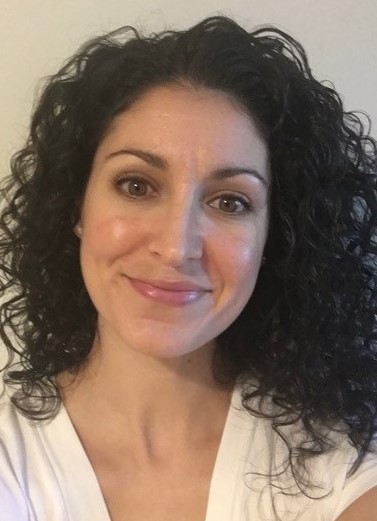
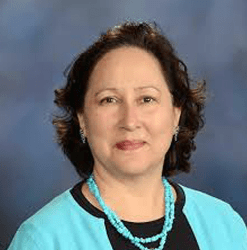
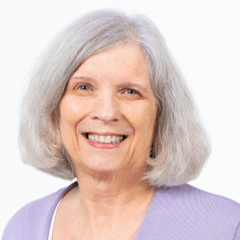
Erica Pitre, Rising Star Award Winner
Who: Erica Pitre
Where: Emory University
Title: Director of Research Development
Number of years in RD: 6 years
Length of NORDP membership: 5 years
Erica was nominated for her work on the NORDP Journal subcommittee for her integral voice in shaping the direction and creation of the journal; her service as manager of the NORDP Consultants Program; her active work on NORDP’s Competitive Intelligence Working Group, where she brings her project management and industry experience while also building the community; and her dedication to sharing resources and solutions to the NORDP community at large.
Erica began her career in the energy industry, specializing in proposal development and technical writing. After transitioning to academic research development (RD), she was part of a bustling R2 hub where she launched the institution’s first, formal RD support unit. She brought her extensive skillset to Emory, where she currently serves as Director of Research Development and supports strategic initiatives, mega proposals, and seed funding, among other RD initiatives.
When asked about the initiative she’s most proud of, Erica shared it has been the NORDP Consultant Program, led by Kimberly Eck, MPH, PhD. Through this program, Erica has had the opportunity to interact with NORDP consultants who possess cutting-edge approaches and collaborate with them to support researchers. In addition to her work in the Consultant Program, her commitment to the future of the field is evident through her involvement in the NORDP startup committee for the organization’s journal. Intrigued by the absence of certain resources, she applied her project management skills and simultaneously acquired new ones, which proved crucial in laying the foundation for the journal’s future launch. Erica emphasizes that newcomers shouldn’t hesitate to get involved in committees and contribute their fresh perspectives. Volunteer communities like NORDP thrive on diverse insights and welcome individuals who are willing to put in the work and learn new skills.
In addition to getting involved in committees, Erica offers valuable advice for newcomers. She encourages involvement in the NORDP Mentoring Program and joining resources like the NORDP listserv and Basecamp to tap into the collective knowledge and expertise of the community. She also suggests that new members keep an active running list of topics to learn more about and roadblocks encountered. Members can then use that running list to connect with the NORDP network to find solutions. Erica shares that one of the standout features of NORDP is the generosity of its members, who make time to support and guide others. One of the key examples she provided was when she used her running list to seek out information from a key NORDP member. She was able to connect with this individual, which led to very fruitful conversations, and an opportunity to transition to her current university.
Having been part of NORDP for the past 5 years, Erica has witnessed fellow new, NORDP professionals gain recognition and awards alongside her and encourages others to speak up and get engaged. When looking at the potential for future rising stars, Erica urges folks to remember the untapped potential of industry professionals. Erica firmly believes that colleges and universities should consider industry professionals as valuable assets for research development roles. While advanced degrees are advantageous, equitable work experience outside academia also brings a fresh perspective and a very transferable, rich skill set. There exists a vast pool of individuals capable of fulfilling the demands of this work, and the opportunity lies in helping them understand the academic ecosystem. Erica’s journey from industry to academia research development exemplifies the potential for professionals to make a significant impact in the RD field. Her involvement with NORDP has been instrumental in not only her growth and success but also the evolution and growth of NORDP and RD programs. Her work highlights the power of community, collaboration, and volunteerism. As the field continues to evolve, recognizing the value of diverse backgrounds and experiences will continue to be vital in nurturing the next generation of research development professionals.
First awarded in 2022, the NORDP Mentoring Award recognizes an individual NORDP member’s unique ability to provide an engaging, supportive, and inclusive environment for professional and/or personal growth through mentorship in the research development community. This award is bestowed with the acknowledgement that effective mentoring occurs through formal and informal channels and may vary in style and substance.
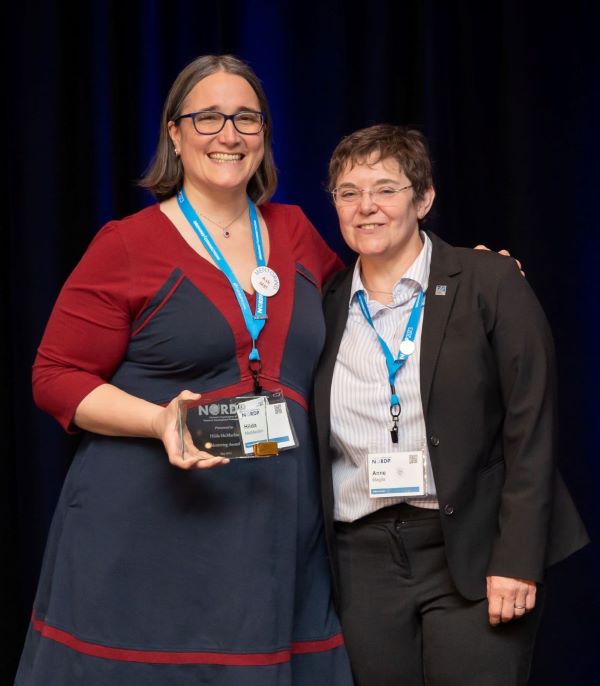
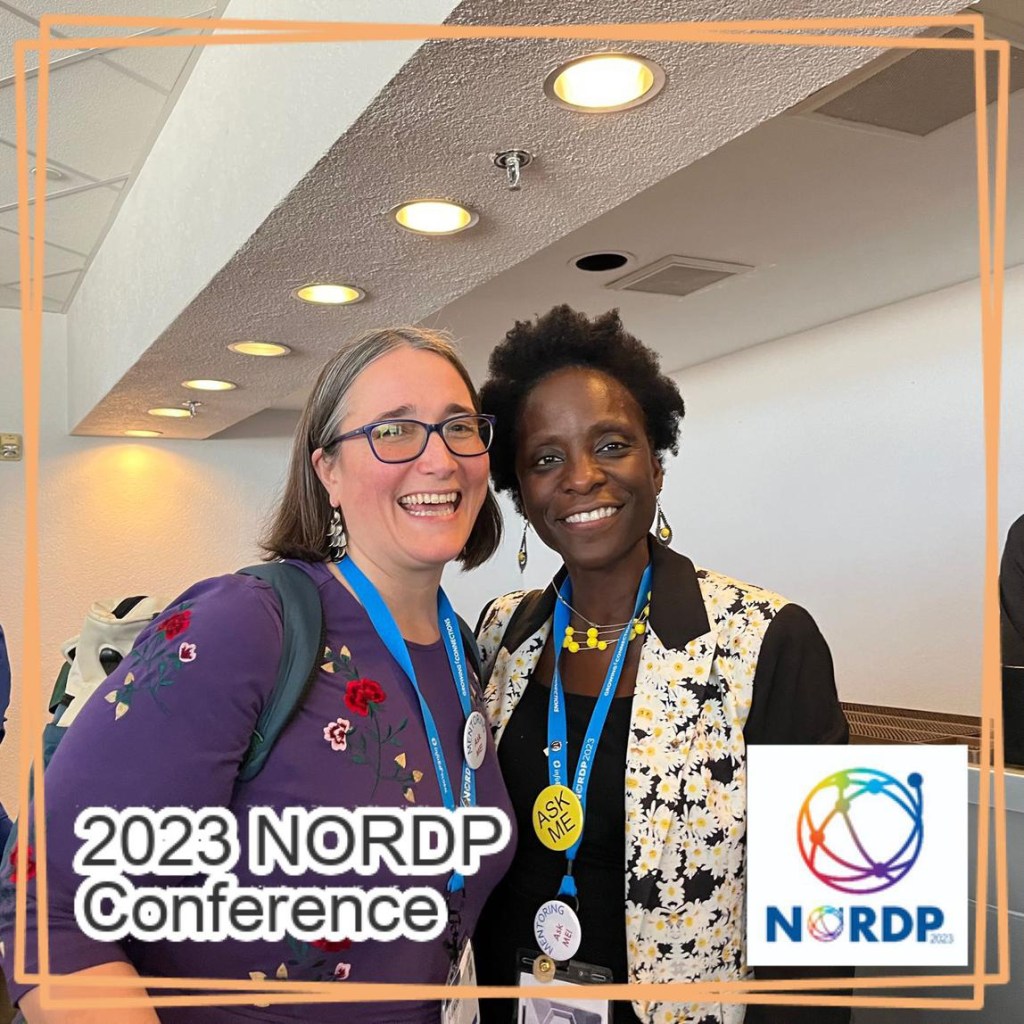
Anne Maglia (R) presents the Mentoring Award to Hilda McMackin, at the 2023 conference.
Who: Hilda McMackin, Director of Research Administration Systems and Reporting
Where: Vanderbilt University, Nashville, TN
Number of years in research development: 14
Length of NORDP membership: 6
What has your mentoring journey within NORDP looked like?
After joining NORDP in 2017, I attended the annual conference in Denver and went to the mentoring committee open house. I was sold! I was especially interested in the Mentorship, Expertise, Support, Helping Hands (MESHH) subcommittee and the resources they developed. I’ve enjoyed working on the MESHH tools available in the NORDP Mentoring Toolkit and presenting webinars and workshops on how to use them.
My involvement has combined committee work with serving as both a mentee and mentor. In the committee, for the past several years, I led the group of Facilitators that serve as points of contact for mentoring program participants throughout the year. I have also collaborated on and presented in three rounds of Mentoring Lightning Storms where we coordinated an hour of 5-minutue lighting talks all focused on aspects of mentoring. Then, in March of 2022, I became a committee co-chair, helping lead the work of the committee. The work has been fun-filled and rewarding. This committee is made up of a great group of collaborative and welcoming people; our meetings have become high points of my week.
I’m currently mentoring a cohort of three NORDP members this year in an expansion of our mentoring cohort pilot that was successful last year. This format bolsters the mentoring relationships by fostering peer mentoring at the same time and expanding the network of all four members involved in the cohort. I am looking forward to exploring mentoring in this exciting group setting.
What initially drew you to mentoring?
I’ve always been grateful for the mentoring I received throughout my career, and I thought mentoring was a great way to both get involved with NORDP and pay that support forward to bolster the growth of others. I also have a deep commitment to the research enterprise and recognize the importance of mentoring in advancing research. Regardless of the role – faculty, staff, or student – receiving and providing mentorship is essential in moving research and innovation forward, as people can’t contribute their whole selves in their work if their needs and aspirations aren’t nurtured.
What does being a good mentor mean to you?
A good mentor is someone who can be present and listen; someone who can focus on the needs of the mentee. Developing trust is essential. Dedicating time is important. And add in vulnerability to truly succeed. To really build a safe space for people to grow, you need to build trust by sharing your emotions as well as your stories. A good mentor is not afraid to share and doesn’t need to be perfect. In conversations with my mentees, I strive to listen, provide perspective, and offer insights where I can.
I wish I’d tried mentoring sooner. I think we’re sometimes hesitant to mentor due to a twinge of insecurity. We wonder if we can really be a good mentor. Do we have enough to offer? Yes, you need to be comfortable, but I think nearly anyone can be a mentor with support from the resources available through NORDP.
I want to stress that you do have to follow through on the commitment. If your mentee hasn’t reached out, check in with them. I suggest carving out time and protecting it. If you’re worried about time, rest assured that you can meet less frequently and still get a big bang for your buck.
What have you found most rewarding, and most challenging, about being a mentor?
The greatest reward is that mentoring energizes me. I’m a curious person, and it’s rewarding to connect with others and feel the impact that I have had on others’ lives. On a personal level, sometimes that means simply helping them get through difficult times. We all know how reassuring that can be.
The greatest challenge is making the time for it. Our jobs keep us very busy. The more you do, the more connections you have, including both unofficial networks and proactive mentoring. I always try to reduce the barriers as much as possible. The greatest reward, for me, is getting to know other people, their perspectives, their experiences.
What advice do you have for others within NORDP who wish to follow in your footsteps?
I want to encourage anyone who hasn’t yet served as a mentor to sign up as one. Realize that you always have something to offer as a mentor and something to gain as a mentee. It’s such a rewarding experience. If you are not ready to mentor, I encourage you to get involved with the NORDP Mentoring Committee. Working with the committee is a great way to learn mentoring best practices as well as help sustain the incredible benefits that our mentoring activities provide for all NORDP members.
A free professional development opportunity for NORDP members, LEAD was established to help create opportunities for member development, engagement, and leadership. One goal for LEAD is to help develop future leaders for committees, working groups, and NORDP’s board of directors.
Participants in the LEAD cohort program spend around 12 hours during an eight-month period devoted to learning about and reflecting on topics like:
Identifying individual strengths and strengths-based leadership
Strategic planning for professional and personal growth
Inclusive collaboration in team-based scholarship
Non-profit board operations and opportunities for service and leadership within NORDP
Through the LEAD cohort program, participants develop a personalized plan for growth as a research development professional and/or as a NORDP member.
LEAD cohorts are limited to 12 individuals to maximize opportunities for learning, community building, and professional networking. Cohort meetings will be on the third Thursday monthly from October 2023 to May 2024.
The 90-minute sessions will run from 12 to 1:30 p.m. Eastern/11 a.m. to 12:30 p.m. Central/10 to 11:30 a.m. Mountain/9 to 10:30 a.m. Pacific on the following dates:
October 19
November 16
December 21
January 18
February 15
March 21
April 18
May 16
Following each session, participants have the option to remain on Zoom for up to 30 minutes for informal networking with other cohort members and the program facilitators.
Cohort 3 applications should be submitted via InfoReady by 11:59 p.m. EDT on Friday, September 1. Applicants must submit their contact information; a short statement of interest and readiness; and a copy of their curriculum vitae or résumé.
All NORDP members are eligible to apply. Application review criteria include the:
alignment between an applicant’s interests in joining LEAD and their readiness to participate in the program.
applicant’s past record of contribution within NORDP or the field of research development and their potential for future, more significant impact.
Participants will be selected based on the diversity of the applicant pool and their willingness to commit to missing no more than one monthly meeting of the cohort. Selection notifications will be issued by Friday, September 22. For additional information about NORDP LEAD – Cohort 3, contact Lisa Lopez or Nathan Meier.
If you attended the recent NORDP 2023 in Crystal City, VA, you experienced firsthand the work of the NORDP Conference Committee. This group of NORDP volunteers supports many of the elements of the annual NORDP Conference, from putting out the call for abstracts to creating the conference schedule and planning the social and networking activities associated with each conference.
Each year in mid-late summer, the Conference Committee begins its work planning on the next year’s annual conference (typically held in April-May). “There are a number of facets to conference planning, so it’s important we start early. This also means that there are numerous ways for volunteers to contribute to both conference planning and execution!” says Conference Committee Co-Chair, Jessica Moon (2022-2024).
Conference Committee volunteers have oversight of a host of elements involved in planning and hosting the NORDP conference, including abstract solicitation and review, branding and communication, DEIB considerations, speaker support, planning social and networking events, and more. Committee members have the opportunity to volunteer for the specific working groups that most interest them. “Working groups have been a great way for conference committee members to participate in the aspects of conference planning that interest them most, without feeling overwhelmed about all the things that need to get done,” says Conference Committee Co-Chair Katherine Duggan. “Having a core group that can develop and execute a timeline for abstract review, or which questions to ask in the session evaluations, means we can have more focused conversations, more productive meetings, and more equitably spread the workload. This smaller group setting also means it’s easier to get to know your fellow conference committee members and to be empowered to contribute.”
One exciting recent win for the Conference Committee is the success of the inaugural NORDP Has Heart initiative at this year’s conference, which raised more than $5000 for Carpenter’s Shelter, an organization local to the 2023 Conference host region that supports people experiencing and at risk of homelessness to achieve sustainable independence through shelter and housing placement, guidance, education, and advocacy. Said Committee Co-Chair Jess Brassard, “This idea came from the creativity of Carolynn Julien, who served on the conference committee this year. She pushed our committee to think about how we can leave a positive mark on the community that hosts our conference. Carolynn took the enthusiastic response of the committee and ran with it. Conference attendees obviously loved the opportunity to give back to the community in a real tangible way. We are excited to find similar place-based ways to make an impact at future conferences.”
For those who may be on the fence about volunteering to serve on the Conference Committee, co-chair Becca Latimer offers the following advice: “Serving on the Conference Committee allows you to interact with all facets of NORDP – from committees to task forces to the Board of Directors. The experience is involved and can be demanding, but the reward far surpasses anything else. It has truly been one of the most exciting NORDP adventures I’ve been a part of and I encourage any enthusiastic NORDP member to consider joining this committee.”
The Details:
Committee meeting scope/schedule: The conference committee creates the vision and mission for the conference every year. They work heavily with NORDP’s contracted event planners as well as coordinate with the executive conference committee (ECC), the NORDP board, and other committee co-chairs to create an event that meets the needs of the NORDP membership. The committee meets every three weeks, adjusting for holidays and vacations. The committee may meet more frequently leading up to the conference.
You might enjoy serving on this committee if: You are energized by creating spaces for people to come together (hello all you facilitators out there!); you have burning ideas for NORDP programming that you think is missing for membership now; you like working with a creative and diverse team of doers; you like navigating the ins and outs of event management; you appreciate a good Gantt chart with concrete deliverables; you love stretching your skills and trying lots of different tasks.
How to get involved: Email the committee co-chairs at rdconf@nordp.org (We love for members to be involved for the whole conference planning year, but welcome people to join anytime!)
RD professionals connecting with HSIs: Insights from SAC Liaison Jorja Kimball, by Elizabeth Festa
Jorja Kimball, Executive Director, Research Development Services and the Office of HSI and Inclusivity Research Services at Texas A&M University
What is the mission of your liaison organization, AHSIE? AHSIE, pronounced “Osh-ee”, is the Alliance for Hispanic Serving Institution Educators. As noted on their website, the mission of AHSIE is to support educators at HSIs “as they seek to provide quality, relevant educational opportunities to large and growing numbers of underserved populations, particularly Hispanic students.” AHSIE’s focus is on the undergraduate population, which makes it distinct from other organizations.
What is your role as a Strategic Alliances Committee liaison to AHSIE? In my role, I work with a specific HSI organization to help link them to resources and initiatives that NORDP offers or has access to. I also communicate unique RD needs of the organization to NORDP, so that we might possibly develop partnerships between the organizations or obtain resources to address mutual needs or goals. That is central to the SAC mission of serving as the professional development arm for NORDP. In uniting AHSIE with NORDP, I hope to strengthen the efforts of both organizations. For instance, one of the longer-term goals I have as a liaison is to facilitate a proposal, such as NSF GRANTED, that includes AHSIE and NORDP members, which will garner more attention and support through the backing of two organizations. It is just as crucial, I believe, to introduce NORDP members to what AHSIE and similar organizations, such as HACU (the Hispanic Alliance of Colleges and Universities), for example, have to offer. I view myself as a point person for the NORDP member who wants to learn more about HSIs and partner with them as well as to support NORDP members at newly designated HSIs. Finally, I am committed to staying abreast of current research trends in supporting Hispanic students and sharing that with NORDP members as potential best practices for use in research development.
Tell me about your professional role. I’m Executive Director of Research Development Services and the Office of HSI and Inclusivity Research Services at Texas A&M University. Texas A&M is an HSI as of last year and a Carnegie Research 1 institution. Research Development Services has three areas of emphasis: support for large proposals, career development for faculty (especially early career faculty), and a focus on submitting for HSI funding opportunities. My role in the Office of HSI is similar to the other two focuses, but with increased attention to communicating HSI funding opportunities to faculty and facilitating the proposal writing process according to faculty requests and needs.
How did you become involved in working with underrepresented scholars? Before coming to Texas A&M, I worked across the State of Texas as Director of Strategic Development for the Texas Engineering Experiment Station, the research arm of engineering for the A&M System. In addition, my doctoral research focused on underrepresented groups in STEM and time to completion of the core body of knowledge at A&M. As such, my background prepared me for this role.
What qualifies a university as an HSI? According to the White House Initiative on Advancing Educational Equity, Excellence, and Economic Opportunity for Hispanics, an HSI must have an “enrollment of undergraduate full-time equivalent students that is at least 25 percent Hispanic students at the end of the award year immediately preceding the date of application.” The federal government also requires that HSIs have educational and general expenditures per full-time equivalent student that fall below the average of similar institutions, as calculated by the U.S. Department of Education.” There are currently 451 HSIs in the United States. One interesting fact is that three states have their own consortia: California, Texas, and Florida.
Could you recommend an article or book on HSIs that may be of interest to NORDP members and the faculty they serve? I’m currently reading Gina Ann Garcia’s book Transforming Hispanic-Serving Institutions for Equity and Justice (Johns Hopkins University Press, 2023). Garcia was the keynote speaker at the recent AHSIE conference, and was also a speaker at a conference that we held at Texas A & M. Garcia, with other scholars, coined the term servingness,which emphasizes the importance of actually serving, as opposed to simply enrolling, Hispanic students. That is an important distinction and a key term for any scholar who is developing research or programming involving HSIs or Hispanic students. This is yet another way that I hope to assist NORDP members through my role as a SAC liaison. Very often, in RD, we need to assist technical faculty in locating publications on best practices for use in broader impacts or educational outreach narratives. My liaison with AHSIE will help to keep me on the cusp of current research, and I will share these resources with NORDP members.
One of SAC’s missions is advocacy. How do you see this as influencing what you hope to achieve as a liaison? One of the goals I have for the next few years is to help with an HSI-specific consulting initiative that is part of or similar to the current project that NORDP launched with HBCUs. This would be a significant undertaking, but a very valuable one in light of the growing college age population in Texas and the nation and the growing interest in DEI. I would love to brainstorm this with the Board and the SAC committee in the coming months!
The NORDP Rising Star Award recognizes individuals for their outstanding, early volunteer contributions to NORDP and strong potential for future contributions to the organization and the profession or the field.
Who: Katherine Duggan
Where: Northeastern University
Number of years in research development: Since 2017 (6 years)
Length of NORDP membership: 2017 (6 years)
Kate Duggan, Associate Director of Research Development at Northeastern University, has been recognized as a Rising Star who brings an open, thoughtful and passionate approach to her work in NORDP. She has been recognized for her wealth of experience from a range of research development roles at two institutions, especially as applied to recruiting and harnessing the energy of other volunteers and encouraging and supporting social connections and engagement among members.
Kate is a member of the Member Services Committee, is a regional co-representative for Region 1, and she has served on the Executive Board for Region 1 as a Membership Coordinator in the past. Kate has consistently demonstrated her dedication to successful onboarding of new members including through the development of the New Member Orientation Guide and by co-hosting the inaugural New Member Meet-Up.
Kate is also a longstanding member of the Conference Planning Committee, including for 2023, and is now serving as co-chair of the 2024 conference. Within the Conference Planning Committee, she has served on numerous subgroups including Social and Networking, Evaluation, Speaker Support, and Abstracts.
Kate’s most proud of the planning and execution of the 2023 conference, the first in-person event since 2019. She notes that she had a great group to work with, including many new members and, working together, the Committee was able to accomplish its goals, working as a team with a range of backgrounds in terms of NORDP and research development experience.
Due to the growth of NORDP since 2019, the 2023 conference was the first in-person NORDP event for many members. Kate and her team worked up to and through the event to get answers to members on logistics and scheduling so that all attendees could be prepared and engaged.
Kate joined NORDP when she started a position in research development at Brown University, her previous institution, learning about NORDP from one of the founders, Anne Windham, and getting involved with the very-active Region 1 right away, including by participating in regional meetings.
In addition to meeting many new people, because many of her colleagues at Northeastern University are also members of NORDP, the organization has provided opportunities to get to know those colleagues better as well as stay connected with colleagues from her former institution.
Kate believes that, over the years, NORDP has developed more and better ways for those new to NORDP and/or research development to make connections and grow professionally, especially through the growth of working groups. She notes that roughly coinciding with NORDP’s growth to over 1,000 members, NORDP is now embracing an outward-facing role as the leader in and advocate for research development, with the establishment of the Research Development Review: The NORDP Journal, the NSF Growing Research Access for Nationally Transformative Equity and Diversity (GRANTED) program, and related initiatives.
One development that has played a major role in her career has been the advent of the Creative Arts Social Sciences and Humanities (CASSH) affinity group. As support for those in the creative fields and social sciences has often lagged behind that for other disciplines, Kate has been thrilled to see support for CASSH disciplines blossom, to include an active Basecamp group and monthly meetings.
Kate recommends that new membersjoin a committee or working group related to their interest, and to be sure to check out new groups that have recently been established. She also encourages them to keep in mind how involvement in NORDP can help support a career in terms of the opportunities to grow into leadership roles.
Kate’s colleagues have described her as an exceptionally enthusiastic, creative, and dependable volunteer within NORDP – a true Rising Star.
As the 2022-2023 NORDP Mentoring Program year draws to a close, we want to thank everyone who participated. Whether you have participated in the more individualized 1:1 dyads or the pilot of 1:3 cohort mentoring, we hope your mentoring experience has been inspirational and supported your professional growth. In 2022, we had the largest cohort for the Mentoring Program ever: 172 participants (136 mentees; 76 mentors) matched in 106 pairs and 10 cohorts. We currently have six active peer mentoring groups, and 19 people completed the five-week mentor training program.
The NORDP conference in Crystal City, Virginia on May 8-10 afforded some of those who were able to attend with a first opportunity to connect with their NORDP mentoring partners in person! Mentoring Committee members enjoyed having a chance to talk about program options and opportunities to get involved with the committee at three conference events: the committee networking session, the poster session, and a committee breakfast table. We had a lot of positive feedback from people who have been involved in the mentoring program, and interest from people wanting to get involved for the first time. We hope everyone interested in the mentoring program this year applied in advance of the application deadline on May 22. If you missed this year’s deadline, remember that peer mentoring groups are open to new members year-round.
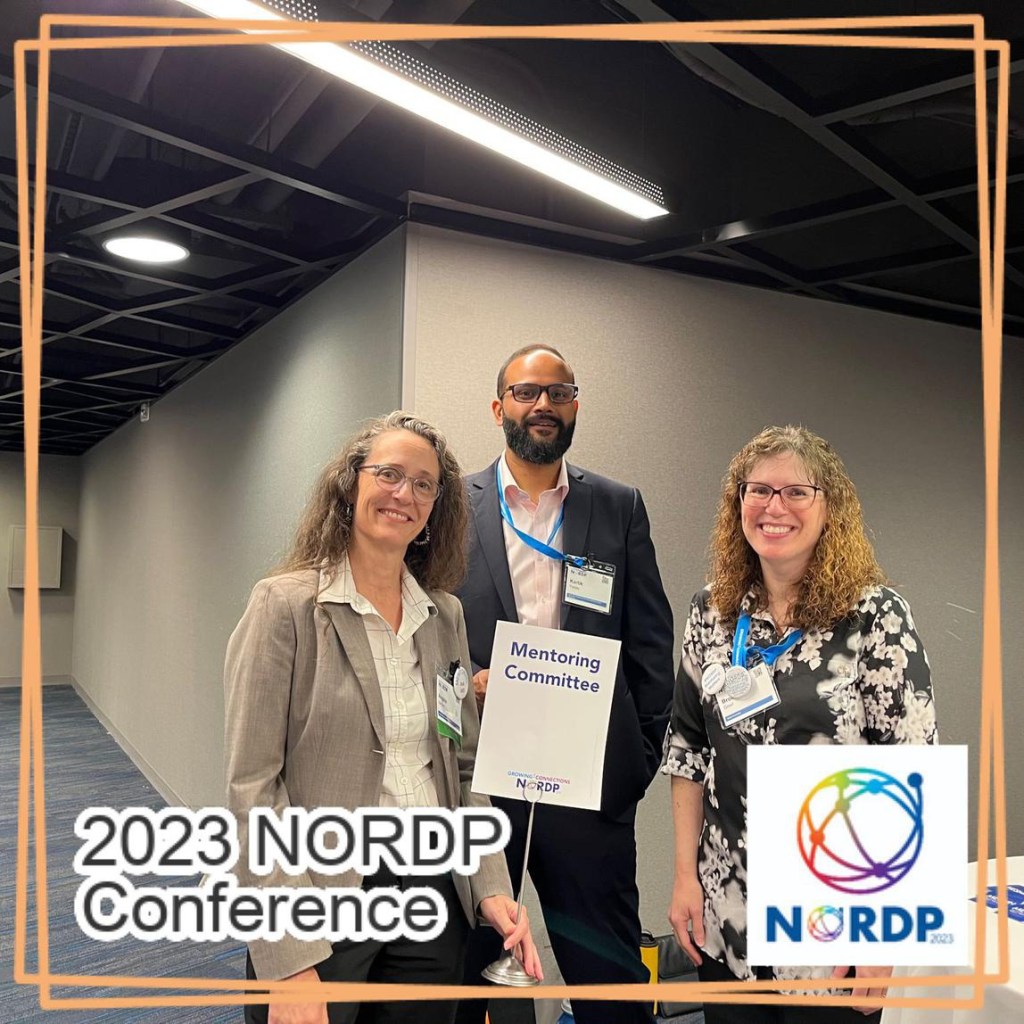
Congratulations to Hilda McMakin and Carolynn Julien, the recipients of this year’s Mentoring Awards! Mentoring Committee members (Angela Jordan, Kartik Yadav, and Brooke Gowl) hard at work during the committee networking session, 2023 NORDP Conference.
Now that the application window for our matched dyads and cohorts programs has closed, the committee is managing the matching process. We expect to share information about new matches for the 2023-24 program by mid-June.
Program participants for 2023-24 should mark their calendars for our Mentoring Program Matching Orientation, which will be held on Wednesday, June 21 from 1-2:30pm ET. The orientation introduces the mentoring programs and the support provided by the committee in the form of curated resources, facilitation, and onboarding materials. We will also be joined by Supermentor Carolynn Julien, a co-recipient of this year’s Mentoring Award along with Hilda McMackin, who will share her experience in the mentoring program.
The Mentoring Committee is also hosting the July TNT session on “Leveraging Wisdom Share Software for Mentoring” to show members how to navigate within Wisdom Share software to maximize your mentoring relationships. That session will be Tuesday, July 11 at noon ET.
On behalf of the Mentoring Committee, Angela Jordan, Elizabeth Lathrop, Hilda McMcakin, Kathy Partlow
NORDP is powered by the excellence and impact of its members. Each year, NORDP Awards celebrate the outstanding accomplishments of members making exemplary contributions to the organization as well as the practice and/or study of research development. NORDP Awards honor the distinctive achievements and contributions of individuals, collaborative groups or work teams, programs or projects, and organizations.
Recipients of 2023 NORDP Awards were recognized during the annual NORDP Conference held May 7 to 10 in Crystal City, VA. In the coming months, you will have a chance to learn more about each awardee through in-depth interviews that will be shared through NORDP News. Congratulations to all of the fantastic awardees for your service to our organization and profession!
Rising Star Award
Jessica Brassard, Director of Research Development and Communication, Michigan Technological University
Katherine Duggan, Associate Director of Research Development, Northeastern University
Erica Pitre, Director of Research Development, Emory University
Leadership Award
Faye Farmer, Executive Director, Research Development, Knowledge Enterprise, Arizona State University
Edel Minogue, Senior Director, Research Strategy & Development, Brown University
Mentoring Award
Carolynn Julien, Executive Director of Grants and Sponsored Projects, Fairleigh Dickinson University
Hilda McMackin, Director, Research Administration Systems and Reporting, Vanderbilt University
NORDP Fellows
Karen Fletcher, Director of Grants Resources & Services, Appalachian State University
Jennifer Lyon Gardner, Deputy Vice President for Research, The University of Texas at Austin
Innovation Award
NSF CAREER Club, Office of Proposal Development (Amanda Bohlin, Matthew Dwyer, Tisha Gilreath Mullen, Katie Pelland, and Jaclyn Tan), University of Nebraska-Lincoln
President’s Commendation
Jessica Brassard, Director of Research Development and Communication, Michigan Technological University
Becca Latimer, Research Program Director, University of Virginia Comprehensive Cancer Center
Jessica Moon, Executive Director, Stanford Aging and Ethnogeriatrics Research Center, Stanford University
Holly Falk-Krzesinski Service Award
Jill Jividen, Senior Director of Research Development, University of Michigan
The New Opportunities for Research Development (NORD) Committee is excited to announce the inaugural editorial board for Research Development Review: The NORDP Journal. Keep your eye out for more information regarding the first volume, which is scheduled to publish in Fall of 2024!
Holly Zink
Holly Zink, Co-Managing Editor-in-Chief
Holly Zink, MSA, ACRP-CP, is the Director of Research & Programs at CureSearch for Children’s Cancer. She has served first as the Associate Editor and now as Deputy Editor of the Journal of Research Administration and is the Chair of the Author Fellowship Program for the Society of Research Administrators International. She is also an Editorial Board Member for the Journal of Natural Science Illustration. Over the years, Holly has worked as a part of several close-knit teams of researchers from many different disciplines and nationalities with broad experience in research development and medical research environments.
Holly offers a unique combination of professional, academic, and research experiences. Her mission is to develop a culture of collaborative investigation that eliminates traditional definitions and boundaries of research and promotes the joy of research. Holly’s research agenda is at the intersection of biomedical research, innovation and strategy, and research administration. Holly is eager to leverage her skills and the capabilities of NORDP and the Editorial Board to further the profession of research development.
David A. Stone
David A. Stone, Co-Managing Editor-in-Chief
David Stone, Ph.D., is the Vice President for Research and Professor of Interdisciplinary Health and Professor of Philosophy at Oakland University. He oversees all aspects of the Oakland University research enterprise, including all research development, research compliance, and research mobilization activities, as well as all pre- and post-award activities through the Office of Sponsored Programs. David’s other roles include Associate Vice President for Strategic Innovation and Planning, Associate Vice President for Research, and Director of Sponsored Projects at Northern Illinois University.
In 2014-15, David served as an American Council on Education Fellow. He has served as President of the National Organization of Research Development Professionals (NORDP), and is a member of the Charter Class of NORDP Fellows. He currently also serves as President and Chairman of the Board of the Institute for Transformational Education and Responsive Action in a Technoscientific Age (ITERATA). Over the past 25 years, he has taught and conducted research at Harvard’s Schools of Medicine and Public Health, Tufts University School of Medicine, Sheffield University (UK) and NIU. David served as founding director of the South East European Research Center (Greece) where he developed and directed a multidisciplinary PhD program focused on addressing the needs of the Balkan nations following cessation of the Balkan Wars. Prior to that, he served as co-founder of the Pediatric and Adolescent Research Center at Tufts University, as director of Harvard’s Boston Violence Prevention Project, where he founded BostonCares for Injured Youth and as a faculty member for the medical School’s clinical fellows program where he founded the Boston Colloquium for Qualitative Research in Health. David has published in seven disciplines, and taught in five. His recent scholarship examines the nature of interdisciplinarity and takes a transdisciplinary approach to public health, education, and research development.
Nina Exner, Ph.D., is Associate Professor and Research Data Librarian at Virginia Commonwealth University. She has served on boards of three research library journals. Nina teaches faculty about scholarly communication and publishing trends. She worked on the NORD Committee’s journal subcommittee from its beginning in 2021. Nina says, “I’m thrilled to see RD evolving to include a professional literature with its own ‘home.’ As a practitioner-researcher I feel like intellectual ownership of the study of our profession is a key part of evolving and creating our unique professional identity. And most of all, I’m really looking forward to the chance to read all of the articles that come out!!!”
Michael Spires
Michael Spires, Co-Managing Editor – Publication & Design
Michael Spires is Research Development Officer at Oakland University in Rochester, Michigan. He has been an active NORDP member since 2012 and has been working in research development since 2006. Michael is a past president of NORDP, served on the Board of Directors from 2014-2018, is a current PEERD Expert, and was a founding member of what’s now the NORD (New Opportunities in Research Development) Committee. Michael worked on the NORD Committee’s journal subcommittee from its inception in 2021. He has served as a peer reviewer for several federal programs and institutional and inter-institutional programs. Michael says, “Way back in the mists of time, I was a typesetter for a local newspaper (and for my college newspaper), and an editor for the literary magazine in high school (a.k.a back when dinosaurs roamed the earth). I’m thrilled to serve as co-managing editor, publication & design, for Research Development Review: The NORDP Journal; this is something we’ve been building toward as a profession and an organization for as long as I’ve been part of both. I can’t wait to start producing content that helps us tell the story of RD as a profession, how it works, and what all of that means to people who aren’t RD professionals.”
Jennifer Speed
Jennifer Speed, Co-Managing Editor – Copy Editor
Jennifer Speed, Ph.D., is a Research Development Strategist at Princeton University. She has been a member of NORDP for four years and has been working in research development for ten years. Jennifer is a scholar and a writer. She says she is looking forward to advancing the professional field of research development through the research to be shared through the journal, and to collaborating with NORDP colleagues in this important work, “The journal offers great possibilities for advancing the professional field of research development.”
Anna Dalby
Anna Dalby, Co-Managing Editor – Copy Editor
Anna Ponzi Dalby is currently interim Associate Director of Research Development at Tufts University where she began in 2017 after roles as an editor, university lecturer, and community program leader. Currently she focuses on building partnerships that advance both faculty and institutional research development capacities, and on designing innovative and creative approaches for faculty to navigate long-term research career strategies and institutional priorities. Anna specializes particularly in education and interdisciplinary proposals, and on developing strategies for the intersection of science and humanities / arts research approaches. Her work builds on both an international background and doctoral work in literature. Anna is currently pursuing her MFA in creative writing.
As a member of NORDP since 2019, Anna has attended and presented at the national conference, most recently on a writing community for early female faculty and on a tool for cultivating regional collaborations. She is active in the NORDP Northeast region. Anna says that she “looks forward to combining her publishing, editorial, and RD expertise in the service of building our knowledges around and advancing scholarly approaches to research development.”
Rachel Goff-Albritton, Ph.D., serves as the Assistant Director of Research Advancement and Mentoring in the Florida State University Office of Research Development and leads the FSU Research Mentor Academy. Rachel began researching barriers and facilitators to faculty grantsmanship six years ago while mentoring in an undergraduate research opportunity program. With a background in clinical sciences (speech-language pathology) and a doctorate in Communication Sciences and Disorders, she began researching this topic for her RD role in order to provide evidence-based research support services. Rachel recently published a peer reviewed article in the Journal of Research Administration – Faculty Views on the Barriers and Facilitators to Grant Activities in the USA: A Systematic Literature Review. She is an active member of the NORDP Mentoring Committee’s Mentor Training Team and has served on several other NORDP committees or programs, such as the Nomination Committee, the Mentoring Committee’s Facilitators Team, the Leadership Forum, and the NORD Committee’s journal subcommittee. Rachel says, “With a background in clinical sciences, I value evidence-based practice. I look forward to being a part of the creation of the Journal which will advance the RD field and the quality of our work. I greatly enjoy continuous learning opportunities and look forward to reading and learning from colleagues’ manuscript submissions!”
Paula Carney
Paula Carney, Co-Managing Editor – Peer Review
Paula Carney, Ph.D., is Director of Research Development in the School of Social Work at Loyola University Chicago. Previously, she held faculty appointments at the University of Tennessee, Northwestern University, and Chicago State University. Paula has served on the editorial board of an academic research journal, currently is a peer reviewer for several US and International research journals and was an acquisitions editor for a major academic publisher. Her previous roles focused on faculty research career development, learning and development of research staff, and mentoring/mentor training within the academic research enterprise. Within NORDP, Paula serves on the Mentoring Committee where she is part of the Mentor Training Team.
The Whova app may be new to many of you attending the 2023 NORDP Conference in Arlington, Virginia, next week. To make the most of your conference experience, below is a list of the top 5 tips from a new Whova user to best utilize the app.
Navigation: The navigation menu for the app is on the bottom of the screen, with Home in the bottom left corner. While you are toggling through the Whova app, this navigation menu remains so you can always find the most important areas. In addition to Home, this includes Agenda, Attendees, Community, and Messages. On the Home screen, there are 15 boxes for Additional Resources such as Session Q&A, Exhibitors, and Documents.
Agenda: The Full Agenda by day can be located by clicking the Agenda tab on the bottom of the screen. This includes not only talks and workshops, but also events like scheduled networking breakfasts, breaks, and poster sessions. When you identify sessions you would like to attend, you can add them to your own personal agenda by clicking on the calendar icon to the right of the session. This will populate My Agenda, with the tab to the right of Full Agenda. You can even set a reminder in Whova to alert you 10 or 20 minutes before the session so you do not miss it. In addition, you can add your own activities to your personal agenda by clicking Add My Own Activity at the bottom of My Agenda.
Tracks: Inside the Agenda area, above Full Agenda and My Agenda, are Tracks with a drop down menu. Tracks are color coded by things like funder, level, affinity group, region, and other common threads found among the research development community. You can filter each day’s agenda by tracks to ensure you attend sessions most relevant to your areas of professional focus.
Community: A community chat can be found by clicking the Community tab on the bottom of the screen. Here you can add a message to an existing topic like Meet-ups or Job Openings, or you can create a new conversation topic. If there is a specific topic in the Community board that you want to follow, you can click Follow next to that topic. You can then filter Community by only those topics you are following.
Attendees: The attendee list and profiles can be found by clicking the Attendee tab on the bottom of the screen. You can browse attendees or search attendees by keyword such as employer name or title. In the Attendee profile, you can take notes about them or send them a direct message. The Whova app also recommends connections for you based on their profiles and yours, so be sure to complete your own profile by clicking on your profile picture, and then the pen icon in your profile preview, to make the most of this networking opportunity.
If you would like more in-depth knowledge of Whova features, be sure to visit the Whova Step-by-Step Guide, Quick Tips and FAQs on the app itself. The Whova Guide is found under the Additional Resources boxes on the Home page. We look forward to connecting with all of you, via Whova and in person, at the Conference!



 NORDP News