Early Bird registration and the NORDP online store close THIS FRIDAY, March 15!
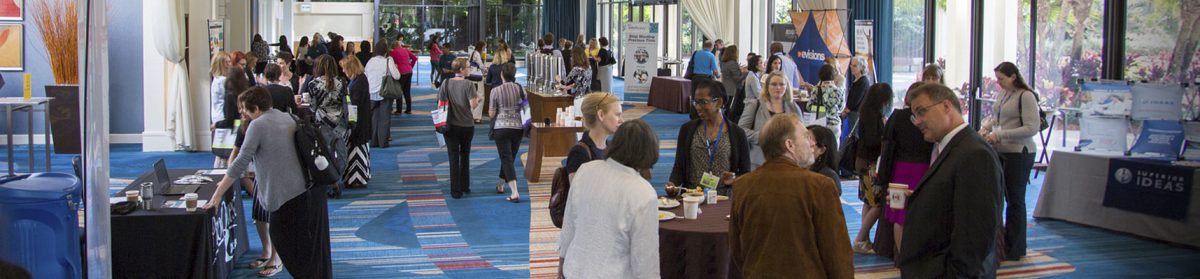
#NORDP2019 starts Monday, April 29, in Providence, RI. Keep checking back here at the blog and on our Twitter feed (@NORDP_official) for conference updates.
_______________
Who: Paula Carney, PhD, Associate Director, Research Development
Where: University of Chicago
Number of years in research development: 14
Length of NORDP membership: 1.5 years
Number of NORDP conferences attended: 1
What is the most interesting place you’ve visited? Nigeria. I helped develop a university research over 5 years.
Like most RDs, my route to the profession was circuitous. My eclectic academic preparation (nutrition/food science, statistics, educational research) led me to research interests at the boundaries of disciplines, and I found myself connecting people from 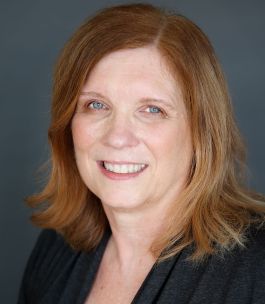 different disciplines, organizations and communities to engage in research and address public health needs. I realized that I was far more effective facilitating research than working in a lab as a faculty member and joined a start-up that provided online learning to health systems. That experience was invaluable as I learned to identify opportunities, innovate products and services, and develop collaborative relationships.
The start-up was acquired, and I joined the Northwestern University Clinical and Translational Sciences Institute. As Director of Education and Training, our unit identified faculty and staff needs, sought resources, and created programs to advance the research enterprise. I worked with Institute colleagues (including Holly Falk-Krzesinski) and others across campus on RD initiatives and was involved in early mentor training initiatives. I also worked with the NU Center for Global Health to advance research development initiatives internationally. A colleague and I conducted focus groups and created a series of videos, posted on YouTube, to trigger discussion of research misconduct issues in sub-Saharan Africa. I also supported universities in Africa and Central America as they created strategies, programs and administrative infrastructure for faculty research initiatives.
I then joined the Provost’s Office at a small state university with the goal of enhancing graduate academic and research programs through policy and program development. I continued involvement with international programs and research, including research compliance and the IRB. I sustained essential programs and services during the multi-year Illinois budget impasse when student enrollment plummeted and many faculty and staff left the institution.
Since 2017, I have been with the University of Chicago as a member of the Research Development Support Team. I enjoy working with faculty and staff and using my previous experiences to support research development initiatives.
I joined NORDP in 2017 and attended the 2018 meeting in D.C. I became involved with several groups (RDs who share best practices for limited submission research opportunities and the collaborative funding list committee); I was also welcomed by the Mentoring Committee, am a member of the MESHH subcommittee, mentor an RD through the mentoring program, and chair the National Research Mentoring Network subcommittee. The amazing members of this subcommittee are adapting mentor training materials for use with RDs and we are establishing relationships with research mentor training groups to include RDs.
I look forward to presenting our 2-hour workshop on mentor training (shameless plug!), to connecting with RDs and expanding my RD network, and to learning all that I can from others in Providence, RI.
_______________
We hope to see you at the Conference, which will be held April 29 – May 1, 2019, at the Omni Providence Hotel in Providence, RI. For more information about the conference program or to register, visit http://www.nordp.org/conferences. Follow @NORDP_official on Twitter for all the latest #NORDP2019 updates.
NORDP fosters a culture of inclusive excellence by actively promoting and supporting diversity, inclusion and equity in all its forms to expand our worldview, enrich our work, and elevate our profession.
 My main role as a writing consultant is to help researchers make their grants (and research manuscripts) more compelling. I provide input on everything related to readability – mechanics, aesthetics, clarity – as well as on scientific aspects of the work. I also regularly teach scientific writing and, occasionally, help to organize large-scale proposals and guide authors to funding opportunities and collaborators. Finally, I have had several opportunities to train scientific editing interns; this facilitated the transition of my two-department editing service to a core facility for the college in 2017.
 of 18 years in private consulting, working my way up the career ladder with a Pennsylvania-based firm that specializes in community planning and funding strategies. As a senior associate, I supported a wide variety of projects for clients in both the public and private sectors, doing everything from writing grant proposals and drafting support letters to facilitating focus groups and briefing elected officials. A significant focus of the firm’s work was the development and implementation of public funding strategies – a government relations function that required direct engagement with local communities, strong relationships with state and federal legislative delegations, and a working knowledge of the federal appropriations and state budget processes. As a project manager, I was frequently responsible for managing client communications, developing congressional briefing documents, and project white papers. I enjoyed the challenges of my work, but after 18 years in consulting, I was looking for a career opportunity that would allow me to grow in new directions.
 to work in both public and private research universities and at the department, central, and school level. Starting out at the department level working with faculty in a large research center was wonderful training for my later work in a central office—it made me very aware of the challenges department colleagues face and the value of their contributions. In the central office position, I supported proposal development efforts across the University for large scale grants and individual investigator grants, and developed programming and resources for new faculty. During my time in that position we were successful in increasing our annual research volume from $60M annually to $100M with no additional resources. We also received an EPSCoR grant to build our state’s research infrastructure. In 2010, I was offered an opportunity to build a new research development office at Harvard University in the Faculty of Arts and Sciences. With the help of wonderful colleagues and an incredibly talented team, we built a new office. We have since expanded our team to serve our engineering school as well.


