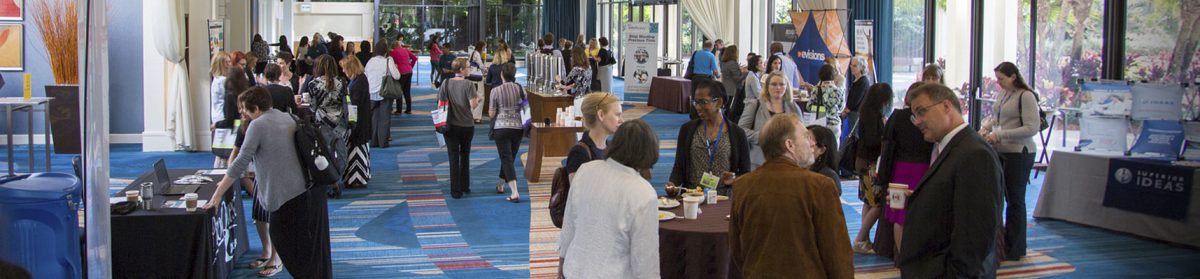
#NORDP2018 starts Monday, May 7 in Arlington, VA. Keep checking back here at the blog and on our Twitter feed (@NORDP_official) for live conference updates. Register here: http://www.nordp.org/conferences.
_______________________________________________________
Who: Matthew T. Rondina, MD, MS
Where: University of Utah
Number of years in research development: 10
Length of NORDP membership: 2
Number of NORDP conferences attended: 1
How do you unwind? In my off time, I unwind by traveling and I enjoy a variety of sports, such as climbing and biking. Last year I was fortunate enough to travel to Scotland and mountain bike the Scottish Highlands. I have a true love for the outdoors and adventures.
I started my research career in medical school. Early on, I recognized the need for research development professionals. At that time, kind and patient people helped me learn the ropes of preparing IRB proposals, recruiting participants, writing grant applications, and collecting data. Those experiences and others embedded within me the desire to build collaborative, productive relationships with research development professionals.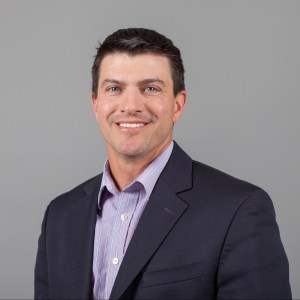
Fast forward a few years, and now my day looks a bit different. In addition to seeing patients in the University of Utah Thrombosis Clinic, I serve as Precision Medicine Foundation Director for the Utah Center for Clinical and Translational Science and am the Associate Director of the Molecular Medicine Program. I am also fortunate to have an NIH-funded translational research lab and work with many talented people, such as Antoinette “Toni” Blair. I could not possibly do my research without a team of dedicated and knowledgeable people willing to work collaboratively.
While I have always relied heavily on the guidance of research development professionals, I don’t think I completely connected these dots until I attended the NORDP conference in 2017. In my various positions, including my role as a research mentor, I always advocate for research development. I feel it is important that we empower research professionals to feel comfortable proposing, developing, and implementing ideas for research. As one concrete example from my own research program, we historically tended to recruit participants through standard approaches, such as newspaper advertisements. When my project coordinator, Toni, suggested that we consider an alternative strategy for recruitment and amend our IRB’s resources to add Research Match (www.researchmatch.org), I was initially skeptical. However, I trusted her instincts and Toni very quickly brought this important recruiting tool onboard for our studies. This resulted in us meeting and, in some cases, exceeding our recruitment milestones. I am immensely grateful that Toni took the initiative to leverage this important resource for our program, as she has done innumerable times since.
I am a strong advocate for research development at my institution. I believe we should fully support efforts to build and develop a robust community of research professionals that help each other and the greater scientific community. While uncomfortable at times, we need to recognize the increasingly dynamic environment of research and be nimble enough to adapt with change. I have identified my project coordinator, Toni Blair, as a rising star in the community of researcher professionals. We are proud to support her attendance at her first NORDP conference in 2018. I look forward to participating in what will undoubtedly be an outstanding meeting.
_______________________________________________________
We hope to see you at the Conference, which will be held May 7-9, 2018 at the Hyatt Regency Crystal City in Arlington, VA. For more information about the conference program or to register, visit http://www.nordp.org/conferences. Follow @NORDP_official on Twitter for all the latest #NORDP2018 updates.
NORDP fosters a culture of inclusive excellence by actively promoting and supporting diversity, inclusion and equity in all its forms to expand our worldview, enrich our work, and elevate our profession.
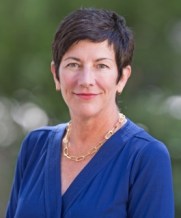 she attended Carnegie-Mellon University, where she completed her M.S. in Industrial Administration, followed by her Ph.D. in Organizational Behavior and Human Resources Management from the University of Maryland. Her research examines how organizations leverage individual and collective knowledge. She examines the performance of teams, especially those teams engaged in knowledge work such as professional services, new product development, and project-based tasks. Recently, Lewis served as a Division Chair in the Academy of Management and Senior Editor for Organization Science.
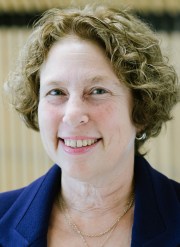 and Behavioral Sciences, and interim vice provost for academic affairs. She was the lead program officer for the National Science Foundation’s ADVANCE program to promote gender equity in academic STEM (Science, Technology, Engineering, and Mathematics). Mitchneck has a dual research focus on migration and displaced populations with an emphasis on countries of the former Soviet Union including Georgia and Ukraine, and on gender equity in STEM. She has served on national boards for the Social Science Research Council and the Kennan Institute, and editorial boards for the Annals of the Association of American Geographers and Soviet Geography. She has received substantial funding from the National Science Foundation and other federally funded agencies. She holds a Ph.D. in Geography from Columbia University and an A.B. in Russian Studies from Bryn Mawr College.
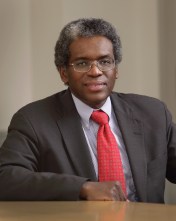 aryland Baltimore County (UMBC) and his Ph.D. in biology from The Johns Hopkins University. He began his career at NIH as a National Research Service Award Fellow in the National Institute of Child Health and Human Development (NICHD), and in 1988 received an Intramural Research Training Award in the National Institute of Diabetes and Digestive and Kidney Diseases (NIDDK). He became a principal investigator in NIDDK in 1992, and he was tenured in 1998. Roland’s research focused on adeno-associated virus type-2 (AAV2). In 2002 he was selected as Mentor of the Year by the UMBC Meyerhoff Scholarship Program. In 2010, Dr. Owens won an NIH Director’s Award for co-leading the trans-NIH Earl Stadtman tenure-track investigator search. In 2011, he won an NIH Merit Award “in recognition of the exemplary support to NIH Leadership’s establishing diversity programs.”
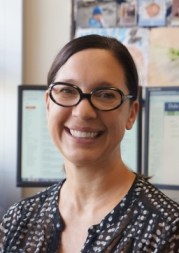 with social science faculty members. She also develops and leads campus diversity and inclusion initiatives. She is Lead PI on an NSF ADVANCE award “Center for Research, Excellence, and Diversity in Team Science (CREDITS).” She is the co-author of the book, Funding Your Research in the Humanities and Social Sciences: A Practical Guide to Grant and Fellowship Proposals. Endemaño Walker first joined UCSB as a post-doctoral scholar at the National Center for Geographic Information and Analysis. Her research has been funded by the National Science Foundation, the National Oceanic and Atmospheric Administration, the Department of Education, the Social Science Research Council, the Elsevier Foundation, and the MacArthur Foundation, among others. She has a Ph.D. and M.A. in Geography from UC Berkeley and a B.A. in Anthropology and African Studies from UCLA. She was the founding treasurer of NORDP.