
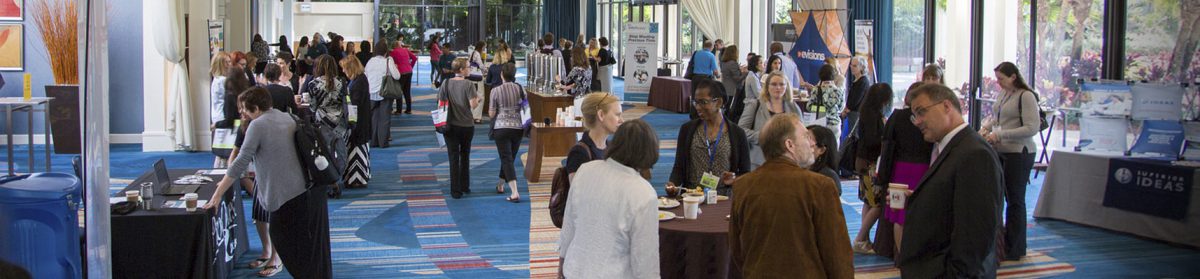
This post is part of our NORDP 2016 Conference Reports. These reports capture the take-home points from a variety of sessions presented at the NORDP Annual Meeting in Orlando.
Session Scribe: Kristin Wetherbee
Demystifying the U.S. Department of Education
Presenter: Marjorie Piechowski
Key points from the session:
- The U.S. Dept. of Education isn’t very consistent with funding opportunities. Programs may not be offered every year and there are few established due dates. Formatting and page limit requirements can vary. Also, some submissions must go through grants.gov while other must go through the U.S. Department of Education’s e-grants system.
- Notices are announced via the Federal Register and the U.S. Dept. of Education website with a minimum 30 day notice (often, only 30 days’ notice is given).
- Proposals should cite literature from the National Clearinghouse which holds documents about the current state of research.
- Proposal components:
- Personnel – must adequately describe role and credentials relative to the proposal
- Project design and need – often weighed most heavily by reviewers
- Adequacy of resources – need to address the specifics of what you’re asking for (cost per student, cost share, institutional resources)
- Evaluation – often weighted heavily, up to 20% of total points. The Department seems to prefer external evaluators so you must provide excellent justification if using your own evaluation tool.
- Special and competitive priorities – these may or may not be required. Bonus points may be given for addressing them so don’t make reviewers hunt for this language; state clearly and boldly in the proposal.
- Program officers don’t have to be experts in the field and some PI’s have found that program officer comments are in direct conflict with what the review committee wants.
What did you hear at this presentation that surprised you?
The consistency of the Department’s lack of consistency.
What resources did you discover at this presentation?
- U.S. Federal Register: https://www.federalregister.gov/
- What Works IES Clearinghouse: http://ies.ed.gov/ncee/wwc/
- National Center for Education Statistics: https://nces.ed.gov/
- Educational Resources Information Center (ERIC) and Other Clearinghouses:
http://www2.ed.gov/about/contacts/gen/othersites/eric.html
What else from this session should NORDP members know?
You must routinely visit the U.S. Dept. of Education website to stay current on offerings and deadlines and must thoroughly review calls for proposals for changes from year to year. Also, if you’re interested in being a reviewer for the U.S. Dept. of Education, a Ph.D. is not required (master’s preferred). Register at http://www.g5.gov/.

 outreach projects. I have worked on a variety of grant-funded and grant writing projects in the public health, K-12 education, and university research sectors. Having held several program staff positions on federally funded grants has provided me with a unique perspective as a research development professional. I gained hands-on experience executing workplan deliverables, managing grant budgets, cultivating relationships with program officers, and implementing follow-on funding strategies. These collective experiences have translated well to working with faculty on research proposal development.
 received the opportunity to participate in a city-funded project, but working as a postdoctoral research scientist at Karolinska Institutet in Stockholm, Sweden is ultimately what led me to the field. My responsibilities included the writing, reviewing, and editing of grant proposals involving research teams from multiple institutions; identifying potential sources of funding; and developing research ideas into fundable proposals. I wrote two proposals that were funded and was a contributor to a third successful proposal. This is when the ‘light bulb’ went on and I knew that research development was a profession.
 Bloomington
 partner and sponsor cultivation, and promotion and external relations. Under our Associate Dean for Research, I support a highly diverse group of faculty and research scientists, with backgrounds ranging from philosophy and law to data science and systems biology. As the lead within a 2-person, unit-based RD shop, I manage services that strategically lighten the administrative load for our researchers in addition to those that propel us forward. In a given day you will find me holding proposal strategy sessions with individual faculty members; facilitating a brown bag on cracking Google research funding; reaching out to Federal Relations re: an upcoming faculty member’s visit to D.C. (our Seattle location has its challenges); drafting policies related to the management of our research centers; planning our transition to an eIRB system; helicopter-parenting a proposal as it makes its way through OSP review; advising my ADR on internal seed fund requests… If it pertains to the conduct of research, I pick up the phone. I came to the field after holding varied positions in research, non-profit, and public program management, most recently within the digital inclusion evaluation and policy spac
